Using Multiple Weight Loss Plans
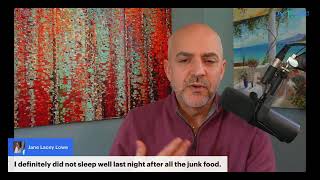
Jim Katsoulis argues that rigid all-or-nothing dieting causes weight regain. Instead, develop a flexible hierarchy of backup plans (Plan A through D) you can shift between based on your energy, stress, and life circumstances. Incremental adjustments beat chasing perfection.
Chapters
Everyone, welcome to today's Program Yourself Thin podcast. Today we're talking about using multiple weight loss plans to lose weight. I know this may sound strange because you've been trained your whole life to use one plan, right? One diet, one approach, one tactic. Uh, but in the real world, that tends not to work well, and you can look at your own experience to verify that. And again, not to, not to argue with you that that one plan may work for a little while. I'm not going to argue that. Obviously, there's countless people that have lost some weight on keto, Weight Watchers, any plan possible, but they tend not to maintain the weight loss. That's the big problem. And I think a big part of this is a lack of options, a lack of flexibility that's necessary to not only get to the goal weight, but then to live there. And I feel like the way dieting trains us to approach weight loss, we have to kind of pick one tactic and just obsess on that and do it perfectly. And that's it. And in my experience, there's two big issues with this. Number one is that one tactic isn't going to be enough, in my opinion, because I believe that we need a comprehensive, holistic strategy in order to truly change your weight long-term. And the other issue is that a lot of times you get to a point where you can't keep up the one tactic for whatever reason. Maybe you get sick, maybe you get bored, maybe you get tired, maybe life blows up, whatever. And if we only have one plan available, we have no fallback plan, right? It's all or nothing. And while all or nothing sounds good when we're thinking about it, the reality is that all or nothing almost never lasts very long because we can't be all or nothing for very long, right? To be all, to be perfect is very difficult. It's very energy intensive. It's really hard to maintain that. So if we have no other option other than being perfect, what do you think is going to happen? You know, it doesn't give us any flexibility. It gives us no choice or option to really meet ourselves in life where we are at times. So my suggestion to you is that you start to have different plans and options. Now, I don't mean to say that you're going to do Weight Watchers, keto, Mediterranean, and count calories all at the same time. I'm not talking about that. What I'm talking about is having the idea that you can have a plan A, B, C, and D. And so if you want to do keto, for example, you could kind of have this Plan A, B, C, and D idea. And Plan A will be 100% no carbs. I'm going to be in straight ketosis. Okay, great. That's your Plan A. When everything's going great, when you're energized, when you're focused, when life's supporting you, go ahead, be perfect. No carbs, ketosis. Great. But can we please consider the possibility that at some point You may get sick, tired, bored. You may get in a fight with your partner. You may get fired from your job. You might have to move. Something might happen in your life that makes it extremely difficult, if not impossible, to be perfect and to be completely carb-free and completely in ketosis. And so in that scenario, maybe we open up an option that says, I will be 90% carb-free. And we have a Plan C or Plan, you know, Plan C, uh, I'll be 80%, I'll be 50% as a Plan D, but we have options. And in Program Yourself, then we refer to this as being all or something as opposed to being all or nothing. And I believe that the real shift in the results that you're looking for doesn't come from being perfect more. It comes from being nothing less. So as soon as you give up on being nothing for good, and you always commit to at least being something. Something could be, I'm going to say no to a carb today, you know what I mean? Like, it could be that simple, but we're always in the game. And that, in my opinion, is the big shift mindset-wise that really leads to much better results. Because mathematically and statistically, it's not the amount of time you're being perfect. It's really what you're doing in the times that you're not being perfect. And if you're a dieter, most likely when you're not being perfect, you're not doing anything at all. And that's the biggest kind of, um, potential shift in your weight that you're missing. Because it's a lot easier to say, okay, I won't eat as many carbs as I normally do. Right now, it's hard to be in ketosis. It's hard to be 100% carb-free. It's a lot easier to be 15%. Less carbs than I normally eat. And that 15% less, while it won't get you the same results in as quickly as being in ketosis, it's going to get you better results than eating 15% more carbs or what you normally eat for carbs. Does that make sense? Because if we can start to alternate between all or something instead of all or nothing, that's the biggest shift you can make in your results. Because most the time you're not all You have to cut the shit. Dieting has convinced you that you can live your life perfectly. You can't. You're always going to make mistakes, and that's okay. You can still control your weight, but you've got to upgrade your mindset to realize that it's impossible to be all for long term. This is why most dieters, even the dieters that are successful, it's estimated that 85 to 95% of dieters that get to their goal weight still put the weight back on. And I think a big part of this is exactly this, that they only allow themselves perfection. And if they're not perfect, then what's the point? Well, the point is that it's a statistical improvement. Even if you only cut 15% of the carbs out instead of 100%, that's still 15% less carbs that you're consuming. Now, I don't have an issue with carbs anyways, by the way, but I'm just picking keto because it's an easy one to, um, to do this example with, but it's the same applies to everything, whether it's Weight Watchers, uh, you know, counting calories, what, intermittent fasting. Intermittent fasting— oh my God, I can't do 16 hours of not eating, I'm starving, I'm starving, I'm starving. Okay, fine, do 12 hours of fasting, right? All of a sudden life's kind of kicking in the gut. Oh my God, I'm not gonna eat for 16 hours. Okay, don't eat for, for 12 hours, don't eat for 14 hours, don't eat for 10 hours. Whatever is an improvement from what you normally have done in the past should be celebrated. And sure, the more you can do, great. That's why we do all or something. All is always available to you. But the truth is, it's really difficult to be perfect in all, all the time. And dieting has deleted— it has, um, dieting has conditioned you to, uh, think in this all-or-nothing term. You know, and so what happens is people are perfect with their eating for a couple of weeks and then they're not thinking about it at all for a couple of months. And that, that those numbers are never going to work for you. So again, the idea of going into your weight loss plan with having some options, a Plan A, B, C, and D, having some, you know, fallback plan for when you're not 100% on track, when you're not 100% focused or energized. Having some backup plans that you can rely on when those moments happen. Because again, dieters go into it expecting that what, day one they're going to be perfect all the way until they reach their goal weight. That just has no, no place in reality as far as I can tell. So the more you start to strategize for the actual reality you live in, I think the better results you're going to get. So give this some thought. And if you want to go deeper into this mindset and some support with it, click the link in my bio or go to programyourselfthin.com and go get the free hypnosis session that I made for you. It's called The New Thin Me, and it is literally designed to kickstart your weight loss in a way that is much more relaxed and calming, um, than you have probably approached it before. And, uh, if you're on TikTok, you can go to the— click the picture of my, my face up there in top left. If you're over in Facebook land or wherever else, I will put a link in there so you can go get this. Because you should go get it. Not only do I give you this session, I also give you— I have a daily PYT Daily email program that I give away for free, um, as well. So I said delete there because Pam Adams said delete. I don't know what that means. I don't know if she wants to delete me or delete something else, but that's why I said delete earlier. I just read it and said it. What's up, Jane? Jane said, my reality is one clean day, one binge day drives me crazy. Um, yeah, but Jane, I know, but, but the first step to changing it is to stop thinking you're going to have all clean days. So again, I would say, okay, great, one clean day I got down. So I don't have to worry about that. I'll have one clean day. Then I'll have one half binge day. I'll have one overeating day. I would minimize it. I would take the binge day and I would make it better by 5, 10, 15, 25%. Because it— what, you're gonna go what? Are gonna just have— you're gonna go from having one binge, one clean day, to one binge day forever. I just want more clean days. Exactly. No, I get that, Jim. That's not working because all you're thinking about is the clean days. So it's like, again, you can have results in two ways. You could either just have clean days from now on, or you could have clean day, binge day, clean day, binge day. But the binge days, you start improving because 'Cause if you started consuming 15, 20% less food on the— oh, it's not working. What's not working though? That I want more clean days or the binge days, dialing them down? Because again, we're always learning. We're either learning what not to do or what to do. But there's really no such thing as— well, I mean, things not work. Obviously things don't work, but when we know something doesn't work, it lets— it opens the door to something working. Hope that makes sense. Uh, Dr. Todd said, I like that comprehensive holistic strategy. Yeah, it makes a lot of sense, right? I mean, again, I'm too zoomed in on myself, it's freaking me out. Um, yeah, comprehensive holistic strategy. I don't know any other way you're all gonna manage your weight. I, I've never seen it work in any other way, not in a way that's like enjoyable. Um, so again, in Program Yourself Thin, we follow the goal weight pyramid, which is a holistic comprehensive strategy. Right where— I don't know why this is blurry. It used to focus so quick and now it's like, come on, I must have— oh, I know why. You read that anyways. There it goes. That is weird. Uh, Mindset, Lifestyle, and Eating. So that is the, that is the, uh That's a comprehensive holistic strategy because just— I always say, like, like when it comes to this pyramid, I'm going to refocus again. Um, with the diets, diets are about this much of the pyramid. Use that tiny little point at the top. That's what a diet is, telling you what to eat. And so the rest of this is the deeper levels of your weight. And most of you have probably never really focused on those deeper levels. And so you probably get the same results everyone else gets where you do the dieting for a little while intensely, and then, uh, you make a mistake and you stop doing it completely, and then you wait a while, and then you go back to and try and repeat it over and over again, you know. Um, yeah, Jane says dialing down the binge days— dialing down the binge days is not working. Um, what's not working? You know, again, we gotta get specific. Not working is so vague that I don't even know what that means. You're eating as much, you're eating more— that doesn't even matter either, because I want to know specifically Specifics, specifics, Jane. It's hard, Jane. I will tell you, and here's a little challenge for you. I will challenge you and we will find out if this is true or not. When you're vague and talking in huge generalities, like it's not working, you're going to feel stressed and overwhelmed and unclear and uncertain of how to move forward. The more specific you get, what's not working? Binge days, binge days aren't working. Dialing down during binge days. Well, how, how so specifically? What, what? During a binge day is not working specifically. The more specific you get, the more kind of grounded you're going to feel. It's going to allow you to move forward. But the more vague you get with generalities, the more confused and frustrated you're going to feel. I, I could challenge you to test that out yourself and see if that's true. Uh, Pat says your daily emails help me be the best, the person I want to be. Well, thank you, Pat. Those, those Daily emails are awesome. Those are free, folks. I give those to you free. I tell you this all the time, no one gives you more free stuff than I do. Um, so yeah, the daily emails matter a lot. They're really good emails too. It's everything I'm talking about. I just give them to y'all for free and I send them out. What's the word? My brain's a little slow. I, I have a cold. I don't know if you can hear me. I've got my, my yearly sickness. Amy says, I got scared I didn't see you on here yesterday. Yeah, I wasn't here Friday or yesterday. Yesterday was a holiday. Um, would I have been on? Maybe I would have been on. I was not sounding good yesterday. It's like, I don't know, I can get it. I know why I'm not feeling great. I'm I was expecting it, to be completely honest. Um, this thing's walloped me, but I think it's for the best. I think I needed to take a break, and I did take a break, and I'm feeling better. But man, my head is just like stuffily stuffy. I can't stand it. I hate when I sound like this because this is my whole work. And it's funny too because it started right last week, last Tuesday. I said, I'm gonna record that book. I was all ready to do it, then I started feeling sick. But I'm here. Here to answer your questions. So any weight loss questions are welcome. I love hearing them. I'm obsessed with weight. I really am. I love it. I like to approach it. Uh, it's like a puzzle to me, you know, and I'm fascinated by it. I wish everyone had this attitude because it makes it a lot more fun. Um, are there still moments of frustration? Well, of course, right? If you ever worked on a puzzle, there's certainly moments of frustration. Um, but they're, uh, broken up by moments of excitement and clarity of getting a piece in or understanding something a little more clearly or seeing something in a way you couldn't see it before. Uh, and I don't think dieting really allows you to do that because dieting is just about the scale. And with Program Yourself Then, we kind of look at all the other pieces as well. There's so much more going on than just the number on the scale. And, um, I always say this to people— I'm going to continue with Jane here in a second— is that the more we get I don't know. I think that the— I look at it as like a puzzle because, you know, even when you're doing a puzzle, if you do puzzles regularly, you start coming up with meta strategies, right? So the first time you do a puzzle, you just do it however you do it. But as you start to do puzzles, you start to have meta strategies. Maybe do the border first, you separate the border piece out and do that first. Or maybe you put certain colors together, certain, you know, pieces that are similar together, whatever you may do. Um, but there's a meta level to it. With dieting, there's no meta level to it. They have somehow, and it's really miraculous, um, how amazing it is, but dieting has really conditioned you to just receive a plan, right? Because every diet's the same in the sense that they're going to tell you how to eat, right? It's always a little different. They all got different philosophy. But the thing that unites them all is they're going to say, okay, eat this. Or don't eat that. It's one and the same, same side, two sides of the coin. Um, eat this way, and then you try and force yourself to eat that way. And that's about the experience for most dieters. And there's no real attempting to understand why some days you're able to eat the way you want to, and some days you kind of overeat and binge on everything. There's no real sense of what part your mindset played, what part your energy played, what part your sleeping played, your hydration played. Your mood's played, your environment played, your routines and habits played, your programming played, your mindset played. I'm not gonna go on and on. I don't want to overwhelm you, but, um, there's a lot of stuff that's affecting your weight that you've never even looked at. Right. And it kind of, the experience is like this. If you're not a mechanic, you hear your car make a noise and you just, I don't know, my car's making a noise. Right. Well, okay. Well, what? That's not very specific. That's not going to— you're not going to— that's going to help you that much. Oh, I don't know. It's coming from the bottom of the car. Okay. Whereas a mechanic goes in and they start diagnosing it. Where is it coming from? What's the quality of the sound? Right. Where— when's it happened? You know, and they're, they're thinking about it in a much different way. And, uh, that allows them to get to the problem quicker and hopefully to resolve it. Right. But when it comes to dieters, they never do that. It's an all or nothing switch. You're either all on doing everything perfectly or you're not. And when you're not, you have no idea why you stopped. Isn't that amazing? Y'all been dieting and I know you're all smart people. You've been dieting for decades and over those decades you haven't learned anything about yourself. No real, oh, I'm a sugarholic. Oh, I have no control. That's not learning. That's not what I mean. What I mean is really understanding your behavior, you know, at a more granular level. And once you do, Uh, it's just a completely different process and it really is like a puzzle. That's how I look at it with all my clients. And let's kind of pop it on here with Jane. Let's see what I mean. Yesterday I had a large bag of chocolate eggs after lunch, and then after dinner I ate a whole bag of Oreos. Is this more specific? Um, it's getting there, Jane, but it's not just about what you ate. It's about what was going on because Jane, at this point here, you, if you're doing the redo rehearsal technique, you must have some sense. What I'm more interested. So yesterday was Monday. What I'm curious about is, uh, what was going on Sunday night? What was going on Monday? Now, right off the bat, I'm going to say, Jane, if you work a Monday through Friday, and this applies to a lot of you, this is what I mean. It all comes down to really understanding the subconscious patterns and programming that you've got because you're all a reflection of your subconscious programming. It's that simple. You're not consciously making your decisions. You're subconsciously following programming routines that have been installed in you, usually without your awareness or, you know, permission. And so right off the bat, I'm noticing with Jane, I don't know, it's Monday. I don't know if you guys all had a holiday yesterday, but maybe Mondays in general are a stressful day and you might, those might usually be a binge day for you. I don't know. I'd want to know that, Jane. So is this an unusual Monday or Monday usually clean days for you? Monday is usually binge or there's a mix of them. Either— any answer is important because it guides us forward. What I'm saying with Jane is what I do with every single client, what I was just referencing, of looking at this as a puzzle. It's like each person— it's kind of like a choose your own adventure, but we're not choosing our adventure, we're choosing our own diagnosis. We're understanding what's going on. You people are not bad people that can't control your eating. That's not the problem. The problem is there's factors and things going on that you're not even aware of. So for Jane, what I want to know is, okay, knowing what you ate, it's good that you have that awareness, but what you ate really is much less important than why you ate it. And why you ate it is not because you don't have willpower. It's probably something else. Maybe you get stressed on Mondays. I don't know what your intention for Monday was. I don't know if you had rehearsed it in your mind the day before and had a plan to do it. Um, so I want to, that's the details I want, Jane. Knowing the specifics of what you ate is a good starting point because there's a lot of people that are in such denial that they don't even remember what they ate when they ate it. So the fact that you remember, it's a— you should feel good about that because that's a step forward. But the next thing we want to know is what's going on. The moment I had a large bag of chocolate eggs after lunch. Okay, after lunch, before lunch, what were you planning to do after lunch? Just eat nothing. Where did the bag of chocolate eggs come from? Where do the Oreos come from? You see what I'm saying, Jane? That's what I want to know. Like, there's a lot more. So you've got the first level, great. But, but I'm, I'm really curious about where the bag of chocolate eggs came from after lunch. What the— I bet Jane— now, I don't know, it could be any number of ways, but I bet Jane knew she was going to eat a bag of chocolate, a bag of Oreos. Was going to have a binge day when she woke up or even the night before. That's what I would bet. Maybe I'm wrong. Maybe I'm right. I have no idea, but I'd want to know that. I want to know because there's a difference between, oh, I had a bag of chocolate eggs in my cabinet. I had a bag of Oreos in my cabinet and then I ate them after lunch and after dinner. That's a totally different story than I didn't have them in my house. I got so pissed off. I drove to the grocery store, got a bag of eggs, got a bag of Oreos and ate them. Those are two totally different paths of where we would go from there. So I appreciate Jane. Jane is very open book, and I appreciate this. Jane says, I had an upsetting phone call with my boyfriend on Sunday, and then yesterday morning one of my neighbors was outside yelling and it upset me. Also yesterday I went to the doctor and had some sun damage burned off my face, and why I wanted to go outside because it was beautiful day, but I couldn't go out. Okay. So, do you know what I mean, Jane? Jane, Jane, you can't tell me— okay, I actually drove to the store and got all the junk. Okay, but Jane, what you just wrote, what I put up on the screen there, I had an upsetting phone call with my boyfriend— that's, that's, that's the gold, okay? Because Jane, do you see the difference between you coming in here and saying, um, My reality is one clean day, one binge day drives me crazy. It's not working, right? Think about how that makes you feel, how you felt initially. Overwhelmed, like giving up, so frustrated, right? And then you come down to really diagnosing in much more detail. I had an upsetting phone call. People outside yelling, it upset me. I had doctors get burned off my face. That's upsetting. I wanted to go outside. I couldn't. I was upset. So we have 4 big upsets firing off during the day. Or the one was the day before. So, I mean, does it make more sense, Jane, that you just have one clean day, one binge day, one clean day, one binge day? Or does yesterday specifically— was that triggered because you got really upset and you didn't have a good strategy to deal with the upset? Maybe you didn't realize you were upset. Maybe you did. I don't know. But I hope— I bet you feel at least a little bit more grounded when you write out all the reasons why yesterday happened. Because when you just say, I have one clean day, one binge day, one clean day, what, what, where do we go from there? I guess you're just that way. I guess that's just who you are. I guess you have one good day, one bad day. I guess that's the reason. And we all do this. Oh, okay. So Jane says, yes, I knew I was upset and would binge, but I wish I had a better strategy. Great. Well, Jane, now, now you can have a better strategy because now you do the redo technique on yesterday. Have you done that yet? Again, this is just the process. We're all going to do this. Listen, we get better by being terrible at stuff. You know, dieters, that's the biggest trick of dieting. And that's why it tortures my clients. My clients in a nutshell are overthinkers, perfectionists, action takers. And dieting is like their kryptonite because dieting always blames you. It's always your fault. The answer is always the same. I should have had more willpower. But no, because if we look at Jane's case, willpower, schmillpower, that has nothing to do with it. When you get really upset, what's willpower going to do? You'll keep me from eating. Okay, so now you're a thin upset person. That's not enough. So the real core problem here is that Jane does not have good strategies to deal with when she gets upset. And Jane gets upset a lot. Jane gets triggered kind of easily. Nothing wrong with that, it just is what it is. But if she doesn't have a good strategy to deal with when she gets upset that doesn't involve food, how is she ever going to get control of her weight? And what's that have to do with willpower? Oh, when I get upset, I just won't eat. So you're just going to sit there and be upset with what? What are you going to do, just be upset and not eat? And that's what you dieters all think the answer is. I'm a stress eater. Okay, so I'm just going to be stressed and not eat. Oh, I'm an emotional eater. I get sad and I eat. Okay, so I'm going to be really sad and not eat. That ain't a solution. James says, I do get triggered easily. Okay. And then Jane says, I also, I quit my gym yesterday because I want to spend more time outside. Okay, Jane. So can you at least appreciate, Jane, that there was a lot of things going on yesterday and that you didn't just binge because you always just do this and there's just one more example, just one more day of what you always do, right? There's more to the story is what I'm saying. You know, and so I ask you, you know, if you could go back in time yesterday, knowing what you know now, what could you have done differently? Is— do you even have an idea in your mind at this point? And that's the next question. Again, that's what I mean. We— it's a choose your own solution, right? So instead of a choose your own adventure book, this is a choose your own solution process. But when have you all done this with dieting? In dieting, when have you ever chosen your own solution? And especially after you fuck up. Yeah, okay, well, you're gonna start on Monday and be perfect. Okay, that's how you always start your diet. I'm just gonna do it. I'm just gonna be perfect. I'm talking about after you make a mistake, what do you do then? No one ever talks about this because dieters are famous for the what the hell effect, right? You're perfect until you make a mistake and then you're completely— forget it. You know, I hate dieting so much and I'm going to write a book on how much I hate it, literally. And it's the book I was born to write. I cannot wait to write it. Uh, I gotta write another— I gotta write another book. Maybe two in front of it, but, um, probably next year I'll have it out. It's the book I'm— I've been— I think about it all day long, but I gotta write these other books first. But I hate dieting so much because dieting is literally an evil thing. It's literally created— it's a— it's, um, created by the food companies. Dieting is not there to help you lose weight. Dieting is there to manipulate you. Um, so What's up, Therese? Therese says, plus now, oh wait, you must have said something before. Uh, Therese said, I'll share some from yesterday. Binge day, went to a celebration and did well, but later ate a bunch of cookies. Should have just had a little at the celebration and not felt deprived. Plus I'm now at a weight I haven't been in a long time and I'm struggling with that feeling. So paying attention to your email sessions, et cetera. Um, Therese, Therese. I wish, I wish I had more hands so I could give you more thumbs up. I, I just— perfect, perfect. That— and program yourself, then that's the perfect thing I could hear. Oh, but it was— she ate cookies though. She ate cookies for binge day. Who gives a shit, dude? I don't give a fuck. Because it's like, if you're always gonna binge days, okay, I've been on my goal weight for 30 years. I have binge days. I'm caught in a little overeating loop right, right at the moment. So what are you going to do? God damn it. If as a dieter you think the answer is you're just gonna be perfect, you've got to cut that shit out quick because you're not going to be perfect. It's not even an option, not even on the menu. You can't be perfect, not for long. So that's why I'm so excited when I hear Therese be able to have a binge day, a day where she overate cookies, and be grounded the next day, learn from it, understand it, and move forward. That's what we're looking to do. So great job, Therese. And two huge things. The big thing you learned is that you went to the, um, celebration and you did well. But did you do well, right? Maybe you did well relatively, but maybe if you go back in time, doing well might have been eating a cookie or two. Because if you ate a couple cookies at the celebration, you might have felt satisfied, and then you may have not eaten any cookies afterwards. So I think you realize that. Great job. Okay. And then, yes, you're right. Being at a weight I haven't been at a long time, folks, I'm here to tell you, because I know this sounds counterintuitive, but as you lose weight and as you get to your goal weight, it's exciting for a lot of reasons that you all know about. I don't need to talk about that. It's terrifying for other reasons. And that's the part most people miss. Anything that's new is terrifying to our nervous system. Our nervous system, our body and brains are status quo machines. They just want to keep everything the same because they want to be able to predict the future. And being able to predict the future is a lot easier when everything else is the same. So when all of a sudden major aspects of our life change, it's terrifying to our brains and bodies, our nervous systems. And that includes losing weight. So yes, Therese, getting to lower weights you have to kind of normalize to them. And people that lose weight too quickly, again, 85 to 95% of dieters that lose weight and get to their goal weight put the weight back on. So you probably— everyone here listening is probably part of that statistic. You probably at some point have gotten to your goal weight or close to it and then put the weight back on. And, you know, this is— GLPs love this shit because they love saying there's no way to actually control your weight. People can lose weight, they can't keep it off. And dieting loves that. Dieting loves that because it makes you feel powerless and it makes you feel like you're never going to control your weight. Which is why what makes what I'm saying different than what you normally hear is I'm not talking about weight loss. I'm talking about living at your goal weight. You can— you know the difference, right? Losing weight is a temporary process to get to your goal weight. Kind of like climbing Mount Everest. I climbed it. Oh my God, I climbed the mountain. What do you do after you climb the mountain? You stay there? Do you live there? Do you live on top of the mountain forever? No, go back down it. So a lot of times people— and dieting has done this, I think it's one of the main things— dieting has done so much terrible things for us that it's hard to even— that's why I got to write a whole book on it. But, um, one of the big things dieting has done is it's, it's it's imprisoned your mind. It's a prison in your mind that you're trapped in. And you internalize weight loss as a temporary thing. That's subconsciously one of the biggest problems with diet mentality is that subconsciously you think of it as a temporary thing. I'm going to diet until— until temporary— I get to my goal weight. And then what are you going to do? I'll figure it out then, Jim. Oh yeah. You know how many people figured it out? Well, 5 to 15%. Not very many. Have you figured it out? No offense, right? No judgment. You're not designed to figure it out. Dieting is not built to live at your goal weight. Dieting is built for you to do crazy shit to get to your goal weight. Then what? You know? So you're right, Therese. So, yeah, again, you realize that. Keep reading the emails, pay attention to all the stuff in there, and it'll change. But you're giving it the time it needs, Therese. And that's what I really appreciate you saying that. Um, actually, what's up, Amy? Amy says your method is so logical, my logical brain is gobbling this stuff up. Thank you, Amy. Yes, I would absolutely agree. This is the absolute most logical approach to managing your weight that exists on the planet. I don't think there's another, and I'm glad you put it that way. I don't think there's a more logical way to manage your weight. Notice I'm not saying lose weight because I don't give a fuck about losing weight. I want you to lose weight in— as a part of the process of getting to your goal weight so you can live there forever. But I'm not going to celebrate weight loss. It's a little phase. It's the— it's a little— right, folks, if everything works out the way you want, right, you're going to spend this much time losing weight and then you're going to spend the rest of your life at your goal weight, right? So why so much fixation on this little phase part of it? Shouldn't you be focusing on the big part of it? So yeah, it is— it's so logical. I, I, I, I'm glad you said it that way. It's so funny you say that because I've been thinking that everything else is illogical, like literally illogical. Yeah, so I appreciate that. Thank you. And I am here, TikToks. I'm over and I stream this to different places so I get different questions in different spots. Let me pop over to TikTok. And I am— I will tell you a little something I'm gonna be doing. I am gonna be doing like, uh, on— this will be TikTok because I don't know if the other platforms do this, but on TikTok I'm gonna start going on where you can talk to me. I'm gonna test that out. I'm gonna keep this— I'm here every Monday through Friday, usually around noon Eastern, um, like in this format, you know, where you can write stuff in and I read it and talk about it. But, uh, I'm gonna add maybe in the— I don't know when— in the afternoon or something where you can literally ask to join and I can talk to you and we can get a— we cover a lot more ground that way. And so that's gonna be something that's coming up. I don't know, this week I gotta— I might wait a little bit to get my, my voice back a little normal, but, uh, that's coming within this week, next week. So I'll let y'all know about that. Um, Alexander says, I feel like I get stuck in an all-or-nothing cycle. Yes, you're right, you are all stuck in an all-or-nothing cycle. Sorry, you just are. If you're a dieter, you're in an all-or-nothing cycle. In Program Yourself Thin, we live in an all-or-something cycle. Uh, but you know, it takes a while to even internalize that. It's a practice. But yeah, if you're not— if you, if you yourself are not actively working to install and live within an all-or-something cycle, then you are 100% trapped in an all-or-nothing cycle. That goes for all of you. So yeah, you're not alone, Alexandra. That's pretty much virtually every single dieter is stuck in an all-or-nothing cycle. And it is so damaging and so, so difficult to succeed in there because it's not realistic. Again, if you went to college and you were an all-or-nothing, you would have failed. You would have quit. Right? Because when everything was going well, great. But as soon as you got a little sick or got off track or you did bad on a quiz, you'd quit. You'd do nothing. And then that nothing would compound faster than the all compounds. That's the problem. Mathematically, all or nothing doesn't work out. And when it comes to weight, it's the same thing. You know, it's so silly. It's like, to put it in a different context, it's so fucking silly that it breaks my brain. But dieting makes you not see it. So let me put it in a different context. Imagine we apply all or nothing in the way we do with dieting to playing the piano. You've never played the piano before, but you're really passionate about wanting to learn it. But the only way anyone ever teaches about learning piano is that you've got to play 8 hours a day right from the start. If you're serious, you got to play 8 hours a day. All or nothing, baby. Go big or go home. So you go and sit at the piano for 8 hours and play, and the next day your back's killing you. Your fingers are cramped up. You hate the piano. You gotta do 8 more hours. Struggle through, you do 8 more hours. It's too much. But that's what you're doing with your dieting approach. You're trying to change everything about your eating in just one day. You wake up one magical Monday and now you totally eat different from now on, huh? Do you have any sense of how your mind works? You know, um Dina says, could talking to you be an option in the members Tuesday live meeting? Um, no, unfortunately, you know, I used to do that, but then it becomes, um, it becomes too long. But you know what I'll do, Dina? I will— you know what I will do? I will make— when I start doing the TikTok ones, if you want to pop on there, um, you can get on there and we can go, we can talk. So that could work. Um, but I know, and I feel bad about that, it's just, it's just those, those calls become too long. The only group coaching I do now, I have a group coaching, uh, a coaching group on Wednesdays. Um, so if anyone's in the program that's interested in that, you can shoot me an email and I can get you information. Um, I think it's a pretty reasonable— it's certainly most the only way to work with me right now. Um, but yeah, hey, The Intelligent Cut, I remember that. Yes, yes, you check the engine, why not the body symptoms or messages? Yes, yes, agreed, agreed. Yeah, the Intelligent Gut. I remember Intelligent Gut from, uh, yeah, you're here, I don't know, a month ago, a couple months ago, dropping a lot of wise shit. Yes, something good says your day starts the night before. Did you stop eating a few hours before bed? Yes, yes, agreed, absolutely. We kind of diagnosed that one. That was just a big, uh mental one. Yeah, it's physical too. Mental and physical, it's always a blurry line, I suppose. Uh, 1492 says, I'm in love with this program. Thanks for all the time you give us. Oh, you're welcome, you're welcome. Thanks for being here. Yeah, this is my mission in life, so I'm here all the time. And I'm really excited because, uh, oh my goodness gracious, if there's not a lot— I got some cool stuff coming out. I've hit a new level. It's just about to be here. I'm right— I'm this close to it, and things are going to profoundly change. I would say I would say in May at this point, because I'm finishing up an enormous project I've been working on for a while. And once that clears out, then I'm— I've really been working. So the last year has been insane for Program Yourself Thin. It has been unbelievable. I literally created two books. This one here is 144 pages. I created this last year, put it all together, designed it, all of it. That was a lot of work. And then I also did this book, The Tao of Living Your Goal Weight. Wrote it, designed it, published it, all the rest of it. Um, and on top of that, just upgraded Program Yourself Thin numerous times. And, um, there's a few more upgrades coming. Um, once I get this big project out of the way, which I'm rapidly moving towards. So I cannot wait. Cannot wait. But thank you. I appreciate you. Um, yes. Intelligent Gut says body relies on routine. Need good signals. We don't feel like moving if we're receiving bad signals. So true. Yep. It's not willpower. It's bad signals. Yeah. So yeah, Intelligent Gut says bad signals. I say bad programming. Um, I think that it's, uh, yes, routines though. I love that body relies on routines. I can't stress enough how important routines are. That's why in Program Yourself Thin, a big part of what we do with the goal weight pyramid is, uh, the lifestyle piece. And I will tell you personally, you know, and again, I do it this way very specifically because my eating sits atop my lifestyle and my lifestyle sits atop my— they both sit atop my mindset. But the lifestyle is probably the most— my mindset is pretty stable, you know what I mean? I've been in a little bit of space the last month or two mindset-wise. It's kind of cracked things up a little bit, but typically my mindset is pretty stable. And then it's really the lifestyle piece. How's the lifestyle piece going? How's the sleeping, the relaxation, the hydration? The nourishment, the movement, the meditation, the gratitude, how are those things going? And how those things go typically is going to really inform how my eating is going. But even the eating is really set to a structure and the routine. So again, the reason why is programming yourself is built around your subconscious mind. And your subconscious mind is the part of your mind that runs all your habitual thoughts, feelings, and behaviors. And that's ultimately, at the end of the day, what's— what your weight is. Your weight is a reflection of your subconscious programming. So, agreed, agreed. Yes, whole foods are good signals. Yes, absolutely. Yeah, because they go back to the old routine. Yeah, that's so true. And that was— again, I gotta say, like, this book's really winning me over as I keep reading it, um, The End of Craving. And, uh, he talks about nutritive mismatch. And I think that nutritive mismatch is kind of the idea most clearly explained with like artificial sweeteners. So you'll— you're getting kind of a sweet taste on your tongue, but then you're not getting sugar in your, your body, right? And that's an example of a nutritive mismatch. And that's pretty common now, you know, with food additives and preservatives and flavorings and all that shit. Um, but there's the, the physiological mismatch, right? Of, oh, sweet, here comes calories. Uh, but I think there's also a psychological mismatch that is part of that as well. And I think it leads to a state of like never feeling satisfied. And I do think the easiest way to deal with that is to start consuming more whole natural foods. I think whole natural foods, again, they come in their natural matrix, right? Have you ever seen the movie The Matrix? You can think of like an apple having code in it, right? Think of the code in it. And as you consume that code, It goes into your body and your body's code, just like The Matrix 2 on some level. I think that's a real great way to think about it. I mean, it's metaphorical, but I think it's literal too, sort of. Um, and so when you put the code of the apple into the code of your body, I think they kind of magical things happen. I don't sound like a total nut job, but I genuinely do. And so then all of a sudden you get, you know, hyper-processed foods. That's not a natural matrix, right? And so what is that doing to your body? It's not— don't just think on this physical level of calories, you know what I mean? Like, there's a lot more going on with when you consume and eat food. So agreed with that. Um, Jackie says, what about those who don't have upsetting things happen to them but still go out and look for junk sweets, such as buying candy and or rummaging through kitchen for snacks, even in the moment? Um, no, you shouldn't, but still do it. Um, yeah, Jackie, I get that. But again, the upsetting thing is really just a trigger. So it's the same thing. It's just a different trigger, right? So for Jane, something upsetting happens and that's her trigger to go into that behavior mode, to activate that program, if you will. For you, it might be time of day. There's basically 4 main triggers. There's time, right? It could be time of day, time of the week. Time of the month, right? Certain time-based thing kind of triggers us to act a certain way. It could be certainly our moods, right? Our mood is a huge one, right? So we get into a bad mood that triggers us. Ah, fuck it. I don't care. I'm eating everything. Okay. Or I'm upset. I don't care. Bag of eggs, bag of chocolates, cookies. I don't care. I'm eating it. People, right? So it could be a certain person. All of a sudden you're around, they trigger you. Or it could be also no one's around. I'm alone. That could be the trigger. Okay. And then place, a certain place you're at. And so, and they can work together, right? So all of a sudden, oh God, God forbid you're, you know, in your home at 5 o'clock and you're in the pantry, right? That might be a thing. And so in that situation, it might be a combination of them. You're alone. It's 5 o'clock. You're sitting in the pantry and you're overwhelmed and tired, you know, and hunger's, I guess, a 4th, 5th one as well. But so for you, Jackie, don't, don't, it's the same thing. It's just that the trigger's a little different. But again, it's activating the same pattern and behavior that when you— because again, for you, it might be bored, right? Still go out. What about for those who don't have upsetting things happen to them but still go out and look for junk sweets? You're not going out looking for junk sweets all the time though, Jackie, most likely. And so there's probably a very specific pattern going on. You might get bored, you might get upset, you might get sad, you might get lonely, and then you feel like going out and looking for stuff. So again, while it may not be upsetting, it's probably something emotional and/or it's now just a pattern habit that you've installed into your subconscious mind. So it's the same process though. You have to understand it first, you know, and then you could deconstruct it and find something better. Uh, what's up, Marta? How's it going? Marta says, I have to be in significant calorie deficit to lose weight. I track during the week, but I am more relaxed on the weekend. Any extra calories and I only maintain. I don't think I can be that strict anymore, and I'm not that comfortable with the weight I'm at right now. Tired of endless diets and being stuck. You know, I have to be in significant calorie deficit to lose weight. I just never buy that simply because most people have never really approached weight loss in this way. Right. Most people have never really approached in this holistic way. So if you're basing— I have to be in a significant calorie deficit to lose weight. That's based solely on being in diets. Diet mode, stressful. Stress mode usually slows down weight loss. So I just— I'm going to push back on that. I don't believe you out the box saying that, Marta. I know you believe it 100%, but I don't. And I'm saying that based— I've done over 6,000 private weight loss sessions, you know, so I'm not just making this up. This isn't just my opinion. It really is based on what I've seen. In my practice, right, working with people and myself. Um, so again, Marta, what I would say is I would look for a more holistic strategic approach, you know, because I think you're thinking all or nothing. Honestly, that, that to me is an all or nothing thinking. And I know you've got evidence that you think you have that proves that you need to be in a significant calorie deficit. Um, and one thing I'll just tell you too, just on a strategic level, is that if you traded some of your foods you eat during the week and on the weekends, if you traded some of those foods, some of the processed or more processed foods for more whole natural foods, that's probably the easiest way to reduce calories to another level and still feel satisfied and full. Okay. But yeah, I would watch out for that too. I mean, it's a problem-oriented comment, you know. And so it's not really looking for the solution. It sounds kind of, kind of problem-oriented. Um, yeah, there we go. Jane, Jane says, well, I would have gone outside to play pickleball, but I couldn't go out in the sun. I should have had a different strategy. Um, should schmood though. Again, right, we talked about that last week. 3 words that are really going to doom you all with your weight loss is I have to, I need to, I should. Those are all bullshit words. So you shouldn't have, Jane, because you didn't know. Jane, how many times have you gotten, you know, sun damage removed from your face so that you couldn't go out that day and quit the gym on the same day? How many times has that happened before? So should, should what? Why should you have had a different strategy? You know, I would say that you shouldn't have. You just, you got caught up. You didn't know. And now you understand it. Now you can do better. Know better, do better, right? Yeah, let me know you publish. I will. Yeah, I can't wait to write that book. I got at least one book I need to get out first, which I've got like probably 70-80% done. I haven't worked on it in 5 months. This book's published though. You can all get this book, The Tao of Living at Your Goal Weight. People love this book too because it is a really unusual book in terms of your weight. It's not me just telling you what to do. This book is really neat because it's actually 40 chapters. Each chapter is a page or two. Each chapter is a hypnotic story, and each story is designed to change the way you think about different things that are affecting your weight. So yes, this is available now. People love it. What's up, Vicki? Vicki says, hi Jim, thanks for being all or something even when you're not feeling well. Thank you, thank you. Yeah, that's me now. I'm being, you know, I, I lower my expectations. You know, I get on here, my voice isn't great, my head feels a little weird. I get on the live, you know, maybe I have a good live, maybe I have a shitty one. Uh, what are you gonna do? You live life, you have good and bad, there's ups and downs, good and bad. You know, I'm here for it. And, uh, that's why I love being all or something. I find it's one of the most freeing mindsets that exists. It's, um, and realistic, you know, it's very practical because what human on earth is just going to— again, this is dieting presupposes that you're just going to be perfect. You're going to follow your plan perfectly, but in order to follow your plan perfectly, it's like all of life has to go along with that. Right. Cause how are you going to like, oh, I'm doing keto and oh, I just lost my job. I'm doing keto and I just got in a giant fight with my partner. Oh, I'm doing keto and I'm just— I just got the flu. Super sick. What's— what are we supposed to do? Oh, so what? So what? No pain, no gain. I hate that way of thinking so much. I can't stand it. Which isn't to say if it works for you, I don't hate it for you. I love it for you. I hate it for people that keep trying to force that square peg into a round hole. You know, if you've tried the no pain, no gain, the no excuses allowed, if you've tried that shit 100 times in your life and it hasn't worked, please stop. There's another way to approach this, and it's being gentle and supportive with yourself. It's understanding that, you know, you get ups and downs as a human being, you know. Um, oh, I like that. Intelligent Gut says sugar without fiber is starving the gut. It's just like, it's like it just got robbed. Yep, yep. They can't balance hormones or sustain energy, probably. I agree 1,000%. I, I, Intelligent Gut's been here before, and I, uh, I don't know if they have some program or whatever, but, or make videos, but if they do, you should check them out because, uh, I would say I always hesitate on that. I, I will say I never, I don't know, they may have a completely crazy philosophy too, for all I know, but when it comes to nutrition, I, I am right on the same page with them. Um, and I like how they explain it a lot. I think the more— and, and I also think for all of you, the more sources of this type of information you can get, the more, the more you get like kind of whole natural food focus dropped on your head, the better. Because we live in such a crazy world. I saw a comment a couple weeks ago, someone was like, well, this guy had me until he started— still, I realized he kind of promotes plant-based foods. I was like, you gotta be a fucking idiot. I mean, eat meat. I don't care if you eat meat, but I mean, what world are you going to live in where plant-based foods aren't going to be the core of what you eat? I mean, what? Huh? Huh? What? What is your nutritional philosophy when you have a problem with plant-based foods? You know, but that's the world we live in now. You know what I mean? We just live in an upside down. We're in the upside down. Um, we're in bizarro world where people can say anything. And it's almost, I guess that, you know, it might be, there's a lot of people that think just eating meat constantly is the right answer and eating plant-based stuff is path to an early grave. And it's like, good Lord. What? Why would you think that? Where's your evidence for that? But that's the world we live in. You know, people can say anything they want. So finding some good sources of information, I feel like, is job number one. And excluding the dumbasses is job number two. I don't even listen. I, I don't, I don't consume any weight, health, nutritional content, um, through TikTok, none of it. And I like TikTok. I love TikTok. You know, I'll TikTok it up, but I, boy, nothing depresses me faster than weight loss, nutrition, workout. Health influencers. Oh my God, I have an issue with almost all of them. And again, it's not what they say sometimes is fine, it's their mindset in my opinion is so problematic. So I don't know. Yeah, yeah, intelligent. Good. Yeah, you work late, you're hungry, and you eat late, that's going to affect the next day. Um, yeah, because your body was busy digesting over repair. I, I, I can't stress that enough. And I'm kind of glad I never— a lot of times I don't get into the nuts and bolts and specifics of when to eat. I kind of talk more about the mindset stuff. But yeah, one of the biggest shifts for me in my weight, in my health, and my happiness is when I stopped eating late at night, you know. And I call it nighttime fasting. Again, this is a term I came up with because when I started doing this, it was 30 years ago, there was no intermittent fasting. But I started what I called nighttime fasting, and I started slowly. I used to eat right up until bed, and I started making that window bigger and bigger. I'd stop eating earlier and earlier. And I think that out of everything, that's one of the top things I ever did, because, uh, boy, I slept better. I woke up with more energy. My weight went down. I mean, it's just everything was benefited from that. And I don't think people hear that message enough. That is just— even if you don't eat any less, you know, fine, eat the food, but just eat it earlier. You give yourself a body, your body a break, man. Energetically, it's one of the most important things you can do. And when you got more energy, everything else is easier. You know, that's another piece. It's funny how people really tend not to like when I say— when I talk about kind of a holistic, comprehensive strategy for managing your weight, A big part of that is managing your energy, you know, and I think people just overlook that part. We do that in general in this culture anyways, but, um, it's kind of like if you don't manage your energy, a lot of people, because a lot of people go on their diet and it's like on day number one, think about how stressful and tiring it is to do a diet, you know, instantly the day you start your diet, you're just spiking your cognitive load. Right. You got to do so much, um, thinking now. It's estimated we make over 200 food decisions a day. So you start your diet and you're talking about adding like a minimum 200 new decisions to your day that you don't normally have to make. And so that takes your energy and just zaps it and that makes you hungrier. And so now you're in this position and that same energy is what your willpower runs on. So now it's like you've. Reduced your energy levels by increasing your cognitive load, and now you're hungrier, right? Because when you reduce your energy levels, what do you think your body does? It sends you a signal to eat so you can reenergize. Okay. And your body knows that the fastest sources of energy are the unhealthiest ones. So you get cravings for bullshit and now you have less willpower to fight those cravings off. So dieting is absolutely there. To keep you trapped being overweight. All the diets, the big diets are owned by the food companies. Weight Watchers is owned by Heinz. Jenny Craig was owned by Nestlé. Atkins Food Products, owned by the same company that owns Onions, Pretzels, and Cinnabon. SlimFast, owned by the same company that owns Ben Jerry's ice cream. So these companies are not there to try and get you to eat healthy and be happy and not eat their bullshit food more. They're there to contaminate your mindset and to think like a dieter so you're trapped in your being overweight forever. And it's working pretty well, I would say. We're at a position— we're at a time in life where 75% of adults in America are overweight or obese. Isn't that crazy? At a time when we've got access to more fresh, whole food than ever in history, 365 days a year. We've never had access to more nutritional information and knowledge. We've never had access to more, um, guidance and wisdom. And yet the overweight and obesity numbers just keep skyrocketing. And that's because these food companies, um, have literally hypnotized people, um, to think like overweight people. And, you know, they make extremely addictive foods. Um, yeah, Lois says, if you haven't gotten his book, do, do it. I love this book. I read a chapter or two every day. Sometimes I just open the book and read the chapter. It's like that. I'm not going to lie. This book is like that. And it was made to be that way. This book is meant to be read many, many, many times in whatever order. You can literally just, uh, you can literally just pick the book up, open a random page and read it. Every story in here is, it kind of grabs you and they're all short. So it's just, this book is, like I said, it's meant to be hypnotic. And, um, part of hypnosis, a different, a definition of hypnosis is that it bypasses the critical faculty. And, um, basically how that shows up for you all is that it's just easy to read. It's just like, oh, I just want to read it. And they're fun stories. So they're just easy. They just go right, slide right into your mind. The next thing you know, you're thinking about the messages and the lessons from them. So thanks, Lois. I appreciate you saying that. Um, yeah, Therese says, exactly. It's terrifying to get new lower numbers, struggling with it. That's fair, Therese. But again, just, just give yourself some time and space to normalize to it. I know it's weird. That's one of the most kind of counterintuitive things about success is as you get more successful, um, it's— you, you— we all have kind of an internal thermostat, and that thermostat triggers both ways. If it gets too hot, it kicks the air conditioners on. It gets too cold, kicks the heaters on. And we kind of have that same thing. We have a status quo thermostat in us. And so as our weight, you know, right when we're overweight the way we've been for a long time, we're kind of comfortable. If we started putting a lot more weight on, now we get really uncomfortable. But if we start losing weight, it starts to feel weird and we get uncomfortable. I know people don't believe that sometimes, but it's so true. And if you're not prepared for it, you're not aware of it, that can really sabotage you. You got to be careful of that. Uh, Crystal says, I do alternate day fasting and love it. I've lost 30 pounds, um, in 2 and a half months. Um, that's great, Crystal. But again, I gotta say this, and again plug your ears in, Crystal, okay? I'm happy for you. Great job taking action. Great results. Okay, but I'm gonna say this for everyone else's benefit because I know there's a lot of you that will see that comment. Oh my God, 30 pounds in 2 months? 30 pounds in 2 and a half months? Sign me up, sign me up. I don't give a shit what I gotta do. What do I gotta do? Alternate day fasting. And I love it. Well, I share with you all And again, Crystal, you plug this up. The worst person in the world to listen to about how to live at your goal weight is someone who's actively losing weight. Because when someone's actively losing weight, they don't give a shit what they're doing. Not eating every other day? I don't give a shit. I don't care. I'm down 30 pounds. And what happens is dieters trade the excitement and the pleasure of the food for the excitement and the pleasure of the scale going down. But the same problem's still waiting for you, that once you get to your goal weight, where's your excitement and pleasure coming from now? Because it can't come from the weight loss anymore. You stop losing weight and it can't come from the food the way it did, or else you'll put weight— will back up, which is what happens to most people. So yes, alternate-day fasting, we love it when we're losing 3 and 4 pounds a week, but as soon as the weight loss stops, will we love it as much? Well, most people, the answer is no. And this is what we're going to find about the GLP-1s as well. Um, because the GLP-1s, yeah, when people are losing weight, they don't give a shit that they don't think about food or care about food, all the rest of it. It's amazing. I don't care. But okay, let's go 5 years in the future. What are you going to do on your birthday? What do you do on, you know, the holidays when your grandma brings her, you know, famous pasta salad over and you don't even give a shit because you don't care about food anymore? Sounds great when you want to lose weight, but that quality of life day after day, is that the quality of life you want to live? That's another question. And for some people, doing alternate-day fast is just— it's amazing. For them, it's down from the heavens. They absolutely love it. Weight loss stops, and they love living that way. But most people don't, and that's okay too, okay? But understand again what I'm talking about. The diet mindset in a nutshell is basically it's trained us to do really extreme shit. And I would, I would throw fasting complete fasting each and every day, if that's what it is. Alternate-day fasting for a lot of people is pretty extreme. And so as long as they're losing a lot of weight, they can do it. But the second that weight loss slows down or stops, now all of a sudden they struggle to do the same thing. And you've all experienced this with whatever diet you've done, whether it's been fasting, Weight Watchers, keto, whatever. That's the same thing that keeps showing up. That's the diet mindset. That transcends all the diets. This is why all diets are the same. It doesn't matter if you're doing keto, carnivore, vegan, Mediterranean, Weight Watchers. It doesn't matter what diet you do, because what unifies all of them is that mindset that on Monday I'm going to do 100% different. And as long as that weight's coming off at a high rate or the rate that's comfortable to me, then I'll keep it up. And as long as I don't make any mistakes, because what's the mistake mean? The mistake means that you're not going to lose as much weight this week. So now what's the point? But again, you dieters, you do great when you're losing lots of weight and you're fired up and motivated. The problem shows up when you're doing great. And last week you lost 3 pounds and this week I lost a pound. I only lost a pound. And then the next week I lost a pound. Oh my God. Oh my God. This is too slow. Or God forbid, you know, you have a week that's a little wobbly and you didn't lose any weight. Oh my God. What's the fuck? This. I'm done. But the same thing happens when you get to your goal weight. That's what I'm trying to tell you, folks. If being at your goal weight— because that said, well, what's going to motivate you, right? I know, I can already hear you. Oh yeah, you trade the pleasure and excitement of the food for the pleasure and excitement of the scale going down. I said, where's the pleasure and excitement come from once you're at your goal weight? It comes from you, my goal weight dumbass. So they tell me, I'm gonna be so happy I'm at my goal weight, I won't care about food. I won't give a shit about eating because I'll be so happy at my goal weight. Everything's going to be amazing. Well, unfortunately, that's just not how it is necessarily. Listen, you've all been at your goal weight. Every single one of you has been at your goal weight. If it was so amazing and everything was so perfect, why did you ever put weight on? I don't mean to ask this, and I know this is an uncomfortable question, but you might as well deal with it because dealing with this is one of the core things you need to deal with in order to be able to live at your goal weight. But if being at your goal weight was this magical thing that fixes all the problems, then why did you ever put weight on past your goal weight? I know it's uncomfortable, but I'm here. I'm here for the uncomfortable stuff because it's usually the uncomfortable stuff kind of moves the needles for real, you know. Yeah, Crystal says, yeah, I gotta figure that part out when I hit my goal weight. I get it. Program Yourself Thin, that's what makes us so different. On day 1, we start with our maintenance because the whole program— Program Yourself Thin is not about losing weight, it's about living at your goal weight. So our focus is, what weight do you want to live at? What's your ideal weight? Okay, how can you live there for the rest of your life? So we start with maintenance. I was— How do you start maintenance before? Because what most diet— what dieting trains you to do your weight is always a reflection of your average calorie consumption, right? So everyone starts from the same spot. But what dieters do is they drastically cut their calories down. Drastically. 50, 40, 60%, 70% of their normal calories they cut out. So they start losing weight fast. And then let's say they do this all the way to get to their goal weight. Now they've got to bring their calorie level up to wherever the maintenance is. That's, that's the, that's the general idea, right? You're going to drastically cut the calories down. And then once you get to your goal weight, you're going to bring it up to your maintenance level and you're going to live there. And we know that that works for 5 to 15% of the people. So it does not have very good, um, success rate. So in Program Yourself Thin, again, we start from the same spot. Your average calorie consumption is your weight, and we're going to slowly reduce the average calories down. Comfortably and let the weight go down. Cut the calories down a little bit, let the weight go down until you get to your goal weight. And then once you're at your goal weight, there you go. Now we just keep optimizing, you know, how you're bringing the calories in and how you're doing all that. But you, you all, you dieters doing this crazy shit, this drastic cut so you lose weight fast, and then you're going to magically figure out some maintenance level, which no one figures out as far as I can tell, you know. So start thinking about that now, Crystal. See, yeah, I got to figure that, that part out when, when I hit my goal weight. I wouldn't wait till you hit your goal weight, you know, because that doesn't seem to work for people. Every dieter on the planet says, I'm going to wait to figure that out till I get to my goal weight. And 85 to 95% of dieters that get to their goal weight put the weight back on. So You know, gotta bring that up. Yeah, Crystal says, I plan to keep fasting but not as extreme once I hit goal. Yeah, great. Um, and I hope that works, and if it doesn't, I'm here for you, right? Remember, I'm here for you because I always want to get people— the people that really motivate me more than anyone else to do this are the people that actually take action and get results and then can't maintain them. Those are the people that really break my heart, and I feel, I feel like I'm serving them more than anyone because I'm like, man, you're, you're willing to do the work, but you don't got the knowledge. You don't got the, the mindset knowledge, um, the strategic knowledge, the lifestyle knowledge to get the results you want long term because you never learned it. None of you have. You all learned how to do short-term dieting fix. Dieting, I always say this, like, um, you know, dieting is like a get-rich-quick scheme. You know, and it rarely works, but even when it works, it's just some money now, which is great. It's better than having no money now, but it's not really your goal. Your goal is to be wealthy. Your goal is to have a consistent source of revenue and income, not just a windfall that covers you for a couple weeks or a couple months, right? So it's very similar to that. Um, so he says, hi Jim, you're the best for being here for us. By the way, the Thrive session for today really hit home. Yeah, I heard that. A few people said that. It even prompted me to talk to Jim AI more about the topic today. So insightful. Yeah, that's great. Yeah. And I, if it was the same, I forget what today was, was food or mood, right? Um, that was one of the sessions for the Thrive program today. Every day they get a hypnosis session, a little 5-minute one in the morning. But, um, yeah, food or mood. And, and I think that, that again, are you eating because you're hungry? Are you eating because you're being emotional right now? Again, no judgment, but we want to understand which is right, um, so that we can move forward with it. Um, Jane says, yep, right again. Yep, I definitely didn't sleep well last night after all the junk food. Yeah, Jane, and you know, another, another connection I would make as well— so great job realizing you didn't sleep well last night. Um, but the other piece as well is that when you don't sleep well, in addition to the eating you did yesterday and to the upsetness, is that You don't feel well today, right? And today, because a lot of the fire has gone out— like yesterday, it sounds like you were kind of fiery, right? And in your fiery mode's probably more of your binge mode. Um, but today I bet you feel a little like more sadder mode, like depressed, overwhelmed, kind of cooler mode, right? Yesterday was more fiery. I bet today feels a little more cooler, and, um, it's just more blue, more sad, more down, you know, you gotta be careful of that, right? But again, you want to attach that to the, the not sleeping and the eating the way you did yesterday. What's up, Sally? Sally says, I've been losing weight for 1 year now. I wasn't feeling well and lost 10 pounds. I went to a holistic doctor and I'm now feeling much better. I'm down 15 pounds now and would like to lose a few more pounds to get to my goal weight. I decided to fast 1 or 2 days a week, but I noticed that I have to do it when I'm eating clean and my blood sugar is level. Otherwise, there's no way I can fast because my body just wants to eat crap. Um, yeah, I totally get what you mean, Sally. I have played with fasting myself and I don't like it. I don't like fasting. I don't like keto, um, specifically because it's like walking a razor's edge, you know. Um, I used to be raw foodist. I didn't like raw foodist either because everything had to be perfect— my mindset, my lifestyle, my eating— everything had to be perfect in order for me to do it. And I think a lot of dieting kind of trains you for this, and some diets are even more extreme. Um, but the fasting is a good example that fasting is so much harder if you're not eating really clean, you know? And, um, so I mean, that's a truth, and we aim to clean everything up so it's all easier. But at the same time, I think walking a tightrope is not the way I want to live because it's just— it sets me up for failure. It's hard to to stick with that all the time. But great job. I mean, you've been doing a lot of good stuff here, Sally. So I think that's wonderful. You know, if I was working with you, I would encourage you for— oh, okay. So let's just use words chronic and acute. I think fasting 1 or 2 days a week is kind of an acute solution, but it requires a lot. And so I would look for more of a chronic solution. I would look for how instead of saying like, oh, those 2 days I'm going to dial the calories down completely, I would look to— okay, so I'll give you mathematically how I would look at it. Let's just say 1 day. I'm just going to stick with 1 day because I think you probably do 1 day more often than 2 days is my guess by a lot. I bet it's like 80% of the time it's 1 day. I'm just guessing. I could be wrong, but let's just say it's 1 day a week. Me personally, rather than having that intense 1 day a week where I can't eat, Now, let's just say, you know, 1 day out of 7 is what, 15%? Let's just— I'm ballparking this. It's a little less, but let's just say it's 15% of your calories for the week. Let's just say, okay, so me personally, I would rather lower my calories over the week by 15% each day, 15% or whatever. That would be more. But, but, you know, 15% total. So let's just say I'd rather— I would rather work on cutting 10 to 15% out each day than have one day where I cut 100% out, if that makes sense. So that is another option, Sally. That's another strategic approach option you have available to you that's different than just having the one intense day, because you might find the one intense day really sucks up a lot of your energy anyways. I hope that makes sense. I don't think I'm being as clear as I can be. Because I can hear my voice. I don't think I'm breathing as much as I normally do. I think that this cold is causing me to not get as much oxygen in my brain as I normally— I genuinely feel that. So I'm gonna— I'm gonna close it up right now. So thanks so much, everyone. This is a great call. Again, you all are so awesome. You ask great questions, and I really appreciate it. I swear, I got some of the smartest people, uh, on the internet show up for this, and I, I— it's really appreciated. I, I learned something Uh, every time I get on here. So thank you. Um, I am here. Oh, actually, if you're not in my world, first thing is go get my hypnosis session. Um, if you're on TikTok, you can click my picture in the top left there and, um, go get that free hypnosis session. I got a bunch of free stuff for you. Uh, if you're in Facebook or YouTube, I just put the link in the chat window. Go grab that. I'm here every Monday through Friday, usually around noon Eastern. Ask any questions you have. I'm happy to talk to you, happy to help you out as much as I can. If you can't make the lives, it's also a podcast. You could search any podcast platform and find it and listen to it whenever you want. And this book's available. Wrote this book. If you're looking for a new approach to your weight, go check this out and read it. It's— it'll be that. It's over at Amazon and Yeah, you can get the Kindle version and/or the physical version. So thanks so much, everyone. Have a super duper day, and we'll talk soon. Bye.
More from Jim



Weight Loss Visualization: Wake Up in Your Dream Size #programyourselfthin #weightlosshypnosis



What If You Pretended to Be Thin for One Hour? #programyourselfthin #weightlosshypnosis




