Using Self Hypnosis To Lose Weight
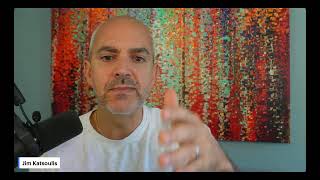
Jim Katsoulis explains why willpower and diets fail at weight loss. He argues you need to reprogram your subconscious through self-hypnosis and imagination, using the Goal Weight Pyramid: mindset, then lifestyle, then eating. He covers microbiome health, whole foods, and answers questions about GLP-1 drugs and habit change.
Chapters
It.
Hey, everyone. Welcome to today's program. Yourself then podcast. Today we're talking about using self hypnosis to lose weight. So I am a hypnotist. But I was thinking yesterday, really what I am is a self hypnotist. I don't introduce myself that way, but that's really what I said specialize in. And in my opinion, if you have any chance in hell of actually creating change in your weight and your body long term, you are going to have to understand how your mind works hypnotically and start to take control of that process. Which is another way to say, I believe that the most helpful and effective way for you to change your weight long term is, is to learn how to use the power of self hypnosis on yourself. And the reason I say that.
Okay, the reason I say that is because.
Your brain.
Let's start with this. Your brain has two brains. Let's think of it this way. You have a conscious mind and a subconscious mind. The conscious part of your mind is the logical, rational part of your brain. This is the part of your brain you rely on when you're dieting. Okay? This is the part of your brain that knows what you should do, why you should do it, and tries to get you to do it. It's where your willpower is at. The other part of your brain is your subconscious mind. And this is the part of your brain that runs all of your habitual thoughts, feelings and behaviors and really is in control of your weight ultimately. Now, the key thing to understand is that both of these parts of your mind run differently. So the conscious part of your mind can hear ideas and understand them in an instant. Right? You could listen to you watch a video, you can listen to a podcast, hear something that makes sense to you. You get it right away. The sub subconscious mind is a little different. You can't just say information to your subconscious mind and have it be absorbed the same way. If you did it, life would be really easy. If you learn that, you know, hey, eating this type of food's not good for you. If you stop eating, you'll lose a lot of weight. If you heard that, and then tomorrow you could just do it because you knew it was a good idea, then you'd have no problem losing weight. But what happens is your conscious mind hears that and says, that makes a lot of sense. Your subconscious mind does not hear it at all. And your subconscious mind just keeps doing what it's always been doing. So we need to understand this dynamic. I believe, in order to understand why your Weight is what it is and why you've struggled so much to change it. Because what you have done through diets is you have approached your mind as if it were completely conscious, as if all you need is a really good idea, and then you'll just do it. So you think, if I find, oh, this diet says, do this thing, that makes sense, I'm going to do this one. And the idea makes sense. And so what, you're just going to do it now? But you're not, right? The next day, you wake up and you plan on not eating any carbs, but then you start getting hungry for carbs, and you eat the carbs. And at the end of the day, this is every diet or struggle that you know what you want to do, you intend to do something, and as the day unfolds, you don't do that thing. Some other part of you compels you to do the opposite of what you intended to do. So how do we understand this? To me, this is the fundamental piece of truly transforming yourself into a thin, healthy person. And in order to deal with your subconscious mind, you have got to understand hypnosis, specifically self hypnosis, because the way you communicate with your subconscious, subconscious mind is, is different than how you communicate with your conscious mind. And just learning more information is never going to get you the results you want. You have so much information in your head right now about what to eat, what not to eat, why to do it, all these things. And that has not made the difference for you, because again, we go down to the core problem is that your issue is not that you don't know what to do, as much as it is that you don't know how to get yourself to consistently do the things you know you should do and not do the things that you know you shouldn't do. And this is where hypnosis, and specifically self hypnosis, comes into play, because it's your approach, it's your ability to influence the part of your mind that runs your habitual thoughts, feelings, and behaviors. And so the beauty of the subconscious mind is that once you install a new program in it, once you hypnotize yourself, if we want to use that word, once you train yourself to have these automated processes, it works beautifully. And you've done this already, you've done it with a number of things. But one thing that you've installed into your life, into your subconscious mind, is brushing your teeth. This is something you did when you were growing up, most likely, and you brushed your teeth at the same times. And now, as an adult, you just do it automatically. At those same times, you don't need to think about it. You don't need to put it in your planner. You don't need a reminder. You just do it. You don't have to think about it, right? Just that these times happen. And next thing you know, you're brushing your teeth. So the power of being able to influence your subconscious mind is profound. Right? The reason your teeth hopefully are in good shape is because one of the main reasons is because you installed this subconscious program to run automatically for you, and it keeps your teeth clean in the background. You don't have to focus on it. You can just rely on that habit. But what's happened through your life is that when it comes to eating, you have learned and been programmed to have all sorts of unhealthy eating behaviors. But these eating behaviors are running subconsciously in the background, just like your toothbrushing habit is. And what you've been trying to do is to consciously stop yourself from doing something that you automatically do. And what happens is it's an imbalance of power. It takes a lot of energy to try and stop your subconscious programming from running or to fight against them once they've started running. And this is what dieting is for most people. It feels like you are fighting against yourself. And in a way, you are. It is your conscious mind fighting against your subconscious mind. So in program yourself, then we're flipping that around, and instead we're saying, let's program our subconscious mind. Let's program in new thoughts, feelings, and behaviors that bring us towards our goal weight. So instead of fighting against those behaviors, we're going to train them. We're going to program them so that they work with us rather than against us. Now, once you buy into this concept, once you believe in it, how do you communicate with your subconscious mind? Because this is one of the most important things. Again, as I said, you can't just give your subconscious mind facts and knowledge. Again, you listen to a podcast. Your subconscious mind does not hear the things that your conscious mind hears. So the way to communicate with your subconscious mind is through your imagination. Imagination is the most powerful way to impact and program your subconscious mind, because your subconscious mind thinks in imagination, in pictures and sounds and feelings that you imagine. And so the more you begin to imagine yourself the way you want to be, thinking the things you want to think, feeling the things you want to feel, doing the things you want to do, the more you start to program your subconscious mind to do that, and the More you follow this process, what happens is you start stacking automatic behavior on top of automatic behavior that's bringing you towards your goal weight so that you put the energy and time into putting a program into your subconscious mind. Then it starts running automatically. Now we focus on the next one and the next one and the next one. But where you end up six months from now, a year from now, five years from now, is you're sitting atop of a bunch of automated programs that are driving you towards your goal weight. Just like you sit on top of your toothbrushing habit that drives you towards having clean, healthy teeth. It's the same type of thing. And so when you start looking at it this way, hopefully it starts to become clearer why you've struggled in the past and what you need to do to move forward in the future in the direction you want to go in. And if you want support in going deeper into this process, click the link in my bio or go to to program yourself in.com and go get the free hypnosis session I made for you. It's called the new Thin me and I think it's one of the best introductions to experiencing hypnosis because for most people, what you think hypnosis is and what it actually is are two totally different things. And so go get that hypnosis session and listen to it. It's a kickstart session. It is designed to calm you down, relax you, and get you fired up. And so that just by listening to this 10 minute session, you may find yourself moving through the day naturally making better, healthier decisions. Right, that's the idea. But go experience it for yourself and see what it's like. And on top of that, once I. Once you opt in, I also have a training for you I made called the three steps to mastering your weight. All of it's free. So go check that out and if you have any questions, feel free to ask them.
Lori Vickery says yes. Yes, exactly right. It's nice to hear some things that make sense. Right? I know this. This is what I do all day. And again, I like to think that I don't think of myself as a guru, but a guru technically is a bringer of light. I'm trying to bring some light into a dark area. And I think weight loss is a dark area that's very confusing and misleading. And so my goal in life is to be able to shine some light into this area and hopefully bring some clarity, some hope, and some better results. You know, that's my goal in life. So I appreciate that, Lori. Diane says this seems to me then, since I did without for so long, I think that is what my subconscious mind says, eat it while you can. So I need to play with mine, that I have it and won't go away.
Yeah, I get what you're saying, Diane, you know, but that's a different thing as well. The idea that, and I think this is so important to understand. Yes, all of us to some degree have this food anxiety that, that while food's in front of us, we should eat it now because we don't know if there's going to be any later. You have got to understand that all of us have that instinct or we wouldn't be here. The reason we're here is because our ancestors ate when there was food around. And that's how it's gone for millions of years. Humans only progress forward. The ones that progress forward are the ones that eat as much as possible when the food's available. Because we evolved in a food scarce environment. So in a food scarce environment, eating as much food as you possibly can, when you can eat it is going to be, is going to lead to an increased survival. So those genes are passed on. So here we are a million years later and when food's in front of us, we have this natural instinct to eat as much as we can while we can. But what's changed in the last 50 years is that now there's just a super abundance of food that's easily accessible for most people. It's hyper palatable and addictive. It's being constantly reinforced through advertising and marketing and it's just everywhere around us. And so when you put these two things together, you get the obesity epidemic that's going on. You get 75% of American adults overweight or obese. You have this million years of evolutionary eat as much as you can when you can, mixed with abundance of addictive foods. Right. A bad combination. So in my opinion, what we have to do to deal with that is we have to reprogram our mind. We have to update our software for the new environment we live in.
Or you can change the environment. You know, go live in the woods. You could do one or the other. You know what I mean? You can go live in the woods and you don't have to change your mindset at all. Go live in the woods in that, that mindset of eating everything possible and you can, that starts to serve you again. You see what I mean? So everything's relative to the context you live in. But we don't live in a natural environment anymore. We live in an alien environment. And so we need to upgrade our software to succeed and thrive in this new environment we live in. And we have no, there is no memory banks for that. There is no instincts to sit in front of a bunch of food and manage it comfortably, moderately. That doesn't exist within you biologically. And then on top of that, you've been conditioned since birth to just think on food and be obsessed with food and be surrounded by food and be addicted to food.
Now, we're all addicted to food technically, right? But I'm talking about above and beyond, you know? You know, and the addiction I'm talking about is that it goes beyond just the physical need for nourishment. It goes to almost a psychological addiction, right, that we start using food for emotional satisfaction, fulfillment, all the rest of it. Yeah, says this makes so much sense to the way I think. Yes. I mean, it does for most people. And that's why I get out here, because I know most dieters, again, very smart people I work with, and they're flummoxed, you know, flummoxed with what's wrong with them. Why can't they stick to a diet? And I'm here to tell you the problem isn't that you can't stick to a diet. Well, I mean, that is a problem, I guess, right, if you want to lose weight. But the problem isn't that you, you can't stick to a diet. The problem is that diets don't stick to humans. There's no, there's no diet for weight loss over the last hundred years that rises to the top of being effective long term. That's how ineffective diets are. There's not even one that really stands above the rest, which is crazy to think about, I think, you know, so, you know, what happens though, for a lot of my clients before we started working with me is that they will blame themselves. They beat themselves up, you know, and so I think that it's important for you to realize because most dieters won't ever really question the diet. And I don't mean the specific diet you're doing. I'm talking about zooming out and just considering the concept of dieting period, you know, because that's what I believe you need to do to have any chance at all of being able to live at your goal weight for the rest of your life.
What's up? XX says, hey, Jim, I was so hungry today, and no matter what I ate protein shake and rice, I'm still hungry. Then I eat fried chicken. And the hunger gone. Does that mean I gave my body the right food and nutrition it wanted?
I think this is, you know, wish. I wish. There's just simple answers to things, folks, okay? But that's what dieting preys on is your desire for fast, simple answers. You know, And I'm not gonna. You. I think. I think managing your weight reflects managing your life. It's. It's hard times out there. It takes work. I mean, it's. It's a. It's your weight. Let's think about this for a second. Your weight, to me, is absolutely fundamental to your life. I think it's the most fundamental thing, because as your weight goes, everything else goes.
And I'm saying this in a way that's maybe a little triggering for some of you because I'm not talking about how you look, and yet I am talking about your weight. Can you make sense of that? Is that possible? Yes. I'm talking about your weight and it being fundamental to everything in your life that matters to you. Because I believe that your weight is a reflection of the average food you eat, the way you're living your life. I think your weight's a reflection of that. And I think how you're eating is going to impact your energy, your moods, your productivity, your lifespan, your health, your quality of life. I just think. I think your weight by way of what you eat and live. You see what I'm saying? So I'm not saying it's how you look is dictating your lifespan and your productivity, all the rest. You understand that? I'm not doing that. What I'm saying is that your weight is a reflection of how you're eating and living. And if you're overweight, potentially, there's a good chance that it's because you're eating a lot of. You're overeating. You're stuffing your body with too many calories. A lot of those calories are processed calories and foods. You're probably not sleeping enough. You're probably dehydrated. You're probably stressed to the gills. You're probably not moving enough. Your mind's probably spinning all over the place. And it's showing up in your weight, and it's showing up in your other areas of your life. It's not just the weight. It's showing up when you eat that way, when you live that way. It's showing up in your work. It's showing up in your ability to be the parent you want to be the partner you want to be. It's showing up in your ability to run your business, to study in school, to be a good partner for whoever is in your life, to be a good friend, to be a good family member. How are we separating these two? You're not gonna. In my mind, to me, they're directly related. So, you know, for me, weight is not primarily about what you look like. It's about what you are like. And I think the weight reflects it. I. I'm not saying there are some outliers. No matter what you do, you're okay, I'm sure, right? There's a lot of people in the world. For the vast majority of people, your weight is directly reflecting what you're eating regularly and what you're, how you're living. And if you're overeating processed foods, you're not at your best. Never mind how you look, you're not at your best. You're not setting yourself up to live as long as you possibly can have the best quality of life. So I think that that's the key.
That I like to look at. So that being said, you know, with X, I kind of got way off track here with your question. Does. Does when you get hungry and you try different things and you finally ate fried chicken, the hunger went okay? Well, you know, what's that all about? Well, there's different types of hunger, you know, so again, without having a bit more context, I don't know, you know, maybe you just, you stopped eating fried chicken for the last month, and now it's a new month. Here's October 1st, right? So get ready, folks. October 1st on a Wednesday. So maybe you were doing really great in September. Now October 1st is here and you fall off track. I. I mean, again, there's so many reasons why you can fall off track. There can be so many reasons why all of a sudden eating fried chicken put your mind at ease. Part of his physical, part of his mental and emotional. So I wish I had a more straight answer for you, X, but we would need to explore it more, right? What happened last time you ate fried chicken? What's the context? This whole thing happened within when, you know, how often do you eat fried chicken? How important is fried chicken to you? He said, I never eat it. I never eat it. Okay, then that's a different story, you know, so all just depends.
I really, I wish I could give you just a more satisfying answer, but sometimes they just aren't satisfying answers in life. But it gets back again, who gives a. If they're Satisfying answers. This is so important that you really got to stay focused on it. People, a lot of dieters, kind of like go, the ups and downs of motivation happen because most dieters are primarily thinking about weight loss through the lens of I want to look better and your desire to look better.
Your desire to look better and the importance of that ebbs and flows.
Have you not noticed that? I mean, you always want to look better, right? That, that, that always is there, but your real desire and how actually important it is to you comes and goes. And when it comes and it's really high, when your motivation to look better is really high, then you start a diet for a little while and do it for a little while, but it always kind of fades back down again and then you stop doing that. And you're constantly going through this up and down a motivation, but it's because you primarily think of your weight loss motivation as looking better. You know, I, I show you this, right? So I'm program yourself. Then we got the goal weight blueprint, right? 144 pages of magic, magical road maps that you fill out to figure out what's going to work for you. But one of the things we do in the program is we follow the goal weight pyramid. So you can see here, here's the goal weight pyramid, right? So we have mindset on the bottom, then lifestyle, then eating, right? So we have a, it's a holistic, comprehensive system. What should I do to, to get to my goal weight and stay there forever? I need to figure out my mindset, my lifestyle, my eating. Now, if we go deeper into each one, right? When we talk about mindset, the very first thing we're doing is motivation. What's your motivation? And we deep dive into motivation because I bet 30, 40 years of dieting out there. I bet 30, 40 years of Dieting. You don't even know how to motivate yourself to lose weight, which is the core problem you're dealing with. Sometimes you're motivated and then it fades and you don't know how to get yourself, you don't know how to maintain the motivation. Tell me that's not one of your core problems, right? But my question to you is 10, 20, 30, 40 years into dieting, obsessively thinking about this.
How do you motivate yourself?
I want you to notice that not only do you not have an answer, but I also want you to recognize that you have no idea how to find the answer. And this is after decades of dieting. So at what point do you figure out how to motivate yourself properly or do you not think that's important? One or the other. Right, so again, in program yourself then, one of the main things I want to put across, and I don't care if you get program yourself then or not, okay? But the point I want to make is that you have been attempting to do this with both arms and both feet tied behind your back. You have, I always say this, right? That, that basically the way you're approaching weight loss, right? We look at the whole goal weight pyramid, you're you doing about that much. Just tell me what to eat. Just tell me what to eat. You know, I'm just gonna force myself to not eat carbs anymore. I'm gonna force myself to not eat for 16 hours. That's about what you're doing for weight loss and that's about what you've been doing for, for decades. About this much, let's be honest.
The truth will set you free. I don't want you to feel bad about the honesty. I want you to feel, oh, no one, well, no wonder I haven't gotten the results I want. I'm only doing this much of it. Have you ever, have you ever focused on your mindset? Have you ever focused on your motivation, on your self image and identity, how to change it into that of a thin and healthy person, on your habits, how to strategically deal with your habits, Transform your unhealthy habits into healthy ones? Do you have any clue how to do that? Do you have any clue how to deal with your emotions? Genuinely feel the emotions you want to feel genuinely without food, Deal with the shitty emotions you don't want to feel in a genuine way without food? Have you ever deep dived into that idea and concept? Do you have any strategy or plan to manage your emotions on this journey? Do you not think that's important? Do you not think that dealing with boredom, eating, stress eating, do you not think that's important to your success with your weight? You either do or you don't. And if you don't, okay, fine. But if you do think managing your emotions is important, okay, what, what have you done to learn how to manage your emotions? A and B, if you haven't done anything, where would you even go to begin to learn how to do that?
So you start to see this isn't a you problem. The weight thing, the weight thing's not a you problem. It's not, it's not a reflection of your willpower or your self control or your commitment. It's a knowledge gap. You don't know any of this. You have not done any of this. You've been dieting for decades and you have never even thought any of this stuff, never mind do it. You never thought about to change your mindset and your lifestyle and how to structure your eating strategically for you. You've never done that. I know you haven't.
And so again, I'm not saying this to be negative. I'm saying it so you can appreciate the main reason you have not gotten the results, because you're under the delusion that the main reason you're not getting results is because you don't have the willpower, commitment or the self control to stick with something.
And I just can't even. I've run out of words to express how wrong that is. You know that the main problem is that you just have no strategy. Anyways.
Yeah, if anyone's got any questions, feel free to ask them. And what's up, Jen? How's it going, Jen? Jen over there. And YouTube land.
Yeah, quiet day, maybe an early day, we'll see. So, yeah, Ben's got any questions, feel free to ask them. Any weight loss questions are fine.
I, yeah, I work with people in every, every area, right. So I've worked with keto people, carnivore people, just literally every type of diet. I've worked with these types of people. So the questions do not need to be about program yourself then, or mindset or anything else. You know, I get a lot of questions here and it's fun to go through them because again, even when you hear typical dieting questions, you're so used to hearing the exact same ideas when it comes to weight loss. It's really a poverty of ideas when it comes to weight loss. I would say. Now you say what, Jim? There's a different idea for weight loss every other day. I don't mean that because I think that most weight loss conversations are happening within the dieting paradigm, you know, so for you to understand weight loss, you almost have to speak like a dieter, right? You just tell me what to do and then I'll do it. That's basically your plan in a nutshell, right now. The plans change. I say this all the time. It doesn't matter what the diet is. It could literally be any diet you can think of, literally any diet you've ever heard of, ever will hear of, or know of now. And they're all exactly the same in the sense that what's exactly the same is your mindset. It doesn't matter what diet you'll ever do. Your mindset is the problem because you could think of Jenny Craig, Weight Watchers, Carnivore, vegan, they're all exactly the same because you're going to jump into all of them 100% on the first day. It's an all or nothing mindset. It's an all or nothing philosophy. And so there's so much about how you think about weight loss that has really been put there by the diet industry. And the diet industry is not your friend. The diet industry is a branch of the food processing industry. Weight Watchers was owned by Heinz. Jenny Craig was owned by Nestle Atkins Food Products, owned by the same company, owns onions, pretzels and Cinnabon. Ben and Jerry's owns.
Slim. Fast is owned by the same company, owns Ben and Jerry's ice cream. You know, so.
Tiffany says fixing hormones, gut, health and emotions is an amazing start after aligning with identity of a person. Like living at a healthy weight. Yeah, absolutely. Tiffany agreed. Agreed. I can't agree with that more. You know, I think, yeah, getting your hormones under control, you know, getting your gut health under control, all of those things are just absolutely essential. I think a lot of people, I think a lot of times people think of their body almost like, like when you have, you have a car.
And you think of your car differently when it has 5,000 miles on it and when it has 150,000 miles on it, right? You think like, okay, the car, it's worn, it's different, you know, and how you drive it and how you maintain it and service it and all the rest of it's going to factor into how it is at 150,000 miles, right? But you got to think of your body the same way. You know, I think a lot of people, intuitively, they think of their body as running the same way as it did when you're in your 20s. But if you've been spending 10, 20, 30 years eating.
The systems in your body start to operate differently. You know, if you run a car to 150, 000 miles and you only change the oil every 15, 000 miles, right? The car is gonna, it's gonna show that. And I, I don't think a lot of people really take into account that your body.
Has systems in it and they rise and fall to the level of how they're being serviced and treated. Now the good news is that a lot of the times you can improve all these things, okay? But we need to think deeper because I think a lot of times people just think I'm gonna cut calories, Okay? I mean, yeah, cut calories, sure, but that's just one piece of the puzzle. What about your metabolism? What about your mindset? Right. On and on. So I do think that a huge part of this is recognizing that as you start to improve.
Like, it's not just about weight loss, it's about improving everything that's going on in here. Start to nourish yourself with the foods that your body really wants, give yourself the micro nutrients that your body craves and desires, and your body starts to operate differently. Start putting more fiber into your body, more micronutrients into your body, and your gut starts to transform. Transform.
What? It's like, almost metaphorically, it's like if you have that150,000 mile car, it's like you start like.
What's the word? Oh, my God. Blanket on it, restoring it, you know, you take the. I don't know. Take the what? What are we going to restore? Whatever you want on the car, you know, the new tires on it, you know, we can't necessarily put new stuff on us, unfortunately, but we. Things, you know, you can so dramatically improve yourself that it's almost shocking how much better you can feel. You know, but when you approach it holistically, it's more. There's a bigger goal at stake than just your weight and what you look like. You know, I want you to look great too, but Jesus Christ, it's. It's like, don't you want to have energy and feel good? You know, don't you want a calm, quiet mind?
Don't you want to feel comfortable in your body because you can move comfortably and you have flexibility and strength and, I mean, don't you want those things, too? Is everything second fiddle to how you look?
Well, if it is, it's not going to be for long because as you get older, I'll tell you what, the functional stuff starts becoming a whole lot more important than what you look like.
You know, so it's just a matter of time till you get there. It's just. Don't wait till it's too late to get there, you know?
Funny.
Yeah. Tiffany says hardware and software. Yes, exactly. Agreed. Agreed. Hardware and software. And a lot of the hardware you can kind of upgrade, you know what I mean? And the biggest piece of hardware you can upgrade is your. Your gastrointestinal tract. I think that's the best thing to focus on your microbiome, you know, Upgrade that microbiome of yours. That will serve you better than almost anything. Because your microbiome is. To me, it's the ground. It's the processing plant. Think of it that way. Right, so you got your gastrointestinal. Oh, I'm not gonna do it. I can't, I can't forget where it is. But I'm blanking on the numbers. Just forgive me, but you'll get. The general idea is that you have basically three exposures to the world. And one of the primary exposures we think, we think to the world is our skin. We think of our skin exposed to the world, but your skin is. Now this is where I'm going to screw things. I'm not even gonna say because I always screw it up. So silly. It sounds, it sounds goofy. What am I saying? Okay, so you have your skin, but that's a relatively small amount of exposure to the world compared to your lungs. Your lungs are number two, right? That's your number two exposure to the world. If you took your lungs out of your body and ironed them out, there's a lot more surface area of your lungs than there is of skin. So in reality, you, your lungs are a bigger source of exposure to the environment than your skin is. But there's a bigger, a way bigger, way, way, way bigger exposure to the world that we, you don't really consider a lot, you know what it is, I just said it, right? It's your gastrointestinal tract. If you took your gastrointestinal attack and iron that all out, it's exponentially bigger than your lungs, which are way bigger than your skin.
So you know another way to think about. It's kind of like if you could turn yourself inside out, if all of a sudden your gastrointestinal tract was, became your skin. You know, you'd be like a 50 foot tall person. I just made that up. So I don't know if that math works out. But the, the idea is the same, that your main exposure to the world is through your gastrointestinal tract. And we don't think of it that way a lot. And a lot of times we're just putting trash in there, you know. And the main thing it goes down to is in your gut. I blow your stomach once you're, you know, the intestines start. That's your gut and that's what's doing. That's, that's running your whole life. That's where all your power comes from, right? All the power you have, all the thoughts you have, all the movements you do, all the breathing, it all comes from this process. That's happening in your gut, and you're not even. You're not the one digesting your food. It's microbes. You have a microbe community in your gut that digests the food for you. That's your microbiome. And there's different types of microbiome. So if you're consisting on fast food, you're gonna have a specific type of microbiome that's gonna crave fast food. By the way, very impactful on your thoughts and your feelings. They call it the second genome. It's that powerful on your decisions and on what you think and feel.
If you have, you know, if you have a whole natural food diet, you have a different microbiome.
And so this, to me, is the core level of the physical transformation of going from overweight to thin and healthy is this focus on the microbiome, you know, because it changes so much.
They've done studies in mice now. Again, you know, this microbiome is relatively a new science because they've known the microbes were there, but they didn't realize that they're all different populations of microbes until they could do genetic testing. So it's a relatively new science, but it's pretty interesting, and it does explain a lot of unexplainable things that have to do with weight. But one of the interesting things, at least with mice, is that they will have obese mice and thin mice, they will transplant their microbiomes, and what they will find is that they will feed the mice the same amount of food, but they will extract different amounts of food out of it depending on the microbiome. So originally, the overweight mouse may extract 900 calories out of a thousand. The thin mouse might consume a thousand calories and only absorb 700 of it. Right? And when they flip the. When they switch the microbiomes of these mice, the same thing happens for a little while, right? The microbiome is extracting less of the food out for the thin one and more for the overweight one. So it's very interesting. And again, this goes back to the idea that weight loss really isn't about eating less, it's about consuming less calories. And when you start to understand calorie density and your microbiome, what happens is it opens up the door for you be able to eat more food and feel completely, totally satisfied while reducing calories. And in my opinion, that's the holy grail of weight loss, when you can reduce your calories while you feel completely satisfied. And the most effective way I know to do that is to again, focus on your microbiome, consume more whole natural foods, just to keep it simple. Yeah. Jennifer says all or something is so much easier and happier. Yes, of course. And Jen's in the program, has been living at her goal weight now for a long time. And so, yeah, all or something is absolutely the way to go. Dieting is all or nothing and they've really gassed you all up. All or nothing is not some miracle. You know what I mean? It's clowny. I'm just letting you know because I know a lot of people take solace in their all or nothing attitudes and really feel proud of their all or nothing attitudes. Great. Because they'll say things like, well, when I do something, I go all the way. When I do something, I do it for real. I do it serious. When I. I'm not going to start my weight loss now, but when I do, I'm going to do everything perfect, you know, and it's like that's the most ignorant you can say, you know, because people that say that never end up doing anything most of the time, you know, So I find all or nothing most of the time serves as a great. Distract her from your per. Your procrastination, you know, it's. Yeah, I'm gonna wait. When I do it though, I do, I do everything. I jump all the way in. Great. That was the last time you went all the way in. That was four months ago. How long did it last? Two weeks. You know, so all or nothing's all or something is the way and all or something is what we follow and program yourself. Then Miranda says, hi, Jim, long time listener, first time caller. Any tips to avoid takeout for dinner once the workday is over? I'm tired, don't want to cook or eat a meal prep. I reward my hard work with junk food. Great question, Miranda. Right. So again, we want to understand this and that's the first step in program yourself. Then when it comes to the eating component here, the very first step is awareness, followed by structure and optimization. But first step is awareness. We can't fix what we don't know is broken. And believe me, we miss a whole lot of what's broken. Please understand that. Right. I know most dieters really are under the delusion that they know what's going on and they know everything they're eating. They know what the problem is and they know what to do to fix it. Dieters couldn't be more full of and wrong if they tried. Like, it's Literally impossible. Now, let me just. I may sound negative to dieters. I love dieters, okay? I love the. The center, hate the sin sort of thing. Right? Like, I love dieters. That's what I'm here for every day. I hate the diets. I hate that mindset. It's dumb. It's bullshit. You know? So.
So, yeah. Okay, so first steps. Awareness, Right? So great job, Miranda. You're getting to be more aware of this habit, right? So what I want to do is, any tips to avoid takeout for dinner? First thing I want to notice is how this pattern runs, Miranda. Right. So are you getting takeout seven nights a week? That's the first thing I want to know. When is this most likely to happen?
Now, I know, you know, every week can be different, but I'm just talking the general pattern. Are you getting takeout seven nights a week? Five nights a week? Three nights a week? That's the first question I want to ask. Right. Let's make this accurate. A lot of times our brain just generalizes. Oh, I keep eating takeout every night. Well, we get into the details that it's three nights a week. Okay, well, three nights is a lot better than seven nights. All right? And we've got some good things to model, because if you got four nights a week where you're not doing it, great. You know? So first thing I want to know is where. Where are we at with it, you know? Now you say, okay, it's three nights a week. Great. What? Three nights. Typically, we want to understand it. This is the awareness phase. You need to understand it. No, folks, you can't. Dieting is trade. You trained you to say Miranda. I bet Miranda has said a million times in her life, I gotta stop eating. I gotta stop eating takeout. I gotta stop eating takeout for dinner. I gotta lose weight. I gotta stop eating takeout. Right? It's an all or nothing mindset. You see, that all or nothing thing shows up constantly. It constantly shows up. You dieters, you think. You cannot even think. Not in all or nothing. It shows up in everything you say. And I'm gonna bet, Miranda, that you're. You have said to yourself a million times in your life, I gotta stop eating takeout. That's okay. So right off the bat, I'm saying, no, you do not need to stop take eating takeout. No, you don't. What you need to do is we need to reduce the number of times that you eat takeout. So right off the bat, it's a something, not an all. And we Give ourselves some options. We give ourselves the ability to work on it. Because the alternative is that I got to stop being takeout. Okay, It's Monday. It's October 1st. Time to stop being takeout. And now it just becomes an endurance test. How long can I not eat takeout? How long can I not reward myself.
Until I do reward myself with takeout food? So again, I want to get more detail, Miranda. Start. Start thinking. Start understanding the process. When does it show up? What triggers it? Right? What triggers our behaviors? Typically, it's location. People that are there or not there or alone or with certain people that can trigger us. Time of day, time of week, time, a month, and our mood and hunger. Right? Those are the big five. And so I want you to really pay attention, Miranda, to the habit, to the behavior. When did it show up? Start to notice what's going on, because it'll leave clues. You'll start to realize, just for example, oh, it's usually Monday, Tuesday, and Wednesday nights, you know, and, well, why is that? You know, we start to go into it. How can you set yourself up for success on those nights? How can we go from three nights to two nights? So we'll start small.
Again. That's program yourself Then. Program yourself then is really built around the concept of 1% better a day, Whereas dieting is built around the concept of 100 better in one day.
Again. Hey, listen, if. If I could actually have the choice, if. If they were both legitimate options, I would take the 100 in one day too. You understand? Of course. Who the hell doesn't want instant results? Everyone wants instant results. Me included. My problem with it is that I'd ever see instant results ever work anywhere? You tell me what in life you can just learn in one day and become a master of. Please let me know is there anything. Please, someone, please, someone tell me what's something you can do in one day and just get. Be perfect at it from that point forward. I've never even heard of this happening.
Well, Jimmy just gotta want it, huh? What's that mean? So, Miranda, pay attention to what you're doing. Get some better understanding of it, and then come back. We'll think about it. That might help you out anyways. But then come back here and let's talk about it some more. What's up, Kiki? Kiki says I changed my mindset from losing weight to eating for health. While I have lost weight. No longer being pre diabetic was what had me doing a happy dance way more than weight loss. That is awesome, Kiki. Proud of you. It's so great. I mean, this is. This is the stuff that makes me so happy. It's when you change your focus from just looking better. Now, listen, we can still want to look better, right? So. So Kiki can still. She can eat for health and still want to lose weight and look the way she wants to look. You can have both of them. What I'm saying, though, is dieting has like, exclusively. It's just always about what you look like. And I'm telling you, it's not enough motivation. Not for most people. And I know you're going to argue with me. I know people argue with me about this all the time. Oh, no, Jim, I really want to lose weight. Well, you've been wanting to really lose weight your whole life and it hasn't worked. So what are you telling me? You know, motivation is so funny to me because people will sit here and argue with me about their. Oh, no, Jim, I'm really motivated. Well, okay. Well, how much weight did you lose this month? None. Well, what have you done to lose weight? Well, not much. Well, then you're not motivated. Motivated is real, crystal clear. Don't confuse it. You know, you're either doing things to get the result you want or you're not. Let's be honest. And most people who think they're really motivated to lose weight are doing nothing. That. How do you square that in your mind? What does motivation mean if that's the case? So I'd much rather look at my situation, say, you know what? I'm not really motivated. I'd like to lose weight, but not really that much because that's where most of you are. Listen, how about this. You all weigh what you want to weigh. Y' all weight what you want to weigh. At the end of the day, I want to weigh what I weigh, and I weigh exactly what I want to weigh.
It's not. And by the way, it's not that you don't want to lose weight. I know you want to lose weight. I get that. What I'm saying is you want to keep eating the way you're eating, living the way you're living more then you want to lose weight.
Is this not true? Are you going to sit there and tell me that's not true? Are you? I have found it to be very true. And I think it's the initial thing you gotta accept in order to get on a better path. You don't know how to motivate yourself. Again, I bring it back. You know, I don't know, let's see, let me just see something real quick here.
Yeah, we got five pages on motivation in this, this blueprint.
Five pages, right? Powering your, your weight ain't powering your weight journey. How are you powering it? Because you want to wear your skinny jeans. Well, would you want to wear a van suit to the beach? Is that your goal? How's that working for you? It didn't work in your 20s, it didn't work in your 30s, but now it's going to work in your 40s or it's going to work now in your 50s. In your 50s. Now you're really motivated to wear Bandster to the beach, huh? What does that mean? You know, you've got to reflect on your motivation because if you're not getting the results you want, there's a great chance you're not really motivated, which is a good thing.
Because if it's not that you're motivated, you can fix that if you think it's just because you're broke and you can't fix that. And I promise you, I promise you, it's your motivation more.
Yeah.
Lena says being too comfortable, imagine that means like I'm too comfortable to want to change.
And I think that's, I think that's legit. I, I just, I think it's honest, you know, I think, I think most people, I think the vast majority of people that are overweight and want to lose weight, they want to lose weight. And now again, this is why I don't blame people. I want to understand that. Right. I think there's, it's a two parter meaning a. I think your motivation's crap. I think most of you don't even know how to generate the right motivation. I think that's a big problem. But the flip side of that coin of why you're not doing stuff is also because the only thing you know to lose weight is this extreme shit that you hate doing too. So it's a, it's a two sided coin to not get results. And the diet industry, again, this book will be coming next year, but it's all about how the diet industry amongst some other ones has really screwed you. The diet industry is not to help you live at your goal weight. I just can't stress this enough. The diet industry is, is if foreign.
The cigarette companies a hundred years ago had started.
Lung exercise programs and they told you to smoke. You know what I mean? Like what I'm telling you is that these diets are literally created to get you to be Obsessed with food and feel out of control and never get any long term results. I don't know how much clearer I can say it. And if you don't believe that, please let me know. Please tell me there's a diet out there that really is set for you to succeed long term. Please let me know the name of that diet. I would love to know. I'll let people know about it. I'm not a gatekeeper. I don't give a. I don't care if they came out with a diet tomorrow that genuinely helped people live at their goal weight in a healthy, natural way. I would, it was the most amazing thing ever. I would tell you to do that. I got a million ways I had that conversation today. I was like, I didn't choose weight loss, weight loss chose me. I genuinely mean this. There's a lot of other ways to, to get, you know, to, to, for, for me to spend my time, personal development amongst them, you know. So again, if, if you know of some great diet, let me know.
Cindy says you're right on point. Thank you, Cindy. Appreciate that. Jennifer says thoughts on probiotics. I don't think about probiotics at all, to be honest. I, I think first of all what I do know is I have studied the microbiome and what I learned from that is that they don't know a whole lot about it right now. It's a relatively new science as I was mentioning. So the idea that they have any real sense of what pro or prebiotics do to you, I don't even believe it. I don't even believe it. And so what I do is I put my faith in whole natural foods and I eat a lot of whole natural foods regularly and that's where I've put my faith in. So to be honest, I don't even think about probiotics. So I'm completely ignorant to know if they're much value or not. I don't believe, I wouldn't believe if I even read about them, most likely unless it was like a real scientific study on it. So I think just again, I will save my money on pro prebiotic and I will put that money into whole natural foods that not only have probiotics but also have micronutrients, fibers, all the things that our bodies have been living off of and thriving off of for millions of years.
Thank you, Jim. You take out almost five dinners a week, Monday through Friday. It's easy because my husband is always ready to go pick it up. Not blaming him at all. It just Makes it even easier to opt for that. Yeah. Miranda. Okay, so great. And I'm glad you answered this, because what I want to point out is that the process of dieting would say to Miranda, oh, we'll just stop eating takeout.
Right? I mean, it might be. We might dress it up a little bit with some other stuff, but at the end of it, it's basically, miranda, stop eating out. Stop eating takeout. That's what you're going to hear, Miranda. Okay? So to me, I want to understand the pattern and habit. I want to understand all the different pieces of it. I want to understand the husband's piece of it. I want to understand the easy piece of it. I want to understand the emotional pie. It. I want to understand just how it fits into my life, right? So five nights a week, that's a big. That's a big undertaking. Okay? So, no, no, Miranda, you're never, ever, never going to just stop eating out takeout five nights a week. That's never going to happen for you. You're never going to wake up one Monday and then just not eat takeout ever again. Let's just start there, right? So I'm going to put a burst, a bubble of all you d. There's not a chance in hell that Miranda just wakes up one Monday and says, you know what? I'm never going to take out again. Because what's going on here is that as all you dieters do, you focus on what you have to stop doing. I have to stop doing takeout. But do you understand that you have a subconscious program back here that runs your takeout habit and routine?
Let's just say I magically, magically could do mental surgery, go in there and take that whole program out as if you'd never eaten takeout in your life, you're still gonna the same problem. What are you gonna do tonight?
You see? So it's not so much. It's not so much that you can't stop yourself from getting takeout. The bigger issue is that you don't have a replacement strategy.
Right? You gotta. You got a corrupt program on your computer. Let's take it out. But now how you gonna. How you gonna do the work you need to do without the program? You need to find a new program. Does that make sense because you died or. You have to understand that so much of your focus is on stopping doing things. But you ever heard the saying that nature abhors a vacuum, so does your mind. So if Miranda over here all of a sudden just removes her strategy for Eating dinner Monday through Friday. Well, what is she gonna do? And I know you said, well, she'll just make food. How? She hasn't made food consistently. She doesn't know what to. She doesn't have the ideas in her mind of what to make. She doesn't know how to shop for them. She doesn't know how to cook them. And fit that into her time. These are all things she hasn't done, because most of our behavior runs on autopilot. It's muscle memory. She's got the muscle memory for takeout. She doesn't have any muscle memory for making dinner. She doesn't even have muscle memory for thinking of dinners that she could make, probably. And then if she does think of dinners to make, she probably has the muscle memory to say, oh, my God, I don't have time for that. I don't even know how to do that. This is what we're really up against. And this is why you dieters keep failing. Because you. You make it seem. Again, it's not your fault. You've been conditioned to think. It's so simple. It's just a willpower thing. Just stop eating out at night. Okay, well, what the am I gonna do then? How am I gonna feed myself five nights a week? What am I gonna make?
What do people say? I. I don't even know. Do you think. What, you're just, oh, just start making something. What? What? Let me put it a different way, because dieting has taught you to simplify this whole process. It's more complex than you think. But it's like if I say, look, I want to stop writing with my right hand, I write with my right hand, I want to stop. Okay, that's great, right? That's half of the equation. I'm going to stop. No more. Well, how am I writing, though? And we forget the other piece. Well, I got to write my left hand now. So stopping writing with your right hand is half of the equation. The other half, the more important pieces, actually learning how to write with your left hand. And so every time you want to change behavior, specifically when you want to stop a behavior, you have to understand the flip side of that is you've got to learn a new behavior.
And if I said to you, okay, stop writing with your right hand from tomorrow on, you know, you get a better sense of how hard that is. I'll give you something easier. Just start brushing your teeth with the other hand. I dare you. I dare you to start brushing your teeth with your hand from now on. You don't give a shit, right? You. You don't care what hand you use. Go ahead, just use your other hand. I dare you. I dare you. And I'm gonna guess you're gonna have almost zero percent success brushing your teeth with the other hand for more than two seconds, because you will do with the other hand. It'll feel weird and you'll stop doing it.
So again, we're underestimating what we're really looking to do here when we're looking to create change. So what I would say to you, Miranda, and Miranda, I know. Tell me. I don't know if you're still here, but tell me, Miranda, that it's not true that every time you've thought about this takeout thing, you said, I got to stop eating takeout. You try to completely stop eating takeout. Tell me that's not the truth. I know it is. And I don't know, Miranda, by the way, but I know dieters. I know dieters. I'm the diet whisperer. I know what you're thinking more than dieters do, by the way.
So what I would say, Miranda, if I were you, and this was my situation and is I would look to say, okay, let's focus on Monday nights. Let's start the week Monday nights. Let's make dinner. And I would say, what's a dinner I can make on Monday nights? And I would prepare for Monday nights, and I would figure out what I was going to make something relatively easy, relatively enjoyable. And I would focus all my energy on getting Monday nights down and not just not eating takeout, but having something that I genuinely enjoy that's easy to make. It has to hit all the criteria. It can't just be healthy. It's got to be something you enjoy relatively. It's got to be something that's easy to make and source and get.
And. And I would focus on Monday night, get some. Get some momentum with Monday night and then start going into Tuesday once you get some momentum with that, and then on and on. So that'd be my suggestion. What's up, Jen? Jen says meal plan on the weekend, shop for the stuff pre. Make a huge salad, cook in bulk, and. Or use the crock pot. Enjoy experimenting. Yeah, there you go. So there's some even more sub strategies that you could absolutely use from Jen, and they're great, you know, and again. But those may or may not work for you. Okay? So again, Miranda, you've got to take into account your own reality, your own situation. Oops.
Yeah. Here goes, Miranda. Miranda says you're right, Jim. I do try to meal plan and I'll write Monday through Sunday with zero Takeout incorporated. All or nothing, it seems. Oops. Thank you. Exactly. So again, it's, it's not a big deal. Once you recognize it, then you can do something different, you know. So I'm really happy you asked this question, Miranda. I really appreciate you giving some feedback with it because again, what I'm trying to say to you all is that the main source of so many of your weight loss struggles is your mindset and how you're approaching things, you know. So Miranda, every time she's tried to deal the takeout thing, it's the entire week and she's trying to go from five nights of takeout, which she's done for probably years, to five nights of making meals. That is so overwhelming, you know, So I think Miranda. And by the way, it's so overwhelming and you've tried it and it hasn't worked. And so now you go into it not even believe it's going to work anyways, you know, and it becomes this self reinforcing of cycle of failure. So again, Miranda, what I would suggest is that you start with Monday night. Let's just make it simple. Let's make it easy to win. Okay? This is, this is part of the 1% better strategy. You know, it's not, it's not 1%. Like it's not literal, you understand, it's a concept. But we're looking to do little things that are easy to change. Changing five, going from five nights a takeout to five nights a home cooked meal is so hard. That is so overwhelming and stressful to start with one night on Mondays. Now I like Monday. Why do I like Monday? Because I always want to start at the beginning. Because there's a great chance that if you get Monday night down, it's going to impact Tuesday. Because when you start, you know, feeling good and healthy at the beginning of the week, there's momentum from that. It might last a day or two. So that even if you get takeout, that's another thing I would do. I would also again, all or something I would start to look at like what takeout do I typically get? What are some healthier options? What are healthier options at this place? What are some other places that have healthier options? There I would look that up too. But I would work with myself and I would very intentionally not overwhelm myself with this, which is what you've been doing without realizing it. And now that you realize it, you can avoid doing it. And I think if you focus on Monday, for me personally, I'd focus, I would focus October this month I would focus on Monday. I would try some different things and figure out what works best for me on Monday once I got a hand. But if you do that for the whole month of October, I guarantee you you will have a bunch of different options to figure out which one works best. And you'll feel really good about it. It'll be easy. It'll be be part of your routine. Great. Then November, I'd focus on adding to Tuesday. Then in December, I'd go to work on Wednesday.
And then if you wanted to, you can do Thursday and Friday. I might not even touch those. You know, I might still get takeout again in Program Yourself then we have clean and pleasure days. So.
I smile because I, I, I've been on this Program yourself didn't journey for so long.
It's, I've been literally, I, I've literally, I've had Program Yourself then as a program for over 20 years at this point. It's crazy and just the, the transformations and iterations of and all the rest are just amazing. But I'm about to hit a whole nother level where there's going to be books and there's just, there's more pieces of the program that are accessible to more people. Because to be honest, I mean, most of the program, well, I mean again, money is a relative thing, but it, but it has been, you know, three to five hundred bucks just for the program and then to work with me is a lot more. But this, finally there's kind of this, this other ends getting filled in where there's lower prices. And I'm really excited because I want people to get more access to this information in this way too. And it's going to help so many people. So anyways.
Leslie says my daughter had a high A1C.
Not type 2 diabetes, but close. I changed our diets to clean eating no processed food. I can name every ingredient. We eat down 69 pounds in one year. Leslie, that's great. Great job, Leslie. So I'm proud of you again. It's amazing. The power of clean, healthy, natural food is just so amazing.
I just think, you know, it's really your secret weapon. So that's great job, Leslie. I'm proud of you, proud of your daughter. Happy for you all. Lena Smith says yes. Going back and forth to slimming world for 16 years. I'm bigger now than when I started. I'm sorry to hear that, Lena. Again, Slimming World Weight Watchers, they're.
They're just. They're not enough, you know, and they're probably two of the better ones, to be honest. I think Slimming World and Weight Watchers are at the top of the list just because of the social component to it, but they just don't give you what you truly need. You know, they're not showing you. You're not. You're not getting this. This goal weight pyramid information, you know, which is a holistic plan. You know, I think you need a holistic plan. I think if you have any chance of living at your goal weight, not just getting there, but living there, I think you've got to change your mindset, lifestyle and eating strategically, and you'll never convince me otherwise. I've never seen it happen the other way, to be honest. So.
Yeah, Leslie says we still get takeout once a month. Yeah, smart, right? Again, it's balanced, and everyone's balance is a little different, but pretty much everyone I've ever seen needs some balance. Yeah. What's up, bookworm? Bookworm says Jim. What is the behavior of people to lose weight when on GLP1 then? What is the behavior of people to lose weight when on GLP 1 1? I'm not sure what that means. What is the behavior of people to lose weight when on GLP1s? I mean, the behavior of people on GLP1s is they just. They consume less food because the. The GLP one makes you feel like you're full all the time, you know, and so you just. You don't want to eat as much. So the behavior of people on GLP1 is they consume less food because now the GLP1 makes them not feel so hungry. So. But there's other ways to do that too, you know, and there's other benefits you can get and. And I don't know if, you know, we'll see. We will see. With the GLP1s, it's always exciting when you're losing weight, so that's not really a good time to see what's happening here. But my. You only lose weight on GLP1s for 16 months, and then it stops. Just so everyone knows. Okay? All the. All the GLP one so far have shown that 16 months of weight loss, then it stops, okay? And then you have to stand it forever to maintain. What I'm curious about is when people get to the. They stop losing weight.
Now, I'm not talking about the people that are obese that stop losing weight and they're still obese. I'm talking about people that have lost weight, get to their goal weight. Let's just say they get to their goal weight. Okay, but now they're not losing weight. Losing weight is a dopamine release. Losing weight is exciting. And I'm curious to see what happens when people don't have the excitement of weight loss and now they don't have the excitement of food to rely on because now they're at their goal weight and that's fun and that's exciting. But you're, you're going to habituate to being at your goal weight and now you don't ever, you don't get to look forward to. Like, I just went out to my birthday this week and I had a big, giant Italian meal. Enjoyed the hell out of it. But my hunger is normal. You know what I mean? Like, I don't feel full all the time. So I'm curious to see people on GLP once, let's say normalized to their goal weight and now they genuinely step into a life where they don't enjoy food like they did. No one's talking about this because everyone's spoken about the weight loss piece. Great, great. But what I'm talking about is what do you do when you have a special occasion or you go to your favorite, you know, aunt's house and she's going to make your favorite dessert and you don't even care about it. Now it's great when you want to lose weight. I get that. But what's going to happen when you want to enjoy food again? Well, I don't know. I'm curious to see how that happens. Well, we will see. Do you enjoy food, do you enjoy food as much when you're at the end of the meal.
When you're stuffed, when you feel full, do you enjoy food as much? No. So let's. That's another piece. Program yourself then. I enjoyed the. Out of that dinner on, on Saturday night and I had extra. I brought it home. I, I could not believe how good it was on Sunday. I loved it. Every time I have a pleasure meal. I just love it because my, my ability to enjoy food is actually increased. People on GLP1's, their enjoyment, I don't know. We'll see. I don't have enough information on it yet, but we will see.
Flamingo says when I overeat, I'm obsessed with burning it. But when I'm. Then I'm even hungrier than the next day. Yeah, yeah, I get that. It's, it's just again, it's dieters get themselves on this roller coaster. You know, they overeat, then they over restrict, they get over hungry, then they overeat, then they over restrict, get super hungry, overeat, over restrict, and then there's the emotional mindset up and down that follows that. And it's just no way to create long term results. There's no, there's no real foundation under you when you do that. So I, I get it, Flamingo, but you gotta kind of stop it. Bookworm says you're funny, Jim. Thank you. I try, try to be funny sometimes.
Says I'm looking at the pros and cons of doing GLP1. Lord only knows what the side effects will be.
Yeah, I agree. I agree. And I'm not a hater. I'm not here to, you know, talk about GLP1s. I think they're the best thing, you know, outside of program yourself then. But as I always say, I'll put success stories at GLP1 versus success stories of program yourself then any day and program yourself then smokes the GLP1 success stories because for the obvious reason, first of all, you know, you're ending up with a real solid plan that's built for you. You know what I mean? So you have a plan that you can live for the rest of your life. You don't need injections, you don't need to pay that money, you don't need any of the side effects you to need. You can enjoy food and you get to live at your goal weight. And again in program yourself then it's, it's not so much the weight. We really take weight loss and we wrap it in personal development. So you're not only losing weight. It's really about becoming the person you want to be. And the weight's just one piece of that. It's really about having more energy, more happiness, better relationships, more productivity at work. If that's whatever's important to you in your life, it's about optimizing those areas too by optimizing yourself. So it's just, it's a much bigger goal than just losing weight. I just want to point that out. But again, GLP1 is within context, you know, of, you know, if you're looking at I'm gonna diet, I'm gonna get surgery, I'm gonna get GLP1, GLP1 is going to most likely be your best bet.
With least side effects out of those three, you know, and then there's program yourself then. So you know what I mean, that's just how I see it. So, you know, anyways.
So very good. All right, I'm gonna get out of here. If you're not in my world, go click the link in my bio or go to program yourself. Then go get the free hypnosis session I give you. It's called the new thing me. It's a kickstart session, 10 minutes long, and you get to experience hypnosis and see what it does to you. There's also a training video on there, three steps to master your way. It's all free. Go check it out. If you like this. I'm here every Monday through Friday, usually around noon Eastern. Happy to answer your questions. Any weight loss questions, welcome. And if you like listening to this and you miss the live, it's a podcast too. So you can go to any podcast platform, search program yourself then and it will show up and you can listen to it whenever you want. All right, everyone, have a super day and we'll talk soon. Bye.
More from Jim



Weight Loss Visualization: Wake Up in Your Dream Size #programyourselfthin #weightlosshypnosis



What If You Pretended to Be Thin for One Hour? #programyourselfthin #weightlosshypnosis




