Wanting To Gain Weight During The Holidays
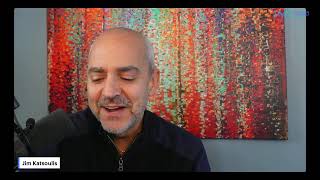
Jim Katsoulis suggests accepting a small weight gain during the holidays, around 2 to 5 pounds, so you can enjoy food without guilt. He argues that maintenance starts now, not after, and that eating habits lead while weight follows.
Questions this video answers
About 2–5 pounds
December 19, 2025
Over 30 years
Over 6,000 private weight loss sessions
18 kilograms in six months (≈37–38 pounds)
Chapters
Everyone, welcome to today's program yourself Thin Podcast. Today we're talking about wanting to gain weight during the holidays. And I know that sounds strange, but hear me out. I think most people approach the holidays whether they're on a diet plan actively or not, and they say, I just want to get through the holidays without gaining any weight. That's the goal. And if we take a step back from that, though, and think about it, let's look at it from a different angle. Right? Because if we go into the holidays with one of the main goals being that I don't want to gain any weight, now, you can have that goal, by the way. Okay, I. Obviously, you can have that goal. That being said, if that's the goal you set for yourself, there is going to be a price to pay for that goal. And that price is going to be, well, I guess it depends on the person, but less or no holiday cookies, less or no holiday wine or drinks, less or no holiday foods, less or no, you know, grandma's macaroni and cheese, whatever it may be, that is unique and special to the holiday time. If your main goal is to not gain weight, it is going to be going through the holidays with none of those things in your life. And I bring this up because I think at the end of the day, this is such an important conversation to have because you can't just set a weight loss goal without appreciating what it's going to require on the other side of it. And what I think a lot of people do is they go into the holidays, I don't want to gain any weight. I don't want to gain any weight. I don't want to gain any weight. And they try to say no, and they typically doesn't succeed, and they put some weight on. Now, the average person doesn't put very much weight on during the holidays. That's the first thing I understand. Okay. And what I want to give you is an alternative approach to it so that we're not just going, I don't want to gain any weight. I don't want to gain. I don't want to gain weight. I don't get weight. Right. Because I think that's a bad thing to say to ourselves. Hear me out. Right? Because again, if we're going to say, I don't want to gain any weight, maybe we're going to try and restrict all holiday season. And again, depending on where you're at, you know, it may be a lot of restriction, a little restriction. But when I go into the holidays, I say I want to gain some weight. Now, deep down, of course, I don't want to gain any weight, okay? But I expect to gain some weight because I expect to eat some more cookies and. And drink some more wine and just eat some more during the holidays than I typically do. And I know from my experience living with my body that when I start to eat more, my weight starts to go up. So obviously, I don't want to gain any weight, but I also don't want to go through the holidays not enjoying any of the things I like to enjoy. So I set a goal. That just sounds weird, but. But hear me out is I set the goal of I want to gain a little bit of weight. You know, if I gain less than, you know, two to three pounds, it'd be perfect. You know, if it goes up to five, I don't give a. I'm fine with that, too. Pretty much two to five pounds over the holidays, I don't care. I'm fine with it because I know that when January comes and I get back to my normal routine, that way it'll come off because I'm gonna go. I'm not gonna be eating as much anymore. I'm gonna dial it back down. But I think being able to dial things up and dial things down in terms of your eating is so fundamental to being able to live at your goal weight. And I think when you're a dieter, you're only able to think of just dialing things down or not paying attention at all, you know, and that's where most dieters are going to find themselves. This is why you get kind of the classic, you know, catch me in January 1st, you know, I'm checking out until January 1st, you know, because again, it's very black or white, all or nothing, and this all or something approach I'm talking about. I know it sounds strange, and I'm kind of. Again, I'm not saying I want to gain weight. I'm kind of. I'm being a little, you know, hyperbolic there in a sense, but not really because again, I am very clear that I'm gonna eat more stuff intentionally enjoyably. This, the holiday time for me is enjoyable, and I like eating some more stuff. So I don't want to go through the holiday season terrified of eating some more, terrified of gaining some weight. I actively go into the holiday season saying if I put two to five pounds on, I don't give a. I want to enjoy myself. Now, that being said, again, I don't. I want to put some weight on, I don't want to put a lot of weight on. So I'm not going to go crazy with stuff. I'm not going to be drinking a ton of wine, eating a ton of cookies, eating a ton of bread and foods. You know, I'm going to aim for being moderate. Now, this is a skill, you know, something I've worked on, developed, so I've gotten pretty good at it. But that's the goal is I'm looking to dial the food up moderately. And I think this is something that, you know, a lot of people say, well, I can't do that. If I strive eat one cookie, I eat all the cookies. But, you know, if you're saying that, you also have to reflect on the fact. Have you ever actually practiced being moderate? Have you ever actually practiced for months being a more moderate eater? And I know the answer is no. I know for a fact the answer is no. Because diet is really not about being moderate, it's about being extreme, typically. And there's a very good chance that when you look at how you've tried to lose weight, you've tried to do these extreme things where you completely give up carbs, you drastically cut your calories, you know, you stop eating for 16 hours at a time. You know, these are all intense things. And so when we start thinking in more gradient ways, it sets us up for more success during the holidays, because, again, we can aim at not that I want to put weight on, but that I want to eat some more food, I want to enjoy myself. And once we actually focus that and once we actually articulate that as the goal, because very few dieters will. Again, dieters are so superstitious, so scared. I just don't want to gain any weight at all. I don't want to gain any weight, go through the whole holidays like that. Now they're still eating anyways. Most of those dieters are going to put a couple pounds on anyways, but they're not getting the full enjoyment out of that food they're eating, because the whole time they're doing, they feel guilty and ashamed and worried and scared and all the rest of it. So I like to look at what I'm going to do over the holidays with open eyes and say, yeah, I want to eat a couple more cookies, I want to eat some bread, I want to eat drinks, I want to do this, I want to do, but I want to do it moderately. Where's the sweet spot where I get to enjoy those things? And I don't really put too much weight on that's the sweet spot and that's what I'm aiming for. I'm aiming for something though, like, very specific that I feel is achievable. And I think a lot of dieters are bullshitting themselves by saying, I don't want to gain any weight. I don't want to gain any weight. Well, again, not gaining any weight means that you're not going to be eating any extra foods. Is that what you want to do? You know, because it's the same thing, right, whether you gain weight or lose weight. Again, it's, that's just a response to what your behavior is. So if you say I don't to gain any weight during the holidays, that's, that's the equivalent of saying I don't want to eat any different during the holidays. Is that true? Do you really not want to eat any different during the holidays? Really? You really want to go through the whole holidays just eating the way you always do the rest of the year? Really? Because I find for most people that's not true. But that's what they keep saying to themselves and they wonder why they get, you know, feel like they're sabotaging themselves, feel like they're battling themselves because it's not a well formed goal. The truth is you don't. Again, most people now that's why I say if you're just locked in and you're just loving it, then knock yourself out. Okay? But for most people, the holidays where they kind of ease up, relax, enjoy themselves, all that stuff. So again, you can aim at that goal and succeed with your weight while you put weight on. That's a lesson I should do tomorrow. You can succeed with your weight even when you're putting weight on. I will put some weight on during the holidays. I am absolutely still a master of my weight. I am still successful with my weight even though I'll put some weight on during the holidays. You understand, that's part of it. And I think dieters only see themselves succeeding when they're losing weight or maintaining the exact same weight. And I think you're missing a whole piece of the puzzle, which is what do you do when you put a little bit of weight on when you go on vacation, when it is holidays, when it is special occasions, things like this. And most dieters have no concept of how to put some weight on in a calm, moderated way temporarily, and then be able to just take it off. And I don't know, I just, I think that's important. I think it is. So I'LL leave you with that. But if you want to go deeper into the concepts I'm talking about, the mindset I'm talking about, click the link in my bio. Go get the free hypnosis session I made for you. Again, if you're on Tick Tock, you can just click the link, the picture of me up there. If you're on Facebook, I'll put the link in the comments and you can go get that. It is a free hypnosis session and it's called the New Thin Me and Trip. It's really good. Yeah. Animated training for you. So again, I got, I got a bunch of free stuff I give you. So if you have any questions though, feel free to ask them. I am here to answer your questions, if you have any, and help you out as much as I can. Jeez. Getting over this, I don't know what the hell's wrong with me. I feel pretty good. Although today I will tell you, I almost broke my ass. I. I fell, I fell hard. I definitely fell hard. I stopped stepping outside. I was holding my dog, bringing out bring her outside, you know, And I go and step on this step. It's a big stone step. It was all ice. I was like, thankfully one too bad. Hurt my hand a little bit, but I'm okay. But anyways, yeah, and then I got this weird kind of cold thing. But enough about me. So, yeah, if you have any questions, feel free to ask them. It is funny, I always find it's so funny to me to talk about weight loss in the holidays. But again, it's good to focus on it. What's up? Hayes? Hayes says I've lost 18kg in six months. Is that good? I mean, it's not up for me to say if it's good, you know, I mean. And I think this is a great, that's a great question though. I love it. Is it good? I'd say in my opinion it's great. You know, personally, I think 18 kilograms, which for you Americans is somewhere in the ballpark at 37 pounds, you know, somewhere around there. 37, 38 pounds, somewhere in there in six months. I think it's phenomenal. And that's kind of like, to me, that's right in the sweet spot. I think a weight loss, you know, I, I think too fast a weight loss, you're setting yourself up for long term failure and obviously too slow a weight loss, you know. Well, I like slow weight loss personally, but you know, when it, when it slows down to a certain thing, it does get Harder to maintain for. For most people, you know, But. But that. That's a pretty decent yes. So. So congrats, Hayes. I think that's. That's quite an accomplishment. Is it good? I'm gonna tell you this, okay? Don't worry about what if I say it's good or not, okay? I want you to think about how you feel. I want you to think about how the last six months of your life have been. How do you feel now compared to how you felt six months ago, you know, because who gives a what I say, oh, that's a good speed. Oh, that's too slow. That's too fast. That's. Who gives a. Who cares what I say, you know? How's it been? How's it feel for you, the way you've lost the weight? Does it make you feel better? Do you. Does it feel sustainable? Do you feel more successful? Do you feel like you can continue it? You know, like, these are the questions I want to know. So, Hayes, I would strongly suggest that you go and get that hypnosis session that I made for you, because once I give you the. Once you sign up, it takes a couple minutes to send you the hypnosis session. I email it to you, I email you a link, and then you go. You go get it. But right away, I give you access to three steps to mastering your weight. I would really recommend you watch that. That training. It's like 20 minutes long. But you've put so much work and energy into losing weight that you really ought to watch that training because it's going to start to focus you on living at your goal weight, you know. So again, I don't know where your ultimate goal is, you know, in terms of weight loss, but it'll help you get there and more importantly, it'll help you stay there. Right? That's really. I think one of the things that separates program yourself then, for most weight loss approaches is that it's really more focused on living at your goal weight than just getting there. And I think for a lot of people, that is the missing piece of the puzzle for them is that the diet world is really all about what you can do to lose weight in the short term. And I have much different focus, which is about how can you live at your goal weight for the long term, you know, so again, already being 18kg down is wonderful, but, you know, again, you got to start thinking about, you know, maintenance and living there now. I think that's such a big mistake, you know, in program yourself, then we follow the goal Weight pyramid. And we start with mindset, right? Mindset's at the bottom. And one of the last things we do in mindset is maintenance, know. But, but we start. And program yourself, then you start day one on maintenance. Because I think a lot of dieters think of maintenance as well. Once I get to my goal weight, then I'm going to focus on maintenance. But I think if you're honest with yourself, most people, when you look at your weight loss attempts, you need to be able to maintain from day one to day two, week one to week two, month one to month two. I think a lot of dieters are so funny because they just assume, well, once I get to my goal weight, then I'll think about maintenance. And it's like, well, a, the chances of getting your goal weight are pretty slim on a diet. And then the fact, even if you get to your goal weight, the chance that, that you're just going to maintain it is, is even slimmer. You know, it's estimated that dieters that lost weight 80, like 83 to 95 of the time they put the weight back on. So, you know, maintenance needs to be the, in my opinion, the bullseye of your goal maintenance. And, and that starts day one, you know, because the, the strategies, well, program yourself anyways. The strategies you learn for maintenance, for maintaining your weight once you get there, the exact same strategies you learn in the beginning to maintain from week one to week two. So, for example, some of the things we cover in maintenance, how to deal with times of stress, how to remote yourself, how to get yourself back on track when you make a mistake, you know, and so there's these little skills that people never learn that prevent them from ever even getting to the goal in the first place, you know. So again, maintaining is not something you do once you get to your goal weight. It's something you want to practice now because that's the main thing that's going to dictate your success. Can you maintain the path? Can you maintain staying on it? Not can you maintain your weight because your weight is, you know, it all starts with this. Your weight is a reflection of your behavior. This is a really important point. It may sound like semantical to you, I don't know, but it's not. It's really, really important. You can't gain or lose weight. You cannot gain or lose weight. It's impossible. Short of chopping an arm off or getting lipos suction, you cannot control your weight. You can eat different and over time, through a magical process, you have no control over your weight goes up or down, right? If you start eating more over time, your weight's going to go up. If you start eating less, your weight's going to go down, right? So you are not actually in control of your weight. So, so in a very linguistically technical level, you cannot gain or lose weight. It's kind of like money, right? You can't make or lose money, you know, because you, you're not making money. You're. You're providing value to someone and you're being compensated. But that's a different. Making money is having a counterfeit machine, you know. So again, I know it sounds like I'm just like, you know, nitpicking words, but that's really important for your subconscious mind. Your subconscious mind is very literal. And so once you understand this concept of cause and effect, the eating is the cause and the effect is your weight. So I'll put it another way. I'll put in business terms, we use the concept of leading and lagging indicators. So how you eat is a leading indicator. What your weight is, is a lagging indicator. So again, when it comes to maintenance, I think a lot of times people have just like this vague idea, I'm just going to maintain my weight. Yeah, but how. You're going to maintain your weight by maintaining your behavior that caused you to lose the weight in the first place. And so you need to learn how to maintain your behavior right at the beginning. Because, folks, that's one of your core problems. You don't know how to maintain your behavior long term. Again, your core problem is not that you don't know what to do. If you were a cyborg robot who just typed in what you're going to eat all day and then you just automatically ate it because you're a robot, you wouldn't have a weight issue. The weight issue happens because you know how you want to eat. And then when it comes time to actually do it, some other part of you compels you to make the wrong choice and you have no idea how to change that part, you know? So anyways, just a great job, Hayes. Keep it up though, okay? But you gotta. The pro. The, the path changes the beginning of weight loss, especially as a dieter. As a dieter, the beginning of weight loss is different than the middle. And the end of the weight loss, it's different. It changes. Okay? And so you're at a phase now. Okay, great job getting started. But now I can almost guarantee you you're going to need some of the things you'll learn in that Training to help you keep moving forward and then to ultimately stay there is what I would guess. So go check those out. But great job. Nice job taking action. I think that's a great, great accomplishment. Again, who gives a what? I think, But I think that's great. I think it's great to answer your question quickly and easily. Bookworm says. You're so funny, Jim. I hope your little dog survives fall, too. Yeah, it was like a miracle because it was so funny. It was so surreal because my dog. I don't know if I. I've told this before, but I have. I have two dogs. I have one kind of big pit bull type dog, and then I have a little Boston terrier dog that we rescued about four months ago. And so she doesn't listen well at all. So I let her out of her. Her crate in the morning, and I've gotten the habit because it's like. Otherwise, it's like, okay, come on, let's go to the door. Let's go outside. And then she's run. She just. She kind of paces. She was a abused. She was a breeder dog, so she's. She's kind of messed up, but she'll just pace in the house. And then I have to go like, co. Catch her and then bring her out. So it's a whole thing. So I've got in the habit now and I let her out of the crate. I just kind of grab her, I hold her, and I'll bring her. I'll walk her outside. Just saves me a lot of time. So it's like. And, you know, I can't not talk to her. I was like, oh, it's fallen, you know, so. But. But I. I somehow was able to protect. I don't know how the hell I did it. I'm not gonna lie, because. And I put down. She's a very, like, she's kind of skittish. She's like. She's very jumpy, you know, but. But we landed on this way, and I don't know, she didn't get hurt at all because she just kind of got up and just, you know, went off. And like I said, I didn't really get hurt either. I. I did, I did. I twisted up. I took a couple ibuprofens, but I definitely. I'm feeling it a little bit already. And I know tomorrow morning I'll wake up and feel it, but I don't care. It's a little. It's. It's muscle pains. I don't give a. I didn't hear any cracks or anything bad. Yeah. But anyways. Yeah, the dog's okay? She is fine. Hazel says I do. Hey. Says I do intermittent fasting. All right. I feel great. Very energized, too. Nice job. Yeah. So again, you know, like, so, so Hayes. Right. So even intermittent fasting, great. You know, again, I'm not here. People say, oh, what do you think? I'm in fasting? What do you think about the golden rule of program yourself then is there's no right or wrong. There's only what works for you. So I don't. I would never be like, oh, no, intermittent fast doesn't work. Obviously it's working for you. Okay. But you have to understand that doing intermittent fasting when you're losing weight is different than doing intermittent fasting when you hit a plateau or when you get to your goal weight. It's just different. You know, the motivation is different. So intermittent fasting typically is not enough to live at your goal weight forever. Because most, most the time for a person to live at their goal weight, they're gonna have to change their mindset to some degree. I mean, that's what I believe. You know, obviously people are free to believe what they want, but for me personally, I think. And this is after studying this, I've studied this for over 30 years. I've done over 6,000 private weight loss sessions. I've studied hundreds of people that have lost weight and kept it off. So I didn't just, you know what I mean, just roll out of bed saying this stuff. And so what I believe, what I've kind of seen is there's really kind of three main things you've got to change in order to really be able to have a chance to live at your goal weight. And I believe that's your mindset. Lifestyle and eating. I believe those three areas you really have to figure out. Right? And so mindset. And again, as you could tell the pyramid, that the bottom, most important part, the foundation of it all, in my opinion, is the mindset. And I think most dieters have no sense of how to change their mindset. You know, so, you know, what they do is they, they get, they get to a place most dieters, motivation is based on pain. So most dieters will step on the scale, see a picture of themselves, catch their reflection. The, the, the big clothes don't fit anymore. Someone says something shitty to them, they get so upset about their weight and they say, that's it, that's it. And then they, they go intermittent fasting. They go Keto, they go carnivore, they go Weight watchers, they go restriction, whatever. They just pick their diet, you know, and they'll do that diet for a while because they're so that, that's it, I've had, I'm not living this way anymore. That's it, that's it. They get so fired up and then whatever, okay, and they'll do that. But the problem is that it's hard to, for most people, it's hard for them to maintain that, that level of intense motivation, you know, to do it, you know, and on top of that, when you have pain based motivation, one of the big tricks of that is that as you start getting results, your motivation a lot of times goes down, right? Because if your motivation is based on pain, as you start succeeding and the weight starts going down, you start feeling better about yourself, the motivation tends to go down too. That's why I'm programming yourself in. A big thing we talk about is pleasure based motivation, which at the end of the day, you know, it's funny, I mean, again. Oh, what's more powerful, pain or pleasure? Well, it really depends on the context. If it's an acute situation, pain's absolutely the bigger motivator. But if we're talking about chronic things, pleasure is absolutely the biggest motivator. That's why you all have issues with your weight, because of the chronic pleasure temptation of the food. So, you know, again, that's a relative question. But again, I find most dieters really have no idea what I'm talking about when I say pleasure based motivation. The idea that you would be motivated to eat well because you enjoyed eating that way, because it made you feel better, because you felt lighter, because, you know, it's hard for people to kind of wrap their heads around that. But I think it's a crucial type of motivation to be able to tap into and use know along your weight loss journey. But, So yeah, but if you have any questions, feel free to ask them. If you have no question, that's fine too. I know a lot of people just want to kind of chill out during the holidays and that's fine too, you know, and that's why I do get on here. I know a lot of people, their main focus is in weight loss right now and I respect that. I don't think it should be, you know, at the same time what I like to do is get on here and just be like, well, you know, there's, there's different ways you can actually engage with your weight, you know, and I Think most dieters only really engage with it when they're in that peak negative state, like when they get really upset about their weight. Then. Then they engage with their weight. But most dieters don't have the ability to kind of engage with their weight consistently when they're calm and relaxed, when they're medium stressed, when they're super stressed. They don't really have an ability to deal with it. And I think that that's part of the problem, you know? So again, I'm here in the holidays, and I'm not. I'm not trying to lose weight again. I'm trying to gain weight. And I know that sounds strange. Of course I'm not trying to gain weight. But the flip side of the coin, this is what I mean too, about the cause effect thing that I don't. I don't. Of course I don't want to gain weight, but I do want to eat more bullshit during the holidays. And so I know that that usually makes my weight go up. So. So I'm saying one in the same, you know, it doesn't. Doesn't feel palatable, but it's. It's the truth, you know? So again, saying I want to gain weight during the holidays, I find to be a good mental exercise. I know that may sound strange to you all, but I do. What's up, Sherry? He says you sound better today. Feeling better? I do feel better. I don't know if you were here. I was just talking about how I took a. I wiped out. It was a pretty big fall. I was on a step. It's. It's a big. I hate this thing. I don't know. Like, I don't. I do and I don't. It kind of just caught me. It's. It's like the back of a porch, and it's like a big old, like, stone step. And it's. It's high. It's like this high up off the thing. But it's. It's my own fault. I don't know. It's. We got a porch thing there, and it's like I got to put. I got to get a gutter put up there. And because I didn't put the gutter. I didn't get the gutter put up there yet. I think that that's what caused all the water to go on and to freeze the step up. And so, yeah, it was just straight, straight ice, but I was all right. I mean, it made it. Made it okay. So I'm thankful for that. Don't like to Fall. But you know, when you do fall, that's the best version of fall I could have. And yes, sick wise getting back to, getting back to feeling normal. So that makes me happy. So yeah, but I am going to get out of here actually. I got a weird day today so I'm gonna move on and get, get cracking with the rest of my day. For any of you that are not in my world, make sure you click the link in my bio or the link in the comments. If you're on Facebook or YouTube, go get the free hypnosis session, okay? It's a great session, it's free, go check it out. And I also made a training for you. I'll give you a bunch of other free stuff. And, and by the way, you know, like, I think I was just talking about how to engage with your weight during the holidays. I think hypnosis sessions are one of the best ways because listen to that 10 minute session, it's going to relax and calm you and I think that is going to help you enjoy the holidays more, probably make better food choices anyways. But then you're also getting good messages. And so again, one of the things I love about hypnosis, it's very kind of passive gentle guidance and nudging you in the direction you want to go. Whereas dieting is very rigid and firm. You know, I think hypnosis is much more, you know, it's just softer. And so I think that it's the perfect thing for the holidays, you know, because it's not about eating perfect, it's about, you know, it's not about eating perfect, it's about just eating better and eating more mindful, calm, relaxed way, you know. Bookworm says. Thanks, Jim. Loving the PYT blueprint. Oh, that's awesome. And I just, just sent yours off today. So yes, this is the blueprint. This thing's awesome. You should have this. I don't know, I don't know how Canadian postal service works, so I don't know if it's quick or slow or what, but I mailed one, I will tell you this, I mailed one to United States today too and they told me I was going to get there on Wednesday, but that's America and so I don't know. I'll tell you, for the price of the postage they charge, they actually get there in a day or two anyways, so that, that's headed out and that's, that's going. So you'll get the physical version too, which will be really cool. I'm glad you didn't get hurt. You need to get on that mountain this year. I know that. I know I did miss too many seasons. You're right, I did. I landed straight on my shoulder too. But this is my, my shoulder I got surgery on last year and this is my fine shoulder. But I just lucked out. Yeah. So thank God. Yes, I'm glad I didn't get hurt too. So anyways, all right, everyone. So, yeah, and also if you, if you like this, I'm here every Monday through Friday US around noon Eastern. And if you can't make the live, you can listen to the replay anytime you want. It's a podcast. You get any podcast platform search program yourself then and bam, it'll show up and you'll see it. So all right, everyone have a super duper day and we'll talk soon. Bye.
More from Jim



Weight Loss Visualization: Wake Up in Your Dream Size #programyourselfthin #weightlosshypnosis



What If You Pretended to Be Thin for One Hour? #programyourselfthin #weightlosshypnosis




