Weight Loss Without Willpower
Jim Katsoulis argues willpower fails because it depletes, and proposes rewiring eating habits to run on autopilot instead. He critiques diets and GLP-1 drugs as temporary fixes, and teaches visualization and "redo rehearsal" techniques to reprogram how you think about food.
Chapters
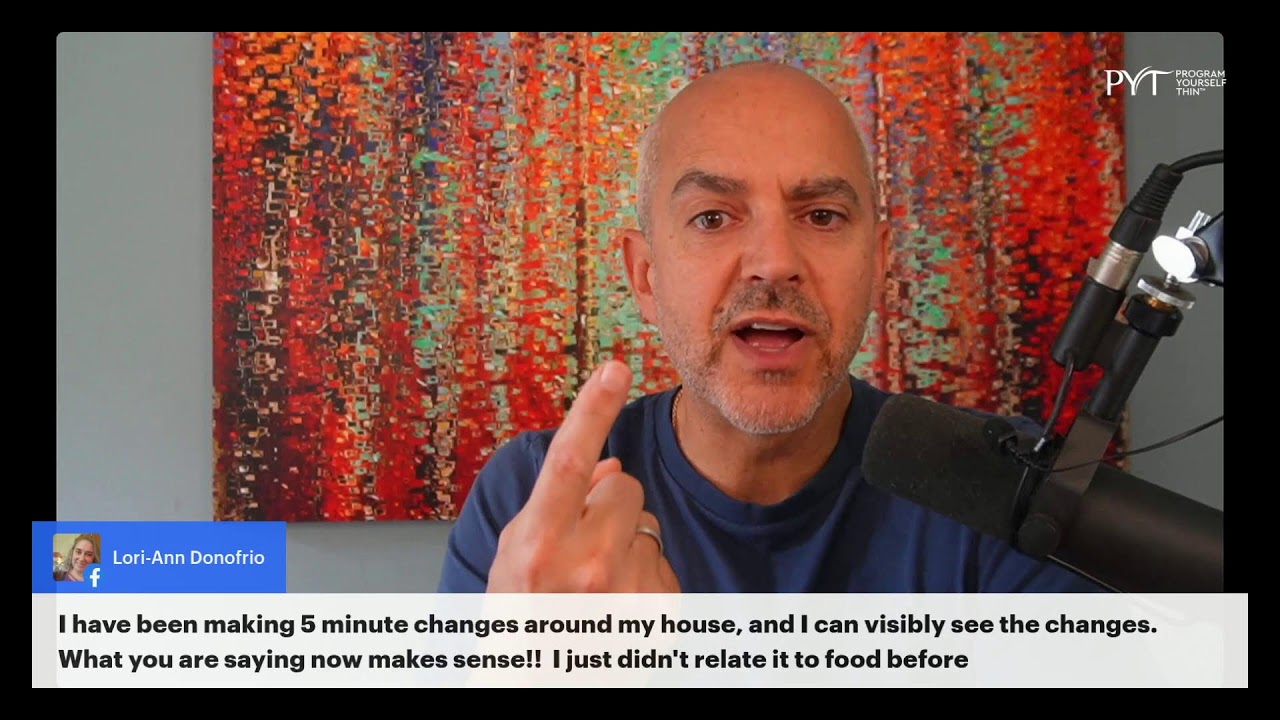
Weight loss without willpower. It is possible. And ironically, it's more effective as well. You have been taught your whole life that the secret to your weight loss success is how much willpower you can enact over yourself, right? How much can you force yourself to do the right thing and to stop yourself from doing the wrong thing? That is what your weight loss has been tied to your entire life. And usually how it turns out is that you can do it for a little while. You can control your behavior and act differently for a little while, a couple of days, couple of weeks. Occasionally you'll get a couple of months out of it. But ultimately what happens? You always go back to your normal way of being and your weight returns to its normal range. So focusing on willpower and relying on it is not a smart strategy to change your weight because it doesn't last. Willpower is something meant to be spent each day and then you run out of it. Okay. Think about your willpower kind of like a muscle. And the more you use it, the quicker you tire it out and exhaust it. And this is basically what you've experienced every time you've tried to lose weight is, again, you have enough for a little while and then it runs out. And then you go back to what you normally do. So losing weight without willpower is a mindset, and it's a mindset that we're going to build your weight loss and ultimately your ability to live at your goal weight for the rest of your life around your habits. And the best example I can give you is your brushing, your toothbrushing habit. This is a habit that you were not born with. And you probably resisted a bit when you were a kid, but your parents probably made you brush your teeth at certain times. And now as an adult, you do the exact same thing. But notice how you do it. It's not a willpower thing. You're not scheduling your toothbrushing on a planner and looking at the planner saying, oh yeah, I got to brush my teeth and then forcing yourself to do it. What happens is it runs automatically in the background, right? And another way to put it is you have programmed yourself Your parents have helped program you to have a toothbrushing habit, and now the habit runs pretty much on autopilot. I mean, I know sometimes you're kind of aware if you brush your teeth or not, and you, you might feel like you're consciously deciding it, but most of the time what's happening is you wake up, next thing you know you're brushing your teeth, you don't even remember it. You get ready, you go to bed, and you don't even remember when you brushed your teeth. It runs on autopilot, and this is the power of programming. You can do this with all kinds of things. You can do this all sorts of good habits. You can certainly do it with your eating habits because guess what? You were programmed to eat a certain way and now you just do it on autopilot. And instead of trying to fight against that programming, you should use your willpower to change that programming. But it's all built around programming so that you naturally and automatically do the things that get you to your goal weight. And you do not need to rely on willpower. Yes, we're using willpower initially to install the habit, but eventually the habit starts to take on its own life and starts to run itself. And this is the secret to getting better weight loss results, but more importantly, it's the secret to being able to live at your goal weight for the rest of your life on near autopilot. So, let's take a second and imagine how this could go, because I want you to imagine some challenge you have in your life eating-wise. Maybe you struggle with ice cream at night or cookies after lunch, grazing during the day, whatever it may be. Pick one thing in your life that you have tried to control, that you've tried to stop. I want you to think about it now, because the way we reprogram it is we take a step back and instead of fighting against that thing, we're going to take a second and imagine ourselves doing exactly what we want to do, exactly the way that we want to do it. So take a moment and think about that behavior that you've struggled with. And take a step back, relax, ground yourself, step into the present moment. And now imagine yourself in that situation handling it beautifully. Imagine yourself acting exactly the way that you want to, doing exactly what you want to do, but it feels easy, natural, and comfortable. And I know this may sound strange, but I want you to imagine it, even if you've never done it, even if it's never felt easy and natural. I want you to imagine it now. Imagine yourself doing exactly what it is that you want to do at the exact moment you want to do it, and it just feels normal. You're relaxed, you're calm, easily and comfortably making the right choice. Now, the more you think about that, the more you give your brain the message and the programming to move in the direction you want to go in. And the more you build on this, the more you start to do it naturally and automatically. And the more good things you do naturally and automatically, the more you can start adding new things to it. But it's all built around your subconscious programming and what you do naturally and automatically, which can be influenced. Because again, you did not have a toothbrushing habit, you created one, you programmed one in. And you can do the exact same thing with your lifestyle habits and your eating habits, and it makes all the difference in the world. So if you want to know more about how to do this, you can click the link in my bio. Go to programyourselfthin.com, or if you're on Facebook, you can type mind, M-I-N-D, into the comments and I'll send you a free hypnosis session. Uh, it's kind of the first step to making this really, really take hold. Um, it's a free session I give you and it is designed to kickstart your weight loss by relaxing you, calming you down, and allowing you, uh, to move forward in a way that gets you towards your goal weight, but in a way that also feels comfortable and easy. So go check that out. If you have any questions, feel free to ask them again. I'm here every Monday through Friday, usually around noon Eastern. Kind of making some changes over on Facebook. I know I got Miss Jane over here who always wants to be notified when we go live, and I'm working on that. I thought I'd set it up today. I did not set it up. No, I thought I did. It did not work right. But Facebook was supposed to show that I was going live, but. We're still working on it. But anyways, yes, here every Monday through Friday. Um, been doing this for over 20 years and always looking to help you all out because a lot of times what you're struggling with weight-wise is something that doesn't need to be as big of a struggle. Now again, I'm not sitting here and saying, you know, program yourself thin and hypnotizing yourself is some miracle easy path. I never want to make that claim, uh, because I think all things that are valuable and worthwhile in life Take effort, and I think managing your weight is no different. And I take the no bullshit oath when I get on here, and I'm never gonna bullshit you that there's some magical you know weight cure that if you just listen to this hypnosis session, you're gonna lose fifty pounds and never go back. I would never make that claim because it's not true. I do believe that if you're really gonna master your weight, you're going to need to have a holistic comprehensive strategy to make it happen. And that is what we follow in Program Yourself Thin. Again, this is the goal weight pyramid, and this is really kind of the, the fundamental plan that we follow, uh, to help you get to your goal weight and then stay there. And as you can see, it includes mindset, lifestyle, and eating. So ultimately, I believe that your weight is really dictated by how you habitually think, live, and eat. And if you can change those things in a predictable, reliable way, you're gonna change your weight. And if you can do it in a way that feels normal and natural and starts to become automated, all the better, right? Even even better. What's up, Jess? Jess says five miles a day and keto has got me to my weight goal, and it's now a lifestyle, not just a diet. That's great, Jess. Nice job. Congratulations. You know, I uh. I will say I'm gonna make this distinction again. I take the no bullshit oath. I'm super proud of you. That's quite an accomplishment. Okay. At the same time, how long you've been at your goal weight? Because it's not a lifestyle yet. It's not a lifestyle until you've been at your goal weight living it. I mean, I think for at least two years, that's my criteria. But if you just got to your goal, it's not a lifestyle yet because you got to remember most dieters are super motivated when they're losing weight. Again, let me start with the statistic I always share: 85 to 95% of dieters that get to their goal weight put the weight back on. Okay, so this is an interesting thing because these are people that can get their weight down. They have the ability to get their weight down, but they don't seem to have the ability to maintain it. And a big part— there's a lot of reasons for that, but one of the biggest reasons for that is that their biggest motivator disappeared. Because most dieters are driven by watching that scale go down, right? It's their big focus. It's what they obsess on. And that really— that obsession, that focus really distracts them from, I don't really like doing this. I don't really like— I don't really like walking 5 miles. Now, I'm not saying this is you, Jess. Please understand. But you might— I don't really like 5 miles a day. It's a pain in the ass. But I just want to see that scale go down. You know, keto— keto's super strict. Right? Super hard to keep up. You got to be kind of perfect with it. And so as long as you're obsessed with the scale, it's easier to be perfect with it, right? Because again, when you're looking at the scale, not only is it this focus and this obsession on it, but simultaneously it's also implying that this is a temporary process, that I'm gonna do all this crazy shit until I get to my goal weight. And I say, well, what are you gonna do then? I don't know, I'll figure it out then. Maybe I'll just keep going. Maybe you will, maybe you won't, because There's a lot of motivation looking at that goal weight. You go, "Oh man, when I get to that goal weight, oh my God, when I get to that goal weight, it's gonna—it's gonna be amazing." And most dieters will trade the pleasure and the excitement of the food for the pleasure and excitement of the scale going down. But the big question becomes: What do you do when you actually get to your goal weight? What are you looking forward to then? We say, "I'll look forward to being thin and healthy." Okay, but—but hold on. Don't get upset with me. You have been at your goal weight before. You already been there. What happened? How come it went up? If being at that goal weight was the, the cure-all for everything, then why, when you already had that goal weight, did you put the weight back on? And a big problem that happens is that when you first get there, you're just fired up. You're excited. People, oh my God, you look amazing. You're buying new clothes. You feel amazing. All the rest of it. But this is the weird thing. There's a thing called hedonic adaptation, and it's something that happens to humans that we Adapt, we normalize to our reality. And so at first, the weight loss is oh my God! It's so exciting. It's amazing. Everything's great. And then it just starts to become your weight. And now the big question is: What are you looking forward to now? What's exciting to you? Because it's not the weight anymore. It starts to flatline after a while. And this is where a lot of people struggle, I think. Because now where do I go? Where do I look at? And they go back to the food usually. So I'm saying this, you know, to prepare you that doing keto and 5 miles a day is a very strict and extreme process. Now, you may have normalized to it somewhat, but it's still a very strict, and it takes a lot of focus, a lot of energy, a lot of discipline, a lot of willpower. And if you make a mistake, it's hard to get right back on there. And this is the challenge every diet presents. Again, 5 miles a day and keto is the more extreme side of things, but Weight Watchers is extreme as well. You're all up to here with life, right? You're just— you're— no one has like an abundance of mental energy and calm that I've seen lately. So this idea that you're just going to stack on top of you who's already at capacity, you're going to stack this whole other cognitive load on you to focus on every calorie you eat. It's a big ask. So again, in Program Yourself, then we're not all or nothing, we're all or something. And so we know right from the beginning we're building in the ability to be flexible. To be able to do the all thing, to do the extreme thing, but also have the ability to lay off of that or fall off of that for a little bit, but still be in the game. And that's something you really, I think, got to consider because it's almost impossible. I can almost guarantee you the next five years it will be virtually impossible to maintain five miles a day in keto. And I don't. I'm not here to be a dick. I promise you I'm not here. To take the wind out of your sails. I'm here to keep the wind in your sails. You've accomplished something very difficult, but I believe the way you've accomplished it is not really set up for long-term success because it's difficult to maintain that level of perfection and discipline long-term. And this is what most dieters end up bumping up against eventually. So anyways, I always feel bad when I have to say that, but I gotta say it. You know why I say it too? Because I know, like, I know how dieters are the second they hear someone who lost a bunch of weight, that was— tell me, what'd you do? What'd you do? So I walked 5 miles a day and I did strict keto. I was in ketosis the whole time. So that's what I gotta— I gotta do that. No, you don't. No, you don't. There's a million ways to manage your weight, and I would suggest you find the way that works best for you. And for most of you, 5 miles a day and doing keto isn't going to be it. It's too extreme for most people. And it's extreme— it's too extreme for virtually everyone Long term. So anyways, congrats though. Congrats for sure. What's up, Joan? Joan says, "So are you?" Whoop! Hold on. There we go. Joan says, "So are you saying that by relaxing, calming down, we can bring unconscious patterns to light? There's no other way. There's probably other ways for sure. But I'm a big believer in that. I literally just got off a call a moment ago where I was talking to a client who." Um, is approaching 100 pounds down. And I said, listen, I'm like, what I would do right now is like, I would obsess on self-care, specifically relaxing, calming down, getting rest. Just, just again, really, that's the focus. Because again, when you hit a big milestone like 100 pounds, it messes with your head. A lot of people don't realize this because you think, oh, 100 pounds, oh my God, they must be so excited, so happy. Well, they are on one hand for sure, but it's also— it brings a lot of stuff up. Yeah. As well, and it doesn't have to be 100 pounds. It could be 10 pounds. It could be 50 pounds. Everyone's different, you know. But I think a lot of people just assume, oh, if you're losing weight, everything's amazing. Well, it's not. You know, there's other factors going on. And again, I'm not trying to be negative here, but but we got to recognize the potential pitfalls that are ahead of us. And I think dieters aren't very good at that. I think dieters just put their blinders on. You know, this blinder is keto. This blinder is five miles a day. And they just live in this little reality. But it's fine while you can do it. Again, the all or something, the all or nothing thing. It's fine when you can do this, but the second you kind of get off track a little bit, it's like, because there's no plan B. Like, like keto's like this, right? I mean, again, depending how you are and how you're approaching it. My clients approach it very intensely because most of my clients are overthinkers, perfectionists, action takers. So if they're going to do keto, they're really going to do keto. You know, they're going to be in real control. You know, they're just— they're like that. Okay, but again, that way of being is usually not long-lasting. I always say, you know, if you want to live at your goal weight, then it's going to be a never-ending marathon. And people go, oh, well, I'll say, but what did you think? You know what I mean? You know, first of all, would you like to live at your goal weight for the rest of your life, or do you just want to get there and then put weight back on? Well, obviously you want to be there your whole life. So if you want to live at your goal weight the rest of your life, then you better have a strategy you can live with and follow for the rest of your life, right? Otherwise, it's gonna be a short-term success. And I think dieters just are, are so dazzled by my throat. Good Lord. Um, dieters are just dazzled by the, the promise and the fast results a lot of times, you know. It's true. So far true from my perspective. Uh, what's up, Jane? Jane says, on my GLP-1, I am finding that the food noise is down, but I still crave sugar. If I feel like eating anything at all. Had a big piece of cheesecake last night, annoyed with myself. I appreciate you sharing that, Jane, because again, I think a lot of people especially haven't been on it yet. The GLP-1 is not this magic cure-all. It is amazing. It's a very powerful medicine. I wouldn't doubt that, you know. And again, this is a very GLP-1 accepting place. I don't think it's the— it's not the— it's not the ultimate solution. It's not the perfect solution. It's not. And again, ultimately, GLP-1 or not, I don't know how you're ever truly gonna master your weight, health, and happiness if you don't have a holistic approach like this, right? Because just because your hunger goes down doesn't mean that your knowledge of nutrition goes up. Just because your, your food noise quiets down doesn't mean you're able to get yourself to make the right choices, you know? So there's just more to it. But anyways, yeah, Jane, so I get that. And you know, Jane, understand though that you're, you're just— Jane's in the program too, so I, I, again, we, we— there's lots of people on GLP-1s in the program, and I think that's not a bad thing to do. I mean, you can also— you don't have to be on them. You can lose weight. That's the majority of clients. But, um, if you are on it, geez, if you're gonna inject yourself with this, you might as well go all the way and take care of your mindset at the same time. Because that's the only chance you ever have of getting off it and not rebounding. That's all that I've ever seen. Because if you just inject yourself, lose weight, and come off the injection, you're going to put the weight back on. That's what I mean. It's not a final solution. It's a Band-Aid, a very effective Band-Aid for a lot of people, but a Band-Aid. It's not, it's not the ultimate solution. Again, I always say this. I mean, you know, shit. Okay, so the client I was just talking about, she's almost down 100 pounds. Now, you know, they would have— when she started, they would have said, oh, you can't lose the weight. You're not gonna be able to lose the weight. You know, you get too much food noise, you get too much cravings. You, you know, like, your body functions in a way that your hunger hormone— it's gonna be impossible. You can't do it, or you're gonna have to do some real strict plan to do it. Nope, nope. She did program herself then. And so again, I always say, because, because the GLP-1 It makes it sound like it's the only solution, and it is a option. But when you compare a GLP-1 success story to a program yourself thin success story, it's pretty obvious which one's superior. Like there's not even a they're not even in the same ballpark. You right? Imagine you knew. Imagine you actually put the work in and you now had programmed yourself to think, live, and eat like a thin, healthy person, and you're doing that consistently. You're at your goal weight. So not only are your goal weight in a way that you know how to control and you know you can do it for the rest of your life, but you've gotten so many other benefits out of it. Because just because food noise goes down means calories go down. That doesn't mean your mindset gets better. It doesn't mean your lifestyle gets better. It doesn't mean your eating gets better. Back to Jane. The GLP-1s there, you're eating less sugar perhaps, but you still want to eat sugar. So now you're eating less food, probably eating less healthy food. And eating more sugar. I'm gonna say this to pile on Jane. I'm just saying that the GLP-1 is not a cure-all. Here they are on GLP-1. The food noise is lower, but oh my God! There's still there's still a challenge. That's what I'm trying to say. GLP-1 is it's it's ending its honeymoon phase, which isn't to say I'm not saying it's good or bad. I'm saying it's been showed in the most amazing light possible. And we're getting to a point where a lot of the population has been on it and knows the truth of it. That yes, it may in the best case scenarios, and doesn't work for everyone. 20% of people, it just doesn't. It doesn't work for whatever reasons. But the people it even does work for, there's there's challenges there. It's not this miracle. Everything's perfect. Everything's good and bad. Please understand the bad of programming yourself then is it takes longer. Takes a little more work. Happy to say that, but the good side is that you figure out how to actually run your brain. You learned how to actually live at your goal weight in a way that really resonates with you. You know, so what I would say, Jane, though, is I know you've the GLP one's kind of new for Jane. I mean, it's maybe like a month or so, I believe, or is it longer than that? I forget. But you're still relatively in the new phase of it, Jane. So you know, don't get too upset about it. Don't get too annoyed. Just Understand that you're kind of in a—you're in the new phase of it. So you're understanding it, and you're going to understand. Excuse me. You're—you're just kind of like when we first do something, you know, a lot of times we go a million miles an hour. But—but we have to kind of like—it's a new reality. Your body's a new reality, right? You put this very potent medicine in your body, and now your body's acting very different. Your mind's very different. So give yourself— yeah, so Jane says about a month. Um, one month, really, it's just— you're, you're in the very, very beginning phases of it. So just relax, you know. If you— food noise gone down, great. You know, the eating's gone down, great. But oh, I want to eat sugar, okay. You know what I mean? But you're not gonna be able to change everything all at once. And you know, you're just in the kind of getting-to-know-you phase, right? So give it another month or so. And then, you know, once you understand it though, then again, you know, with Program Yourself, then you start using those, those techniques and skills Um, to choose, you know, the healthier thing than the sugar, you know. But, but understand, you're still in the phase where you're getting to know your body on this stuff, you know, and your mind. I mean, again, it affects you in a very fundamental way. It's important to understand that. I mean, medicine affects you as a system anyways, but GLP-1 especially— you've got GLP-1 receptors in your brain. So there's GLP-1 receptors they're finding all over your body. So the effect of it is bigger than what they thought. And they're still figuring it out, you know. But when you go on it, you got to give yourself, I would say, at least a couple months to kind of get to know what the hell's going on here, you know, kind of hit a baseline, you know. And then again, and program yourself then. Then it starts to become more effective to program yourself, you know, because you just, you understand more, you know. But right now, you know, you're just stepping into this kind of new reality. So it's kind of hard to figure things out. So don't get too annoyed with yourself, you know. Recognize it for what it is, that it's a first phase. Oh my goodness, throat's going crazy. Um, yeah, Jane says, I agree, but this is the only time when I've had much less food noise and cravings. Um, yeah, even the food noise and cravings, I, I get it, folks, but I, I've been dealing with food noise for over 30 years. There are other ways to reduce food noise and cravings. I just want to say that. Now again, it's harder than injecting yourself. I would never, never argue that, okay? But if you start— I mean, shit, in the program we have hypnosis sessions. Hypnosis sessions are like meditation. So if you start listening to those every day, you're getting 5 to 15 minutes depending on how much you do. Um, you're getting 5 to 15 minutes of meditation, which is calming you down physically, mentally, emotionally, making you more aware of what's going on inside. As you start working through the blueprint and you start, um, understanding your mindset, you know, getting clear on it. What your motivation is, what you want to do, your habits, your emotions. As you get clear on all these things and go through it, as you work on your lifestyle and implement the lifestyle, that's the biggest effect on food noise. The biggest effect out of the three of these on food noise is lifestyle. What's lifestyle? Your sleep, hydration, relaxation, breathing, nourishment, movement, meditation, gratitude. That's literally—I'm letting you know this. That is your natural food. That's your natural volume dial for food noise. And don't, don't, don't tell me, don't tell me you did that. I've met virtually no one who has really enacted a full lifestyle plan who has not had food noise dialed down. Okay. And so when you do that and it's, it's foundationed by a mindset that's quiet, clear, and calm. And motivated, and then on top of it you have an eating plan that is built for you, and you know what you're going to eat, you know it satisfies you, you know you enjoy it, you know it's easy to make, and you know it gives you your goal weight— guess what happens to food noise? It starts turning down. Food noise is not some magical thing they discovered when they came up with GLP-1. They just found a kind of shortcut way to turn it down. But again, to me, you know, it's turning down the food noise. Is it turning down everything else? You know, if you have a lifestyle— let's think of it this way, right? So let's look at just the lifestyle piece. But if you have a lifestyle where you're not getting enough sleep, you're dehydrated, um, you're tense and stressed all the time, uh, you're, you're not nourishing yourself well, right? You're eating a lot of junk food, fast food, processed food, um, you don't really moving a lot, you're, uh, you know, your mind's all over the place, you never really kind of Center and focus it. You lack gratitude and all the rest of it. If you're living that lifestyle, even if the medicine says, oh yeah, food noise is turned down, everything's great. How could that body be thriving? Even if the food noise has been artificially turned down and you're losing weight, how could that lifestyle lead you to have a body that allows you to thrive? So thriving is the goal here, not just weight loss. This is what I'm trying to say. And program yourself. Then we take the weight loss, we wrap it in personal development. So it's not just a weight process, it's not just a weight journey, it's a journey about being the best version of you possible. This is why a lot of times, oh, what do you think about GLP-1 compared to PYT? And it's like, they're 2 totally different things, is what the answer is, you know. But so yeah, I mean, again, I'm not, I'm not arguing that that medicine can help turn the food noise down. I'm saying though That's just one piece of things, you know. So well, I don't give a shit, Jim. I've been overweight and I just want to lose weight. I get it. I totally get it, you know. And that's what that's what Jane said. Yeah, true. I guess I'm just impatient. Yeah, and I mean impatience is is you know that that's I would say dieters that's one of your biggest challenges is your impatience and it's not your fault again. You got to understand why we so impatient with weight loss because your entire life the diet industry has conditioned you to think about weight loss. As something the faster the better, right? So every plan has been sold to you is that this is the fastest way. This is the this is what you look like in four weeks. This is what you look like in six weeks, and you've had a literal lifetime of that. I mean, literally millions of ads. Think about it. In your lifetime, you've been exposed to millions of diet ads. Every single diet telling you the same exact story that how fast can you lose the weight? You know, it's always the same story. So again, no wonder you're impatient, right? We're impatient naturally anyways, right? And then the people that I work with, we're extra impatient, you know what I mean? So I get it. I totally get it. Um, but at the same time, just because you're impatient doesn't mean you can't work on that. Just because you're impatient doesn't mean you can't become more patient. It's a skill. It's an ability that you can develop, and it's a fundamental skill and ability that changes everything above it. So the more patience you have, the better you operate, in my opinion. Do you operate better when you're super impatient? I find not so. I find when I'm super impatient, I make rash decisions. I make unhelpful decisions, ineffective decisions. That's what I find. Everyone's different, you know. So again, it's no different with the food. So again, patience becomes a main thing you focus at because, by the way, if you're impatient with your weight, I bet that impatience is showing up in other areas of your life and probably not serving you well there either. This is what I mean. Again, personal development. If you're gonna put all this work in— listen, shooting yourself with GLP-1 is still work. It costs extra money. It's that. I want you to do this forever. And then there's the realization that if you don't like your weight, you probably think, well, my weight's kind of ruined a lot of my life. If my weight got down, everything would be a lot better. But not always so. I'm not saying this to be a jerk, but I'm just saying again, the diet is another diet industry thing, is that you, you know, you've been led to believe your entire life that if you get the weight down, everything's going to be great. You've been sold this fairy tale your entire life. We all have by the diet industry. But unfortunately, it's just not true. I mean, just because you're at your goal weight, it doesn't mean everything is perfect, obviously. But I think we forget that. So to me, it's like if you really want to live the quality of life you want to live, you're going to need to do more than just lose weight anyways. So that's why Program Yourself Thin is an inside-out approach. Because to me, who gives a fuck? What do you want to be? You want to be a thin, miserable person? You want to be a thin, stressed-out person? A thin, exhausted person? Is that what you want? You know what I mean? Jesus Christ, there's— raise up. Folks, raise up your goal. Raise up your goal. We— and, and it's so important. We need more because I'm telling— here we go. This is what's going to happen. This is what I'm waiting for. And listen, I, I'm not against GLP-1s. I know it kind of sounds like I am, but I'm not. But here's the big thing that I always wonder about, is that what happens when you get to your goal weight on the GLP-1 and now you start, okay, now I can live. Now, now I can get to the business of living my life. Okay. What you gonna do? Because we just took food right out of it. We're taking food, right? Okay, you ain't going to restaurants and like loving food, you know. You're not looking forward to, you know, your grandma's special lasagna, you know. You're not looking, oh man, Christmas time, I'll go eat that and then that. You're not doing that anymore. And now you don't give a shit because you're losing weight. So I don't care about any of that. I'm saying you'll love it. But what happens when you lose the weight and you get there? Now what's going on? Because for me, being able to look forward to food is a pretty fundamental part of my pleasure system, to be honest. I mean, I'm looking forward to food not necessarily every day. You have clean days where really I'm not— that's not really the main focus. But every single week I got my pleasure days. I'm always looking forward to them. They're what pin me down and hold me down. I mean, this last Sunday I went to New Haven and, you know, pig out on pizza, and it was so fun. But you're giving that up on the GLP-1. Don't tell me you're not. Don't— no, stop it, right? Come on, stop it. We all know how they work now. They activate your aversion system just below the level of nausea. But you've all eaten food. I did it this week because I tell you, we went— we're gonna hit all the pizza places in New Haven, 3 of them. That was the plan. I'm driving, I'm like, I want to get 3 pizza— I'm gonna get 3 pizza places. It's gross. I'm gonna enjoy it. First pizza place, phenomenal, the best ever. And 3 hours later, I'm still full because I ate way too much pizza. Then we had a bakery afterwards anyways. But we hit the third— the second place, and it was like, it wasn't as good a pizza anyways. But, um, I was also— I wasn't even hungry, you know. I was joking. It was like that first pizza basically acted like Ozempic, you know, GLP-1. So come on, you know, when you're not hungry, food isn't as enjoyable. So, you know, that is a question that people are gonna come face to face with, really. Again, they're gonna start now. You only get about 16 months of weight loss with the GLP-1s, and we're starting to hit a— the first group of people that really started it are going to start hitting that 16 months en masse now. And now we're going to start to get that story, I think, of what's life like on Ozempic forever when the weight loss stops, whether you're at your goal weight or not. The weight loss stops. Understand that some people get to their goal weight, some people don't, and then that's just where you're at. But Everybody gets to a point where the weight loss stops, and no one's really considering that. No one thinks about it anyways. That's why what I'm saying is kind of unique and different, because all you ever hear about is losing weight, whereas what I'm talking about is living at your goal weight. I'm so focused on it, I wrote a book on it. Living, living, living, living at your goal weight. Not, not the Tao of getting to your goal weight, the Tao of living there. How do you live there? That's a different story. And anyways, we will see, we will see. Yeah, Rose says truth. Absolutely. Yeah, facts. Yes. Do you take the shots for life? I mean, if you want to keep the weight off for life, you know what I mean? You don't have to do anything. You always have a choice. But, um, yeah, everyone that comes off the shots without some sort of real plan to fall back on puts the weight back on. Because those people, you're not— okay, so program yourself, then the simplest explanation is that you're learning how to reprogram your mind. You're, you're programming, you're reprogramming your subconscious mind so that you can think, live, and eat as a thin, healthy, happy person, and it's customized to you. Okay, but when you take the shot, you're not changing your program at all. You're just using an artificial thing that's turning down the food noise, and that's all that's changing. Very powerful, very useful, the right choice for a lot of people. I'm not arguing that. But I mean, at the same time, I'm not gonna— how can it be? How can it be just considered a solution? You're not really changing anything. You say, well, I'll just stay on it forever. That's fine. Obviously you can stay on it forever, but all the other things are at play still. They're not changing. But yeah, you'd have to take the shots for life if you want to keep it off. And it's all of them, by the way. All of them. Uh, what's up, Kent? Speaking of success stories, this is what I mean. Kent's another example. I mean, Ken's been in the program, he's been at his goal weight. I forget, I forget even how long now, Ken. How long you been at your goal weight? Is it like a year or something at this point? But he's done it by reprogramming himself, and he's so good at it. He's like really good at understanding which habits and behaviors are kind of sabotaging him. He understands how to, you know, look at them and diagnose them and change them so that they're better. He knows how to program himself so he starts doing the new thing automatically. And now he's at his goal weight, but he's not just at his goal weight because once you get to your goal weight, this is what I'm trying to say. Hear this right here. Once you get to your goal weight, you still need something to look forward to. As humans, we need something that we need the next thing to look forward to or we get bored. And once you get to your goal again, 85 to 95% of dieters that get to their goal weight put it back on. So the way I think of that is they get to their goal weight and now what are you focusing on? Because you know how you get obsessed with the weight loss. We all have to On it, okay? But then you get to your goal weight. Now what are you obsessed with? What? Well, you already know the answer. You're not obsessed with anything, and you put the weight back on. So in programming yourself, then a we start with maintenance, right? Again, if you notice right here on the mindset piece, maintenance. So from the very first day in the program, it's focused on living at your goal weight, maintaining your goal weight. We start with maintenance because that's the goal. So that when you get to your goal weight, it's exciting. It's a milestone. But then tomorrow you're looking forward to the next thing. What's the next thing? Well, I might focus on my water. I'm going to drink a little more water. I feel a little better. I might get a little more sleep. I'm feeling more energized. I might work on some food and nourishing myself and make it a little more nourishing. Now I feel more alive. There's always something to work on. I've been doing this for over 30 years. I dropped 50 pounds 30 years ago. I'm as excited about All of this stuff, as I was when I was losing the weight. That's the secret. You get that? Because my engine, my motivation, is not reliant on losing weight. It's reliant on doing all these things here because I just keep feeling better and better and better and better and better and better. And the weight loss, honestly, for me, the weight loss is now almost like a side effect. Like the weight just kind of happens and does what it does. Because I focus on all these other things. I focus on my mindset, my lifestyle, my eating, and it's—I can always optimize. I'm constantly optimizing these. I've been optimizing these for thirty years, and I love it. It's fun. It's like a hobby. I play guitar. It's like I love playing guitar. I just keep keep getting better. It's it's just fun. This is the same thing. Have you ever been able to say about any weight loss approach? Are people on GLP one saying that they're not? You know, this is what I'm trying to say: that there's a much better approach. Than what you've been given, and I don't have to talk about the diets. I usually talk about diets. I've talked about GLP-1 a lot here, but I mean, the diets forget it. There's not even a diet out there that that even what what's a maintenance diet? What's a diet that think about this right? 100 years of diets. There's not one diet that rises to the top of the shit heap that's the best one. There's not a single diet that's associated with long-term weight loss. So the diets obviously, you know what I mean? And we all know that. Um, but yeah, yeah, Ken said Frank, Frank Pepe, Sally's. I didn't get Sally's, that's why, you know, I'd had Sally's before, but I was saying I had Sally's at the mall. They got a mall in Connecticut with a 6,000-foot screen. It's a little ridiculous because you sit, you sit this far away from the screen and eat your pizza. It's a very weird experience, right? But, um, the pizza was phenomenal. But, uh, no, I went, I got Pepe's, my favorite. I love Pepe's so much. Um, Modern not really my favorite. I don't— I didn't like that. They put more cheese on it than I like. Um, and Sally's I love, and I can't wait to go give that its own kind of day, day in court, you know. But oh my God, the pizza in New Haven is for real, for real. And Pepe's, man, oh my goodness gracious. Yeah, there it is. There's Kent. Yeah, 2 years. And I always like take screenshots of Kent's progress because he keeps getting longer and longer. And that's what you see with Program Yourself then. As you see, I don't know, she's not here now. Connie, she always sticks out, but I mean, she's 11 years, you know what I mean? She's been at her goal weight, you know, and that's the norm, you know, because again, see what you don't think about? You always think about dieting. You think about like stopping yourself from doing something, but you don't internalize living at your goal weight is something that you just do naturally. And you don't think of like living overweight is something you do naturally. Think about it, right? You do everything in your power to lower your weight and it's almost impossible. Why? Because you have— think of it this way— you have a subconscious thermostat that's got your, your weight programmed to a certain level. And that's why it's so easy to stay at a certain level. Because by the way, your weight's not going up and up and up and up and up and up and up and up and up and up all the time, right? That very few people have that experience. Your weight kind of stays in kind of a range, right? When you're not paying attention, strict attention to it, trying to get it down, it just kind of stays in a range. That's evidence of your subconscious programming, and it shows up kind of like it's like a thermostat, you know? But you can turn that thermostat down to a lower level by reprogramming your mind, and it feels just as easy. Again, Ken's a great example of that. He has his strategies are so elegant. You know, he talks about them sometimes, but it's um it's not about fighting with ourselves. It's about working with ourselves. It's not about stopping ourselves from doing something. It's about installing new thoughts, feelings, and behaviors that kind of nudge us and direct us in the right direction. So we're developing skills, you know, and most dieters don't feel that way. Most dieters they get to their goal weight and they just feel a sense of oh. But they don't have any skill really. It's always them fighting and micromanaging every little thing they do, and it's unsustainable. Whereas here it's kind of like, you know, if you practice an instrument for a year, you, you're developing skills under and you keep progressing that way. That's what programming yourself in is like. You keep building on skills, so you start to feel a sense of, of knowing, a sense of confidence, a sense of understanding when things are going right and when they're going wrong. So for me, it doesn't matter. I have a good day, bad day. It doesn't matter. I'm always kind of reflecting on it, learning from it, moving forward, making tomorrow better. One percent better a day. That's the philosophy and program yourself. Then we're not overwhelming ourselves. Another piece of the whole puzzle. You know, diets are always overwhelming you. So yeah, nice job, Ken. But yeah, if you have any questions, feel free to ask them. Yeah. Jane says, the reason I ate the cheesecake is because I went out for dinner with a cousin I had not seen in years and my dinner was disappointing. Yeah, there you go. I mean, again though, it's— you know what I mean? That's emotional eating. So emotional eating is going to, um, emotional eating is going to be a thing whether you're on a GLP-1 or not. You know, behavioral management is something you're going to have to work on, GLP-1 or not. Right, mindset maintenance, something you're gonna have to work on, GLP-1 or not. So again, not arguing that it could be a powerful tool, but it's not, it's not the only tool you need. I think I always want to lose weight. No, you don't. No, you don't. I know that and you don't. I've done 6,000 private weight loss. I've been doing this for over 20 years. What's up, Carolyn? Carolyn says, oh my God, yes, so much better to be patient. Hubby was, has, oh, I'm the opposite. Oh, okay, sure. Yeah, Jade says, oh, okay. Oh, so many things to work on. Yikes. I don't see it that way though. Like, I know, I know it can sound overwhelming, so I, you know, I don't, I don't tell you everything we work on the program all at once. It could feel overwhelming. But, um, to me it's the opposite overwhelming. It's kind of like guitar, you know. Guitar to me is like this limitless thing. Like, I'll never master the guitar, you know. There's always things to work on with a guitar, and I find that really interesting. Um, And so because there's lots of things to work on, it's really exciting for me, you know, because I'll work on one. It's just like, again, if you look at like even the lifestyle— and again, I do this with all of them, but all these, these main areas of mindset, lifestyle, and eating are broken down into smaller categories. But it's like, I love working on, um, lifestyle-wise, so that I love working on these things. Again, it's sleep, hydration, relaxation, breathing, nourishment, movement, meditation, gratitude. I love working on those, so I don't, I, I don't have to master them all this month. I understand I've been working on them for 30 years, and I, I saw my, you know, like, I'm about to focus in on meditation more. I kind of went into coast mode with meditation over the summer, and now I'll kick it into doing it more. And that's really fun because I'll learn something. That process of easing off a little bit and then coming back and focusing on it. I've done that so many times with every habit, and that's how you get better. That's how you go up to the next level, and you never even know what the next level includes. So this is what I'm trying to say. It's so exciting. There's always something to focus on and get better at that makes you feel so much better. You can feel so much better than you feel, and that's the easy part. That's the easy part. The wait's the harder part. I'm not gonna lie, the wait— the wait's the hardest part because it— it— you're impatient. It takes longer than you expect it should. That's why it's so hard. But it is so easy to feel better. You could feel so much better right now if you'll relax your shoulders, relax your chest and your stomach. Let it relax. Relax your face. Take a deep breath in slowly and let it out. If you did it, don't tell me you don't feel a little better. This is not rocket science and it's not difficult. And again, feeling better is actually a lot easier than you think, and it doesn't require you to lose 50 pounds first, okay? You can start feeling better right now. And guess what? If you would allow yourself to feel better, you'll probably find it's a lot easier to manage your weight. Again, another, another shitty thing we've learned from diets, right? That you basically have to just put the screws to yourself to make yourself lose weight. Then I'll, then I'll relax. Once I lose the weight, then I'll then I'll feel confident. If I lose the weight, then then maybe I'll accept myself and love myself. Maybe we'll see, but I'm not gonna do it now. Look at my body. Look, I don't like my arms. I don't like my hips. So I don't like myself. And once I lose the weight, then maybe we'll revisit it. Huh? You know, that sounds that sounds tough, right? When it's said that way. But let's be honest. You know, that's the message. That's the message we receive thousands of times every single day, basically. Yeah. What's up, Olivia? Olivia says, I've been putting your past podcasts on every day just to listen and stay focused. Nice job, Olivia. Great, great strategy, right? And so again, if you all like this, um, click the link in my bio or comment mind, M-I-N-D, if you're on Facebook, uh, and I'll send you a link to go get the free hypnosis session I, um, I made for you. I got something really big coming, a free program for everyone. I'll have it. I think I'll have it this weekend. I really mean it too. I really do mean that. I've got like 70% set up and it's all recorded. So I got that for you. But yeah, so stay tuned for that. But if you're on my email list, you'll get an email about it. But yeah, but to get on my email list again, just click the link in my bio. If you're on Facebook, click type mind into the comments and I'll send it to you. But that's a smart strategy, Olivia. And again, I mean, a lot of people listen to my podcasts and listen to it repeatedly, and it makes a lot of sense because you're never hearing this shit. You never hear this stuff. All you hear is diet, mindset, and GLP-1, and maybe stomach surgery. And so I think it's important to hear a different perspective. And if you agree with it, the more you hear it, the more you listen to it, the more effective it becomes. You know, it becomes its own form of programming. some degree, right? Um, what's up, Marta? Marta says, how do I start when overeating has become a deeply ingrained habit? Great question. That's a great question, and it's the right one because it already breaks things down, right? When people say, how do I lose weight? You know, well, that's like saying, you know, how do I become an accountant? I mean, you go to school, right? I mean, being an accountant— I'm an accountant— is lots of things under there. Right. And losing weight is the same thing, in my opinion. So focusing on the eating smart, right? But I would start drilling it down more now, Marta, right? So Marta here overeats and it's become a deeply ingrained habit. But what Marta has just done is they've described all of their eating basically as overeating. It's so amorphous, there's no way to move forward with it other than just stop overeating. Right. And that would be the diet suggestion. And I'm sure you've tried that, Marta. I bet you have tried multiple diets Where the plan was at the very least, I'm not going to overeat anymore. And you try and stop yourself from overeating, and you do that for a couple days, a couple weeks, and then you go back to overeating and not thinking about it. Can anyone relate to that? So what do you do, right? If you're an overeater, how do you actually make headway with it? Well, what I would suggest is you don't try changing all of your overeating at once. You know, just like if you wanted to become an accountant, you're not just gonna become an accountant next week. What the hell does that mean? What are you gonna do? You're gonna start studying accounting things, things, right? Maybe you say credits and debits and balancing the books over here, accounts payable over here, accounts receivables over here, this over here, this over here. You know, you start figuring that stuff out. We break it down into pieces and then work on the small pieces, because if we try and do everything, we're going to overwhelm ourselves and just quit. Which is what's happened most likely. So what I would say, Marta, is I would pick—I would look at now again—I give different advice depending on what your situation is. So if you're in the program, I would say focus on the highest calorie overeating you do. Okay. So listen, folks, we all operate on programs, on patterns. Okay. So Marta's most likely not overeating like all day long from the time she wakes up till the time she goes to bed. Every single day. Most likely what's going on is that there are overeating patterns that show up specifically. Probably dinnertime, I eat too much regularly. Um, after dinner, I snack and I eat too much. I overeat there. Lunchtime, I go to lunch and I intend to do well, but then I overeat there. So most people aren't overeating every single meal and every single, you know, snack in between there. There's certain ones that are you're doing more overeating than others. Okay, so that's the first we need to recognize because we need to break this down. You can't just fix your overeating. Okay, we got to break it down and say, okay, when you look at your overeating behaviors, where does it show up kind of most egregiously? Where where are you doing the most overeating consistently? And if you answer that, I can I can give you more specific with with what I would say to you. But that's the first step is you want to. What's what's the thing? So let's just say, for example, you say dinner time, dinner time without question. I overeat dinner six nights a week. Okay, so that's what I would focus in on is dinner, and then I would drill down even more. I would say, okay, where are your dinners usually happening? Well, I eat at my house four nights a week, and I go out to a restaurant three nights, two nights a week. Okay, you know, so I would probably say let's focus on home because that's the most consistent. Right? The restaurants change or whatever. So I put that to the side, and that's a little challenging, more challenging anyways. I'd say, okay, let's focus in on eating more moderately when you eat dinner at home. And now I get even more specific. Which meals specifically do you find yourself overeating the most? You see what I mean? So we're breaking it down to the point where it starts to feel manageable. You see the difference between doing that and saying, okay, it's Monday, no more overeating. I'm tired. That's it. I'm not going to overeat anymore. No more. What's that mean? What's it mean? You know what it means? It means that you're going to use your willpower to make yourself do the right thing every single time. And you know what's going to happen? Your cognitive load is going to overwhelm you. Your willpower muscle is going to exhaust, and you're going to revert back to your normal behavior overeating. And tell me that's not your experience, right? And that's everyone's experience. But again, it's not a you problem. It's not because you're You have no willpower, or you're too addicted, or you suck, or whatever you tell yourself. It's that you don't have a good strategy. You've never done what I just said about dialing the overeating down to something specific you can work on. You've never done that, you know. So it's like, it's, it's having a better strategy and plan. And again, if you all opt into my thing, I give you a training as well called Reprogrammed. I'm gonna put it just on my website, but for right now If you opt in, um, you'll get it immediately and I'll send you some emails about it. But that's again, I think it's one of my best trainings ever and it exactly shows you how to do all this stuff. Um, I even show you the program yourself in technique. It's a self-hypnosis technique you use to program your mind. Takes 60 seconds. It's the redo rehearsal technique. I break it all down for you in that, that training. So go check that out. Uh, Carolyn says, trying to get my daughter's mindset around all this. She is using and has been all kinds of sickness, colds, extreme fatigue, other She's an adult and knows a lot about healthy food, but like you said, after you stop, then what? Yeah, yeah, yeah, exactly. Because most people's main motivation is just losing weight. So once they, um, you know, once they go and, uh, get to the goal weight, if they're one of the successful ones, then they run out of motivation, you know. And on top of that, knowing what to do and being able to get yourself to do it are two totally different things too, Carolyn. So Um, all right. Yeah, Carolyn said she just listened to the book again yesterday. Yes, this book is actually— I, I haven't even promoted this, but yes, this is, this is my book. Um, it's also on Audible, so if you like audiobooks, it's available there as well. Um, yeah, Carolyn says that is smart about overeating. Mine is still making too big servings for myself even with smaller plates or too late at night. Yeah, great job, Carolyn, again. But it's about— notice what I was saying. Let me say what I was saying in a slightly different way. Um, okay, Marta actually answered, so this is perfect. Marta says, I overeat after work because I don't eat enough during my shift. Okay, hey there, Marta, look at you. See, now as we start to like get more specific, it's so interesting what happens almost naturally. You start to realize the cause of that situation because a lot of times where the problem shows up is not where the problem was created. So Marta's probably really mad at herself because she's overeating after work, um, and she's probably trying to stop herself from overeating after work. But a way easier solution may be to eat some more during your shift if you plan better, if you were able to strategize better, if you come up with some other strategies. Is there a way you could eat more during a shift? Now sometimes there's not. I've worked with people, um, I work with a lot of nurses, medical people that literally they just cannot eat during their shift. Okay, and so then we got to strategize a little different. But the first simplest solution could potentially be if I could prepare better. Could I bring healthier food and options to work that I could eat? And then all of a sudden that may completely eliminate the overeating at dinner. I'm not saying necessarily or the overeating after work. Okay, but what I'm saying is when you start to dieters tend to zoom into the problem and say willpower stop overeating at work and program yourself. Then we zoom out and look at the big picture. of what created that problem. Marta's not a bad person. Marta's not a person who has no willpower. Marta's a person who right now does— isn't able to eat enough at work, so by the time they finish work, they're starving, and now they can't control their eating. So the, the problem here is not they don't have the willpower. The problem is that you're not able to get enough food into your body during work. And again, I don't know if you can change that or not. If you can, well, that's obviously the first thing I would focus on. If you can't, what I would also do is I would say, okay, after after work, I can't eat at work. I get done and I'm really hungry. Okay, fine. What do you want to eat then? What are your options? And most likely, because you only focus on not eating in that moment, you haven't come up with good options that you can have ready and you know able to go as soon as you get out of work. And if you prepared and made better options when you got out of work. It may support you. You could still overeat even, but you can still reduce your calories. So a lot of people understand too, because again, most dieters think in all or nothing. So the answer is always just being perfect. But you know, you could start overeating after dinner or after work foods that have, you know, a quarter of the calories, half the calories of what you normally eat. That's another option. And again, I'm not saying what the right thing is, but I want to share with you the process I'm using. Because I'm not just saying I'm just going to stop overeating. I'm not just saying, you know, I got to force myself to do the right thing. I'm thinking strategically, how can I set it up so it's easier for me? And nothing's easy. I mean, if you have to prepare and bring food to work, that's a whole thing in and of itself that's going to take energy and effort. If you can't eat at work and you have to prepare to have better things available to you when you get out of work, that's going to take effort and energy to do that. So, you know, everything takes effort and energy. But we have to stop thinking that we have unlimited willpower and unlimited energy to just change everything all at once. Dieting is the stupid, stupidest shit. It's the dumbest strategy ever for changing something because it's so stressful and overwhelming the second you start it. You know, and so we've got to be more strategic and smart with how we're going about creating change. You can't just change everything all at once. You can't just— looking at this goal weight pyramid, right? You can't just do all this stuff on Monday. You can't just get yourself motivated, have the right self-image, to have the right habits, handle your emotions, think properly, maintain, you know, add your, your sleeping, hydration, relaxation, breathing, nourishment, movement, meditation, gratitude habits all starting Monday. I'm going to become more aware, structure, and optimize my eating, everything on Monday. You know, that's like saying I'm going to learn the piano on Monday. No, you're not. You're not going to learn the piano on Monday. You could start studying the piano on Monday if you want, you know. So yeah, again, not our fault, right? The diet industry has really kind of sent us down the river with this stuff, and, uh, there's a reason why. Every time afterwards I try to make the next day perfect, but it ends up failing again. Yeah, exactly, Marty, because you're not dealing with the core problem, you know. And the next day perfect is a common diet trap, you know, because that's the only thing you got. The only thing you got is perfection. I say I talk about this all the time. The diet mindset is all or nothing, right? But all is perfection. And, um, what that means is that subconsciously you start approaching your weight loss like it's a sprint. And, you know, if you think about what a sprint is, if you're actually running a sprint, you've got to be perfect to win this sprint, right? There's no room for any error in a sprint. So you trip a little bit out the starting block in a sprint, you lost. But if you trip a little bit out the starting block in a marathon You got the space to recover from it. So a lot of dieters really use that. Oh, tomorrow I'm gonna be perfect, you know, and it's bullshit. But it ain't even that. First of all, it's not even possible. You're not gonna be perfect. No one's gonna be perfect, maybe for a little tiny bit of time. But the other thing is that tomorrow's gonna be no different than today. See, because what you're saying is you're saying, oh, tomorrow I'm gonna be starving with no options in front of me except unhealthy ones and make the healthy choice. That's what Marta is saying to herself, right? Oh shit, I blew it. I just overate everything. But not paying attention to why, not paying attention to what her strategies are, not paying attention to the pattern that she repeats every day, but just focusing on the fact that she once again didn't stop herself and she did the wrong thing. And so if that's what she thinks the problem is, well, what would make tomorrow the right thing? Well, you know what? Tomorrow is going to be totally different, and I'm gonna just stop myself and do the right thing. Well, why, why would that happen if you go to work and you can't eat and you end work and you're starving? And now, you know, it's the end of your shift, you're weak, you're tired, you're, you're not thinking straight because you're so hungry and you've got no plan for a healthy option ready to go. And the quickest thing you can get is something that's not that healthy, that's easy to overeat. Why would tomorrow go any different than today? Well, it's not going to. Again, please, Marty, you especially, make sure you go to the link in my bio, click the link and go get the hypnosis session. And watch the training Reprogrammed. It's 25 minutes of information. Um, go watch it because again, you do the reading rehearsal technique, you could change that habit this week comfortably in a way that's not built around willpower. I promise you, I do this every day with my clients, folks. This is not— this is not magic. Well, it's kind of magical but not magic. Uh, what's up, Laurianne? Laurianne says, I've been making 5-minute changes around my house and I can visibly see the changes. What you're saying now makes sense. I just didn't relate it to food before. Yes, yes, Lori Ann. Yes, I do the same shit. I practice what I preach. I promise you, I um some of my clothes got a little carried away, and it's like oh shit, you know because what am I do? I gotta I gotta do all that's all I gotta organize. Oh God! No, I don't. And so I started doing. I said I'll just do I'll do one thing today. Do one thing, you know, and it's every time I do one thing, I'll do a little bit more. I stop. Okay. And the next day, let me do a little one thing. I'll do a little bit more. I couldn't believe it. I already got it organized. So yes, breaking things down into smaller pieces is a very smart strategy, I would say. And yeah, we rarely do it with food. We rarely do it with change in general because we're always taught that we have to, you know, just change everything all at once and be perfect with it. If we're going to do it, we're going to go all the way and do it perfectly. But we don't realize is that's a shitty strategy because you overwhelm yourself. And when you're overwhelmed, how are you operating at your best? You know, so again, to put it a different way, dieting sets you up to kind of be the worst, um, version of yourself, right? Because every time you start a diet, now you're stressed, you're tired, you're not eating normal, you're changing your whole routine, your emotions are all over the place, your biochemistry is all over the place because you're changing so much stuff. And so, you know, you're stepping into this chaos and wondering why you're not, you know, performing at your best. You know, it's pretty obvious, no? Uh, what's up, Dandy? And he says, I'm coincidentally changing my eating window to 7 since I work until midnight, and with long shifts, typically walking 5 to 6 miles in the morning on a fasted stomach— miles in the morning on a fasted stomach. Then I go eat before work, but I can go longer fasted, so I'll rest when I'm on a time restraint as well as on my lunch break. Then also, like you say, easier for me is eating lesser, and it's prepped food, prepped meals. Then when work is over, I won't be eager to eat since I hadn't got almost 11 hours. I'll just go to bed faster for only five hours, then heal more by fitting and more sleep too. It's not easy, but I'll also have three days different from the other days. Yep, yep. Yeah, nice job. Wow, Danny, look at you. Yeah, Danny's in the program, right? Danny says, "So happy all this encouraged by this program and hypnosis." Yes. Damn, Danny, nice job. Yeah, and that's the idea. I mean, makes a lot of sense to me that you know what you're saying. What a— and again, that dandy, that may or may not be the final form of it, you know what I mean? But look at everything you're doing, such detail. Nice job. But again, remember, right, you're always— this is the other thing too I always say, is that the problem with dieting is it's like this rigid, strict thing. It's not built for a human being living a human life because our lives fluctuate, right? We feel better, feel worse, have more energy, have less energy, have more time, have less time, you know what I mean? Just There's always things changing. You know, I remember like one person got on here and said, "Well, I lost a bunch of weight doing intermittent fasting, and now I'm freaking out because I'm just I can't control myself." I said, "Well, did anything change in your life?" They'll say, "Yeah, I started a new job, totally different time." I said, "Well, don't you think that might affected your intermittent fasting routine and setup?" Oh yeah! Oh shit! I didn't even think about that. I've been trying. Yeah. I mean, when things change, what you're doing is going to change too. And I think dieters are never like. Paying attention to that and trying to— now, okay, let me see how I can make this work with my new reality. They're trying to just force themselves to do what worked before in the old situation, the old context. And so again, program yourself then where we always lead with awareness. What's going on? Are things changing? Because things are always changing, right? If I'm going through— some big-ass bomb goes off in my personal life, you don't think that's going to show up in my lifestyle, my mindset, my eating? How would it not? Oh, I'm strict keto, and now all of a sudden, you know, someone close to me passes away, or I lose my job, or I start a new job, and I'm just going to keep doing the same keto routine I was doing when I was unemployed, but now I'm employed and I'm just going to act exactly the same way. How would that— how does that work? It makes no sense. But again, we've all been conditioned to believe that that's what— yeah, that's what you're supposed to do. No matter what happens in your life, you just do the right thing all the time. Forever, never never make a mistake. That's that's the answer. You want the results? You gotta no pain, no gain. That's how you gotta do it. That's bullshit. It's bullshit. And I found that out real quick when I started studying people that actually lost the weight and kept it off. Yeah, so there's better ways to do it all, and that's what I'm here to show you all as much as I can. This is a mission in life for me, so I am here every Monday through Friday. Specifically to help you all do that, because this is a mission for me to help as many people as possible live at their goal weight. So again, if you're not in my world, please click the link in my bio or go to programyourselfthin.com. Go get that free hypnosis session I give you. It'll bring you directly to the Reprogram training I created. It's completely free. All of it's free. Go check it out. Go watch it. Uh, and if you're on Facebook, just type mind, M-I-N-D, into the comments. That's all you got to do, and it'll automatically get you, get you going with that. And get you set up. But if you like this, I'm here every Monday through Friday at noon Eastern live. Happy to answer any questions you have. Happy to speak with you and hopefully help you, you know, achieve the weight that you're capable of living at in the most comfortable way possible. And if you can't make the live, it's also a podcast. So you can go to any podcast platform, search Program Yourself Thin, and it'll pop up. You can listen anytime you want. All right. And oh yeah, I forgot. I haven't talked about this book in a while, but this book's available too. So if you're looking for A real great book, uh, to read about everything I'm talking about. Go check it out. All right. All right, everyone, have a super duper day and we'll talk soon. Bye.
More from Jim



Weight Loss Visualization: Wake Up in Your Dream Size #programyourselfthin #weightlosshypnosis



What If You Pretended to Be Thin for One Hour? #programyourselfthin #weightlosshypnosis




