What To Do To Lose Weight
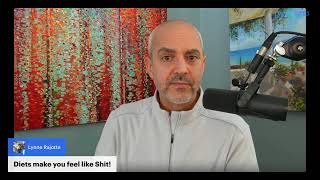
Jim Katsoulis argues that sustainable weight loss comes down to lowering daily calorie intake gradually, not through drastic cuts. He presents the Goal-Weight Pyramid: lifestyle factors like sleep and movement at the base, eating habits in the middle, and mindset at the top, with daily hypnosis and mental rehearsal to build a thin identity that lasts.
Chapters
Hey everyone, and welcome to today's program, Yourself Thin Podcast. Today we're talking about what to do to lose weight. I think a lot of times right now at this point, people are really almost confused about what to do to lose weight, right? I mean, every day, every week, certainly we're being told what to do, what not to do. And at this point, it's been years and years and years of getting so many conflicting different messages about how to lose weight that eventually get to the point where you just kind of throw your hands up and give up. And I think that's a an understandable place that a lot of people get to because you're getting so many different ideas constantly. And, you know, you get emotional about it and it's just— it's almost easier at some points to forget it. I don't know what to do. So I want to just talk about how to lose weight simplistically. And certainly, you know, once you understand this, you can bring in a lot of the things, you know, believe, have tried, have heard but you'll have kind of a framework to see it. That's just really simple, right? So when it comes to weight loss, what we're talking about is reducing your average calorie consumption. That's going to be the best way to lose weight. Now, I'm not talking about calorie deficit. Okay. Now, calorie deficit, you can create a calorie deficit by working out more. Yes, you can. But that has a tendency to not work well because when you just focus on working out more, you tend to unintentionally eat more. And so I have found that the clearest way to drop your weight is to reduce your average calorie consumption. Now, notice I'm not using the word calorie deficit because right off the bat, I'm not just talking about losing weight. I'm talking about you living at a new lower weight for good. And so I want to use the language that reinforces that. And so instead of just creating a calorie deficit, which really does kind of hint towards a temporary thing. I want you to start right from the beginning thinking about long-term success. And so what you're looking for long-term, if your goal is to live at your lower weight for the rest of your life, is you're looking to lower and reduce your average calorie consumption. So that's the first starting point, okay, is we want to get the calories lower than what they typically are on average, because your weight is a reflection of your average calorie consumption. It's the number one thing impacting it. So the first thing we want to do is focus on reducing your average calorie consumption. Now, how do you go about doing that? Dieting has trained you to do this drastically. So typically when people think they're going to go and lose weight, they're thinking as a dieter, because that's how we've all been conditioned to think, because we've literally been surrounded by diet marketing our entire lives. And we say, okay, I'm going to reduce my average calorie consumption. Jim, I'll talk about like you do, but I'm going to jump right into it. I'm going to reduce my average calorie consumption by 50, 60% starting tomorrow so I lose weight quick. Well, if you do that, the chances of your success go way down because cutting 50, 60, 70% of your calories out starting tomorrow and trying to maintain that is really difficult. Your body is a status quo machine. It's a homeostasis mechanism. So when you all of a sudden cut that many calories out, all of your body and your mind start to fight against that, and it makes it very difficult. So my suggestion to you is— because of course we know, I'll just cut the calories down. It sounds easy on paper, but how does that show up in real life? Well, we need to make it relatively comfortable. So I would suggest that you start to think of this almost like a dimmer switch, and we're not going straight to where we want to go. We're going to work our way up there comfortably. And that's a key factor, is that you want to work your way to your goal in a comfortable fashion. Now, again, this is the opposite of what you hear with dieting, because dieting is typically telling you no pain, no gain, jump into it, 50%, 70% reduction day one. But that is setting you up for maximum difficulty and maximum difficulty. The flip side of that coin is maximum inefficiency. It's not an effective strategy typically. So we're looking to do is, yes, reduce the average calorie consumption, but to do it comfortably, start dialing it down. So yes, on a calorie level, we want to start lowering our calories, but we want to do it in a comfortable way. Now, the most effective way to reduce your calories long term is not just to cut out a lot of foods, but to start to understand the concept of calorie density so that it's not so much that we're looking to remove the food as it is remove the calories. And there's a big difference there because you wanna start looking for the foods you typically eat that have the highest calorie density. What's calorie density? Calorie density is the amount of calories in a volume of food. So if we take an apple and a cookie that's the same size, or cookies that are the same size of it, same volume, but the cookies have way more calories in it. So the cookies are a lot more calorie dense because of the butter, the sugar, the flour. We look at the apple, that volume, there's a lot less calories in it. So that's a lot less calorie dense. And so what you want to start doing is not just cutting foods out, but to start removing calories. You want to ideally keep the volume similar to what you typically eat., but you want to reduce the calories. This is the real secret to reducing calories in a way that feels comfortable so that you feel satisfied. So you want to start reducing the calories but maintain the volume as best you can. That's going to allow you to reduce calories while you still feel comfortable. And as a hack to do that, just as a general guide, the easiest way to do that is to focus on whole natural foods. Just by and large, whole natural foods tend to be less calorie dense than processed engineered foods. So that's just kind of a, a simple guideline. Of course, you can educate yourself more and more about this and make more and more sophisticated decisions. But just in general, the more you start to consume whole natural foods rather than processed engineered foods, you're going to find that you're consuming less calories and you're feeling better. So I'm going to leave calories alone there for now. But again, that is very important. But the other thing I want to talk about that I think is not really talked about in a systematic way is that we do— we deal with the eating on top. So again, what I'm referring to here is a goal weight pyramid. In Program Yourself, then we talk about the goal weight pyramid, which is a comprehensive, holistic strategy to deal with your weight. And so we just talked a little bit about eating, and obviously you're going to change some of that. But the next thing we want to talk about is lifestyle, because the the lifestyle supports your ability to eat in this new way. And so what are we talking about with lifestyle? In order of importance: sleep, hydration, relaxation, breathing, nourishment, movement, gratitude, and meditation. And so as we start to create a lifestyle where we weave these things in, what happens is physiologically now you start to set your body up to burn calories more effectively, to reduce your appetite, to feel more satisfied, to be more present and be able to make better food choices that, you know, you should make. And so the lifestyle piece, I think, is so overlooked and it's so crucial. I think, you know, without the right lifestyle, the right eating is almost impossible. And at the very least, it's extremely difficult. So again, we want to get that lifestyle piece in there as well because, it makes you able to make the food choices that, you know, you want to make. And then finally, the piece underneath that is that we want to work on our mindset. And this is probably the piece that's avoided and ignored the most. But of course, this is the base that supports the lifestyle and then the eating on top of that. So when it comes to losing weight, instead of getting fixated on just the eating piece and the specifics of what you should eat, you know, what I told you is kind of a nice starting point. And focus more of your energy, less of it on the food, the specific foods, tracking macros, all that micromanaging of eating, and start to dedicate that energy, more of that energy to your lifestyle, getting yourself more grounded, calm, energized, emotionally balanced, because that's going to turn into a healthier body that supports you in the choices you're going to make. And it does support your metabolism to some degree to help you let go of the weight, in a more efficient way most of the time. And then put that energy into mindset as well. Um, reinforce your motivation, uh, reinforce the identity that you're looking to create in yourself of being a thin, healthy, happy person. Uh, focus on your habits and installing and generating the habits that work on near autopilot to move you in the direction you wanna go in. Um, work on your emotions. Again, emotions are so fundamental to your weight because when we're emotionally unbalanced, we tend— that tends to show up in the eating as well. So if we go to the core level and start working on our emotions genuinely, we tend to again make better food choices up on that top level. Work on how you're thinking, work on your maintenance so that if you have a good or bad day, you're able to keep on moving forward and you just keep going forward because you have a rock-solid mindset. And when you put all three of these pieces together, your ability to manage your weight skyrockets. And most likely, these are things that you have never really considered or focused on with your weight loss, because the diet industry has really gotten you obsessed with micromanaging calories in different ways. And if you look at this bigger picture, you're going to find that not only are you able to manage your weight better, but you feel better. And that's the key thing. And that's the reason we're doing this. So I hope this helps you out. And if you want some more support with this process, click the link in my bio or go to programyourselfthen.com. Um, get the free hypnosis session I give you. It's called The New Thin Me. And again, it's designed to help you clarify your goal weight self and connect to it so you feel pulled forward during this process towards your goal, um, as opposed to having to just always push yourself. So go check that out. Uh, and if you have any questions, feel free to ask them. I hope you're all having a nice Friday. Um, and again, if you're over in— put this link in there. If you want to get that hypnosis session, if you're on TikTok, you can just click the little picture of me up on the top left there and go get that in the link there. And if you are in Facebook land, YouTube land, there you go. I just put the link up in the comments section. You can go check that out. So yes, if you have any questions about weight loss, though, feel free to ask them. I am here every Monday through Friday. This is something I do every weekday to help you all move forward with your weight. One of the things I like to be able to do is give you a different perspective on this whole process. I think, you know, all of us are surrounded by diets constantly, and, uh, to some degree it's kind of hijacked how we think about weight loss. And it is my goal to help point out a different way to accomplish this and do this for yourself. So, hey Regina, how's it going? Regina says hello, thank you so much for everything you do. You're welcome, welcome. Yes, this is my mission in life and, um, and a passion. I, I love doing this. I, I find, um, dealing with weight in helping people live at their goal weight, it is— I like it. It's like a puzzle, in my opinion. So I find it really interesting and certainly it's very fulfilling because when you are able to get control of your weight in the way that I'm talking about, like I said, it's not just a physical thing. It is a— it's a mental thing, an emotional thing as well, you know, and that's my goal because I think, you know, we had someone on here yesterday where two people actually where they've lost pretty, uh, profound amounts of weight and, um, and they weren't really happy, you know. They said this is still a struggle, it's still difficult, you know, and all this stuff. So, um, you know, what I'm talking about here is more of a comprehensive holistic approach that again is not only designed to help you manage your weight, um, but really help you to develop personally as well, you know. Um, Boulder says you have no clue what you're talking about, bud. Um, that's not true. I have a very good clue what I'm talking about. I've been doing this personally for over 30 years, uh, professionally for over 20 years, so I have a very good clue. Um, Boulder says you're just saying the same thing over and over again. Get to the point, genius. Well, I appreciate this. I haven't had a dipshit on here in a long time, so thank you, Boulder. It's been a while. Um, did I get to the point? I don't know if I got to the point for you enough or not. I hope I got to the point for you all. But, uh, there it is. I don't think Boulder would be a good person for this approach. Uh, you know, and I always say too, like, I, and I don't make any secret of this, that, that what I'm talking about here is not for everyone. Um, as a matter of fact, it's not, it's not for most people, I don't think. Um, because I'm not here saying Boulder is not smart. Um, but, but most of my clients are overthinkers and, uh, I think Program Yourself Then really is designed for overthinkers. And, uh, so, you know, because, because I get my— I love the dipshits that get on here. I'm a big fan of it because I think a lot of times they say, you know, to be honest, I mean, that wasn't really— they're not saying much, but I'll get people on here, oh, this all your bullshit, all you got to do is just do the right stuff, just, just follow the plan, just reduce your calories, it's just simple, it's simple. You know, it's not simple. It's not simple. You know, and I think that, that goes right to the core of how a lot of people kind of torture themselves, especially my clientele. I'm not talking about my people, um, which are overthinkers. And, you know, my clientele are very smart and very successful in their lives, right? Whether it be professionally or personally, where they've focused a lot of their energies in their lives, they're very successful. But then there's the weight piece and they struggle there. And I have always found that interesting because so often the weight thing is not really— it's not really a reflection of your abilities, you know, because people will have the ability to have willpower and stay focused and, you know, take action in certain areas of their lives. But then when it comes to the weight, they're just kind of out of control with it. And that's such a fascinating thing. And I think a lot of you will be able to relate to that. And if you really think about it, you'll recognize you kind of You're constantly in that headspace. You're like, what's wrong with me? What's wrong with me? How come I can do this over here and I can't do this over here? What's wrong with me? What's wrong with me? There's nothing wrong with you, in my opinion. I think what I've seen— and I've done over 6,000 private weight loss sessions, so again, I think I do know what I'm talking about somewhat. You may not agree, and that's fine, um, but I, I, you know, I've got absolute fucking proof, um, that I know what I'm talking about, um. But I think what the real issue is, is that you all have never learned how to truly manage your weight. You've never— you know, you have to understand that the diet industry is not here to really help you. The diet industry is wolves in sheep's clothing. The diet industry is a branch of the food processing industry. Weight Watchers is owned by Heinz. Jenny Craig was owned by Nestlé. Atkins Food Products is owned by the same company that owns Onions, Pretzels, and Cinnabon. SlimFast, owned by the same company that owns Ben Jerry's ice cream. So I don't think these companies are really, really motivated to help the population consume less of their foods and be healthy and happy for the rest of their lives. That just makes no business sense to me. And so I think, you know, when they put these diets out there, they're promoting a strategy that is proven not to work. And I mean that genuinely because I challenge any of you and I'm— here we go. You can prove me wrong right here, you know, on the livestream. But I challenge you to tell me the diet that's effective long term. And I think if you reflect on 100 years of diets, there's not one single diet that rises to the top of being effective long term. That, that's a crazy thing to think about. And so to me, dieting just in a nutshell is not going anywhere close to help you manage your weight. And I believe the reason why is if you look at this goal weight pyramid that we use in Program Yourself Thin, you know, to me, I always say dieting is basically this much of the pyramid. It's basically saying, tell me what to eat, what should I eat? It's that part. And it's not getting into the, the structure and strategy of eating for you. It's certainly not getting into a strategic plan for how to change your lifestyle. And it never, never gets into the mindset piece of it. And so you have people with ineffective mindsets, ineffective lifestyles, and really ineffective eating strategies, just trying to force themselves to follow a diet plan. And it doesn't work, which is understandable. But the real trick the diets have pulled on us is that the dieter blames themselves for it, you know. And that's why I'm here every day for free, because I don't think it's fair, um, that you blame yourself. For not being able to manage your weight. I don't think you've ever really learned a strategic, comprehensive approach to actually managing it. And I think once you do, everything changes. You know, again, I ask you all, I ask you, if you've been struggling with your weight, have you ever, have you ever in a systematic way focused on your mindset or lifestyle? I know you haven't. And how do I know you haven't? Because I know in the world? You tell me. And again, prove me wrong. What— who would you study? What program? What person would you study and learn from to figure out how to create the mindset of a thin, healthy person? What program? What person would you study? And I am not expecting an answer because I've asked this hundreds of times. I've never gotten an answer. And so I don't think you're getting this kind of information. And so if you don't have this information, How are you gonna succeed? Well, the idea is that you'll just one day wake up on a Monday morning and just do everything perfect. But is that a realistic strategy? Is that, is that a solid strategy to get behind? I suggest no. Life Goes On says, I like your responses. Well, thank you. Yes, I, I love dipshits, and, um, it makes it fun for me. And I will tell you one thing else is that it's very surprising to me. I've been doing this, I've been doing this podcast, these live streams every weekday for over 3 years, and I'm shocked that I don't get more ding-dongs getting on here and saying dumb stuff. It's shocking to me. Brayden says, are you an actor? I don't know what that means. I am not an actor. No, I am a, uh, hypnotist, an NLP trainer, uh, and the creator of the program Yourself Thin program, the author of this book, The Tao of Living at Your Goal Weight, um, which is my, my newest book. And I love this, but, but really my claim to fame, in my opinion, my life's work is Program Yourself Thin. Um, this is the Goal Weight Blueprint. This is one of the books we use in the program, you know. Um, so this is what I do. I've been doing this for over, like I said, over 30 years personally. I've gone on my own journey, um, dropped 50, over 50 pounds and kept it off. Um, but my real focus is that I've been doing this professionally for over 20 years. I've done over 6,000 private weight loss sessions. And, um, I get on here to help people out because I think y'all deserve it. And plus just as a matter of why this is a mission for me. Um, my father died when he was 54 years old. I was 9 years old and had a heart attack, and his weight and lifestyle were absolutely huge contributors to that. And so for me, weight is life and death, and that's why I'm on here, because, uh, yes, I want you to look good, you know, in your bathing suit, but I more— I want you to live as long as you can. I want you to have a wonderful, best quality life possible while you're here. You know, so it does mean a lot to me. Bazooka Joe says follow Dr. Eric Berg. Um, I don't think Dr. Eric Berg is going to give you the depth of mindset, um, info that you would need. But, um, Amanda says, I get what you're saying, but if it's not our fault, then whose is it? Nothing changed until I stopped. No, no, no. Okay, listen, you, you, it's— I don't think This is such a— it's a squishy thing to say, okay? Because technically on paper, everything's your fault, you know what I mean? But in reality, if you don't have the information— so for example, you know, if you're just someone who wants to lose weight and all you've ever known about losing weight is, uh, dieting and it hasn't been successful, uh, is that your fault? You know what I mean? And so I don't think that it is, because I think you have not had the information that you need, uh, to really succeed. And so if you don't have the information, you know, so, so I've lost a bunch of weight. Yeah, okay, you know, some— sometimes people do lose weight as well, obviously, you know, but, um, it starts to become kind of— if you're lucky— so no, it's hard work. Well, I know it's hard work, but Here's what I'm trying to say. To me, a strategy that works is one that a lot of people can utilize and succeed with. And dieting is not really that. Dieting has terrible, terrible, um, success rates, you know. So yes, we're all responsible, but I think the responsibility is more about learning how to get yourself to do the things you know you should, rather than just trying to force yourself to follow a plan that doesn't really resonate with you. I don't know. Dr. Berg. Yeah, yeah, not the biggest fan. Amanda says giving responsibility to everyone else. Uh, Ken says 60 months in PYT and have comfortably lost over 50 pounds and kept it off, so I'm glad I did PYT and not GLP-1. Yes, Ken, I love that. Um, yeah, of course, right? And I always say that, I always say that, uh, you know, if I, I will put any of my success stories against the GLP-1s all day long. Um, and again, I'm not, I'm not a GLP-1 hater, please understand. Uh, I think, I think it's a miracle, uh, drug for a lot of people, and I think it's the right choice for a lot of people. Um, what I don't like about the GLP-1s is this idea that it's the only solution. It is not, you know, it is not. Um, so again, I get out here to work to explain that. Uh, what's up, Vicki? How's it going? I hope you got your email. I did get the email, I'm gonna check that out. So thank you for sending that. What's up, Katie from Australia? All right, yes, yeah, we get people from around the world here, it's pretty cool. I actually, I always say like my biggest countries outside of US, uh, people I work with, Canada, UK, and Australia, definitely. So I hope it's doing well over there. Uh, because there's another dipshit or a troll. Yeah, who knows, I always kind of the same. What's up, Jane? Jane says learning seems to be so slow for me, I chose to eat a huge bowl of chocolate pudding too late last night and didn't sleep a wink due to indigestion. Question. I'm exhausted now. Um, Jane, one thing I'll say about you is that I, I think you, you, you measure yourself too zoomed in. Um, so I wouldn't say learning seems to be so slow for me because I know, I know you've been programming yourself then, I mean, I'm a month or so, you know. And this is the message to all of you, I think, that, uh, weight loss, again, that's one of the things dieting's done to us is it's, it's really perverted our sense of time. And, you know, you look at weight and you measure yourself in days, weeks, and months. And, you know, if you look at something like learning a musical instrument, you know, how good are you going to get at playing the piano in a month? You know, and so you get the other— myself, I don't know, I must be slow. I must be not very good at this, you know, because I can't even play that much in a month. Well, I'm 30 years into the guitar and I'm here to tell you, yeah, a month's nothing. A month's nothing. A month's nothing with your weight. It just isn't. Tough shit. If you don't want to believe that, you don't have to. But I don't see how a month is very long with weight loss at all. And again, it's this thinking of— it's my favorite quote, right? That most people overestimate how much weight they can lose in a month and underestimate how much weight they can lose in a year. And I think that's very common. And I think that's directly because of weight loss. Weight loss has conditioned us to think about how much weight we can lose in the shortest amount of time. And I think that way of thinking sets us up for, um, so much difficulty, so much trouble. But the big thing, Jane, that I look at when you say that is that you had the awareness to realize that you ate a bowl of chocolate pudding too late, then you didn't sleep. So that, to me, again, in Program Yourself Thin, the primary things we're learning come from our mistakes. So again, the biggest difference between Program Yourself Thin and dieting is that dieting expects you're not going to make any mistakes and Program Yourself Thin is built around your mistakes because you're going to make lots of mistakes. Yes, you are. Yes, you are. You're eventually going to make lots of mistakes. You might be able to not make mistakes for a couple of days, a couple of weeks, sometimes a couple of months. But I promise you, you are going to make mistakes. And if you're a dieter, you have zero strategy for how to deal with that mistake. If you're in Program Yourself Thin, we build on those mistakes. The whole program is built around the Program Yourself Thin technique. Which is the redo and rehearsal technique. So when you make a mistake, great, we get to redo it today. So I feel like Jane's better off because she's aware now, and now she has the ability to subconsciously associate, oh, I shouldn't eat chocolate pudding. Here's the difference, right? Jane the dieter, Jane the program yourself thinner. Jane the dieter eats pudding and says, oh my God, I shouldn't have eaten pudding. Why'd I eat pudding? But subconsciously, Jane likes pudding. So yesterday morning, Jane likes pudding. Subconsciously, Jane has association. Chocolate pudding is pleasurable. Okay. And as a dieter, she has that association and she fights against it consciously. Chocolate pudding is so delicious. It's so good. It's so pleasurable. Don't eat it, though. I want to lose weight. Don't eat it. Don't eat it. Don't eat it. Don't do the thing you like to do. And it's a forever struggle. Jane, the program yourself thinner, has the awareness, oh, I ate chocolate pudding and I didn't sleep at all. So now she starts to That gets a little different. That association is a little different. So instead of chocolate pudding just being pleasurable, now all of a sudden we're starting to create a new association over that that says, yeah, chocolate pudding can be pleasurable, but it can also be painful, and chocolate pudding equals not sleeping a wink. Well, if you keep building on that, because guess what? Every time you eat a lot of chocolate pudding before bed, it's always going to be the exact same scenario. You're not going to sleep for shit. This goes for all of you, by the way. This goes into the consequence food phase of eating, that anytime you overeat sugary, you know, high-processed foods, it's a negative consequence. And so with program yourself, then we're looking to reassociate things in a more accurate way too, by the way. Everything's good and bad. So now for Jane, she's on a path to start associating chocolate pudding at night equals no sleeping. Well, let's just say that happens a couple more times and it really starts to solidify so that she thinks about eating chocolate pudding at night. She's like, yeah, but I want to sleep tonight. If I eat chocolate pudding now, I'm going to be exhausted tomorrow. Well, now you don't desire it as much. Now you don't need as much willpower to fight against the chocolate pudding because it's associated with something negative that you don't want. So now the desire goes down, the craving goes down, and the decision starts to change and reflect that. Does it happen instantly? No.. But if you keep focusing on this, every time you make an unhealthy food choice and are aware of it, you're going to realize there's always a negative consequence that follows. Some of those negative consequences are intense. Some of them aren't that intense. But the more you keep paying attention to the consequences that follow immediately, your unhealthy, unhelpful food choices, you start to condition yourself differently. So, so I know it sounds weird, Jane, but again, I mean, Great job, um, being aware of that. And we're always going to make mistakes, but at least you realized beyond just, oh, I'm a bad person, you realize you're exhausted today. So good job. That's what stopped me from eating, exactly what you just described. I started to realize how negative the effects were that of eating. Um, what's up, Therese? Therese says, oh gosh, they don't know what they're talking about. I started with you in December and I'm finally making peace with this journey and you. Yes, I'm successful. Yes, thank you, Therese. I guess I, I, I never mind that. I never mind trolls that get on here. There's not a person on the planet that could get on here and make me feel like I don't know what I'm talking about. I mean, I, uh, you know, because I know what I'm talking about. But thanks for sharing that. Anita says, it's working for me. I was so ready for understanding it's not willpower but the subconscious and the practice of proper habits to correct. But let's be kind to ourselves, the key. Yes, yes, yes, um, absolutely, Anita. I agree with that. Um, we have to be kind with ourselves, I suppose. I, I mean, I guess you don't have to be kind with yourself, certainly. But I think you have to be kind to yourself if you want to not just lose weight but feel better. Because, I mean, again, I regularly have talked with people that have lost weight, but they've done it through very intense punitive measures. They're just really hard on themselves. And so, yeah, they lost weight, but they're just as miserable as they've ever been, pretty much. I mean, yeah, it's cool. You know, they look a little better or they feel a little better in certain ways and go clothes shopping once in a while., but they're living in this constant stressful, struggling state. That's not the goal here. You know, the goal here is to improve our overall quality of life. And one piece of that is your weight, you know, and the other pieces of it is your mindset, your lifestyle, your energy, your emotions, your physical comfort, you know, all these other things. And so we're looking to feel a lot better, not just, um, do that. Ketovore, 100% success, optimum health. Um, ketovore. I've never heard that term. Is that just like being a keto— keto bore? Yeah, so I mean, it's just— it's a keto diet, right? But it's just a— oh, what is— it's an offshoot. Well, I'll have to look into that. Whatever. Listen, I will tell you one thing, folks. Um, 100% success is bullshit. There's no— nothing with 100% success rate. Um, and second of all, I'm not— I don't care. You want to do keto diet, knock yourself out. Knock yourself out. Do keto diet all day long. Um, the healthiest populations on the planet in the modern world are people that consume high-carb diets, low-protein diets, and there's no question about that. Go study the Blue Zones. I can't think of a single population on Earth ever that has really great health that eats high protein diets. So yeah, let me know. Let me know that, that population. Yes, yes. Ali says when you know better, you do better. Yes, yes, yes. Agreed. Agreed. And I think we, we live up to what level we can, you know. And so if we keep bumping up against a level Einstein said that— he said, you can't— I'm blanking on this. I used to say this all the time. It used to roll off the tongue, and now it's a blank. But also, I'll summarize it. I'm going to butcher it, probably. But basically, it's like, you can't solve the problems that you have with the same level of thinking that created the problem. And so I'm a big believer that whatever you're dealing with on the physical level in terms of challenges is a reflection of your mindset and the thinking level you're at. And so this is why I think, in a nutshell, I think this is why dieting does not work because dieting is basically saying, um, I'm not going to change my mindset. I'm going to keep the mindset the same. I'm just going to follow a new plan. But to me, it doesn't matter what plan you follow if you've got the same broken mindset. And I think dieting— the main issue I have with dieting, beyond the philosophical philosophy of nutrition, my main issue with dieting is the mindset of a dieter. Because it doesn't matter, you want to be a ketovore, you you want to be a carnivore, you want to be a vegetarian, a vegan, literally anywhere within the spectrum of diets, pick any of them. What they all have in common is the person jumps into it 100% on day one. And the diet idea is I'm going to jump into it 100% on day one, and I'm just going to change in one day. And I think that way of approaching it is set up for failure for most people. It's too intense. It's too extreme. You make over 200 food decisions a day. The cognitive load of completely changing your diet in one day is overwhelming. It's not built to last. Your brain's not built for that. It— again, there's a lot of good reasons why dieting doesn't work, and it's not because your willpower is weak. That's the shittiest explanation for why diets don't work. Yeah, Jane says, yeah, just one month. Uh, yeah, Jane says, not so much the pudding, it was the more— more the eating late. Yes, Jane. So there you go. That's an even better association to have. That's a more useful association I'm going to have— so it's not just chocolate pudding equals I'm going to wake up exhausted. Now it's eating late at night makes me exhausted. Great, Jane. I went through the exact same thing, Jane. I spent months and months and months— I mean, probably 6 to 12 months working on my late-night snacking when I first started this. I was— oh my God, took you that long? Who gives a shit? I spent 6, 12 months on it, and then the next 30 years I don't eat at night. So yeah, I'm willing to put the time in to figure something out genuinely and then reap the rewards of that forever. So great job, Jane, because now you're making the association and you'll be able to test it because you'll make another mistake. You're going to eat late again, Jane, at some point. Who gives a shit? Because you're going to have the opportunity to reassociate. Oh my God, when I eat late, I really— I don't sleep well. Oh my God, I get exhausted. That's the biggest thing all of us can do, folks. You've all built up a tolerance to the food. What do you want? You eat like shit and you feel like shit, but you don't realize you feel like shit. It's the classic case of tolerance. And once you start becoming aware of how shitty you feel, not how shitty you look. So that's what the diet industry's got you fixated on, how you look, what your scale says. I'm talking about your day-to-day reality of how you feel mentally, emotionally, physically. You eat like shit. You're most— if you're struggling with your weight, never mind what your weight says and how you look in pictures, you're living in a constant state of hangover. Basically, you're constantly less than because your energy's shit. You don't feel that good physically. Your digestive system's not working right. Um, your mindset's clouded. Your emotions are down. Your mental, you know, how you're talking to yourself is negative because you know you're not doing the right stuff. That's the bigger fucking issue than what your scale's saying, what you look like in a picture. I know you don't believe that because we've all been conditioned by the diets to just think about how we look, but there's bigger consequences going on. And once you start waking up to them, you start naturally making better choices. Lynn says, when you mention high carbs, you mean certain types of carbs or all carbs? No, I mean certain types of carbs. I mean not, not refined carbs. Refined carbs are an issue for sure. The number one source of calories in America for adults is baked goods. So yeah, you know, that's what keto is. Keto is this knee-jerk reaction to that stat. Okay, the number one source of calories for most people is baked goods, flour. We're talking about flour. And so, yeah, so if we make a diet where there's no flour, people are going to lose weight. Yeah, you lose weight for a little while. You're not going to stick with it. Simon, I don't, I don't know. You think it's a healthy diet? I don't think it is. Whatever. Fine. Is it healthier than what you're doing? Maybe. Is it the healthiest? I don't think so. But whatever. We can agree to disagree. That's fine. But no, I'm talking— the carbs I'm talking about are vegetables, fruits, whole natural carbs. Whole grains. This is what— there's no question in my world. I, again, if you've got evidence of some population that is just thriving health-wise that eats high protein diets, then let me know. Just say it. Please don't tell me the African tribe and don't tell me the Inuit Eskimos. Please don't say that. But give me some population that has existed on high protein diets that's thriving health-wise. Who are they? Who are they? I know protein is the answer to everything right now. Right now, please take a step back and look at the last 50 years of food. We got low fat, then we had low sugar, then we got low carb, then we got low gluten. Now we got high protein. It's like, you know, every— it's the halo effect. They pick one thing to focus on. They jam that down your throat. And right now it's protein. There's protein everything. Oh, yeah. Is that why everyone's so thin now? Is that why everyone's losing weight? Because they're eating so much protein? Listen, I love protein too. Please understand that protein is an essential part of a diet. Please understand that. But I think there's this overfocus on it because there's a lot of money being made around protein. I get— I get every day I get opportunities to promote protein products because they're huge in weight loss right now. So I think that it becomes an echo chamber of you hearing all of these podcasts, all these influencers all of these ads, all of this marketing, all these products with protein out the wazoo. And it's like, again, I think protein is important, but it's not a miracle. It's not eating more protein. Oh, it satisfies me. Oh, okay. So you know what's going to satisfy you more is fiber. Never mind your protein content. Jesus Christ. I've been vegetarian for over 25 years. You know, the first question everyone asks me, well, your protein— who gives a shit? What are you so worried about protein for? Have you ever been given a protein deficiency test in your life? No, you know what I mean? Like, if you eat enough calories, it's impossible to be protein deficient. The protein thing is really an economic factor more than a nutritional one. And again, protein's important. I can't stress this enough. So you don't think protein is important? No, it's very important, but I think it's overstated. And I certainly think it's overstated when you should be focusing more on fiber. Fiber would change your life more than more protein, I promise you. If you're an average American, more fiber is what's going to make your life better health-wise and weight-wise than more protein. Lynn says, I need to adopt a better lifestyle. Yeah, sure. I mean, we all, we all need to adopt a better lifestyle. That's why in Program Yourself Thin, it's a— it's the middle of the pyramid. And in reality, I think on a physical level, I always think of this as the kind of non-physical level, although mindset is physical technically. But, um, in terms of our body and our weight, physically, on the physical levels of it, the lifestyle and eating piece. And I think the lifestyle is the more important one because it leads to the eating. You know, I listen, you can take whatever plan you want. You could be the best eater in the world. So you think, let me keep you up all night. Let me dehydrate you. Let me exhaust you. Let me stress you out. And then let me see how your eating goes. I bet it's not as good. Mine certainly isn't. I'm an eating pro, but all of a sudden my lifestyle, things start getting worse. My eating reflects that. It gets worse. So yeah, we all need better lifestyle. We got to take it more seriously. And I think a lot of times it's kind of overlooked. It's just kind of a saying for some people, but I don't think most people have a real strategic plan for how to improve their, their lifestyle. And I think it's crucial, crucial to do that. Bazooka Joe says, isn't it all about keeping your in love throughout the day? Maybe trying to eat 2 meals a day. Keeping your in love throughout the day. I don't know what that would amount— sure, that's a typo. But, um, uh, but, but 2 meals a day, for example, it doesn't matter. You could eat 1 meal a day, you could eat 2 meals a day, you could eat 5 meals a day and still be at the exact weight you want. So this is, this is another point that I really have a bone to pick with dieting because dieting is always giving this one-size-fits-all solution. And I think that's bullshit. I think, cause everyone's different. That's why like, oh, keto, keto versus carnivore, 100%. Well, what if you don't, what if you don't like eating that way? What are you supposed to do then? What if you're a vegetarian? What are you supposed to do? You know, so, so people are unique. You're unique, beautiful snowflake. Back when snowflakes were beautiful things, it used to be when I was growing up, snowflakes and being unique like a snowflake was a good thing. Now being a snowflake is bad. But you're a unique, beautiful being and you deserve to create an eating plan built around you, one that works for you. And whether you want to eat 1 meal a day, 5 meals a day, or anything in between, you can do that. You know, you got to figure out how to do it for yourself, but you could figure out how to eat for yourself. But again, this is where I think a lot of people go wrong with dieting because they try and make themselves follow a plan that doesn't really work for them. And dieting, to me, in a nutshell, is kind of like trying to fit a square peg into a round hole. Like, it's just you're always trying to force yourself to do something that just— it's not resonating with you. It's because it's not built for you. You know, the idea that everyone should be like— someone say, oh, carnivore, 100%. I'd never say that. I don't think program yourself in 100% success work for everyone. That's bullshit. Because there's just a million— everyone's different. So how am I going to say one thing's going to work for everyone? I just— that drives me crazy. And I think it leads to a lot of problems because you all, you've all tried losing weight and you've all done it by trying to follow some plan, but you've never said, wait a second, what works from this plan and what doesn't work from this plan? Let me take the parts that work. Let me discard the rest. Let me move forward and keep optimizing. If you had done that for the last 10 years, where would you be at today? That's not what you've done, though. You jump into a plan 100%, you jump out of a plan 100%, jump into a new plan 100%, jump out of a plan 100%. And here you are, confused and starting from the exact same point you're probably at 10 years ago. You can't do that. You don't have the time. You've got to start changing the way you're approaching it. Um, you know, because no matter what you've done and no matter if you've succeeded, you fail, whatever, there's so much wisdom and knowledge back there through your experience that you can learn from and utilize. But you're not because you've learned like a dieter. They jump all in, you jump all out, jump all in, jump all out. You do the hokey pokey, you do the hokey pokey with your weight. What's up, Crystal? Crystal says it's so confusing. Yes, she said beans though. Yes, beans. Beans are a real magical fruit. And no, not because they make you fart, but because they put fiber in you and they're a really high source of nutrition. And if you listen to certain people, you're going to be terrified of beans because you're terrified of lectins. And that's how— that's the crazy world we live in, you know. And again, just so you know, lectins get cooked off. You really think beans are killing people, you know? But that's how— that's how bad the misinformation can get at this day and age. It's, uh, again, the information age. We always thought we're gonna— oh, okay, good information, we'll know what to do. We didn't know we're gonna get all the information and you just pick whatever you want to believe, and there's bullshit behind all of it. You can believe any of it, you know. But anyway, Bazooka Joe says keeping your insulin low throughout the day. Yeah, agreed. I think that's a way to look at it, you know. But the flip side of insulin is glucose. And I think if you start thinking in terms of what is this thing I'm about to eat, how would it impact my, my glucose and insulin levels? I think that's a great paradigm to reflect through. I don't think it's the only one, but I think it's a very valuable one because most Americans are eating foods that spike their glucose levels constantly. And if you spike your glucose, you're spiking your insulin, right? Because the glucose goes in your blood and you got to clear it out. So then your body releases the insulin. So the insulin follows the glucose spike. So yeah, if you have a paradigm of how I'm going to choose food and part of it is based on I want to keep my glucose levels stable and consistent, I think that's a great paradigm. It's certainly part of what I think, you know, and what that leads to is you have a steady, stable energy level all day instead of these crazy spikes and crashes all day. I've been there. It's almost impossible to control your eating when you're spiking and crashing your blood sugar all day long. So yes, agreed, Bazooka Joe. I do think that's a valuable, valid way to do it. But it doesn't have to be 2 meals a day necessarily. You know, you can, you can manage your glucose and insulin levels in any number of ways. You know, you could eat 1 meal a day, you could eat multiple meals a day, you know. So again, it depends on you, depends on your situation. And I think I just— I say that because What I want you all to start doing is basing what you're doing out of yourself. I think, I think a lot of times dieters have this tendency to be like, just tell me what to do and I'll do it. And it's like, oh God, don't say that. You know, I mean, how much more untrue could that be? You know, like you're just, you're not just going to adopt some brand new way of eating. What if it doesn't work for you? Is that possible? I'll just do it. Will you? Why would you say that? I would just say that, uh, Mike says diet typically means that you are doing something for a short period of time. You need lifestyle changes. Yes, yes, agreed, Mike. Um, I totally agree with that, except that, that phrase, that phrase where people say you need lifestyle changes, I agree, but I also think when most people really reflect on what that means and how they're going to do it, there's no there there. That you don't really know what lifestyle changes are. Technically, and you have no strategy for actually implementing those. I ask this all the time. What's a lifestyle? What's your lifestyle? What is it? I know. I mean, I could show you right now. I got it written in a book. I've got 8 things that I consider your lifestyle. What do you think your lifestyle is? And I know I've asked this many times and people say a couple of things. And so, yes, lifestyle is really crucial. Mindset. And lifestyle changes are necessary, but I want you to reflect and say, do you have a real specific plan? There's gist and literal knowledge. Most people have a gist knowledge when they say lifestyle mindset changes. That ain't going to cut it. You need a literal knowledge of what exactly is a lifestyle change and how exactly do you plan on creating that. I think that's an important point. Um, Lynn says, so do you suggest maybe a low GI type of diet. Whole foods is what I'm trying to focus on. Um, yeah. Oh, thanks, Lynn. Lynn says, I love all your, your videos and reels, by the way. Uh, yeah, I think, um, I think looking at, um, the glu— the glycemic index, it's just what I was just talking about, right? So it's like, I, I don't think it's everything, but I think it's a lot because I think— here's the thing though, I think Understanding the depth of why something is right. So, so even let's just talk about glucose for a moment, glucose and insulin, because I think for a country that has as many type 2 diabetics as we've got, it's amazing how little knowledge we actually have about glucose and insulin. It's really fascinating to me. And I mean, I literally, I've had numerous conversations with people that are literally type 2 diabetics that don't really understand what's going on in them, right? So every Cell in your body uses glucose. It's the main fuel in your body, and everything you eat turns into glucose ultimately. And so your cells, cells use it. But if you look at whole natural foods, that glucose absorption is much slower. Okay, because when you eat whole natural foods, it comes in the package of a food matrix, and it's typically held together by fiber. And so it takes your body a little while, and so you get a slow, steady glycemic The glycemic index is about how quickly it's absorbed into your body. So if you eat a candy bar, you're going to spike your blood sugar because a candy bar, you know, it basically melts into sugar in your body, right? It's just, it's already processed sugar. So you eat that candy bar and it's quickly absorbed, goes right into your blood. The glucose goes right in your blood. It spikes it. And now your body has to release insulin to bring it back down. And so Compare that to an apple, you know, in, in the apple, again, the, the, the sugars, and again, those are different sugars, it's fructose, but that, that exists in a food matrix. And so there's fiber bound, binding it all together. So it takes longer for your body to absorb that. So you don't get a spike. So that's just a kind of a general idea of glycemic index. And so as you start choosing foods that are more whole natural foods, pretty much you're gonna get foods that have a lower glycemic index. You know, and foods that are processed and engineered tend to have higher— again, not everything, you understand what I'm saying? There's always exceptions, but just in general. And the processing of food really is the big issue here, and specifically sugar and flours, because you look at sugar and you look at flour and it's been ground down into a powder, and this powder is quickly absorbed into your blood. You compare that to eating an apple, it takes a lot longer to digest it. So, um, yeah, I, I, again, I don't, I don't think like the GI, GI type diet, um, I don't think it's the total answer, but I think it's a very valuable concept to understand. But again, you know, in my opinion, we study all the different diets, we take the good parts and we discard the parts that don't work for us or they don't agree with it, you know, and move forward with it. So, um, Mike says the problem is they're putting the word protein on everything now and is it's normally small amounts. Yeah, sure, sure. Um, protein's just the— it's the buzzword, you know what I mean? And it's, um, you know, it ain't just gonna— the protein paradox is that how, you know what I mean, like on one hand you have people that are eating protein to put weight on and build muscle, you know what I mean, so they can be bigger. On the other hand, you have people eating protein so they can lose weight and be smaller. You know, again, and I know there's, there's more to both of— I understand that, but I'm just saying, just as a— it just makes me nuts. Anita says the acceptance that the correction of our subconscious may take many months is important to being successful. Yes, Anita, yes, yes. But that's a time frame. Again, you know, like, think about the time frame you have with your weight versus the time frame you might have if you take up golf or you want to learn an instrument, you want to learn a language. Those time frames are way longer. Your time frame for weight is how you, you eat well the first day, you're like, oh, did I lose any weight today? You know, maybe you can wait a week. How much weight I lose this week? Well, how good did you get at the piano your first week? How good did your golf swing get the first week? Not very good. It's not very much time. So again, the diet industry has put this, this weird-ass time frame over us, and we can't even escape it now. It's just It's hardwired into us at this point, but we have to fight against that and we have to realize that success takes longer than we think. I mean, it's literally a cognitive bias. It's called the planning fallacy. And when we undertake some new undertaking, we tend to just think of the best-case scenario because our brain's always looking to conserve energy. So it doesn't take into account every possible setback. So most people think they're going to start their weight loss journey here and then just go straight down to their goal weight, straight line of success. Well, I have literally worked with people. We've tracked their weight.. And I can tell you it's much more doobity-doop, boopity-boopity-boop. But the trend line's down. You know, it's— again, look, go look up Virginia Satir's Model of Change. I think that's the most profound diagram you'll ever look at. And change takes longer than you think. So what? Who gives a shit? The irony is that you all have been trying to lose weight for decades at this point. If you had just stopped chasing hacks and shortcuts years ago, you'd be in a much better spot now. And again, I don't blame you because I think the diet industry has conditioned us to always look for hacks and shortcuts. But you got to resist that. You always say dieting is a get-rich-quick scheme. And, you know, but when it comes to money, get-rich-quick schemes we see in context because most people earn money through developing a skill or an ability or a talent and they're compensated for it. Okay. Um, and so we see get-rich-quick schemes as the bullshit they are within that context. But when it comes to weight loss, we don't even have, there's not even a genuine strategy or philosophy or system for how to manage your weight in this environment now. And so dieting is seen as legitimate, but it's complete bullshit. It's bullshit because it's woefully inadequate. How are you going to tell me that you're going to— when you see this goal weight pyramid, I know you probably never think in this way, but once you see it, once you see, okay, you know, in this program anyways, we're going to deal with mindset, lifestyle, and eating. Like, once you see that, What do you think about your mindset? You either think it's important or you think it's not important. If you think it's not important, I don't know what to tell you. But, but if you think it is important, how are you going to— how are you going to deal with it? What is your mindset? How are you going to change it? What are you going to do? And that reveals that you have no clue because you've never learned about it. No one's talking about it. And this reveals the bigger picture, that the reason you're struggling with weight more than anything else is you've never learned how to think like a thin, healthy person. Never, ever. You've never learned how to think like a thin, healthy person, and you have to learn how to do it. Why? You say, well, my grandparents have to— your grandparents didn't live where we're living now. We are living in an alien environment. This is a brand new reality that humans have never had to deal with in history. And so you do not have the knowledge and the strategies and the information in your brain to deal with the reality we live in now. We live in an alien environment where we're surrounded by hyperpalatable addictive foods. And you have zero strategy that you've ever learned of how to deal with that. The only thing you got is dieting, and dieting is not there to help you. Dieting is there to hurt you, confuse you, and keep you stuck. And that is why most people are, you know. Yeah, Mike says protein and fiber are both important. Yes, of course, of course, absolutely. You know, it follows up by saying calories in, calories out. Yes, calories in, calories out. It works again, but, um, for most people, the minutia of calories in, calories out gets them— it gets boring, you know. Mike says the key is knowing your maintenance calories, and if you want to be at a deficit, you minus 500 calories from that, you're losing a pound a week just on diet. Um, well, I don't believe that, you know, because that's bullshit, you know, because listen, folks, you know, I'll get 100 of you overweight and I will reduce your calories all by 500 of what you typically eat, and some of you will lose a pound, some of you will of 5 pounds, some of you lose no weight, some of you put some weight on. So that's one thing I got to push back on. Um, weight loss is extremely inconsistent, unpredictable in the short term. That's why these calorie calculators, I think, do more harm than good, at least in the short term, because every body is different and the way you lose weight is completely different. And I think the idea that you think you're going to lose as much weight as your friend did, the second you don't, you feel discouraged and frustrated. So yes, in theory, you know, that's a theory, and ultimately may point to be true. But, but this week you cut 500 calories, you're not going to be a pound down next week. You may be, but you also may not be. Oh, User 906, I love this. That makes no sense. The laws of thermodynamics apply to all bodies. Um, do they apply equally in the exact same time frame? Because that's not true. Go look up any metabolic lab study, and what you will find is they put a group of people in a metabolic lab and account for every calorie in and out and keep them the same. And they leave that metabolic lab with wildly different weight loss results. So how do you explain the laws of thermodynamics in that context and in that time frame? User 906. So yes, the laws of thermodynamics apply to all bodies, but they don't apply to all bodies equally in the exact same time frame. No, they don't. And that idea that everybody's the same, and if we all cut 500 calories down, we're all gonna lose the same amount of weight, is bullshit. And it sets people up for failure, because as soon as you don't lose the weight that your friend lost, you think, uh, uh, it doesn't work. Something's wrong. Something's wrong with my body. Well, nothing's wrong with your body. It's just, it's a different body. But if you continue to keep the calories lower, you, the weight will come off. Yes. The laws of thermodynamics do apply, but they don't all apply at the same timescale. And I think that's crucial to understand. And I think that's a huge issue people have because everyone is thinking again, tell me what diet out there is not measuring your results within a week. Tell me you're not measuring yourself, you're weighing yourself every week and you're seeing what the thing is. And if you don't lose weight the first week, the first 4 weeks, tell me you're going to keep going. It's hard, right? But it's because you think you should have lost a certain amount of weight. Your expectations of weight loss are bullshit, folks, time frame-wise. That's why I say weight loss is inconsistent, unpredictable in the short term, very consistent and predictable in the long term. Lynn says, I'm stuck with T2D and trying to lower my A1C, so that's what I meant about changing my lifestyle. Yes. Um, oops. Yeah, Tabby Cat says, so true, sometimes I lose 1 or 0.5, sometimes I gain 0.7, but I have monthly net loss is normal. Yeah, exactly. Again, that's a time frame thing. We've got to reframe the time frame piece because because I think the timeframe is probably the number one thing that sabotages people. Tell me that's not true, folks. Tell me you haven't done really well with your eating, and then you're so excited, you can't wait to step on the scale and see what it is, and it's not what you expected, and you feel deflated and discouraged and defeated, and you quit. Tell me that's not the number one reason you've stopped losing your weight loss efforts. I dare you, you know. So again, and I get it, listen, I'm not saying that— that's a legit challenge. It's hard. It's primarily hard though, because we've been conditioned by the diet industry to think in timeframes that are this big. Imagine if you, imagine if you approached your weight like you did college, right? Because college, imagine you went to college in the first semester, the first week, like, I don't understand, I'm not a biology major yet. I don't understand biology. First semester, you're like, I don't know, I'm not a bio, I don't know everything about biology yet. This isn't working. Well, you don't do that because you, in your mind, you go into that with a 4-year timeframe, whatever your timeframe may be., but it's a, it's a multi-year timeframe. And so you can relax, calm the fuck down. Let's just work on this subject for now. Okay, dude, cool. Let's just do this now. And you break it apart and you work on your little things and you take that pressure off yourself. But when it comes to weight loss, you do the exact opposite. And you're just always, you know, you're like the farmer who plants the seed and keeps digging it up to see if it's sprouted, you know? And I get it again, we're all impatient naturally. And then the diet industry is glommed on top of that even more. And made us so impatient that it's almost impossible to stick with anything long enough to get the results that you're capable of. Tell me your impatience isn't the number one issue that stops you in the past. So again, my suggestion to that, by the way, is that cut the shit. Weight loss is a never-ending journey. And you say, oh God, what? Oh, I gotta do this forever? Well, let me ask you, how long do you want to live at your goal weight for? Well, I just heard you say forever. So on one hand, I hear you say forever. On the other hand, you're freaking out that it's a never-ending journey. So which is it? Well, of course you want to do this forever. So that's— that comes back to the idea the reason you can't think about dieting forever is because dieting's fucking miserable. It's a miserable experience. It lowers your quality of life when you're dieting. So that's why I say with Program Yourself Thin, this is all about increasing our quality of life right from the beginning. We're not in a rush to lose weight. I'm, I'm all upfront about that. Program yourself in is not the fastest way to lose weight. Well, technically it is because fast and slow are really interesting concepts as well. If you lose 20 pounds in a month by dry fasting and put 20 pounds on the next month, was that fast weight loss or no weight loss? Well, it depends on when you look at it. If you look at after the first month, you say, oh my God, that's the fastest weight loss ever. But if you look at the end of the second month, it's no weight loss. So what is fast weight loss and what is slow weight loss? You know, they say, oh my God, I'm doing program myself, then I only lost 2 pounds this month. Okay, fair enough. But how was it doing it? Well, it's great. I feel great. It was easy. It was enjoyable. It was comfortable. Okay, fine. So could you continue it? Yeah. Okay. Well, call me back in a year. Holy shit. I'm 24 pounds down and I'm maintaining it because I built it on a foundation that's easy and comfortable. So in that context, is that 2 pounds a month slow or fast weight loss? If you're able to keep it up. So we've got to reframe how we think fast and slow weight loss. Dieting has ruined that for us, you know. Yes, yes, yes, Chels. Yes, you just— you— yes, yeah, you just made it because you want it to end, and that's wrong thinking. Exactly, because dieting's so miserable. Dieting is an endurance test, let's be honest. It's basically you saying, how long can I stick to doing this miserable thing? So that I can lose some weight. But if that's how you feel, if you're constantly having to force yourself to do something you don't want to do, that's not a good long-term strategy. So you may lose some weight for a little while, but it's kind of an illusion. It's not real weight loss. To me, real weight loss is weight loss that you can sustain comfortably and relatively easily. That's real weight loss. So you're— I think you're absolutely right. I think you hit the nail on the head. What's up, J. May? Whoa, Mike says I'm down 115 pounds due to diet, mostly whole foods, weight training, and getting 10,000 steps per day. Nice job. Yeah, Mike says I want everyone to know they can do it too, right? Yeah, yeah, yeah. And he says he's right, everyone needs to figure out what works for them. I say this all the time, like, Mike, great job. I didn't even know that about you. That's, that's an awesome, awesome successful thing you did. And I was saying this yesterday, we had some people on, I think someone lost 150 pounds, I probably lost 50 pounds. And I always say everything I'm sharing with you folks comes directly from people that have lost weight and kept it off. That's what makes everything I'm saying different than what you typically hear, because I'm not— I'm not telling you what I learned from people that lost the fastest amount of weight the fastest. I'm talking about what I've learned from people who have lost weight and been able to keep it off. And they're two totally different things. So yeah, agreed, Mike. Anita says, mine says 69 years old and never used this as a tool to lose weight. So simple and so complex at the same time. Agreed, Anita. I, I don't disagree with that. Um, I find life in general is, is like, it's, it's a paradox, right? Like, the— some things are easy, but then they're also the most complex. I, I agree. Um, but I can't even tell you the number of people in my program that are in their 70s, you know. So it's never too late because what we're talking about here is not just weight loss, it's about personal development, it's about quality of life improvement. And you're never too old to improve your quality of life. So glad you're doing it now. Um, yes, Tree says, accepting my own time frame, that's challenging but also freeing. Agreed, agreed. I'm not saying these things aren't challenging, please understand. I think they're absolutely— everything I'm saying I think is, is challenging and difficult. But I think at least we're on the right path. And I think dieting is challenging and difficult, and it's on the wrong path. So I'd rather invest my energy and my time into challenges and difficult things that are going to sustain long term, that I can build on top of and keep growing. Um, Anita says impatience creates angst, depression, anxiety. Can't lose weight effectively if anxiety-ridden. Anita, I think you hit the nail on the head. And I don't think I don't think people pay enough attention to their emotional state when it comes to weight loss. I think what you'll find is that when you're in an emotionally unresourceful state, you're anxious, you're stressed, you're sad, depressed, pissed off, whatever kind of unresourceful emotional state you get in, it's really hard to eat well because when you're in those states, it's just too easy. Who gives a shit? Who cares? Fuck it. And when you're relaxed and calm and grounded, it's kind of the opposite. And I think if you look at pretty much any diet you've ever done, how do you feel the first day, the first week of your diet? Do you feel calm, relaxed, and grounded? Hopeful, happy? Or do you feel stressed, bored, tense, anxious? Well, we all know the answer. And so that's why I say in Program Yourself Then, just to give you an alternative take on the world, And program yourself. Then we don't start with a crazy meal plan or all this, this crazy shit. We start with a 5-minute hypnosis session in the morning. So you, you start your day relaxed, calm, breathing deeply, turning your attention inwards, grounding yourself, getting good ideas put into your mind. Then you go about your day. That alone is going to set you up to make better choices. Perfect choices? No, but better choices. In an easy and enjoyable way. You feel better, you feel grounded, calm. Then at night, you listen to a 10-minute session, do your 60-second mental rehearsal technique. That's it. Now, there's a blueprint, there's more, more to do, but you do it at your own rate and speed. There's no rush. It's learning how to figure out what works best for you. And we start by relaxing, calming, and grounding you. That's the number one thing that's been missing from your weight loss more than anything is that every time you start your weight loss, you start stressed to the gills. And you, your goal is how long can I stay stressed for? That's why I talk about the endurance test of dieting. It's really about like, how long can I white knuckle it and force myself to do this shit that makes me feel miserable? Dieting is hard and difficult and anxiety. That's why you're avoiding it, folks. You want, think about this again, the paradox of a dieter is you think about losing weight 24 hours a day. You're constantly thinking about your weight and how to lose it, and yet you never are taking— you're always pushing off the start. Oh, this month? Oh man, next Monday, next month, next year. Why are you pushing it off, right? It's like, it's on one hand, it's the thing you want more than anything in the world. You think about it constantly. On the other hand, you're always avoiding it. Why are you avoiding it? It's not rocket science because it's miserable. It doesn't have to be miserable. The main reason it's miserable is you're doing way too much too quickly. You know, I use the metaphor, the way you all approach your weight loss as a dieter, it's as if you were going to learn to play the piano, but the only strategy you knew is I'm going to play for 8 hours a day. I want to get good quick. I'm playing 8 hours a day. Okay, well, on paper that sounds great, but when you go to sit down and actually play for 8 hours, if you're able to get through the first day, the next day you wake up, your fingers are all cramped up and gnarled. They're killing you. Your back hurts. The idea of sitting at that piano is the very last thing in the world you want to do. And that's what you're doing metaphorically with your, your weight loss and your dieting is you're so overreaching, you're so overwhelming yourself that you now have this association to weight loss that it's the most painful, miserable thing in the world. And that's why you're stuck in this dynamic of thinking about weight loss 24 hours a day and wanting it more than anything and not actually doing anything to make it happen. Because the way you've been taught to make it happen is miserable, overwhelming, and you avoid it at all costs. Yes, Lynn, I think Lynn just summarized all my, my 20 minutes of bullshit in one great statement: diets make you feel like shit. Exactly. And to that point, I want to make a quick point, right? I love that, Lynn. Yes, diets make you feel like shit. They make you feel so shitty that even when you accomplish the thing that you want more than anything in the world, which is to lose weight, you still feel like shit. You say, what, what are you talking about, Jim? Okay, 85 to 95% of dieters that lose weight that are successful and get to their goal weight put it back on. So that tells you that dieting is so shitty that it is shittier than the weight loss is good. So it— that, that should tell you everything you need to know about dieting and why it doesn't work, in my opinion. You know, what's up, Queen Victoria? Thanks, Jim. I need this today. I'm one of those clients in their 70s. That's right. Yes, Queen Victoria's in the program. And, uh, again, it's never too late, um, And again, it's not just about the weight loss. That's why I can't stress that enough. That's what I noticed too. Honestly, I mean, most of my clients, 95% of my clients are 45+. So again, I'm not saying— I mean, once in a while people are younger, a little kind of old souls, I suppose. But I think a big reason for that is because Program Yourself Thin is not just about what you're going to look like. You know, because I think right around, right around 50, your motivation starts to change, even if you don't acknowledge it, but your motivation starts to change to functional issues, right? So it starts to change from how you look to how you move, climbing stairs, how long you're going to be alive. You know what I mean? It's starting to become like functional. And I think that's an important distinction that there's more motivation those people are bringing in and not only more motivation, but more wisdom and knowledge that there's more to this, just how you look, you know. So that's awesome. I'm glad you said that. So, all right, everyone, I gotta get out of here. So, uh, this has been awesome. I don't know, I've been really on a roll. This week's been really good. I really appreciate everyone on here and, um, you know, sharing this all with me. I really, really— I think you all got so much interesting things to say, and, uh, I, I do appreciate that. It makes it so interesting to do all this work, and obviously it's very fulfilling to be able to speak with you every day. I, I'm the luckiest person you all know. I say that every day. Um, I'm just one of the luckiest people on the planet, and this is one of the reasons why. So thank you so much. Um, if you're not in my world, make sure you click the link in my bio or go to programyourselfthen.com. Um, if you're over in, um, Facebook land, I will go put that, that link there. Okay, you can go get that. Uh, it's a free hypnosis session, and it's not just a hypnosis session. I give you a training, I give you a bunch of stuff. But, but go check that out. Um, if you like this, I'm here every Monday through Friday. I usually get on here around noon Eastern. I'm happy to answer your questions. Again, I do this every Monday through Friday. If you can't make the lives, it's also a podcast if you like listening to it. You can go any podcast platform, search Program Yourself then, and you can listen whenever you like. And, um, yes, this book's available. So if you're, you're looking to go deeper in everything I'm talking about in a really easy, accessible way, um, this is my book. This is available now. Uh, 40 chapters. Each chapter is a page, page and a half. Each chapter is a hypnotic story. Designed to reprogram your mind to think like a thin, healthy person so that you can live at your goal weight. Okay, so it's not just about weight loss, it's about living at your goal weight in the easiest, most comfortable, enjoyable way possible. All right, so go check that out on Amazon. The Kindle book is like $2.99, the physical book's $9.99. So if you're interested, go check that out. And yes, thank you, Anita and Jane. Awesome. Thank you. Appreciate that as well. Have a super day, everyone. Have a great weekend and we'll talk soon. Bye.
More from Jim



Weight Loss Visualization: Wake Up in Your Dream Size #programyourselfthin #weightlosshypnosis



What If You Pretended to Be Thin for One Hour? #programyourselfthin #weightlosshypnosis




