Why You Do Dumb Things When You Want To Lose Weight
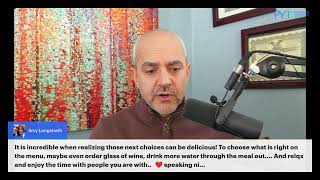
Jim Katsoulis explains why people sabotage their weight-loss efforts: the mental exhaustion of maintaining habits and the licensing effect, where one good choice feels like permission to indulge. He recommends shifting self-talk from punitive to neutral and using a one-minute nightly rehearsal to imagine better responses to temptation.
Chapters
Everyone, welcome to today's program yourself Thin Podcast. Today we're talking about why you do dumb things when you want to lose weight. Now, I will tell you the answer right away. I don't really know, okay? But we're going to dive into it, because ultimately you're going to do dumb things when you want to lose weight. And we need some way to be able to handle it, to absorb it, to deal with it, because it's going to happen. So the reason why it happens. Let's just go through that real quick. Some. Some ideas or thoughts. There's a million reasons. And ultimately, again, I think you get to a place where I don't really know why I did that. You know, I was doing so good, I was eating perfect, perfect, perfect, perfect, and then I had everything in sight. Why does that happen? I don't know, but it happens, and it happens consistently. It's going to happen forever. Meaning that this is the start of dealing with it, is that there is no time in life. I don't think. Again, I've been at this for 30 years. I've never hit this moment. So maybe it still exists somewhere. But I don't think there's gonna be a time in life where you're able to do everything right and then not do anything dumb. I don't think that that's even a possibility, as far as I can tell. And so for 30 years, I've consistently been curious as to why I can do so well. Well, well, well, well, and then screw up and do something stupid. And I've done it so many times and so often that I've gotten to the point to say, okay, I'm going to shift my energies from trying to stop myself from doing dumb things to being able to absorb it and get back on track quickly when I do it. And that's my first suggestion to you, is that you stop putting so much energy into trying to stop yourself. But. But more importantly, once you do the dumb thing, beating yourself up about it, okay? And you just accept that this is part of the process, right? And the way we frame this, though, in a successful mindset is that you do not have to be perfect. You do not have to never do dumb shit in order to manage your weight. You can make mistakes. You can do dumb shit and still take control of your weight, because we don't need to be perfect. We need to be statistically better. And so I want you to really remember that, because the diet industry has conditioned us to think that we need to be absolutely perfect, and that Is not true. You can make mistakes and still get the results you want as long as you're able to get back on track relatively quickly. Because if you can do that, what happens over time is you tend to make less mistakes less frequently. And when you do make the mistakes, they tend to be less intense. And so as we start to kind of look at this, we recognize. I'm always going to make mistakes. Sometimes that's okay. I'm all right with that. My goal is I want to be able to get back on track quickly. All right? And that's kind of the big one, right? I think that's so much of it. If you start to focus and manage your weight like you do other areas of your life, if you look at your work, your parenting, your relationships, there's ups and downs, right? You do a lot of good stuff, you make some mistakes, and that's just the nature of it forever. And so as you internalize that and you bring that into your weight loss, I think that it's going to be very supportive because it's very accurate right now. We'll go back to why it happens just real quick, because I just want to. I know everyone wants to talk about that stuff, and this is what we get fixated on, okay? So I do want to address it because I think it's important. I know your brains. I know if you're listening to this, I know you're an overthinker. And I know when you make mistakes, you have a tendency to just get caught up into analyzing and trying to understand why you did something stupid. So I will give you a couple kind of unusual takes on why you may do dumb shit that, to me, make a lot of sense. And once you understand them, I think you're better off. So the first one is when we string together a bunch of good days of eating or exercising or just behavior, we'll keep it vague when you have a bunch of good days of new behavior that are good. I've been getting up early, I've been going to bed. I've been eating well. I've been exercising, I've been eating fruit. And again, it could be any or all of these. You've been intentionally doing things better. And then all of a sudden it seems like, oh, my God, what happened? And then the weekend came, and I blew it. The first thing we have to understand is that in order to get yourself to do the good things, you had to expend extra amount of energy, physical, mental, emotional energy to get yourself to do the. The good thing okay. And so if we look at this on an energetic level, what happens is, as you spend that energy to get yourself to do the good thing, your energy gets depleted. And once it's depleted, that a lot of times is where the bad thing ends up happening. But again, if we go back to what I was just saying about looking at this differently, not as all or nothing, perfection is the only way forward, but starting to look at it as all or something we're looking at statistically improve what we're doing. Then if we get four or five days of improved behavior and one or two days of a backslide, I'll take that all day long. That's two steps forward, one step back, which is still one step forward. And the truth is that a lot of times, this is what progress and success looks like in the real world over time. It's not this diet idea that I'm perfect for a week, a month, a year. You know what I mean? Like, that just is so unlikely and difficult to maintain. So, again, one of the big reasons why we do so well and then we kind of backslide is that we used up a lot of energy to get ourselves to do the right thing, and then we're depleted, and we kind of fall back into old behaviors from that. The other one I'll give you is this, that I believe it's tied directly to the licensing effect. In the licensing effect, basically, you kind of see it. If you ever go to the gym, you say to oh, my God, I went to the gym, and I worked out and I burned 500 calories. And now here's a muffin that's 200 calories. I can have that, and I'm gonna eat it. And so it becomes a licensing effect because I did that good thing. Now I can follow it up by this other thing. And the problem there is, a lot of times our numbers are totally off. In reality, we burn 200 calories, and the muffin was 500. But regardless, that's basically the licensing effect in a nutshell. And so this is at play every time we do something good, right? Whenever we get ourselves on track, do the right things, get eating better, exercising, whatever it may be. There's this kind of effect that says, oh, I've been doing so good. I can have a little treat, I can have a little reward, I can enjoy myself. And the licensing effect, I mean, I'm just kind of scratching the surface of it. It's a fascinating concept. And when you really dive into it, it's so interesting because it explains a Lot of unexplainable behavior when again, we're doing so well. Why did I screw up? Well, there's a reason why, and that's what I'm going to leave you with, is that when. And I'll just finish up on the licensing effects. The licensing effect can happen. We did well. And I said, okay, now I deserve a break. And we want to recognize these patterns, okay? Because it explains what's going on. And I think what a lot of people do is they go into their mistake and then they start to look for this deep seated, sabotaging reason why they're screwing themselves up that doesn't exist. And if you look at it the way I've talked about, and again, there's a. You go a lot deeper into it, but just initially that when you get yourself to do something good, you're using a lot of energy and you're leaving yourself depleted a little bit later. And licensing effect, you feel like you did something good. So now you can treat and reward yourself a little bit after. And when you start to look at your behavior through this lens, you're going to start to notice this pattern, most likely. And once you notice this pattern, I want you to resist the urge to try and eliminate it, because you're not going to eliminate it completely. I want you to resist that urge and instead put that energy into shrinking the downtime, shrinking the dumb stuff and increasing the positive stuff, but also leaving a space to acknowledge that you're a human being and you're dealing with some of these challenges, the energy challenge, the licensing, psychological effect challenges, and that if you can ultimately make one step forward, even if it was made by making two steps forward, one step back, it's still a step forward. And if you can really orient yourself to improvement over perfection, you're going to find that you're able to handle and ultimately laugh about the times that you do dumb shit. And you'll still be able to achieve the goals you want to achieve. So I hope this helps you out. If you want to go deeper into this mindset and the mindset that gives you the ability to deal with missteps and backslides and all the rest of it, click the link in my bio or go to program yourself then and get the free hypnosis session I give you. It's completely free and it's a session designed to help you clarify your weight loss goal and, and then connect to it. So go check that out. But if you have any questions, feel free to ask them. I am here every Monday Through Friday. Although I was not here yesterday. I don't know why. I'm not gonna lie. We. Where I am, we're supposed to get a blizzard of the century. I was pretty fired up about it, to be honest. It didn't snow that much, but I was already in that mode, so I. I had a fun time yesterday, actually. So anyway, sorry I missed you all, but you probably all were shoveling out anyways and. Yeah, we didn't get that much snow. You know what? I'm fine with that. I'm good with the snow this year. Had enough. I've had enough of the snow and I like snow, but. Yeah. So anyway, so it wasn't here yesterday, but usually here Monday through Friday around noon Eastern to answer any questions you have. Yeah, Amanda says that's me. Yes, again, the patterns I share, I think most dieters can relate to it, you know, and again, in program yourself, then it's not about. We're certainly working to change patterns, no question about it. But some patterns are so big and so baked into us that we can't change them. And one of those patterns is that you're going to do well and then make a mistake, do well, then make a mistake, do really good, then do some dumb shit. That's how it's going to be forever. As far as. I've never seen anything opposite of that. Again, we all have our moments where we're like, really doing good and we're pushing, pushing, pushing, pushing, pushing. It's almost always followed by something stupid. Not a big deal, though. Okay. Again, once we understand it, I think then we can go to work and fixing it, but fixing it by improving it. What's up, Casey? Casey says I was 189amonth ago. Down to 175 now. Nice job, Casey. Congrats. Proud of you. So what's going on? Yeah, Casey's. Casey's kicking it in. All right, so I know Case, kind of a regular here. So what's. What's been going on, Casey? What motivated you? What inspired you? Nice job. Good work. On the questions over here. Tick Tock. I did find out that I might be able to stream to Tick Tock through my main thing. That would be awesome. I've been hoping that. The reason I don't do that primarily is that I stream. I stream to. And actually I'm gonna put the link in here. So if you're in Facebook land. You know what? I'm going to use my new. I've been organizing things. You know what's funny about Organizing things is you organize things, but then you got to remember to use the organized things. Does that make sense? It's like I set things up like, oh, it's going to be so easy. Well, it is easy if I remember to use it, and then I gotta remember where I put it. Okay, here we go. So, yes, here's the link. If you're over in Facebook or YouTube land, you can go get the hypnosis session at that link. Yeah, so I was talking about TikTok. I might be able to stream. I restream. I use a service called Restream, where I'm able to stream to Facebook, YouTube and Instagram through there. And I use my phone to stream TikTok. And one of the main things is that the vertical versus horizontal video. So, no, it'd be cool, though, because if I could do that, I could. I can show you things. I could. It would really allow me to kind of step into a whole new direction right now. It does hold me back a little bit. I'd be able to share more things with you all. I think it'd just be more interesting. So we'll see. I. I just applied for that thing. You have to apply for it. We'll see if we can fix that, but that'd be really cool. What's up, Jane? How's it going? Jane says, my pattern seems to be one step forward and two steps back. Okay. People say that all the time, though. You know, I hear people say that all the time. And I. Now, again, this is people I'm working with that are in the program. And rarely does it actually end up being that way when we take everything into account. Because usually when people say, oh, I take one step forward, two steps back, they're looking purely at their eating behaviors or their exercising behaviors. And I always include the psychological behaviors, you know, like what you're thinking, little habits you've developed, things you become aware of. And so I don't just look at the final step of, you know, what your weight is, what your reading was, what your exercising was. I go way before that as well, and I pay attention to what your mindset is, what questions you're asking yourself, how you're talking to yourself, you know, your motivation, all these different things. And people say that, though, you know, but it could be true, too. That's obviously true for people sometimes, too. Jane follows it up by saying, it seems to be that I have one sad, stressful event each day, and then I blow it again, you know, so I. I can. I'm going A little deeper with Jane because Jane's in the program. But again, I blow it. You know that, that kind of language and dieters are famous for this. You know that dieters have, in my opinion, some of the most atrocious language patterns on the planet. Right. But again, when you say then I blow it, that, that implies. I wouldn't want to use the word I blow it. It's so vague. It's emotional. It implies the worst. It's probably an exaggeration. A lot of times makes me feel disempowered, hopeless, like I really stepped in it. Like, oh my God. And so I would much rather say things like, you know, it seems to be I have one sad, stressful event each day and then I end up, you know, eating more ice cream or I eat more food or I eat whatever or ate a whole package of cookies. As Jane followed it up here, he said, I'm mad at myself because I ate a whole package of cookies yesterday. So I'm gonna stay a little time with this because I think this might help everyone. So the first thing is, again, even personally, I would much rather say I had a stressful event yesterday and I ate a package of cookies. I would much rather say that than I had a stressful day yesterday and then I totally blew it and ate everything. To me, that, that is a two worlds apart. And if you. Oh, that's just semantics, Jim. It's the same thing. It is not, it's not the same thing. It creates a completely different feeling inside of you. One's more specific. And, and, and it's, it's bound, right? Oh, it's a package of cookies. Now, package cookies, a lot, a lot of food, a lot of calories. So I'm not doing it right. But it's, it's a thing, I blew it. It's big, it's everything, you know, so I like to be specific. Now the next thing is I'm mad at myself because I ate a whole package of cookies yesterday. I would never get mad at myself. I, I don't get mad at myself. I get annoyed with myself. So I kind of get it. I, but I don't spend a lot of time there simply because it's not effective. It does not help. You getting mad at yourself for eating a package of cookies yesterday is going to benefit you absolutely zero. There's not a single benefit you're going to get out of being mad at yourself. That's my point. And I want you all to hear this because I know that's the main strategy you all use to get yourself to eat better is you get mad at yourself for eating wrong. And it does not work. It does not work. At best, it may work for a little bit. It does not work. And it does not work because what Jane's doing is she's thinking about the bag of cookies she ate yesterday, and she's getting mad, and she just keeps thinking about the bag of cookies she ate. Now, program yourself then. The core of the program is mental programming, how we program our minds. And one of the core things you have to understand in order to program your mind is that your subconscious mind does not understand negatives. So you say, oh, my God, I'm such a stupid for eating a bag of cookies. Why'd I eat that bag of cookies? Well, every time I say that, what are you imagining in your mind? What do you imagine in your mind? Right. Obviously, every time you think about eating a bag of cookies, you're imagining eating a bag of cookies. And you may say, I shouldn't have eaten that bag of cookies. Your bag. Your mind's thinking about a bag of cookies and imagining eating a bag of cookies. It's replaying it. You're literally strengthening the neural connections of eating bags of cookies when you do that. And I will show you the alternative, and you show me which one's better. I ate a bag of cookies yesterday. That's not how I want to eat. If I could go back in time, what would I have done differently? So if Jane could go back in time to yesterday, right now, again, the good news here is Jane has a consistent issue. Every day. Every day, there's a sad, stressful event in her life, and every day that sad, stressful event happens, she goes and has a binge eating episode. So the good news is that this sad, stressful event's happening every day. So you've got a lot of opportunity to practice getting better with it. But I'm going to assume Jane has been getting mad at her behavior for years, and it's just made it worse. So you tell me which one's better? God damn it. Why'd I eat that bag of cookies, you stupid asshole? You want to lose weight. You've been trying to lose weight your whole life. Then you eat a bag of cookies. You're in this program, you're doing this, and you want to do better. You say you want to do better, but then you go eat a bag of cookies. Why? Because something stressful happens. Something stress happens every day. Every day we're getting a bag of cookies. You're the worst person. I can't believe you. You don't even deserve to lose weight. You shouldn't eat that bag of cookies, and you get everything you deserve. Okay, so we got that path. All right? Let's call that the diet path, right? And you all. You're all familiar with that. And so I'll let you all make your decision about how effective that is for you. The other side is, oh, shit, I just ate a bag of cookies. That's not what I want to do. I don't want to eat bags of cookies. I don't feel good. I don't feel good when I do that. My stomach's kind of hurt right now. I'm so angry with myself. I just feel like shit. I feel discouraged. I feel frustrated. That's not how I want to live my life. And I know this kind of happens. I don't want this, though. I want to feel better. I want to act better, and then I ultimately want to look better, too. But this isn't how I want to respond. I know I'm having a sad event. Sad, stressful event happens, and I go, turn to the food. That's not what I want to do. Let me think. If I go back in time, knowing what I know now, if I go back in time yesterday to the sad, stressful event and how I felt, what would be a better response? What could I have done yesterday differently? What are some options I could have done instead? I felt sad and stressed after this thing happened, and I went to the cookies because usually the cookies takes my mind off it for a moment, but then I feel so upset for the next 24 hours about it. I don't want to do that. That's not the behavior I want. What else could I do? And then you think about it now, again, this is where everyone's answer is a little different. You know, we might say, oh, I could have taken a nap. I could have gone for a walk. I could have eaten an apple. I could have drank some water. I could have called a friend. I could have read a book again, everyone's got different things they like to do. You say, yeah, if I go back in time, you say, you know what? I would have read that. I would have gotten the book, sat in the sun and just, you know, dozed off and read and just relaxed about it. That would have felt a lot better. Let me imagine myself doing that. Oh, that would have been nice. I would have liked that. That would have been a lot better. I don't. I don't know. Am I crazy. Is that not infinitely better? I, I don't know. I don't know. You know, I, I, I, I think I know, but I think that that's, that's the wrong way. And then, then Jane follows it up by saying, and then I have another event to go to today. It's in or out. And I can already say the way you're saying that, Jane, that you're already rehearsing now, right? So I'm programming stuff. Then we have the redo and rehearsal techniques. And so now I can see Jane already because she's trapped in the beating herself up and she never gets away from it. So she's beating herself up about what she did yesterday, and now she's already basically pre beating herself about what she's going to do to dinner tonight. Because I can tell, and I have another event to go to today. It's a dinner out. I can tell the way that said that you're already anticipating that you're going to overeat at dinner and get mad about what you do at dinner as well before it even happens. And that's what we call the rehearsal technique. You're always rehearsing, folks. Whether you're doing it intentionally through the program yourself then, or just on your own, you're always rehearsing what's about to come. And so for Jane, I'm imagining in her mind right now, she's imagining dinner out and she's going to way overeat and then be really pissed at herself. That's why she said it that way, as opposed to saying, how do I want to behave at the dinner out tonight? What do I want to do at the dinner out tonight? How do I want to eat? How do I want to feel? How do I want to think? How do I want to behave? How do I want the dinner out to go tonight? There's never any space for that, right? Because you're so pissed about yesterday, and all of a sudden, next thing you know, now we're into another event where we're, you know, gonna overeat and get mad at ourselves. And then you'll be stuck in that for the next 12 hours until tomorrow comes, then some other event happens, you overeat, then you'll be mad about that and you anticipate that happening. So again, Jane, this is why we do the redo rehearsal technique at night. It's a way to kind of just step out of that reality for a moment. And the thing that's common about it is saying, okay, I did that behavior. If I go back in time, how would I have liked to have done it differently? Yeah, Jane says I always plan to do well, but then when it's time to choose food, I choose poorly. Yeah, but your plan is half assed, Jane. Your plan to do well is I'm going to eat well today. You're not imagining in your mind how you're going to step into that dinner out tonight. Do you know where you're going tonight for dinner? Do you have a sense of how you're going to step into that situation? How you want to feel, how you want to breathe, how relaxed you want to be, how grounded you want to be, what things you want to say to yourself? The version of you, you want to step in there as who's the best Jane possible. If I said, Jane, if you go to this dinner, I'll give you a million bucks. If you eat well, make good choices, how would you step into that dinner? How would you order food? What would you say to yourself? So when you say I always plan to do well, it's a half assed plan. I almost guarantee it. It's, it's a pl. I'm gonna, I'm eat good tonight. Oh, I screwed up last night. Now I'm gonna eat well tomorrow night. I'm gonna eat. I'm great. That's not a plan, folks. You know, you've got to practice this stuff. You got to practice being the person you want to be. Azer says, Jim, how can I stop craving fast food and processed food like chips? I would say it's not so much, not so much. It's not so much like stopping cravings as it is shrinking them. And I say that because I don't know if you'll ever get to the point where you completely stop them. And that language is important because if you think I'm going to completely stop cravings and you stop them for a day or two and then all of a sudden they show up, you're going to feel like it doesn't work anymore. So I want you to realize that cravings are kind of always there. The question to me is how can I minimize cravings? How can I lower them? Because me personally, I always have cravings for potato chips. Short of if I'm stuffed, I don't. I may not want them. But short of that, I literally, I love potato chips. So I always, I'm always walking around with that, the very least, a low key craving for potato chips. And sometimes it gets boosted up. So I think that's a better question on that. Okay, but then once you ask that question, how can I minimize cravings for fast food and processed foods? You know, there's a lot of things you can do. And I think the first things I would start with, obviously it's a chicken or the egg thing, I suppose, but consuming less of them is helpful because again, that's an addictive substance. And so the less of that substance you have in your body, the less cravings you're going to experience, typically psychologically. Well, let's stick with physical first. I would also start to eat more healthy, whole natural foods. I think life's relative. So if you start eating some more apples, some more salads, more whole natural foods, I think you'll naturally recognize the disparity between whole natural foods and fast processed foods. And I think naturally your body loves whole natural foods. And that'll support and help you move forward, I think, psychologically. Study. Go watch some videos on what the specific fast foods you struggle with and the specific processed foods you struggle with. Go research them. Potato chips. Find out the oil they make. Find out how they make them. See what potato chips, how they're digested in your body and what it does to your body. Research a little bit. Change the way you think about it. That's another way to do it. Practice being more relaxed, grounded and calm. Because I bet when you're more relaxed, calm and grounded, you naturally tend to make better food choices. So there's a couple ideas for you. CCG says I eat a pan of spanakovita to keep my fit and thin. Yeah, I love spanakovitas. As I said, the scale went up after eating more fiber. I don't know what that means. You know what I mean? I don't know how much more fiber you ate. I know much the scale went up. I don't know how quickly it went up. I don't know if you had eight fiber that afternoon and the scale went up that night. I'm not sure exactly what to make of that because it's kind of a vague statement. Um, but people say that all the time with things. I would say cause. Cause the implication there, right. The scale went up after eating more fiber. Well, the implications. I gotta stop eating fiber now, you know, And I think that's a horrible way to look at it because I think a lot of times when you change things up, there might be an initial effect that doesn't last. So I don't know exactly what that means, but I know the implication is that I don't know. I thought fiber's Gonna help me and I put more weight on. But it's never that simple. I mean, there's a lot of factors going on, so I couldn't even begin to really address that. What's up, Kelly? Kelly says I crave living at my goal weight. Nice. I like that. I think that's what you got to do, too. I think you need to turn. You need to turn living at your goal weight into a craving, you know, like a deep craving. I think that's very important. Jane says, okay, I'll take your $1 million. Well, yeah, listen, but. But it's. It's a mind game, Jane. The reason I say the million dollars is just to show. Here's the thing, Jane. You're not broken. You work fine. If all of a sudden I'm giving you a million dollars, are you going to walk. How would you walk into that restaurant or that. That dinner out differently? If there was a million dollars on the line, and you're going to say, well, who gives a shit? You know, the million dollars isn't real. So. But if there's a million dollars on the line, you wouldn't have any problem going out to dinner and eating perfectly, right? Not. You wouldn't have a single problem. You. There's no way in the world. If there's a million dollars on the line, they're like, oh, should I get the calamario? I want the calama. Oh, oh, the chocolate cake looks so good. If there's a million dollars on the line, I don't give a fuck. Cake, shake. I don't care. I'll sit here and eat nothing. Give me the salad with no dressing. I don't care. I want the million bucks. So I know there's not a million dollars on the line, but what I'm saying is, I'm using that as an example that when you're truly motivated, how you can eat is mind blowing. And again, a lot of times we pin ourselves into thinking in a very limited way. You say, well, yeah, but there's no million dollars in the line. For me personally, I value my health and happiness more than a million dollars. That's not a crazy thing to say. Again, it just shows you what conditioning can do. And it's. It's. It's a little. It's a little bit of a sad commentary on our. But I. But I get it. You know, we all live in this world, but it's a little bit of sad commentary that we can get more excited about the content, the concept of a million dollars on the line. Than we can our health and how long we're going to be alive. But that's another story. But anyways, the main point of that million dollars is just to show you that if there was a million dollars on the line, instantly your motivation right there. And that's just proof that you've got everything you need within you. You're not missing a motivation chemical, you're not missing a motivation muscle in your body. You can get motivated, you just don't know how or you're not at the moment. Okay, again, Jane, what I would say to you. You got the blueprint. Now go through that first motivation section. Right. So again, we, we gotta run our mind if we're gonna run our body. I will tell you that. Yeah. If you have any questions, feel free to ask them. Casey says, crazy what a bit of attention can do for you. Ah, there you go. Yes, it's funny what motivates us, but. Yeah, there we go. Yeah. Casey says that you notice when I eat less of the food, I crave it less and actually crave somewhat healthier food. I, I mean that is true for most people. So again, if you eat a lot of processed fast food, I don't think you just go cold turkey. Just they're going to get rid of all the cravings. It's a process, I believe and I believe again, the process is multi layered. But yeah, I mean you want to dial it down as much as you can and you want to dial up the healthy food. You want to create that gap. You know, we always learn through contrast. And so a lot of people, I was there, I ate a lot of. My whole diet was pretty shitty. You know, my dinners were always solid food. I will say high calories, a lot of, a lot of calorie dense foods, but, but it was natural foods. You know, the rest of the eating was not so much a lot of processed food. But yeah, when you get into that world, you know, it's literally, I think of it no different than the world of substances, you know, that people get stuck with. And so it's the same thing. If you can dial them down a little bit, the cravings tend to follow that a little bit. You know, you have to do other things as well. But I think that's a solid first step, is to create that, that difference between what you feel like when you eat fast, shitty food and when you eat whole natural foods. I think most people, you know, that was really one of the first programs I ever put together. I called it addictive health and the theory of It. It did not do very well. I don't think people like that title. But the. The concept behind it was this, that I think a lot of times when people want to change, like their weight or their health, they jump into it, like, with an all or nothing mindset. So they have to completely do everything right and do nothing wrong. And my whole theory in that course was that you can keep doing the wrong, keep drinking, keep smoking, keep eating fast food, but add some healthy stuff to your life. Because what that does is it creates a separation. And you start to notice if it's just an apple, it could be an apple in the afternoon. You start eating an apple afternoon, and what happens is your brain and body are realizing how you feel when you eat the apple. And then when you go and eat the fast food, you realize how you feel there. And what happens is that starts to reprogram your body and mind, that the fast food's actually uncomfortable, it's painful, and the healthy, whole natural food is pleasurable. And a lot of people don't have that association. A lot of people have the associated. The processed food's really pleasurable, and the whole natural food's painful and boring and bland. And if that's the associations you have, it's gonna be very difficult to change them. So, again, strategic systems moving forward. But I think a smart way is to start eating healthier foods, because a lot of things happen naturally and automatically when you do that. Yeah. Jay May said we wouldn't talk that way to our best friend. Yes, exactly. Again, beating ourselves up is really not an effective strategy for creating change. And I've never seen it work. Well, there's one person he always sticks in my head because I remember interviewing him. He had lost a bunch of weight and kept it off for years, and I remember interviewing him about it, and he sticks out my head because he was. He was a person that lived as a dieter, meaning he did not like how he was eating. He was very, very punitive with himself. Very, very strict. And he was very negative about the whole thing, was getting the results technically that he wanted, but he's pretty miserable. And that always stuck in my head. I think, you know, the goal of what we're doing here is to become happier in addition to becoming healthier and looking the way we want to look. You know, I think we want to hit all of them, but I think being happier is just as important. You know, that's a baby. Amy says, yep, you're so right. Million dollars. Or I also think of Jim jail. Yeah, exactly. Exactly. And I, I use those just as, because I think a lot of people, I think a lot of people walking around with two huge limiting beliefs within them. Number one is that no matter what they do, they won't lose weight. Right? That's where gym jail comes in. And Jim, jail is basically, I put you in jail and I control your calories. You're going to lose weight. I don't give a shit. It's funny, I just had someone in the program and I got to write to them. They, they are on prednisone, right? And then they have some other health issues and they're losing weight. And that's, that's what I mean. Like, I think at the core, most dieters have the belief that no matter what they do, they can't lose weight. So that's why I talk about gym jail. It's just, it's an extreme thought experiment just to prove the point that if you reduce calories over time, your weight's going to go down. And you really have to start with that belief because if you don't believe it's going to work no matter what, again, I tell you, hey, I found a new way. You can flap your arms and if you flap them just right and hard enough, you'll start to fly. How hard are you going to try that? Not very hard. You don't believe it. Okay. And I think if you approach your weight loss with a deep seated belief that no matter what I do, nothing's going to matter, I don't think you're getting very good results because I don't think you're really going to commit at a high level. And then the other piece that I think a lot of people really overlook and miss is they confuse can't with won't. And that's why I asked the million dollar question because, oh, I, I can't even control my eating. I, I can't. I can't go to the restaurant. I can't pass by the, the fast food place without stopping in. I, I can't. I can't eat at one cookie and not eat the whole bag. I can't do it again. Can't or won't? Now we could debate it all day long, but again, if a million dollars on the line, is it a can or won't? Well, that clarifies things real fast that it's a won't. I don't give a shit. I don't give a shit to eat one cookie. I'm not really motivated to drive by the, the fast food Restaurant. And so motivation, again, I say this all the time. I think most of you motivations, the. The first thing you got to deal with. That's why in program yourself, then we follow the goal weight pyramid here, right? And. Or I always get to this point. At some point, it doesn't matter. I don't show anything. So we have mindset at the bottom, right. And the first thing you'll see is motivations. The very first thing we do and program yourself then, is the motivation piece. Because without the right motivation, everything I always say, like, the motivation is like the engine of your car, and most of you are driving around with a lawnmower engine in your car, you know, and so the motivation is definitely important to focus on and get rock solid because it drives the rest of the process. But, yeah, the difference between can't and won't is profound. And a lot of people walking around with two very limiting beliefs. Number one, that no matter what they do, they won't lose weight because their body's broken for some reason broke metabolism or whatever. And number two, that they can't stop themselves. They can't control their eating. And I've never seen that be the case. I've seen they won't control their readings and not really motivated that much much. And so that's what the million bucks stands for. But, yeah, if you have any other questions, feel free to ask them. And if you don't any questions, that's fine too. Florida kayak and fishing. How's it going? Long time no see. I pretend my salad is donuts. Yep, that's a good one. I like that. I. That that doesn't work for most people, so I respect that it works for you. You know, it's funny because I remember when I first started my hypnosis practice, one common technique that was taught to you in terms of weight stuff is to have someone imagine, like, their challenge food that they're struggling with and be like, okay, there's bugs all over it. There's dirt over it or something. I don't. You know? And what I quickly found out is that for most people, it would work a little bit, and then they would eat it because they knew that wasn't true. So. So again, we all got to figure out what works for us, you know? But that's funny. And he says another one as I'm eating and fall off my plan for the day and eat something crappy or too much of the healthy stuff. I actually hear you weigh what you want to weigh. Again, so true. Yeah, absolutely. You Weigh what you want to weigh. I say that all the time. I know it's triggering to some people. They get upset about that, but I have just found that to be a truth. How do you not weigh what you want? You know, again, our weight is really one of the most personal things that we get to decide on and choose. Now, I know that that can trigger some people, and unfairly, because you've been raised in this diet culture. And so your. Your sense of how to get control of your weight is really so screwball that. That it can feel like it's impossible, but it's not. It's not. You can absolutely influence your weight because you can influence your eating. And you're waiting your weight's reflecting what you're eating. If. If GLP ones have taught us nothing else, down or nothing else, it's that no matter what, even with the worst metabolic disorders that exist, if you reduce your calories over time, your weight's going to go down. And that's what we see with GLP1s. GLP1s aren't magically fixing metabolisms. They're making people feel full and sick so that they don't want to eat. That's why they're losing weight, because they're consuming less calories. And so these people with insulin resistance, Hashimoto's metabolic disorders up and down the line, thyroid issues, older menopausal, all these things that people sometimes use as excuses for reasons they can't lose weight. These people are all losing weight because they're consuming less calories. That's why. So I think that's a very important belief to go into this process with, you know, and so I like to summarize that up by saying, you weigh what you want away. I'm trying to be an asshole, but I believe that your weight is a direct reflection of how motivated you are to be that weight. I'm extremely motivated to be the weight I want to be. And it's not because of how I look. I mean, that's a little cherry on top. But it's primarily because I want to be the person I want to be. I want to have the energy I want to have. I want to live as long as I can live. I want to be happy, I want to be healthy. I want to feel light. I want to feel energized. And so my eating choices, my weight, are intertwined together with who I want to be and how I want to live my life. Primarily, that's my primary motivation. And so you could put my brain into any of your all's body and we're almost instantaneously going to start losing weight because I'm stepping into that body with a rock solid level of motivation. And that motivation is going to turn into changed eating behaviors, and those eating behaviors are going to turn into weight loss. So again, you know, I think sometimes our heads just, we're so unclear about weight loss and some of it's intentional and some of it's, you know, just a effect of the culture we live in. But I like to clarify things and you, anyone here tell me if you don't believe that, because I know you say, you say, well, I better try everything. I've been trying to lose weight for 40 years, Jim. I don't weigh what I want. I don't want to weigh this well, I know consciously don't want to weigh that, but subconsciously I think you're right where you want to be. And I know that's a weird thing to hear, but I believe it. You know, what's up, Nancy? Nancy, day 52. All right, nice job, Nancy. And remember, so you're right, you got about five, six more days. So once you get to the end, if you want to restart, just set up a support ticket. We'll get you restarted too. Okay? It just keeps getting better the more and more you listen to it. So realize that's one thing about programming yourself then I love so much is that it's, I mean, it's, it's, it's kind of set up as an eight week program just to kind because people need that beginning, middle and end sense, you know. But the other side of it is that it's forever program. You have forever access to it and you can literally restart the daily hypnosis sessions. There's eight weeks of daily hypnosis sessions. Every day you get a five minute session and you can just keep going through that and you know, multiple times through it, you get more and more benefits of it, you know. So great job. Congrats, Nancy. Nice job. Nice job. Taking action. Florida kayak fishing says I'm down to 17 and a half percent. It's taken a while. I've lost 39 pounds. Nice job. Great job. Great job. Taking a while to me is really a badge of honor because if it's taken a while, that means you have spent more time practicing and internalizing your new thoughts, feelings and behaviors. So great job. And that's quite an accomplishment. 39 pounds. A lot of weight. All right, And I'm glad it took a while. I don't think that's a bad thing. I know the diet industry is all about as fast as you can lose it, but I'm a big fan of taking longer and making it last. Yeah. Sub Shireen Train says, and sometimes I do let myself have. Have some, of course, but a little will do you. It's. It's crap. Yeah. Again, I mean, yeah. How we're going to deal with fast food, junk food, things like that, we need to come up with strategies for it, and those strategies are going to differ from thing to thing because there's some fast foods and processed foods that we really love, and there's some that are okay and then something we don't care about. So a lot of times the things that are here, we need to have a different strategy, how we deal with these things than the things that we really get obsessed with. So, yeah, the idea of giving ourselves a little bit again, program yourself. Then we work on moderation. I hear all the time people saying, oh, I'm terrible. I can't. If I eat one cook, I'll eat all the cookies. I can't moderate at all. Well, have you ever practiced moderation? Or have you just stepped into your diet and expected that you were going to be great at moderation? Like, if you suck at moderation and you've never practiced getting good at it, why would you be good at it? You know, I. I don't understand that philosophy. It's like, you want to play. You. You want to be a golfer. I can't swing a golf club. I don't know how to swing a golf club. Well, I know. That's why you practice it, why I took a lesson last week. I still suck at it. If you practice it all. No. Well, but when it comes to weight loss, we just. Oh, yeah, you can't moderate. No, you're no good at it. Oh, well, it must be. You must have been wired into you. You must be a bad moderator. That's it. You know, but it's like, yeah, because you don't know how to work on moderating program yourself. Then we go to a lot of depths to work on moderation. I'm not saying it's the easiest thing in the world, but it's valuable because once you get good at moderating, you never have to say no to any food ever. I don't say no to any food. There's no food. There's no food. There's no food in the world that I can't eat. You know how much, you know, calming that is for me because one of the fastest ways to stress me out. Oh, you can never. You can never have your favorite food again. Imagine this thing you love so much, you can never have it again. Huh? What do you think that's going to do to you inside? What do you think it's going to do to you inside when you take your favorite dessert and say, I can never have that again? What do you feel? Calm, peaceful, grounded? Or do you freak out, feel bad for yourself, feel sad? Which do you feel when you take your favorite foods away? So again, I would much rather get good at moderating so that I could eat whatever I wanted. Now, again, you gotta eat it differently. But I would much rather have that reality where I eat things differently than, you know, keep trying. Oh, never eat. Okay, here we go again. No more carbs. Let's see. Let's see how long I can go. Well, you can't go long. That's the answer you want. Your answer. You wanna know how long you can go without carbs? Not long. Not long. There's your answer. Well, it's not long. Who gives a. If it's a couple days or a couple weeks, who gives a shit? It's not gonna be long. It's not gonna. It's not a strategy to live at your goal weight. Never eating a carb again for most people, never eating sugar again is not really. Is that how you want to live? It's not how I want to live. No, Jim, you don't know me. I can't eat any sugar. Okay, well, what have you done for moderation? Tell me how you practice moderation. Oh, I said I wasn't gonna eat any sugar and then I ate it all. Okay, that's not moderation. So how did you practice moderation? No, nothing. I don't hear any answers. I don't hear any answers about how to practice moderation. Nancy says, was it a conscious decision to end your morning routine with your tagline and drop, have a great day? I used to repeat the same back to you still do. That's awesome. Yes, it is, because I made those sessions specifically for the morning, you know, so, yeah, those morning sessions. See, again, let me just give you an example, just an alternative, because again, in. When it comes to weight loss, you all have been. You all have been conditioned to think kind of this all or nothing, you know, jump into a plan, 100% sort of mentality, and it's overwhelming. Right. Again, I think a funny question to ask yourself before you start a diet is, do I have a super abundance of energy Physically, mentally and emotionally. Because if you do, if you just got like an abundance of energy physical, mental and emotional, go start a diet, knock yourself out, you'll probably do great. But if you're kind of like right up to here, you're just surviving life, you know, I mean, you're just kind of getting through the days and you just feel like shit and you're dragging. Adding a whole nother responsibility and challenge onto that is probably not a great idea. So in program yourself then, instead of diving into a strict eating plan or exercise plan, we start with a five minute hypnosis session each morning. That's the big Commitment is a 5 minute hypnosis session in the morning, a 60 second mental rehearsal technique at night. That's it. If you can't do anything else, just do that and you'll get results. Now, there's more to the program that you can dive into, obviously, but the main point is that program yourself then is an all or something mindset, whereas dieting is always an all or nothing mindset. And so the all or something thing is the something is the minimum. So at the very least, you can do five minutes in the morning, 60 seconds at night. At a minimum, at a maximum and program yourself, then you can go as extreme as you want. You can count every single calorie if you choose to, you know, so there's room for that. But with diets you've got only that. And if it's not absolutely perfect, then you don't want to do anything. And I think that's the big mistake. So, yeah, again, I think you program yourself, then it's very much, you know, program yourself. Thin is really, in my opinion, it's built for human beings. I learned most of these things from other human beings who successfully are able to change their weight long term. And I have learned from teaching and working with people to implement these new mindsets and routines and habits to become the version of themselves they want to be. And what I've noticed is that no one's perfect. So we, we can't go into this process thinking we're going to be perfect because it sets us up for failure. Me thinks Jane says, what is the best way to practice moderation? I think that, yeah. Okay, so Jane says two things, and the second thing is the most important thing she said, but I'll get to that in a second. Okay, what's the best way to practice moderation? I don't have like the answer you want because I know you want me to give you like a technique you know to do. And there are techniques. The main technique, I would say, is the reader rehearsal. We'll get to that in a minute. But when I think about how to practice moderation, I think in a more holistic way. And I know that's unsatisfying for dieters because dieters just want to be told the one thing to do, and then they want to go and do it. But the reality, in my opinion, is that you need a holistic, comprehensive approach to managing yourself and your eating ultimately. Right. So to me, to practice moderation, the most important thing is we're going to start down with the mindset and then the lifestyle and then the eating. So again, I know you want to hear me give you some eating technique, and there are eating techniques, but the main thing is that I think the number one thing that's going to lead to your ability to moderate more effectively is being more relaxed. I think being more relaxed is probably the number one thing I would want if I had to get into. If I was going to go into a situation where I want to be moderated, I want to be calm and grounded in that situation more than anything else. Now, there's strategies and techniques I'll layer on top of that. But at the foundational core level, I want to be calm and I want to be grounded present. I think that sets me up to moderate more than anything else. Okay. But then I'm adding things on top of that. So. And I'll give you a couple examples. I would like to be more nourished. Right. So I want to. If I'm going to step into a situation where I want to moderate my food more effectively, I want to be calm and grounded. I want to be nourished. I want my hunger to be at a relatively comfortable level, so I'm not starving. Okay. I want to have prepared myself in that scenario to eat exactly the way that I want. So if it's a situation I'm familiar with, I want to imagine myself going into that scenario, eating exactly the way that I want to eat, having it be natural and automatic, and I want to practice that. So those are some of the steps I would take. And then Jane follows it up and says, I have not been doing the mental rehearsal technique, although I listen to the hypnosis about four times a day. Yeah. Okay, Jane, I mean that. That's number, number one reason you're missing. You're not getting the full results. The hypnosis. Listen and program yourself. Then I say, in my opinion, in program yourself in the program, the hypnosis plays a supplemental part. I don't think the hypnosis is going to just change you. I think it's very helpful and it's very valuable. At times it feels like it's changing everything. Okay. But I think ultimately, if you're going to get control of your weight, you have got to get control of your mind. And so I believe the fundamental part of program yourself then is the redo rehearsal technique. It's the program yourself then technique is the core of the whole program. Now there's this blueprint which tells you what to do. And I think this is important as well. But even this 144 pages of strategies, you know what I mean, and tactics you're going to use. But even this, without knowing how to run your mind, is pointless. So to me, the mental rehearsal techniques are the most important thing. And especially for you, Jane, because you're saying you. You got this awareness that you're. Every day you're having this big event happen that's making you sad and stressed, and then you're turning to food to deal with it. And so never in your days are you getting a moment to say, what would be a better response? What would be a better way to handle and manage and respond to that sad, stressful event? You never give yourself that space to figure out a solution to that challenge in your life. And this is true for most of you. So again, when I say the program yourself then technique, the redo rehearsal technique, and I say, okay, we redo a mistake we made and we rehearse it like there's a lot more to it than that. Okay? But for you, Jane, please watch that training today. It's 42 minutes. Please watch it and start practicing the redo rehearsal technique. It takes less than 60 seconds. And. And it's the number one thing. Now that you've told me a bit about your situation, it's the number one thing I could ever imagine you doing to actually get a handle on it. Because notice, Jane, that what happens is you go into a state, it's completely problem oriented. And it starts right with literally the first words. My pattern seems to be one step forward, two steps back. It seems that I have one sad, stressful event each day and then I blow it. And when you get into that mindset, it's all about problems. It's about the problems you just had, and it's about the problems you're expecting to have pretty soon. Do you feel that, Jane, like you're stuck in the problems. You're focused on the. And this is all of you folks. If you're Jane, at least is in the program and she's going to walk out of this, you'll all see it. If Jane continues to come to these lives and talk about this, you will literally watch her in real time. Fix this. I watch. This is my whole life. I've been doing this over 20 years. Okay? Because what happens for most of you is this is what you're currently doing. You're constantly reflecting on what you just did wrong and then anticipating the next wrong thing you're going to do. Oh my God. I just ate a bag of cookies. And now I got to go to dinner tonight. Oh my God, I just had a bag of cookies. And now tomorrow I got to go out to dinner with my, my friends. Oh my God. And you're constantly. I just screwed up and ate too much there. And then tomorrow night I'm gonna screw up and eat more. And that's what all of you are doing. You're. You're stuck in this problem oriented reality where all you can see is yourself making mistakes. Never do you get the chance they. Wait a second. Okay, I know I screwed up. Hold on. Okay? I'm still alive. I'm a good person. Even though I made mistakes with eating, I'm still a good person who deserves to be loved. You know what I mean? I'm a good person. I, I know I am. These are two separate things. And this isn't how I want to eat. I, I don't like this anymore. It's getting boring. I'm tired of being myself. I'm tired of feeling bad. I'm tired of eating this way. I just don't like this. I want to act different. I want to live differently. I want to be different. If I go back in time, what could I have done differently there? If I was more grounded, relaxed. Oh, my God. I was stressed out. I was freaked out. I was frazzled. Oh, okay. If I go back in time, if I could have grounded myself for a second. Okay, relax, Jim. It's okay. It's gonna be okay. Right? What could we have done differently? You all are never doing this. You're never doing this. You dieters never have a space in your mind to feel relaxed and calm, to feel love for yourself and then to focus on solutions. You have none of that. There's never an opportunity as a dieter to just take a step outside of yourself for just a second, reflect on yourself from a different perspective and to look for solutions. And so what happens? You just live in the problems and when you live in the problems, you just manifest more of them. Again, I didn't explain this clearly, but just understand this. Why beating yourself up doesn't work simply is because your subconscious mind doesn't understand negatives. To prove the point, I will show you that your subconscious mind does not understand negatives. And I'll prove it with this exercise. I want you to get all your willpower together and don't think about what I'm about to say, okay? Get your willpower together. Okay. Don't think about a banana. Don't think about a yellow banana. Stop thinking about a yellow banana. What's happening? You're thinking about a yellow banana because your brain has to make sense of the words I'm saying. So as soon as I say banana, your visual cortex lights up with a yellow fruit. So every time you say, oh my God, a bag of cookies. I shouldn't be in a bag of cookies. I hope I don't need a bag of cookies tonight. I hope I don't need a bag of cookies tonight. You're imagining yourself eating a bag of cookies and you're literally programming your nervous system to eat more cookies. And this is what most dieters are just constantly in this never ending stream, this hamster, this continuous hamster wheel of beating yourself for what you just did and then anticipating that you're going to do something bad coming up as well. And you're just stuck in that negativity, you're stuck in that problem. And you never get the chance to step outside and say, wait, I don't even like eating this way. I don't like how it feels. I want to eat differently, I want to eat better. How can I do that? Most of you dieters are never doing that. Yeah, Jane says I do get stuck on the problems. I know. Listen, folks, we all get stuck on the problems because we've all evolved to have a negativity bias. Negative impacts us more than positive stuff. That's why there's no equivalent word for trauma, for positive things, you know, so we, we again, this is, this is the part of program yourself then where you start to understand yourself. Because you ain't changing that. You're never going to be a person who doesn't overvalue negative stuff. It's just, it's hardwired into you. There's no changing it, but there's understanding that and then strategizing around it. And that's where the reader rehearsal technique came in. I know. And especially in program yourself, then we're all a bunch of overthinkers. Overthinkers, I have found, are especially harsh on themselves because they got a lot of mental capacity and they're just at themselves and it becomes a grinding downward force on us if we don't manage it. And so the reader rehearsal technique, really, again, like I said, it's a layered technique. But in addition to redoing a mistake and rehearsing the way you want to be, one of the things that's embedded in the concept of the reader rehearsal technique is that it's solution oriented. And being solution oriented takes intentional effort because your brain will automatically do all the negative stuff. So to do the positive stuff, to look for the solutions, you have to genuinely take some time and energy and put it into it. And that's what the redo rehearsal technique does, because we're all stuck on problems if we don't intentionally move ourselves over to solutions. But again, most of you dieters are stuck in problems with no sense out. Luckily, Jane's got a ladder out of that, you know, problem jail into the solutions. But Jane, that, that's 95% of your problem, is that you're stuck on problems 24 hours a day. And so we start with the reader rehearsal technique. So at least it'll be 23 hours and 59 minutes a day. So we'll give Jane one minute a day where she can be solution oriented. And you, you will be shocked, Jane, because here's the fascinating part, at least for program yourself in clients. As I said, you're all over thinkers. We're all over thinkers. Which another way to put that is that you've got like this sports car that you never learned how to drive. You got the super computer you never learned how to use. So once you take this super power brain you got and you start aiming at solutions, watch out. There's a million solutions that are right in front of you, Jane. You just never take the time to see them because you're too busy focusing on the problems. And that goes for most of you. If you're overthinkers and most of you are overthinkers, because the only people listen to me are overthinkers. Ed Coleman says, all I can say is this is really working for me. That's awesome, Ed. Nice job. Keep it up. Yeah, when it works, it works, right? It's magical. It is magical. And it tends to work for most people because we're all up in our own heads thinking about things. You know, Amy says it's incredible when realizing those next choices can be delicious to choose what is right on the menu, maybe even order a glass of wine, drink more water through the meal and relax and enjoy the time with people you are with. Speaking nice to myself, Amy, I'm so glad you wrote that. Again, Amy's in the program, so you know she's further down the path a little bit than Jane. But this is what I'm talking about. It's all learnable. And once you learn it, it changes everything. It doesn't just make you thin and miserable, the promise of a diet, it makes you thinner and happier. Right? Not just because you're thinner, but because when you go to dinner with people that you love, you enjoy the time more. You're not in your head freaking out that you're going to overdo it. You have a plan to go in there and get as much pleasure, enjoyment out as possible. And it turns out that that way of approaching it is also good for you to stay in control and manage your weight. Kind of a paradigm shift for a lot of people, but that's how it goes. So I appreciate you sharing that, Amy and TikTok. I think if there's any questions, I might have missed them. Okay. I am wondering, boy, if I could do what a dream it'd be if I could stream to TikTok through my thing as well, because I'd also see the comments so much easier. The new guy says I'm calm. Nice. Yeah, I think being calm is really one of your super weapons that you've never really learned how to use. It certainly is. For me, that's been one of the biggest game changers. I think so. All right, I gotta get out of here. Thank you so much, everyone. These are great, great questions. I really appreciate everyone's comments and questions, really good ones. And so if you're not in my world, make sure you click the link in my bio or go to program yourself then.com and go get the free hypnosis session I give you. Again, it's completely free. It's called the New Thingy. It's a kickstart session designed to kind of clarify what your goal is, connect you to it so it pulls you forward. And what's the other thing? I'm here every Monday through Friday, so if you are, if you're around, I live stream every day, Monday through Fridays around noon Eastern. And if you can't make the live, I also put up the podcast so you can listen to it anytime you want, go to any podcast platform, search program yourself, then it'll pop up. And my book is available now. The DAO of living at your goal weight, written by yours truly. Up to jeez, over 80, over 80 five star reviews at this point. So again, thank you so much for everyone who wrote those reviews and for those of you that are getting ready to write the review, I really appreciate it. This book something else again. Each chapter is a hypnotic story designed to reprogram you to take control of your weight in an easy, comfortable, enjoyable way. So go check that out. It's available, I think it's 299 as a Kindle and it's $9.99 for the physical version. I would suggest the physical version. It feels really nice. You can leave it around your house and read it whenever you find it. So go check that out if you're interested. And thanks so much for listening and we'll be back tomorrow. Have a super day and we'll talk soon. Bye.
More from Jim



Weight Loss Visualization: Wake Up in Your Dream Size #programyourselfthin #weightlosshypnosis



What If You Pretended to Be Thin for One Hour? #programyourselfthin #weightlosshypnosis




