Why You Don't Want To Lose Weight
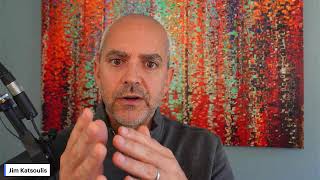
Jim Katsoulis (Program Yourself podcast) argues that people who consciously want to lose weight often have subconscious fears that block progress—fear of the process and fear of how others will respond to a thinner self. He recommends identifying specific emotional triggers (which foods, when, and why), asking how you want to feel instead, building one better behavioral alternative at a time, and using hypnosis/meditation to quiet the conscious mind and access subconscious change. The video includes live Q&A with examples (teacher morning routine, gut health, dieting extremes) and closes with links to a free hypnosis session and the Program Yourself program.
Chapters
It.
Hey, everyone. Welcome to today's program yourself Thin Podcast. Today we're talking about why you don't want to lose weight. I think this is a great question to ask, and I know it may sound a little strange at first because you said, well, I don't want to lose weight. I want to lose weight. Jim, what are you talking about? Of course I want to lose weight. There's no reason at all that I wouldn't want to lose weight. There's your first mistake. I promise you, if you're overweight and you want to lose weight, I promise you there is at least one and probably multiple reasons why subconsciously, deep down, you do not want to lose weight. And most likely it's some fear, some fear of losing weight. Now, it could be the fear of the process, right? So I've asked this question so many times to people, sometimes the answer might be, well, it's too hard, right? Doing it's too difficult, it's too depriving, it sucks, it's too boring. I don't like the process of losing weight. Right. That's almost always a part of it, okay? Because again, most people associate weight loss with, you know, dieting and working out and overwhelming yourself, you know, with this new plan. So you avoid it, right? You have fear of it. You have a negative association to it, okay? That's one of the most common ones. But the really interesting ones happen when you go beyond that and you start thinking to yourself, if I was at my goal weight, if I was eating healthier, living healthier, and losing weight all the way to my goal.
What would be a problem I might encounter there? This is where things get interesting, right? Because of course, you know, yeah, doing this stuff's hard, and I don't want to do it. Okay? We all know that. Okay. But it really gets fascinating, and I find this to be the most important reason why you don't want to lose weight is usually the idea that if I was thin and healthy, if I became happier and healthier and my weight went down where I wanted to be, how would people around me react to that? That's usually a good way to kind of get to it. Now, if you're a woman, the first thing you want to reflect on is how are men are going to treat you. This is one of the most common things I see with women is that they experience some form of, you know, you know, insecurity, discomfort, to assault, trauma in the past. And somewhere along the way, they made the decision that I will stay overweight, so I avoid that situation and keep myself safe. There's an example of what? Of that. Another one could be that when you start losing weight, certain people around you start attacking you or start treating you different, and you're worried about that. You might find that when you start eating healthier, it breaks rapport with the people in your life that matter to you most. You might feel that losing weight is. Your boss is going to expect more out of you now. You're going to have more attention. There's so many different reasons I've seen over the last 20 years that people have for why they're nervous and scared to lose weight. And I think we don't reflect on this enough because I think most people are thinking, well, of course I want to lose weight. All I want to do is lose weight. I find that to be almost never true when I first begin working with someone, it is almost when I. Without question, they're incongruent. Yeah, of course they want to lose weight on one hand, but then they don't want to lose weight or are scared of losing weight on the other hand. And usually it is that fear of losing weight and what it's going to bring that prevents people from losing weight. And I think most people never explore this. They never become aware of it, and they have to suffer the effects of this. And the effects of this that you'll notice is, is you kind of turn the gas off. You just can let your foot off, the gas just ease off. Just don't do it. Because keeping the weight on while you'd like to lose it deep down, it keeps you feeling safer, more secure. You feel confident that you kind of understand the situation. All of a sudden you think of yourself being a thin, healthy, happy version of you. It's weird. It's a different version of you. People are going to respond different reality shifts and changes. If you live as that version of you, and because it's new and because it's different, can feel scary. And so subconsciously we say, I want to do that. Now. When you combine these fears up, it becomes a very powerful block to get into your goal. You know, when you. You look initially and you say, oh, God, it's so difficult and it's hard. I don't want to do that. And then even if I get to my goal away, Jesus, you know, people start saying stuff, I don't feel good. I feel nervous. I feel worried for myself. You start putting these fears together, it becomes almost insurmountable subconsciously. And the worst part of this, though, is that consciously Like, I want to lose weight. I want to lose weight. I want to lose weight more than anything. I just want to lose weight. I just want to lose weight. You're always thinking you want to lose weight. You're always saying that to yourself, but subconsciously you got your foot firmly pressed down on the brake. I said, nah, let's just stick with what we know. Let's just keep doing it. We don't like being overweight, but at least we know it. At least we know how people are going to respond to us. We know how to get through the day being overweight. So this is your question. You know, why do you not want to lose weight? And again, you can pop by. We'll talk about this, too. How do you resolve this? So once you start to identify the reasons why you might be scared of losing weight or why you may not want to lose weight, and again, the two big ones are that you don't like the process of losing weight, you're kind of fearful of it or overwhelmed or anxious about it, and that once you get to your goal weight or start acting like your goal weight self, that people are going to respond differently to you, and you don't really want that. And so once you recognize those things, the beauty is that you can see them as issues and you can work to resolve them. Now, the first one's relatively easy to resolve. It's that you don't have to diet to lose weight. You don't have to jump into your weight watchers plan, your keto plan, your workout plan, your intermittent fasting plan, but both feet intensely, you don't have to do that. So if you have this fear of getting overwhelmed and deprivation from changing up your eating, the easiest solution is you don't have to change it up so much. You know, recognize you don't have to. You don't have to go straight ketosis. You can just start by cutting out some extra refined carbs from your diet. You know, you don't have to jump into intermittent fasting 16 hours a day. Maybe you make your window 11 hours a day, get comfortable with that. So that's one of the easiest ways to deal with that fear. The other fear really is a little more tricky. I won't pretend it's not, but I think when you start to realize, like, if I get to my goal weight and act like this version of me, how are other people going to respond? Instead of just assuming that that's how it's got to be, start asking the question, how do I want to feel about this, okay, so if you want to lose weight but you're nervous that you're going to get more attention from men and that scares you, the question becomes, okay, but how do I want to feel about this? How do I want to feel about losing weight in this environment? And a lot of times what these questions will bring you to is you'll say, well, I feel kind of uncertain, I feel scared, I feel I'm not as secure. And then you can ask the question, how can I feel more secure? How can I lose weight and feel secure out in the world? And once you start asking these questions, it drives your mind to find solutions to these challenges that are there subconsciously already. And until we figure out the solutions to these fears and we start to change up the way we think of this process, so the fear dissipates and it's replaced by excitement. So we say, I'm going to lose weight. And once I lose weight, I'm going to be more aware. I'm going to take a self defense class, I'm going to, you know, be more aware of my surroundings and make sure I keep myself extra safe and be extra vigilant. Maybe. Okay, as an example. And again, there's a million different fears, so you have to be tailored specifically for each one. The but as you start to focus on the solutions and on the answers to your kind of challenges and blocks that you're going to find is probably going to move you forward more than anything else that's ever done it. Because when there's subconscious incongruencies, when unconsciously you associate stress and fear and anxiety to losing weight, well, it's going to make it that much harder, obviously. So recognize this level of things, question it and then work to find resolution and solutions to it. And if you want support with this process, click the link in my bio or go to programyourself then.com go get the free hypnosis session I gave you. That actually helps with this process because the quieter you again, going into hypnosis, the first thing you're doing is you're quieting everything down. You're relaxing your body, you're breathing more deeply, you're bringing your attention inwards, you're becoming aware of more subtle things. And as you become aware of those subtle things, it just allows you to recognize the challenges and then move towards finding the solutions to them and meditate. Hypnosis, meditation, all help with this process. So click link in my bio and go get that hypnosis session. Check that out. And if you have any Questions, Feel free to ask them. You're all having a nice Thursday.
Yeah. Fears of weight loss, though it's interesting, I will tell you. And it's stuff like I would never believe. I. I've been doing this for over 20 years. And that is really one of the things that keeps on being kind of surprising is just all the different subconscious fears that can exist that are unknown. You know, that's the amazing part.
To me, that's the most interesting part of the whole process, is that we can have these major fears that are preventing us from moving forward, but have no awareness of them at all. You know, and that's the worst situation to be in, because if you can't recognize what the problem is, you can't resolve it, can't fix it. So, boy, is that process important.
Jenny says if you fall asleep to your hypnosis, will I still hear it subconsciously.
Okay, so if you were dead asleep, Jenny and I put a hypnosis session on. It's not going to do anything to you. It's going to be pointless. If you listen to a hypnosis session while you fall into a deep sleep, that's a different process, and I think it's really valuable. Okay, so why. Because I think when you're awake and falling into sleep, what's going on is you're receiving these suggestions. So as you're falling asleep and you're. You're going into that dream world, I think when you're listening to hypnosis sessions, there's a good chance that what you're hearing and listening to kind of becomes part of your dreams. And I think that's a really powerful place. You know, hypnosis in general, right? Hypnosis, Greek for to sleep. So a lot of times with hypnosis, what I think of it is when I'm hypnotizing someone, I'm bringing them from their awake alert state down to right about their sleep state. Okay? Now, I don't want to fall asleep, right? Because then it doesn't work. They don't respond to what I'm saying. But I want to get them right to that spot. Say this is sleep, right? I want to bring them right to that sleep space. Why? Because when you get right to that sleep space, your brain shifts. It shifts from alert, conscious, logical mode to this dream mode. So that's the big shift, right? And you know it because you feel it, because you feel like you're falling, right? You have that experience. Like you genuinely. You're laying in bed flat, but you have this Experience as if you're falling. And to me, that's kind of the crossover point when you shift from that logical, rational awareness, mind functioning to this more surreal imagination based dream, mind.
Being, you know, way of being. And, and so when that switch over happens, if you're thinking and receiving positive suggestions really about anything, could be any hypnosis, but certainly weight hypnosis. When you're receiving that and you go into that mode all of a sudden, the suggestion sometimes can all of a sudden take on this very, you know, kind of surreal, vivid imagination, intense imagery and then consequently feeling. And so I think that's really worth it. Now again, once you fall asleep, maybe you'll continue to dream about and that might do some benefit. But even if you just fall into a deep sleep and that's it, I still think that's valuable, you know. So again, we are bringing you, with hypnosis, we're bringing you right to the edge of it because your brain starts to operate differently. Your logical conscious gatekeeper mind starts to recede a little bit and your surreal, vivid imagination, dreamlike mode starts kind of arising. Right. And so that's hypnosis. We're bringing to that state where the conscious logical part starts to recede and the conscious, the subconscious dream, vivid imagination mind starts to come to the surface more. And we want to speak to that part of our mind to install and help implement new thoughts, ideas and ultimately behaviors. So, yeah, so I, I would absolutely think falling asleep with them is very valuable. Ideally, I don't, I can't even say an ideal because I think, I think they're both great. I think if you go into a relaxed, calm, hypnotic state, the sessions are wonderful. And I think if you drift off to sleep listening to them, I think that's really powerful too. So I think they're both good. But again, if you were dead asleep and I pop in your room and put one on, it's not going to do anything. Okay. But if you do listen while you fall asleep, I think there's a lot of value there.
Oops.
Tick Tock questions. That's a trouble. I just don't know. I keep thinking I'm gonna, I use that Restream app and I stream to a couple places through it. It works funny though, you know, Like I stream to Instagram and through Restream and it works a little funny, let's just say. And so I kind of hesitate to, to stream to Tick Tock. I don't know if it would be funny too, but the Instagram ones I stream It Instagram natively or Tick Tock natively. Carmen says, how do I get rid of the feeling of needing certain foods to go through my day feeling safe and comforted? Okay, Carmen, that's a great question, actually. I love that, and I think that's a great question, because, again, it's. It's more that question kind of embedded in is just a deeper sense of awareness, you know, that these foods are serving some emotional need. Which, by the way, if you're overweight, I can pretty much guarantee you the core of your problem is emotional eating. I mean, it's kind of that simple. If you didn't emotionally eat at all, you would just eat for nourishment and to, you know, put food in your body and energize yourself. And you would eat till you were fueled and then you would stop. So to me, all weight issues really come down to emotional eating. So how do I get rid of the feeling of needing certain foods to get through my day feeling safe and comforted? What I would do to start that process is to start to get a sense specifically of what foods give you what feelings. So I would start to look, how do I get rid of the feeling of needing certain foods? Certain foods? What certain foods? I'd want to know what certain foods and what certain feelings. So, for example, because we want to go from the vague to the specific, right? So we just ask a general question like, you know, how do I get rid of the feeling of needing certain foods and for certain feelings? It's so vague, your brain doesn't really know how to make sense of it, right? As opposed to saying, you know, every, you know, five days a week, in the afternoon, during the week, I feel like I need to get a muffin after breakfast to feel, you know, to get through the day, you know, all of a sudden, that's way more specific, and we can dive in that even more. So that's the first step, Carmen, is you got to get specific. Which foods, which feelings, when are they showing up? Right? Because you're saying, how do I get rid of the feeling of needing certain foods? Let's make that specific to go through my day feeling safe, comforted. So which, where is the safe comfort needed most? You know, because you may find, I don't know, again, maybe you're fine until the afternoon. Maybe it starts in the morning. So again, we want to get more specifics on this. What are the foods? What are the times feeling safe and comforted. That's what I want to know. So let's just say for example, you know, I don't know.
You get tired in the afternoon and you eat a. You eat stuff so you feel more safe and comfort in the afternoon to get through the rest of the day. Let's just say that's the example. So I want to know, what are you doing? Right? Because even the food, a lot of times, just the food, I can't tell you the number of people. They work in an office, and they're like, well, I get up in the afternoon, I go to the vending machine, I get cookies, and I don't want to do that anymore. And so it's not just the cookies. It's getting up, it's going to the vending machine. Maybe it's seeing people as you walk along the way. It's getting up, it's moving. So there's a lot of times there's. There's more embedded in the behavior than just the eating the food. So that's why context is so important. So I would much rather hear Carmen, like, how do I get rid of the afternoon snacking that I use to feel comforted and whatever, you know what I mean? Like, I want to know specifically what it is. And then I would quickly want to go into, what are you snacking on? Because it's probably going to be a pattern. It's probably not going to be something different every single day. And even if you think it's different, it's still usually within the realm. So it might be, well, I always go to the bakery and, well, I always pick something different. Well, okay, yeah, you always pick something different. The bakery. But you're going to the bakery. That's the. That's the pattern. Okay. And then within it, you're always picking something different. Don't get caught up on that. Let's just focus on the consistent pattern of it. So that's what I'd want you to do, Carmen, is to notice the repetitive pattern of it. Right. And I know some of it'll change, you know, maybe choose different foods. But I go to the convenience store every day. Oh, every day I pick a different candy. Okay. So. So I don't care about the different candies. I care about the behavior of going to the convenience store and choosing candy. Do you see what I'm saying? And as you get more specific with this, I think it'll help you to start to understand it, analyze it, and then, you know, again, the key thing is be able to find a solution that really works for you.
That's a great question because. Yeah. At the end of the day. I think for most people, the food is really does. You know, it's being used for emotional reasons. So Carmen says mainly carbs. Fast food fixated on eating coffee and high carbs for the morning. Get through morning anxiety to start my work day. Okay, great karma. There we go. Okay, so now. Now we're getting somewhere. Okay, so because now. Right again. Oh, how do I get through my day? And, you know, it's so vague and big. I don't know. And let's just say it's your work day. Even if they don't get through my work day, even that's too big. It's eight hours, you know, and the potential travel time, you know, outside of it. So that's too big. Right. So now we're getting somewhere. Because again, and there might be multiple things, Carmen. There might be. Well, at breakfast is this thing. And then there's the anxiety in the afternoon, getting through it. Then there's the anxiety of driving home. So there might be multiple kind of patterns of when these habits show up. And we would deal with them in turn. You know, we kind of pick the first one you want to work on. So let's just say the morning anxiety to start my day. And that's perfect. Okay. And I think you'll feel like even just as we talk about it, I'm not saying we're come up with a perfect answer, but we'll come up with a process that's much more likely to bring you to that answer. Okay, so what you're doing right now is you're probably using the morning treat to deal with the morning anxiety of starting your day. Coffee and bagel for morning anxiety. Fast food for relief in the evening. Great, Carmen. Okay, here we go. Right now we're getting somewhere. That's great. So it's like a lot of this job right now is causing a lot of anxiety and stress in you. And. And you're using the food to manage it right now, currently. Right. So there's these initial anxiety and stress of starting the day that you're using coffee and a bagel for. And then at the end of the day, you're kind of using that fast food as a reward to get through the day. Right. And so now all of a sudden, we can define it differently. And now we're well on our way to finding some real solutions. Okay.
Flan, is this the weight loss guy?
So, okay, so, Carmen, so now what we do is we recognize the behavior in context. And now the magical thing that happens is we can realize that you're not a bad person because you're having a coffee and bagel and fast food at night. You're not a bad person, so stop beating yourself up. What's happening is you're using the coffee and bagel in the morning and the fast food at night because they're your best strategies at the moment at this point in time. Your best way to deal with the morning anxiety at point, this you know of at this very moment in time is coffee and bagel. So you could say I'm a bad person because I ate a coffee and bagel in the morning. No, you're not. It's just that you don't have good options. You don't have a way to deal with the anxiety that doesn't involve food at the moment. And so what you've been trying to do is you say, I'm going to get rid of the coffee and bagel. But then what happens is you're just left with the anxiety and your mind says, oh, I want to lose weight, but I'm not. I can't live with this stress thing. I got to work. And so then you go and rationalize and have the coffee and the bagel. So again, I'm not saying you don't love the coffee and the bagel. The flavor of it too, that's a component of it as well. But the much bigger piece of it is this emotional piece that this coffee and bagel is basically in your subconscious mind. The coffee and bagel is what is allowing you to go to work. So, and subconsciously, the coffee and bagel become as important as going to work, you know, so that's like, get your car, I need a car, I got to get to work. Right? The coffee and bagel subconsciously start to represent that because you don't have a better way to deal with the anxiety. So once you realize that, the way I approach this, I'm never going to say, oh, stop bagel coffee. I gotta stop baking coffee. I'm never doing that. Because I know any behavior you all have done for a while, there's a reason you're doing it. You're not just. You're not just eating because it tastes good. I promise you. I promise you. You're not just eating foods because it tastes good. That's a part of it. I'm not arguing that. But it's not the main reason. Especially when it's a habit that you know you want to stop. When you have a habit of eating habit, you want to stop because you know you want to lose weight. You know it's causing you to be overweight, and you can't stop it. I promise you, you're doing it for more reason than just because it tastes good. You've got to get that through your head. You've got to understand that. Because if you keep just thinking it's the taste, then you're missing, like, 80% of the problem here. And almost always the problem is, is that you have these. These emotions you don't know how to deal with genuinely. All right, here we go. So Karma says, yeah, 100%. I'm a teacher. It's such a habit. I feel crazy because I know I'm smarter than this habit. You are smarter than the habit. But what you have not been smarter than yet is coming up with another alternative to a coffee and bagel to deal with the anxiety in the morning.
But now, here you go, Carmen. Now here's the fun part. And again, I'm just going to leave the fast food at night to the side for a minute. So we can only. You're a teacher, right? You can't learn everything all at once. Right. You can't just teach everything the first day of class and be done. Right. You've got to take things in order, because if you try and do everything all at once, then you just don't do anything. Okay, so same here. So we're not going to try and change all your bad habits all at once. We're going to start strategically with the morning coffee and bagel, if that's which one you want to work on. But, well, let's just deep dive into it as if it were. And so once you realize the coffee and the bagel are primarily a strategy to deal with your anxiety in the morning, now we can start to ask the magic question. I feel anxiety in the morning. What do I want to feel in the morning? You see your whole life since you probably started teaching and think about this. This is how a lot of bad habits start. You start teaching, and you go into it, and you're scared shitless. You're anxious, you're nervous as all hell. So again, I don't know how long you've been teaching for, but when you first started, you're probably nervous and scared, and you go get the bagel and coffee as a way to kind of calm down before it. And that just became a thing. So you never really gave yourself the opportunity to say, how do I want to feel going in here? I know I feel anxious, or I know I did feel anxious. Do I still Even feel anxious, actually, maybe I haven't even considered that. Maybe that old anxiety habit isn't really relevant or applicable anymore. So that's interesting too, but. So the first question is, how anxious are you in the morning? I'd reflect on that, you know, are you still anxious anymore? Or is that just an old kind of habit you had? And if you are still anxious, I'll say, what are you anxious about? I'm anxious about the kids, I'm anxious about the work, I'm anxious about parents, I'm anxious, whatever. Okay, I'd want to start to define it. What exactly are you anxious of? Let's get a real sense of where the anxiety is at, level wise and what's leading to it. Not too much time, but just a general sense of. Okay, now I want to ask the magic question. How do I want to feel in the morning when I go to school? How would I like to feel in an ideal world? How would I like to think about my job the night before? As soon as I wake up in the morning and as I go drive there, how do I want to think and feel about school? How could I perform my best? How would I like to feel in a dream world? In an ideal world, how would I like to feel? And now maybe all of a sudden you start saying, I like to feel calm. I'd like to feel excited, I'd like to feel prepared, I'd like to feel confident, ready. I don't know what you'd like to feel, but you want to start picking the feelings you would like to feel, not the ones you don't want to feel. I mean, well, I don't want to feel tired and I don't feel exhausted. I don't want to feel stressed and I don't want to feel angry. Not that we can start there. We can start with the things we don't want to feel, but then we got to switch it over to what do you want to feel? Oh, confident, happy, relaxed, calm, you know, enjoying the kids, whatever. Okay. And once you start to articulate what you want to feel now, you magically start to ask, how can I start to feel more of that? What can I do to start to feel more of that? And that's where the question gets really interesting. And now again, it depends on what your answers are for this. So I don't know if you want to be more prepared. Let's say. Let's just say, okay, I'm not saying this is you, but this is not an unusual thing that someone's in this Loop of being unprepared and anxious and stressed when the time comes that they're going to be called on it, okay? And so they're unprepared, they're going into work and they're feeling lots of anxiety, Coffee, donut, to go, deal with it. Okay. And you take a step back and say, okay, I want to feel prepared and ready and calm and confident. Okay, how do I do that? Well, the, the bagel and coffee are not doing anything to make you feel more confident, prepared, right. So as soon as you start to look at this way, you say, well, okay, to be more confident, prepared, I'm going to do the work ahead of time. I'm actually get this work done more effectively, more productively. So again, I'm just using this as one example. But you start to see how quickly we got off the coffee and the donut. The coffee and the donut are not the problem. They are a symptom of a deeper problem. And the deeper problem is that you don't have a good strategy right now to consistently go into school the way you want to feel. You probably don't even know how you want to feel going into school. And you know, subsequently you don't know how to feel that, you know. But if you work on that for a week or two and all of a sudden you start looking at that, look, I'd like to feel more relaxed, more calm, more prepared. And you start enacting strategies to help you feel that way. Now all of a sudden, you feel a lot more calm and centered in the morning. When you're more calm, centered and grounded in the morning, you tend to make better decisions just from that alone. But then we can start to work on the coffee and the bagel because that is still a habit. So we still have to switch it a little bit. But it's going to be a lot easier to deal with that now once you've resolved the emotional piece underneath it. So I hope that makes sense, you know?
Yeah, Carmen says I, Yes, I have six years now. You're so right. It started when I began the career to cope. Never realized. Yeah, yeah, I want to feel calm and happy. That's perfect. That's perfect. So. So this is perfect. Common, right? Because you want to feel calm and happy. So that's perfect. Okay, so now it's really interesting because what you're looking for is to feel calm and happy. You've never really considered as a genuine option because again, we always do what we did, you know, and this is the classic human thing. Where it's like, when we experience how we first experience something is kind of how we just. Like, that's how we're gonna experience forever. So six years later, you know what I mean? Like, you're a totally different person than you were in the beginning, right? So it's like, it's nice to kind of have that. That check. Wait a second. I'm not that person anymore, okay? I want to be calm and happy. Okay? How can I be calm and happy? The. The bagel and the coffee at this point, it's like, it's not even making you calm and happy. That bagel and coffee at this point is actually causing you more stress and anxiety.
Maybe not for that few moments, but. But overall, it absolutely is. Right? Because what if. What if you had a better strategy? What if you figured out a way to genuinely feel calm and happy? Go into class, just thrive, do awesome. And at the same time, the way you're doing that, your weight was coming down. So imagine it's three months from now. You figured out how to be calm and happy as you go into school. School's going better, you're teaching more effectively, Everything's flowing better, and you've lost some weight. It feels good. Wouldn't you feel calmer and happier in that scenario then three months from now, you're still doing the same thing with the coffee and the. The muffin or whatever you're eating. You see what I mean? So again, time frames have a huge impact on this. But again, when we start to chase emotions, it becomes a lot easier because that's what you're going to do anyways. We're all chasing emotions. It's. A lot of us just don't realize it, you know.
So. Yeah. So hopefully it's helpful. Yeah. Karma says yes. 100. Great. Yeah. So give that some thought, you know, and start to come at this differently. Don't come at it like you're a bad person because you've been eating a coffee and donut. You see what I mean? Like, because to say you're a bad person to do something that makes you more calm and happy or you thought made you more calm and happy, that makes you a bad person. You know, it just makes you a person who has a limited number of options available to you. So take a step back, come up with some more options and develop them. You only need one more option, you know, one better option than the coffee and donut. Now, again, getting rid of the coffee and the donut, it's the deeper stuff that really matters.
This One says, user says, can I maintain a diet of only salads and boiled veggies for a month? Yeah, I'm sure you could. If I threw you in jail and that's all I fed you, you'd be able to maintain it, no problem. If I offer you a million dollars to do that, you could probably do it, no problem. The question is, who the hell wants to do that? I mean, I like salads, but boiled veggies for a month, that sounds like a nightmare. And so you, I'm sure, I mean, we can do anything they want pretty much if they're motivated enough. But I don't think anyone would want to do that for very long. What's up, Jenny? Jenny says, I'm so invested. I've shared your tik tok and podcast with four friends today. We're all jumping on. Well thanks Jenny, I appreciate that. Yeah, that's awesome.
I am here every day, by the way, so I'm here every Monday through Friday.
Carl says thank you, you are wonderful. Well, thank you Carmen, I appreciate that. Hopefully that helps you out, you know, that's what I'm here for. I literally, that's what I'm here for. I'm here every Monday through Friday, usually around noon Eastern to help you all out because again, I, I want to help you smart, wonderful people. You're all doing wonderful things in the world and you're just being self tortured because you don't understand, you know, how to deal with your mindset, your behaviors, your habits, your emotions. And once you start to really understand how to deal with this in a real, functional, legitimate way.
Everything changes, you know, and that's my life. I know, I love it, you know, because I get to work with smart, intelligent people who are action takers, you know what I mean? Who, who can get great results once they have good information. But, but most of those people are walking around with real information, you know, from diets and workouts and you know, dumb and so they're struggling simply because they don't have good information, not because they don't have willpower or self control. Okay. And I think that's important to understand. What's up, Lori? Lori says, got the book, been making progress. Excellent job, Jim. I appreciate going deep into the emotional hook. Effective. Oh, that's awesome, Lori. Yeah, the book, book she's talking about is this one, you know, and it's something else, I'm not gonna lie. Got a bunch of them coming in tomorrow, so I will have the link. I'll put this up today or Tomorrow morning. So if you're in the program, I'll put the link up in the Circle app for this again and I'll send these out and yes, I will sign them again. I will sign these little letter with them. And yeah, they're pretty cool, though. But again, it's the goal weight blueprint. So this is really the. The workbook for the program. I would say program yourself, then. It's got three main pillars. There's knowing what to do specifically for you. That's what this is all about. There's being able to get yourself to do it, how to kind of run your own mind. And there is a support system to kind of support that whole process so that you get through it and get the results, you know. And so, yeah, this book's something else. So it is. I spent a lot of time on this. I mean, some of this. Someone asked me as to how long it took me and, you know, it's taken me over 20 years because I've been working on this for over 20 years. I've been teaching. Program yourself then for over 20 years at this point. And this book, though, especially, you know, the last seven months, eight months of this year, I've really been working on it. And now it's a real thing. So, yes, it is pretty good. And if you're in the program again, remember, you get the PDF of this. It's already in there. So if you want to grab the PDF version, which is fillable, you can do that too. But if you want to order a physical version, that's available now as well. But good job, Laura. Yeah, keep it up. Mary Jane says, I noticed that giving myself an extra hour for breakfast helped me. No. Anxiety and stress. That's brilliant. Brilliant, Mary Jane. That's brilliant. Okay. And that's what I mean. You know, sometimes when we start to really recognize what the real emotional piece of the story is and we start to aim at that.
It'S. It's really transformative, you know, so it's. Great job, Mary Jane. Great, great realizing that and great strategy. Let's see. The invincible thing says, hey, sir, I'm working on my gut health. I feel that my consistent stress and anxiety for days was majorly responsible for my poor gut health. Yeah, absolutely. I agree with that. I think gut health is just fascinating science. I tend to frame it more in terms of the microbiome. But, yeah, I think that stress is a huge impact on the microbiome and on your gut health and on your overall health. So I think working on stress levels Just so beneficial in so many different ways.
But the biggest thing of gut health is eating more whole natural foods and less processed foods. I think that's number one by a mileage. And then I think stress is also very important there as well. Dana says I'm new here. What book are you talking about? Yes, again, it's this book here. This is only for people in the program. So again, I'm sitting here to tease you all with it, but I just show it because I like to reference it when I talk about the program and stuff. But I do have a book coming out probably the next couple weeks, I think. So I was thinking that. I'm saying the next couple weeks. I don't think so because I've already gotten the entire frame, the books done. I've. I've second drafted the first half of it and I'm almost done with the second half. And then. Then it's off to the races pretty much. You know, there's a little bit more to do with it, but most of it is quick. So that book will be ready like on Amazon. Anyone be able to get that? Again, I'll make it as cheap as I possibly can, but this book here is. Is for people in the program and. Yeah, so that's what it is. But it's a goal weight blueprint. Um, it's well sing. I was surprised to know that how continuous stress and anxiety can ruin someone's gut health, which is actually digestive health. I take. I take nuts, seeds, lentils, grains, veggies, fruits, herbal teas for gut health. I'm staying away from what is bad for my digestion. Yeah, it's super. That's super sting. Yeah, that's. That's the secret. Now again, you have to do it all at once, you know, either because. Yes, stress, Completely changing your diet in one day is very stressful. So it's almost counteractive. So again, when you just relax, calm down, ground yourself and this kind of peaceful, calm feeling, and then operate out of there slowly and systematically. I think that's the way to. I think that's the best way to change A and B. I think it also kind of supports gut health the entire way down the path there as well.
Jenny says, do you still feel indifferent? Whoops. Do you still feel indifferent to food on a day to day basis?
Do I still feel indifferent to food? I. I mean, I don't feel indifferent so much. You know, what I do. In program yourself, then what we work on is structuring your eating. So we kind of like we Create a structured eating plan based around you. So it's based around you. That's. That's a key thing I want to mention. I don't give you a meal plan. You figure out what meal plan and way of eating works best for you to thrive and succeed. That being said, it's a focus on what you want to eat primarily. That's the main focus. What do I want to eat? And so what happens is a lot of dieters start their program off by focusing on what they don't want to do, right? So they're obsessed with all the foods that they're eating that they don't want to eat. And so learning to generate indifference for those foods is valuable, especially in the beginning. But eventually, where that process is meant to lead to. I think a lot of dieters never think of this or realize this, but ultimately, where you want to get to, and this is my path and my client's path, is that we go from. Primarily, we're focused on all the foods we're eating that we don't want to eat and we want to feel indifferent to. And what. Eventually what ends up happening is our eating is primarily what we want to do and eat. Okay? Now, there's always foods that we're, you know, kind of challenged with. And so to those foods, you know, we practice feeling indifference, but the feeling of indifference to those foods is really only one piece in managing that. The primary way to manage it is to structure the eating so that we know what we're eating, what's good, what's healthy, and we have our eyes on that. And we're also somewhat aware of when challenging foods sometimes sneak in. And so we're strategically kind of structuring our eating, our mindset, our behaviors, to do what we want to do and avoid those foods that are tempting. That's a lot of the heavy work. Think about them differently. That's a lot of the work. And consequently feel indifferent about them. So, yes, I. I do still feel indifferent to certain foods, but I feel very. It is funny, right? What's opposite of indifferent? Passionate, I guess, about the foods I do eat, you know, So I don't know if that really answers it. Ren says, I know you're from somewhere. I'm a nurse in ICU and ccu. I know you're from somewhere. Well, luckily, I've not been in the ICU for a while, ever. I mean, so it's not from there.
Maybe you see me on here. If you see my videos at 10 million videos on Tick Tock and All over the Internet. So it's possible. Possible that could have been it. All right, I'm gonna get out here. I got a lot of work to do here, so I'm gonna exclude. So I hope you all have a super duper day. If you're not in my world, make sure you click the link in my bio, Go get the free hypnosis session I give you, watch the training video I made for you guys, read the emails I send you, a lot of cool stuff on the way, and a lot of it's just free. And I do have a program, too, but the free stuff is really, really valuable. I don't think anyone gives you more free stuff than I do. All right, so click the link in my bio or go to program yourself. Then dot com, go get that free hypnosis session and do all that. And then if you like this here, I'm here every Monday through Friday. Every Monday through Friday, I'm here around noon Eastern to help you answer your questions, coach you along. Happy to do that. And if you like listening to this, but you missed the live, you can also listen to. This is a podcast, and it's called Program Yourself. Go to any podcast platform, search it out, and you will find it.
Before I go, I see. Ananya, my brain doesn't want to lose weight. I am fat since birth. Whenever I lose some weight, my brain panics and I start binge eating.
Well, you know, again, I hear that a lot from people, but I think we got to at least take into account how you lose weight. Right? So whenever I lose weight, lose some weight, my brain panics. Okay. Why, though? You know, is it the weight loss? That could be part of it. Is it the way you're losing weight? That could be another part of it. If you're doing extreme, unsustainable things to lose weight. Yeah. Panic and stress and anxiety go hand in hand with that. So if you kind of ease up what you're doing so it's more comfortable and grounded, that may change the experience for you. So that'd be my big suggestion to you. All right, everyone, have a super duper day, and we'll talk soon. Bye.
More from Jim



Weight Loss Visualization: Wake Up in Your Dream Size #programyourselfthin #weightlosshypnosis



What If You Pretended to Be Thin for One Hour? #programyourselfthin #weightlosshypnosis




