You Already Know How To Lose Weight
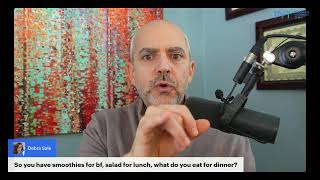
Jim Katsoulis argues you already know what to eat, but you fail because you can't turn knowledge into action. He proposes reprogramming your subconscious through habit automation and identity shift instead of willpower and calorie counting. His system includes a 144-page blueprint, daily five-minute hypnosis sessions, and mental rehearsal.
Chapters
Everyone, welcome to today's program Yourself Thin Podcast. Today we're talking about the fact that you already know how to lose weight, at least partly. Let me explain. You already know what to eat and you already know what you should do, right? So in a sense, if I just said write down on paper what you need to do to lose weight, you probably have no problems. Let me put it a slightly different way. Imagine if you were a robot and you could just write down what you were going to eat all day and you actually would just eat it because you were a robot. You wouldn't have much trouble losing weight, right? Because you know what to eat, you know what not to eat, pretty much, right? And you've known that for a long time. And when you really take a step back and reflect on it, the problem is not knowing what to eat. The problem is and always has been that you don't know how to get yourself to do what you already know you should do. Eating wise, right? It's been the same story your whole life. Diet to diet. You are given a plan of how to eat. You understand the plan, you believe the plan, you intend to do the plan. And that's where things fall apart. You may do it for a couple days, you may do it for a couple weeks, sometimes you might do it for a bunch of months. But ultimately, at the end of the day, the same problem shows up that you don't know how to get yourself to consistently, sustainably, long term, do the things that keep you at your goal weight. And so while you do know how to lose weight, how to eat in order to lose weight, on a conceptual level, right? You could write it down on paper, you could tell someone else what they should do, you know what you should do. The problem is that you don't know how to get yourself to do it. You've never learned how to do this. And when I look around the weight loss world, I don't see anyone ever talking about this, right? The way you're supposed to get yourself to do it is you're supposed to use your willpower and force yourself to follow this plan. Never mind your cravings, never mind your mindset, never mind your motivation, excuse me, Never mind your emotions, never mind dealing with any of these things. Here's the plan. Force yourself to follow it. I'll see your goal weight. That's basically every single plan in a nutshell that you have tried to follow to lose weight in your life. And it hasn't worked long term, it may work short term. You may be able to Fight and force yourself to follow this plan for a little while. But ultimately, the same story always reveals itself. That you go back to doing what you always do. And this is because you've never learned how to change your mindset. You've never learned how to program new habits that run automatically into your subconscious mind and your nervous system. You've never learned how to deal with your emotions in a genuine way. You've never learned how to truly think about weight loss in a way that's so motivating that even when you screw up, you keep moving forward. You've never learned how to shift your identity from an overweight, unhealthy person to someone who's healthy and at their goal weight. You've never learned any of these things. And until you learn them, weight loss is always going to be a struggle, because it's always going to feel like you fighting against yourself, forcing yourself. And we can't force ourselves to do things for very long. And as humans, our behaviors primarily happen subconsciously. Another way to put it, we basically run on autopilot. All of us humans are designed this way. Our prefrontal cortex, which is our conscious mind, our willpower, is a evolutionarily newest part of our brain. So we are designed to be on autopilot. And if you look at your own eating experiences with weight loss, you will see this, that when you consciously, intentionally force yourself to eat differently, you can eat different. But as soon as you take your eye off the ball for a minute, you go right back to your automated, programmed behaviors. So the real thing to learn in order to change your weight for the rest of your life is how to reprogram your subconscious mind so that you naturally and automatically do the things that get you to your goal weight and then keep you there and do them in a way that feels automatic. And when I talk about automatic, one of the ways you can reference this is your toothbrushing habit. You spent time growing up dedicating to installing the habit of brushing your teeth. And now, as an adult, you reap the benefits of that. You now brush your teeth at the same times every day on near autopilot, right? You're kind of aware you're doing it, but it's mostly just happening in the background. On autopilot, you wake up, next thing you know, you're brushing your teeth. You go about your day, you're about to go to bed, Next day, you brush your teeth, you go to bed, right? But it's primarily running on autopilot. And this is how your eating behaviors are running mostly on autopilot before you even can stop yourself from overeating, you've already overeaten because that's what you've been programmed to do. And so the diet industry has conditioned you to think, no, you just have to fight against that. Well, no, you're not going to ever win that battle. But if you start to use your willpower and your conscious mind to install more effective, more successful programs into your subconscious mind, that is the path to not only getting to your goal weight, but finally being able to live there long term in a way where you can trust yourself in a way that's relatively easy, relatively comfortable and sustainable. But it all starts by programming your mind. And if you've never done that before, it's not as scary as it sounds. I'm going to prove it to you by giving you a free hypnosis session. You can click the link in my bio or you can go to programyourself then.com and get the free session I give you. It's a kickstart session designed for someone who's never used hypnosis in your life. And if you've used hypnosis, it's designed for you as well because it's one of the most powerful sessions I've ever made. And it's designed to kickstart your motivation by clarifying what the goal is for you and allowing you to connect to it so that you can feel pulled towards your weight loss goal instead of trying to push yourself towards it. And so I hope this helps you out. If any questions, if you've got any questions at all, please feel free to ask them. I'm here every Monday through Friday, usually around noon Eastern. I thought I started earlier today. Maybe not. I guess we're a little bit late today, but every day keep moving. We're working on that 12 o'. Clock. But yes, I am here to answer any questions you may have in any way that I can help you. Any weight loss questions are welcome. B says, do you trust in calorie management? I'm not sure what you mean by trusting in calorie management. I certainly think calories are an important metric, you know, a valuable metric. I am not a big believer in tracking them, partly because that's just not really my makeup. I don't like tracking calories and I never have. Okay. I don't suggest it for my clients because I find most of the time tracking calories obsessively is a short term strategy that most people cannot maintain for very long and it's understandable. It's overwhelming. You know, it takes a lot of, it's a high cognitive load to track all the calories you eat all day long, every day. It really takes a lot of time and effort to do that. And so my goal is to really make living at your, getting to your goal weight and living at your goal weight as easy and enjoyable as possible. And so for most people, that doesn't include, you know, tracking calories obsessively. Now, that being said, I do think it's a great idea to track calories for a week or two just to calibrate, you know, what you thought you were eating against reality. I think that's a very valuable exercise to go through. But I think long term tracking of calories has not been shown to be too effective or sustainable for the average person. So that's kind of my thoughts on that. Question there. He says I never, I never overweight during the week. It only. Oh, I never overeat during the week. It only occasionally happens on the weekend. Great. I mean that if that's your starting point, that's a great place to be. Right? So again, now listen though, that kind of brings up a point that in this process, we all, we all have our strengths and our weaknesses, you know, and again, this, this is another bone I got to pick with diets is I think dieting's out there intentionally, you know, or explicitly or implicitly, you know, That they're kind of implying that. Hold on a second. Wonder if J told me the sound's not synced up to my mouth. Over in Facebook YouTube land, I just changed something. I don't know if it fixed it or not, but anyways, yeah, diets are always kind of implying explicitly or implicitly that it's a one size fits all world. Right. So when the diet comes out, it doesn't matter what diet it is. Right. Whatever diet it is, it's meant for everyone. And I think that puts the idea in dieters minds that, you know, the plan that's given to them is the plan they have to follow. Exactly. And I think that's 100% wrong. I think ultimately you have to figure out for yourself what is the right way forward, you know, in other words, now again, program yourself. Then really one of the core parts of the program is this goal weight blueprint. And you know, this is 144 page to create a customized roadmap, you know, and we go through, you know, flip this around, we go, go through your mindset lifestyle and eating, you know, in some detail here to really lay out the plan for you. But, but it's, it's. It's generalized questions that you answer with your specific answers. You're the one who has to answer these things. I don't think the way that I lose weight is not the way you're going to lose weight. We're different people, we have different lifestyles, different preferences. And I think that's one of the main missing things from the weight loss industry. They never really reinforce this idea that, yeah, you got to take some time and you got to figure out what works for you. But if you do that, you know, it may take a little bit longer in the beginning, but you end up in such a better place because you have a plan that's customized to you. And that right off the bat makes it way easier to stick to. I mean, you still have to do work to stick to it, obviously, but it's easier because it's a plan custom made for you, you know, So I think that's important. What's up, X? X says it's hard to track accurate calories. It's absolutely. I would go beyond it's hard to track accurate calories to. It's impossible. It really is. I mean, it's estimated that the calories on packages are off by 20%, up to 20%, and frozen foods even higher. So right off the bat, you're starting off with imperfect, unreliable information. It's just the truth of it, you know. And then on top of that, you know, you really. The biggest issue, though, the tracking calories is, is you. You know, the human fallibility piece of it. Again, when you're doing great, maybe, you know, when you're eating great, maybe your tracking is a bit more accurate. And when you get a little off track, I bet your tracking's not as accurate, you know, no. No judgment, no hate. But again, there is human psychology at play here, you know, So I agree. I think it's challenging to get those calories exactly accurate. I don't think it's even necessary, personally. You know, I think for most people, you know, getting into the minutia of the. Of the calories really is unnecessary, you know, unless you're a competitive bodybuilder, you know what I mean? Or something of that level. I really don't see how it's necessary to be so specific with your calories. I think if you're able to be honestly accurate, you know, in ballparks, you can make pretty significant changes in your weight. The average person can. You know, it says, I Eat similar foods that I love and just see how they affect my weight and switching what's not working. Yeah, X. I agree. That's exactly what I did. I never tracked calories, okay. I tracked behaviors. And I had a good sense, you know, don't get me wrong, I became. I would say I became nutritionally literate, right? And that was a process where I was like, oh, that's, that's pretty good for me. I look into it. Holy shit. That's way more calories than I thought. Oh, that, that, that ingredients, that's not good for me. Okay? So there was a lot of that through the process, but I always went into it fairly intuitively and I would look for the big things. So, you know, the first thing I started with was my nighttime snacking. Now I would snack from 7, 8 o' clock at night until midnight, you know, just sporadically grazing. And, you know, again, I ballpark, I'm. I'm estimating I was probably consuming 500 to 1,000 calories a night on average, and it was seven nights a week. So I said, okay, I'm gonna go to work on that. If I can get rid of that behavior, that's gonna make a huge shift in my weight. So, you know what I mean? I took swings at the big things. You know, program yourself. Then instead of changing your Entire eating plan 100% in one day, we strategically look for your worst eating habit. And we define the worst eating habit being eating habit that happens daily or multiple times a week where you're bringing the most calories in. And so for me, that was nighttime snacking without question, number one. And so I went to work on that, and it took me months to get a handle on it, but I got a handle on it in a real, genuine, fundamental way. And so now here I am 30 years later, and I never snack at night. That commitment to those six months of dealing with that set the foundation for me to live at my goal weight forever. Now, I had to make other changes too. But, but as soon as I was done with the nighttime snacking, you know, then I work on the afternoon snacking, then I work on the dinner portions, then I work on improving the lunches, and I worked on snacking between breakfast and lunch. And you know what I mean? Like, so, you know, but kind of strategically let me focus on this thing. Let me focus on this thing. I think dieters. And again, I don't, I don't blame you. I never blame the dieters. You've been conditioned to think like dieters by the diet industry. And the diet industry is just the food processing industry. So you haven't really ever had a fair chance to get control of your weight, in my opinion. And so the dieting industry is put into your idea that the way to create change in your body is to completely change what you do in one day. Completely change how you eat. And so you're going to change breakfast, lunch, dinner, snacks, you're going to change all of it, starting tomorrow, forever. And when you take a step back and think about it, that's an overwhelming thing to take on. I mean, it's estimated you make over 200 food choices a day. So right off the bat, I mean, you're really taking a lot on. And I think it's one of the core reasons why, you know, virtually no dieters stick to their plan. See here? Yeah. Oh, I see. B says probably from over restriction during the week. Yeah, absolutely. I mean, you know, that just brings up a good point. I always say this, that where the problem shows up is usually not where the problem was created. And if you can internalize this, I think this is a real eye opener. Because a lot of people say, I always use a classic example that people say, oh, breakfast and lunch are amazing. Um, but, but afternoon and dinner, I, I lose, I fall off the wagon, right? I say, okay, what are you eating for breakfast and lunch? Nothing. Well, so how's that amazing? That's not amazing. That's literally setting you up to overeat. If I wanted to, like, if someone said, okay, Jim, you can do whatever you want to this person, but can you get them to overeat or not? Right. The number one thing I would do to get them to overeat, the number one thing I would do is I would restrict them. I would say, hey, restrict, you can't eat, you can't eat, you can't, you can't eat. And I would just set, I would set them up to overeat. The number one factor in your overeating is almost always how hungry you are. Emotions is a close number two, and sometimes number one, but, but how hungry you are. And so that dieting mentality you've been installed with, again, it's not there for your benefit, by the way, just real quick, because I know a lot of people don't believe me when I say that the diet industry is a branch of the food processing industry. But Weight Watchers was owned by Heinz. Jenny Craig was owned by Nestle Atkins Food Products, owned by the same company owns onions, pretzels and cinnamon Slim Fast Owned by the same company, owns Ben and Jerry's ice cream. So these companies don't want you to all of a sudden be thin, healthy and happy and stop eating their food. Disordered eating. Oh, because I said restricting. I just got restricted on tik tok. Because I said I was talking about restricting your reading. Well, that's all right. So anyways, yeah, so. So be careful of that because a lot of times people mad at themselves because they started overeating in the afternoon. But if you really think about it, what's that implying? That you're going to just not eat all day long? Like, like, that's not gonna work. That's not healthy. That's not. You're never gonna do that. So to me, if you're overeating in the afternoon or evening or, you know, and if you're overeating in the, in the weekends, a lot of times it's the direct consequence of over restricting. And if that's the case, instead of hoping and focusing on, well, I just need more willpower here, I need more willpower here, I need more willpower here. Say, wait a second, how can I prevent this over here? And usually the much better strategy is to eat, not to restrict so much so you're not so hungry, and then it's easier to stay in control of your eating. So, anyways, what's up, Vicki? How's it going? Happy Thursday. He says, yeah, I'm a bit fed up of calorie management. It's so time consuming and have to do so many calculations. Yeah, exactly. I mean, it's just. It's a weird way to live. We were never, we were never evolved to micromanage our calories. Concept of a calorie didn't even exist, you know, until 50 years ago. I'm ballparking it, but you know what I mean, though? You know, we didn't think about food, you know, another one, too. And I always think about this. The idea of macronutrients wasn't really a thing until 60, 70 years ago. And I think that's fundamental because I think them, that's a big part of what they do, is they break food up into categories and then they can work all sorts of shenanigans. It's literally like the financial industry. I don't know how much you all know about finance, but if you talk about the 2008 collapse, a lot of that was from derivatives, which, long story short, is they basically take, you know, like a mortgage or something, you understand intuitively, and they break it up in all sorts of other concepts. And that's kind of what they do with food. Now, don't get me wrong, it's absolutely valuable to break food up into macronutrients and, and there's, there's a value to it, but that's the primary way dieters think about food now is they think about calories, macronutrients, and so they break it up. And so to me, while I agree that that can be value in some place, most dieters are going to be benefited by balancing their view of food with a holistic, natural view of it. Just common sense, you know, what, what foods are whole natural foods that are, we've been eating for a long time that are probably good for me, you know, so you don't have to have a nutrition degree to know that the produce section is healthier than, you know, other areas of the supermarket, you know, and kind of leaning into that instead of, you know, again, I love the science of nutrition. I think it's great. But I think we're in a situation, especially if you're a dieter, you're probably way over focused on macronutrients and details of food and way under thinking about just the simple common sense of food. And if you start to come at food from some more common sense, nourishing your body, you know, just the basic stuff, your body's a temple, you know what I mean? Eat what your grandma ate, all that stuff there. That's a nice counterbalance to the chopping things up into conceptual ideas of food that we tend to do. But yeah, tracking calories. Don't feel bad if you don't like to do that. It's a, it's a ridiculous way to live, in my opinion. I, I think it's very taxing. And if you're living a life where you're doing a lot of stuff, just like, you know, find the energy for that and energy for sure. Let me tell you something, I want to tell you real quick. I'm gonna do a whole lesson on this, but I'm just going to tease this now because I thought this was. I talk about this all the time. I think a lot of my clients don't. Well, my clients kind of know this because we talk about it, because my clients usually are overthinkers, always up in their head thinking. But what a lot of people don't know is that thinking uses up glucose in your body. So let me put it a different way. Thinking a lot, mental energy, thinking a lot of stuff, thinking about math problems, thinking about calories. Thinking about tracking calories, thinking about whatever uses up actual energy. Just like as if you ran a marathon, if you're over here running a marathon, you're using up glucose energy in your body, you're over here thinking about calories, you're burning literal glucose in your body. They're both burning energy in your body. And to drive that point home, they had an article the other day that said playing high level chess causes players to burn calories at an athletic rate. For example, 21 year old grandmaster Mikhail Antipov was recorded burning 560 calories in just two hours of sitting, roughly what Roger Federer would burn in an hour of single tennis. Let that sink in because I, this is a paradigm shifter for a lot of people and it's really important because what now if we, if we use that paradigm of thinking uses up lots of energy. When you go on a diet, you're already, most dieters are already kind of up to here with life, right? You're frustrated, you're stressed out, you're working hard, you're constantly on the go, you have no time for yourself, you're overwhelmed, your cortisol levels are high, right? He said, I got to change my, my weight, I'm going to go on a diet. Now you tell me what diet you're going into that doesn't massively boost your cognitive load. From Weight Watchers to intermittent fasting, all of a sudden you've taken, you're kind of already up to here with life and now you've just dumped a whole more bunch of calculation onto your mind. And so what are the chances of you being able to maintain that? You know, because let's put it a different way, what would the chances be that if I said, okay, starting tomorrow, right, you got to start running, you know, five miles every day, you know, can you handle that? Do you have the extra energy to just do that, to expend that? Do you? You know, and again, a lot of people don't think of thinking as a physical thing, but literally thinking is burning your energy up. And so when you go to these intense diets where you're micromanaging every thing and controlling yourself and forcing yourself, you're just burning through your energy. And so this is why usually you start the diet and you know, you do it for a couple days and then you feel this dip in energy, you're not imagining it, it's not an illusion. There's not, it's not a surprise. It's because you're drastically burning energy. If you ran, you know, Five miles. If all of a sudden you start running five miles, you might be able to, you know, you got to reserve energy, go and do it. Maybe the first day you can get through it. Maybe the second day you can work through it. Third, fourth, fifth day, all of a sudden you're, you're holy. I'm wiped out. And is this not what you feel? The diets, you know, now don't get me wrong, sometimes the diets go a little bit longer, but at the end of the day you always get to this point where you just can't keep. It feels impossible to keep going. Well, there's a physiological reason for that. You know, you're burning through energy way too fast. And so, yeah, tracking calories is part of that. Yeah. B says mentally it's quite exhausting. Yeah, of course it's, of course it's exhausting. It's not because you're a weak willed person, B. It's because it's, it's an exhausting strategy. It'd be like, it would be like, let me put it in slightly different context to drive the point home. It'd be like, oh, you want to lose weight? Okay, you've got to work on these calculus problems for two hours every night. You know what I mean? Go work on calculus problems for two hours every night. Let me know how long you do that for. You know, Patty, Patty says you really inspired me recently when you said, start this moment. What can I do right now? Drink some water, breathe, eat a salad, walk. Don't wait for a specific time. This moment is doable. It makes me feel good about myself. I love that. Patty, thanks for sharing that. And yeah, that's, I think that's a huge message. And again, it's a message that stands in stark contrast to the diet industry because the diet industry is always telling you all or nothing. If you're not going to do it all, what's the point? And that's the worst advice you could ever get. Okay. The real secret to transformation is starting small in a sustainable, comfortable way and then building on that for the foreseeable future, for the long term. That it's a, it's an obvious, you know, we all know this in other contexts. If you're going to play the piano, become an artist, learn an instrument, you know, anything you take on in life, it's always the same thing. I kind of start here and I'll keep building on my skills. But with weight loss, you've been convinced that you can just start at the top. So, yeah, I'm really glad that helped you Patty, because that's such an important message that you know, again most dieters, you wonder why you can't get yourself to start. Think about what it is you think you have to start and it's overwhelming. That's what you're feeling. If you're want to lose weight but you're not actively doing anything to lose weight, it's for one reason and one reason only. It's because the idea of starting feels overwhelming to you and so you avoid it. That's why in program yourself then you know how you start the program. You start with a five minute hypnosis session in the morning. Each morning you get a new hypnosis session that's five minutes long. You listen to that to start it. And then the other thing you do is at night you do a 60 second mental rehearsal technique. That's it. I mean there's more to the program but it, but that's the minimum. So you know, at the very least 60 seconds a day, that's the main thing, you know, and then hopefully you can carve the five minutes, you know, and then obviously there's more time to invest when you can do it. But we want to set a real easy way to engage with it every day that's comfortable, doable and I think that's, that's crucial. How could it not be? What stops, what's stopping you from starting a weight loss plan? It's not rocket science. It's, it's overwhelming to you. You don't have the time, the energy, the motivation to do it right now. Not because there's anything wrong with you, because that plan is bullshit. What are you going to do? You're going to jump in your keto plan tomorrow. Oh my God. You're going to start intermittent fasting tomorrow. That's a huge overwhelming thing to take on. You got to be really fired up and motivated to do that because it's really hard. And the idea that you're going to do it for just forever now, I'm just always going to intermittent fast. So, you know, so again start small. That that's the secret to success. What's up Judy? Judy says, what are your thoughts on weighing yourself? Often I can't staff the scale and get discouraged daily, but can't seem to stay away from it either. I, I'm a big proponent of weighing yourself every day if you want to lose weight and you're actively working on it. I think weighing yourself every day or, or more frequently, let's say is, is A great strategy. Now, that being said, you have to understand and program yourself, then a big part of the program is managing your emotions, you know, so where, where I suggest working on scale. Now, let me back that up. The golden rule of program yourself then is there's no right or wrong. There's only what works for you. So if you absolutely despise the scale, then forget that. Okay? But if you're, you know, you don't like the scale, you get frustrated, get triggered by it, all the rest of it, I think you should use it because I think it's a great way to work through a lot of emotions that are there. And so, you know, a lot of people say, well, if I step on the scale, I gotta get really, you know, I, I, it throws me off completely. Well, okay, so if you're, if you're that unstable, you know, in, in your process, you know, if you're that wobbly, that just stepping on the scale and not getting the number you want, if you're that wobbly in this process, that's revealing a motivation problem. And it's a motivation problem that's there, so you can ignore it, but it's still there. And so to me, I like to use the scale very strategically to kind of smoke out, limiting beliefs, emotion, little connections. I have the scale and all the rest of it, and I think standing on it every day in an intentional way, because there's people that use it every day that use it to torture themselves. But if you use the scale consistently in an intentional, strategic way, I think it's a wonderful tool. I mean, again, eventually, where I want my clients to get to the scale is I want you to think of the scale like the speedometer of your car. You know, the speedometer of your car. You're not scared to look at it. If you're going too fast, you know how to slow down. If you're going too slow, you know how to speed up. And that reveals the real issue with the scale, which is that it's not what it says to you. It's that it reveals that you have no idea how to lose weight. That's the real problem with the scale. It just verifies a fear you have that you don't know how to lose weight. So again, I do believe in using the scale regularly when you want to lose weight, but simultaneously, it's using the scale in an intentional way. And again in program yourself, then we learn how to talk to ourselves, how to manage our mind. And using the scale regularly is a great practice area. To do that work. What's up, Hillary? Hillary said after I fixed my biggest food problem, I would move on to my next biggest. So does it ever end? In other words, how does a thin person know she has a new problem? Thanks for all you do, Jim. Yeah, great question, Hillary. But again, you. It ends when you're at your goal weight, you know, so, you know, listen, I don't wanna. I want to eat as much as I possibly can and be at my goal weight. Let me just put things in a different way that than you. Then you think about it, right? I want to eat as much as I possibly can. Like, if I lived in a world where my weight was disconnected from my eating, I'd be eating right now. I love eating. I love eating. Okay. So I take it all into account, though, you know, I know that I. I'm not going to eat all the time because it has consequences, and I don't like those consequences. Okay. When I. For me, right? So it's just like I don't want to be, you know, at a certain weight. I don't like it. You know, I don't like how I feel, how I breathe. I start snoring more. I started, you know, moving towards sleep apnea. My sleeping gets weird. I started sweating more. I started, you know, being more uncomfortable in my body. I don't have as much energy on and on and on. So for me, you know, I have a goal weight, which really, to me, goal weight is really just shorthand for who I want to be and how I want to live. So let me just talk about that real quick, because I know sometimes people have issue with the word thin. I'm reclaiming it. To me, thin is being at your goal weight. What's your goal weight? To me, your goal weight is the weight that gives you the best quality of life. So to me, it's not enough just to just be a number. I don't really think about the number in terms of just being a number. I think of that number as being a place where I'm kind of at my best. Energetically, cognitively, emotionally. You know, I've got the most energy, the most clarity of mind. I move forward the easiest. I'm able to take action. I feel good physically, so that's my goal weight. Okay? And so I look at the patterns, my eating patterns, and I work on them, you know, so it's like I work on my nighttime snack and my weight goes down. I work on my afternoon snack and my weight goes down. I work on my, you know, dinner Consumption. My weight goes down, I work on optimizing my breakfast. My weight goes down a little, right? And eventually I get my weight right where I want it to be. I stop now. I optimize. So the things I've changed, I work on optimizing them so they're easier, more enjoyable, more effective. So I'm still optimizing them. But yeah, this is not a never ending process. It's just a process we do until we get to our goal weight. So hope that helps explain that. And if it doesn't, again, ask questions, you know, get them. I'm happy to go back and forth with you all. Medul says, what are some tips to remove that noise within that creates constant hunger while dieting? When following 1500s, not losing weight, need to be 800 to see any results, but then always hungry. I just don't believe that. I hear that story all the time. And you know what people always leave out of that? That idea that I can cut to 1500, I won't lose anything, I need to cut 800. And the missing piece of that equation is the time factor. Okay? So you have to all understand that the biggest problem with the diet mindset is the time factor in it. And that time factor is very short. So the time frame of a dieter is very, very short. So when they say, well, I cut my calories down to 1500, I didn't lose anything for how long? Not so much there. Right? And that's where a lot of the, that's where the, the real interesting information is. Couple days, a week, maybe two weeks. Sometimes people will say a month. I don't, I don't always believe them. That's okay. But you know, if you cut your calories down to 1500, I don't lose anything in a week. Well, it was a week. What do you want? I always say this, that weight loss is inconsistent and unpredictable in the short term and it's very predictable and consistent in the long term. So, you know, that's the big question is the time frames and say, so I need to cut down to 800 to lose weight. Okay, and in what time frame are we talking about? Are we talking about a week? I bet we are now. And I always say that people say, no, no, it's been a month. It's been a month. Really though? Was it really a month? Because a lot of times it's just not. And again, there's no shade here. You know, I'm a normal human being. I've done over 6, 000 private weight loss sessions with normal human beings. I'm not saying that people are intentionally lying. I'm saying we've been taught to misrepresent things and think I'll screw in our heads from the diets. You know, Badul says I'm on medical Supervised, always hungry, 800 calorie protein shakes only. I mean, to me, I, I don't even know what the purpose of that is. And I don't know if she's here. I got one of my favorite clients, she had done the, the Kaiser Permanente program where it was the same thing. It was 800 calories protein shakes going in there, getting weighed medically supervised and lost a hundred pounds. But it's an illusion because unless, unless you plan on drinking protein shakes and being starving forever. But again, how could that plan, how could the plan of constantly being hungry, of drinking protein shakes, how could that lead to a better quality of life? Maybe real extreme situations. But, but how can that be a better quality of life? I don't think it is and I think the evidence is, is obvious. Yeah, it's similar to Kaiser. Yeah. So you know, it's, it's a temporary short term illusion. I hate to say this to you because I'm not here to be negative. Please understand, Vidul. I'm literally, I'm literally here to serve you. I'm literally here to help you. And I'm saying something you probably don't want to hear. And I understand that. But again, I take the no oath every time I get on here. And I think the weight loss industry is full of shit, including right up to the medical doctors that deal with weight loss. I don't blame them. I think that they've learned how to think about weight loss within this diet, processed food, medical complex way of thinking. And I think it's very, very limited. And I think the idea that you're going to do some weird outlier thing temporarily to lose weight is one of the cruelest things you can do to yourself. Because the weight loss you achieve is going to be temporary. Unless you absolutely love being hungry all the time and drinking protein shakes. If you love drinking protein shakes and being hungry all the time, then that's probably the perfect plan to manage your weight with. And I'm not saying that sarcastically because in program yourself, then when we don't do any plans that feel like shit, any plan that really is stressful and overwhelming and makes us feel like shit, we're not going to do it. Because right at the beginning, like I said, your goal weight ought to Be the weight that gives you the best quality of life. And I don't in my, for me, and I'll just speak for myself, for me, my quality of life would go down if I was hungry all the time and drinking protein shakes all the time. So what's the alternative? Well, I will tell you a little bit without going into too much detail of the client I had and have. And she is learning how to improve her relationship with food. She's working on some of her worst eating habits and she's making progress with them. Is the weight loss slower this way than doing protein shakes? Yes, absolutely. Is it set up to be longer lasting? Yeah, absolutely. You know, she's learning, like, I'll give you a couple examples and I'll just keep it vague, but she, one of her big issues is she will eat in the car, eat standing up, and when she does that, she over consumes in that moment and ultimately for the day, that's one of her biggest issues. And so she's got a real handle on that. You know, gotten way better, like, like 80, 90% better on that. Genuinely, calmly, confidently, in a way that's built to last because she feels better doing it. And so she's building up foundational skills that she's going to be able to build on and live and utilize for the rest of her life. Whereas the shakes are, it's just a temporary thing to lose weight as quick as possible, but it has no long term. It's literally, it's just like the GLP one. You have to think of it that way, that you would have to do that forever in order to maintain the weight loss. And so again, this comes back to my core issue with dieting, is that dieting is all about losing weight. And so as a dieter, you've been conditioned by the diet industry to just focus on the process, the phase of losing weight. But when we zoom out, we realize that the phase of losing weight is only the first phase of your real goal. Because your real goal is not to lose weight. Your real goal is to live at your goal weight for the rest of your life. And so the weight loss piece is just this little piece here. And depending how old you are and how long you want to live at your goal weight, the rest of it is, is way over here. So again, we get so obsessed with the weight loss things. I don't give a. I'll do anything. I'll just drink milkshakes just, just to lose the weight. I'll be starving, I don't care. I just want to lose the weight. But when we zoom out and say, okay, what's going to happen when you get to your goal weight? You say, I'm going to figure it out. You know, but, but when have you ever figured it out? Anytime you, any, any of you have gotten your goal weight, one of you just figured it out. And again, I don't say this to be negative. I say it to really. Is conceptualized so you can see, so you can see the, the problem clearer. The problem is not really losing weight, Right. You think the problem is I'm hungry all the time? Well, that is a problem, but it's a problem you're never going to get away from. You're never going to adapt to. Humans don't want to be hungry all the time. So Jay says it's hard to. Yeah, the, the audio and the, the mouth are matching up, but yeah, there you go. Hey, what's up, Paula? Paula says that. Thank you, Jim. Sounds right. Because on top of all that, I've tried so many of those plans and lost weight only to put it back on and then some. I know that's that, that you know what the worst part of it all is is that that's become just accepted. Now I, I always say this, diets are like get rich quick schemes, right? And money. But the difference is that with get rich quick schemes we have a reference point, right? Because most people go, go to college, get training, long story short is they somehow figure out a way to offer value and get compensated for it, right? That's the traditional way of making money. And get rich quick schemes try to circumvent that, just hack their way around it as quick as whatever. And we know get rich quick schemes don't work because we have the context of a traditional genuine way that does work. Okay, but when it comes to weight loss, the problem is that the problem and the diet solution both evolved at the same time. Diets and the obesity epidemic both stem out of the same problem, which is mass media. Yes, mass media. And so, you know, now, now listen, the obesity epidemic really was fired up partly by mass media and more so by the hyper palatable processed foods that they started creating. In my opinion. Both of those things, I believe led to the obesity epidemic. But at the same time, we had diet culture explode. Diet culture didn't exist a hundred years ago, so it exploded with mass media. And what's happened is we now live in a reality where there is literally no reference point for how you would ever change your weight long term. There's not even An I always joke around, like if I ask you what the Chinese word for pencil is, notice how your mind goes blank. And if I ask you what's a genuine time tested way to change your weight long term, you might give me some vague thing like, oh, just eat better. But you have no idea. You have no idea. You have nothing. Let me just give you a counterpoint. Nothing in your mind is coming in with this kind of detail. When I say, how are you going to live at your goal weight? How are you going to change your weight for good? You don't start thinking about breaking it down to a mindset, lifestyle and eating and then having subcategories of those things. You don't know how to manage your motivation, your self image, your habits, emotions, thinking and maintenance. You don't know how to strategically improve your sleep, hydration, relaxation, breathing, nourishment, movement, meditation and gratitude. You don't really have any strategic plan for how to become more aware of your reading, how to structure in a way that works for you and how to optimize it so that you're able to get to and stay at your goal weight in the easiest, most enjoyable, comfortable way possible. And then on top of that, you have no idea how to run your mind. So you know, if you're not learning those things, I, I don't know what the chances of long term success with your weight would be. But again, this is the problem that you don't even know that exists. And that's why I'm here every day for free, you know, to let you know that there is a better way. And yeah, Shane says, how can I find out which day my blueprint will arrive here? Oh, Jane. Okay, you know what, Jane? I think it's today actually. And I only know that because. Okay. Jane. Yeah. You're up in Canada, right? Yeah. You know, it's funny because I think I told you last week I was like, oh, Wednesday. And I was thinking about you because I said that and I think like the next day I got a, an email that said it was delayed and it said today. So I think today, Jane, that's so funny you said that. I was thinking about you. Milla says I can fast for long hours. I don't feel hungry at all, but the minute I start eating, I can't stop. Yeah, exactly. Again, that's very common. We can go into different modes, but when you, when you go in, it's a famine response. I mean, to some degree, I'm not saying it's actual famine response, but it's very similar to that. And so when you over restrict, regardless of how hungry you feel, once you start eating, you're probably going to want to overeat. And again, I just did a lesson on this yesterday. If you listen to the podcast yesterday, I talk all about, I talk all about why you're always thinking about food, why you want to overeat. And long story short, it's because you were evolved that way. You know, you're here because your ancestors were the eaters. Think about it right over history. You know, human evolution really primarily or survival depended on food, how much food you get, how much food you could eat. And so we are literally evolved biologically to be obsessed with food, which was fine in a food scarce environment, but now we live in a food abundant environment. On top of that, it's processed, hyper palatable food that's designed to be, you know, super addictive. So yeah, again, trying to over restrict is I think one of the worst strategies for managing your weight. Yeah. If anyone's got any questions, feel free to ask them. Oh, I see a bunch of questions here. I can't tick Tock's questions. Let's see here. He says, my boss wanted to lose weight so she became vegan and she hated it. Again, I mean if you, if you, I don't know, is this a cr. Because this is how, you know, sometimes it's, it's the way they always say, it's hard to read the pill bottle when you're inside the bottle. Okay, well, when you're a dieter, it's hard to really get perspective on it. But in what world would it make sense that the plan you're, that you're going to live your life, you're going to live your life hating the way you eat. Like, in what world are you going to be able to do that long term? I. So if you hate eating like as a vegan, why would you even choose that as the strategy forward? That to me is the most clearest evidence of how broken diet thinking is. The idea that I'm going to choose the plan I hate the most, that's the plan I'm going to choose. He said, well, why? Because that's how I'm gonna lose weight fastest. You're never, you're gonna want to stick with it. I don't care. It's how I lose weight the fastest. That's what I read it in a magazine. I heard. My favorite podcaster said it. I mean, Jesus Christ, if you don't like it, you're not gonna stick with it. Is that controversial to say. This is what I mean. This is why dieting has got you all gassed up on willpower, right? Because the, the implication is you need willpower to do something that you hate. You don't need willpower to eat the cookies, right? You, you need willpower to do things you don't want to do. And so to make the, the core part of your weight loss strategy something you hate to do is just the height of, of silliness to me. Argue with me. It's a good idea. Is anyone going to sit here and say it's a good idea that the plan you choose is the one you hate? I, I, what's the logic there? I, I really don't get that. And so I know that the only reasoning that you would ever choose a plan you hated is because you believe that's the fastest way you'll lose weight and you've already failed. You're not going to last. It's not going to stick. What do you want from me? Am I saying something crazy? If it sounds crazy, that should be a reflection how crazy the world we're living is. Because how can it be crazy to say that if you choose a plan you hate, you're not going to stick with it? That's not a smart plan. Do you like intermittent fasting? I like, I mean, I do a form of intermittent fasting that I came up with 30 years ago on my own. So I, I definitely like benefits of taking a break from eating for periods of time. I think it's wonderful. But I, the problem I have with intermittent fasting is they've turned it into a diet. And so most people that are going to try intermittent fasting are going to jump right into 16 hours or, and again, once again, it's too overwhelming. You know, dieters love to overwhelm themselves. You know, he says, I think eating more protein has helped me. I was in a plateau for five weeks. Yeah, protein is definitely helpful. You know, fiber is usually even more helpful. Yeah. B says I'm my leanest in my mid to late 20s. I never tracked, I just ate really healthy food and was outside walking and exercising a lot. I think there's a lot of wisdom in that. I, I don't think, you know, again that there's, I think, dieters, I think a lot of times you dieters are way too into the minutia of things. You know, you can't see the forest for the trees. Right. I think you're just, you're so dialed into the minutia that you're missing the big picture. And that kind of goes back to what I was just saying. I think that's how you get yourself to follow plans you hate because you're so deep in the weeds on certain things that you're missing the big picture. You hate living this way, you know? And I think if you go the opposite direction, you say, what's a nice lifestyle? Where's a lifestyle where I feel happy and confident and energized and my emotions are more balanced and my body feels better and I feel lighter? If you start chasing that, those things are pretty much aligned with being at your goal weight. I'm not saying that that's all you have to do, because I think I like the science of the minutia too, okay? But I think that most people are way into the minutia things and they're missing the big picture stuff. And that's what I try to talk about, you know, He says, is the hypnosis like a meditation session? Yeah, I think that's a good way to think about it. Because personally, my definition of meditation, I'm a yoga instructor. My definition of meditation is you're there by yourself. Okay? And I think, what a lot of people, they're talking about guided meditation. And to me, a guided meditation and a hypnosis session are the same thing. And meditation is a separate thing. That always bothers me a little bit, you know what I mean? Because I, I, you know, looking back at, you know, in India, you know, thousands of years of yoga, there really wasn't a lot of guided. That's not what meditation meant, you know, meditation was you quiet inside, you know? Now again, I, I love guided meditation, but I just, I, I think of it as hypnosis. So, yes, if you get the hypnosis session, listen to it, and you all should. It's free. I'm one of the highest paid hypnotists on the planet. I just give it to you. I, I want you to just experience this. You got nothing to lose here. It takes you two seconds. Click the link in my bio. If you're on Tik Tok, click my little picture up there. If you're on. If you're on Facebook or YouTube, let me put the link in here. You can go get the free hypnosis session here. You can get that. It takes five seconds, right? But yeah, it's just like a guided session, you know? So, yeah, go check it out. It feels nice, too. It's nice and relaxing. He says when my scale drops, I get so happy. Is that bad? No, I don't think so. I think absolutely when the scale drops, it's exciting, you know, you're working for it. I think you should make other. You should have more measurements than just the scale. But the scale is always a very inspiring thing in my opinion. I, when I was actively losing weight, I loved watching the scale drop. And even now I don't weigh myself as much because I'm a. In the maintenance mode. But I step out and see what I like. It always feels good and I think that's fine. Internalize it. Don't let that be the only thing though, you know, also pay attention to your energy levels, your moods, you know, your, how your body feels, how you're sleeping at night. Right. How you are interacting with people that you care about. You know, pay attention to those things too and the benefits you get out of those. But I think getting excited when the scale goes down is. It's fun. Detach from the numbers on the scale. It's actually going down consistently. That does seem to happen. A lot of reasons for that. Yep. Vicki says, I found this direct correlation between my consumption up and down and the number on the scale. Yeah. Oh yeah. Going up and down. Yeah, of course, of course. Right. I find the same thing when I start eating more. I notice the scale goes up. You know, that's why weighing yourself regularly I think is really valuable because I think it lets you know how your body works and, and I think it creates an association that is very helpful and more accurate than most people are walking around with. Yeah, yeah, exactly. BB says I don't know how people can live off protein shakes. You can't really, I guess, I don't know. Can you live off a protein shake? I mean, I always see them as kind of an acute strategy to deal with something. I mean, can you live off a protein shake long term? You know, there's not much nutrition in protein shake other than protein. Agreed. So yeah, it's not. But it's not built to be a long term plan. It's literally just a temporary thing to do to lose weight for a little bit in, in that context, you know, Sue says, very new to all this info. I haven't seen. I can order that booklet. Can I do that? And how you can't get. This booklet is not for sale. This is, this comes with the program. The program yourself then brooms. This is my clients. Because Again, this is 144 pages. You gotta be committed. You know, I always say program yourself then's like a College course for mastering your weight. And so you know, to get in the program and do it and go through this is a commitment. But I will tell you the book you can get that's for sale right now. But bam, there it is. The Dow Living at your goal weight, written by me. Where's my hands? So there. Yeah, you can, you can get that book. It's over on Amazon. I'm not restricted on TikTok, so I can say Amazon. But yeah, you can get the, the Kindle version I think is 299. And the, the physical book, which I'd recommend. It feels cool. And then you can have in your house, you can open up and just read whatever. It's got better Energy. It's only 9.99, but this book is amazing. 40 chapters. Each chapter is a page or two. Each chapter is a hypnotic story designed to give you an experience and reprogram your mind just from reading it. And what you may not know is it actually takes you through the whole program yourself then system in kind of a little sneaky way, you know. So this, everything in this book correlates to the program. And so even if you're not in the program, though, you still get value out. You don't have any knowledge of the program, but if you're in the program, you can use this as just another perspective on everything we're doing in the program as well. But yeah, this program, I think we're up to, I don't know, 77, five star reviews. People are loving it. So, yeah, it would definitely. Some people, I've heard some people say it's the weight loss book of 2026. They say it's the best weight loss book of 2026. I've heard people saying. So if people are saying that, there's no way they're wrong. So I, I would, if you care about your weight, I, I would, I would run, not walk to go get that, that book. So Deborah, Deborah said, you crack me up. You 100 get your sense of humor. That's nice. That's all I like to hear. Like to keep it light, you know what I mean? Make some jokes about things that, that usually people take real serious. And I take it serious too. Don't get me wrong. I would take this shit real serious. But I also have fun doing it, you know, because why not, right? And sue says, can I order that book? Yeah, you can order that book. Like I said, from, from Amazon. Jane says, it seems like I have one good day and the next day I blow It. And eat everything in sight. Okay, but Jane, now you know that. Okay, so now the goal becomes, okay, I can do one good day pretty well. The next day, my goal isn't to be. See, what you're looking to do is you're looking at streak. I want to have a good day. Good day, good day, good day, good day. Okay, okay, fine. That. That's the goal. That's the long term goal. Okay? But let's break that goal down into smaller pieces and set ourselves up for success. So, Jane, for you, right now, having one good day is relatively easy. The next day, though, you eat everything in sight. So now the goal becomes, let me have one good day, and then the next day, let me be 50 better. You understand? So. So it's like, now, I don't like these freight, I don't like. So the good day, I want to be 80 to 100 better. The next day, though, I only want to be 30 to 50 better, which may be better than being 0% better. Does that make sense? Does that make sense? Oh, Sue. Okay, Sue, I got you. I just joined your program. I got a PDF. Yeah, sue, if you want to order that book. Oh, I know. I keep. I keep kind of hesitating on this, but I got them now, so I got to get this out. If you. If you're in circle, sue, you can go into the Circle app. You go to PYT System discussion, scroll down, and there's a link to buy it. I got to make this more obvious. So I'm going to work on that today, tomorrow anyways. But if you scroll down, you'll see it. Okay. And you can order the physical version of it. All right? And I do think. I think it's worth it. Again, I. Printing's expensive. Someone told me they were. This is 144 pages. Pages. They're up in Canada and they got. They've got one version, they want to print up another one. And stables home is $144. So, you know, I sell this with shipping, including for $40 to my clients. And, you know, honest, I'm still old school. I'm like, Jesus Christ, why is this so expensive? But that's what it costs these days. Things are. Got expensive. But so there you go. It's way cheaper than printing it out at Staples. I don't know how that she got that price. That's a crazy price. But anyway, so I think this is super value. You know, again, I think the PDF's great too. You can fill it out. But again, physical stuff has got its own energy to it. So, yeah, check that out, Sue. And if you can't find it, sue, you can open up a support ticket at the help desk, and they can send you the link as well. All right, Jane? So, yes, it does. Okay, so, Jane, that's your new goal is to have one good day, right? Like, a good day that you consider good, then the next day half as good, and then see if you can have another good day after that. That's kind of the excitement. But remember, Jane, it's not so much like, you know, oh, okay, I have one good day, and then I have one bad day. Okay. That's what's going on. And then we want to flip into solution mode. Okay, what's going on here? How can I make it better? You know, so it's not about, oh, I need. Every day's got to be perfect. Let me have a really a good day and an okay day. A good day. An okay day. And maybe okay is too hard. Okay, so we'll do. I'm gonna have a good day in a All right. Day, you say, but we don't want to have a bad day where we blow it and eat everything in sight. Right. Anything that's better than that is better. Okay. And let yourself do that, because, again, success is not linear. And so sometimes getting. Setting yourself up for a small win sometimes sets you up for a big win, ultimately. Yeah, Super Jane says that makes a lot of sense. I'll do that. Super. Super Jane. So I'm glad you're in the program again. I'm glad you get on here because I am happy, happy to help you all out, and I'm extra happy to help my clients out. So if you're, if you're. If you're in the program, you basically got coaching five days a week. Pop on here. I always give my clients, you know, I, I give you extra attention and focus. Right? You're in the program. I, I, I'm here to serve you extra. You know what I mean? Anyone that commits to themselves and makes the investment, I'm always obviously willing to help even more. So, yeah, pop on here and ask questions, and. And I know you already do that, James, so I'm just speaking to other people, too. And speaking of that, there's Christina. What's up, Christina? Christina says, I think I've read the magic mirror 100 times since I've got your book. Just amazing. I love the Magic Mirror. Yes, the magic Mirror is in this book here. I love it so much. I think that's one of the longer ones. I'm not going to read it. I was kind of reading these, but I haven't read them in a little bit because I think that's the three page one. I love it too. Should I read it? I'm not gonna read. I gotta get out of here. But this book's so good. Yeah. Again, this one you get Amazon. It's available now. Go grab it if you want to. I love these stories. I gotta tell you. They're good anyways. All right, I gotta get out of here. If you are not in my world, make sure that you get in my world. And it's so simple. If you're a tick tock, all you do is click the little picture in the top left, click the link in the bio, go get the hypnosis session. If you're on YouTube, Facebook, Instagram, you can, you can go to Blanket. Jane wrote something. Yeah, the blueprints. More in Canada. Sorry, sorry, Jane. I should have said that. Yeah, in Canada. The post. It's your post office, you know, it's not, it's not the printing of the book. The print of the books the same. The post office is wild to Send Some of UMass or United States to, to Canada. It's really, really nuts. But anyways, yes, getting back to it, if you're in Facebook or Instagram or YouTube, you can click the link I put in the comments or just go to program yourself then.com and you get the free hypnosis session. Get on my email list, I give you a bunch of free stuff and if you like this, I'm here every Monday through Friday, usually around noon Eastern. Any questions you have, I'm happy to help you out. I'm literally here, you know, to kind of serve you and if, if you like this and you can't make the lives. It's also a podcast and the podcast shifted up a little bit for any of you may not have recognized yet. So every day this entire live audio is put up there and the first part of it, which is like a five minute lesson that's its own separate thing. It's in the PYT Live too. So the PYT Live is everything. And then the, the lesson itself is like the first five, ten minutes, right? And you can listen to that any podcast, platform, search program yourself, then it'll pop up. Deborah says. So you have smoothies for breakfast, salad for lunch. What do you eat for dinner? I don't have smoothies for breakfast anymore. My breakfast is typically, I will have like Ezekiel toast, natural peanut butter, apple Natural peanut butter water. That's my typical breakfast. I have a salad for lunch. Dinner. Dinner is okay. So I have clean and pleasure days. So Monday, Sunday, Monday through Thursday night are my clean days. Clean dinners Friday through Sunday are more of my pleasure dinners. Right. Let's just say so. That's a category in my mind. The clean days are built more for fuel. The pleasure days are more about fun. That being said, even my pleasure days are dialed in. I really eat. So I'm kind of giving you guidelines because my dinners aren't as structure. Like, they're not. Like, my breakfast is the same Monday through Friday. My lunch is the same Monday through Thursday. My dinners change. Right. They're similar week to week. Right. So, you know, I don't know, like, Tuesday night a lot of times, like, some type of Mexican dish. And, you know, I mean, like, there's kind of patterns in that sense, but they're. They're not as specific as the breakfast and lunch. So it's more guidelines. So I really don't eat processed food. Most of my food is whole natural food. I will eat, you know, rice and beans is a big one. You know, roasted vegetables, beans. I eat a lot of beans. I eat fish sometimes, like, salmon. Last night with string beans and some rice pilaf. Night before, I had, like, baked potatoes, string beans, and a meat alternative, which was. Okay. I don't really eat a lot of alternative meats, but whatever. So, yeah, it's kind of. Kind of whole natural foods. I would say that's usually the dinners. Yeah. Sorry, everyone. Have a super duper day, and we will talk soon. Bye, everyone.
More from Jim



Weight Loss Visualization: Wake Up in Your Dream Size #programyourselfthin #weightlosshypnosis



What If You Pretended to Be Thin for One Hour? #programyourselfthin #weightlosshypnosis




