You Don't Need To Lose Weight
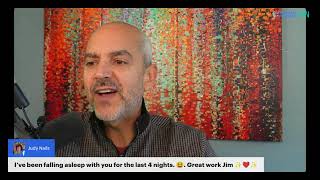
Jim Katsoulis (host of Program Yourself Thin) argues that nobody literally 'needs' to lose weight — weight loss requires voluntary participation — and that reframing 'I need to' into 'I want to' is central to sustainable change. He advises building a large, personal reasons-list to boost motivation, using behavioral programming ('Program Yourself Then' with rehearsal/redo techniques) to practice healthier choices, customizing diet/fasting to the individual (nighttime fasting example), adding meal variety or planned alternatives, and experimenting with stop-eating-before-bed timing. He answers viewer questions about repetitive food orders, artificial sweeteners (Coke Zero), intermittent fasting stress, and shares promotions for hypnosis and a community app.
Chapters
It.
Foreign.
Welcome to today's program yourself Thin podcast. Today we're talking about the fact that you do not need to lose weight. You don't need to lose weight, okay? You never need to lose weight. Literally, there's no situation where you need to lose weight, meaning there's no situation where you absolutely have to or going to be forced to lose weight. You can only lose weight if you want to, because it requires your participation. And there's no reason big enough that really rises to the level that you need to. And I say this knowing people that are literally have just had heart surgery and they've been told they need to lose weight in order to avoid, you know, dying. And so it doesn't get more extreme than that. And I've seen these people not lose weight. So again, there really is no reason that's big enough that you need to lose weight. It's always a matter of, do you want to lose weight? And this is such an important distinction to make in your language, because when you feel like you need to do something or you have to do something, what happens is you feel like you're being forced to do it. And the second you feel like you're being forced to do something, you feel like you're losing your autonomy and your freedom. And you tend to subconsciously push back against that thing, right? Because it's framed as something you have to do, not something that you want to do. And so anytime there's this thing that we have to do, but we don't want to do it, we rebel against it, we push back, we dig in our heels. And this is a lot of times how you're approaching weight loss, where it feels like one part of you is trying to force yourself to do it, and the other part of you is resisting that. And you get this tug of war. There's this internal battle, and you've all felt it. You may have described it as your rebellious part, you know, kind of sabotages you. But what ends up happening is you feel like there's two kind of horses in you running in the opposite direction, pulling you in different directions. And it's hard to succeed, and it's certainly hard to succeed comfortably and sustainably if that's the case. And so one of the best ways to get both of those horses running in the same direction is to change that. I need to lose weight. I have to lose weight. I should lose weight into I want to lose weight. I really, really want to lose weight. Because. And so when we start changing, I need to lose weight. Till I want to. That's the beginning point that sets us up to identify all the reasons we want to lose weight. And there's tons of them. And I find a lot of times people really don't reflect enough on the reasons why they want to lose weight because they just assume, well, of course I want to lose weight. And so a lot of dieters are out there just assuming that they're really motivated to lose weight, just think they really want to lose weight, but really, deep down, they don't really, really want to lose weight, because most of their motivation is built around wanting to look better, but they don't have all the other reasons kind of at their fingertips. And so the more you start to frame this as, I want to lose weight because I want to feel better, I want to look better, I want to have more energy, I want to be healthier, I want to live longer, I want to be the best version of me. I want to feel more confident, I want to be able to think more clearly, I want my emotions to be more balanced, I want my moods to be more balanced. I want to feel more optimistic and hopeful. I want to be excited about the future. I want to grow old in a mobile and strong way so that I can have a great quality of life as I get older. Right now, I can just literally go on for hours and hours doing this. And the reason why is because I've asked the question to myself, or I've thought so many times myself, I want to lose weight because. Okay, so that's what I want you to start doing is asking. You're saying the statement, I want to lose weight because. And then fill it in, and you can't do this enough. I've done this thousands and thousands of times, which is why I have so many answers at the ready. Because if you ask yourself, why do I want to lose weight? You're going to struggle. I can guarantee it. You will be able to say, yeah, I want to lose weight because I want to look better, I want to be healthier.
I want to wear that outfit. Oh, well, look at the pictures. You're not going to have a lot there. I can go for hours and hours about all the reasons I want to lose weight, because I've thought about all the specific details and benefits I get out of it. I've internalized them. They're right there at the ready. I can tap right into them, I can talk about them. That's how I think about weight loss. That's why I'm so much more motivated than the average dieter. Because the average dieter can't quickly and powerfully connect to all their reasons why they want to lose weight. And so motivation cannot be assumed. And as a matter of fact, this gets directly to motivation. Because if you're a person who's wanted to lose weight for a long period of time, who struggled with it, and if you currently want to lose weight but you're not actually doing anything to make it happen, you've got to look at that situation as being one that is primarily a motivation problem to start with, which is to say that right now, your main weight loss issue is that you're not motivated enough. Promise you. Okay. Because I've been doing this for a long time. And when you're not doing the things that you know you should, it's really just another way of saying, I'm not really motivated. And the reason you're not really motivated is you don't have this giant bucket of reasons of why you want to lose weight that I have or my clients have. And once you do, once you reframe this and. And again, of course, you keep. I want to look better and I want to wear this. I've got those goals, too. Okay? So I'm not getting rid of my. My goals of how I want to look, but I've added so much more underneath it that my motivation is just cranking, it's humming along, and that's what powers me through this whole process. Okay. And the average dieter has very low motivation, typically to lose weight, which isn't to say you don't want to lose weight, by the way. I know you all want to lose weight. What I'm saying is that your motivation to lose weight is down here. And your motivation to want to live or live the way you're living and eat the way you're eating is up here. You're more motivated to maintain the status quo than you are to change it. And so most people, I would say the reality is that you weigh what you want away. Currently, your. Your weight is a direct reflection of your motivation level. There's another way to put it. And instead of just trying to force yourself to do the right thing and wondering why you're not doing it, use that energy to start identifying all the reasons that you want to lose weight, all the benefits you would get, all the subtle and big benefits you get out of it, how it's going to affect your relationships, how it's going to affect the most important areas of your life, how it's going to affect your longevity, your quality of life, the adventures you go on, what you're going to do, all the things in your life that are important to you. Start to look at how your weight is directly going to impact those in the short term and the long term. And it's a never ending list. Again, there's so much benefit and beauty and wonderful stuff you get out of mastering your weight that goes far beyond just how you look. Okay? And again, that's a fine motivation to add into the pile. But you need to have a pile. You need to have a pile of reasons why you want to lose weight. And when that pile gets big enough, the whole process changes. Because it's almost like taking your car that had a, you know, 50 horsepower engine in it and putting an engine that's got 300 horsepowers in it, right? It's same car, but now it's got so much more energy and power that it can tap into. And your motivation is the same thing. It's the engine that's driving the whole car. And the more motivation you have and the bigger your engine, just the easier all the whole process becomes. There's still work to do, you still got to do other things, but you feel like you're able to tap into so much more energy. So again, you never need to lose weight. You don't have to lose weight. You want to lose weight. Understand that distinction, build up all the reasons why you want to do it, and you're going to find that it's probably a lot easier to do the things that help you lose weight. So I hope this helps you out. And if you want to go deeper into this process and certainly in helping you find the motivation that's going to drive you forward, click the link in my bio and go get the free hypnosis session that I give you. It is, it's right there for the taking. Okay. And I give you a free training as well. Three steps to master your weight. I give you a bunch of free stuff. Got a community getting ready to start next week. So if you're on my email list, you'll get a link to that. And again, I'm here to help you. So if you have any questions, feel free to ask them. And if you're not in my world, make sure you go get that hypnosis session because it is helpful. And if you never tried hypnosis before, you should test it out. It will not open you up to the demonic. I saw that comment today. There's nothing demonic about hypnosis. It is no different than a state of prayer. Okay, so if. If meditation or if hypnosis opens you up the demonic, so does praying. It's the same state of mind, so does meditation. And those things do not open you up to demonic. So anyways, feel. Feel free and comfortable that hypnosis is just a state of mind that is really no different than watching TV or a movie. It's a state of active.
You're passively active. I say you're passively imagining whatever you're focusing on, right? When you're watching a movie or watching a TV show, you're kind of passively sitting there calmly and you're imagining in your mind whatever it is you're watching. And you're getting feelings based on whatever you're watching. Watch a comedy, you're laughing. Watch a drama, you're sad, you watch a sporting event, you're adrenaline going for your body. So anyways, Rebecca says I'm having trouble eating some. Well, I'm having trouble eating the same food drink on repeat. Advice to break the cycle.
I'm having trouble eating the same food drink on repeat. I'm going to assume that you mean I'm having trouble eating the same healthy food drink on repeat. I'm gonna guess that's what you're saying. Correct me if I'm wrong.
Because I. You. You could mean that I'm eating the same problem foods on repeat, but I'm gonna guess that you mean I'm eating healthier, but it's the same stuff and I'm getting bored of it. That's what I'm gonna guess. Let me know if I'm wrong. So this is a common thing, right? And I think what's really important, folks, is that you all have to build whatever you're going to do to lose weight around you. Everyone's different. So one of my superpowers is that I can eat the same thing every breakfast Monday through Friday. And I don't give a. I just don't care. I enjoy it. And the fact that I don't have to think about it and the fact that I've just automated it is. I. I'm fine that way. Okay? Now, another person may do that. And three days in, they're ready to, you know, they climb the walls. They. They're so bored, and they got nothing to look forward to, and that doesn't work for them. So we need to understand that we need to build whatever we're going to do around us. And we all have our own unique preferences and likes and dislikes. And so that specific one is that we all have different variety requirements. So for me, my variety requirements Monday through Friday are very low. I just don't care, okay? I don't look forward to breakfast as some special thing. I enjoy my breakfast, but it's really just. I know I can eat it. It satisfies me. I like it. It's easy. That checks all my boxes, but someone else may have another box and says, I need more variety. Okay? And so to that point, Rebecca, if that's what you're talking about, is the healthy stuff, is that you start to expand on that, you know, and so if you got some healthy stuff, great job with the healthy stuff initially. And now start asking, okay, let's just take breakfast, for example. But of course, you could apply this to anything you say, okay, my breakfast is really good. I've made a healthy breakfast. I'm getting bored of it. What is another breakfast I could have as another alternative that's in the same ballpark that meets these needs? It's relatively easy to make. I enjoy it enough, and it's in my calorie nutritional goal ranges. Okay. And you may need to have three different options. Okay? So for me, for breakfast, I ate the same breakfast Monday through Friday, okay? Now if I get tired of it, I do have two options in the back of my mind that I can use. Okay? So that's what I would suggest, Rebecca, is that if you're getting bored of what you're eating, first congratulate yourself that you've implemented some healthy habits. But now start asking the question, what's another alternative? What are some other alternatives I can have to these. These meals here? Okay. And come up with another one or two. That's all you need. Usually, again, depending if you're a super variety person, some people are. They need to eat something different five days of the week, right? And if that's the case, you need five options. But again, usually one or two will do people pretty well. And. And again, it depends on the meal. Most people can have the same breakfast, one or two or three of those a week. Lunch, you know, the same ballpark, usually dinner. We want variety. Each night, something's different. And so again, respect that variety and find the answers for you that are going to work. Okay, if that's what you meant, if that's not what you meant, let me know and I will speak to the other thing I could have. We could have talked about.
Let me see. Rebecca says, yeah, I go to store and get the same order, salty sweet combo. I try to make it healthy, but then I Overeat. Okay, I got you. So you keep getting the same thing, and you're kind of getting stuck with it. Okay.
This is a big thing, because most people are gonna find if you really look at your behavior, it's behavior that's repeating, right? People do what they did. That's the way our brain works. It's meant to work on autopilot. And so it's very common that when you really look at your behaviors, you see the same problem behavior repeating over and over. And so for Rebecca, it's going to the store, ordering a salty sweet combo, trying to eat less of it, trying to order something healthier, not doing it and eating it. It sounds like. Or. Or trying to make it healthy. Again, I'm a little confused with the language. I try to make it healthy, but then I overeat. So I'm kind of hearing two different things there. The syntax is a little off because I'm hearing, I try to make it healthy. And again, I know what try means. Try implies failure. I try to make it healthy, but it's not healthy. And then I overeat. And so I like to start things earlier in the process. So my first goal would be how could I order something healthier? Because it sounds like that's where the problem is. I get the same order. I want it to be healthier, but then when it gets time to order, I order the unhealthy thing. Right? And if that's the case, again, I mean, to program yourself, then one of the main things we use the program yourself then techniques, the core mental programming strategy we use, and it's basically two parts to it. There's the redo technique where we kind of look backwards, and there's the rehearsal technique where we look forwards. And so in the program, what we do is we basically rehearse and practice ordering the right thing, ordering the healthy thing. Because you're running into what a lot of people do, where they say, okay, tomorrow when I order lunch, I'm going to order the healthy thing. And then they go and go to order it, and they order the unhealthy thing again, and they just keep repeating that pattern. And this is what most dieters do, because they expect in the moment of ordering, that they're just going to magically make the right decision. But the. The problem is that you've trained yourself through experience and through your mindset to order than healthy thing. And that's what seems normal and natural now. And when you try and deviate from that, it feels bad because your dopamine drops. And then you say, oh, forget it, just give me the normal thing. And so you're locked in the situation where you. And this is what all dieters do, because you just expect the moment's going to come and you're going to make the right choice and then you don't. But then. Then as soon as you finish eating, you say, oh, God, I'm never gonna do that again tomorrow I'm gonna order the right thing. And then you don't. And then, you know, it's a repeating cycle. And so with Program Yourself Then, one of the main things we do is we insert the Program Yourself Then technique in there. So it gives you an opportunity to practice doing the right thing, because you never get a chance to practice ordering what you want to order. Okay, so, yeah, Rebecca gives a little more context. Sashimi and protein chips. And so again, you want to change it up, but then when it comes time to do it, it feels like if you order anything else, it's going to feel. You're going to feel deprived of missing out, right? And so you have no chance to really practice ordering something healthier in a way that makes you feel good. And so that's so much what Program Yourself Then is. But again, it's a whole technique you learn how to do. So for you, again, I'm kind of laying it out that what you want to do is start imagining yourself making the right choice, because you might find that you don't even have an alternative, because saying I'm not going to order the sashimi and protein chips is not really that helpful, because nature abhors a vacuum. Your mind abhors a vacuum. All of you dieters do this because you say, I'm not going to do the bad thing, but that's basically telling your brain you're not going to do something, but you're not telling your brain what to do. And so your brain gets confused, it gets into the moment of decision and it's basically got the thing you've always done and then a vacuum of I don't know what to do, and you go and do that. So, again, another thing I would do, Rebecca, is say, what is an alternative that you would like to eat for lunch? You know, at least define it and then see if you can get yourself to do it, even if you know about it. And the same thing with a glass of red wine with dinner, it's the same thing again. You've programmed yourself to have a glass of wine with dinner to the point now that if you say no, Wine, it doesn't feel normal. Again, you get a dopamine drop. It feels like you're deprived and you're missing out on something and it feels uncomfortable. And then you go get the glass of wine. Oh, okay. Everything feels normal now, right? But your normal reality, your baseline setting is to have glass of wine with dinner. And so if you don't have a glass of wine, it feels less than. And you feel that, right? And so again, it's not enough to know what to do. It's about also programming our subconscious mind so that our new desired behavior of having dinner without wine, of, you know, again, whatever you want to do with lunch to make it healthier, whatever your improvements want to be, it's one thing to know what to do, it's another thing for your nervous system to be like, yeah, that's a normal dinner is me having dinner with a glass of water. You know what I mean? And you start to normalize that. But again, that's the whole process. That's program yourself. Then we're literally programming our mind so that our new behavior feels normal and natural. Thank you, Rebecca. I hope that helps out.
Andrea says sir, though on Coca Cola zero, I drink two liters a day, but still in depths to calories, it. Okay.
You know, again, I always start questions like this with the golden rule of program yourself then is that there's no right or wrong, there's only what works for you, okay? And I really mean that and I want you to really internalize that because, you know, drinking 2 liters of Coke Zero I would never suggest to anyone, okay? But it depends what your goals are. So if you don't have the same health goals that I have, then who gives a what I think, you know, if your only goal is weight loss and drinking 2 liters of Coke Zero a day helps you to maintain a deficit in your goal weight, and that's all that matters to you, then great. You know, so it depends on what your values are. And if you don't really value your health as much as I may, then you may not care about the, the health effects of Coke Zero, okay? And you only care about the calorie weight effects of it, all, right? Now that being said, for a lot of people, drinking Coke Zero is actually going to cause you to gain weight. Substitute these zero calorie drinks that use artificial sweeteners are associated with weight gain in studies. So that's for the general population, but for Hendra, perhaps it affects them where it helps them lose weight. So again, everything is so individualized you have to start looking at things that way. And now we can answer the question much more effectively. So, depending on what your motivations are, if all you care about is a weight loss and drinking 2 liters of Coke Zero is helping you to lose weight and live at your goal weight and you feel great about it, then keep doing what you're doing. Okay, now, if you're asking me what I think I wouldn't want to drink 2 liters of Coke Zero, I wouldn't want to get used to that. I wouldn't want to put that in my body. I think the health implications that are not positive or not good, especially over time. So I wouldn't want to do that. But. But who gives a. You're you and I'm me. So again, it depends on what your motivations and your goals are and what your value, what you value. So wish I could give you a clearer answer, but again, there are no clear answers in life really. You know, unfortunately, Blue Eyes says, do you believe in fasting? I like fasting as a. It's a part of my toolkit I use. Nighttime fasting is what I call it. And it's fasting. Basically. I. And again, I don't eat from basically 6 to 7 at night till 7, 8 the next morning. And that's pretty much my when I don't eat. Now I came to fasting very organically and naturally over 30 years ago. And I kind of figured it out myself. And I say that to you because that made all the difference in the world because there was no intermittent fasting. I went into it really saying I don't want to eat so close to when I go to bed. I used to eat pretty much right up until bedtime. And so I said I want to create a bigger window when I don't eat until when I go to bed. And the bigger I made that window, the better I felt up until about that time period I'm at now. So the difference I'm saying is that when I figured out how to fast for me, I built it all around me. I didn't have any ideas about you had to do it for 16 hours and intermittent fasting and Dr. Fang and all this stuff, I didn't have any of that. Okay. I just created what felt good for me. So my approach to was completely different. And I ended up in a place where I wanted to be based on my experience with it. Now we fast forward 30 years and most people think about fasting as being intermittent fasting or something even longer. And it's very structured, it's very rigid. It's got to be 16 hours, the last two hours where all the magic happens. And I think that's all. And I think it all goes back to the dieting thing where you try and do these things, you make them very rigid, very regimented, and you try and all of a sudden go 16 hours without eating. And, and it works for some people for sure, but for a lot of people it doesn't. And I get a lot of those people in my program that I get to work with. And I find that for them, intermittent fasting was very stressful, especially last couple hours. And they would get themselves so hungry that when they started eating, they almost started training themselves to binge, you know, and so again, nothing's black or white, you know. So do I believe in fasting? I believe in my version of fasting. I believe in the. The version of fasting that may work for you. I do not believe in intermittent fasting is being like just. Just doing them and fasting. Everything's magically going to get fixed. I don't believe there's any. Just one thing you're going to do to fix your weight again in program yourself. Then we follow the goal weight pyramid. So it's a, it's a. It's a comprehensive holistic strategy. Okay. Where we, we cover the mindset, lifestyle and eating. And so, yes, in terms of an eating strategy, I think nighttime fasting is definitely something, or fasting in general, customized to what works for you. I think that's a great strategy to explore. Okay. Because I think giving your body a break from eating for a period of time, one of the greatest gifts you can give yourself. It's the way you approach it and it's the other things you're doing to support that. I don't think fasting by itself is going to fix everything. I think using it as part of your toolkit, though, is a great strategy. So there's again my nuanced answer. I would say, what's up, Rob? Rob says you're fantastic and recommend you often. I'm 70 years old and have been following you for a few months. Lost 20 plus pounds in the last four to five months. Healthy eating works. Thanks, Rob. Nice job. Thank you for sharing that little screenshot of that Nice job. Wow, quite an accomplishment. Yes. 20 plus pounds in four or five months. I love that rate of speed. I think that's wonderful. Okay. Nice job, Rob. So keep listening and I appreciate you letting people know. So super duper. Lois says weighed lower today than I was way back in 2014. Nice job, Lois. Wow. Well, it's good job. Way to. Way to do it right. Keep it up. I love the success stories. Karen says, how long before bed should you stop eating? Okay, there's just. There's no, like, hard and fixed number. You all got to get this in your head. Really, really hear what I'm saying? If I just said 7 hours, 8 hours, 10 hours, 12 hours, whatever. If I just pick some number, 3 hours, 2 hours, who gives a shit? I'm me, you're you. And so what works for me may work for you, and it may not. Okay? So the best thing to do is experiment, Karen. Okay? And again, I think the best way to experiment, I'll tell you what I did, and I think it's a good approach, is again, like I said, I used to eat pretty much right up until bed. You know, I'd be up until an hour before bed. And what I started to say, okay, I want to give myself two hours, do that, got comfortable with it. Let me give myself three hours, do that, got comfortable. Four hours. Let me do that, get comfortable. And I finally figured out a spot where I felt the best, and it felt comfortable too, you know, and so I would experiment with it, Karen. But I think it's a great thing to experiment with because I will say giving my body a break and changing that was so helpful, was such transformative for me because I used to just eat all day constantly and give myself a big period of time where I stopped eating that was comfortable for me. One of the greatest gifts I ever gave myself, and especially when I focused on before bed, because not only was I giving my body a break, but I was doing it right before I go to sleep. And my sleep improved tremendously when I have a body full of food. Okay? So again, I think experimenting with that, Karen, is going to lead you to the answer that is right for you. And never believe anyone that just gives you an answer. You know, I could give you an answer based on studies. It still doesn't mean it's going to be true for you. Right? So again, I would look at what you're currently at now, right now, how, how on average, how much time do you have between when you go to bed and when you stop eating? And let's just say it's an hour, two hours, three hours, doesn't matter. But wherever you're at, extend it by another hour and see how you feel. That feels good. Extend it by another hour, see how you feel, you know, send it by another hour now I start to feel a little hungry. Okay, shrink it up again. There you go. Right. That's the strategy I would use.
Whoops.
There we go. All right.
What's up, X? X says hello. Jim, I gained weight from stress about eating time from intermittent fasting. Yeah, yeah, yeah, yeah. I gain weight from stress about eating time for intermittent fasting. A lot of people do. Again, you know, I say this all the time. I mean, none of these diets are good or bad, like, like on their own. You know, I, I, I take from all the diets pretty much. I take little parts of it in creation of my own diet. You know, I'm always, I think all of us should be creating a one size fits one plan that works for us. And I don't think we can, we can't. Just.
That'S the. One of the, My big issues with dieting is this idea that, you know, they're going to give the same strategy to everyone. You know, everyone in the world has to do keto to lose weight. Everyone's got an intermittent fast. If you want to lose weight, you got to intermittent fast. You want to lose weight, you got to do this. And it's just like, it's so, like rigid and I don't know, it's just, it's not, it's not taking into account you as a person, your lifestyle, your likes and dislikes, you know, like how you want to do what your goals are. There's so many factors. And so.
You know, again, intermittent fasting is a good or bad, I don't know, like, it's good and bad and it just depends on you and your situation. But I do see a lot of people that try and interment fast. It's very stressful for them. And I see like one of the biggest, this is just a generalized thing. But one of the biggest causes of stress with intermittent fasting is this, it's the 16 hour thing. Because I've had people attack me for that because I'll talk about fasting in my version of fasting, and I hate even calling it that now at this point, like, again, I can't. I figured out fasting for me before fasting was a thing, like intermittent fasting was a thing. It just didn't exist. And so that was a blessing for me because I didn't have any ideas of what I had to do. You know what I mean? And so, believe me, that makes a big difference because I, again, for me, I started off slow and built up my ability to go longer and Longer without food. But if, if, if I try to do it now and I'm like, oh, gotta fast. I'm like, oh, how do I fast? Oh, I gotta do 16 hours. Well, now all of a sudden, I've set this huge goal for myself, and now it's stressful. So instead of for me, you know, okay, let's just say when I first started, I slept for eight hours and I stopped eating an hour before I went to bed. So let's say nine hours I would go without eating, right? So if I went from nine hours of not eating to 16 hours, that's ridiculous. That's almost a doubling in time of how much I don't eat. That's extreme to go from one to the other. But what I did is I added an hour, another hour, another hour, got used to it. And it was a slow, gentle increase in how long I went. And I. And I still never got to 16 hours. Even now, if I ever went to 16 hours, it didn't feel right to me, you know? So again, I paid attention to what worked for me, and I got to the time period that felt best for me, you know? And so again, because I see so many people out there will like, oh, I'm going to try intermittent fasting. And they go, and try intermittent fasting. And they do it, and they get really hungry and they're stressed and they're tense and they're overeating and they're not losing weight. And then what do they say? They go, there's something wrong with me. Oh, here's another diet I failed at. Why can't I stick to it? Why can't I go 16 hours? Susie lost 30 pounds on intermittent fasting. Why can't I do it? And what happens is you start blaming yourself. You know what I mean? You start beating yourself up because you can't intermittent fast, or it's not working well for you, but maybe it's just not the right fit for you. You know what I mean? And so we always have to, like, realize that we've got to get the right plan that works for us. That's a huge part of this process. There is no magical process that's going to work for every single person. You need to figure out what's going to work for you, you know? So, yeah, so that's very common. X. I do a lot. A lot of people have said that to me. You know.
Jebediah says.
Jebedia is in Nigeria. All right, Funny, I was just talking to someone from Nigeria two weeks ago.
Can I lose weight still. While still eating rice? Yes. You can lose weight while still eating anything. Technically, some things that's a little trickier than others. I mean, can you lose weight eating candy bars and fast food? Yes, but it's harder because it doesn't give you the satiety and the satisfaction that makes it easier. Right. And so, you know, there's that. But technically, you can lose weight eating anything because it's always just about a calorie deficit, you know. But some foods support you making healthier decisions and support that calorie deficit and lower calorie consumption more than others.
What's up, Sherry? Sherry says hi, Jim. I'm still learning to figure out what works for me. It's actually fun. When was the last time anyone ever said that about a diet? Thanks, Jim. Yeah, exactly. Well, Sherry's in the program, so that's what we're always looking to do. Again, it's an adventure. It's a journey. And, you know, again, journeys are. They're kind of all, everything's good and bad, you know, and the journey of it's good and bad. Because I know most people just want to be told what to do, because that sounds like the easier thing. Just tell me what to eat and I'll do it. And it's like. That sounds easy when you say it, but the reality is that I could tell you what to eat, but if it doesn't resonate with you, it doesn't fit for you, then you're not going to do it, so what's the point? And so, you know, at the end of the day, we have to walk a certain path, and we got to figure out what works for us. And, yeah, it takes a little bit extra time. You know, it's easier just. Yeah, of course. Who wouldn't just want somebody to tell us what to do, tell me the perfect plan for me. But who could tell you that? You know what I mean? No one's you. And so we really have to figure out what works best for us. And it's a journey. And again, I love the framing of it. Right. It is fun. It's fun figuring it out because that's why we say in program yourself. Then we take the weight loss, we wrap it in personal development. So we make it a process of personal development. Growing, evolving, turning into the person we want to be. And it's a process of exploration. It should be fun. You know, there's no rush to it. I'm on a straight path. See, this is what happens subconsciously. Dieters think about weight loss as a destination based goal. So you think about getting to your goal weight and that's it. So let's just take, you know, this scenario where you have a lot of weight to lose and it's going to take you two years. Let's just take a lot of weight to lose two years to lose it in your mind. You're like, okay, I got two years and I lose my weight, then I lose the weight and I'm there. But what are you gonna do the next 50 years?
What are you going to grow and evolve and look forward to there? Because when, when you think about weight loss and like a dieter, you just think about getting your goal weight, well then how do you live? What do you look forward to? What do you do? What's exciting to you?
So that's why we take the, the personal development wrap it over. Because once you get to your goal weight, what are you looking forward to? What's the excitement? What are you growing with?
So for me, it's like I'm on this straight path. I just keep improving, I keep growing, I keep evolving, I keep learning stuff about myself, I keep tweaking things. Keep optim. It's fun, like I enjoy it. So again, you know what I mean? Like, I think dieters. So what are you gonna do when you get your goalie? I'll figure it out then. Well, what's that mean? Because very few dieters, very, very few dieters ever actually maintain their weight.
So, you know, you really, you gotta learn from people that have successfully lost weight and kept it off. And they're, they're singing a whole different story than dieters are. And that's what I'm trying to share with you all is that they think different. And you know, Sherry's one of them. She's becoming one of them. So nice job, Sherry.
What's up, Judy? Judy says I've been falling asleep with you for the last four nights. Great work, Jim. Thank you. Thank you. Yes, that's what I do. I am a hypnotist. And so, you know, it's, that's what I do. And I got a bunch of hypnosis for you all. So, you know, again, if you're not in my world, click the link in my bio, go get that free hypnosis session that I got for you. It's free. You could test it out. I am one of the highest paid hypnotists on the planet too. Just so you know. Literally, I'm literally one of the highest paid hypnosis on the planet is $25,000 to work with me privately. So, you know, the fact I'm just giving this free hypnosis, as you may say. Well, you know, I've worked with a hypnotist and it sucked. It worked. It wasn't me. You didn't work with me. And so go test it out. It's free. You never know. And then the other side is you might never tried hypnosis before. Go test it out. Experience what it is. It's probably not what you think. It rarely is. And so when you experience it firsthand, you get the full, you know, kind of benefit of it and you get the real experience of what it does. Okay, so go check that out. But nice, nice job, Judy. Again, nice job taking action. Just listen to my hypnosis sessions at night will begin to change you and transform you. It's built that way. That's a nice part of it.
So, yeah. All right, you know what? I'm gonna wrap it up. I got a lot of stuff to do. Again, one of them is being putting together the free Circle community app. So again, if you're not in my world, please go get the link. I'll put it on Facebook here.
So if you're on Facebook.
Go get this.
There we go. Yeah, go get that. Go get it. Because it's right there for you. If you're on Tick Tock, you can click the little picture of me up in the top left. It's right. There's a link. Click that and you're right there. Take you two seconds. You're back in my world. And.
Yeah, so again, so go get that hypnosis session. Watch the video training I made for you. They're all free. And then if you like this, I'm here every Monday through Friday, usually around noon Eastern, somewhere around there. I am here to answer your questions, help you out as much as I can. So please pop on here, ask whatever questions you have. I'm here to help you. Right? So anything you want to do, ask questions of, feel free to ask. And if you like listening to this, but you can't get to the lives, it's also a podcast and there's replays available. Again, there's replays on Facebook that are there all the time. And it's also a podcast and you can search program yourself then any podcast platform up at Pops, you can listen anytime you want. So, all right, everyone have a super duper weekend and we'll talk soon. Bye.
More from Jim



Weight Loss Visualization: Wake Up in Your Dream Size #programyourselfthin #weightlosshypnosis



What If You Pretended to Be Thin for One Hour? #programyourselfthin #weightlosshypnosis




