Your 5 Year Weight Loss Plan
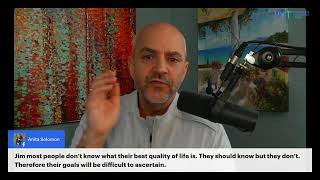
Jim Katsoulis argues that five-year weight loss plans work better than crash diets because they let you stop chasing rapid results and start living at your ideal weight instead. He breaks this down with his Goal Weight Pyramid: mindset as the base, then lifestyle and eating habits. The diet industry sells quick fixes that fail; lasting change requires reframing weight loss as an identity shift, not a temporary project.
Chapters
Everyone, welcome to today's Program Yourself Thin podcast. Today we're talking about Your 5-year weight loss plan. Now, you heard me right. 5 years. Now, I know your brain is just broken in half right now because the idea of a 5-year weight loss plan doesn't even exist in your mind, right? What are we talking about? 100-year mortgages, 30-year college degrees, right? This is in the realm of, huh, what are you talking about? But I really want you to sit with this because this again gets to one of the core challenges you have in terms of mindset with your weight. Is that you think in tiny, short time frames and you need to lengthen them. And the main reason you want to lengthen them is what do you want your weight to be in 5 years? Let's make it simple. Let's start simple. What would you like your weight to be in 5 years from now? What would you like to be 4 years from now? Let's go the other way. Would you like to be 10 years from now? So if we start thinking longer term, it's pretty clear what goal you want. But the reason you kind of freak out when you think of a 5-year weight loss plan is that feels too long on one hand, but on the other hand, you want to be at your goal weight forever. So you've got this weird subconscious incongruency that on one hand you think 5 years sounds way too long and you recoil from it. On the other hand, when you take a second and think about it, like, yeah, I want to— I want to be my goal weight in 5 years, 10 years, 20 years, 100 years. I want to be at the same weight. That would be great. And so I asked this question to you to really highlight that strange kind of paradox that's within you, that 5 years feels weird at all, um, yet it's what you want and beyond. And you have to recognize this because, again, dieting is not your friend. Dieting is a psychological operation by the food companies to get you to think about weight loss in the wrong way. Let's keep it simple. And one of those wrong ways— and there's a lot of wrong ways they're putting in your mind— but one of the wrong ways, again, is this time frame idea so that when you think about weight loss, you're not thinking in 5-year periods, 10-year periods. You're thinking in days, weeks, months. And it's too short. It's too short of a time frame. If we go back to college and that idea, You can't get a bachelor degree in a month or two. You just can't do it. There's a natural time order to life. You can't plant a tomato seed and pick the tomatoes next week. It just doesn't work that way. So there's a natural timepiece to it. But dieting has convinced us and conditioned us to remove that timepiece or to try and speed it up as much as we can. And that is what causes so much stress for you, because you have to understand that there really is a direct relationship between how fast you can lose weight and how extreme the thing you'd need to do to, to do that would be. Okay. So if we go to the extreme, I would assume the fastest weight loss a human could create, short of chopping their leg or arm off, would be to completely stop putting anything in their mouth. No water, no liquids, no food. Exercise as much as you get yourself to exercise. And that would probably be the fastest rate of weight loss you could achieve in the short term, not in the long term. Right. Because eventually you have to eat again and drink again. So you're going to put weight— that weight you lost during that period, that weird period of time where you put nothing in your mouth, you're going to put weight back on eventually. But again, dieting has conditioned us to only look at the weight loss period. All we care about is losing weight. We don't think about the day after, the week after, the month after. And that is one of the biggest challenges mindset-wise that you've got to face and deal with. Because if you keep approaching your weight with this short-term mindset, you're going to keep falling prey to the, the diet hacks, the instant results, the overwhelming strategies, the things that don't work for you. And you're going to just keep cycling through them until you can't cycle through them anymore, which is probably where you're at. You have probably tried tons of diets, tons of times to try and lose weight. Nothing has worked for you. And now you can't even get yourself to start another plan. And what I'm trying to tell you is that before you even embark on another attempt to change your weight, change your timeframe, start thinking about what is my 5-year plan? And the reason you ask that question is to stretch your mind, to expand your mind, to start thinking of it differently. I, would want nothing more for people than to start thinking about their weight like they think about college. Because if you sign up and join college, you have a 2, 4, 6, 8-year timeframe in your mind. And you approach it differently because of that. And if you approached your weight that way, oh goodness, you know, it would be a whole different story. Because what you would do is you would start to break the process down into pieces and start working on it strategically, systematically, instead of trying to do everything all at once. And so if you start thinking about a 5-year plan, you really do set your brain up to think more like a person who is thin and healthy naturally, which is the real goal. The goal is not just to lose weight. The goal is that you start to think and behave like a naturally thin person so that living at your goal weight almost becomes an extension of who you are. And it feels internally like you're in the flow of it. You know, you just, you do what you do and you live at the weight you want to live at. That's really what we're aiming at here. We don't want our weight loss plan to be something that requires 100% focus and attention. That's a short-term thing. You can't keep that up long-term. And so as soon as you start to set the criteria of 5 years, it forces your brain to think about your weight differently. And in a more accurate way in terms of what you want, because you don't just want to lose weight so that you can put it back on and be struggling with your weight 5 years from now. Wouldn't it be nice 5 years from now if you genuinely had mastered your weight, meaning that you knew how to think like a thin, healthy person, you knew how to live like a thin, healthy person, you knew how to eat like a thin, healthy person, and you knew how to run your brain so that you could do all those things comfortably. On near autopilot? Isn't that a more improved goal over just wanting to lose weight in the short term? And so when you start thinking about it in a longer-term timeframe, almost without exception, you start to think about better strategies because, A, now you're not as rushed and that helps your quality of thought improve tremendously. And B, you realize you don't need to do this all at once. You know, there's a great— one of my favorite quotes ever is that most people overestimate how much weight they can lose in a, in a month and underestimate how much weight they can lose in a year. And I think that diets really exploit this in people, that they want to just get fast results, but they're really missing the big picture that you've been chasing fast results for decades at this point, and it hasn't worked. And I see no reason why it would work in the future. So the real shift that has to happen is your approach. And the approach— the different approach starts by thinking differently. And you can do that simply by starting to consider and wonder, what is my 5-year plan? Where do I want to be 5 years from now with my weight? And once you start to get clear on that, then you can start to reverse engineer and work it backwards strategically, systematically, for how you can accomplish that. And I think it's a fun exercise to do because it's going to force you to think about your weight in a different way and how you're going to achieve it. And if you want some more support kind of thinking in this way, click the link in my bio or go to programyourselfthen and go get the free hypnosis session I give you. It's called The New Thin Me, and it is designed to help kickstart your weight loss. If you are in TikTok, you can click my picture up on the top left and you'll see it. If you're in Facebook or YouTube or Instagram. No shit, hold on a second. There we go. I'll put this right in the chat window for you so you just click this little link. And as I've been saying, not only do I give you this free hypnosis session, but I actually just put a whole thing together called PYT Daily, which is completely free, and it's a support program I give you for free. So every day you'll get an email. Sometimes it'll have a link to a TikTok that was really— that did really well, people really liked. Sometimes it'll be a podcast I did. Sometimes it'll be a hypnosis session I made for you, all completely free. So go check that out. Again, it's my gift to you, and it's my way to help support you, you know, in your weight loss journey. So you feel like you, you kind of have someone. But if you have any questions, feel free to ask them. I see Nuzz says, why do I lose weight so slow? I don't know. I mean, everyone loses weight at different speeds. That's, that's a fact of life. Why are some people tall and some people are shorter? Why are— you know, I mean, like, you can just go down the list. But at the end of the day, who gives a shit? Who cares how fast or slow you lose weight? The only thing that matters is the way you're losing weight feels comfortable so you can keep it up. Because who cares how long it takes as long as once you get there, you can stay there? So, so slow weight loss really isn't the problem. It's usually the mindset we have and/or the strategies we're using to achieve the weight loss. But I get it, as a dieter, you want fast weight loss. We're all impatient. I get it, you know. Um, but why do I lose weight so slow? Um, let me tell you this though, there's people that lose weight slower than you, so at least appreciate that you don't lose weight as slow as them. And, um, be happy that you can at least lose weight because some people think they can't even lose weight. So again, I know it's frustrating, but, uh, yeah. Is that a good answer? I don't know. What's up, William? I guess all the answers can't be great. Maybe that's an okay answer. I don't know. Uh, what's up, Anita? It says, as an about-to-be 70-year-old, I think I'll shoot for no more than 2 years. That's funny. But no, don't do that, Anita, right? Push it to 75 even. It doesn't matter. I work with people— there's people in my program in their 70s. And that's interesting too. But again, I mean, I'm just telling you, like, I could talk about this for hours, but if you start thinking about your 5-year weight loss plan, it's such an interesting exercise because what it does is it really reveals and highlights a lot of your kind of limiting beliefs and ideas and thoughts you're kind of living within that a lot of times you're not even aware of. And yeah, anyways, that's funny though. I get what you're saying. Sue says dieting mindset's so hard to change. 40 years dieting. I agreed. Agreed. Yeah. Dieting mindset is one of the hardest things to change. I will give you that. Um, we've been steeped in a diet mindset our entire lives at this point. Literally all of us, every one of us, we have been exposed to literally millions and millions and millions of diet ads in our lives and they affect us. And on top of that, you've tried dieting. So you've, you've dedicated time and energy and focus to it on top of it. And, um, on top of that, It's the only method we're ever given for how to manage our weight naturally. And it's just, it goes on and on and on. Dieting is, is difficult. I don't disagree with that, but it's one of the most important and worthwhile challenges to take on. You know, it is difficult, but again, as I always say to my son, hard is good. I find taking on hard things in life has been really the source of really my greatest senses of pride and fulfillment and success in life. So don't shy away from hard things, but, you know, be strategic with how you approach hard things too. Hard things are going to take a while. It's going to take a lot of effort and energy and resilience and time and focus and energy and recovery and all the rest of it to do it. And that's what it is. And I think that if we don't shirk from that and we face it head on, Again, we take it on with a challenge response. Oh, it's so hard. It's so hard. Oh, yeah. I mean, everything in life— not everything, but a lot of things in life are really hard. And the more important they are— and again, everyone's different. Some things are easier for people, some things are harder for people. But if weight is hard for you, then give it the proper respect it deserves. Dieting is not that. Dieting is not respectful. To how hard it is. Dieting is bullshit because dieting is a get-rich-quick scheme, and to buy into a diet is really to buy into hacks and tricks and shortcuts and bullshit. And I'd much rather, uh, dedicate my energies to things that are going to serve me long term. But it's hard. It is hard. Um, Anita says, I wish I understood this long-term mindset when I was younger. I would be at my goal. Love the idea of the 5-year plan. Yeah, agreed, Anita. I hear that all the time. Time for my clients. I mean, we all go through that. I think one of the, the shadow side of personal development and personal improvement— weight loss is part of that— the shadow side of that is that as you improve, you know, you realize limiting beliefs you had, uh, strategies that don't work for you. And so, so much of personal growth is realizing things you've been doing for a long time that haven't been working, and there's always a sense of regret. Once you realize that, and I think acknowledging that's really important as well, because it's a, it's a force. And sometimes I swear to you, almost subconsciously, we don't even want to recognize the thing we're doing wrong because it's so crushing to be like, holy shit, for 60 years I've been on the wrong path. That can hurt. I get it. But remind yourself that there really is no wrong path as long as we learn from it. So you could have been trying to diet for 60 years. And you can be frustrated when you hear me talk about it. I get that. That, that's honor that. Let yourself feel that. At the same time, once you move through it, remember that everything you've done is an opportunity to learn and grow from. And this is actually a huge thing I work with my clients on is that we don't want to just say, oh, 60 years of dieting, we're just going to ignore that because it didn't work. We're going to use all of that wisdom. We're going to use all that experience that you've had. Um, because again, if you've been dieting for 60 years, some things have worked for you, a lot of things haven't worked for you, but that is absolute gold to notice and to learn from. Now again, dieting never teaches you to learn from your previous attempts. It's always just the same thing. Oh, okay, now I'm going to do it. Now I'm going to do it. Now I'm going to do it. You never adjust. You never learn. You never grow. And Program Yourself Thin is all about learning, growing, and evolving as a person. And creating a strategy for you. And so even if you've dieted for 60 years, there is so much wisdom and knowledge within that experience that you can pull from and now proceed a lot quicker than someone who doesn't have that experience. So again, that's the other side of that regret, is that you also have a lot of experience and wisdom that's just waiting there to be utilized as well. Uh, what's up, Jane? Jane says, for some reason I don't get the notification that you're on live until you are about 8 minutes in. That's weird. Yeah, I keep missing the beginning, which is annoying. Yeah, that sucks. But you're on, you're on Facebook, Jane. You can at any time, um, well, I guess maybe like in— I don't even know how long it takes. No more than an hour. But on Facebook, these, these lives I do every day, they're there. So if you go and follow, uh, the Program Yourself Thin page on Facebook Every day you can just kind of go back to it and watch the beginning. So there's at least that, you know, and that's a pretty good, um, second place to just being known and seeing it live. It's always nice seeing it live. It's just easier. And it's something about the attention span is, is helped, I think, when you're watching something live as opposed to something recorded. When it's recorded, it's just so easy to just hit the pause button, I think, you know. Now. But yeah, if you got any questions, feel free to ask them. So Michelle, Michelle says, question on weight loss speed. This is, say, Michelle from yesterday's live with 178 pounds lost 20 to 24, um, maintained for 2 years but still 30 pounds to lose. And despite continued life changes, that 30 pounds just won't budge. Why? Um, okay, Michelle, well, let's go into that. And I'm going to start with my kind of big general overall view because I think it's really just so relevant for so many dieters. Especially someone who's in your situation where you've lost so much weight. You know, I think you might even be more dealing with this. But I want to start with this, that I think the big challenge virtually everyone has when they're dieters is that they trade the excitement and the pleasure of the food for the excitement and the pleasure of the weight loss. And I think that what happens is you can diet yourself down But at some point, the same problem exists that you don't know how to live as a thin, healthy person. And so again, when the scale's going down, that kind of becomes our focus, right? So we replace our focus on food for our focus on the scale. And as long as the scale's going down, it's exciting, it's pleasurable, we're looking forward to it, we get absorbed in it. But I think what happens when we get to our goal weight— now again, I want to give you the stat that I always reference, that it's estimated 85 to 95% of dieters that lose the weight and get to their goal weight put it back on. So we have to recognize that something is happening when a person gets to their goal weight, and it's not— it's not your fucking hormones regulating and metabolic adaptation. That cannot be the explanation. What I think it is is a psychological one. And I think what happens for most dieters is they trade the excitement and pleasure of the food for the excitement and pleasure of the scale going down. And I think what happens eventually, most dieters will get to their goal weight. And now where's their excitement and pleasure coming from? It's not coming from the food and it can't come from the weight loss because you're at your goal weight now. And I think sometimes after you've gone through it a couple of times, the smart dieters start to say they start to get close to their goal weight and they stall it because they live in this perpetual diet mode because they don't— they're scared to death of getting to their goal weight because what are they going to do then? And so I think a lot of people do that subconsciously, people that get stuck, you know, and, and again, I, it's not really, so you may say, well, I'm 30 pounds away, but weight loss is a relative thing. You know, so if you've lost 178 pounds, you're 30 pounds away. You ultimately wanna lose 208 pounds. You are 15% away from your goal weight. So I don't think 30 pounds, I think you're 15% away. And that's usually, I see people about 5 to 15% away is the average space people get stuck from away from their goal weight. I don't understand what's going on. I try everything. I do everything I can. I do everything I can. And we kind of talk about it. And a lot of times that's a factor. So I will just start there. You know, do you have a plan for what you're going to do once you get to your goal weight? Because the other piece is this, and this is going to bum you all out, folks, but, but don't let it. You've got to address this. You've got to face it head on and then get through it. But back to the stat that 85 to 95% of dieters that lose the weight, the successful ones, put the weight back on. If we follow this thread, the pleasure and excitement of the food for the pleasure of seeing the scale going down. What happens when you get to your goal weight? Now I know what you're thinking. I know what you're all thinking in your head. You're saying, Jim, being at my goal weight is going to be— the pleasure, excitement is just living in my goal weight. It's going to be amazing. Every day is going to be amazing. Unfortunately, not exactly the way you think, because there's a thing called hedonic adaptation. Which is we normalize to whatever our reality is. And you've all experienced this with your car. You get your car and at first it's your new car. After 3 months, it becomes your car. Okay, we normalize. This is why you put the weight on in the first place. If being at that weight— because all of you have been at your goal weight before— if being at that weight was so magical and so amazing and so incredible, you would still be there, wouldn't you? That motivation you expect is going to be there when you get to your goal weight. Why wasn't it there when you were at your goal weight the last time? Because you have been at your goal weight. Some people say, I've never been at my goal weight. Well, what did you just— you skipped over the number? I mean, no, you were at there at one point and it wasn't enough for you not to put weight on. And I think this is crucial because, again, to me, this gets to the heart of everything I'm talking about. It's not about weight loss. It's about living at your goal weight. They are two fundamentally different paradigms. Focusing on weight loss is focusing on the short-term phase of losing weight. That's not what you want. It's not. It's a path to get to where you want and where you want to get to ultimately is to live at your goal weight. All right. So, so that's the mindset piece, Michelle. And there's a lot more to it, but that's kind of the big mindset piece that I would focus on first. Do you feel comfortable? Are you anxious about putting weight back on? Are you nervous that once you get to your goal weight, what are you going to do then? Again, a lot of times we kind of hold that that goal weight out in front of us and we live in this perpetual state in order to keep ourselves motivated. The other piece, though, let's just get into strategy and functionality, is you mentioned something. You said, where is it? Despite continued life changes, that 30 pounds just won't budge. Yeah, life changes support when it comes to weight again and program yourself. Then we have the goal weight pyramid, mindset, lifestyle, eating. The eating is physically is the most direct thing that's affecting your weight. So the lifestyle things support your ability to eat in a way to keep you at your goal weight. So when I hear you say I have, um, despite continued life changes, that's a red flag for me. The life changes are great and wonderful and crucial and necessary, but ultimately that last 30 pounds is going to come down to reducing calories, um, from your from your daily caloric intake. So that's where the focus has to be. The lifestyle supports that, but the reason the 30 pounds aren't losing— aren't coming off is because the calories are still too high. So the average calorie intake needs to reduce, and it probably needs to reduce by another 15 to 20% of what it is right now. Just ballpark mathing it. I'm not saying that's exact, but just ballparking it. So focus on the food piece of it. What's the food at? Where is it at? Um, and again, as you get closer, um, it's a significant amount of weight. It really hasn't even— again, maintained for 2 years is impressive in my world, but considering that you started almost 200 pounds heavier, uh, you need to have a longer time frame. Absolutely 5-year plan for you, Michelle. You know, it's just the way it is because your body is changing a little bit at a time. you know, but over the next 3 years, it's going to start to get familiar with living it that way. You're going to optimize it. You're going to dial in your lifestyle. You are going to dial in your eating and get to that goal weight. So that would be my kind of suggestion. Uh, what's up, Joyce? Joyce says, I had lost 70 pounds, and when I stopped my diet, my emotional food eating brought me back up to my original weight. I know without a doubt that self-sabotage is real, and I feel my new mindset is what will set me free. I am 69. Um, yeah, I'm sorry to hear that, Joyce. Again, familiar story, unfortunately. I'm glad you realize it now. Um, one thing I will say though, and I always have to push back on this because I just think it's, it's an inaccurate way to describe it. I don't believe in self-sabotage. I don't believe that, Joyce. I believe it was what I was just saying. I think because it's like if, if you've never played the piano before and I sit you at the piano and I say, play me a song, and you say, I don't know how to, and I say, that's bullshit, you're just sabotaging yourself. Well, that wouldn't be an accurate description of the situation, right? The person's not sabotaging themselves. They don't know how to play it. And there's a very distinct difference between sabotaging yourself and not knowing something. And I believe, Joyce, two things. I believe, one, that in the past— and I don't know where you're at now, but I will say when you drop 70 pounds and then put it back on, I don't think that was self-sabotage at all. I think it was probably a combination of two things. Number one, you didn't know how to deal with emotional eating. Without the excitement of weight loss right in front of you. So you didn't know how to genuinely deal with emotional eating and deal with your emotions genuinely. That's number one. So I don't think that's sabotage. I think you didn't know how to do that. Number two, I don't think you knew how to live as a 70-pound lighter person. I think you lost 70 pounds and it felt weird to you. Didn't feel normal. You almost didn't even know yourself as that person. So I don't think that's sabotage. I think that's not knowing how to think. Live and eat like that 70-pound lighter version of you. I think that's a more accurate description, but we can disagree too. She says, okay, thanks. Yep. So Jody, Jody says, yeah, you can watch it on YouTube immediately or even start at the beginning when you're live. Oh yeah, right, right, exactly. Um, so YouTube, yeah, that's right. You can just, if you choose to, go right back to the beginning and, um, you'll see that beginning as well. Yeah, thanks for Adrian says, I'm just so blown away at how fast just taking a deep breath can change my whole demeanor. Yes, Adrian. Yes, right? It's life-changing. It really is crazy. I agree. And taking a deep— let's all do it right now. Take a second, everyone, and notice how much you're resisting doing it. I don't know, I'm not taking a deep breath. I'm not— I don't have time to take a deep breath. I know that's what you're thinking. I think the same thing, but it's so silly, isn't it? Let's just do it. Oh man, every time. I— every time. So I appreciate you reminding me that, Adrian. And if you did it, um, notice it felt better, right? And the funny thing is you can do it again tomorrow and you'll remind yourself. And it's like you— every time you remind yourself and re-experience that, it's always kind of like profound. It's weird. And then if you didn't do it, I want to take a second to think about that. Why didn't you do it? What possibly could you be doing right now that would prevent you from taking a deep breath and letting it out? Why would you resist that? And if you are resisting, I'm asking this genuinely, maybe reflect on that a little bit. Now I want to take another deep breath. If you're resisting taking a deep breath, I've just taken two of them. If you've resisted during that time, what is the excuse? Why would you not do it? Again, I think it's funny. I'm kind of joking with you, but we're funny creatures. We're not logical beings, folks. I think the quicker you realize we're not logical primarily. We obviously have a capacity to be logical, but we're not primarily logical creatures. We're primarily emotional creatures that are just running on autopilot. That's the reason why you ain't taking a deep breath if you didn't. So again, no judgment or blame there, but it just— it is a funny thing that can reveal a lot. Uh, so funny. But yeah, if you got any questions, feel free to ask them. Um, uh, Lisa says, I hate that stat. I know it's a bummer stat, you know, that 80 to 95% of dieters that lose the weight put it back on. I know it's a bummer stat, but I say it all the time because I, I don't know. I'm gonna literally write a book on it, I promise you. But I don't know what else I can say to prove to you that diets don't work. And especially all of you, I know the people that are listening, I know if you're listening to me right now for any period of time I know you're an overthinker, and so I know that you're in your head and I know you're an overthinker and I know you're kind of a perfectionist. And so I know that you blame yourself for the diet's not working. And I don't— I don't know. I do everything I can. My life is dedicated in part to trying to figure out how to communicate as effectively as I can that it's not you, it's the diet primarily. You play a part. Don't get me wrong. You're part of the thing. Don't— don't get me wrong. But it's primarily that diets don't work. And if you've never been given a real plan or strategy for how to manage your weight, I'm not going to blame you. When something fails 85 to 95% of the time, I'm not going to blame you. I'm going to blame the strategy. And I don't know, I just think that's smart. So, but it's a bummer stat for sure. Um, Brooke says, advice for someone who lost a lot of weight but gained weight due to, uh, BED. Yeah, okay. Um, well, I would say in that, in that situation, now again, when it gets to a, when it gets to the level of disordered, I, I think that there's kind of thresholds with life, you know. And so if it gets, if binge eating gets to the level of a disorder and you feel like it's that level, then that's above my pay grade. I, I don't work with that. Okay. But I'm going to share some things that may be helpful to you. Um, it may or may not be relevant. Okay. Again, without knowing your real full story, I just want to qualify by saying that. So what I tend to think of is binge eating is a symptom of something deeper. I tend to believe that. Always? No, there's always outliers, but the vast majority of the time what I've seen is binge eating is a symptom of something deeper. And that deeper thing is typically one of two or both things. Number one is that the binge eating is triggered by over-restricting. So people say, I don't know, I was doing great and then I was binging. I said, well, how are you doing great? Well, I didn't eat anything. Well, okay, not eating anything for extended period of time is one of the best ways to get yourself to binge in the future. That's number one. Number two— ah, here we go. See, I, I said disordered and I shouldn't have done that one. Um, so now I'm restricted on TikTok, but that's okay because I gotta get out here in a minute. So, um, so number one is over-restricting. Number two though is emotional. And that if you don't know how to manage your emotions genuinely without food, then the food and that behavior becomes one of your main strategies to manage your emotions. Like I said, I'm not always saying it's just these two things, but these are two good places to start. And so for a while, you were able to fight against yourself and lose the weight, but then eventually, you know, either you started over-restricting or probably most likely the emotional one's probably the bigger one. That you started feeling stressed, you start feeling sad, you start feeling upset, whatever emotion it may be, and you did not know how to deal with it genuinely. And so you use food as your next best strategy, your best strategy, um, to at least minimize it, makes you feel better for a few moments at least. So again, that's, um, a very generalized sense of it, but hopefully it can kind of lead you somewhere new and different where you can get a handle, or at least some forward momentum on it. Um, Joyce says, also with my meditations daily, I received a message from internal self to drink tea and eat raisins. Yeah, that's great. That's great, Joyce. And that's the point, right? It's just figuring out what works for us. And again, you know, like, with hypnosis is, is a core part of my process that I, that I share with people. And I think, um, one, one piece about hypnosis that's kind of overlooked a lot is that hypnosis is just like meditation. It's literally, it's a very similar brain state. We're just, we're creating it in a different way. But the benefit from meditation and the benefit of hypnosis both is that you're quieting your mind down and you're turning your attention inwards. And the value of that is that your subconscious mind whispers to you. A lot of times your subconscious mind whispers solutions and strategies and answers to you. And a lot of times our brain is so loud in there that we can't hear them. And so the beauty and benefit of meditation and the hypnosis sessions a lot of times is that we start to hear those whispers and we start to realize strategies and solutions that really, really are the right fit for us. And, um, that's what we're doing. So yeah, nice job, Joyce. Anita says, exactly, Jim. All my experience has allowed me to easily slip into your entire thought process. It's been pretty easy for me to understand and implement your mindset. That's awesome, Anita. That's what I want. And that's why I do this every day. I literally want you all to slip into my mindset. I've never really thought of it that way, but that's literally what I'm doing too. I, you know, kind of— I'm not just talking words here. I am a hypnotist and an NLP trainer. So the way that I'm communicating every day is intended to go deeper into your mind than just information. I am looking to literally kind of become a voice in your head for what is going to be warm, encouraging, supportive weight loss. Because I think most people do not have that voice in their head. I think the voice most people have in their head when it comes to weight loss is a harsh, punitive, mean voice. And I seek to be the counterweight to that. I want to be the warm, encouraging, supportive voice you think in your mind when you think about your eating, your weight, your health, your happiness. That is absolutely a goal of mine. So I'm glad to hear that's happening, Anita, for you. Thank you. Connie says, give your body a moment to regroup and shrink your skin. Yes, that too. Again, I just think that, um, yeah, well, and I see Michelle wrote here, so I'm going to kind of go right, hop down there for a second. Um, Michelle says, ironically or coincidentally, the weight I got to is the same weight range I was in in late teens, early 20s, which was the most fun and productive time of my life. This causes me to wonder if there's a subconscious factor holding me here or an identity as thought that's stalling me. Um, boy, what an interesting thing, Michelle. I'm gonna, I'm gonna nitpick because I like to nitpick language and tenses of words. The weight I got to— is that the weight you're at now? Is that how you're referring to it? Is the weight you got to— the weight I got to— is that the weight you're at now? That's disassociated language. Interesting, because if you're at the weight you were at in your late teens and early 20s when you had the most fun and productive time of your life, if you're there now, well, then we gotta have another conversation. So let me know if that's what you meant when you wrote the weight I got to. Yeah, okay, that's the weight you're at now. Okay, now that's really interesting. And so now we're gonna take a left turn. Thanks for answering that, Michelle. So this is fascinating. And, um, this really validates my point, Michelle, of what I was saying initially, the perpetual diet cycle. So Michelle has lost 178 pounds to return to the weight she was at in her late teens and twenties when she had the most fun and most productive stage and phase of her life. She's there. But she's not there in her mind. She's got 30 more pounds to go. So subconsciously, you're keeping yourself in a perpetual diet, A, and B, now that brings up the other point that your goal at this point here is not so much about where you want to be as opposed to where you don't want to be. And you're locked into that mindset. It's the common diet trap. That everything's about what you don't want to be, what you don't want to eat, what you don't want to do, what you don't want to weigh, what you don't want to look like. And now here you are, you've literally gotten right to the weight that you were at when you were your happiest and healthiest, when you're in your late teens and 20s, which is typically our lowest weight naturally. And yet you're stuck in this mindset that you haven't gotten there yet. And on top of it, that you're 30 pounds away. Which is a lot of weight left to go, I would say. So that's interesting. And that brings me up to a point, and this is why— this is another thing I give away for free. Well, I did give it away for free sometimes. It's kind of— it's, it's in a different spot now, but it's my goal weight quiz. What's your goal weight? How did you pick 30 pounds lighter than your happiest, healthiest late teens, early 20s weight that you had? How did you decide on 30 pounds lighter than that BMI chart? You know, we can't choose our goal weight based on a BMI chart only. I think it's not a bad reference point amongst a few things, but I don't think in and of itself the BMI should be the only reference point. And, um, yeah, that's very interesting, Michelle. I would really be interested to know why you'd believe your goal weight needs to be 30 pounds lighter. And I would reread what you wrote and said— I would change that wording to ironically or coincidentally the weight I'm at now, not the weight I got to. Again, that's disassociated language. I don't know if that means anything to you, but it's a factor, I promise you, in what's going on here. Um, Jane says, I think that we live our lives— I think that we think our lives will be amazing and different because we look better, and then when it isn't, we realize that that's not realistic. We don't all of a sudden get a new partner, a new job, etc. Agreed, Jane. I think that's 100% the truth. I think the diet industry has sold us a big bunch of bullshit. And I think, you know, the diet industry is really built marketing-wise around the before and after picture. And the after picture is the fairy tale. And we just project all— everything in life magically improving because we're at our goal weight. But last time you're at your goal weight, did everything magically improve? I'm not saying this to discourage you. I'm saying it to help you realize that you already fucking know that. You already know you were at your goal weight already, and you know it wasn't— it wasn't enough to keep you there. And this brings me back to a point, just to— just to prove to you that I'm not just bullshitting you here, that I've already thought this stuff. I'm not just making this up on the fly. I want to show you the goal weight pyramid from Program Yourself Thin. This is, uh, this is the— the goal weight blueprint. This is one piece of the program. 144 pages. This is— I'm gonna tell you one other thing too, because I got someone yesterday, they were telling me that they thought there was too much in the program. And I said, well, I'm about to— I haven't read back from yet, but I'm going to. But, um, yeah, I want to be crystal clear, for this is not for the, the faint of heart. This is a program, it's serious. I mean, I think this is like a college program for mastering your weight. It's not for everyone. It's for overthinkers, it's for action takers, it's for perfectionist people. It's— I'm being very specific about that. I'm not trying to sell you some bullshit that you just get the program and you lose weight. Now you got to work it. Okay. And here's an example. There's a 144-page— you know, you have to fill it out right away, but over time you really ought to fill this out. It's your blueprint, your customized blueprint to follow. But anyways, the main kind of overview is this goal weight pyramid: mindset, lifestyle, eating. But if you look at mindset, which is where we start, it's the biggest piece of the pyramid, the most important foundational piece. The very first thing we do is motivation. Very first thing, motivation, because most dieters' number one challenge that they got to get through first is to get motivated. And I know you're sitting there saying, no, Jim, you don't know me. I'm really motivated. Well, guess what? I do know you. And I know if you're not actually losing weight right now and you want to, that you're not motivated. Motivation is a really easy thing to measure. You're either doing the right things and getting the right results or you're not. Motivation doesn't mean I really want it, but I'm not doing it. That's not what motivation means. That means you're unmotivated. You're not motivated enough. And while I know you're motivated to lose weight in one sense, isn't it more accurate to say that you think about losing weight all the time? You're motivated to think about it all the time, but you're not really motivated to do the right stuff. Enough. And I'm a big believer that everyone weighs what they want to weigh. And I think subconsciously, if you know in the back of your mind that losing the weight doesn't fix everything, that becomes an issue, you know, in terms of your motivation. So agreed, Jane. I totally agree with that. Anita says it's interesting it takes about 5 years to gain 20 pounds and people will accept this, but people don't want to accept the idea of it taking 5 years to lose 20 pounds. Anita, agreed. Absolutely agreed. And again, the 5-year weight loss plan I was talking about in the beginning, it's just to really show you that you don't think about your weight past a couple months. I was going to do like your weight next year, but I was like, I'm just going to go to 5 just for shits and giggles because no one's thinking about 5 years from now. I was thinking about it. I'm like, what— how do I think about my weight in 5 years? I'm going to be at the same weight. I'll be doing basically the same stuff. I'll have tweaked and optimized some things. But I'm going to be this— I'm doing the same stuff, just in a slightly improved way. I'll be at the same weight. So that's what I want for you all though. I'm not bragging. I'm here to show off. Look at me, I'm doing it because I just— to show you there's another way to think about this. Um, someone, I can't read their name, says, I had to take medication that made me gain a lot of weight. How do I get rid of that weight? Well, you know, I don't know if you took a medication. If you took a medication that made me gain a lot of weight, how do I get rid of that weight? I mean, if the medication made you gain weight, are you still on the medication? That's the first question. The second question is, did the medication make you gain weight or did it make you hungrier? Did it slow your metabolism down? What did it do exactly? How did it make you gain weight? Get specific. Because I don't know, there's a lot of medication out there. I'm not a doctor, but maybe they can make a medication that makes you gain weight no matter what. So I don't know what medicine you're on, but that'd be the first question I would ask. Get specific. Um, Cat says, do you still count calories or is it intrinsic for you now? Um, I never counted calories. I don't like counting calories. Um, but I do use a process to monitor my eating. I structure my eating so my eating is pretty consistent, A, I know that if I eat this consistent way, that my weight's going to stay pretty much the same. And I do have an idea in my mind if I'm following kind of my plan of what I expect to eat, or if I'm kind of over— going over or under it. And so I kind of track it that way now. And I think that's the best way to do it. I think counting calories is— it's a short-term strategy for most people. Some people love it, and that's fine, but I think most people don't. You know, I had done— and sometimes your subconscious says really stupid stuff. Yes, agreed, agreed. Yes, your subconscious doesn't just whisper wisdom and wonderful words, it also whispers dumb shit. And, um, but that's helpful too. Again, to me it's the awareness. We always talk about that in Program Yourself, then it's always about awareness first. And that awareness allows you to hear the good stuff and the valuable stuff that you can use moving forward, but it also helps you hear the dumb shit you say to yourself, so you can fix that too. Both are valuable. So yes, good point. Thank you, Don, for clarifying that even more. Miss Moss says, my life actually did magically improve, I just wasn't able to hold on to it. Um, I don't know, I, I, I would, I would push back on that. I would push back on that. I'm sure it improved in some ways. I just wasn't able to hold on to it. That's a very interesting way to frame that, you know, and by the way, listen, you know, sometimes people's life gets way better when they lose the weight. But again, the same problem exists. Listen, folks, you all got an overweight mind. If you're overweight person and have been overweight for a few years, let's just say you have an overweight mindset. Let's just keep it simple. What's that mean? It means that your normal way of living, your normal way of eating is making you overweight. That's simple. That, that's how we're defining mindset. And you got one mindset, one mindset, because dieting is not a mindset. Dieting is an anti-mindset, meaning that when you go on a diet, it's not a mindset in and of itself that you do naturally and automatically. It's you consciously fighting against your mindset. I can't use my hands here because the camera's flipped. Um, dieting is you using your conscious mind to fight against your subconscious mind in your mindset. This is— no, we're not gonna do that. No, we're not gonna do that. No, we're not gonna do that. We're not gonna do that. We're not gonna do that. We're not gonna do that. We're not— that's dieting. And you diet yourself, you fight against your natural mindset until you get to your goal weight. But the same problem exists, that you still have an overweight mindset, and how you normally think, how you normally eat, what you normally do, um, is still causing you to be overweight. So this is another reason why a lot of dieters get to their goal weight and now they stop dieting But the same problem exists. You've got an overweight mindset, so you're gonna have an overweight body pretty soon. So to me, it's like, I want to use my conscious mind to reprogram my mindset and turn my mindset into a thin and healthy mindset so that I have the thoughts, lifestyle, and eating patterns of a thin, healthy person that I can do pretty naturally. And it becomes my, my MO, my, my de facto way of being in the world. I don't know, that makes a lot of sense to me. So for me, for example, like, I certainly am aware of my eating and things like that, but most of what I'm doing is just running on autopilot. Like, on autopilot, oh, it's Sunday, I'm gonna go get the salad. Or it's Monday, I'm gonna get my salad stuff. Oh, it's new, it's Monday at lunchtime, time to make my salad. Oh, it's Monday at break, I eat my breakfast. Oh, okay, I just, I just finished my breakfast, now it's time to drink my water. I'm about to go to bed, time to do my stretches. Hey, it's 2 AM, time to get up and meditate. That's why that one just spontaneously happened. I didn't force that one. But again, I build around my habits so that I don't— it, to me, the idea of like consciously micromanaging my, my weight down is fucking pointless. I would never do that because what am I going to do? I'm just going to enjoy my weight loss for a few minutes and then watch it go back up. I dedicate my energy into my habits. I don't live at my goal weight on near autopilot. My goal's way better than yours. I'm gonna be an asshole because you could take my goal, but my goal's way better than your goal. Your goal is you want to lose weight as fast as you can. My goal is that I want to live at my goal weight for the rest of my life on near autopilot. They— we're not built the same. We don't have the same goal. That's the core of what's going on here. My goal is kick-ass goal. Wouldn't you like that goal? Isn't that goal way better than just, I just want to lose weight, I just want to get the weight off? I get it. I know you've been saying that forever. You can't even get out of that fucking phrase, by the way. It's just a hypnotic suggestion that's been installed in your mind. It's bullshit. It's bullshit. He said, no, Jim, of course I want to lose weight. Well, I want to make money fast too. I'm not going to go get a get-rich-quick scheme because I know it's bullshit. I'm not going to put my money, my energy, my time into a get-rich-quick scheme because why would I? Why would I do that? I don't want to waste my time, energy, and money, so I'm not going to do that. I'm going to spend my time, energy, and money on things that I know are going to serve me long term. Why would it be any different with my weight? I don't know. I don't have to answer that question. I've already answered it. You all have to answer that question if you're struggling with your weight and relying on fucking diets. And this isn't a judgment. Please don't take the— oh, well, listen, you'll— what is it? Am I Angela Ray? You know better, you do better. That's what I'm here for, is just to show you I think there's a better way. It'll work. Momo says, just joined, sorry if you mentioned this before, where can I get the book? Ah yes, the book. This is the book, um, she's referring to. This is my book, The Tao of Living at Your Goal Weight. Well, I'm already restricted, so Amazon. So usually I don't like to say that because TikTok will restrict me, but they already restrict me because I Again, like a dumb asshole, I, you know, I, why do I answer the questions? If you, you, I can't talk about disordered eating at all. I shouldn't have just said that. I, they're really serious about that and I'm glad. Okay. But it's like, I, I've been doing this for over 3 years. I know better. And, um, I just got caught off guard, but anyways, yeah, my book is, uh, The Tao of Living at Your Goal Weight. This book is something else. Again, this is really, I wrote this book very specifically because as I was just saying a few minutes ago. I know my program is a meaty course. I have no— I'm not trying to hide that. This book I wrote so that anyone could just read it and quickly and easily get a whole sense of what we're doing here. It's 40 chapters. Each chapter is a page or two. Each chapter is a hypnotic story designed to literally change your mind while you read it. And if you don't know what that means, um, I don't know, is there a look inside of this? I don't remember, but it's $9.99. It's the Kindle version, $2.99. If you love the Kindle, if you love Kindle, then get that, but spend the extra $6. This book is something else, I'm telling you. Um, I guess it's $7, $7 more. But this book, I think having in your hands is something special because then you can just have it. You can just open up anytime you feel like it and, um, just read a chapter. And every time you open it up, no matter what chapter you go to, you're gonna feel this weird sense of that was the perfect chapter to open up to. That's what happens with this book. So yeah, you get that Amazon. Um, Joyce says, oh my, you're on fire, Jim. Thank you so much. Yeah, I was. I've calmed down now. Um, Deborah says, how do you define diet? Well, there's dieting the verb and dieting the noun. And so I think of my general— I have a diet. My diet is how I eat over the week, over my lifetime, right? That's my diet. And I have kind of philosophies about how to eat. That's that. But I think typically how I define diet is the verb of you're going to actively change and micromanage your eating completely, usually starting on a Monday. And so when I think of diet, I'm really thinking of a mindset, not so much the plan, because to me, fuck your keto plan, fuck your vegan plan, your carnivore plan, your intermittent fasting, your Weight Watchers. Fuck it all. Why? Because I think it's all diets. And what unites all of them, even though they're all different on the surface, what makes them all the same is the dieting mindset that's going to approach them. And I don't care which one of those I named or which any other ones you think about. What's always the same is that you're going to jump into it 100% on Monday. So that's really how I define diets, is this mindset that you're going to change your diet, your eating 100% starting tomorrow, and you're going to change it 100% until you get to your goal weight. Bullshit. And no, you're not. It's too much. Your brain's not designed. It's estimated we make over 200 food decisions a day. You don't even know that because most of those decisions are being made on autopilot in the background. You've already made them far ahead of time. And so you're just doing it automatically. So to all of a sudden make all these decisions consciously is overwhelming for your brain. It would be the equivalent of like if you woke up tomorrow and said, you know what, I'm going to use my phone with my other hand. I'm going to use my computer mouse with my other hand. I'm going to brush my teeth with my other hand. Could you do it? Yes. Would it take a ton of mental energy to do that? Yes. Would you be more annoyed and frustrated and irritated? Yes. Would you quit very quickly? Yes. So it's not the specifics of the diet that are the problem. It's this approach to jump into it 100%. And that's how I define diet. Rhonda says, I'm starting to reframe my thoughts. Living at my goal weight means eating until fullness, but not stuff myself. I can leave food on my plate and be comfortable. I can choose to start with smaller portions and get more if needed. I have my mind on satisfaction and not self-indulgent behavior. Rhonda, I give you— if I had more thumbs, I'd give you more thumbs up. I think that's wonderful. I think that's so beautiful because that's exactly what I'm talking about. Living at your goal weight becomes the container, and then you start filling it in with the beliefs and strategies that work for you. And that's the perfect example of that, Rhonda. How can you— how can you fail if that's what you're thinking about? You know what I mean? Because it's not all or nothing. Okay. Living at my goal weight means eating until fullness, but not stuff myself. Okay, great. So sometimes you're still going to stuff yourself and then you practice eating till just the right amount and you just keep practicing that. If you keep practicing that, where will you be a year from now? Where will you be 5 years from now if you keep practicing that? If you keep practicing, I can leave food on my plate and be comfortable. It's hard at first. Sometimes I can do it, sometimes I can't. But if I practice for the next year, for the next 5 years, what do you think is going to happen? You're going to get better at it. I can choose to start with smaller portions and get more if I needed. The more you practice that, aren't you gonna get better at it? This is what I'm talking about. Dieting gives you no room to get better. Dieting is a, is a quick start, quick stop. And so you never get anywhere new. It's a hamster wheel. That's beautiful, Rhonda. Thank you for sharing that. Um, Sue says, the calmness that I learned from you is amazing. I no longer get home and eat everything in sight. Thank you. You're welcome, Sue. That's wonderful. And again, the calmness I learned from you is amazing. When I get home, I'm more calm. And again, that becomes a practice. The more calm you get, the more you associate being calm when you walk through the door at the end of the day, the better your eating is going to become, the more managed your weight's going to be. Wonderful. Super, super happy to hear that. Um, Michelle says, I was overweight from childhood, currently 5'2", 180. Um, okay, Michelle, but again, you're referring back to a— you're referring back to a BMI chart now. And BMI charts are not enough. If BMI charts were enough, we wouldn't have 75% of the population overweight or obese. BMI charts were designed based on European middle-aged white men. So, so it's not the whole picture. It's, it's just one guidepost and take it or leave it. I think, again, I think it's a reference point, but what they have found out is that people in the overweight category typically are as healthy or sometimes healthier than the people in the normal weight category. So, you know, to me, using the BMI chart really is about being in the normal to overweight range, you know, and then it's up to you because that's your health. Okay. So then it's like, okay, well, where's my quality of life come from? So you just told me, Michelle, that your highest quality of life when you were late teens, early 20s, the most fun you ever had, the most productive you ever were, was at the weight you're at right now. That to me— so program yourself. Don't let me just share this. And program yourself thin. And I know sometimes people freak out about the word thin. Um, thin to me is just your goal weight. It's just a shorthand word. Thin equals living at your goal weight. But your goal weight is the weight that gives you the best quality of life. You can't— a BMI chart's not going to tell you what weight gives you the best quality of life. It'll give you a ballpark sense of, you know, statistical numbers of where health and weight fall. But again, normal to overweight range, you're pretty much in the health area. So if we go, what is the best quality of life? Again, that's not something I can answer for you. But for you, Michelle, it seems like there you have a direct number that was the most fun and the most productive you ever were in your life is at the weight you're at now. You sound pretty close to it. So I don't know that, that, you know, I think the BMI chart might be doing you a disservice here. But that's just something to think about. Again, I don't know. Um, choosing our goal weight is one of the most, you know, personal freedoms we have in our life. We all get to choose what we want to weigh— what we're going to weigh, I should say, specifically. And, um, so that's your choice, Michelle. But I think you should reflect on that and consider it. Sue says, I've tried to download this 3 times from different videos that you have made and I cannot get it to work. What am I doing wrong? I've tried to download this. I don't know what this is. Um, if you're talking about the hypnosis session, um, there should just be a link. You can go and listen to it. So get a little more specific and maybe I can help you. I'm not sure what this means. If you try to download like this video here while it's coming, um, I don't know how you would do that. I guess you have to use some other service because Facebook doesn't let you download stuff pretty easily, and none of them want you off their platform, so they kind of keep everything there. Thanks, Anita. He just says my goal is better. My goal is better. My goal blows your weight loss goal away. You know, the goal of wanting to lose weight quickly, you know, is a bullshit goal. And the goal of wanting to live at your goal weight for the rest of your life on your autopilot's way better. Everyone knows that. Sue likes that. My goal's better than yours. I know sometimes I got to be obnoxious. You know, when you talk this much, you're going to say, you know, silly things, but I mean it too. I, I Again, I don't want to come across like some egotistical asshole, but at the same time, my goal is just way better. Sue says, best book ever. Seriously easy read, goes deep into your brain. It's really true, right? Oh, thanks, Sue. Sue says, I bought it and, uh, and I've heard this from a lot of people. Sue says, uh, I bought it and then bought two more. I hand them out. I've heard that from a lot of people. It's like that. I'm telling you, I'm telling you, this book is like that. Um, it's just different. And so if you've been struggling with your weight, I promise you this is a different— you've never read anything like this. There's nothing, there's nothing like this. If there is, let me know what it is, but because I, I will hang out with that person. We must be soulmates because it's like, please, this book here though is, uh, is something different and special. So if you've been struggling with your weight, yeah, a lot of people are saying that they've got multiple copies and they love it. Um, Mama says, I spent the extra $6. I think it's worth it. I do think, um, and again, I say this all the time, this is my first like real book. I did my Blueprint, which is a real book, and I was proud of that, but this is like my first like book book that anyone can buy. But, um, putting it together, there's a bunch of decisions you never really consider, and one of them was like what you want the COVID to feel like. And so I got the matte cover and it's really cool. Like, it feels different. A lot of books don't have this kind of COVID so this book just feels cool in the hands. It's— I'm gonna go, I'm gonna be ridiculous here, but it feels to me like if a book can feel this way, it's almost like— wow, this— if you like Apple, Apple's kind of known for like their shit just feels cool. This thing feels cool. It feels like a— it's like a book iPad. So I don't know, something about it just feels cool. It just fits in the hand so perfect, and it's just laid out to be— it's, it's You know, it's laid out like, uh, like a kind of poetry, really. It's based on the Tao Te Ching, um, but more people probably know poetry books. But so it's like, it's easy reading, and, um, and that's on purpose because it's just easy and it's common. It allows the ideas to go in deeper, you know, because that's, that's how stories go anyways. That's hypnosis basically, is communicating in story because that just allows the messages to kind of flow in. Um, and that's very intentional in this book. Anita says, Jim, most people don't know what their best quality of life is. They should know, but they don't. Therefore, their goals will be difficult to ascertain. Absolutely agree to Anita. That is why I have given it out, and I'm— I will give this out again, but the goal weight quiz— I literally put a goal weight quiz together so that it guides you through how to choose your goal weight, because none of you have ever learned how to choose the right goal weight. Your goal weight's been chosen for you. That's what a BMI chart is. Oh, how tall am I? Okay, that, that's what I— that's what I should weigh. That's not choosing a goal weight. Does that make sense? So you get to choose your own goal weight, and I suggest that you choose it based on the quality of life. But a point made, Anita, and I think that's a very, very valid point that most people have never thought of it this way. What is your quality of life? Oh, that's a whole story, and I gotta get out of here. We can't get into it. But Michelle, if you're still here, you shoot me an email at jim@programyourselfthin.com, and I will literally get you a link to the goal weight quiz. It might be an interesting thing for you to reflect on what your goal weight is and give it some thought. You know, again, I'm not telling you to change it. You do what you want to do with your goal weight, but it might be worth kind of reflecting on that because you might have made it, baby. You might be there. You might— congratulations. You know, you're at your goal weight. Congrats. I'm not saying that's true, but you know what I mean? Like, like you've done so much work. And I think that, you know, you've literally You've reduced your weight by 50%. 50%. Congrats. You might have made it. You might be there. There is no magic number. So anyways, yeah, Michelle likes this one. Lots of takeaways. Good, good. I'm glad. I'm glad because you deserve it, Michelle. I really— I mean that so deeply because I'm so proud of anyone, anyone that really puts that work in. And you have. And I just, um, I don't even know you, but I'm just so proud of you. Boy, it's been 6 years, you know? And so my main message to you is that you deserve to feel better about it than you even feel now. I want you to let yourself feel better. And that's probably scary, which is, you know, I want to highlight that. That's all. I'll leave it there. All right, everyone. Yeah, if you're not in my world, make sure you click the link in my bio. Um, if you're on Facebook or whatever, you can click this link I just put in the chat window. If you're on TikTok, you can click my picture up on the top left, go to my bio, um, click that link and go get the hypnosis session. Takes you 5 seconds, a free hypnosis session, the new Thin Me. It's a kickstart. Um, I give you a bunch of other free stuff as well, uh, that you can go check out. Uh, if you're— if you like this, I'm here every Monday, every Monday through Friday, uh, at noon Eastern, right around there. And if you can't make the live, you can look at any podcast platform, search Program Yourself, then it'll pop up. And here's the book. This is my book. You can go get this at Amazon, The Tao of Living at Your Goal Weight. Um, a really good book. Some people have said it's the best weight book they've ever read in their lives. People buying multiple copies and give them away. This book's something else. So go check it out, um, see if it's something you're interested in. And, um, yeah. All right, thanks everyone. Have a super day and we'll talk soon. Bye.
More from Jim



Weight Loss Visualization: Wake Up in Your Dream Size #programyourselfthin #weightlosshypnosis



What If You Pretended to Be Thin for One Hour? #programyourselfthin #weightlosshypnosis




