Your Automatic Patterns Define Your Weight
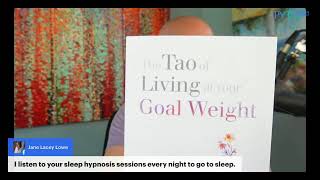
Jim Katsoulis argues that automatic, subconscious patterns control weight far more than conscious diet knowledge. He says traditional diets fail because they target the logical brain, which can't rewire habits. Instead, he uses hypnosis, guided imagery, and habit stacking to reprogram automatic behaviors.
Chapters
Everyone, welcome to today's program, Your Self Thin Podcast. Today we're talking about your automatic patterns are defining your weight, literally. Literally, the patterns that you have automated in your nervous system are really why you weigh what you weigh. And this is why— excuse me— learning about different diets or learning about different nutritional philosophies or exercise programs is not changing your weight, because conscious knowledge, new conscious knowledge, when you learn about a new diet, is not going to change your automated patterns and behaviors. These are stored in a different part of your brain, and that conscious logical part doesn't affect that at all. And so if you really want to change your weight, you need to strategically change your automatic patterns. And you'll start to notice it when you look at your typical week. The automatic patterns are obvious, right? You eat the same things for breakfast, the same things for lunch, the same things for dinners, the same snacks in between. You eat the same amounts of those foods, you eat them in the same places. And there's a similarity there. There's a pattern there, and that pattern is what your weight is. And so all the learning of information in the world is never going to impact those automatic patterns. The only thing that will impact that is creating new automatic patterns over those, right? We're literally going to wire over the automatic patterns that are already wired into you, and this is how you change your weight for good. Because the beauty is that while this approach may seem like it takes a little bit longer, right? Because you can read about a diet and say, that's it, I'm gonna change all my patterns. I'm just gonna completely act different starting right now. But at the end of the day, you're always going to revert back to your automatic patterns. And so the only way forward in a realistic way is to consistently, systematically, and strategically change those automatic patterns so that they become the patterns that keep you at the weight you want to be at. Excuse me. And so once you do that, though, the whole game changes. And again, while it may seem a little bit slower, at least the whole process makes sense and you start to move forward. Whereas with dieting is much more of kind of like this hamster wheel, right? You get on it, do what you do for a little while, and you're in the same spot you were ultimately, you know, because again, you can force yourself to act different for a little while. But the way your brain is built, you're always going to revert back to your automatic behaviors. And so it's this automatic behavior level that as you start focusing on that, um, is really the big difference. Because most likely, if you've only dieted in your life to lose weight, um, and you've never been successful long term, it's simply because of this fact that, again, your weight is a reflection of your automatic behaviors and patterns. And you've never really focused on that part. You focused on trying to override it and do everything differently. But again, your brain's not built that way, so it becomes too difficult. It's like holding an inflatable ball underwater and you can do it, but eventually your arms get tired, your focus lags, your motivation disappears to do it, and it pops back up as soon as you get to that moment. And it's the same thing with your diet. So what we want to do is we want to make the new patterns automatic. And again, this is a fundamental difference in mind approach, you know, for how you approach your weight. But once you start doing this again, it is transformative because it gets right to the core level of what's truly dictating your weight. And it's an illusion to think that you're consciously just going to change all of your behavior. That would be like if I said, from now on, you have to consciously breathe. We'd all be dead. We'd forget to breathe. Because our brain is built to be distracted, to forget, and all the rest of it. But on the automatic behavior level, we don't have to pay attention. You don't have to think about brushing your teeth tonight. You don't have to have it in your calendar to do it because it's become an automatic pattern. Um, and if you look at your life, you start to do this all the time. You don't have to remind yourself to put the seat belt on when you get in the car because it's just an automatic behavior now. You do it before you put the car on. You You know, and there's lots and lots of these behaviors in your life, and this is how you're designed to work as a human being because this way of living actually conserves energy. But the idea that you're gonna consciously control every little thing is an illusion. And the quicker you realize that, the quicker you can get on the path that actually makes a change, and that is starting to layer in new automatic patterns and behaviors that bring you to your goal weight and then keep you there. So if you want to go deeper into this experience and kind of experience it firsthand, click the link in my bio or go to programyourselfthin.com and go get the free hypnosis session I made for you. It's probably one of the easiest ways to experience what it's like to focus on this automatic pattern level, because that session is going to help you connect to who you want to be and kind of imagine and install some of the patterns that are going to help you get to where you want to go. And again, that's completely free. Go to programyourselfthin.com and it's there waiting for you to sign up for. And if you're on Facebook or YouTube, I will put the link in there. If you're on TikTok, you can just go ahead and click my picture and it'll show up. I don't know, do I sound stuffy today? I feel stuffy today. I feel like I sound stuffy. I was talking about this. I was talking about the Tuesday live Q&A we do. I said I feel like I'm sounding stuffy, and now here I am. I feel all right, but yeah, definitely feel like I sound weird. Um, maybe it'll get better as we move forward. But anyways, yeah, if you have any questions, feel free to ask. Um, Zara says, I love your videos and think they are really helpful. Well, thank you, Zara. I appreciate you saying that. That's why I make them, you know. Again, my goal in life is to help as many people as I possibly can. Live at their goal weight. And, uh, this is what I do, one of my main things to help achieve that, in addition to writing books and putting programs together. Mimi says, you really help us a lot. Thank you. Well, thank you. Yeah, that is my goal. It's always nice to hear that though. My goal is to help as many people as possible. And so I think that one of the differences with what I bring to the table in this conversation is that I don't approach it like everyone else. I think really, like, almost exclusively all weight loss information is basically people telling you what you should and shouldn't eat, how you should exercise. And at the end of the day, it's people telling you what to do. And being told what to do is not being able to do it, right? I could sit here and tell you how to swing a golf club, but if you don't actually practice swinging the club, you're gonna suck at it. I could sit here and tell you how to play the piano, but if you don't practice playing it you're not going to be able to play it. The knowledge— knowledge does not equal behavior. And I think the sooner you realize that, the sooner you can get on the right path. Because again, what you've been doing your entire weight loss careers is you're given information about what to do, and then you're trying to force yourself to do it with your willpower. And the wall you always run up against eventually is that your willpower disappears and you can't control your behavior. And what do you do? You go back to what you automatically do. You go back to your automatic patterns. You always— your weight is always a reflection of your automatic patterns, minus the rare few times when you get really obsessed with a diet and force yourself to act differently. Um, but you know, it's, it's just bigger than that. You know, that's not what's controlling your weight. It's never going to work. It— I know. What's up, Sangita? How's it going? Christine Ann says, just starting on and loving it. All right, that's awesome, Christine. I'm happy, happy you're here, and I'm glad you're liking it. Yeah, again, this— it's just on top of it being effective, I think the other thing I'm talking about here is that it's comfortable and enjoyable. So in Program Yourself Thin, you know, we take the weight loss and we wrap it in personal development. And part of that, I think that what comes out of that approach is that from day one, it's comfortable and enjoyable. My goal for you is not to lose weight. I want you to get to your goal weight and then live at your goal weight in the easiest, most comfortable way possible. That's my goal. And you notice right from the beginning that that's a different goal than you've been aiming at. What you've been aiming at is the fastest weight loss possible, and, um, that has— that kind of sets you up for failure right away, you know, when that's the goal. So I'm glad you liked it, Christine, and I'm glad you're here. What's up, Jane? Glad to see you on here, Jim. Thanks. Yep. Yeah, I'm here today. Was not here yesterday, uh, something come up, and now here I was thinking on today, I was like, I don't know, feeling, sounding weird. But, uh, persevere, push through. What's up, Kent? Kent says, looking back at 18 months on PYT, I can't believe how many automatic behaviors have changed. Yes, exactly. Kent's in the program, um, and just working it. And that's the goal. Again, I sit in front of you not at my goal weight because of some amazing amount of willpower I have. It's because I have consistently focused on my automatic patterns and behaviors for over 30 years. And over 30 years just tweaking and refining them and optimizing them and making them better. It just But I'm always building on my automatic behaviors so that now I'm at my goal weight in a way— I'll give you an example. I'll give you an example of a client I work with. She, uh, this person goes on more cruises than anyone you know. I mean, maybe 6+ a year, okay? And sometimes when she first— we first started walking— working, she would go on a cruise and it was not unusual for her to put 12 to 15 pounds on. On a cruise. Okay. And since we started working, you know, the last cruise she went on— well, the two— the cruise before this last one, um, she's like, I did really— I was really, really locked in. I was doing everything perfect, and I'm so frustrated. I came back, I put 2 pounds on. I said, well, that's practically nothing, and that's way better than where you used to be at. But then she went on the last cruise, and she goes, oh, I don't know, I felt like I, I lost the plot. I was trying to make the good choice. They kept bringing stuff, and I don't know, I feel like I got off track. I said, well, what's the weight? She goes, I put 4 pounds on. So what I'm trying to say is that, you know, a lot of times what we think we're doing is really misleading because it really comes down to our automatic behaviors. And for this person, what she has consistently improved on over the years we've been working together is that she can go on a cruise now and she's got so many strategies she uses before she goes, while she's there, when she gets back, that now even when she feels like she's off track, She put 4 pounds on. When she feels like she's doing perfect, she put 2 pounds on. So again, what we're aware of is so misleading. And what it always comes down to is our automatic behaviors. And if you build on those, you're like guaranteed success. I really mean that. And I don't say that lightly. It's just, it's so obvious. It's obvious in the sense of like, like if you want to learn a musical instrument, all it, all it is is practicing muscle memory, basically. I mean, like, at the end of the day, and if you consistently practice whatever instrument you want to play, whatever sport you want to do, whatever thing you want to do, if you consistently work on it each and every day, you start to develop the automatic patterns and behaviors to succeed with it. And that's not what you do with dieting, though. With dieting, you just try and be great at it all of a sudden. You try and skip the process, basically. And if you'll commit to it, It's just amazing what you can change and in the way you can change it. Because like what Ken says, you know, 18 months, it's like the automatic behaviors. So it's not like he has to think about every little thing. Do you understand? That's why the automatic piece is so crucial, because we're building on our habits. We're building on the strongest part of our brain, which is our subconscious mind, which runs all of our automatic thoughts, feelings, and behaviors. And eventually it gets to the point, just to give you a reference point, it's like brushing your teeth. You know, at one point you had no idea how to do it, and now you do it on near autopilot. And your teeth health is a direct reflection of your toothbrushing habit. It's not about your willpower to brush your teeth, right? You've built in a tooth care routine. Maybe it involves flossing, maybe it involves Waterpik, maybe it involves brushing a number of times a day. But whatever your routine is, it's a routine. It's an automatic process. That you have in your life, and your tooth health is a direct relation to that. I mean, obviously what you eat is a factor as well, um, but again, it's all, it's all about your automatic behaviors. And, uh, I think the quicker you get that, the quicker you get on the right path. And, uh, then you get like Ken here, who again, he's not— it's not just that he lost his weight. Losing weight to me is not enough. You need to lose weight in a way that's sustainable, and the sustainable way is when you build it around your subconscious mind so you can do most of it automatically. So you have to think about it all the time. And that's how it becomes an easier, more enjoyable process. So, Therese, Therese says, good to take a break from work and join you all again today. I'm 32% toward living in my goal weight. Nice job, Therese. And again, Therese, she's using the right language, right? 32% toward living my goal weight. That's wonderful. What a great way to imply your— where you're at. Because when we say, oh, I lost X amount of pounds, I lost 15 pounds, lost 15 pounds, well, okay, that doesn't have context to it. You know, and people get wrapped up in talking about how much weight they've lost, but when you talk in terms of a percentage, right? So let's just say you wanna lose 100 pounds and you're 32 pounds down. Instead of just saying, I lost 32 pounds, I lost 32 pounds, I lost 32 pounds. Okay, that's great, but it doesn't have any context to it. It doesn't give you a sense of where you started and where you wanna go. Where are you at in the process? Okay. And so when you start thinking, well, I lost 32%, I'm 32% of the way to my goal, there's context there. And context matters for your subconscious mind. It feels different. And so that's wonderful, Therese. Nice job, keep it going. Um, Jane says your voice sounds different today. Yes, it does. I told you, I told you I was feeling sick on Tuesday. I think I had a premonition. That's what I was talking about. Yeah, it's kind of weird, but I'm just thankful. I had a sore throat the last two nights, and God, is there anything worse than trying to sleep with a sore throat? It is. I know there is. I don't be ridiculous, but it was so, so annoying. So My throat is feeling better, but it does sound weird. So yes, good ears, Jane. Laura says, I've always given up when the scales don't reflect my effort. However, if you just keep going, it will eventually happen. It took me 2 years and 2 months to lose 5 stone, using your videos to help me lose the last 2 stones. Small changes, not big changes, otherwise they don't work. Totally agree with you, Zara. That's awesome. I appreciate you sharing your story. Screenshot that because that is just straight wisdom right there. Right, and there you go. So for those of you that don't know, I mean, let's see, 5 stone, what are we talking? Is that— it's like 60, 70 pounds, is that right? I'm a little out of practice with my, um, my UK conversion. Yeah, 70 pounds. Um, So that's amazing. I mean, I just think that's so great. So, you know, when Zara says that, listen, 70 pounds is a lot, but the more important thing is 2 years, right? Zara's been at it for over 2 years. That's the key thing, is that it takes a while. You know, listen, it always takes longer than you think. Planning fallacy. It always takes us longer to accomplish our goals than we think it's going to take. Um, but the other side of that is that if you can keep it up for 2 years, you're doing something right, because not only have you lost the weight That's one piece of why I say that. But the bigger piece is that if you can do something for 2 years, it's resonating with you on some deeper level, right? How many times have you all done keto for 2 years? Yeah. How many times you tracked every calorie for 2 years? Yeah. I don't know. That's, that stuff's a bit harder. And something else Zara said that I think is really important too is that the last 2 stone, is that the last 25 pounds? Um, the last 40%, if you wanna put it back in percentage like we're talking about, the last 40% was she shifted up approaches, right? And, and again, small changes, not big changes. Okay? So, so listen to someone who's dropped 70 pounds and especially the last 24 pounds with this kind of approach, right? That's, that's the small changes built up all there is no such thing as a big accomplishment. Like, it's an illusion in a sense, because all big accomplishments are the accumulation of small accomplishments. You can't just achieve a big accomplishment. It doesn't exist that way, right? So we just build up on top of each other. We just keep— and next thing you know, we're— holy shit, how'd that happen? You know, that's how change really happens. And, um, I don't know. I mean, dieters are notoriously impatient, but that impatience is really a symptom of a deeper problem. And the deeper problem is the time frame in which you think about weight loss. And this really isn't your fault, because the diet industry has put into your mind the whole time that weight loss can happen really, really fast. In your entire life, weight loss has been conceptualized as something— how fast can I make it happen? How fast can I lose the weight? And that mindset piece, that time frame that you think within and have thought within your whole life when it comes to weight is one of those things that set you up for failure. So again, the idea of relaxing and realizing that you don't just want to lose weight— what do you want to do? You want to live, live at your goal weight. You want to live at your goal weight, and you want to live at your goal weight because it's not enough to just lose the weight and get your weight. You want to stay there, and ideally you'd like to be able to stay at your goal weight in the easiest, most comfortable, natural way possible. And again, the way that happens is by focusing on your automatic patterns and making small changes at a time. Program Yourself Thin, it's the opposite of dieting because dieting, that Monday comes and you change 100% of your behavior. With Program Yourself Thin, we're looking to change 1% of our behavior a day, 1% better every single day. And that's why you get people talking about 18 months later, 2 months, 2 years later, you know what I mean? Program Yourself Thin lives in a whole different timeframe. It's kind of like college. College is a different timeframe than a lot of things in your life. Because if you decide to go to college, you're making a 2, 4, 6, 8, 10-year commitment. For most people, that's one of the longest commitments they make in their lives of that nature. If marriage, I'm going to tell you, I'm going to do it forever. But college is literally like a medium, if we want to call it that, well, it's called kind of a medium timeframe commitment. And it's one of the few, maybe, uh, a car loan. I don't know. But even college is different, right? Because it's your whole life. And so you go into it with a much different timeframe and expectation and feelings with it. And so you should approach your weight the same way because again, at the end of the day, you don't— how long you wanna live at your goal weight? How long you wanna be there? And it's funny, you can't even think of a timeframe there, but I'm assuming it's forever, right? What's up, Dina? Dina says, hello. Have you had people join and not able to change their automatic behaviors? Mine seem relentlessly persistent, stubborn, and hard to change. Um, no, I've never seen anyone that's consistently and resiliently working on their automatic patterns who hasn't been able to change them. Nope. Um, and you're right, and absolutely, there are absolutely certain behaviors in us. That's the, that's the interesting part, and it's different for each person. But what's the same for each person is that all of us are gonna have some automatic patterns that are easy to change and some that are harder to change. And, and that's gonna be true for all of us. Um, but again, in Program Yourself Thin, we acknowledge that, we recognize that, and, um, we work on it strategically. So again, I will say, Dena, most likely, you know, how are you trying to change 'em though? That's the big difference. You're probably trying to fight against 'em. You're probably trying to consciously remember and make yourself do the right thing. And that's not the strong part of your brain. The strongest part of your brain is your subconscious mind. Your subconscious mind, it runs all the things you've learned in your life. Think, think about this, folks. Take a second and really think about this, because this to me is the whole game, and it reveals why dieting has never worked and never will, and it lets you learn more about how you actually operate. But think about everything you've learned in your life that you did not know. I mean, it's, it's so many things and it's like limitless, right? It's like, I mean, reading, writing, brushing your teeth, taking a shower, getting dressed, driving a car, using a computer mouse, using your phone, walking, running, climbing, um, cooking. I mean, it's just, it's literally everything you do, you didn't know how to do it and you learned how to do it. But now you can do all of these things without even thinking about it. Think about this for a second, because this is, it's like so obvious and so amazing that we miss it almost because it's so big. But think about all the things you've learned to do in your life that you just do automatically now. You don't have to think about how to drive your car. You're, you know, okay, what am I gonna do now? Like, think about the first time you drove a car and then think about it now. Think about the first time you tried to ride a bike and now. Think about the first time you tried to read and write and now. So think about how much effort it took to learn how to read and write, how much is going on there. It's really hard, but now you just do it lickety-split without breaking a sweat. It does. It takes no effort for you to do it. As a matter of fact, reading, you do so well that if I put this in front of you, can't not read it. If you say, I don't want to understand it, too late. You already, you already read it. You already know it. That's how quick your subconscious mind is. That's the part of your mind that runs your automatic patterns. and it is your automatic eating patterns, primarily your automatic lifestyle patterns right under that, that are controlling and dictating your weight. And this is the part that you've never focused on with your weight before. You've done the opposite, where you try and consciously control your eating. Again, consciously controlling your eating, it would be like if you started tomorrow and you said, you know, I'm gonna use my— I'm gonna brush my teeth with my other hand. Do it tonight. Brush your teeth with the other hand. That's what it feels like to do something consciously. And then go back to your regular hand. That's what it feels like to do something subconsciously. And you tell me how they feel compared to each other. Well, it's night and day. When you brush your teeth with the other hand, it's going to feel weird. You're going to have to really concentrate. You're going to jab your gums. You're going to feel like you're missing teeth. It's going to feel weird. And then when you do it with the other hand, you're not going to think about anything and you're going to do it perfectly. This is what I'm talking about. And this is what's controlling your weight. It's not your conscious willpower. Your conscious willpower— shit, folks, how many times you've been on a diet and before you know it, you're eating cookies or you got your hand in the pantry before you even realize, well, I'm on a diet. That's your automatic mind taking over. And it's the part of your mind that always ends up taking over. And you never focus on this part. You have never focused on retraining your automatic patterns. And so, yeah, some are easier to change and some are harder to change. Um, but again, when you understand how to see the patterns, the context within which they exist. So I just talked about the conscious subconscious mind. And so your, your patterns, Dina, the automatic behaviors you have are in your subconscious mind. And so if you consciously try to fight against them, it's never going to work. And you have to understand that your subconscious mind runs differently than your conscious mind. So just learning about things does not touch your automatic behaviors at all. So we need to very, in a very specific way, kind of go at changing them. And that's what Program Yourself then does. We, we hit it at a bunch of different levels, but one of the main ways that we influence automatic behaviors is that we use subconscious programming. That's what I call it. Um, and it's, it's partly visualization, guided imagery, hypnosis. They're all kind of similar in a way, but basically what it's doing is it's allowing you to program your subconscious mind to do new behaviors automatically. And we shortcut the process by doing that. Excuse me. So, um, yeah, I get it. I get it. So, so keep the faith, Dina, though. I promise you, again, some are easier, some are harder, but you can change all of them, you know? And it helps when you know kind of what you're doing as well. Um, Mimi says the world are teaching us what to eat, how to calculate calories, and what to do in the gym, but you're different. You taught us how to behave and what to do in this diet health journey that most people didn't do. We know what to eat, but sometimes we don't know how to be— behave during this diet journey. Yeah, agreed, Mimi. I— I agree 1,000%. Um, again, I think the diet world's always just telling you what to do. And I think it drives me crazy. You know, listen, I work with really successful people. You know, I say this all the time. It's $25,000 to work with me privately. So, think about a person who's gonna invest that kind of money. I mean, clearly, I'll let you know. I— I've never worked with anyone that aren't personally successful financially. They— they're very smart. Driven, ambitious, focused, all the qualities you think would make weight loss easy. And yet they struggle with their weight. So it's not an intelligence issue. Your weight is not an intelligence issue. It has nothing to do with your intelligence. It has to do with your subconscious automatic patterns, your automatic behaviors that have been programmed into you. And until you go to that level and start reprogramming your subconscious mind, it's always going to feel like you're fighting against yourself, because that's what you're doing. That's what dieting does. It's you consciously trying to fight against your subconscious mind. It's you consciously saying, no, no, I don't eat the— don't eat the cookies. Don't eat the cookies while I was eating the afternoon. No, no, we're on a diet now. Don't eat the cookies we always eat. Don't eat the ice cream on the sofa that we always eat at night. Don't do that, right? You automatically thought about the ice cream. You had to intentionally think about, oh, I'm on a diet, right? No, don't do that. That's never going to work. You're always playing catch-up, and you're playing catch-up between two parts of your brain that are in pro— again, here, if you're, if you're new here I strongly suggest you go to programyourselfthin.com and get the hypnosis session I made for you. If you're on TikTok, you can click my little picture up there. There. I know how to use my hands, folks, but the screen I have flipped around somewhat recently. By the way, so here we go. Conscious, subconscious. Okay, here's the perfect example of it. Oh my God, if it hasn't been 3 months now. So I've been doing this for 3 years, these lives, right? For 2 years and 9 months of that time, I've always looked at my phone. I don't know if it's mirrored or not mirrored. I don't know. But one way. And so I've learned how to use my hands in that way over 2 years and 9 months. 3 months ago, I wrote my first book that you can go get right now. And All of a sudden I say, oh boy, when I show this book the way it is, it reverses everything. You can't read it. I was like, oh. So I, I didn't stop mirroring it. Flips it. Now all of a sudden though, I don't use my hands. So I'm trying to point, I'm trying to point to my picture and I'm pointing up there because that's what I've been doing for 2 and a half years. So here I am 3 months later, 3 months later, I do a live every day, every weekday, and I'm still pointing to my picture Like this. Now I'm starting to get a little bit like my patterns, my wires are getting a little bit better. Okay. But, uh, this is what I'm trying to say. So I have to consciously, my subconscious is still in the old ways and my new mind is kind of trying to, no, no, Jim, it's the wrong way. You got to go here. But right now I'm cognitively, I'm thinking this, this is me use my other hand to brush my teeth. Use my other hand to write is me right now. I instinctively want to point over here, but I need to point over here, so I'm playing catch-up. I gotta— it's more cognitive load. No. Oh, and you'll see me. So when I— when it looks like I don't know how to run my hands, that's what's going on. Uh, so anyways, there, that's the book though. But, uh, yeah, so, so you're not going to consciously— back to what I was saying. So go get the hypnosis session, because when you sign up for that, what I also give you is a training I did. And in that training, I talk about the conscious subconscious mind through the metaphor of the rider and the elephant. And it's the person riding the elephant. And in that scenario, it's the elephant who's truly in charge. Okay. And the rider is trying to direct them and run them. But at the end of the day, it's the elephant that's in charge. And so when it comes to your mind, your subconscious mind's like that elephant. It's the part that's truly in control. Because again, all the things we've talked about, everything you've ever learned in life is stored in your subconscious mind. And now you just access it like that. How the hell can you get on a bike 20 years after you learned how to ride it and haven't ridden a bike in 20 years and just be able to do it again? That's amazing. It was all muscle memory. What's muscle memory? It's not muscle memory. I'll take your brain out of your head and you'll— what muscle memory are you going to have? It's your brain. It's your neural networks that you've developed on your automatic patterning level, which is your subconscious mind. And so you can know everything in the world about nutrition and still go and grab the cookies. Because learning stuff is not changing your automatic patterns. It's not changing your subconscious programming. And until you change your subconscious programming, you're always going to be fighting against yourself because you probably have the automatic patterns of an overweight person. And that's what you need to change. Uh, Jody said stuffy. Yes. As soon as you feel better, we'll remind you. I appreciate that, Jody. I feel like I'm going to recover quick here. I knew this. I was saying this the other day. I was Because I'm joking, I got to record the audio version of this book, um, and I'm going to get that done soon. But, uh, I was Tuesday, I was like, I'm going to do it, I'm going to do it. Then I woke up yesterday, I was like, and, uh, then even today I just sound weird. Imagine I recorded sounding like this. I will say though, sometimes— anyways, yeah, remind me when I start, when I sound good enough, remind me and let me know, please. Uh, Minnie says, what can you say about people losing weight because of, uh, terzepatide? Terzepatide, can they do this for life? I don't know. I'm not, I'm not a doctor. I'm not a medical expert. I don't know what the tirzepatide does. So I don't know if it's a GLP-1. GLP-1s, people aren't gonna lose weight forever. You, you get about 13 to 16 months of weight loss. So that, but, but I don't know if that tirzepatide is different or not. Let's see. Oh yeah, Don says, you know, it's probably allergies. Yeah, pollen counts are through the roof. I, I don't think this is allergies. I, I will tell you, I have been— this last month of mine has been one of the most intense months of my life. There's been a lot going on. It's been really pretty wild. Um, so I think my body is just finally catching up with where my life has been. It could be pollen too, you know, hopefully it'll get fixed. TMW says, hey man, I went from 120 kilograms to 60 kilograms, currently 68 kilograms. Question, how do you get rid of love handles? Wow. Congratulations. Wow. Half your body weight. That's quite an accomplishment. I will share with you my love handle story. I remember I'd lost a bunch of weight and I still had love handles. And I would say The love handles took me twice as long, 3 times as long to get rid of. And so I think that the changes that we all imagine in our mind take a lot longer than we think. I'm just going to say that because a lot of times it's not just about the weight loss. There's about our skin tightening up, muscle, you know, being developed, and recomposition can be an issue. Just your body kind of getting a new baseline and then being able to go further. I don't know, like, that's my experience. So, so what I would say is, hey, great job, enjoy what you've done, okay? Because what I'm hearing already is so common, it's so common as to be the, the rule almost rather than the exception, is that more often than not when I see people, especially if they've lost a substantial amount of weight, you go 120 kilograms to 60 kilograms and, uh, and you're worried about your love handles. You know, and, and so sometimes because you have love handles, you don't feel it's not enough, it's not good enough. And I find so many dieters, and the more weight they've lost, almost sometimes the more this is an issue, that they still aren't celebrating their success. It's still not good enough. And that's a trap all of us can get caught in. So I would say take some time and really appreciate and, and honor what you've done, you know, and do that for a while. Just enjoy your 68-kilogram body. My friend, that's— what an accomplishment. That's an amazing accomplishment. Enjoy that. Experience it. Optimize it. Master it. Get good at staying at 68 kilograms for another year, 6 months, whatever. And then start thinking about your love handles if you still care. But, but give yourself some grace to enjoy all the work you've done and the accomplishments that you've achieved as well. Sunny Boy says you don't eat enough protein, bruh. That's probably true, but what's enough protein? That's the big question. Boy oh boy, are we living the protein ages now? What a crock of shit, you know. The whole protein thing is just like, good lord, it's the, it's the, the macro of the day, the macro of the hour. I love protein, okay, but it's so overstated, it's silly. It's become what? You gotta eat protein to lose weight, right? Y'all stuffing your face with protein. How much weight have y'all lost? No offense, but I don't know. This person, Sonny Boy, doesn't even know protein I eat anyways. But maybe I just give off not enough protein. I could see that too, because I don't think— I'm not worried about my protein intake, and I probably, I probably eat less protein than the average American male, I would guess. I certainly don't give a shit because I'm not worried about not getting enough protein. I don't think any of you have to worry about not getting enough protein, because if you eat enough calories, it's impossible not to get enough protein. So don't worry about that. Good Lord. And that's how gullible we are, folks, because, you know, the protein scare of 2026, and it's like you're so worried about protein. It's like, when have you ever even taken a protein deficiency test? You ever taken one? Your doctor ever given you a protein deficiency test? Bet they haven't. You know anyone who's ever got a protein deficiency test? Unless there's some real outlier situation, you never even heard of that. So why are you so fucking worried about protein, people? You'd be worried about fiber. That's the thing. What's up, Adrian? Adrian says, my sweet 13-year-old dog Daisy passed away on Saturday. In the past, this would have meant a lot of comfort overeating, but I've been using the hypnosis sessions to stay calm and not use food. I'm sorry, Adrian, that sucks, man. Losing a dog, it's one of the toughest, right? I mean, a cat and any animal that you've been with for 13 years, that's a tough one. So, but, but I'm proud of you because, you know, by not eating to deal with the emotions, you know, you open yourself up to experience the sadness and the grief, which isn't fun. It doesn't feel good, but it's the healthiest response, you know, to to be able to experience the emotions directly, you know, without trying to numb ourselves with food, really is such a powerful path to walk because, yeah, it feels like shit. It feels like shit anytime, right? You lose your dog like that. That just sucks. It's so hard. But you get through it quicker and you get through it more genuinely. Like, it passes through you to some degree. I mean, it always stays with you a little bit, but it's just a genuine way to let that sadness and that grief pass through you. Rather than trying to numb yourself or distract yourself with the food. So I'm proud of you, Adrian. Great job. And I'm sorry again, you know, that sucks. But staying calm and staying kind of in the moment and then being proud of yourself to some degree is kind of a great way to handle that. You know, what a great response. And so even in a difficult situation, you can still pull something positive out of it, you know, that you can be proud of how you responded to it. And so I think that's great, you know. But again, I'm sorry, sorry for your loss there. Yeah, if you all have questions, feel free to ask them, except for Sunny Boy. Just kidding, I like the trolls too. Uh, Andrea says, I'm one week in my diet now and I can't wait to lose all the weight. It's so hard to wait. Uh, yeah, yeah, it is hard to wait. And again, dieting is all about getting to your goal weight so that that pressure is even more pronounced, you know, because dieting ramps up your impatience. Dieting— boy, I can't wait. That's— I gotta get that. That's how I will let you know that I got things happening here where the books are kind of moving forward because I gotta get this book out of my way so I can get to the book I really want to write. But, um, part of it's going to be about the diet industry and all the psychological shenanigans they do. And I cannot— this is the book I was meant to write. I cannot wait to write this book. But anyways, part of what they do is they put this artificially tiny time frame in your mind so that one week in, one week in, you're so impatient. And that's not a good sign. I'll let you know that. Again, I'm happy for you that you're taking some action, but that impatience after a week is not a good sign. Okay. Because at the end of the day, the results you truly want really show up next year, the year after. That's how you get the best results, folks. What the fuck? What would you get good at in life doing for 3 months? Playing the piano? What are you going to play it every day for 3 months and be amazing? Pick a sport, art. What are you going to do in life for 3 months, 6 months and be amazing at it? You know, that's what I hate dieting for that more than almost anything. Is it sets you up for failure because it tells you all this shit that, like, it's all about how much weight you can lose in the next 3 months, next 6 months. They don't even go to a year, you know. But, but I'm happy for you, Andrea, if you know. But again, pay attention to that impatience and notice if you're able to stay on track or not, because you're a week in. What's going to happen when you're 2 weeks in and you haven't lost the weight you thought, right? Because right now you're still, you're still living in the fantasy. A week in, you're still in the fantasy. Oh, I might— I don't, I don't need to lose that much, Violet. As long as I lose 2 to 3 pounds a week, I'll be fine. Well, what happens when you're 2 weeks and you've lost a pound? What's your impatience going to do then? Not that I'm not trying to be a jerk here. I'm trying to address the things that's just inevitably waiting for you. It's awaiting all of you folks. When you diet, you're always waiting for the weight to come off and it never comes off fast enough. I mean, I'm saying something that doesn't— have you not experienced this, folks? So I need to address it. I'm not going to ignore it. I'm not going to say, oh, go do it. You can do it, Andrea. You can do it. I'm not doing that shit. Because you know why? Because diet fails 95, 85 to 95% of the time. So I'm not going to sit here and cheerlead dieting. I'm proud. I'm happy for you taking action. That part's great. The part of relying on a diet. Well, good luck. Yeah, you're feeling everything. You're feeling that now one week in. What do you think you're going to feel 4 weeks in? When you've lost 2 pounds, 3 pounds? You know, not trying to be a jerk, but folks, you got to deal with this. This is alert— this, this thing is lurking in the corner for all of you as soon as you start your diet. So don't let it— don't be surprised when it gets you. It's, it's waiting for you. How are you going to deal with it, folks? How are you going to deal with your impatience? How are you going to deal when you've been counting every calorie for 3 weeks and you've lost 4 pounds? How are you going to deal with that? What are you going to do when you've been doing keto perfectly for 2 and a half weeks and you've lost 5 pounds? You tell me, how have you dealt with it historically? Again, I'm not trying— I'm trying to be negative here, but we've got to address that. It's the elephant in the room, is it not? Because I think in dieting world, so we all know, don't talk about that. No, talk. If I don't talk about the impatience, I don't talk about that, then it won't happen. Okay, well, what's happened the last times you've tried to ignore it? What ends up happening every time you diet? Every fucking time. There's never an exception. So that doesn't make me negative. It makes me real, you know, logical, looking at what actually happens to everyone multiple times in their lives. But again, good job taking— but make this time different and pay attention to impatience. Notice if you can manage it. You're going to have to manage it if you want to get the results you want. Yeah. Kim James says yes, in the '90s fat-free was the thing. Oh yeah, absolutely. Protein's the thing now. Before that it was gluten. Before that was carbs. Before that it was low fat. Before that was low sugar. It's— listen, they specifically— this is a literal specific tactic the food industry does. They pick one thing to focus on. Now, by the way, that's the same thing the diet industry does. The diet industry is built around the one thing. Every diet is one thing that it's focusing on. Now, I'll let you in on a little secret. The diet industry and the food industry are the same thing. The diet industry is just a branch of the food processing industry. Weight Watchers was owned by Heinz. Jenny Craig was owned by Nestlé. Atkins Food Products is owned by the same company that owns Onions pretzels. SlimFast is owned by the same company that owns Ben Jerry's ice cream. So these companies both do the same shit where they focus on the one thing. The diets say, oh, just don't eat for 16 hours, just don't eat carbs, uh, just track your points, just, just do this. It's just one thing. I'm here to tell you your weight's not relying on one thing. You need a holistic, comprehensive strategy if you have any chance. So again, that's the diet side of it. And then the food side of it is that they do the flip side. If you get rid of the fat, you're going to lose all the weight. If you add a lot— oh, how much protein? Oh my God, let's put protein in everything. It's going to fix everything. Oh no, it's not. No, it's not going to fix everything. It's not going to fix everything, folks. Your problem is not that you're not eating enough protein. Please understand that. I promise you that your weight issue has nothing to do with your protein intake. Does anyone really think that everyone's going to be way thinner next year because everyone's eating so much fucking protein now? There's protein in everything. I need protein-fortified bananas or something. I, I— there's no limit to it. Someone, it was someone who sent me— I can't remember what it was now, but they'd sent me some ridiculous protein thing. I can't remember what it was now, like protein gum. I mean, come on, folks, you got to see through this. It's bullshit. It's not going to help you because, because after the protein's gonna be another thing and you get cold, do this, you know what I mean? Next thing you know, so you look back and it's been 30 years and you haven't ever figured out how to manage your weight. You know, it's just, it's just the protein thing drives me crazy now. And again, I like pro— obviously protein's important, but it's way, way, way overstated. And that's what they always do. Always. It's the same playbook every time. You've got to see it for that though. It says, we love your content from Saudi Arabia. Thanks. Oh, you're welcome, Saudi Arabia. All right, that's, that's kind of a first one. That's cool. Yeah, it is awesome. It's global community. It's just so cool. That's one of the coolest parts about doing this, I gotta say. Gotta say, Jane says, I'm with Dina. I feel like that too. Um, that was back to the automatic behaviors. Yeah, folks, you all feel like that. You all feel like your core problem is that you don't know how to deal with your automatic behaviors. It's the same for every single person struggling their weight. There's no exception. You all are— you all weigh what your automatic patterns are, the shit you do without thinking about it. Your whole life is that way. No, you don't always eat something different every day. No, you don't. You eat the same volume every day. You eat the same foods, the same places, the same amounts, and the same with the same people, by yourself at the same times. It's a pattern. It's a bunch of patterns put together that make you your weight. Everyone should relate to that. Um, Barbara says, can you put the link in the chat? Yes, that was a little bit ago, but I will put it in there. This is to go get the hypnosis session. I just put that in there. TikTok, you just click on the picture of me, and then this is my book, is available. People loving this book, and why wouldn't they? Because again, this book is about changing the automatic patterns of your thought so that you start to think differently about this whole process. And so this book is not only effective, but it's fun to read, you know, and it works. It works as you read it. Um, Sanjita says, just ate some ice cream, sugar-free, but feeling horrible. Um, yeah, sugar-free stuff to me, no way. I'm— that's a, that's a bright line for me. I, I do not eat sugar-free stuff at all. And, uh, it's so funny, I'm reading a book. This might be a great book, The End of Craving. It might be a great book, I'm not sure. It's taken me a long time to get through it. I realized part of why I had kind of a negative bias to it. I got this book and it's actually like a big font book. I've never seen this before, but it's like big font. So I guess it's for people who have trouble seeing. And but it's funny. It's just such a different experience reading a book with this big font. It does affect my feelings on it. But I'm going to look up a bunch of stuff that he's talking about in the book. But it's very interesting. And boy, I really enjoy it. I'm going to say we've crossed over from, I don't know if this stuff's all legit to I'm like, I love it because he's really got an askew— when you want to know about weight loss at this point, you need someone with kind of a, a different view, a different take on things. When you're hearing the same shit you've always been hearing forever, just run for the hills, you know? And, uh, this, this is interesting. But anyways, one of the main points of his book, he calls it Nutritive Mismatch, and artificial sugar is right at the top of that list. Where you're consuming something that's super sweet to imply that it's sugar, but then you're not putting sugar in your system. And that nutritive mismatch seems to be a real big issue with overeating. And so, yeah, so me personally, artificial sugar is a big bright line I never cross. I never, ever eat artificial sugar, and I wouldn't. I philosophically think it's something that make my weight journey way harder. So yeah, not surprised, Angie. Diane says, I feel like I eat well, and as a 63-year-old, losing weight is hard. I maintain my weight but so hard to lose even with mindful eating. Um, well, you know, mindful eating again is, is really not, not gonna do it. You know, it's so funny, I was talking with someone yesterday about that, that The mindful eating, I don't even know how valuable that is. I mean, it's fine if it's part of a whole, like, strategy, but just mindful eating on its own, you're still going to overeat. You still got your automatic patterns. And I just don't think that mindful eating is the solution that it implies itself to be. I think it's helpful. You know, I think it's got benefits to it, but it's not the whole story. So again, I mean, in Program Yourself Thin, we build around the goal weight pyramid. And so again, what I want to point out is that it's a comprehensive, holistic approach. So there's mindset, lifestyle, and eating, and then those are broken down into specific areas, but it's a comprehensive, holistic approach. So, you know, eating, um, you know, you could say maybe awareness, you know, is kind of like mindful eating in a sense. But as you can see from the pyramid, it's just one little tiny piece of it. It just ain't enough, you know. So, um, at the end of the day, you can mindfully eat too many calories, which is probably what you're doing for the weight you want to live at, you know. So Diane says, where should I start? Um, well, I mean, first of all, you start by acknowledging that you're doing great. Okay. The fact that you're able to maintain your weight is wonderful. Um, so I would start there, right? And now again, with Program Yourself Thin, the goal is that, you know, first off, now again, this is, this is assuming this is kind of set up. Well, I guess it's the same even if you're there, but it's kind of assumed for most people they're going to be overweight and then, you know, they're going to start with awareness of what your patterns are. Then you're going to start to structure your patterns, right? Because you already have a structure of your pattern. So Diane, the, the fact that if you're able to maintain your weight, That implies on the other side, your patterns are maintained. So what— and our patterns are always maintained, but you have like a maintained pattern that gives you the weight that you've been living at. So that's a huge accomplishment. So that's the first thing I would suggest, because even right now, the way you're framing everything is as if you're failing, right? Because you're thinking how hard it is to lose weight. Meanwhile, you're sitting on the most important piece of information that you're able to maintain the weight that you're at now. So everything's going great. So once you realize the pattern of your behavior and the weight that you've been living at, you've got that kind of dialed in. That's a great place to start. Now you start looking at what are my patterns though. Mindful eating ain't going to touch this. You know what I mean? Again, mindful eating has got some benefits to it, but pretty minimal, to be honest, because fuck your mindful eating. I joke with that because you could I could put headphones on you, VR glasses, and, you know, distract you as much as humanly possible. But if I give you a certain quantity of food, I'll control your weight. You can eat that shit mindfully. You can eat it not mindfully. You understand? So it's not the mindful eating that's controlling your weight. It's the quantity of calories that's controlling your weight. And what's controlling the quantity of calories you're consuming regularly is your automatic patterns. And so you can eat that automatic patterns mindfully, completely distracted. It's going to make no difference about the amount of calories you're bringing in. Does that make sense? So, you know, maybe another way to think is become more mindful of your calorie consumption. And you would do that by becoming aware of your calorie routines. Now, again, this is where you got a real benefit, I think, because for a lot of people when they first start this, you know, we always— we're always developing awareness. I'm working on awareness constantly. I'm working on structure and optimization as well, but at this point I've been doing this for 30 years. My awareness is pretty good. My structure is pretty dialed in and I'm always working on optimizing. But you're in this spot here where you've got pretty good structure, right? Because if you're maintaining your goal weight, then I know your structure is good. But what you can start to develop is your awareness of your structure, and then you can start to optimize that. So once you become aware, that's what we do in the program too. It's the first thing we do. Is kind of get clear on what my typical eating patterns are. Now, once we realize those, we kind of validate them. Okay, okay, this is pretty accurate. This is what I typically eat here, here, here, here, here. Then we look at and we say, okay, where would be the easiest place for me to dial some calories down? And so we go at it strategically. So that's how I would approach it. Um, uh, yep. Jane says the honeymoon phase of dieting is very short-lived. Yes, of course. That's what I mean. We've got to recognize that, folks, because if you don't realize that you're just going to keep falling into it, which is what everyone does. It is like, come on, folks. It's like Invasion of the Brain Snatchers out there. Come on. And I know this drives you crazy yourself because you're like, I'm a smart, intelligent person. How does this keep happening? But if you really look at how you approach your weight, you keep doing the thing that doesn't work over and over and over and over again. It's the most literal example of the definition of insanity being doing the same thing, expecting a different result. And with that definition, dieters may be the most insane people on the planet, you know, but it all starts with that honeymoon phase of like, oh my God, I'm doing keto and I'm down 3 pounds. Who gives a shit? Because you don't want to live doing keto. So what is the point? Well, I just want to lose the weight first, Jim. What are you going to do then? I'll figure it out. What happened last time you lost the weight? I put it back on. You didn't figure it out? Nope. What about the time before when you lost the weight? Did you figure it out? Nope. Okay. Have you ever figured it out? Nope. Anyone you know figured it out? Nope. Okay. So we've got to recognize the pitfalls that are right there in front of you, but you have become conditioned or trained to not see them. But that honeymoon phase is just real. I'm not trying to be a negative asshole here, though, you know, put everyone down who's dieting. I don't mean to do that. But at the same time, that initial honeymoon phase of dieting where you're all excited is just as much of the problem as the last day when you're on your diet. Like, oh fuck, I can't do this anymore. They're directly connected. So we need to become aware of the whole cycle of dieting, whichever phase you're in. Um, Connie says, if you create a new eating habit after 30 or 60 days, is that becoming your subconsciousness? Um, maybe, you know. And that's another thing that drives me crazy, because for a long time— I forget even the numbers now because they're bullshit— but, um, at one point they're like, oh, you do something for 30 days, it becomes a habit. That's not true. Some things may become a habit after 30 days and some things may take you 30 months. I don't know. You know, it's just some things are easier and some things are harder. That's it. You can't prejudge them because who gives a shit? So what? So it took you 30 months to get your new eating habits under control. Oh, 30 months. That's too long. Okay. How long you been trying to lose weight for? 30 years? I'd gladly trade 30 months for 30 years. And on top of that, when you get to the end of the 30 months, if you get a new habit in, you can rely on it. You don't have to think about it anymore. So again, to that, to that question, Connie, I don't really have a specific, and I think you should put the timeframe right outta your mind cuz it'll become a recipe for disaster. And I'll tell you my experience personally and my experience doing over 6,000 private weight loss sessions is that some changes and habits form quickly. Some habits and changes form slowly. And the bigger question is how important is it? And if it's really important to you, it won't matter. You know, back to Tony Robbins' questions: how long would you give your kid to learn how to walk before you cut them off? So that's it, you dumb bastard, you're never gonna learn how to walk. Yeah, never, right? You just keep trying, keep trying, keep trying, trying. How long is it gonna take? I don't care. Oh, well, the neighbor learned it in a week. Oh, here I am at 2 weeks. So what are you gonna do? Oh, I guess you don't do it anymore. Of course not. You just keep going, keep going, keep going. That's the attitude you have to get into. you know, uh, Therese Marie says, I'm also concerned about artificial sweeteners and kidneys, bladder irritants. Yeah, sure, I would, I would be too. Um, I just don't think anything good comes from artificial sweeteners, and I think it's, it's one of my top things I would avoid. I would eat sugar over, um, artificial sweetener. That's what I think, because I think that, I think directly, I think artificial sweetener directly contributes to metabolic disorder. Directly because you're signaling to your body that sweetness is coming, which means calories, and there's no calories. How do you think that affects the system? I know there's less calories coming in, but you've got to look beyond just the calorie level. There's a whole system going on here, an intricate, amazing system your body is. And even the way you process food, it's fascinating. And so to me, it's like, I don't want to mess all that up with artificial shit. It's throwing everything off, it's making everything else harder in my world, in my opinion. You know, again, at the same time, if you love artificial sweeteners and you don't want to give them up, fine, that's fine too, because everyone has to choose their own path, right? But for me, that's, that's definitely— that's one of the ones I will say. And again, I try and keep my— do I keep my opinions to myself about foods? I don't know if I do, but, uh, artificial sweeteners I definitely would work to not, not eat. Oh, good, Andrew. Andrew says, yeah, I get it. Thank you. You're welcome, Andrew. And again, I, I always— I, I'm here for you, literally, okay? And so, Andrew, what I will say to you as well is, um, pop in these things. I'm here every Monday through Friday around noon Eastern, so pop in here and tell me how things are going. I'm happy to literally coach you through the process, okay? Um, so, so I don't want to just sound like I'm just like, you know, being an asshole. So I'm glad you took it that way. I'm here to help you, but I am trying to point out as well the big pitfalls. So I'm glad you took it that way. Kim says, I'm excited to go to your PYT site. Great. Yeah, go check it out. There's a bunch of stuff there. And again, sign up for the hypnosis session, folks. I give you so much free stuff. I literally just started a program last week called PYT Daily, where if you, if you want, you have to click a link to do it. I can't just send this stuff to you, but I'll email you every day, like, like positive, encouraging, supportive, helpful stuff. And it's all free, completely free. This is a mission for me. Um, Rob says, what you're saying is so true. Thank you, I appreciate it. Been doing CrossFit for 6 months and just starting to see some small changes. Yeah, exactly. Things just take longer. Again, it's literally called the planning fallacy. It's a cognitive bias that's built out of our brain structure, that our brain's always trying to conserve energy. So when we take something on, we just think of the best case scenario because that's the easiest thing to think about. We weren't gonna sit there and think about all the potential problems and issues we make. That's tiring and exhausting. We don't want to do that. So we just think of that as a best case scenario. So right off the bat, the way our brain's structured, we're going to be disappointed. You might not be disappointed the first week or two because you might lose considerable amount of weight the first couple of weeks, but you're very quickly going to run into some disappointment. Things take longer than you think. And I think you have to start with that belief. You've got to— you're not going to believe it. You have to, like, See it as something that's true outside of your belief, I guess, is a better way to put it. And I think that's the first step. Again, college, like if you went into college and you're like, okay, let's see how fast you can get your degree, right? Imagine there's no timeframe on it. Like, okay, let's see how quick can you get your degree? You know what you'd do is you'd probably just burn yourself out. Because what would you do? You'd do everything you possibly could. You'd get to the end of 8 months and you'd be ready to keel over and you wouldn't be very close to your degree yet. You'd have so much more work left to do. And dieting is like this, and it's very intentional. Dieting is not your friend, folks. Dieting is literally there to make you fail with your weight. Literally, it's by the food companies so that they can get inside your brain and program the way you think about weight loss. But at the end of the day, what happens is that people that diet never change their eating, and that's the point of it. Dieting is not your friend. Dieting is there. It's a branch of the food processing industry. It's there to program your mind to fail losing weight. I can't make it any clearer than that. But I appreciate you saying that, Rev, and it's just true, right? So again, I'm proud of you. 6 months is so great. Um, what I would suggest to you as well, I'm gonna say this to you now, CrossFitting it, and this goes for a lot of things, but especially CrossFitting, is please understand that CrossFit can be your plan A. Okay, and everything's going great now, you're feeling good, everything good, great job, keep it up. But I want you in the back of your mind, realize that if you get hurt, if you get a little bit of an injury, if you get sore, if you get tired, you get sick, have a plan B, C, and D as well. Okay. So doing CrossFit for 6 months straight, that's great. What an accomplishment. That's super. But chances are that at some point in the next year or two, something's going to happen that's going to prevent you from being able to do it as intensely. Now, if that doesn't happen, great. You just keep doing plan A. But what I would love for you to do is to have a plan B, C, and D in case you do get hurt. You got something already keyed up, ready that you can do. If you get sick or don't have a lot of time, you can't go there. You got other plans, other options you can do so you can maintain the consistency of doing something. But that's great. Jaylen says, could you advise on calorie intake based on current and then goal weight? Yeah, I hear what you're saying, but I don't really think of it that way because I, I think what most people do is they approach— listen, your weight's a reflection of your average calorie consumption, okay? And so what most people do in diets is they'll— it's okay, my calories are here, my weight's here, uh, I want my weight to go down as fast as possible, so I'm going to drastically cut my calories down. And then once I get to my goal weight, then I'll bring them up to maintenance level. And that works about 5 to 10% of the time. Which isn't very much. So what I would rather do instead of looking at calorie calculators or counting every calorie and all the rest of it, I would rather get a sense of my eating patterns, right? My automatic eating patterns that I tend to follow week after week after week and realize that those patterns keep my weight at a certain spot. I look at those patterns and I start to say, okay, where would be the easiest place or the most impactful place for me to make a change? Now, for me, That was snacking at night. Okay, so snacking after dinner was my big one. And so I worked on that for months and months and months, months, months, months, months, months. But I figured it out and I got rid of that and my weight went down. So what I like to do instead of trying to figure out the calorie equations is I look at the eating patterns and I will cut an eating pattern out and then my weight will go down. Then I'll dial another pattern down and my weight will go down. And I basically continue this until I get to my goal weight and then stay there. You know, Michelle says margaritas are my kryptonite. I convince myself if I don't eat food and just drink my calories as a margarita, I don't go over 1,200 calories, but it doesn't work. Even one drink, even White Claw's at 100 calories, I just don't lose weight. Um, yeah, well, there's a lot there. Um, but yeah, I mean, margaritas, right? Again, typically alcohol is not going to support our weight loss for— obviously there's calories in it, A, um, but B, it lowers inhibitions and tends to make us hungrier, and it affects metabolic function. Uh, so yeah, I mean, I get it, you know. And so I guess, um, even White Claws at 100 calories, they just don't lose weight. Um, yeah, but I mean, honestly, Michelle, what I'm hearing from that, even that question, is that you don't have a real clear plan that you're following. It's, it's too humble jumbled, and, um, you're, you're fixated and focused on margaritas and White Claws and the alcohol piece, but at the end of the day, what really is controlling your weight is your eating, your, your eating habits, your eating patterns. So that would be the more helpful piece to follow. So what I'd wanna know is how do, what, how does your eating patterns change when you drink margaritas versus how do your eating patterns when you're not drinking margaritas? I'd wanna start there. 'Cause that's what's mainly controlling your weight more than even the margarita piece of it. But yeah, if you have any questions, feel free to ask them. Whoops. Yeah, I says I lost 17 kilograms in 7 months. They were small steps, but I'm very happy and proud of myself. And you should be. That's wonderful. That's wonderful. Um, and I love how you did it. Yeah, 17 kilograms in 7 months, that, that to me is right, right where you want to be. You know, I think that's a, that's a, that's a nice rate of weight loss. Um, and again, small steps is crucial because when you do small steps, now here you are 7 months later and you probably don't feel like you're white-knuckling it. You know, you probably feel like you're starting to become that person. So again, small steps are always gonna, um, defeat the large steps in the long term is what I've seen. So great job. Chris says, I appreciate all you have to say. Well, thank you, I appreciate that. Um, Christina says, I feel smaller but the scale doesn't reflect how I feel. Oh, hell yeah! Hell yeah! That's the first thing you'll notice once you start weighing yourself every day, which I recommend to people. Um, once you start doing that, you're going to be shocked at how wrong your feelings and thoughts are. I continue to be amazed by that. It's amazing how wrong I am. I think I've lost weight. I've gained weight. I thought I gained weight. I lost weight. Thought I've gained weight. I'm the same weight. It's just I don't even trust myself anymore. And I think the biggest cause of that is recency bias. I think what we've eaten most recently really colors what we think our weight is in a very illogical way. But I do get that, Christina, and that's why you step on the scale every day. So because I don't trust my mind, I don't trust my mind, everything it says. And thinks, and you shouldn't either because it's wrong a lot, especially around weight. So, um, yeah, that's why we weigh ourselves every day. Then we have to get in our head and wonder, am I right? Am I close? Man, it's right. We step on the scale and get, you know, cold hard facts, which is very grounding once you get over all the emotion you all have with it. But, but once you can just use the scale like a speedometer of your car, it just becomes a data point, an accurate one, and it gets you out of your head. So I get that. Amy says, I try food I used to love before the program and now I don't like them, but my brain thinks I do. I get it, Amy. I hear you. And that's normal too, you know, and that's a good sign. And don't be, don't be afraid to validate and test that out. I, I've done that so many times with things, um, where it's like, I don't like that anymore. And then a week goes by, a couple weeks go by, months go by, I try it again. I'm like, oh, I forgot I don't really like that anymore. You know, that, that happens. So that's funny. But that's good. You probably have more control over your eating now, so it's probably a good benefit from that. Susan says, I eat well all week and then drink and indulge more on the weekend. Yeah, he's super common. Again, remember, you know, that the easiest way to binge on stuff is to over-restrict before that, you know. So everything's connected. And when you look at the weekend behavior, it's a direct, um, you know, a lot of times I always say like where the problem shows up is not where the problem is created. It's not so much the pro— the binging on the weekend as you may be over-restrictive. You're saying, I eat well all week, um, I would like to dive into that. How does it feel? You know, you might be building up too much pressure, um, at this point, you know. And so, um, yeah, but again, program yourself. Then we, we were— we have clean and pleasure days, and that's another piece of what's going on too, is that you know how to eat clean, you know how to eat well during the week, but you don't know how to enjoy yourself in a moderated way. And that's what eating for pleasure is. So you really need both of those. We're not gonna have a good quality of life if we only eat clean and never eat for pleasure. And we're not gonna have a good quality of life if we only eat for pleasure and never eat clean. So I would say for you, Susan, um, yeah, it's probably my main thing I guess I would start with is you can just think this idea of pleasure day, but how can you enjoy the weekend more by consuming less? That's the question I would go at, you know, and take the whole thing into account. Christina says, I eat more when I weigh less. I eat more when I weigh less. Um, I don't know what that means, but you don't— you don't eat more calories when you weigh less, but you may eat more when you eat less. And the way you can do that, again, is to understand calorie density. Um, if you eat a lot of processed food, the secret to losing weight, the most effective way to lose weight in my opinion, is, is the more whole natural food you start eating, you can eat almost the same volume, the same quantity, but there's less calories in it. So if that's what you mean, I get it. Or if you eat more frequently, you might mean that. But, um, what Christina does not mean is that she consumes more calories and loses weight, because that doesn't happen for anyone. Christina says, that's so true. I love stepping on the scale daily. It's so eye-opening. Thank you for the lesson. Yeah, you're welcome, Christina. Yeah, Christine's in the program. But again, you know, she's a great example of someone who's worked through stepping on the scale every day. You know, again, very valuable, folks. If you're terrified of the scale, that's a big red flag saying, hey, look at me, we need to deal with something. We got a lot of bottled up, pent-up emotion that's not supporting our weight loss. I promise you. And not stepping on the scale is not helping you all. Most of you. Connie says, are the new— are the habits the new subconsciousness? Um, yeah, I mean, I guess if you want to think of it that way, right? I mean, it's like, you know, when you install new automatic patterns and habits into your subconscious mind, um, I guess technically it's a new subconscious, right? But when you— you before you knew how to read and write versus after, right? I would say, yeah, a different subconscious. Yeah, I think that's a fine way to look at it. Sure. Jane says, I wonder how long it takes to stop constantly thinking about food. Boy, I would not— I don't like that suggestion, Jane. As a hypnotist, I look at that as a suggestion, and I would much rather ask the question in such a way that I wonder how long it'll take to focus constantly on other things in my life. Or they'll go another direction. I wonder how long it'll take to feel indifference to food, you know, because that's a negative suggestion to say to yourself. It's like me saying, don't think about a banana, right? But if I start saying, how long is it going to take to stop thinking about constantly about food, right? How long is it going to take to stop constantly thinking about food, right? What you're getting out of that is constantly thinking about food. You're reinforcing that. Which is already there strongly anyways. So the idea of saying, I wonder how long it's gonna take to start feeling an indifference to food. I wonder how long it's gonna take for me to look at chocolate and feel as if it were on the other side of a glass wall and I felt completely disconnected from it. And I, my eyes saw it, but I had no, I just had this calm, peaceful reaction when I saw it. And I could look at chocolate and my mind was just still and quiet. I could hear the breeze blowing through there simply because I disconnected my responses from my, um, from these foods. And now my mind's at peace and calm, and I was focusing on other areas of my life, other things in my life. You see that, Jane? Um, Carol says, I'm finding that my hunger has really diminished since listening to your tapes. All right, all right, Carol. Well, that does tend to happen. I mean, folks, listen, probably one of your most valuable techniques and strategies is to relax more. Because typically the more relaxed you are, typically, um, the lower your hunger gets. The more stressed you get, the hungrier you get. And so hypnosis, one of the big benefits of it is it calms you down, relaxes you, connects you to your goals. So not uncommon, Carol. I'm glad you shared that with me. Um, Connie says, Jim says get a hobby. Yes, absolutely, Jane, right? But, um, but even then, even still, right, like that will certainly help. Having a hobby starts to fill up your mind with other things, Jane. Right? So that would definitely be helpful. But I also want you to understand why we're doing that and how to speak to yourself, you know what I mean? So that you also support that process. Michelle says, for me, I think it's when I am stressed at work. Yeah, I'm sure stress and hunger go hand in hand, folks. Okay, for a number of reasons. So yeah, again, it's about noticing your patterns and finding new, better patterns to replace them with. That's, that's the secret to changing your weight. It doesn't work to, um, just fight against yourself or to ignore these things. Ingrid says, you've been so helpful. Well, thank you. You're welcome. Again, that's my purpose here. So again, if you found this helpful, please click the link in my bio and go get the hypnosis session. Get in my world because I help you in a lot more ways for free. I have a program too, but I absolutely help you for free as well. Um, see, Angie just says, I used to get stressed if I weighed daily. Lost 5 kilos without weighing daily, Jim. Then great. Listen, if not weighing daily is working for you, if you're actively losing weight and not weighing daily, then continue what you're doing, okay? Again, the golden rule of Program Yourself Thin is that there's no right or wrong, there's only what works for you. However, if you're not weighing daily and you're not losing weight, then don't tell me how great weighing yourself every week is. Okay, but if it's working for you like it is for Sanjita, then super. But again, getting stressed— we can manage our emotions with the scale, folks. We're adults and we can change our responses. So I just want to— I just want you to know, I know it feels impossible, I get that, but you can absolutely change how you feel about the scale and how you respond to what it says to be much more neutral and calm. Michelle says, I have 90 pounds, it's been over 2 years and have 50 to go. My margarita comment was intended to imply I lose weight when I don't include a margarita or White Claw. I do get hungry but have trained myself not to snack. Much easier not to include those empty calories. Oh, okay, thank you, Michelle. Yes, I appreciate, um, more of the context. So yeah, then that's what you get. But, but again, I mean, you know, to me personally, it's all about a balance as well. And so, you know, maybe you don't need to get rid of the margaritas or White Claws completely. Maybe you just drink them one night a week or two nights a week or whatever. Um, but again, I, I trust you. I mean, you're already— yeah, you lost 90 pounds. It's been over 2 years, so You know what you're doing. And I think that it's great to focus on this and experiment with it. You know, that's the thing. You're figuring out what works for you now. You know, and you've been doing this for a while now, so you know there's no rush. Okay. And the next 50 years might take you another 2 years. Weight loss is not a linear process, folks. Okay. It, um, typically weight loss kind of starts off quicker and ends slower. And that's the path of mastery in general anyways. You know, anytime you start something new, you have quick gains because you don't know anything. And as you get into it, the gains come slower and slower. And that's true for virtually everything in life, you know. But again, Michelle, you're doing this— this is it, right? This is— you're learning how to live as a thin person, not lose— just losing weight. I hope you understand that difference, right? Again, when you just focus on weight loss, subconsciously you're focusing on your overweight self. When you make this a process of learning to think, live, and eat like a thin, healthy person You're learning the skills and the automatic patterns of a thin, healthy person and installing those into you. So once you get to your goal weight, you're set to go. It's totally different. Um, Dina says, how can I start thinking of myself as a thin person? Well, Dina, I don't know if you're— if you've gotten the hypnosis session, but I would— are you in? You're not in the program. Um, but yeah, I would strongly suggest you go to— well, I'll put it right in the comments too. If you— if you haven't done this yet, make sure you go get the hypnosis session. Because that's probably the easiest way to start thinking of yourself as a thin, healthy person. But yeah, I mean, the secret about thinking like a thin, healthy person is setting up a system that's going to train your automatic patterns to be that of a thin, healthy person. So there's nothing you can do today other than commit to something long term that's going to keep working on you. Okay. Does that make sense? It's kind of like, okay, yeah, you're in the program. All right. So or you have that session. Um, but if you want to think of yourself— if you're in the program and you want to think of yourself as a thin, healthy person, oh, okay, yeah, great. So yeah, then we go right to the— this is your guide right here, Dina. Everything you need in terms of what to do is in this, the Goal Weight Blueprint. Um, how to get yourself to do these things is the Program Yourself Thin technique, right? So how to think of yourself as a thin person, I would go to this part here and I would go to the self-image section. All right, so that's in the mindset, and it's right after motivation, self-image. So I would do the motivation too because it's so valuable. But if you want to skip over that to the self-image piece, that's how to think of yourself in this new way. So go there and then check it out. And then if you have any questions, come back next week and ask me, right? And/or Tuesday too. Remember, we got the Tuesday live Q&As. Nana says, I've been dieting for 20 years. I lose weight, then gain it back. I have uncomfortable 'uncontrollable eating episodes. Fasting works for me, but once I start eating, I can't stop.' Um, fasting doesn't work for you. If fasting worked for you, that wouldn't be your story. So that's the first thing you got to do is realize, no, fasting does not work for you. Fasting is just part of the problem. It's part of the problem that you can fast really strictly for a little while, lose some weight, and then you can't keep it up, and then you put the weight back on. So that, that's not working for you. That, that's, that's literally the problem. It's just one half of the problem that you don't consider a problem, but they're connected. The diet— the fasting is directly connected to the times you stop, you stop fasting, then you overeat, put all the weight back on. So it's not a solution. And so, um, yeah, once I start eating, I can't stop. That's the classic hallmark of a faster, pretty much. Um, fasting is a great way to train yourself to be a binge eater when it doesn't work. Now, fasting works for you, then ignore everything I'm saying. It works for you, great. But, but fasting working for you means you, you're at your goal weight and you've been there for a while and fasting is a core part of your strategy, then, then yeah, great, do what you're doing. You cannot tell me fasting is working for you because you lost 30 pounds last year and then put it all back on fasting. That, that means fasting is not working for you. Does that make sense? You've got to upgrade your, your definition of what working and what not working is. Does that make sense? I don't, I don't know. Unless, unless you just like losing weight and then putting it back on. And if that's the goal, then fasting is working perfectly. But if your goal is to lose the weight and then live at your goal weight for the rest of your life, then I would say from your description that fasting is not working and it's a core part of the problem. Now, what you keep telling yourself is that the answer is that I'll just fast forever. And yet you've never been able to do that because fasting after a certain amount of time really triggers you to overeat. So how is that ever going to work? Well, I just know I won't overeat. Yeah, but fasting triggers you to overeat. Well, I just won't overeat. Okay, how many times you able to do that? Never. Okay, so why do you keep thinking that it's an option? Does that make sense? I, I don't know, maybe it does, maybe it doesn't, but that's how I look at it anyways. And, uh, I don't know. What's up, Chell? Chell says, I use all your free help daily, bought new scale, weigh every morning, steady weight loss mix. That's great, that's great. Um, yeah, mind clear, not stressed about the odd gain, feeling so well and healthy. Thank you. Yeah, you're welcome, Chell. I'm Super proud of you. The way in yourself every day, I'm telling you folks, it's really, really, really, really important and helpful. Um, and there's just so many reasons why, you know. Now again, please understand when I say you're weighing yourself every day, you're not just weighing yourself the way you've always weighed yourself. You are weighing yourself every day, you're doing that physically, but there's also kind of a mindset component to it where we'll learn to be more relaxed and calm and we're managing ourselves as we use the scale. Both things are happening at the same time. And both things are extremely valuable and helpful to the process. Sascuba says calorie deficit. I've gone from 313 to 198 in 16 months. Fast 16 every day. Yeah, great. Again, for, for Sascuba, you know, again, or for Sascuba, I don't know how to say that, but yeah, if something's working for you, keep it up. Okay. But when you start to feel like you're struggling, you're white knuckling it, that's when you come back and listen to me, you know, or come ask me some questions. But keep up. If something's working for you and that's clearly working for you, all right, then you keep it up. Um, Sanjita says, can you make a hypnosis session before bedtime, Jim? Um, yeah, my program's full of them. I've got literally— I call them sleepnosis sessions. And, uh, all the— all of the hypnosis sessions, and there's over 67 of them. Again, most of them are 5-minute ones. Um, those don't actually have sleep ones because those are meant to be listened to in the morning. But then all the weekly core hypnosis sessions, all the sleepnosis version. So there's one that you listen to and then get counted out, and then there's one you listen to as you drift off to sleep and then go to sleep. Um, Michelle says, if I'm not hungry, is it best to listen to my body and stop eating, or should I eat a little? If I'm not hungry, uh, me personally, I'm a huge fan of structure and Um, I just read some really cool science that really validated— I will tell you, I'm gonna pat myself on the shoulder, so if you don't like listening to people talk great about themselves, you might wanna get outta here. But, um, I've been doing Program Yourself Thin as a program for over 20 years, and I don't hesitate to say that a lot of this was created by talking to people who successfully lost weight and kept it off. And, uh, but what I have found over the years is that all the strategies and things I teach I can't think of a single one that has not been ultimately validated by science. And one of the ones that was recently validated is I was just reading about a study talking about uncertainty and unpredictability in humans and how we behave. And so a core part of program yourself then is structuring your eating. So for me, I, I think like the concept of intuitive eating as it's taught is bullshit. I don't think it's going to help you at all. It's got some helpful qualities to it, but it's not gonna help you lose weight, in my opinion. So to answer your question, I eat consistently, and so that leads me to a place where I'm never not hungry, pretty much. Um, I'm always kind of right on the edge of hunger. Um, but if I wasn't hungry, I would probably still eat something because if I don't eat now, I'm gonna throw off the next day. So I'm a big fan of kind of eating consistently. And I might eat a little bit more or less depending on how I feel, but I keep my consistency. That is like the bullseye of my whole eating plan, is to keep a sense of consistency there. And that has allowed me to manage my hunger at a much higher level, and that has ultimately allowed me to manage my calories. So that's what I would do. But again, everyone's different, so you can test it out and see what works best for you. But probably eating. Jane says, I listen to your sleep hypnosis session every night before I go to sleep. That's awesome. Sneeze. I'm not. All right. All right, everyone. Gotta get out of here. You all are awesome. I really appreciate it. Great stuff today. Well, I stayed extra long here. Um, so yeah, I hope you all have a super duper day. If you're not in my world, click the link in my bio or go to programyourselfthin.com or click this link if you're on Facebook. Um, go get that free hypnosis session I made for you. It's really good. Um, I also give you a bunch of other free stuff. I'm here every Monday through Friday, usually around noon Eastern. So if you ever, uh, want to ask any questions, pop on here and ask. I would love to help you. I'm happy to do that. And, oh, look at that. I see Baked by Jackie. So I usually watch on Facebook, but I just went on TikTok and now I see you on here. Yes, I'm on both of them. And this is also a podcast. So if you miss the live or can't make it, it's still available to you anytime you want. Go any podcast platform, search Program Yourself Then, and it'll pop up. And finally, I have a book, The Tao of Living at Your Goal Weight. So if you're interested in kind of internalizing everything I've been saying in the easiest way possible, this is the book for you. Go check it out on Amazon. All right, everyone, thank you so much. Have a super day and we'll talk
More from Jim



Weight Loss Visualization: Wake Up in Your Dream Size #programyourselfthin #weightlosshypnosis



What If You Pretended to Be Thin for One Hour? #programyourselfthin #weightlosshypnosis




