Your Goal Weight System
Jim Katsoulis walks through a personalized system for staying at a sustainable goal weight, not just losing it. Daily weighing reveals your body's patterns. Define your goal as a 3-5 pound range, treat stress-eating by fixing the stress, and fill up on low-calorie-density foods like beans and oats so you eat less without feeling deprived.
Chapters
Everyone, welcome to today's program yourself Thin Podcast. Today we're talking about your goal weight system. So before I tell you what it is, let's just talk about having a system to live at your goal weight. There's a lot packed into your goal weight system. Break it down. So, first off, we're focusing on your goal weight. That's the first distinction I want to make. So notice I didn't call it your weight loss system, right? Because your weight loss system is a system that would be focused on you losing weight and that wouldn't resolve the core problem you have, which is that you don't know how to live at your goal weight. So right smack dab in the middle of your goal weight system is your goal weight. That's what we're focusing on. I don't care about you losing weight. I care about you living at your goal weight for the rest of your life on near autopilot. And that distinction is crucial. It changes everything that follows. So it's very important that you make the distinction between losing weight and living at your goal weight. The next step is system. Because I can't just sit here and tell you to, oh, just cut calories. There you go. There's my system. That's not a system. Right. That's a tactic. That's one thing to do, and that's usually what you've been trying to do to lose weight, is that you've been focusing on one tactic at a time. Whether it's counting calories, cutting carbs, not eating for 16 hours, whatever you choose, it's almost always one thing at a time that you're looking to change, and that's not enough. Again, and program yourself. Then we follow the Weight Mastery Pyramid, right? So we have a systemic approach to changing your weight that involves and includes your mindset, your lifestyle, and your eating. So it becomes a systematic approach. We're not just going to tell you how to eat, not just going to tell you you should get more sleep, okay? Because again, we need a holistic, comprehensive strategy to actually do those things to lower your calories is a complex process. I wish it was easier. You know, I wish I could just sit here and give you one little hack and then it just works. But I've never seen that work. What I have seen work is when you create a system, a system that in ways, you know, it supports itself in multiple ways. You're moving yourself in the direction you want, focusing on how you're thinking about things, how you're living and how you're Eating, making those all work together. Because most diets, nothing's working together. You're just doing one thing and that's never going to do it. Because again, your weight is a complex process that involves a lot of different systems. Okay, so we got goal, weight, system, and then we go back to the first word, which is your very important. Okay. Because this isn't a system built for someone else. It's a system that needs to be built for you. And so this is why I'm programming myself in. I never tell people what to do. I guide you through a process because I can't just tell you what to do. You're you. I can't tell you what to eat. You may or may not like those things. And so the. Your part may be the most important piece of all of it. Because you build the system around who you are, around your lifestyle, around your preferences, your goals. Instead of just assuming that some stranger can just tell you what to do and you're just going to follow it, we stop that and we take ownership and we create a one size fits one plan that succeeds for you. That's why I program yourself. Then we say, there's no right or wrong, there's only what works for you. And when you start building your system around what works for you genuinely well, changes everything. Because now it fits you, fits like a glove, and now it's easier to continue it. And now all these pieces start to meld together because now you have a system that addresses more than just calories or telling you what to do. It involves everything. It's focused on getting to your goal weight and living there instead of just doing drastic stuff to get there and not being able to maintain it. Right from the beginning, we're focusing on maintaining living at your goal weight and doing it for you, building it around who you are, your preferences, your lifestyle, your genetics, all the things that make you you. You incorporate into the system so that it fits you well. So it's your system custom built for you to get you to your goal weight and keep you there for the rest of your life on near autopilot. That's the kind of language you start using when you think this way. And obviously, I hope you can imagine thinking this way is going to bring you much further along in the process than what you've probably been doing, which is thinking like a dieter. So I hope this helps you out. If you have any questions, feel free to ask them. And if you want to go any deeper into this mindset and this whole philosophy, click the link in my bio and go get the free hypnosis session I give you. I'll type it up here. If you're up in Facebook land, I will put this link right in there so you can grab it. And not only we get this free hypnosis session, but I also have a whole training I did for you as well and that's in there for free. So go check that out. If you'd like to live at your goal weight. Boop. There it is. So, yeah, if anyone has any questions, feel free to ask them. How's it going, Jose from the Philippines? All right. Look at a lot of Philippines people that I know of. I never know. I never know where all the people are that listen. So it's kind of cool. But yeah, I don't get a lot of Philippines. I definitely know that. So how's it going and how's it going in the Philippines? Where would we be at what time would it be in the Philippines? I bet it's night time, I'm guessing.
What's up, Jen? How's it going? Glad to catch you live. Yes, glad to be here. I was, I meant to be on yesterday, but I was not on yesterday because there was a big Internet brouhaha. Is that the right word? I don't know. But there was a server, something went down for Amazon and yeah, it affected these services here. So yeah, I wasn't able to do the. The live and I wasn't able to do our class yesterday for the Thrive program. So yeah, apologize for that. But the Internet's gonna Internet and so yeah, we're good back, back here today. What's up, Carrie? How's it going? Yes, fans, any questions, feel free to ask them. Any weight loss questions are welcome again. You know, I know, I'm well aware that the approach I'm talking about here is kind of unusual to most people. So it doesn't have to be questions about this approach. It could be literally any weight loss questions you have, anything you're struggling with.
For a lot of people right now, what are they struggling with? They're struggling candy, right? We get the Halloween time, we get to the fall, the candy's everywhere and yeah, there you go. So, you know, it's. If that's a struggle for you, you know, how do you deal with it? I don't have any clear cut answer because I think it depends on the situations you're in, you know, But I do think one thing about candy that's important to remember, this is actually what we do in the Thrive program. Is we're not saying we can't do it. We'll definitely philosophy is that we don't want to restrict. I don't find restricting to be a good long term strategy. I would rather reframe how I think about things. And one of the best reframes you can do with candy, and I know you already know this, I know you're gonna say jim, I already know that, that's no kidding, right? But the reframe I like to do with candy is remind myself over and over again that it's sugar. I know you said. I know that, Jim. I know that. I, I know. But you're caught up in the marketing most likely, you know, like my favorite candy. Although I gotta say it's kind of changing. I don't know, I've kind of fallen out of love with it. But I would say for 40 years my favorite candy was peanut butter cups. I'll tell you why I probably fall not in love with it, to be honest. You want to know why? I'll tell you. Because I'll give you my, my technique I used and I just didn't realize until just now. That's the funny thing about hypnosis and what I do sometimes because I do subtle change work, it's not about willpower, it's not about fighting yourself. So a lot of times when you change how you think about something, it changes how you feel about it, right? And so a lot of times when I work with people and obviously I do it to myself sometimes.
Like I don't know, I don't know if it worked or not. I just don't feel like eating that stuff anymore, you know, I don't even think I was hypnotized, but I just don't feel like eating as many cookies anymore, you know? Well, it might have something to do with it, but, but anyways that just happened to me because I think with peanut butter cups for years I've been talking about this strategy because it works well. Not saying I can't have any peanut butter cups this year. This year I'm not going to have any. Right. I would never do that because I know subconsciously that just it stokes the craving for them in a lot of ways. Okay. And so what I would suggest you do instead. And again, whatever your candy of choice is, if you want to have more control over it, it's not forcing yourself not to eat it, it's understanding what it actually is and it's doing to your body. And again, skipping from with candy, we're really Dazzled by the marketing. You know, the marketing is how we think of it and the marketing is always associating the candy to all these feelings. So for me, you know, I've been eating peanut butter cups since I was a kid. So a lot of the memories I have about peanut butter cups are all related to like, you know, when I was a kid and Halloween and fun times and different parties went to and just different stuff.
Put them in the freezer. I used to get giant like 48 pack and put them in the freezer and I would just kind of eat them frozen all the time. It's so crazy thinking about that. I mean I would easily eat 3, 4, 5, 6 Reese's Pieces every day, you know, and that amongst everything else too, by the way, you know what I mean? But it's just so funny to think that like three packages of candy every day, you know, life's funny. But anyway, so one strategy you can use with candy that you have more control over is to A, remind yourself that it is sugar and B, look at the ingredients. Ingredient lists have a strong anti hypnotic effect. So again, when you think about the candy that you like, you think of it primarily through the marketing and through your experience of it. But when you look at the actual ingredients of it, it tend to has kind of a waking up, sobering effect of what really is in it. Because a lot of what that experience is bullshit and marketing and conditioning and hypnosis, really, honestly, yes. A part of it is the flavor and the taste. And I'm not arguing that these things can taste good to us. What I'm saying is they don't taste as good as you think they do. Almost guaranteed. And when you actually look at the ingredients and then pay attention to how it tastes, a lot of times you're going to realize it's, it's not as great as you thought it was. And as soon as you start to realize that that starts to dawn on you. It makes everything else a lot easier because now your cravings and desire go down. So.
Carrie says, what are your thoughts on beans? My thoughts on beans are that they're amazing and wonderful. I love beans. I have been a vegetarian for 25 years, but I've only begun eating a lot more beans the last six years or so and I'm just the better off for it. I think beans are just wonderful, wonderful, wonderful food and I think a super duper source of protein. I, honestly I'm, I'm still, I am early in my bean game. I, I will, I'm Always looking for more opportunities to put beans into my life and I will continue that. And so, again, I just think beans are great and I think they're one of your most powerful. If I was going to make a list of superfoods for weight management, I would put beans up at the top of the list. So that's my thoughts on beans. I can't get enough of them. And I think it's crazy that there's a whole segment of the diet world, nutrition world, that says beans are bad because they have lectins in them. And I, I am thoroughly confused by that concept because the lectins are cooked out of them when you cook them. So again, there's a lot of anti bean propaganda. I would say there's a lot of anti vegetarian propaganda because there's so much money being made off of animal products and protein and stuff. But that's a story for another day. Jennifer says, I know you're big on semantics. I've been at my goal range now for 11 months. Tomorrow, if I go over that very briefly, am I still at goal? Like, what constitutes maintenance and what is a blip? That's a great question, Jen. Again, Jen's in the program and I always appreciate when she shares her success with me because again, the success isn't just losing the weight. That's out of the initial success. Obviously we celebrate it, but the big success is when you're 11 months in and you're still at your goal weight, you know, and I consider being at your goal weight being within your range. So, you know, you pick whatever your goal weight's going to be and then add 5, 3 to 5 pounds to that for most people, and for some people might be a little bit of a bigger range, you know, if you have a wide swings you can do. But you know, again, for most people it's going to be about 3 to 5 pounds. But what you want to do is, you don't want to say you one of the worst things you can do for yourself, say, this is my goal weight and just pin it to a specific number because your weight fluctuates a couple pounds constantly. And boy, I've seen that fluctuating couple pounds I've seen do more people than anything. You know, they'll be like, oh, I'm at my goal weight. And then the next day they're like a pound heavier and they're like, oh my God, now I'm not that pound heavier. Well, what I mean, yeah, your weight goes up and down, you know. So again, I I. If you're not thinking in a range, I don't know what you're doing to yourself. You know, it's just so weird to think that you're, you know, say your bank account, Your bank account is not always at one number. Like, like, it's not impossible. It's just, it's not, it's weird. So you have to think in a range, first of all. Okay, that being said, great job, Jen. So, yeah, what constitutes being a goal? I mean, I can't give you a rigid definition because it's kind of up to you what you want to do. I will just give you mine. Okay. So for me, I have a five pound weight goal range, right? So I got kind of my, my low. The number at the bottom is kind of that goal weight. I think in, and then I think if I'm within five pounds of that, I consider myself at my goal weight. Now, that being said for me, as, like, my weight can fluctuate. My weight can literally fluctuate four or five pounds in one day. That's unusual. But it's happened. So I have a sense typically. Now, again, you have to understand that if I'm actually, if I'm actively losing weight, I'm weighing myself every day. Once I'm at my goal weight, I weigh myself a lot less. Okay? So if all of a sudden I just randomly get on the scale and it is five pounds heavier, five pounds up from my bottom goal weight, right? So I'm right at the upper lens of the limit there, the range.
What I will do probably is I'll kind of like I'll look to shave off a pound or two. So I like to be right in that range. But if all of a sudden I start weighing myself more and I'm. I'm right around three, four pounds over that weight, and one day I'm six pounds over it, I'm not freaking out because I know that my weight can fluctuate a bit. So again, I think now you only know this if you weigh yourself every day. And I know a lot of you don't want to weigh yourself every day, and I don't want to get into that conversation. But if you weigh yourself every day, what you quickly notice is that your weight fluctuates. And what ends up happening is you consistently weigh yourself every day. You don't have this, this ridiculous reaction to the scale that most dieters have. I mean, most dieters are absolutely terrified of the scale and if they step on it, says the wrong number. I mean, they're Just absolutely out of commission. Right. They have no, like ability to manage that scale, most people. So when you weigh yourself every day, eventually what happens is you just normalize to it and when the number comes up, you don't freak out, you know? Now the other side of weighing yourself every day is the numbers don't fluctuate as much. Okay. So again, they fluctuate day to day a little bit. But if you don't wait, you weigh yourself once a week even. And then we know when we're not doing well, we don't weigh ourselves even that much. So if a week go or a month goes by and we've been kind of off track, you can, I don't know, I could easily put five pounds on six pounds, seven pounds. And so all of a sudden you step on there, it's absolutely devastating. So again, another reason why I think weighing yourself randomly is so crazy. But so, so again, Jen, I would say that if you, yeah, if you're very briefly over that by a pound or two over the range, I would just freak out.
I would just calm down and, and just relax about it. But I would, but, but for me, it's kind of like a thermostat. And so it's like, as I start getting closer to the edge of the range, I start, you know, then I get to the five pound, it gets six pounds over. Now usually what I'm going to do, I'm going to say, okay, let me, let me dial my eating in. Let me, let me bring it back down. Okay? But again, we always ground ourselves in calm. And then you decide for yourself which numbers work best for you, Jen. Right. And a follow up, Jen says I'm now weighing two to three times a week, just letting diet or fear in as I am half a pound from the top of my range and obsessing about it. Okay, Jen, so, so that's the key thing, right? It's not about obsessing. And I know that's our natural reaction a lot of times, but we've got to manage that because if we freak out, if we get obsessed, if we're, we're terrified, we get hungrier, we start craving unhealthier food, we have less ability to direct our behaviors. So again, when you see your weights creeping up towards that thing, just relax. The weight's only cre. Listen, folks, you don't gain or lose weight. You eat more or less. You're always in control of your weight. Okay? So if it starts getting up to the higher range, relax. Look at what you've been doing because I would. So what I would say, Jen, is I would look at my behaviors and I would say, okay, where have I started to eat more? You know, And I'd start looking at little, little ways the calories are starting to sneak in. And then I would, I would go to work on those things. Okay, but freaking out is not going to help you in any way. So ground yourself, calm yourself down and begin asking the question, how can I, you know, shave those two, three pounds off so I can get right back in that comfortable space I like to be? And if you look at it that way, I think you'll find things quickly and be able to figure it out. What's up, Michelle? Michelle says my birthday is coming, so I am doing my best to avoid all the freebie treats being thrown my way. Yes, that does happen. Right? And so good for you, Michelle. Now I think there's a two, I think there's two sides to that strategy. And so yes, I think we want to say no to a lot of the food that may come our way during birthdays, holidays, things like that. However, on the flip side, I want to celebrate some special meal. So fine, Michelle, say no to the freebie treats coming your way. But then on the other hand, enjoy the hell out of your birthday cake if you have some or your birthday dessert or whatever it may be. Okay, this is what I mean. Like, dieters go into this all or nothing mindset where all of a sudden, I'm not going to say no to that food. I'm gonna say no. That I'm gonna say, oh, my birthday cake, I'm not gonna eat that. You know, and you're setting yourself up for long term failure. We've got to learn how to manage life. You can't live this artificial reality for a while in order to lose weight because at some point you got to live normal, natural reality. And so program yourself. Then we're always looking to adjust our normal natural reality. Okay? And we're not going to live a reality where we just never eat birthday cake again. What's the point? You know? So again, good job, Michelle. Saying no to the freebies, but on the flip side, also, enjoy the hell out of your cake because you know, the cake for a day is not going to sabotage you. Not having the cake could. Okay. And say no to the freebies obviously is a good job. So, so nice job. And, and again, if you're not in my world, make sure you get my hypnosis session because it'll help you with that. It'll help you kind of reinforce your. Your fortitude and your motivation. And again, you can get that I put the link in there or you can go to program yourself then, or click the my little bio. But it's called the New Thin Me. It's a kickstart session. So great job, Michelle. Keep it up. And happy birthday to you. Rain says Rain from Philippines also. All right, so I got two Philippine people, maybe even more. Thanks for inspiring us a lot. When I'm stressed and pressured, my appetite is really there. End. I keep stress eating. Yeah. So it's never ending. Please advise on how to kick off and finally really start. Seriously. Okay, well, let's talk about this. And I love this question. And I think a lot of people will be able to relate to this.
You're stressed and pressured and you're hungry all the time. A stress eater, let's just say. And so for a lot of people, this is a. Is a real trap for them where they will say, I am a stress eater. And every time I start, I do good for a couple days and then I can't keep it up and I stress eat. Right. And so how do I get started? Right? And it's so crazy. And again, this is just an example of the diet mind that if you're a stress eater. I don't want to start with the eating. I want to start with the stress. That's the core problem. So another way to think about this is that the stress eating is a symptom of a deeper problem. The deeper problem is that you're stressed. And so the goal here is not to be a thin, stressed person. You know, it's to be a thin, healthy, happy person. And so we need to learn how to manage the stress better. And right now I'm going to guess that the eating is probably your most effective strategy for dealing with stress. So what we need to do to really start this off seriously, and I don't think it has anything to do you being serious. I think all of you are serious about your weight loss. I think that what happens though is if you're a stress eater and you've been using the food to manage your stress and relax, then all of a sudden when you say, okay, time to start and get serious, you're serious. But then all of a sudden you start feeling stressed and you don't know how to manage it, and your stress just keeps going up and up and up and up. And so, yeah, you might be losing a couple pounds, but you're ready to kill someone. So again, it's not that you're not serious, it's that you don't have a good strategy, most likely for how to manage your stress without food, you know, and so that's what you need. So if you were really serious about this, what I would want to do is I would want to focus in on what can I do when I feel stressed, to relax when I'm stressed, what can I do to kind of minimize it, to lower it, reduce it? How can I feel more relaxed and calm? Where do I tend to get stressed most? How can I set myself up in those situations to feel better, to be more calm or relaxed? These are the questions I'd want to ask because I don't think your eating is the problem as much as the stress is the problem. And I think that if you start thinking this way, there's so many things I guarantee you can do to reduce your stress levels naturally without food. And as soon as you are able to reduce your stress levels, you're going to find that your stress eating automatically starts to reduce too, because your stress eating is a reflection of your stress. So if you lower your stress, you're most likely going to lower your stress eating just naturally, you see. And so what I would want to do first is learn how to lower my stress level naturally. Then I'm gonna go at the food. So that would be my suggestion for you. But yeah, keep listening. The Philippines. And thanks for the question. What's up, Ria? Ria says Jim, what do you think about overnight oats? Is it a good meal option in your opinion? Yeah, I love oats. I think oats are great.
And yeah, whatever style you make, you know, the basic thing, everything's on a spectrum. So I think what I tend to value is more whole natural foods. So when it comes to oatmeal, maybe the least. And I think oatmeal, pretty much all oatmeals almost are better than just cereals. Okay. Pretty much. But at the. The less healthy oatmeal, start with like the instant oatmeals. Okay. Because instant oatmeals are more processed and on top of that, they usually have a lot of sugar and stuff in them too. Then we've got like whole oats that you make. Right now you can make them yourself and they take twice as long as they take twice as long because they've got more fiber on them, they've got more of the covering on, they're more whole. Right. Then we go to steel cut oats. Right? And that might be like the, the healthiest oat, right? It might be the hardest one for you to eat because it's. It's got a whole different texture, flavor, all the rest of it. So, again, overnight oats, in my opinion, are great. They're great oat. And again, as long as you don't, you know, put, you know, a bunch of sugar or bullshit on them, I think that the substrate and the base of oats, I think is great. And that's one of my key meals. When I eat, I pretty much eat Ezekiel and apples. But when it gets winter time, there's a couple times I'll get into my oatmeal phase. And I love oatmeal. So again, what I'm looking for for breakfast, one of my main things I'm looking for pretty much all meals, but especially breakfast, is I want something that's going to stick with me. So the Ezekiel's like that. Ezekiel bread's great because it's not made out of flour. It's made out of sprouted grains. So it's the same thing like the oats I'm talking about. And this is one of the. This is kind of like a paradigm of how I look at food is I consider the absorption rate of it, right? And so if. If you take flour, right. Right off the bat, the flour is missing less. It's. It's a less whole food. It's processed, and they get rid of the outer coverings because it's not as tasty and whatever. And so right off the bat with flour, you're getting rid of some of the outer shells of it. And then on top of that, you're pulverizing and grounding it down to a powder so that by the time you eat it, it's a very. It's very quickly absorbed because it's very processed, okay. And so that's going to spike your blood sugar, and it causes all sorts of issues. So for me, when I'm thinking about food and especially breakfast, I want something that's going to have a low. Something that's released slowly. So we have flour on one hand, which again, discards the outer shells, and then just grounds what's in the middle. And then you have sprouted grains, which has all the outer shells, and it's not ground. And so as you can imagine, a powder versus, you know, sprouted grains. One's absorbed very quickly in your body, and one's absorbed very slowly. One has a lot more fiber, but one has a lot less fiber. One has a lot more fiber. So, you know, for me, oats are right in that ballpark. That's what I was talking about. I'm looking for the more, again, the overnight oats, the steel cut oats, those are gonna be the healthier ones. But whatever you choose to do for all of you, everyone has different preferences. But again, you want to be looking, I believe, at the absorption rate of the food you're eating. Another, the glycemic index is related to this. Typically. Now, again, different people respond differently, but glycemic index is a very important concept in my mind, and it's a huge part of. A core part of how I make food decisions is I want foods that are absorbed slowly. Because foods that are absorbed slowly fill you up more. You tend to have a lot less calories in them, and they sustain you. You get a more slow release of energy as opposed to flour and processed food. You get much more of a spike in a crash. The slow absorption is more what I'm looking for, so hopefully that helps. What's up, Jody? Jody said it took me a while to get used to the fluctuations, but if you weigh every day, then you get a good feel for what your body does. After a pleasure day, it bumps up, but by the end of the week, it's gone. I know all this because I weigh and collect the data for your. For your own body. Yeah, exactly. I mean, again, Jody's in the program and she's a superstar, but it's this exact same thing. You know, it's so funny I was saying this that I will tell you, like, the number one thing missing from, well, weight loss. Let's just say weight loss. I'm reading this book, Diet Drugs and Dopamine, and I'm such a big fan of this guy. I think he's so smart. He was the head of the fda. He's a doctor. I mean, a brilliant, brilliant person. But.
But.
It'S just so crazy. I mean, because his book, he's talking to all the weight loss experts in the world. I mean, like, the top of the top. I. I mean, it's just. It's all the Medical. The. The GLP1 researchers, you know, people that run medical, just all this stuff. And he's missing the most biggest parts of. Of weight loss, in my opinion. It's just so crazy how we're taught just so screwy about all this stuff, you know, but the big one is this, that even him. I think what everyone does is they look at the problem. They look at the problem of obesity, they look at the problem of people being able to lose Weight, not being able to keep it off. And they say, why does that problem exist? That's the, that's the question. He's going into this with that everyone's trying to lose weight. No one can keep it off. Why? That's the question. And then you start getting, oh, it's the homeostatic system, the hedonic system. It's, you know, it's your biology. Oh, your hormones shift and keeps you overweight. And it's all this stuff, you know. And you read this book and you get to the point, oh, my God, Nothing, nothing works. No one's ever lost weight before. That's what you start feeling. That's what I start feeling. Now. This is a guy who's also had weight issues. He's also a guy who worked 18 hours a day. Again, I am a big fan of his stuff, but it is very hard for me to read this book. I'm not lying. I read about 10 pages at a time because I get so irritated because it's such a negative, it's such a hopeless point of view embedded into the whole thing. And I know that's his experience. I know that's a lot of people's experience. I understand that. But this is the difference with program yourself then, and this is what makes it different from 30 years ago, is that I learned to focus on the people that got the results I wanted. Now, I'll be the first to admit it's a minority of people that are able to lose weight and keep it off. No question about it. But it happens every single day, every single year. People lose weight and keep it off forever. They're out there. You can do it. And when you begin speaking with these people and you speak the way I do, where I'm really looking to understand them. And again, I'm a neuro linguistic programmer, so I'm looking to model them. I don't. Don't. Just tell me what you did. I want to get inside your mind and see how did you make this decision? How did you get motivated and stick with it? How did you change how you think about food? How did you change how you think about yourself? How did you change how you think about exercise, sleep, all this stuff? I want to know all these little details. And so why program yourself then is so different is because it started by modeling people that had lost weight and kept it off. You know, there's a thing called the weight registry study. And the fact that people, you know, you're all dieters, y' all been dieting. I know you're all smart. You've been dieting for decades. You never even heard of the weight registry study. What's the weight registry study? It's a database of people that have lost weight and kept it off for two years. And they do surveys. They ask them, what did you do?
That's where you should start, and that's that you never get that point of view in the weight loss world. You never, ever get the point of view in the weight loss world. People that have lost weight and kept it off. The weight loss world is obsessed with losing the weight. And it's. It makes me insane. It's this crazy paradox that only people only care about losing weight, but then no one wants to lose weight because they can't keep it off. That's the problem. But then they just start. And you always know it because someone's losing weight and say, okay, well, what are you going to do once you get to your goal weight? Oh, I'll figure it out then. Why would you think that? It's estimated 95% of dieters that lose weight put the weight back on. So why would you think you're going to figure it out then? Have you figured out in the past when you got to your goal weight? So again, losing weight and living at your goal weight, two different things. And what got me off on this whole thing is Jody, because what Jody's experiencing. Ray, I'm going to read it one more time because I want you to hear this. It took me a while to get used to the fluctuations. Our weight always fluctuates, by the way. It took me a while to get used to the fluctuation. Now Jody's talking about being at her goal weight. Let me just point that out, too. It took me a while to get used to the fluctuations, but if you weigh every day, then you get a good feel for what your body does. After a pleasure day, it bumps up a little, but by the end of the week, it's gone again. I know all this because I weigh and collect the data for my own body. Yeah, I did the exact same thing. Because I weighed myself every day. I started to understand my body. My body. Not some chart, not so. Not what I was supposed to do, not some calorie calculator. I learned what my body does, and by weighing myself every day, I reinforced my commitment. Important to this, I learned how to understand my body more. I got used to the rhythms, my body more. And I created beliefs and plans based on that data. You want to. One of the biggest things I learned from weighing myself every day is that I found that it took on average, about two weeks for my weight to show up. So. So if I. If I started eating more, it would take about two weeks for that weight gain to show up consistently. If I start eating less, it would take about two weeks for that weight loss to show up consistently on the scale. That's one of the most valuable things I've ever learned to manage my weight. Because if I'm like most people, I think, well, the weight's going to show up. I start eating well today, it's just start showing up tomorrow, the next day, the next day. Well, if that's what I think, by the goddamn time two weeks goes by, I've already quit. Imagine if I think that I started eating really well. Monday, I started eating really well. I'm expecting to show up on the scale, what, Wednesday? Thursday? Right. I'm looking for it. Oh, it's not there. Oh, it's not there. Oh, God. It went up. What? How's this possible? How's it. How do I go up on Friday? I've been great all week. Oh, my God. This never works. I'm broken. It. It's Friday. I'm a. You know what I mean? How many times that all happen to you? But I'm not doing that because I get on, I step on the scale. Oh, it didn't move. It didn't move. I went up a little bit. Whatever. I don't give a what it says until two weeks away.
Again, the more data you have, the better, you know. But again, I share this with what Jody said because that was exactly my experience that as I weighed myself regularly, I started to understand my body and the rhythms of it. Your body might not do that. You might lose weight in a week. It might take you three weeks. I don't know. But you don't know either. And how. How serious are you about weight loss if you have no idea how your body weight even works day to day? That's why I always say this. I think weighing yourself once a week is one of the cruelest things, because your weight does fluctuate. If you just weighed yourself every day for a week, you'll see it. It'll be right there in front of your eyes. You're gonna watch your weight fluctuate in no understandable way. Completely inconsistent, unpredictable. And you're gonna be surprised it does not your weight. If you step on the scale every day for a week, I almost guarantee you'll be wrong about what you think the number is going to say 80, 90% of the time I was anyway, so maybe I'm projecting, but that was shocking to me. But it was helpful to clear that up too, because now I'm not living in the stuff. I think just because I think I should lose weight in three days. Who gives a. Who cares if you think you should lose weight in three days because you've been eating well, so what? Why do you think that? You don't know anything about weight, to be honest. You know what I mean. But you just have this idea in your head. Well, three days sounds good to me. That's. That's. You just pick these arbitrary days and numbers and they're setting up for failure. So anyways.
Jen says, thank you, Jim. I appreciate you. Yeah, I appreciate you, Jen. Great questions. And I'm proud of you. I'm so proud of you. And now's the fun part, you know, managing the weight, it gets fun. And so let it be fun, Jen. Right? This isn't. This. Isn't this white knuckle? My. Oh, my weight. Oh, Went up a pound. Okay, good, good. Right? Calm down. Relax, relax. Because when you're more relaxed, you can drive your weight way more effectively. Just relax, calm down.
You got this. Okay? But it's a skill set, and so that's why it's you. For Jen. Jen, you got to remind yourself. Jesus, it's been over a year, almost a year I've been doing this. I'm feeling good. Of course, we're always learning, we're always adjusting, always vigilant because things can switch quickly, too. But relax and ground yourself in your success, Jen. Right? You're a successful person now with this. We have to remind ourselves of that, too. That's a whole nother story. But for Jen, she'll know what it means. Go watch Jennifer go. Goal weight blueprint. Go to.
Okay, go to the self image section. Go to the self image section. Jen.
Go through your answers that you put and tweak them a bit, right? Because your self image is going to change as you. As each month goes by and you're at your goal weight, you start to think of yourself differently. So that. That's also. I would strongly suggest going back to your goal, the. The self image section and either reminding yourself what you wrote or tweaking it and optimizing and updating it with where you're at now.
So. Yeah, Carrie says I don't want it. Yo, you don't want any beans?
Is that what you're saying? Gary, when it comes to beans, listen. Yeah, I mean, you gotta. You gotta slowly upgrade your consumption of beans. You can't just all of a sudden just start pounding tons of beans.
Not gonna work. I'm. I'm the same. I'm in the same boat. And I'm talking like, I'm out five years, and I. I eat a lot more beans. Did. And I know there's a lot more opportunity for me. More beans. You know, it just takes a while. Like, behavior change usually takes a while. Some things change quick, but very rarely. Usually things just take longer to change. So. Yeah. Gary says, I feel like I told myself I hate to throw up, that my body now will not throw up, but it's been 20 years, so I feel like I need to do with certain foods. Like, I know what it'll taste like, and I don't need it. I'm just starting my bean game. I can already tell the difference. Yeah, great. I think I might have missed a little thing you wrote there. But.
Yeah, way every day changes every day. Yeah, exactly. It really does. And I don't know. I know. And people say, oh, my God, if I step on the scale every day, I'd be a mess. You know, it's like, maybe that's a problem, though. You don't have to accept that. You know, just because you step on the scale now and have a panic attack doesn't mean that's how it's going to be forever. You. You're a human being who can change. You know, you can respond differently. So, yeah. Carrie says, I love it because I pay attention to what I did and what I ate the day before. Me too. Right. So again, I. I now, again, when I'm not in weight loss mode, I don't really weigh myself very much. But when I'm in active weight loss mode, I'm weighing myself every day. Exactly for that reason. There's a million reasons why, but some of the big ones is I do it every day, get a sense where my body, what it does. It absolutely helps me to reflect on what I did the day before. And what does that mean, you know? And so I look for patterns. It's just a way to kind of reinforce to myself this matters. That's why I'm getting on the scale. I'm serious about this. I want to master this. I want to get good at it. So, again, I think it's a good thing, but everyone do what they want. What's up, Kent? Ken says when I start to creep above my goal range, I focus on drinking water, and sleep gets me back quickly. Yeah. Again, Kent's in the program and superstar, too. That is exactly what I do too, most of the time. Um, again with program yourself, then. Right. It's all about kind of layers of stuff, you know, so Ken's saying exactly what I'm saying. Typically, for me now, at this point, if my weight starts scooching up, it's. It's almost like less about the eating for me and much more about the lifestyle. So. So I'm right with Kent on this one that a lot of times, if my weight starts scooching up, I'm looking at, like, my sleep, my water, my. You know, my lifestyle factors. And I almost always find something there that's kind of shifted, and so I'll change that first, you know, and then a lot of times that'll kind of get the weight under control and. Or I also pay attention to the routines and habits. Is stuff coming. I got a new one now. The new kind of challenge.
Boss for me is bread. I've talked about bread is kind of my. My thing that I can. I can eat a loaf of bread and just be fine. Like, I'm sourdough loaf of bread. I just eat the whole thing, and I'm feeling great, you know, so foods affect people differently now. If I ate a bunch of cookies or swee, I wouldn't feel as good. I'm more sensitive to that. Okay. But all of a sudden, I go to my brother's house the other day, and I walk in and I see this amazing loaf of sourdough bread. And I'm like, oh, we must have gone to the. But I did. You know, it's funny now I think about. Because there was another, like, half loaf of sourdough bread that was wrapped in plastic. And I was like, oh, he must have gone. The bakery. That's cool. You know, he made a soup, and it was so good too, by the way. But I was like, oh, okay. Must have gone the bakery. Cool. That looked. That looks amazing. And he's like, yeah, I've been getting really into bread. I've made it. I was like, wait, what? You made that? I was like, you've just made that? Like, it's beautiful. I was a cooked per. I mean, it was beautiful. He's like, yeah, yeah, I got real in a sourdough. And I'm making him blah, blah, blah, blah, the starters and all this. If you know, you know, right? And so. Oh, yeah, we ate that whole thing. This is a giant loaf of bread. And it's like, even I brought it home, and I'M just thinking about it, you know, and it's like. Like, I'm like, like, oh, man, I want to start making sourdough bread. I'm a little nervous of it. Like, it's just like, I love sourdough bread. It's probably one of my hardest to manage, I would say. So I'm kind of. I don't know yet. I haven't done it yet, but I'm, like, this close to, like, ordering this stuff. For it to start making it would be so cool to make it my own. I'm confident myself. I got a pizza oven. I was worried about that, and I've been managing it well. But anyways. But. But what I'm saying is life is. Is not static. You know what I mean? Like, life's not fixed. Things change all the time. New challenges appear. New routines and situations nudge us in the wrong direction sometimes. So this is why diets don't work, because they're so rigid and stiff, you know, they're not really adjustable and adaptable to life. And so, you know, we need to have the ability to, you know, acknowledge where we're at and adjust, you know, and so great job, Ken. But, yeah, most of the time, for me, anyways, it's lifestyle factors, and once I get those under control, the weight goes right back where it's supposed to go. So I can relate to that. Camp Carrie says, I really feel beans first food a day really takes cravings away, and I'm way more satisfied all day. Oh, absolutely, Carrie. Yeah, I love that. Carrie. I. I love what Carrie's doing again, you know, in program yourself, then I just want to show you, like, we have a whole eating section, right? So we have the. The goal weight pyramid is what this is, right? Mindset, lifestyle eating. And eating is a whole thing in of itself. It just sits upon these other important pieces. But the eating piece is really about figuring out what works for you, you know, and being strategic. And what I know about eating now, man, what I would have loved to have known 30 years ago. But at this point, you know, there's things you need to know about food that allow you to strategize, to make the whole process easier. Because as the guy in the book says, drugs. What is it? What is it now? Diet. Diet, drugs and dopamine.
He goes, the holy grail of weight loss is to lose weight and lower calorie consumption while not feeling hungry.
And it's like, there you go, guy. You just said it. You just said it. But now, like, he just says, it, on the way to get to the drugs, you know, and it's like, it makes me, it makes me crazy. It's making me, it's making me hard to get through this book. Honestly, as much as I, I respect every and love everything he's. I love the information in it. It's just this.
Narrow point of view when it comes to weight loss. And it's like he'll say it, okay, yeah. The problem is, how do you lose weight and still feel satisfied?
And it's like, okay, smart man. It's not. I don't think, I'm not. I don't think I'm stupid. I don't think that. But I don't think I'm the smartest guy. I'm not this guy, right? I don't got a medical degree. And then all, I mean, this guy's just decorated. And yet it seems like he's missing some. Most obvious. Yeah, it definitely is. The key to weight loss long term is to be able to reduce your calorie consumption and feel satisfied. Okay. And then it goes right back to GLP1s. But in my world, that's the main thing. And we do that strategically. How do you do it strategically? Okay, well, you need to understand calorie density. Calorie density is the amount of calories in a volume of food. So you take a burger over here and you take a cookie over here. Well, okay, we'll take a slider even. Let's take a slider, A little slider and a cookie equivalent size. What am I saying here? These two, we take a hamburger on one side, an apple, okay? So volume wise, they're similar, they're in the ballpark. But calorie wise, they're two different stories, right? I mean the burgers literally could be 10 times the calories potentially, right? So that's, that's calorie density, is that the amount of calories that are in the food. Now, just as a real simple separating point, you can think of food and food stuff. Food is natural food that grows and you see it and you understand what it is. One, one ingredient foods, okay? We can say by and large, natural whole foods are low calorie density foods, right? Apples, fruits, vegetables, grains, these have relatively low calories in them for the amount of space they take up compared to processed foods. A cookie, right? A cookie can be this big and it can have 130 calories in it. You know what I mean? So a chocolate could be this big and have 150 calories in it. So it doesn't take up much space, but it has a ton of calories in it. So you put a lot of calories in your body and now you're still hungry because that didn't satisfy you long. Whereas you eat the, you know, the apple and it doesn't have much calories in it. It's got a lot of fiber and it takes up more space and that's going to satisfy you longer. So that's the real beginning of learning how to strategically manage your food. And so for me, I would never drastically just cut my calories down. And it's not what I did anyways. I'm strategically transforming my calories into more satisfying calories. And that having beans at breakfast is absolutely a strategy I would use. If all of a sudden my, my weight went up, say my metabolism all of a sudden just completely slowed down and all of a sudden doing what I do, eating how I eat, living how I eat, all of a sudden I put ten pounds on. One of the first things I would do is probably optimize my breakfast even more, eat some beans and fill myself even more, satisfy myself even more. See, like you've never learned as a dieter, you've never learned how to satisfy yourself. Literally. Literally. You don't know what it's like to feel nutritionally satisfied, most likely because again, even whole natural food versus food stuff, food stuff doesn't have the micronutrients your body needs. So your body's screaming out for nutrients. You interpret that as hunger. You eat more calories, you never get the nutrients you need. When you eat whole natural foods, you're getting so many more micronutrients, so much more fiber, and so that, that those calories are going a lot further, right? They're holding out a lot longer. And when you start getting strategic with it, it's way easier to dial the calories down while you feel totally satisfied. I've reduced my calories by over half. I imagine at this point. Me, it feels that it's. I've never, I've never really been a calorie tracker, but just looking at how I eat and I don't feel any hungrier, as a matter of fact, I feel less hungry now, eating less calories than I did back then when I ate way more calories. Don't you find that odd? Folks like you, subconsciously, you think the calories are what are filling you up and satisfying you. That's not true. You know that on some level too, because you know what it's like to eat a ton of calories and be hungry an hour later. So the calories are not the only thing satisfying and sustaining you. Yes, they're a part of the puzzle, but the other huge part of it is fiber. Micronutrients, the volume, these are really important factors too. And you never optimize to them, most likely. And so every time you try and lose weight, you get starving and you can't stick with it. You're never going to stick to anything starving. That's the point of this guy's book. But he just goes to GLP1s. Maybe at some point later in the book he'll talk about whole natural foods. It drives me insane though, because again, as much as I enjoy his books and I think he's really smart in a weird way, he's just, he's just keeping this going, that the only way to lose weight is with the drugs and it's not true. You know, Again, you've never done any of this. If you've never done any of this stuff, don't tell me you've tried everything to lose weight. Have you dealt with your mindset in a real strategic way? Have you genuinely tried to transform your lifestyle? And have you learned how to eat in a way that works for you in a systematic way, customized to you? Have you done any of these things? Then stop saying you've tried everything. It's, it's not true, you know, and, and again, you're always getting this message now, especially with the medicines. Listen, they do work. I'm not going to argue that. No one would argue that the, the weight loss medicines are working for a lot of people. But it just, it's so annoying to say that's the only way. You know what I mean? You give people this ass strategy of dieting for a hundred years and then when none of it works, you say, oh, well, none of it works. There's no way to lose weight. No, there's no way to lose weight. Dieting. What if you transform your mindset, your lifestyle and your eating? What if you optimize all those things? What if you start thinking, living and eating like a thin, healthy person? What if you're strategic with it? What if you build it around your own lifestyle and preferences and genetics? What if you find your real motivations? What if you learn how to manage your habits? What if you learn how to deal with your emotions, genuinely love food? What if you learn about nutrition in the right way so you can reduce calories comfortably and feel totally satisfied? What if you can have more energy by consuming less? It's like, you don't know any of that. You know, most people know any of that. So I don't want to hear that. There's. Oh, there's no way to lose weight unless it's medicine. Yeah, that's not true. That's not true. What have I been doing? What I've been doing for 20 years? What about the people I watch my own eyeballs lose weight and keep it off? What's going on there?
So I don't know. It's just a negative message with the GLP1s. And I'm not even against them. I'm not against them, but Jesus Christ, it's just like they're. The message they're putting out there in subtle and strong ways is that it's the only way to lose weight, and that's just not true. Why? Because no one can lose weight on a diet. That's the only way. People lose lost weight for 100 years. If you're going to lose weight, what are you going to do? You're going to diet? You know what's fascinating about it is here's the thing. I'll tell you why weight's so interesting is because the weight loss epidemic really kicked off right around 1980. Okay. Right around the same time, mass media really started to take off, too. And they both start around a similar time. And what happened is you had this obesity epidemic start off at the same time. Mass media is really kicking off, and the diets hopped on that wave. So that when you think about weight loss, you think about dieting, you think about surgery, or you think about injections. That's it. That's the only thing that exists in your mind when it comes to weight loss.
You've never learned a natural, holistic, strategic way to change your weight long term in this environment.
Anyways.
What'S up, Santina? Santina says, I can't believe how just taking a few breaths before deciding on taking that cookie or pizza changed everything. Yeah, Santina's in the program, so, yes, learning how to. We call that a break state in nlp. You know what it's like when you start craving something. You start getting that aroused state. Learn how to break that. You know? Now, it doesn't always guarantee you're gonna make the right choice, but, boy, it really helps because a lot of you, what happens subconsciously, you start getting this craving state. What you don't realize is you're trying to stop yourself, but the way you're trying to stop yourself is actually cranking up the cravings Once you realize that's pretty profound moment. So, yeah, great job. Santina. Joan says, I never learned glycemic index charts, but I have calorie density charts memorized. Are they basically the same?
There's a great quote out there these days. What you're not changing, you're choosing. Oh, I love that. I love that. Yeah, I never learned glycemic index charts. Are they the same as calorie density? No, they're not. Although there would be some overlap, most likely because calorie density, by definition, I can't, I don't know what the most calorie dense natural food would be, like an avocado or something. I don't even know what it would be. But pretty much the most calorie dense foods are always processed foods. Right. Because you just. Nature doesn't pack that many calories into things, you know, and so there I could see how they might be related in some ways, but they're different. And so glycemic index is all about how quickly the food you eat turns into glucose, blood sugar. And so again, you eat a cookie that's going to be higher on the glycemic index most likely than an apple. Right? Because a cookie, it's just powder basically. There's no fiber in there. And so you, you eat it and you absorb it quickly. You eat an apple, there's lots of fiber that the molecules are bound to. Right. It's a totally different sugar. Anyways, just so you all know, fructose and fruit glucose and sucrose is, is what regular sugar is and that's glucose and fructose. Okay. It's half and half. Whereas fruit sugar is a fructose. Right. So they're two different things and they, they're very different in the body. Just so you all know. Because I know, I know. And the anti sugar stuff and the carnivore stuff, they got you, you know, questioning if you see fruit or not. You know, you should. So anyways, yeah, so glycemic index is really a measurement of how quickly the body absorbs it and turns it into blood sugar and spikes your blood sugar. And then the calorie density charts is how much calories are in volumes of food. So they're different. But I definitely could see there being overlap between them.
Let's see. Marine says, thank you so much for making me realize how to deal with my issue regarding my stress eating. Amazingly, you made me realize that I'm not resolving the direct issue. Why am I being stressed? I resolved to do quick Fix approach by eating a lot and feeling good for a while. Then suddenly I'll be surprised. I'm just gaining and gaining. Not getting younger, not same metaslim, yet in denial that I can still do it in the same timeline and approach when I was younger. Thank you so much. Bless you. More than. And it rained. That's great. I appreciate you saying that. A lot of wisdom there. And that's what I'm here for is just, again, that's why I love all your challenges. I. I eat your challenges up like little snacks because that's what I do for a living, you know, And I love hearing your challenges because it's my opportunity to reframe them and get you to think differently. When you think differently, you act differently. So great job, Rain. What's up, Paula? Paula popping in, getting back in her routines. Listen to the podcast. Dondi says you're so right. Yeah, I am kind of right. I'm not right about everything, but when it comes to weight, I'm pretty right about a lot of stuff. Michelle says I love beans and have been avoiding them because of the lectins. I have to reevaluate. There you go, Michelle, I appreciate you saying that. Yeah, the lectin thing, I. I just.
You know, the lectin thing is brought to you by the same people that won't eat plants because plants have defense chemicals in them.
That was from a doctor. I. I love myself a doctor. I love doctors. I love science. I love medicine. Okay. But most doctors you're gonna meet don't know about nutrition or weight loss. Just so you know. Most doctors don't know they know as much about nutrition and weight loss as you do. I know that's a weird thing to think, but it's true. Okay. And, yeah, this was a doctor. He was a doctor promoting carnivore. And, yeah, that was his inspiration that he was in. He was in his nutrition class for five minutes, and he heard about plants have plant chemicals, and he quickly put together in his mind he's going to stop eating plants because he doesn't want to put those plant chemicals in his body.
You know, And I guess, you know, at first blush, it could sound like a compelling argument, but it's not. We have to.
The plant chemicals make us stronger anyways. But, yeah, lectins are another one. And. And I don't know, they just say that, and it's like, what do you think? People are dying eating beans? I mean, most of the populations in the world, folks lived off beans forever. So beans were like the main source of protein in most cultures. You know why? Because they're way cheaper to buy and grow than, than to graze animals. Animals are very resource intensive. It's a very intensive way to get protein in your body. Expensive. So, yeah, beans are a lot cheaper and that's why people use them more around the world. And so this idea that, that lectins are going to kill you, I. I don't what the. I mean, it makes me nuts. This is what I mean though. This is the world we live in again, the information age. You thought we get the good information, we just get all the information. A lot of bad information too.
Yeah. She'll says, I like what you're saying. It's the energy around your words that are bothering your anger is yours. Keep it. Yeah, no, it's mine for sure. I get angry I all the time because for me this is life and death. And you know.
I look at this, you know, my father died at 54 of a heart attack. And I think this all the time that, you know, if my father had died of like a drug overdose, I'd be allowed to be angry at the drugs. Right? I'd be. That'd be fine. Right. We all know people like that. It'd be understandable. But for me, I look at my father dying early because of the food, and so I see in America, 70 to 75 of the population is overweight or obese. And I know that means that 70, 75 of population potentially is gonna have a shorter lifespan, a lower quality of life. And on top of that, I see people constantly be giving terrible, terrible strategies for how to lose weight. And so then they internalize their inability to lose weight and they believe that they're less than, that they're not good enough, that they're broken somehow. So, yeah, I get really mad. Yeah, I get very angry and worked up all the time. So this certainly won't be the place for you because I'm not even that angry right now. Yes. But I get really mad. I get mad at the diets, I get mad at the food companies, I get mad at the medical establishment every day. So, yes.
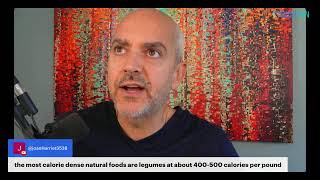
Joan says the most calorie dense natural foods are legumes at about 400 to 500 calories per pound. Thank you, John. Yeah, so there you go, right? Legumes. So I'll see your. Your legumes. I know people say that to me like, oh my God, you eat peanut, you eat peanut butter. There's so much calories in that. It's like you have Calories somewhere, you know what I mean? And again, when everything else is in play, that's fine. But yeah, again, I'll take legumes all day long and compare them to Big Macs or cake or cookies or, you know, I don't know where was I? I forget where I was, who I can't remember. I don't really eat. I don't really eat out of chains or like fast food places, but I was somewhere looking at the calorie, like mark, you know, rankings or whatever, and I couldn't believe how much calories it's. Every place. Now I go anyways, though. But yeah, that's interesting. Yeah, legumes, that makes sense. What's up, Christy? Christy. See you. Same with bread. Yeah, yeah, the bread can. Bread can get you. Right. Bread triggers. Means very hard to manage. Yep. Working on changing my thoughts about the bread. Yeah, I feel the same way, man. I love bread. I love it. I mean, sourdough bread. I could just literally eat a loaf of bread every day easily. I could easily do it. It, you know, I don't, though. You know, I mean, that's what I mean. I said I could easily do it. I couldn't because as soon as I started putting the weight on, as soon as I started feeling the effects of eating that much bread, I wouldn't like it and I would stop. So I don't want to speak flippantly here, but it's easy. You know, there are foods and everyone's got different. Everyone's unique, right? So it's kind of interesting that.
Everyone'S got their own experience with different foods, right? So. So for some people, it's bread, some people's cookies. Everyone's got their own unique thing, and you need to figure out how you're going to manage that. So again, bread, I. I manage it and I don't eat. I don't eat flour. I mean, I'm not saying I don't eat flour, but. But I rarely eat and I intentionally seek to limit flour and sugar Monday through Friday. Monday through Friday afternoon, I should say specifically.
So, you know, on the weekend I absolutely will eat like bagels. I'll eat bread.
Pizza. You know what I mean? I'll have those things on the weekends, but I really make an attempt not to eat them during the week. Week. And most weeks I don't. So again, everyone's got to come up with their own strategies for their own unique challenges. Right? Christy says yes. The more nutrient dense foods I eat, the less food noise and less hungry I am. Yes. Right. Okay. Chris says, I'm listening to that book 100, disappointed in his take with the drugs, as if that's the only way. Thank you, Christy. I've started thinking I'm crazy because I like him so much. Like, he wrote the End of Over Reading. And when I read that book, it was the. It was one of the. I think it was the first. It was the end of overeating and Salt, Sugar, fat. Both of those books I thought were so good. But the End of Overeeding was one of the first books I ever read about the ultra processed foods and why they don't satisfy you. And so I've always had such high esteem for him, and I still do. I think his. His scientific information is just second to none, I believe. But I also think that his Fr. His mindset sucks. That's what I think. I think he struggled with his weight.
Honestly, you know, and I hate to project, but as he kind of talks about a little bit, it sounds like his mindset's definitely off. His lifestyle sounds very much off, and his eating sounds to be very off, too. It sounds very diety. And so when he goes into, like, oh, the drug's the only thing that works for me. Yeah, because you never dealt with your mindset lifestyle needing, though, you know, I wish you had, and then that didn't work. And this only thing that works for you, fine. But again, I don't know how anyone who has not in any strategic way dealt with their mindset, lifestyle or eating, how you're going to walk around saying you've done everything. Why? Because you've tried every diet. Because every diet's the same, by the way. Doesn't matter if it's vegan or carnivore. It's the same thing. You get the same mindset. You're always starting on Monday, 100, you're all or nothing. It's only about the weight loss, you know, so even says that. He says it in the book. And it's like at one point in the book, and I almost wrote this down, but I'm like, it basically says. He goes. And this was recent when he was writing the book. He goes, all of a sudden, I realized taking the drugs, actually, that's when he realized it, that this is going to be a forever process. And I'm like.
I don't blame it on you all if you don't know that, because you're not. You're not. This guy, this guy, he lives his whole life. He's a doctor studying. He was the head of the fda. I mean, he doesn't. He knows everyone. He's had all these conversations, but you just realize his mindset's not in the right place, you know? Now I know he would talk to me and say, well, I got all the. I got all the data to prove my point. No one. No one's losing weight statistically, but that. No one that he's referring to is millions of people. Do you understand? There's millions of people every year that lose weight and keep it off for good. I don't know if it's millions, but. But it's a lot of people. And I don't think you ever hear their stories, you know, and that's what I'm trying to bring you. I'm glad you said that, Chrissy. I thought it was just. I don't know, look at me. Am I just being too picky with this guy or whatever? But I kind of appreciate that and I like him so much. So it's hard for me to say that, but I do think his mindset sucks. I don't love it, and. And I'm not against the medicine, but it's just like. I don't want to hear the only thing either, though, you know?
What's up back? Sex says, hello, Jim, when I don't eat, when I'm hungry, then does it cause cortisol and ghrelin to go up and does the thyroid go down? I've heard that these cause stress. Then we don't lose weight like stress from fasting.
Listen, first of all, listen, your body can be stressed. You're still going to lose weight. Maybe not in the short term, but people don't not lose weight when they're fasting, no matter how stressed they are. I mean, you can see people in famine situations. You can't be much more stressed than that. And they're. They've lost weight. So what happens is, you have to understand that really what's going on is you get stressed and you eat, and then you gain weight or you don't lose weight. So, you know, when I. When I don't eat, when I'm hungry. That's such a loaded term. I don't know what you mean when you say, when I don't eat when I'm hungry, because I don't know how hungry you are getting. If you're getting to the point where you're starving.
The cortisol and ghrelin, I'd be less worried about that. And the fact that when you get starving, you're going to Overeat, you know, so, yeah, intermittent fasting makes me gain weight. Bloating, too. Yeah. I mean, intermittent fasting. I say this every day. I'm not. I'm not against intermittent fasting. I just think the way it's taught, it's very stressful for most people, you know, and the people it works for, great. You know what I mean? Yeah. Christy said the state is passionate, not anger. There's a difference. Yeah, I do, too.
But I don't care. I just. I know there's. People don't like swear words and. Yeah, that's life. Right? We all got preferences. What's up, Sherry? Sherry says good X good. RX has an interesting article about lectins and beans and why the benefits of beans far outweigh any negatives, just like you said. Yeah, again, you can't. I mean. You know what, folks? You want to know what's the most toxic thing we're doing is breathing oxygen. You ever heard of oxidative stress? Right. It's the main thing that ages us. So what do you do? Stop breathing oxygen. You know, like, it's just. It's such a dumb argument to just look at one thing and just be like, that defines it all. And lectins, you know, it's like, what? It's like you cook them out and it's like, what do you think's gonna happen? I mean, the most healthiest populations on the planet are high bean diets.
Anyways. What's up, Bookworm? Bookworm says, hi, Jim, is your new book out yet? If yes, what's the name of the book and where can we buy it? This book is this close to being done. I am on the final. The final go round on it. So, like I said, I believe this book will be out by the end of the month. And so I will let you know about it. I'll be talking about it all the time. I can't wait. It's really exciting. You're gonna love this book, folks. You're gonna love this book. I love this book. I've read this book 6 million times. I will tell you this book.
I. It is a weird thing, like when you're writing a book and you just keep reading the same things over and over. So I. I've it. I feel like that's taken me longer because, like, I'll try and read through the whole thing and you get halfway through and you're just reading words, you know what I mean? So I have to space it out. But it is weird reading the same thing. Over and over and over and over and over and over and over and over again. But I still like it. So anyways, I, I can't wait to all read it. You're gonna love this book. It's so good.
So that'll be coming, but thanks for asking. Of course. Bookworm wants the book. Princess says. What about chia seed pudding? Great. Yeah, I think chia seed pudding is good. Filling, protein, fiber, all of it. I think that's a good, good option. Certainly better than regular pudding. So I give that two thumbs up, especially over milk cream based pudding all day long.
But I suppose, could you overdo it? I'm sure it's pretty energy dense too. So just be careful, I suppose. I mean you can be careful with anything. We can overdo anything really at the end of the day. But it's gonna be a lot less harder to overdo the chia pudding, I imagine than regular pudding. If I had to guess.
Carrie says no, no, I completely understand what you're saying. You're absolutely right. I never looked at it that way. Good, that's what I'm here for again. What I do thing is help them see things differently. And I think that's very important. Okay. Because it's with, with dieting you're not seeing things differently, you're seeing things the same way and.
You'Re just trying to fight against it, you know, so it doesn't work. Karen, I'm glad you wrote that. Karen. I, I, I don't even know what, I don't even know what email you're sending to me because I, I've tested my email out and I don't know, like it's, and it was funny. You know what's crazy is I tested my email out and I didn't get it. I was like, holy. And then I realized it was the email I was sending from there was an issue with it. So I have no idea how that's not getting through to me. And I don't know how you're not getting like a bounce back saying we can't send it there. So I don't know what email you're sending. You're gonna have to message me through Tick Tock app because I've looked, I haven't seen you message me through it. Please Message me through TikTok, send me your email and I'll take it from there. Because I, I don't know, I, I look every time you say I've not seen one of your emails, so I, I have no explanation. This happens sometimes and it's technology, so what can you do? But if you send me through Tick Tock, I will get it and I'll be able to help help you out there. So. All right, gonna get out of here, so. Thank you so much, everyone. Great questions. Really appreciate all the, all the comments and questions. That's what I'm here for. If you're not in my world, please click the link in my bio or go to program yourself then go get the free hypnosis session that I made for. It's called the new Thin Me. It's Kickstart session. It's really good. Go check it out. There's also a free training in there. Three steps to master your weight that comes with it. Free as well. Go check it out. Okay. And then if you like this, I'm here every Monday through Friday, usually around noon Eastern. I'm happy to answer any questions you have talked about your weight. That's what I'm here for. And if you missed this and you like it, you can listen to podcast. You can look program yourself then on all the podcast platforms and go check it out. You can listen anytime you want. So. All right, everyone, have a super day and we'll talk soon. Bye.
More from Jim



Weight Loss Visualization: Wake Up in Your Dream Size #programyourselfthin #weightlosshypnosis



What If You Pretended to Be Thin for One Hour? #programyourselfthin #weightlosshypnosis




