Your Real Weight Loss Goal
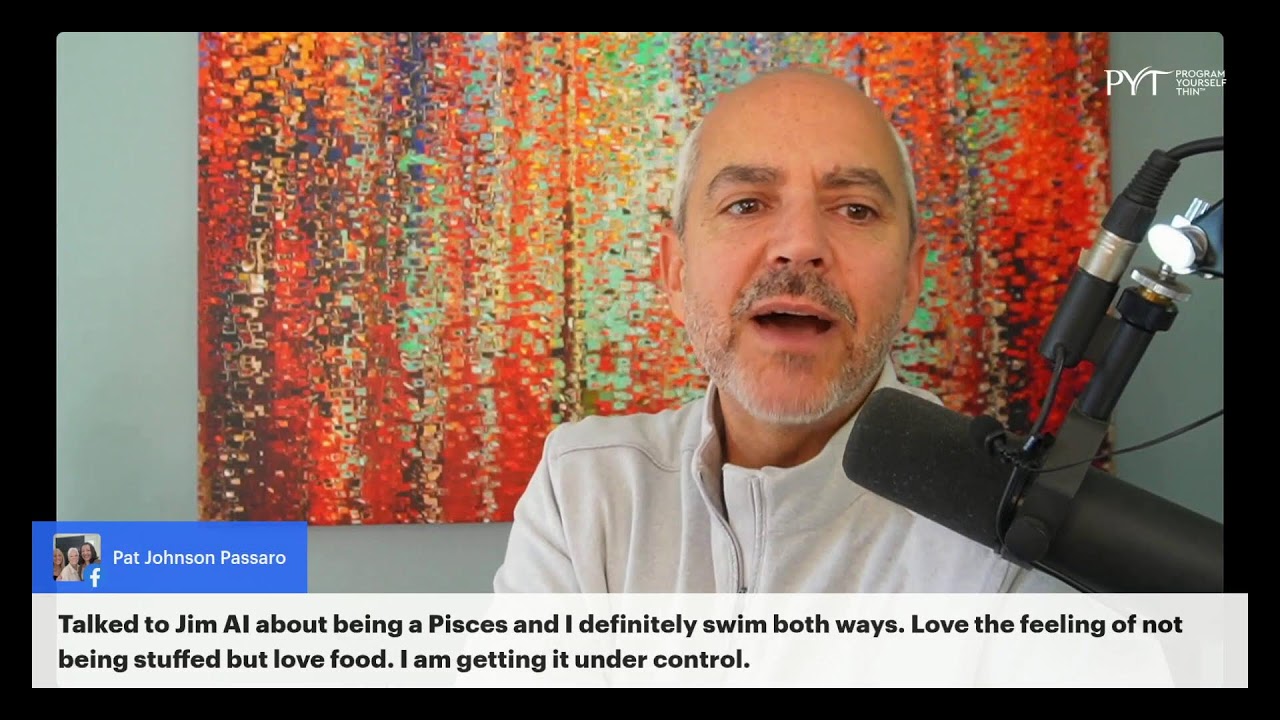
In this extensive live session, Jim Katsoulis challenges the conventional weight‑loss mindset that focuses on losing weight quickly to reach a target number. He argues that the true objective should be to live at your goal weight for the rest of your life, which requires a sustainable, enjoyable, and personalized approach. He explains why typical diets (Weight Watchers, keto, intermittent fasting, calorie counting) are inherently unsustainable because they are framed as short‑term fixes, leading to repeated failure. By studying people who have kept weight off for years, he identifies a shift in thinking: focusing on long‑term lifestyle, mindset, and eating habits rather than temporary restriction. Katsoulis then critiques GLP‑1 medications (e.g., Ozempic), acknowledging their powerful appetite‑suppressing effects but warning about side‑effects, muscle loss, anxiety, and the danger of treating them as a diet. He stresses that GLP‑1s do not address the underlying mindset and can create dependency. The core of his solution is the "Program Yourself Thin" system, built around a Goal‑Weight Pyramid (mindset, lifestyle, eating). He promotes a "one‑size‑fits‑one" plan that tailors strategies to each individual’s life, using concepts like clean vs. pleasure days, the 3 Rs (reduce, replace, remove), and the importance of stress‑management skills. He emphasizes emotional framing—linking weight goals to happiness and quality of life rather than abstract health metrics. Throughout the session, Jim engages with community members, answers questions about cravings, anxiety, and personal experiences, and repeatedly offers free resources: a hypnosis session, the "Reprogrammed" training, a daily email program, and access to live or recorded sessions. The overall message is that sustainable weight maintenance comes from reprogramming mindset, building enjoyable habits, and learning to bounce back quickly after setbacks.
Chapters
probably what you think. Your real weight loss goal is something that you have looked at the wrong thing your whole life, most likely. Because most of your life, when you've thought about weight loss, your goal you thought was to lose weight, right? You thought, my goal is I just want to lose weight as fast as I possibly can so I can get to my goal weight. I want to get there. I want to lose weight and get there. But the truth is that you don't want to lose weight. You don't want to get to your goal weight. You want to live at your goal weight. You want to live the rest of your life at your goal weight in the easiest, most enjoyable way possible. And this difference makes all the difference in the world because the goal you aim at is going to dictate the strategy you need to get there. And so you have been focusing on losing weight and getting to your goal weight as fast as you can your whole life. And what that's led you to think about Is how you lose weight is always this extreme overwhelming thing. Think about it. Every single time you've ever tried to lose weight, it's felt overwhelming. Every time. Weight Watchers, intermittent fasting, keto, calorie counting. It doesn't matter. All of these things are a huge lift. You're normally here and all of a sudden Monday comes and you're going to do it. It's way up here. It's tiring. And you do that because you think of this as a temporary process. When your goal is to lose weight, when your goal is to get to your goal weight, That's a short-term temporary goal. That's not something you're going to continue forever. It's just something you're going to do until you get there. And that codes it in your mind as something that's temporary, something we're going to do for a little while and then stop. And that is setting you up for failure because you, every time you've attempted to lose weight, have used a method that's unsustainable. Every single diet you've ever tried is built to be unsustainable. Not intentionally, but it's just the nature of it because it's too much. It's too much of an overreaction. It's not what's built for the long term. So when you shift your goal over to wanting to live at your goal weight, all of a sudden you start to reprogram all the deeper structures of your mind to think about some things you can do long term. And when you think about what you're going to do long term to get to your goal weight and then live there for the rest of your life, You usually come up with much different things, and that's what happened to me when I began studying people that had lost weight and kept it off for at least two years. As you started to notice that they were approaching it much differently, they were thinking differently, they were living differently, and they were eating differently than dieters were. And that, I realized, allowed them to not only lose weight, but more importantly, allowed them to stay there long term. Being able to sustain it, keep it up. And this is what you actually want. Your real goal is not to lose weight. Your real goal is to live at your goal weight. And the clearer you see that and the more you focus on that, the easier time you're going to have and the more effective you're going to be because you're going to allow yourself to use strategies that genuinely, truly work for you to make the changes that you want to make. And if you want to go deeper into this way of thinking, you can click the link in my bio or go to programyourselfin.com. If you're on Facebook, you can literally just click the— you can just type mind, M-I-N-D, into the comments and it'll automatically send you the link. But go check that out. I give you a bunch of free stuff. I give you the hypnosis session. I give you a training workshop called Reprogrammed: How to Live at Your Goal Weight Without the Fight. And I give you a daily email program all for free. So go check that out. And if you have any questions, feel free to ask them. Hope you all had a nice— oh, weekend. It was beautiful here. I was just talking with someone here in New England. This weekend was literally the magic time. It was— and there's like 1 or 2 weekends every year where just the weather— wow, it's perfect. That was this weekend. Perfect. Crystal clear, crisp air. Oh man, nice cool air in the evening. He's sleeping great. It was awesome. Uh, what's up, Debbie? How's it going? And there's Debbie though, dude, down in Florida. You don't got a lot crisp days in Florida, do you? A lot soggy days in Florida. No, not soggy, but it's humid down there. It's humid. Yeah, we get the crisp days for about 6 days a year maybe, it feels like. But anyways, this weekend was one of them. But I hope you're all having a nice time. Um, this time of year, I don't know. Yeah, fairs. We had the Big E last last week, which you may know about. I don't know. I read the Big E, which it actually was in the town I grew up in, was, um, the 4th biggest fair in this— in the country. The Big E. Couldn't believe it. So anyways, yep. What's up, Baja? Baja says, meanwhile, it's 85+ here, waiting for the fall weather. Yeah, 85, that's a warm one. I know, I'm just loving it. What is the temperature now? Yeah, right, say right in the 60s, right where we're at. Oh, and the nights get into the 40s. Oh man, anything make you sleep better than that? Turn that air conditioner off, get that nice cool natural air. Oh, it's awesome. Love it, love it. Yep. Uh, Debbie said super hot and humid Florida, melted in Disney. Yeah, I bet. Oh my goodness. Yeah, Disney's funny, you know. You spend all that money, go to Disney. You live down there, so it's a little different. But yeah, you really play the weather. I, I don't know, they say the busiest time— isn't the busiest month like, um July. Is that true? Is that really true? I've been in Disney in like February and it's like I'm gonna melt, so I cannot even imagine what July is like there. And is that the busiest month? I don't even know if that's true, but I can't even imagine going there in July. It is like— I, I don't know. I can't imagine waiting in the lines and then not just going home. Uh, what's up, Jane? Jane says, 2 things which I have found out being on Ozempic now for over 2 months: I still have strong cravings for sugar, which I gave into yesterday, and also my brain seems altered. I have a bit more anxiety. Interesting. Um, that's interesting. I've not heard that. I haven't heard or seen too much about the GLP-1s and mood. Um, there is research and curiosity about the GLP-1's effect on addictive behavior in general, whether it's gambling, alcohol, food, whatever. Um, you actually have GLP-1 receptors in your brain, not, not just in your gut. They're discovering, and so they're trying to figure out, you know, what the effect of that is. But that's interesting. I've not heard that. Um, A bit more anxiety. I don't know; that could be you know, it could be biochemical, it could be psychological. You know, I think one of the things that I do know about the GLP ones, at least from the people that are drawn to this approach, is that the idea of being on it forever and what it may be doing to them and the anxiety of ever going off it and what that may do can cause some anxiety. You know, it's not it's not natural. I mean, it's it's an unnatural way to. crank your GLP-1 up beyond anything your body's ever had. I mean, it's, it's serious stuff, you know. So yeah, but the sugar cravings, I think a lot of people don't realize that either, you know what I mean? Like, so, you know, the sugar cravings go up and the calories go down and you're consuming as much sugar, you know. That, that's again, where does that lead to? Yeah. Oh, there you go, Jane. Yeah, Jane said maybe just because I had eaten a bunch of food, um, which I regretted later. But you know, I mean, that, that's a point too, that, that Experience is a relative thing. We experience things relatively. And so if you go on Ozempic or GLP-1 and you still eat like shit again, now again, you have to understand our people here, we're overthinkers. So if you're an overthinker, you're a perfectionist type of person, you go on the GLP-1 right off the bat, you're already kind of using it to bludgeon yourself with most of the time. Most clients— I'm not saying everyone, I'm saying my clients, my overthinkers. My perfectionist, if they decide to go on the GLP-1, there's a level where they're they're angry themselves. They got to the point where they have to go on a GLP-1, so that cranks up the anxiety a little bit. So now you're in that state, and now you go and eat sugar, or you make unhealthy food choices while you're on you know the GLP-1. Now that just gives your critical part even more to kind of come at you with. So I would absolutely believe that, Jane, that when the eating's not great and you're on the GLP-1, you're way harsher to yourself even more so, and that may create more anxiety. That's real stuff, right? Again, the GLP-1 is not the ultimate answer, folks. I try and tell you this stuff. It's a very powerful medicine that will help a lot of people lose weight while they're on it. I'm being very specific with how I frame this, okay? It's not a solution. It's not— you never get to a point where you've changed anything within yourself mentally, physically, emotionally, biochemically. Um, what's up, Karen? Uh, That you'll be able to live with forever. You never create, you know, a plan for how to think, live, and eat so that you can live at your goal weight. You never do that. You take an injection that that makes you less hungry while you're on it. You know? Yeah, Jane says my magic pill is not that magic. There there are no magic pills, you know. And and I will I will say I've been saying that for over thirty years. There's just no magic pills. Just just do the work. You know, do the work because there is no magic pills. And if you keep looking for magic pills, you're going to get to the end of your life and realize there's no magic pills and still not have an answer. You know, so there is no magic pills as far as I can tell. There's doing the work, you know, and that's what we try and do here in Program Yourself In is we're looking to do the work in a general sense. You know, we follow the goal weight pyramid. This is kind of the general kind of approach to managing and living at your goal weight. Right here, mindset, lifestyle, and eating goal weight pyramid, right? And break it down into categories. But basically, we're learning how to think, live, and eat like a thin, healthy, happy person. And I, I've still never seen— I've never seen an alternative to that. I've never seen an alternative, and GLP-1 included, stomach surgery included, by the way. It's not a long-term solution necessarily. So yeah, you're not alone there, Jane. Oh man, Mary says yep, she's up in Canada, perfect weather. Yeah, if you're up north, I guess being up north's the call right now. He says okay, it's a slow time now. That's what I always heard too. I literally, I was, I was thinking that because, um, yeah, October is supposedly— September and October, the slowest months at Disney. If that's true, if that's true, um Yep. Jane says, very true. I'm back to you, Jim. Going to focus more on your teachings again. Yes. All right, Jane. That's all right. I appreciate it. You're always here, right? You got unlimited lifetime access to the program. So that's no problem at all. Um, but yeah, that's just what it is. We're going to hear this over and over again, folks. You all know I've been here before the GLP-1s. I'm going to be here long after the GLP-1s. The GLP-1s ain't going anywhere. Okay. But, um, people are gonna— you're gonna experience the GLP-1s and most people are not going to want to be on GLP-1s for the rest of their lives. And there's gonna be a lot of people that are really scared to go on GLP-1s at one point because the scariest thing about GLP-1s is that you lose weight quickly. You say, well, what's the problem there, Jim? Because you also lose muscle quickly. And then if you ever go off of them, you put the weight back on and you trade a lot of muscle for fat because you don't put the muscle back on. So a lot of people— the biggest scariest thing of GLP-1s is their body recompositioning that happens if you come off of them. And most people want to come off them at some point. Just so you know, we're already finding that out, and you're going to continue to find that, or you can't continue them because they're too expensive. You know, but um, that's going to be the biggest, the biggest problem with GLP-1s in the future, in my opinion. And they're both related. You've heard me talk about GLP-1s. The other big thing is that um, GLP-1 again, no one's thought of this yet, and I'm curious to see where this all ends up, and we won't know for a few years. But once you get to your goal weight, or once you stop losing weight, because you only lose weight for 16 months on a GLP-1 regardless. And so at some point when the weight loss stops, what's it going to be like then? Where's your motivation then to continue jabbing yourself and never be hungry and never enjoy food the way you used to? We will see. We will see. You know, but Program Yourself Then will still be here. We'll still be talking about this and we'll still be working our stuff. And again, it's just, you know, I say this every day and I don't mean to get up on the GLP-1s, but I always say, like, if you compare the GLP-1 success stories versus the Program Yourself Then success stories, The program yourself thin success stories are way more—they blow them out of the water. Why? Well, they're way more inspiring. A because they're not just physical changes; they're these inside-out mental, emotional, physical changes. But the big thing is that the people in program yourself thin again—they're ending the program or they're ending up with, I should say, an ability to think, live, and eat like a thin, healthy, happy person that's customized to them. So you're creating a one-size-fits-one plan that fits you in your life. And so once you have that, it's transformative, you know. And with GLP-1, you're constantly and forever dependent on it, you know. And that's what I was saying, that this, this past 2 weeks I've been sending out testimonials for my clients to fill out and just reading through them. It's just so inspiring. I'm going to put them all together so anyone's interested can kind of look through them because I think it's important for you to see that there is an alternative out there. Um, to manage your weight. That's not GLP-1, that's not a diet, that's not surgery. Um, it's to approach it just practically, strategically, I dare say intelligently, you know. And it works, you know. That's what's so exciting. It's so fun reading my clients' stories. Um, it's so inspiring because it's not just weight loss, you know. It's a new relationship with food. Most of the time it's a new relationship with themselves. Um, certainly a new relationship with their body. Yes, weight loss and living at a lower weight, but it's doing it in a way that really resonates and feels good. You know, we're gonna be talking about that today, actually. I can't wait. If you're in the program, today's class, we're gonna be talking about how to make how to make your living at your goal weight easier and more enjoyable. We're gonna dive into that. That's the secret. If you can make doing the things that keep you at your goal weight as easy and enjoyable as possible. You're on easy street. That's the street I'm on. I'm on easy street when it comes to living at my goal weight because I have strategically, systematically figured out the little things I need to think, do in my lifestyle, and eat in order to stay there. And I've looked for the easiest, most enjoyable way to do it. And after 30 years of doing that, I've found that. And so for me to live at my goal weight is as easy as it was for me to live overweight. Just as easy, and it can be the same for you. Again, your behaviors are run based on your programming, and unfortunately, your programming has not been set up to support you. It's been set up to you know kind of sabotage you. That's true. What's up, Pat? Pat says clapping for me. Had a weekend. Excuse me. Had a weekend that I didn't overeat nor drank too much. Had fun shopping and being with family and eating out. So glad I make healthy food choices now. You've been a big help. Thank you. That's awesome, Pat. That's great. So proud of you. Proud of you, Pat. Nice job. And Pat left the story. I remember I read your story, Pat. It's so, so inspiring. So yeah, it's exciting. Um, this is what I'm talking about, because it's not just enough to lose weight. You got to live a life too. You're a human being living a life. You're not going to live a miserable life that you don't enjoy. So, um, You know, that's why dieting doesn't work. Dieting is not that enjoyable, so you need to figure out an enjoyable way to live. Uh, Karen says all my friends are on GLP-1, which is fine for them, but I'm not doing it. Yeah, and again, you'll see where they show up in a year. Again, you, you need to see, just like diets, because I said this last week, most people are approaching GLP-1s as a diet. Yes, they are. Even if they say they're not, they're thinking I'm going to do the GLP-1 until I lose the weight. I'm only gonna do GLP-1 for a little while. You cannot think that. This is not a diet. The GLP-1 is not a diet. The diet didn't matter. You didn't do it anyways. But even if you did it, you lost weight at a natural rate. GLP-1 is gonna cause you— if it works, it's gonna cause you to lose weight most likely quickly, which is gonna cause you to lose more muscle mass. And then if you decide to go off it, which most people are for one reason or another, you gotta watch out. You're not gonna be able to do this too many times. This isn't dieting. You're not gonna be able to cycle off and on this too much. Your body composition is really going to pay a price. This is not a conspiracy theory. This is real. This is real stuff. What's up, Kitty from Norway? Nice. Let's get people from all over the world here. That's pretty cool. Debbie says, isn't GLP-1 supposed to curb appetite? Yeah, it curbs appetite, but it doesn't necessarily curb your cravings. Okay, so you still got to eat. And on top of that, I think it's a licensing effect piece that people go on GLP-1s. Now they're not as hungry. They're eating less. They're losing weight. And now it's easier for them to give in to cravings for sugars or whatever else is. So again, you have to go in the GLP-1s really with a focus on nutrition and nourishment, not just weight loss. I hope, but people gonna do what they're gonna do. Um, Jane says, so annoyed that my sister is doing all the right things and is losing more than me. Yeah, and I'm assuming that, that your sister's not on a GLP-1. But yeah, I mean, at the end of the day, Jane, Um, it all comes down to the work we're doing on ourselves. And well, listen, we all got a different path, you know. Some things are easier and some things are harder, no doubt about it. But, uh, I know you, Jane. Jane, I know you enough to know that it's, um, it's important, I think, because again, it's not just the weight loss. But I think for knowing Jane enough, it's, it's kind of getting that more grounded, calm foundation for yourself. And if you could kind of transform percentage-wise into a more grounded, more calm version of yourself, I bet that would improve lots of things in your life in addition to your weight. And that's what I'm trying to say. Again, in Program Yourself Thin, we take the weight and we wrap it in personal development. So we, we're not just going to lose weight in this process, we're going to turn ourselves into the best version of ourselves we can be. The weight is one piece of it for sure, But it's just a piece of a bigger goal, and that's an important concept because for most dieters, the the weight is the only goal. It's the only thing that matters, you know. And in real life, that's not that's not enough. That's not true. I like I like no one believes me with that. I like what if someone's overweight? Oh, Jim, I don't know. You don't you don't understand. You don't understand, Jim. I really want to lose the weight. Yeah. Well, what are you gonna do when you get to your goal weight? I'll figure it out then. No one does. 85-95% of people put the weight back on, so they didn't figure anything out, right? Um, so we have to be aware of that right from the beginning. Oh, Debbie says, I have to get to my goal weight. No, you don't. You never have to. You never need to get to your goal weight. You don't have to get to your goal weight. You shouldn't get to your goal weight. None of these things, none of these, these words, banish them. I have to. Why? Who's making you have to? Where's that pressure coming from? You don't have to. Please hear this, folks, because I know most of you have been saying, I have to lose weight for decades. Have you? Have you lost weight? If you haven't lost weight while you've had to lose weight, did you really have to? I have to breathe. If I sit here and don't breathe for 10 minutes, I'll have proven that I had to. Okay, but the definition of have to is not, you know, I don't breathe for 10 minutes and I'm just fine, and I have to breathe. No, you don't. You like to breathe, you know, you want to breathe. And so you never have to lose weight. None of you have to lose weight. Give me one example where you have to lose weight. There is not one. And I take this straight from a study I read where they studied, um, men over 50 who'd gotten open heart surgery They tracked them to see what percentage changed their lifestyle afterwards. 20%. So there's literally no situation where you have to lose weight or need to lose weight. You don't. Yeah, but I'll die, Jim. You don't understand. I'm right on death's edge. So what? People die. People will eat themselves right to death. So you don't have to. That's the— that's literally the definition of not having to. Semantics matter. I have to get to my goal weight. No, I want to get to my goal weight. Okay, well, that's accurate. What's up, Kent? Lake Tahoe, perfect fall weather. Nice. Yeah, no one needs to get to their goal weight. No one has to get to their goal weight. No, you don't. Stop saying that. But it just says it works. Yes, and Baj, I appreciate your feedback too. Kent though, Kent, that's who I haven't seen. Kent, where— I didn't see your thing. Did you not get this, Kent? I need to get your story. I did not see your story, Kent. I've sent out a few emails. I don't know if you've seen them or not. If you haven't, please email me at jim@programyourselfthin.com and I will send you the, the link, a special, because I know you'll share your story. I know you must just not have seen the link. Um, that was Carolyn. I'm not doing it and need to lose so much weight. No, you do not need to. No one needs to lose weight. No one needs to lose weight. Does anyone argue with that? Does anyone here need to lose weight? Need to? What's that even mean? What's need to lose weight even mean? Debbie says, I have miserable moments trying to get to my goal. My body won't sync with my mind. Um, yeah, but I mean, you know, again, that, that to me is an indicator that the weight really shouldn't be the only part of this goal. If all we're measuring, um, if all we're measuring— oh, I see that, Kent. Yeah. Oh, you haven't received any emails? That's not good. Yeah, shoot me an email at jim@programyourselfthin.com, Kent, and I will, um, I'll make sure your email— maybe sometimes emails in my system get blocked randomly for random reasons, and I I'll just make sure you're getting it and I'll shoot you a message because I'd love to hear your story. Um, yeah, but back to Debbie. Yeah, I have miserable moments. We all have miserable moments though. Please understand, you're gonna have miserable moments whether you're at your goal weight or not. So once you realize that, you start to realize, well, you know what, do I really need to have— what's miserable? What's miserable about it? See, because Here's the thing, let me put it this way, Debbie. You get to your goal weight, let's say you're at your goal weight. I'm at my goal weight. Well, I don't really have miserable moments. I would— I don't describe them that way anyways, but I have good and bad days. I have good and bad days of behavior, you know. Um, again, I don't really think I'm as miserable, but, but I think of them as that. And so to me, it's no different when I was actively losing weight or while I'm at my goal weight. Good and bad days, good and bad weeks, you know, good and bad decisions. And I'm always learning from them. You know, my body won't sync with my mind. See, I don't think it's your body won't sync with your mind. I think it's your body is reflecting your behaviors. So I think more accurately, you probably mean that my behaviors won't sync with my mind. And in reality, your behaviors are syncing perfectly with your mind. The problem is you don't have the mindset yet to do the things you want to do naturally and automatically. But I hope you can enjoy the process too, you know, because before you, you know, your weight gets exactly where you want to go, maybe you work on, you know, your communication with your daughter and being able to communicate more clearly and have her hear you and support you. And that can be, you know, a sub-goal you have on your way to your ultimate goal weight, you know what I mean? But there's other things to focus on other than just weight, and I think they're very important because if you only focus on weight You're going to be in big trouble because, uh, weight is just inconsistent, unpredictable. You know, good weeks, bad weeks, whatever. So when you have bad weeks or when you ever hit a plateau or whatever, you need to have something else you can also focus on improving as well. You can't just have weight. Why would you live and die just based on your weight? I mean, it can be important and you can consistently focus on getting the weight you want, but why hinge all of your emotions on what the scale says? It's just Bad strategy. But yeah, your body's in sync with your mind though. Okay, it's it's your body technically is in sync with your behaviors, folks. Okay, please understand that you can have all the thoughts in the world. Doesn't matter where your thought. It does matter where your thoughts are, but in the wrong order. Ultimately, your your weight is a reflection of your behaviors. Your behaviors are a reflection of your mindset. Okay, so technically, your body's perfectly in sync with your behaviors. Your behaviors aren't the ones that are giving you the weight you want, and the reason why is because your mind's not in sync with the behaviors you want to have. It's in sync with the behaviors you don't want. So that makes sense. What's up, Vicki? Vicki's up hot. So Cal, it's hot over there. All right. Uh, Jane says, yes, I've been very stressed because my daughter is struggling at the moment. Okay, Jane, I'm sorry to hear that. Um, but again, you know, you come back to program yourself then, and you're supported here. Okay, Jane, so Let it let yourself realize. Oh man! So Jane, what I would suggest you go to today: go into the program, go to the mindset blueprint trainings, and then go to the part on dealing with times of stress. I made it for exactly moments like this. Right, when real things are popping off in life that you got to deal with. So again, it's related to weight but in an indirect way at this point, because right now, um, learning how to relax and calm down is more important than losing weight. But they're both related, so we can work on both at the same time. But you got to put the— I would suggest the stress relief primary, by the way, that has to do with your sugar cravings, on top of it. As well. Hey, there we go, Carolyn. Carolyn says, my body will be healthier at goal weight, my movement, well-being, ability, etc. All right, so there's Carolyn. Carolyn's been around enough to know to go from, uh, I'm not doing it, I need to lose so much weight, to my body will be healthier at goal weight, my movement, well-being, ability, etc. But I'd go a step deeper, Carolyn. My body will be healthier is very uninspiring to humans for some reason. I don't know why. I'm not here to explain why. I'm just here to let you know that a goal of being healthy tends to be a very low motivation score goal for whatever reason. Shouldn't be. Should be really motivating, but it does not seem to be in reality. So Carolyn can say my body will be healthier, but you've known that forever. So I'm going to assume that's not going to crank the motivation up the way we want. I think the way to crank the motivation up is to realize how much emotionally happier and better off you'll be when you get your weight and your, your, you know, your life and eating under control or in line or in sync or in flow or however we want to describe it. So yeah, my body will be happier. Even healthier just doesn't do it. I don't know why healthier just doesn't seem to move the dial for most people. So I'd switch my body will be happier I'll be happier. I'll feel more successful. I would focus in on the emotions of getting to your goal weight and living in the flow. I think that's where the most motivation comes from. It seems like for people that actually moves them into action. Yes, yes, Kitty Kitty says I want to eat more healthy and I'm gonna do that. Yeah, and again, I take that a level deeper. I'm gonna eat more healthy because when I do, I feel so much better physically, mentally, and emotionally. When I eat healthier, I feel lighter physically. Literally, I feel more energized. I feel even if I'm the same weight, I feel lighter. It's easier to move. I feel more comfortable in my body. I feel stronger mentally. I'm just more at peace when I eat well. When I make good food choices, I feel more nourished. I'm proud of myself. I'm happy. I feel like I got momentum. I feel successful. I feel energized. I feel clear-headed. I'm happier about myself. That's how I. Would go about starting to define my goal. What's up, Ann Marie? Ann Marie says, "I don't really have a goal weight, but if I did, I'm at it. I'm working on body recomposition now. I'm working on what are really healthy eating habits and lifestyle habits to live like a healthy person would live." Super great job, Ann, and congrats! Yeah, it's nice when you're at the weight you want to be at because then now you can focus 100% of your energy on just quality of life. And don't just pin your quality of life to the physical part of it, right? Because it's also how you think, how you behave, your routines, your habits, um, all of these things as well, um, beyond just your weight, you know. And as you're saying, body recompositioning for what? So that you have more strength so you can move more comfortably, so that you can be stronger, have better mobility, better balance, more stamina, you know. You'll be independent longer, you'll be able to go on more adventures, you'll be able to walk more, you'll be going on more trips. Whatever it is for you in a day-to-day Reality. We don't want to make our goals vague. Well, I'm going to be so much— things will be so much better when I lose the weight. Well, what's that mean? You know, that doesn't give you a clear picture for your mind to kind of envision, and that's where the motivation comes from. You know, uh, all right. Jane says, I'm always trying to improve my life in every aspect of my life. Well, good. But if you can't improve everything all at once either though, so you got to be strategic about it too. But you got the plan. You got the plan to do that. Um, it's called Program Yourself Thin. It says, when I went— when I want to indulge bad habits, I say your mantra out loud: nothing tastes as good as thin feels. Yes, nothing tastes as good as thin and healthy feels. I know some people don't like that phrase, but I've reclaimed it. I like it a lot. You don't have to, but I do, and I think it's very valuable. And, um, I drill it into my clients' heads because, um, yeah, I'm not saying nothing tastes as good as being skinny feels. I don't give a shit what you look like. I do. I want you to look good, but I mostly care about how you feel, how long you're gonna live, your quality of life while you're alive. And I will put up the joy, the just unbridled joy and pleasure of living at my goal weight and feeling good about myself against any food in the world. That's what that means to me. Now, I don't know if you agree with that or not, but if you did agree with that, don't you think it'd be a lot easier to manage your eating and your weight? Certainly is for me. But yeah, you never, never need to lose weight, so don't say that. Yeah, Ken's gonna send in a support ticket. Yeah, go do that, Ken. Um, we'll get that fixed. I don't know, like I said, it's so annoying. It's so annoying. You're not the first one, you know. I, I get people and they've like It's people that double opted in. They've done everything right, and it's just like, man, sometimes emails just get blocked. It's weird. Yeah. No evening snacks taste as good as great night's sleep feels. Yeah, that's perfect, Ken. That's exactly right. That's— that's— Ken, thank you. You know what I mean? Like, I've been fighting this thing for 4 years, this saying, because program yourself thin. Um, I've been doing program yourself thin for over 20 years professionally, and Most of that time, nothing tastes as good as thin and healthy feels has been the main mantra of the program. And I started doing social media like four years ago, and people hate that phrase because they always think of like you know the Kate Moss saying it, and it really just being you know all all the bad it leads all the bad stuff with weight loss. You know, and I respect that. I get that. But at the same time, it's a really valid point not not to make it about being skinny in my opinion because I would never trade my health. For— I'd never want to look a certain way that made my health bad. Like, that doesn't make sense to me. Um, so again, when I say nothing tastes as good as thin and healthy feels, I really mean thin and healthy. And again, thin to me is you being at your goal weight. It's not a BMI chart number that you have to be at. It's a number that works for you, that you decide yourself, that gives you the highest quality of life. So if we think about you being at the weight that gives you the highest quality of life and being as healthy as you want to be, Nothing tastes as good as being at the weight that gives you the best quality of life and makes you the happiest. And nothing tastes as good as being as healthy as you want to be feels. Does that— is that better? Because that's a very powerful phrase, because what it does is it puts apples against apples. Because usually when someone says, I can't have that ice cream, they're thinking about the pleasure of eating the ice cream, and now they're feeling deprivation because they're thinking about the absence of that pleasure of eating ice cream. Right? When you say no to some food you want to eat, you feel deprived. You feel an absence of pleasure. And this saying allows us to fill in the absence of food pleasure with the existence of a different type of pleasure. And again, when you compare your favorite food ever in the world, the taste of your favorite food in the world, whatever it may be, And you put that next to the pleasure of being at your goal weight in a way that you were also healthy and happy and had the highest quality of life because you were happy with how you looked, how you felt, how you ate, how you lived, how you thought day in and day out, and you felt really good about it. Put those 2 pleasures next to each other. Which one's more pleasurable to you? I'm imagining it's that one. The body, the weight, the happiness, the health. Is it not? Is it not, folks? Because if you say it's the food, then fine, it's the food. But fine, you know, to me there's no comparison. Why can't I compare them? Because Kate Moss said some dumb shit 30 years ago? Fuck that. I don't give a shit. Oh, you're pro-anorexia. No, I'm not. Absolutely not. Absolutely nothing I say is in that ballpark. Oh well, she said that. Well, who gives a shit? You know what? It's 2026. You know, lock in and hear what I'm saying. I'm not saying what she said. But it's reminiscent. It sounds like it. Yeah, well, it sounds like it and it's different. What do you want? I mean, and this is why I work with smart people, because if you can't make the distinction between nothing tastes as good as skinny feels and nothing tastes as good as thin and healthy feels, if you can't make the distinction between those two, then you're in the wrong spot anyways. I'm just letting you know, you'll, you'll never make it through the day in my program anyways. So You know, whatever. But I live and die by that phrase. I love it. It's my favorite. And, um, and I've had people in the program that love the program that don't love that phrase too. So, you know, again, you're allowed to feel and think what you want, you know. But, um, please understand that there's a bigger thing there. Debbie says, I did the mindset training for dealing with stress once so far. It was helpful. Yeah, very good, Debbie. Yeah, the dealing with stress one to me is, is so important. And, um, I think, you know, A, if you're going to manage your weight, and B, if you're going to be a happy, healthy person in your life, you're going to have to learn how to manage stress, right? Because as long as you're here breathing, you're going to have stress. And it don't matter if you're at your goal weight. It doesn't matter if you ate great yesterday. You're going to have stress regardless. So we need to have strategies, abilities, skills in order to deal with stress in our lives. And I think most people don't. You know, the way you deal with stress is you just fight it, I think, is a terrible way to deal with it, by the way. So yeah, Debbie, I'm glad you, you did that. Yeah, and it's there again. Listen to it again. You know, you'll have more times of stress. Go listen to it again. You'll get more out of it. Yeah, Phil says, feel so joyful and proud. I like that. I like that. Yes. Yeah, Carol, I like my, my description. Again, how you define your goal is a huge, huge piece of the puzzle. Yeah, there we go. Yeah, Debbie says that phrase is on my whiteboard in my refrigerator. Nothing tastes as good as thin and healthy feels. Good, good. I love it. I love that phrase. And, um, I don't give a shit. And people have been busting my chops about it forever, and I don't care. People can say what they want. Your weight is really one of the greatest freedoms you have in life. You get to weigh what you want to weigh. You get to choose it. You know, it's one of the very few things in life that we get to completely choose what we want to do. You know, I think people forget that. I think they don't. I think a you've been disempowered your whole life with your weight. That's what I think. I think you've tried to diet your whole life, and dieting's never taught you a system. You know, if um you've been dieting for decades at this point, most likely, and you're no closer to understanding how to live at your goal weight than when the first diet. Than before the first diet you ever started. And that in itself is pretty indicative that diets don't give you what you need to live at your goal weight. It's kind of this anti-response to how you typically eat that's really built around willpower and fighting against yourself and forcing yourself not to do the wrong thing. But you never ever practice how to do the right thing easily, comfortably for you. And that's what really— that's what this is all about, right? This is the goal weight blueprint we have in the program. And, um, you know, this is your customized blueprint for how to get to and live at your goal weight. I mean, it's 144 pages. This is— you don't just go through this right away. I mean, this is something you work through, but eventually it gives you a complete system based on this where you basically break down how to think, live, and eat like a thin, healthy, happy person for you. Because everyone's got a different approach because everyone's got a different life. Everyone's a different person. So you got different things you like to do, different, you know, Qualities you got, situations you're dealing with. So we need to customize your strategy and path for you. And dieting never does that. Dieting just gives you kind of this one-size-fits-all, you know, plan. But unfortunately, that just doesn't work at all. Yeah. Mary says, uh, eat the ice cream and really take notice of what happens. The result is not good, right up to how you slept that night. Agreed, Mary. I did that last night. I got some ice cream And I, I literally ordered the kiddie size and it came out like so huge. What I will let you know, folks, is people in America don't like to give you a little bit of ice cream. They feel weird about it. They can't imagine anyone in the world would want a little bit of ice cream. But I can tell you, for me, the reason I eat less— way less ice cream than I used to, and less cheese especially— is because I paid attention to how I felt after. I didn't feel great. I'm not saying you will. Maybe you'll feel amazing. I don't know. But I noticed I didn't. And when I recognized that and noticed that over and over again, eventually I decided I don't want to eat it that much. I didn't really enjoy it. So I didn't stop myself from eating ice cream that I absolutely loved. I started to realize that I enjoy a little bit of ice cream a lot and a lot of bit of ice cream not at all. It was gross to me. I don't like how I feel. Is that going to be your path? I don't know. Maybe, maybe not. But it what I'm saying is it's not this one size fits all that like oh you're struggling with ice cream don't don't eat it anymore. Well go cold turkey stop eating it just stop. That's the answer to everything. You know, ain't gonna work. User five nine two says I'm good during the week and cheat again and gain weight back on the weekend. Um, yeah, well, I think that, uh, great job. I mean, you're starting in Program Yourself Thin. You're doing what we already work on, which is called structuring your eating. And in Program Yourself Thin, we have clean and pleasure days, okay? Um, but we recognize each as kind of its own unique day. And so in essence, um, the clean days are really about fueling your body. That's the main focus. That's the intention. I'm gonna fuel my body at the highest level possible. I wanna make most of my food decisions based around fuel. Then there's the pleasure days, right? And those are more about fun, right? So those days are more about making food choices for fun. So as you start to realize your two patterns, you have your weekday patterns and you have your weekend patterns, you can start to make strategic choices moving forward. The first choice I would make, 592, is I would look at the weekend eating and I would say, what is the thing I'm doing that's bringing the most calories in on the weekend? It might be nighttime snacking. It might be your dinners you have on the weekend. It might be that you eat all day and graze all day. I don't know, but I would look at the weekends and I would say, what on the weekends is the habit or behavior that is responsible for the most calories going in each week? Maybe you go and get giant breakfast on the weekend. You know, again, it's different for each person, but pick the one thing, not all the things that are putting calories in, the thing that brings the most calories in. Then you focus in on that, then you got 3 choices, the 3 Rs of weight loss: reduce, replace, remove. You can focus on that one thing. Let's just say, for example, it's snacking at night. You say Friday and Saturday night, I just eat all night long. Okay, great. So we look at that behavior. We say, what can I do to make it better? Better reduce, replace, remove. Okay, so you continue to eat the same thing you normally do, but you could stop an hour earlier than you typically do. That's a reduce strategy. You're going to reduce the calories coming in. You could replace some of the more egregious calories. I eat ice cream here. I'm gonna switch it over to, you know, um, this yogurt or this low-calorie ice cream. Um, or you could replace it, you know, so you can replace it with, um, you know, again, again, the lower-calorie ice cream piece. And/or you can remove it. That's— I'm not gonna eat ice cream. Um, you know, at the end of the night, I'm not getting ice cream. I'll still eat the chips and I'll still have the, you know, the cookies over there, but I'm not gonna eat ice cream I normally eat. So I would go about it that way. You know, because again, that sets you up for long-term success. But you know what most people are gonna do in that situation is they're gonna try and eat perfect on the weekend. We all have required requirements for variety, and you got to figure out what your your needs are. Could be a couple glasses of wine or going out to dinner. Yeah, it could be. You know, but I would I would spend a little bit of time. You know, and program yourself. Then the first thing we got to do. If you look at the eating, right? So we got the goal weight blueprint, right? And if you look at eating, there's three phases here. But the first one is the most important. Nothing happens until you got that awareness. Awareness. So I would say user five nine two. The first thing you do is get more awareness. Maybe maybe it's the glass of wine. Maybe it's the going out to dinner. But it also might be other things too. Just so pay attention this next weekend that comes up. Instead of trying not to eat anything and then beating yourself up for doing it. Say, wait a second, what are my typical patterns? What do I typically do on the weekend, starting from when I get up to when I go to bed? What do I do in between here? I want to notice what my behavior patterns are. And then if the glass of wine is your most enjoyable part of the weekend, I'd leave that alone, you know. And then I'd say, okay, I'm gonna go to dinner, but I'm gonna dial dinner down by 15-20%. But that's the main point, that instead of changing everything, we'll change things strategically in a way that's comfortable. Um, what's up, Kimberly? Kimberly says, after I went all week doing good and yesterday really let myself enjoy eating some wonderful food at my daughter's house celebration, it was great. And I'm trying to let go of my guilt on important events with family. Now I'm getting back to my schedule. Thank you. Less stress because I now know my plan. Nice job, Kim. That's awesome. Or Kimberly, I don't want to take, uh, don't assume that. Um, yeah, then that's exactly what we talk about on the program. Exactly that. The ability To eat well all week, go into the weekend, enjoy yourself more. Go to your daughter's celebration, eat the way we want to eat in a more moderated way than we used to, but still eating things we like to eat. But then most importantly is then being able to get right back on track Monday. That's what we want, folks. That's what we want, and that's what I would suggest. There's no there's no real answer that out in the world. GLP one's not going to give you that because GLP one you're just constantly your hunger is just always depressed. So you're gonna go to that party and just— you're not gonna give a shit about the food. You're not gonna enjoy it. You're not gonna be in rapport with other people 'cause you're just not gonna care about the food. And then, for dieters, you're gonna go there and you're either gonna have to not enjoy any of the food, or you're gonna give in and eat some of it, then you're gonna eat all of it, and then you're gonna be off track for weeks or months. So again, I always say this, but the most important skill to living at your goal weight is to be able to get back on track quickly. So great job, Kimberly. I'm super proud of you. You're living in the real world here. You're living a real life, a real world where you get to control your weight. You get to go to your doctor's celebration, enjoy the food, and then you get to come right back to your usual schedule and routine. And that's really what we're aiming at. And you just keep getting better and better and better at that. So nice job, Kimberly. Right, right on the path, walking the path, practicing the path. Uh, Pat says, talk to Jim AI about being a Pisces, and I definitely swim both ways. Love the feeling of not being stuffed but love food. I'm getting it under control. That's me too. That's me in a nutshell right there. I love food. I love food. That's why I would never go on a GLP-1. I would never in a million years want to give up my enjoyment of food. I wouldn't want anything to mess with that. I love food. That being said, I also love living and I love feeling good. And I like being healthy, and I like being happy, and I like being proud of myself, and I like having the body I have, and the health I have, and the quality of life I have, and the routines I have. I love them all. I love all of it. Right? So you're right on the money though, Pat. That yes, getting it under control is key. You know, that's what we're looking to do again. How can I enjoy food and have my body is a question we ask all the time in the program. Because we want to enjoy food. That's it. It's a one of the great parts of life, I would suggest. All right, everyone, I'm gonna get out of here. But again, if you're not in my world, please click the link in my bio and go get the free hypnosis session. If you're on TikTok or YouTube, go to my bio and get that link. Um, if you're on Facebook, all you have to do is type mind, M-I-N-D, into the comments and it'll automatically send you the link to go get the session. Um, and I don't just give you a hypnosis session, I also give you a training called Reprogrammed: How to Live at Your Goal Weight Without the Fight. And also, uh, I give you a free email program you can check out, you know. And if you like this, I'm here every Monday through Fridays around noon Eastern. And if you can't make the live, it's also a podcast, uh, that you can go search any podcast platform, Program Yourself, then it'll pop up. Listen anytime you want. And/or over on Facebook, you can go watch the replays. They're there all the time as well. So Go check those out. Have a super day, and we'll talk soon. Bye, everyone.
More from Jim



Weight Loss Visualization: Wake Up in Your Dream Size #programyourselfthin #weightlosshypnosis



What If You Pretended to Be Thin for One Hour? #programyourselfthin #weightlosshypnosis




