You're Always Going To Overeat Sometimes
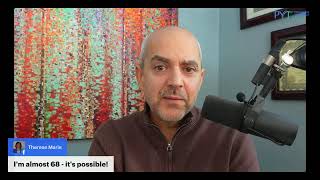
In this live podcast episode Jim Katsoulis (the Thin Podcast host) challenges the common diet belief that weight loss must be perfect and short‑term. He argues that overeating is inevitable and that success comes from being consistently better over long periods rather than striving for flawless short‑term compliance. He introduces the concept of viewing weight loss as a lifelong "goal‑weight" mindset, using percentage‑of‑goal framing to keep motivation high. The episode critiques diet industry hype (e.g., protein trends, OMAD, quick‑fix diets) and emphasizes the importance of subconscious programming through hypnosis. Jim promotes his free "New Thin Me" hypnosis session and his flagship program "Program Yourself Then" (PYT) – a multi‑week system that combines mindset, lifestyle, and eating habits, supported by a paid "PYT Spark" upgrade with additional hypnosis content. He discusses the psychology of investment (money, time, accountability) as a driver of adherence, shares listener questions about protein, OMAD, age‑related weight loss, and offers practical tips such as measuring progress in percentages, avoiding extreme hunger, and focusing on fiber. Throughout, he maintains a conversational, supportive tone, encouraging listeners to accept occasional overeating, re‑frame setbacks, and commit to a sustainable, self‑customized weight‑maintenance plan.
Chapters
It. Everyone, welcome to today's program yourself Thin Podcast. Today we're talking about you are always going to overeat sometimes. And I want you to really let this sink in because it's crucial to how you're going to get to your goal weight and stay there forever. Because what you've been taught your whole life about weight loss is the idea that you're going to be perfect for a little while, lose weight, and then get to your goal weight. That's kind of the whole way you think about it. Which means that you think about your weight loss in a short term time period, right? You think about it as a temporary process where you're going to change your reading until you get to your goal weight. But what happens then? Well, we'll deal with that later. But the way you think about it is that you think it's going to be a short term shift in your behavior. And when you think about it as a short term, temporary shift in your behavior, now you open yourself up to the possibility that you can be perfect, that your reading can be perfect, because it can be perfect. In the short term, you can stick to your plan perfectly for a little while, but when you zoom out on your life, when we start looking at months, years, decades, you cannot be perfect. It's not possible. Okay? There are going to be times when you make mistakes. There are going to be times when you overeat, choose the wrong food. That's okay, that's normal, that's natural, and it's unavoidable. There's no path you're going to walk where you're just perfect forever. And you really have to internalize that and accept that. Because if you don't, then you're going to build your whole weight loss on this foundation that you can be perfect. And then when you're not perfect, you're going to feel it's catastrophic. What's the point of going on anymore? I screwed up. I completely messed this up. No, you didn't. You're just being a human being. And human beings are not going to be perfect with their reading. Excuse me. Especially in this environment. Okay, so we need to start with the realization that you're not going to be perfect and you don't need to be perfect. All right? You're always going to overeat. Sometimes. Sometimes when you're surrounded by really triggering food, sometimes when you're just feeling really depressed, sometimes when you're feeling really tired and really hungry. Things are going to happen in your life and you're going to Overeat. And it's not a big deal, because your success does not come down to being perfect. It comes down to being better, to being better more consistently. And if you can start to think in this way, it opens you up for a much more enjoyable and successful weight loss journey, because you need to be able to absorb the mistakes you're going to make, because you're going to make them. And this stands in stark contrast to how dieters approach it, where they assume, I'm going to be perfect, tomorrow's Monday, and starting tomorrow, I'm going to be perfect until I get to my goal weight. And if you're thinking that way, that is setting you up for absolute failure, because at some point you're going to make a mistake. And if you're under the belief that you need to be perfect to get to your goal weight and then you're not perfect, well, what's the point of going on? You see? And so this is at the foundational level of the mindset that's kind of sabotaging you. And the quicker you change it so that you start to internalize that this is a game that I'm playing for the rest of my life. This isn't about being perfect. It's about being better consistently. How can I get better? How can I, over a week, over a month, over a year, over a decade, reduce 20, 30% of the calories I intake? Not how can I be perfect this week? You see the difference. And the big difference, again, is really expanding that timeframe, because not only is it probably gonna take you longer to get your goal weight than you think, but the other side is that even once you get to your goal weight, how long do you want to stay there for? And I know the answer is forever. And so you have to understand that staying at your goal weight forever is going to include times when you make unhealthy food choices, when you overeat, when you do the wrong thing. That's part of the whole process. But if you can realize it's a part of it and get good at recovering from it, getting right back on track, that's the thing that's gonna make the biggest difference in your weight long term. Okay? So start to realize that you're gonna make mistakes. The next time you make a mistake, relax. Realize mistakes are part of the process. They're not the defining factor, though. As long as you're able to get yourself back on track relatively quick, then you can still move towards the success, still move towards the weight you want to live At. So next time you make a mistake, relax, take a breath, let it go, and ask yourself, what do I want to do next? How do I want to respond after this? And take steps in the right direction. And if you want support in doing that, click the link in my bio. Go get the free hypnosis session that I give you. It's called the New Thin Me. It's a kickstart session that will support you in this process because it's going to really connect you with how amazing it feels to think, live, and eat like a thin, healthy person. So you feel pulled towards making the right choices rather than push towards it. And again, it's completely free. Go check it out and if you have any questions at all, feel free to ask them. I am here to help you and answer whatever questions I can. How's it going? Regina from Ohio. See over there? Oops. Go. Oh, Ohio. You know, I will tell you, I'm in Massachusetts, but I actually have worked with clock clients in Ohio, and I always feel like Ohio and Massachusetts are very similar weather. So I don't know why I wanted to say that, but I. I just think that I always find it kind of odd, but it does seem true. And it's cold, so it's probably cold in Ohio. James says I need to eat more. I'm too skinny. Have a great weekend. When I stopped eating, I stopped holding on to weight. I used to be overweight when I stopped eating. Yeah, that'll happen. If you stop eating, you'll tend to lose weight. Right. But again, you know, it's funny though, I will tell you this. I know people don't believe this, but even putting weight on, you know, your weight is such a subconsciously oriented and controlled process that even when people want to gain weight, sometimes they can struggle with it. Because. Because most of our. Our weight really is a reflection of our behaviors. And most of your behaviors run on autopilot because of your subconscious program. And so whether we want to eat more or want to eat less, I'll give you an example what I mean, just in a different context. I remember when I was in school, I got a degree in finance and I was taking an investments class, and the teacher says, okay, I want you to go home this weekend and put a portfolio together that will lose as much money as possible, right? So we're always thinking in terms of how we want to make as much money as possible. So he says, lose as much as, oh, this is going to be easy. Well, it turns out it was no easier than picking the Winners. Because whether you pick the winners, whether you pick the losers, there is, you know, you don't know. You don't know what's going to happen, right? So you can't pick anything. You know, you're just kind of lucky. You could do your research or whatever. You know what I mean? Sometimes it hits. But long story short is that you know, to some degree, you have no idea. And so when it comes to gaining weight or losing weight, the thing that anchors them together is that your weight really is a reflection of your behaviors. And your behaviors are run pretty much on autopilot. It. And so I will, I will say, you know, it's easier to gain weight typically for most people, but for some people it's not. And again, the main reason being that you kind of have a programmed amount that you eat every day. The average person eats the same volume of food every day, and your body and brain are really status quo machines, you know. So again, even putting weight on sometimes can be challenging, you know, because of that. What's up, bookworm? Pilgrim says Jim defined mistakes. I mean, mistakes are relative. Jesus had this all week. Mistakes are relative. So I'm glad you asked that question, though, because it's not me saying, oh, you're making a mistake with your reading, because you did that. So a mistake is relative. Meaning, you know, if I'm. I want to lose weight and eat better, and one of the things I'm working on is not eating cookies after my lunch anymore, right? So typically, you know, I go and eat my lunch and I go get a cookie. Let's just say that's a behavior pattern I have. And so, so, you know, if I'm working on that and I want to, you know, not eat a cookie, let's just keep it real simple. I don't want to eat a cookie, and I eat a cookie, I'd say it's a mistake, you know, so really, it's just, to me, it's like what you intend to do. And then if you don't do what you intend to do, I'll call that a mistake. But again, it's a relative term, not. Not an absolute one, because everyone's journey is a little different. And so, you know, mistake for one person is, you know, mastery for another. So, you know, it is relative. But that's a good question. D. Jackson says you don't always lose weight when you stop eating. So why is that? Yeah, you do. You do lose weight when you stop eating. It just may take a little while. Okay, So I say this all the time that, you know, weight loss is inconsistent and unpredictable in the short term, it's pretty consistent and predictable in the long term. Okay, so again, I can cut your calories by 50%. You may. Or may. I could, you know, put D. Jackson in a room with 10 other people, cut all your relative calories by 50%, and you will all lose different amounts of weight over the month. Okay. But you know, over the long term, you know, that'll kind of even out a bit. I mean, so again, you do always lose weight when you stop eating. Again, it just may take a little while. Imagine, you know, again, imagine a reality. And I think you got to go to extremes to really drive this point home. But it's like if you imagine a famine scenario. Wait, what did I just say? A famine. A famine scenario. But if you've ever seen pictures from, you know, famines around the world during history, you're not, you're not seeing any overweight, obese people. You know, I mean, like, it's just there, there's physiological impossibilities. We do live in a reality based reality here. So now, again, different people respond differently. So there is, there's wiggle room and all the rest of it. But again, if I, if I throw you in gym jail and, and I cut off all your calories, how, what reality would it be? That you don't lose weight at some point, you know, so again, we got to be careful with our language because there's a difference between, you know, I, I stopped, I cut my calories way down for a week and I didn't lose any weight versus, you know, I cut my calories down for a year and didn't lose weight. I. I've never heard that. So anyways, what's up, Jane? Jane Says hi from B.C. it's about 36 degrees and sunny. I played pickleball yesterday. What the hell, 36 degrees up in Canada. It was, it was funny. I think I said this the other day because it shocked me, but I was out walking and I was like, well, it's kind of nice. And I looked down and see what the temperature was. It was 24. Just give you a scent, Fahrenheit, you know, of how cold it's been. The 24 felt like a sunny, warm day. It was so funny. But yeah, it's been cold, cold times. And it's only gonna get colder here. It is only gonna get colder for me. So there we go. Camera angle's better. Got some new, new updates happening to the podcast. I was looking that Up. So the podcast is gonna show up a little differently for those of you that listen to the podcast is that there will kind of be two podcasts each day now. So one will be like the beginning part, just that, and the other part will be the whole thing plus the, the Q A. Kathy White says, do you ever eat chocolate or desserts? Oh, yeah, absolutely. I eat chocolate almost every single day. Desserts, I really, I'm more, I'm more sparse with those. I moderate desserts more. So I would say I eat desserts probably on average, probably twice a week. If I had to pick two to three times a week, I'd say is probably pretty accurate. And the other days a week, every day I'm eating chocolate. So I'm chocolate now. I eat it moderately. I want to make that crystal clear. So I'm a big believer you can eat whatever you want, but you will probably have to eat it differently. Again, the quantities have to change, the way you eat them has to change. But I've seen hardly any evidence. Again, some people, there's always outliers, but almost it's very unlikely that you would have to completely give up chocolate or desserts, you know, to control your weight. As a matter of fact, I think having those things in your life and learning how to be more moderate with them is a much better strategy than, than abstinence and giving, giving things up, you know, but that's me thought on that. I see someone says, I think she's coming back. Says, what do you think of Omad? You know, again, I answer questions like this all the time by first stating that the golden rule of program yourself then is that there is no right or wrong. There's only what works for you. So, you know, if you're a person and Omad's one meal a day. So if you're a person who tried one meal a day and just absolutely loved it, right? You love eating one meal a day and you just look forward to eating one meal a day for the rest of your life. You just love it then I'd say great. You know, if it's, if your health and everything's in good shape, then that's a great plan then. So I think for you that's great. But I think for the vast majority of people, one meal a day is, is not a great strategy for most people. I think for most people, it's very tense, it's stressful, they get very hungry. When they eat their one meal a day, they feel unsatisfied or they overeat. It doesn't feel sustainable. It's not something they want to keep up. It's hard to maintain. That's the majority of people I've seen. So, again, I think both are true. And I think the secret is to figuring out, how do you feel about it, you know, is it working for you now? Again, I, I, My experience at this point is that it's not a good fit for most people and most people stick with it way too long because they do what most dieters do and they try and convince themselves that it's the right thing to do, you know, and, and that happens a lot with weight loss. I always say the last person in the world you should ever listen to about weight loss is someone who's actively losing weight. I, I think there's no worse person on the planet to listen to about weight loss than the person who's actively losing weight. Because when you're actively losing weight, you don't give a shit what you're doing. Okay. Oh, I, I love keto. I've never felt so good in my life. Is when I stopped eating carbs. I feel amazing. You talk to them the next month, they're not doing it, you know. Oh, I love Weight Watchers. I love counting my points. It's so easy. It's so fun. Okay, in a week. Later. I love intermittent fasting. Oh, my God, it feels so great. Not eating until noon. It's amazing, you know, two weeks later, wait, you're, wait, why eating? It's not 12 o' clock yet that you know. So it's like, again, people are actively losing weight, you know, and that's why I don't even believe the Ozempic stuff, you know, Again, it works, it clearly works, but I don't. My big Tthing with the GLB ones is when you're losing weight, you don't give a shit. You don't give a shit if you feel nauseous, half nauseous half the time. You don't give a shit if you don't care about food because you're losing weight. But once the weight loss stops, that's, that's the people I listen to, the people I've listened to are the people that have lost weight and kept it off for at least two years. That's the real test of a strategy. Can you keep it up when the weight loss is finished? Can you keep it going? And I think most people don't really ask that question. They just want to lose weight quickly. And so everyone's obsessed with the weight loss phase. But I will tell you, in my opinion, the worst person on the planet to listen to is a person who's actively losing weight. I know that might sound ironic, but that's some real wisdom for you. And again, that's coming from someone. I've done this personally for over 30 years and professionally for over 20 years. I'm one of the highest paid hypnotists on the planet. I know what I'm talking about. I've done over 6,000 private weight loss sessions. So, you know, I'm not just making this stuff up. I think absolutely the worst person to listen to someone who's actively losing weight. What's up, Deb? Deb from Michigan. How's it going? Joy says I'm having trouble finding the free hypnosis session. Well, let me put it right in here for you. Here's the link. Go click here and you can get the free hypnosis session. I will tell you folks as well. That was weird to video just went off. Let me finish this thought too because it's very important for you if you. I made a decision and so right now I'm giving. I made a program called PYT Spark. It's kind of a light touch program where I give you a goal weight quiz to help you find the right goal weight three steps to mastering weight training program yourself. Then method report shows you how to do the core technique of the whole program. What else is in there? Oh, Jim, AI give you access to my gym AI coaching, you know, bot which is really powerful. And I, I'm literally giving away right now. So if you sign up, you can, you'll get that for free. But that is not going to be free for long and it might be next week. I don't think it will be because I, I was giving it away for free and I've been doing it for a few weeks now. I put a thousand people in it and I started watching what happens and you know, this is what I mean. Sometimes you need to learn a lesson a hundred times, you know. But once again it reinforces the fact and the truth that when people are giving things for free, they don't use them. Because I looked up the numbers of people that actually used any of the stuff in it and it's almost no one. So people sign up for it and they're just not using it. And that again, I've seen that over and over and over again. So people say, oh, if you care so much, give it away for free. No, because people don't value things that are free. No, they don't. And, you know, I think the numbers were somewhere around 7%, 6, 7% of people. There's over a thousand people access some of the stuff in there. Six, seven percent. Okay, you want to know a percentage of people access the program that have paid me 25 grand, I'm sure you can imagine that have paid me five grand. Even people that pay 500 bucks, you know what percentage of them access the program? It's in the 90s to 100%. And therein is the difference. And it's very important as someone who does this, because it can make you wonder what's wrong with you. But it reminds you. It reminds me that I'm gonna let it go. But anyways, go get that hypnosis session while you can. Again, if you're on TikTok and click the picture of me and go get it. It's free. And I give you all this stuff right now. It'll be. I don't. It might not be there tomorrow. I don't know. So if you want that. That spark thing, go grab it now because it's not going to be there long. Linda says that's a great point. I'm not sure which point it was, but I'm sure it was a good point. I make a lot of good points. That's right. To be conceited. Please, please. But I have been doing this for a long time, and I think one of the reasons I do this live every day is to try and help people just break out of their diet prison. Right? All of you, people that want to lose weight, you're stuck in this diet or prison. The diet industry has put a mental prison around your thoughts. So you can only think like a dieter now, and it keeps you stuck. And it is my mission and goal in life to help you break out of that. And I do these lives every day again, I got a lot of content coming in different ways at you, and that's how I'm going to help people for free. You know, Jody said, wow, Jim, that's insanely low numbers. You say it all the time. No, I know that, Jody. And it's like I keep forgetting it. It's like, I don't know, it's fine. I don't mind, because it's a great program. So I'm happy I put it together. But, yeah, I'm just going to. I'm going to charge for. Because that's the only time people use anything. So again, when people ask me why I don't just give everything away for Free. It's because I, you know, and that's PYT Spark. I have literally given the whole program yourself in system away for free at points in my career. Like literally the whole thing, the whole eight week program and it was the same thing. It's just people invaluable. I mean think, imagine if all of a sudden, you know, Mercedes worth $1,000 for a brand new Mercedes. Right. Well, cool, that's awesome. But very quickly you would start to think less of it, you know, and it's just, it's just the world we live in and, and money is, is a representation of commitment, you know, it just is. So don't blame me. I gave it away for free. If everyone used it, you know, I mean I would just keep it that way but it's just I've done this so many times in my career. It. And it's just finally, I mean I'll probably do it again sometime. But yeah, anyways, that, that's something I need to be reminded of lately because I always want to just give everything away for free. But then I'm reminded that no one ever uses it then or very few. There are always the people too that do use it and get results, but it's, it's a minority, you know, and it's frustrating but it is what it is. Again, it's just human psychology. So anyways, I think she's coming back. Yeah, you're welcome. Yeah, Omad, again if you do it. But for most people that's very stressful. You know, Bookworm says what's the link to Spark? Bookworm, you're already in the program so you don't have to worry about that. You got all that stuff already. Although, although one thing I am going to be adding because the Spark program is going to be a paid program which a lot of you might like. Again, because I am going to add a little bit to it and the main thing I'm adding to it is I'm going to do five hypnosis sessions. Well that's actually what the Spark program is going to be. I'll just let you know real quick. Is that the Spark program, It's a little different than what I'm giving away for free because it is going to include the physical book. So you'll get the physical book shipped to you, you'll get the PYT Spark program. And what I'm also adding to that is five hypnosis sessions. So for five days each morning you'll get a five minute hypnosis session and the sessions are built around this book. They're built around my favorite chapters. So I'm going to do five, I'm going to start with five hypnosis sessions for my favorite chapters here. And you'll get those, you'll get those emailed to you. And if you're in the program, I will put them. You know, if you're in the program, I just put this, the digital version, the bonus section. So if you go to the bonus section, you'll see downloading your goal weight downloadable version. And I will put the hypnosis sessions in there as well. Okay. Once I do them and I'll let you know. But, but that's what the PYT Spark program is going to be anyways. Carol says, I love following you. I use the free hypnosis. It was great. Yes, thank you. That is a great session. I mean that's a session I really took my time, took my time on. Okay. And I think it's a great session. I, I really is one of my favorites. It's a 10 minute session, it's a kickstart session. So it's designed to help you clarify in your mind what your goals are and then connect to them. And the goal of the whole session is that you finish it feeling inspired and motivated to want to eat well. That's the secret. It's not about forcing yourself to eat well. It's about changing up how you think so that you want to eat well. You know, I hope that makes sense because as a dieter you always think your weight loss revolves around your ability to stop yourself from doing the wrong thing. And that's not. Yes, that works in the short term, maybe, but, but in the long term that's not a good strategy because you got a life to live. You know, you got other things you're going to focus on. So I believe the real secret is to program your subconscious mind to do the things that bring you in the right direction so that you're subconsciously being serviced and supported to get to your goal wave and stay there. And so it's a different approach. But I give you the free hypnosis session. Just experience it. Because I know that a lot of people have never really experienced hypnosis. And, and I know a lot of people have never experienced hypnosis. For me, I'm literally one of the highest paid hypnotists on the planet. I don't think I would say there's not a hypnotist alive on the planet who has done more work on living at your goal weight than Me, I really can't. I mean, I know Marissa Pierre, I know Paul McKenna. And these people, it's just they're generalists and they're great. I'm a fan of theirs, I really am. But this has been my obsession. This is my obsession, you know? And so with me, it's not only just hypnosis anyways. I mean, it's just being obsessed with this stuff for so long. I don't see a lot of people like that. So, again, I give it to you for free. I don't know what else I can do. You know, maybe I should start charging for that too. I don't know. You know, more people listen to it. I'm just kidding. I will give that to you for free. I will always keep that free, because I just want you to test it out, you know? But, yeah, check that out. Nate says, are you a healthcare professional? I'm not a healthcare professional. The typical term, I guess, of that. Like, I'm not a nurse or a dietitian or a doctor, none of those things. But on the other hand, well, I don't really. I never use the word healthcare anyways. I'm a hypnotist by trade. I am certainly a coach. I'm an NLP trainer. I'm a yoga instructor. So, yeah, am I a professional? I like to think so, but probably not a healthcare. Even though I think I do help people with their health care. But I guess I would never use that term because then you get into a lot of. A lot of bureaucracy. I. I suppose. Yeah. Yeah. Bookworm. Got the physical book every. Yeah, the. The physical version of this book is the stuff. And again, I can't stress this enough. This is my book. The DAO of living at your goal weight. This is out and available now. It's just super good, you know, again, I got. I. And I always say this, but, you know, like, I think it's really great. There's 40 chapters in here. Each chapter is a page or two because each chapter is a hypnotic session designed to change the way you think about your weight, you know, food, everything that has to do with living at your goal weight. And the beauty of it, though, is that as you read it, it changes you. So it's not like just more information I'm dumping on you as you read this, it changes the way you think about things so that you come out the other side, you know, a change, different version of yourself. And that's what it's meant for. So, yeah, Jane says, every day now, I tell myself that Nothing tastes as good as being thin and healthy. Feels. That's wonderful, Jane. I think that's a wonderful, wonderful mantra. I would say that's probably the core mantra of the whole program, if I had to guess. I think it's the most important one. Amy says, I've emailed you and filled out the form for the free stuff and checked my spam. Send help. Okay, Amy. Yeah, email me again. I don't know. I don't feel like I would have seen that, but, yeah, check it out. I don't know if you checked your spam. Yeah, I'll hook you up. Just shoot me an email at Jim. Program yourself then dot com. As I said, I got to get the support desk set up for people that aren't in the program, but, yeah, that session's ready to go. Ready to go. Choice says, I think I should read it again. Yeah, absolutely. This book is meant to be read multiple times. Please let it be known this is that. That this book was literally written for that. The power of this book comes from rereading it. That's what it was designed for. It was really. It was kind of based on the Dao de Jing, if you're familiar with that at all. It's kind of. It's the same. Same type of thing. You know, each chapter is the same type of length or whatever. And I remember there was a period of my life where I would just read that every night. Like. Like, just, I'll read this chapter tonight. And I would meditate on it, you know, and I read this chapter the next night. And so the beauty of this is, like, it doesn't even have to be linear. I think it's fine to go through it, obviously, front to back one time, but then. Then the goal is, you know, keep it on your coffee table, keep it by your bed, keep it in the bathroom. And you go in there and just read a chapter of it. That's the goal of it, is it to pick me up every time, you know, and you can look for a specific chapter if you want or just spontaneously pick one out. But. But people have been saying it's really, really helpful, you know, because it's just a little bit size, you know, boost, I guess. Tree says yes. I'm one of the few weirdos who loves free things. Thank you for your daily noon session. While I can't always be on with my work schedule, you've helped me a lot. As of Today, I am 22% toward my goal weight. I'm working with the idea that no food is off limits and trying to be moderate instead of. Thanks for what you do. I appreciate that, Therese. And, yeah, you're not. You're not a weirdo for liking free stuff. Right? We all love free stuff. The. The. The challenge is to get something free and then use it as if you paid a million dollars for it. That's the secret when it comes to free things. We all want free things, you know, but it is really important to. It's really important, I think, to realize that your motivation is going to be impacted by what you pay. And a lot of people, I guess, don't. I mean, I was like that. I never really thought about until I started doing this work. But I've been on every end of it. I've given things away for free. I've sold things for $7. 19, 27, 97, 197, 497, 997. I've sold coaching for $5,000, $10,000, $25,000. So I've sold things for virtually, you know, every single price point. And it is true that the more people invest, the better results they get, simply because they just show up more, they take it more serious, and they come in at a higher level. And that is always the challenge for me as a program creator, because I'm always struggling between that higher price point where people really show up, but then making accessible to more people. And I will tell you, it's something I have struggled with. It's. It's a hard thing to wrap your head around because I've gone back and forth so many times. You know, I'm gonna do $7. I'm gonna make it. Everyone can get it. And then it's like the people get it, but then they don't really do it. And then you charge 25 grand, and then it's like, people show up. It's amazing. But then it's only a few people can, you know, work on that level. Then you go, you know what I mean? It's. It's. It's wild that way. So anyways, Claire says, I've only just found you and have started to listen to your approach. I'm already thinking your way. All right, Claire. Yes. So, Claire, if you're new here, make sure that you get the hyp. Hypnosis session again. If you scroll up, you'll see the link there. Go click it and get the hypnosis session, because it'll help reinstall these ideas even deeper into your mind. Again, if you watch my videos at all, and especially if you like the ones where it's like, you know, where it takes you kind of like a visualization of how tomorrow would be at your goal weight. You know, if you like those. The hypnosis session's way more powerful. You know, it's just. It's a deeper, more effective version of that. So, again, I can't stress enough how valuable that'd be. Jane says, have you found that your clients do continue to use your program for a long period of time? Oh, yeah, yeah. My clients use the program forever. So, yeah, absolutely. And that's been cool, too. I will say, like, the Thrive program is one that's out there now, and again, it's an accessible way to continue if you choose to. Meaning that every day you still get hypnosis sessions, there's a weekly lesson that we go through. There's just a lot of stuff we do to kind of keep you engaged in this way of thinking. And I think that's very reasonably priced as well, but. Oh, yeah, I mean, once you. I always say this to my people. Like, once you get. Once you kind of step into this way of thinking, it's hard to step out of it. You know what I mean? Like, it's kind of like I always think of it this way. I don't want to sound dramatic here, but it's kind of like it's like the wizard of Oz. It's like the second you're able to look past the idea of the wizard of Oz, you see what actual was like. Once you see that, it's hard to ever go back to believing in it again. You know what I mean? And so I think it's very similar here that once you realize that as a dieter, you've been fixated on losing weight and not really focusing on living at your goal weight, it starts to become really obvious that you've been kind of walking the wrong path for the goal and the destination you want to get to, you know? So, yeah, absolutely. My clients, once they start, they stick with it and they keep getting better. That's the other piece, too, is that this model is built on improvement. And so just like, if you decide to play the piano or go golfing or start drawing, you know, the first year you do it, you're okay. The second year, you get better. The third year, you get even better. The fourth year, you're getting better. So you just keep on improving and getting better. You know, this isn't like dieting, where the same thing you're doing on day one is supposed to be the same thing. You're doing five years from now. There's no growth, no evolution, no optimization. It's totally different here. Here a program yourself, then part of the goal is not only get to your goal weight, but then once you're at your goal weight is to keep optimizing how you're staying at your goal weight to make it as easy, enjoyable and comfortable as possible so that you can basically do it on near autopilot. That's the ultimate goal. So, yeah, I mean, once you get bitten by that bug, it's, it's. You kind of stick with it, you know. So Vicky says, yeah, I got multiple copies around the house and one in the trunk of my car. That's awesome. Yeah. Again, having these around, I mean, I love the stories and that's what ends up happening. It reminds me, I'll tell you, you know what? I just, I just realized this. And you know what I used to, I used to read growing up and I used to love them is Shel Silverstein books. We used to have Shel Silverstein, like palms around. And I just realized for the first time ever that that was absolutely a subconscious influence for this as well. The Dao de Jing. And I never even thought this Shel Silverstein because I would just randomly. We had the book on the coffee table. I was randomly picking up and just read one, you know, and I. And by the end of it though, I know all of them. I'm gonna re. Get that book. I, I got rid of that book. But I know all of those because that was cartoons too, right? It was so good. He was amazing. But so there's no, there's no images in here. So that's why I don't think I just put together until just now. But, but the idea is that you can just pick up any one. But my goal for you is that you get to some point where you've reread them so many times that you've really internalized them. That's where the real magic's going to happen. So even if you have this book and you've been reading it, what I'm trying to say is that next year at this time, you're going to get so much more out of this because you're going to have read it for another 10 months and it's going to sink in a much, much deeper level. What's up, X? How's it going? Long time no see. Yes, I'm doing good. I hope you're doing well. Now he says the chapter about taking BLT's bite, licks, taste. Makes me think differently now and catch myself doing it. Yes, yes, yes, yes. That's such a great chapter too. I love that. The, the Sleuth, that's such a good chapter, in my opinion. The Food Sleuth, that's such a good one. Should I read it? I don't know, I, I read them sometimes. I love that chapter too. The Food Sleuth is one of my favorites. Come on. What's up, Adrian? Adrian says I go through the hypnosis library. This has changed my life in so many ways. Yeah, that's awesome. Yeah, the hypnosis library too, you know that, that's just a, that's just a bonus in the program. I always say that, you know, sitting within the program yourself. Then System is the number one hypnosis program on the planet for weight loss. There's, there's nothing even close to this. It's an eight week program that you'll, you're never going to find anything like this. I, I know, believe me, I know the hypnosis weight loss market and what 99% of the weight loss programs out there is you're going to get three to five hypnosis sessions. That's not going to do shit. And so not long term. And so the hypnosis program in the in PYT system is for eight weeks, every morning you get a five minute hypnosis session. Each one's different. And so each day you're getting a different mantra put in your mind because each one's built around a weight loss mantra. And so for eight weeks, each morning you're starting with a new idea put in your mind in a relaxed, calm, centered state. And then each week you get a weekly session. And then that one's designed to be listened to at night repeatedly. So if you can listen to it every night, that'd be great. But at least a few times you want to listen to it. And that one's 10 minutes. And what happens is you start bookending your days and, and each one of those weekly sessions has a core weight loss mantra in it. And so by the end of eight weeks, you've had like 67 mantras installed into your subconscious mind repeatedly in a hypnotic way. So that's just that part. Then there's the whole hypnosis library, which is basically five times more than you're ever gonna get from any just straight hypnosis program. And this is, I think there's over 30 hypnosis sessions in there now that you just listen to whichever ones you want. They Cover all this stuff. So, yeah, great, great strategy, Adrian. Nice job. Good job taking work, taking action and doing the work. Right. Oh, nice. Amy says even without, I have such a sense of calm just listening to your podcast. Thank you. You're welcome, Amy. That's what I'm here for. And I love that you say that because my goal is to calm you down. You know, it's funny here on the podcast I talk in a much more animated way, but what I'm saying, I hope calms you down. But with the hypnosis sessions, how I'm speaking is going to calm you down. Again, I'm one of the highest paid hypnotists on the planet, so I do always. It does. People that listen to the podcast that don't get the hypnosis session, that does keep me up at night because you're. You're missing my number one skill, you know, which really, I believe is my hypnosis voice and my hypnosis abilities. So again, I give you that hypnosis session for free because I want you to experience it firsthand, you know, and I want you to experience a much deeper, deeper sense of calm and peace. And that's a hypnosis session does. But thanks for saying that. Amy says your explanation has been the missing piece for me. That makes me so happy. And yeah, I get. Is the missing piece again, the missing piece for all of you if you're struggling with your weight, is how do I stay there? How do I live at my goal weight? You've never had that focus. Your focus, because of the diet industry is always about how can I lose the weight, how can I get to my goal weight? And so you think of it as a destination based motivator for you. You just want to get someplace. But then what happens afterwards? Because again, the big statistic you got to remember as a dieter is that 85 to 95% of dieters that lose the weight, so 85 to 95% of the successful dieters put the weight back on. So I don't know what more evidence you would need that dieting is not about living at your goal weight, it's about doing crazy, unsustainable shit to get there. And so what I'm talking about that's so fundamentally different and feels like a missing piece is I'm talking about how to live there, because that's your real goal anyways. And the second you upgrade your goal from wanting to get to your goal weight to wanting to live there, everything changes. You know, you see things in a much different way. A much more accurate way, much more effective way. I would say so. Yeah. I appreciate you saying that, Amy. So I'm glad you're here. Glad you're here. Don says, I love that Teresa said the percentage towards her goal. I know. Yeah, right. I knew. I knew my peeps would hear that. So I felt the exact same way. And so I don't know if any of you all picked up on that. So I'm glad you said that, Don. But when. When Therese was talking about how she's been listening to stuff and she's 22% towards her goal weight, that's a strategy I really suggest for you all. Instead of just thinking in terms of how much weight you've lost, put that weight you've lost in terms of what your overall goal is. Okay? So if you want to lose £100 and you've lost £40 so far, don't just keep saying, I've lost £40, I lost £40, I lost 40. There's no context in that. Instead, I'd rather say I'm 40% of the way to my goal. And every time you say it that way, you're refocusing your subconscious mind on what your goal is. Okay. And how close you are to it, how much work you've done within that context. And for your subconscious mind, that's very valuable. It feels different. So, again, I can't stress enough to measure your. Your success in terms of percentage. Your weight loss in terms of percentages. Right. A very, very effective technique. And of course, Don would pick that up because she's a pro. Jamie says, I love the book read two times. Helped my maintenance for over two months after 50 pound weight loss. I love Food Map and sculpting. Yes, yes, yes. Agreed, agreed. Thanks. You're welcome. Yes, I love. Yeah, the food map's so good. Like I said, the other thing about this book here is that what it does, it's. It's a layered book. There's a lot of intention in it. Okay. And the main intention was that you're going to go through. Well, the first intention was that anyone in the world could pick this book up, read it and get some value out of it. That. That was number one. Okay. But the number two thing in my mind is that this book in a. In a subtle way. Well, not subtle way. It takes you through the whole program yourself then system. So in program yourself then we follow the goal weight pyramid. You all can't see this on TikTok because I'm mirrored. We follow the Goal weight, pyramid, mindset, lifestyle eating. We kind of break those down. And that's your. Your big three things you're going to focus on. To get control of your weight, you got to get control of your mindset, your lifestyle, and your eating. Learn how to think, live, and eat like a thin, healthy person. And you have to learn how to run your mind. So it's basically four things. Okay. And so those four things are all laid out in here, right? So this. This whole book goes from start to finish, right through the program yourself, then system, from the. The blueprints, the mindset blueprints, all the way down to how to run your mind. Right. And yeah. So that's awesome, Janie. Great job. What's up? Natalie says, love your honesty. Well, thank you. Appreciate that. I do take the no oath. So I'm as honest as I can be with you all. Okay. Because I think the. The weight loss world is not honest. It's a bunch of bullshitters, unfortunately. So I try to be a safe harbor in the storm of funny forgiving tree. That's right. I was one of my favorites, too. Yeah. I'm gonna. I'm literally. Today, I'm gonna. I'm gonna buy. I forget the name. That's funny, right? I like. I literally. I know I'm gonna get the book and I'm gonna read through the stories and I'm gonna. I'm gonna remember every single story in it, but I can't remember the title of it right now. But if I'm gonna. I'm literally. I'm buying that book when I. When I get this afternoon, I'm buying that book. I want that book again. I used to love it. Yeah. The giving tree is so good. Oh, my God. It's tear jerker. Maddie says. What's the title of the book? Title of the book is the dao of living at your goal weight. The dao of living at your goal weight. So again, living at your goal weight's really my main focus. And the Dow piece of it is really a nod to daoism, which is an Eastern philosophy. And I think one way to explain it is that it's kind of the idea that we're going to go with. We're going to use flow. We're going to. We're going to create the changes we want. We're going to live at our goal weight in a way that feels like we're flowing. And then. I don't know. I'm blanking on the words here. You're. You're in Sync with, kind of yourself with your environment. You're flowing to live at your goal weight, which is the complete opposite of dieting, where dieting is like this war where you're fighting against yourself, you're fighting against the food, you're fighting against the environment, you're fighting as people, you're fighting against the weight. Dieting is a very aggressive, confrontational approach. And I believe that that at the core is the thing that makes it unsuccessful for most people. So the Dow piece of it, and there's a couple different layers of meanings to it, but one of the big ones is that it's this much more holistic, flowing. How can we live at our goal weight in the most comfortable, automatic way possible? And that's kind of, that's really, in my mind what that means. What's up, Mary Jane? Mary Jane says, next time I'm in the States, I'm ordering your book. Just wondering how much you take up habits. Yeah, well, the habits, Jane. So Mary. Mary Jane's in the program. So the, the habit part of it. See, this is what I mean. Like, so you'll. You'll get this more. Okay, so. So it's like if you looked at the. The chapters of the book, right, you'll see that the inner path, there's a little bit of introductory stuff there, that kind of overview, but the inner path is really the mindset piece of the pyramid. So you see the goalway pyramids here, right? Mindset. And so the inner path is. So if you look here at mindset, you get motivation, self image, habits, emotions, thinking, maintenance. And so when you get the inner path is mindset here. And then it's mindset, deep reason, magic. It's all those things, though. So it's slightly different words, but it's all information about those. And then we get the lifestyle and we talk about the eight habits that are there. And then we have the. A life of Energy is the lifestyle section. And it's literally all those habits, Right? So there's a chapter about each of them. And so that's what I'm trying to say. Like this, this book here directly goes through all the content and the ideas of programming yourself, then just in a lighter, more accessible way that makes sense. Yes, Adrian says, agreed. There's so many solutions to so many issues in there. It's true. There's a ton of. Yeah. And it's not even just straight solutions, but I think there is. But I also think bigger than that. It's. It's the paradigm you think in, you know, the ways you think of this stuff is influenced, you know, in this book. So, yes. Is the absolute best. Thank you. I appreciate you saying that. Yes. People like that. I like it. Yes. And he says, I lose it. And it comes back. I mean, even in the language we use, right. The idea of losing weight. See, I would much rather be good at living at my goal weight than be good at losing weight. Right. Because to get good at losing weight, you must have to practice it a lot. Most things in life to get good at, you got to practice a lot. Okay, so even if you're successful, Dieter, that really what you're telling me is that I gain weight and I can lose it. Well, which means that you're always doing this. Okay. As opposed to the clarity and the calmness of. I'm really good at living at my goal weight, you know, so some people are good at losing weight. I'm good at living at my goal weight, and I'm very, very skilled at it. I've got all the skills and I've got the thinking. I know how to think like a thin, healthy person. I know how to live like a thin, healthy person, and I know how to eat like a thin, healthy person. Like, I, I, I'm really good at it. Just like if, if I play a musical instrument. Oh, I'm really good at, I'm really good at the chords. I'm really good at at the melodies. I'm really good at rhythm. I'm really good at, you know, this style of music. Well, if you're really good at those things, then you're really good at them, you know? And so, yeah, weight loss psychologically is a problem. Therese says, I love the percentage aspect and other advantages. When people ask how much I've lost, if my answer is 22%, people don't know how to react to that. Therese, I love that. That's so good. That's funny you say that. I've never really thought about in that context. I love that. Yeah. If people ask you, how much weight have you lost? How much weight? They always want to hear a number of pounds you lost. But if you start answering in percentages, I think that that's hilarious. Good job, Therese. Proud of you. Keep it up, too. And says, what's your view on protein? Track it. Eating plants. Have enough. Use creatine. I mean, you know, my general view on protein is that it's overstated in this culture. I, I think we hype. I was thinking about this yesterday or the other day because I, I was a little off that day and someone was busting my chops on. On the chat there. But I. I say this all the time. Protein's important. Obviously, protein is essential and it's crucial, and it's really important. That being said, I think we live in a moment in time where protein is way overstated. I think there's a ton of money being made off of protein in all its forms, whether it's meat, creatine powders, all sorts of things. And so I think we're in a moment. If you look at the diet industry, you'll notice there's trends, right? Low fat, that's the secret. Low sugar, that's the secret. Low salt, low gluten. Uh, you know what I mean? Like, there's always something that's kind of front and center. And I would say right now, protein is that thing, but it's bullshit. You know, it's like I. I didn't even. I was thinking about the other day that if protein. Listen, folks, if protein was so great for weight loss, then how come everyone hasn't lost weight so far? Because I can't tell you that, people. I love protein. Again, I can't stress this enough. Protein's essential and it's crucial. But people talking to me like, oh, well, protein killed all my cravings. If protein was the magic thing, everyone would be at their goal weights now. It's not. I don't think just raising your protein intake is going to make you lose weight. Can it support it? Sure, depending on the situation. But I think for the average person, what I see is a way bigger issue in your nutrition is not your protein levels, but your fiber and whole natural food levels. I would bet if you're a typical American, your fiber level is so low that that's the way. Biggest thing that you could fix to feel better. I think if you start adding more fiber into your diet, the typical person, everyone's got their own situation. So please don't get on here and say, I can't eat fiber. Listen, there's always outliers, okay? I'm talking in a general sense, but I think for the average American, boosting their fiber is going to do way more for their satisfaction and weight than boosting their protein. And so I think that protein. Thank you, Sherene. Yes. It's where the sidewalk ends. I'm glad you said that. That's the Shell Silverstein book. Thank you. Thank you. Yes. Where the sidewalk ends. So you just saved me a minute of searching. So, anyways, yes. My view on protein is that it's Important, but I believe that you get plenty of protein. Well, it's a fact that if you eat, if you eat the right amount of calories a day, as long as you're getting enough calories a day, you don't have to worry about protein. You're getting enough. And this is why, folks, you've never had to take a protein deficiency test in your life unless you had some real outlier situation going on. You've never taken a protein deficiency test in your life and you probably don't know anyone who has. And if they did, I can almost guarantee it was a real outlier experience. So I have been a pescatarian vegetarian for over 25 years and everyone's worried about my protein intake, but I'm not sure why. If you really take a step back and think about why are you so worried about protein levels? You've never even taken a protein deficiency test in your life, most likely. So why this concern about it? And again, there, there's just a lot of marketing bullshit around it. The healthiest societies in the world are high carb, low protein diets on top of it. So that's my view on protein, is that eating plants and eating and you know, eating beans first of all has got tons of protein in it, but if you're eating enough calories all day, you're gonna get enough protein. Is my belief on that. Jane says I find that if I let myself get too hungry and then make not great food decisions around food. Yeah, I mean that, that happens. That's a common pattern for people themselves get too hungry, then they overeat and then they blame themselves about it for not stopping themselves from overeating. Instead of strategizing. Better to not get so hungry. But that's a good point. AVOC says is is true what you say about the price and personal accountability, how they are tight together. For me, anyway, your voice in the hypnosis is very calming. Often makes me fall asleep. Well, thank you. I appreciate both of those things that you said because there's no question, the price and the accountability, I mean, were all the same. I remember my last semester of college. I was so done with college. I couldn't be more done with college. I was like, oh my God, it's the last thing I want to do. However, when I reflected how much money I'd invested in that college degree, that is 100% what kept me going till the end. And again, I've seen that then and throughout my life. I have invested in $10,000 programs a number of times. And I promise you, I've shown up at the highest level possible for those programs. So it's just. That is a truth, you know, as well. That's why I think a lot of you, I think that's just one reason as well, the bigger reason that diets don't work. But I mean, you know, again, when you look at your weight loss approaches, you don't have a lot of skin in the game. You know, most of the time it's just some promise you made to yourself, I'm going to eat better, I'm going to start tomorrow. There's no, you know, you haven't invested anything financially into it. You haven't invest anything to it energetically. And you wonder why, you know, because you're. The amount of effort you put, the commitment you put into the beginning is going to be directly there when you leave it. And so if you don't invest any money, any time, any, you know, social accountability into it, it's just easier to quit it. And that's what a lot of people do, right, is that they think about and promise to start tomorrow and that tomorrow never comes, you know, so that is a part of it. If you're really looking to dissect motivation and commitment, you know, Cindy says, is it harder to lose weight after 60? I mean, you know, is it harder? I know what you mean. I think when most people ask, is it harder to lose weight after 60, what they really mean, can I lose weight as quickly? You know, and that's linked to easily because quicker weight loss feels easier, even though usually it's the most intense thing you can do. But yeah, you can absolutely lose weight after 60. Is it harder? I don't know what you mean by that exactly, but I will say after 60, it may seem slower. I, I don't think that's a crazy thing. And so maybe, and whatever. I'm just going to speak to people that might have issues that might slow their weight loss down. Who gives a, you know, is it harder? I don't know. I mean, because when you're 60, things are different. So there's always good and bad to everything. So when you're after 60, there's some positives you have. You understand yourself more, you're a little calmer, you know, you mean, you, you can look back and reflect and learn more from you have more wisdom, more experience that you can learn from you. You may have a different situation where more in control of your time, your, your situations. So that, that may make it easier. But on the other hand, Your metabolism might slow down a little bit. You might have some, you know, insulin resistant issues, you might have some, some physical things that may slow the weight loss down. Well, that makes it harder seemingly. But if you get rid of the time frame piece of it and stop saying, well, how fast can I lose weight? Because that's usually what most people are asking with that question, can I still lose weight as quickly as when after 60? Well, maybe not, but who gives a. So what, so what if you lose weight slow? This is either worth doing or it's not. And if you're only going to do it if I can do it quick, that, that to me says that you're not, you know, person's not really committed to it. So, you know, is it harder? I really couldn't answer that. You know what I mean? In some ways it is, in some ways it isn't. And I know that may not feel like an unsatisfying answer, but it's the most truthful one, I think. Yeah. Jane says, I have my mind made up that this is the last program I'll ever do. Yeah, Super Jane. I think that's a great, great commitment and I think it's absolutely essential. And that's what Program Yourself then sets you up for. Because again, Program Yourself then is the kind of the foundational grounding program. So listen, I mean like even me, like I'm always looking at the new stuff coming down the pike. New diets, new philosophies, new nutrition stuff, new cycle. I'm taking all this stuff in, so, but it always goes into my core program. You know, I always say, like, program Yourself then is a one size fits one plan. It's for you to build the plan built for you. It's not for you to build a plan for everyone. It's not for me to build a plan for everyone. I don't know, I don't know it's going to work for you. It's up for me to give you the guidance in the system to figure out what works best for you. And so in that process we look at other plans. We, we can look at keto, we can look at aspects and philosophies of different plans in service of creating our own one size fits one plan built for us. So I love that Jane and Teresa says I'm almost 68 is possible, you can absolutely lose weight. I mean I, I, my whole career has been with work, working with women in some phase of menopause and, and they consistently lose weight. So again, if you do the right stuff Consistently over time, I, I think you're gonna get the results you want. It's hard not to. Yeah. Elaine says, seems like protein's a huge trend right now. It's absolutely a new trend right now. They're putting protein in everything. Okay, so again, I, I don't know how many times, folks, can we go through this where you don't, you don't see it for what it is, you know, and the reason I say that is, again, I love protein. And it's up for you to figure out the right amount of protein, but there it's always this one thing shoved in your face and your living at your goal. Weight is never just one thing. You need a holistic, comprehensive approach that really deals with a lot of things. Protein's one piece of it, but so is fiber, so is nutrients, so is nutrient density and variety. So. But it is, it is a big trend. And again, the diet industry always puts the trends. It's going to. That's the only thing you need. So you just need to stuff yourself full of protein because that's the message I get from people. Anyways, Maddie says, gotta get back to work. Thank you. Love your energy. Thank you, Maddie. Stereo says, what is your response to Israeli's crimes? And I don't know what's up, Christina? So nice for a change to realize that I'm worth the effort. Thank you. Yes, Christina, I agree. Right. And it does feel good. I will tell you that, too. This isn't me trying to sell you any, but it's like in my life, when I have invested and coughed up the big money, it's been transformative. In the book Cal Newport wrote, Deep Work, he calls it the grand gesture. And he talks about when you have something in life you want to do. This grand gesture idea is when you make an investment of time, money, both, energy, whatever, but you make a real commitment to it. It's hard to make some big shift in your life that doesn't feel uncomfortable. Again, I'm not trying to sell you anything here, but look, in your life, have not the big moments of your life been uncomfortable? So if you're going to jump into, okay, tomorrow's Monday, and tomorrow I'm going to start tracking my calories. But you haven't done. Your plan for tomorrow is no different than the plan for the last 50 Mondays where you said that and didn't do anything. Why would you expect tomorrow's going to be different? So, yeah, I do believe as well that the idea of investing in yourself, it gets down to deeper Paradigms within yourself of self worth and what you deserve. And I think this all the time too, in America, because people look at my program, which is now $500, which is way too cheap, and it bothers me, like, honestly, I've been really meditating on this for the last week because I'm like, where do I want the price to be for the program? And really going back and forth between $500,000. And I'm just like, you know, it's worth more than a thousand dollars. I know when people pay that they engage with it a higher level because I used to sell it for a thousand dollars. But then there's a part of me says, well, I want to be able to get, you know, if people want to do it, I want them to be able to do it, you know, and, but whatever, you know, and it's like, but let's just take both of those numbers. Let's just say it doesn't matter whether I charge five hundred or a thousand dollars for my program. People will say, oh, that's a lot. And I say, look at, what are you watching me on right now? How much is the device that you're watching me on? How much did you spend on snacks last year? How much did you spend on coffee drinks last year? How much did you spend on streaming services? You know, I mean, you know, so in this society we live in people investing thousands of dollars in their, in health insurance and tens of dollars in their health. So we live in a culture, we live in a culture that really devalues your health. It literally puts it at a low level. What are you going to do, spend $10 enjoying Planet Fitness? What, what kind of commitment is that? Compare that to the college. Compare that to a training program you've done. Compare what you invest in your body and your health and your longevity and your happiness versus what you invest in your car, you know, and I would have to say there's probably a mismatch because how could getting your weight, health and happiness under control not be the most valuable thing you could invest in? Or at least one of them? So I don't know. That is part of it. Jane says, after pyt, what's the next program called and how much is it after programming yourself, then the system, if you want to continue this program yourself, then thrive and you'll get information on that when you're, when you're done, I want to say the prices because I might change it. I'm kind of, I'm reflecting on prices before I get things rolling. So anyways. All right, I'm out of here. I gotta go. But yeah, if you're not in my world, please go click the link in my bio. Go get the free hypnosis session I give you. Go watch the training I made. I got a bunch of stuff for you in there. Go get it. If you like this, I'm here every Monday through Friday, US around noon Eastern. If you don't like or if you can't make the live, you can listen to the podcast. It's the same thing, just you can listen to whenever you want. And this book's here. Available, right? The Dao of living at your goal weight. Great book on your goal weight. Probably the most powerful weight you've ever book you've ever read on your weight. So go check it out. It's available at Amazon. You get the Kindle version for 299. The physical version for 9.99is the one I recommend. And yeah. All right, everyone, have a super duper weekend and we'll talk soon.
More from Jim



Weight Loss Visualization: Wake Up in Your Dream Size #programyourselfthin #weightlosshypnosis



What If You Pretended to Be Thin for One Hour? #programyourselfthin #weightlosshypnosis




