You're Going To Overeat Forever
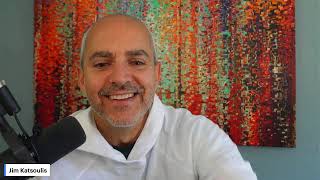
This content was created by Jim Katsoulis. This content was uploaded by Jim Katsoulis. This is a YouTube video titled "You're Going To Overeat Forever" created on September 20, 2025. It features Jim Katsoulis discussing the unrealistic expectations of perfection in dieting and weight loss. He emphasizes the importance of accepting mistakes and learning from them to achieve long-term weight management success. The content is a monologue by Jim Katsoulis, providing insights and advice on mindset and strategies for sustainable weight loss.
Chapters
Whoop.
Hey, everyone. Welcome to today's program, your self thin podcast. Today we're talking about the fact that. That you're going to overeat forever for the rest of your life. They're going to be times when you make the wrong food choice, you eat too much, it's going to happen for the rest of your life. There's no way in hell that you're going to have some moment in the near future where you just never overeat again, never make a bad food choice again. And I think you need to come to terms with it, because it's fine. You can make mistakes, you can overeat, you can have times where you choose the wrong foods and still weigh what you want to weigh. They're not mutually exclusive, all right? And it's important that you recognize this, because if you were like most dieters and you're going into your weight loss plan with the preconception idea that you are going to be perfect now, because. What's that mean? I mean, because you want to lose weight, right? So you're gonna be perfect and you want to keep the weight off forever, right? So you're gonna be perfect still. And so a lot of dieters go into the process thinking in their mind, I'm going to be perfect, I'm going to get rid of my bad eating habits, I'm never going to overeat again. And it sets them up for failure because as soon as they do make the mistake, and you're always going to make the mistake, you can't be perfect, you know, and that's what that means, by the way, right? The idea that you're never going to overeat, you're never going to choose the wrong thing, means that you're going to be perfect. And I don't know what area of your life you really have the even choice that you can just be perfect. Can you be the perfect parent? Can you be the perfect partner all the time, every day, every situation?
I don't think you can, you know, So I guess that's where it all starts. And if you don't think you can either, if you're a human being and you make mistakes and sometimes you're tired or sick or in a bad mood and you choose the wrong thing or make a mistake, then this is for you, right? Because what we have to do is we have to completely change the way we look at weight loss now. Then as soon as you put yourself into the human category and you're going to make mistakes, well, now we have to anticipate a different path than the one the dieters are thinking about. Because most dieters, again, it's not well articulated. It's not, okay, I'm going to be perfect from now on. I'll never make another mistake. You're not saying that out loud. You're feeling it deep down. The idea of dieting is this idea of being perfect. Perfection. I'll never make a mistake. And that is the seed for so much of your sabotage. Because when you think you're perfect, the second you make the mistake, I blew it, you know, because as soon as you make it about perfection, it becomes an endurance test. How long can I be perfect for? And now it just becomes a matter of how long I can do it. And then as soon as you mess. Ah, it's doing so good too. Wow. Made it three months this time. Made it three days, Made it six days or whatever. It doesn't matter. It's always this endurance test to see how long I can go. It's not built for the long term. It's built. It's built to see how long I can do it for, how hard can I keep myself on track, how much control can I have over myself for how long? And so it's not built for the long term, because what's built for the long term is recognizing that of course you're going to make mistakes. And how are you going to deal with that? What are you going to do when you'd have been doing great for three weeks and all of a sudden you have a day where you'd everything in sight? What are you going to do then? What's your plan?
Most dieters aren't going to think about that plan because they're too busy hoping and imagining that that plant time's never going to come. Dieters are so busy just trying to ignore a mistake completely put out of mind. I don't want to think about a mistake. I'm not going to make any mistakes. That's how I'm going to avoid any mistakes. And then when the mistake happens, you're caught red handed, you caught with your pants down, you got nothing. What are you going to do? What do you do when you make mistakes? How do you respond to it? And I'm gonna guess not. Well, I'm gonna guess you get really upset and discouraged and frustrated and you quit. What stops most people from from successfully losing weight? Is it when they're eating well and losing weight? No, it's when all of a sudden they make a mistake and it feels like this is never gonna work. This is never gonna work. I can't be perfect. Because most dieters are equating weight loss with perfection. If I can't be perfect, I can't achieve weight loss. That is wrong. It's completely wrong. Weight loss is a matter of statistically reduc calories you consume on average, which leaves space for mistakes. You can make mistakes and still lose weight if overall you're reducing calories. And one of the most important ways to reduce calories overall is to be able to make a mistake and get back on track quickly to make a mistake, and the next day you're right back in the game, as opposed to most dieters who make a mistake and then it's off to the races for a couple days or a couple weeks or a couple months or a couple years until they get remote available. We started. Let me do it over again now you know. So again, weight loss does not require perfection. As a matter of fact, the more you focus and obsess on perfection, the worse your results are going to be. That's what I think. Prove me wrong, you know. So we want to start looking at this differently. And one of the most important things you have to do is anticipating the mistakes you're going to make. I have a client I was speaking with yesterday and she wants to lose 100 pounds. She's 75 pounds there, which is to say over the last, say about two years, she's lost 75 pounds, transforming tremendously, you know what I mean? Like just not even just with the weight, just behaviorally, mindset wise, lifestyle wise, everything, you know what I mean, is, is flowing and out of nowhere. Had a day where she was overeating all day long too. Started breakfast, continued to evening right. She said to me in the beginning, most I've ever eaten. That's what it felt like. So mad at myself, I'm so angry at myself for doing that. I knew what to do and I, I consistently chose the wrong thing.
So, okay, let's take a look at that, you know, and the first thing I tell her, I said, listen, these days happen. And I think a lot of people don't realize this. I can tell you, as someone who's lived at their goal weight for over 30 years, that I have never been perfect with my eating. I have times where I'm doing well. I mean, there's days, there's sometimes weeks where I string together, you know, close to perfection. But I have never had a month of perfection. I've never had a year of perfect, perfect eating. What happens is I've gotten better at. Better at making mistakes and quickly getting back on track. So statistically, when you look at the year, I drastically reduce the number of days where I'm overeating. However, I know for a fact now that. That if you look at a full year, there are going to be days where you make unhealthier choices, where you eat more food. It's just statistically has to happen, and it happens to me, but it does not matter because, again, I look at the whole. I look at statistically the average of the calories I'm consuming, and I make space for the mistakes. I understand they're going to happen sometimes, and I seek to minimize them. I seek to get back on track quickly when they do happen and when they happen, because I've got a plan ready to go. I'm not completely thrown off the path. When I make mistakes, it's not catastrophic. I'm ready for it. Okay, what was going on there? I'll learn something. Usually, understand it, get right back on track. Now, my client let it be known I was speaking to her the day after this. Worst day ever of eating, you know. Now, first off, I said, well, how's today been? Well, today's fine. I got right back on track. I'm just doing my thing. Well, that's a program yourself thing, right? So we see that a lot with the clients where it's like, they do get off track, and then the next day they get right back on track because they've been programmed to eat that way. It's not. It's not really a choice so much. It's just easier at this point for her to just eat healthy. Okay? So that was the first thing. I had to point this out to her. She was still mad about yesterday. Okay. And so I bring this up to you because this is that negativity bias I reference a lot of times. And you have to understand, like, probably one of the biggest mindset challenges you face is your negativity bias, which says that anything that negative happens is a lot more impactful to you than the positive stuff. You know, compare a day of overeating to a day of eating. Well, the day of overeating. And she said this. She goes, I feel like I gained all 78 pounds back. That's what it feels like. I get it. Right. That's the negativity bias in action. You have one day of overeating, and it's, oh, my God, I gained all the weight back. And we have one day of healthy eating. And if that's not gonna do anything, you know, and that's fundamentally one of the core mindset things we have to deal with, is that your mind, no matter what this is someone who's been doing this for almost two years, is 78 pounds down and felt this way. So how are you going to feel when you're four days into it and you make a mistake? You see what I mean? Like, that's how strong the negativity bias is. It just highlights all the negative stuff. And it's just. It's not even highlighting. It just impacts us more. It feels more intense. So you have to be ready for this because it's going to happen. And the other piece of this is that it becomes relative. Okay? So as you start to improve your eating, right, this client certainly has improved her reading overall. And so now everything's relative. So I bring it back to when she said it was the worst I've ever eaten. So, well, I said, five years ago, if you ate that way, what would you have thought? She thought about it. She goes, that would have been a good day. Okay, great. Because that's what you have to understand is that your mind is playing tricks on you. It's making you think this is the worst you've ever eaten. When. When you put it in context of five years ago, it would have been one that you would have been celebrating, what the hell happened to me today? I had, you know, and so she started looking at, sigh. It's true, it's true. It wasn't that bad. It was worse than what I'm used to now. But again, in context of five years ago, it had been great. And so recognizing these things. But again, I'm able to help her with this because I've been doing this, I'm prepared to help her get through the struggle. And within five, ten minutes, you know, she completely feels different about the mistakes she made. Just, it's fine, it's no big deal. I'm right back on track, you know, and celebrates the success and all the rest of it. And I say this to you because you have got to manage your mindset. You've got to manage your motivation. If you just let it go on autopilot, your autopilot's going to drive you into the ditch, I promise you. Here's just. That's why I share this example with you. Because again, in your mind, you're like, if I told you what you're 75 of the way to your goal weight, you've been doing it for a year, and A half. And you're gonna have one day where you overeat and it's going to make you feel like you're. You ruined everything. You laugh at me, say that's not true. I would never think that. So I share this with you because again, we get caught up in the moment. You know, life's relative. And so as we get to where we're at, if we have a bad day, it feels catastrophic. Feels the worst day ever. It's not, though. Zoom out. Look at the big picture. Look how much you've improved over then, you know? And so when you start to manage your mindset, you really give yourself a chance to succeed. And without managing it, I just don't know what you would do. Because it's not that your brain is working against you on purpose. It's not like it wants you to fail. It's just that the negativity bias has evolved into us. Because in a natural world, and I guess maybe just in life, it's more important to remember the negative stuff, notice the negative stuff, than the positive stuff. You know, as I say, it's always. It's more important to remember where the lion was than where the beautiful flower was. Okay, so we have this negativity bias built into us. But if you do not learn how to manage, drives you into the ditch. And especially if you're an overthinker, if you're an overthinker, a perfectionist, you know, an action taker, you know, you're up in your head a lot of, forget about it, you know, you've got to learn how to manage your mindset because you have like this super tool, this super computer. If you never learn how to use it, you know, the super car, right, the super sports car, but you never learn how to drive it again, you end up in the ditch. So you've got to learn how to manage your mindset, you know? And when it comes to weight loss, the very first thing you've got to figure out, how am I going to respond to mistakes I make? What am I going to say to myself after a day of bad decisions or overeating? Am I going to say to myself, how am I going to talk myself down? What I want to remind myself of, do you have that plan? Because if you don't have that plan, what do you think is going to happen when you make the mistake? Or do you think you're never going to make a mistake?
Because if you don't have a strategy for when you make a mistake, I bet you think that your success is going to depend on you never making a mistake and that's setting you up for failure. So take a little bit of time and think, what am I going to do when I make a mistake? Am I okay with recognizing I'm gonna make mistakes for the rest of my life? No, I'm gonna make less of them. They're gonna be less intense. I'll get back on track quicker, but I'm always gonna make some mistakes. And once you start your journey, your path to your goal, weight from that perspective, I think it sets you up for success because you naturally start coming up with strategies for. When I do make mistakes, what am I gonna say to myself? Because most people are caught flat footed all of a sudden. A mistake how? And you got no sense of what's going on. You just get caught up in it. Next thing you know it's been three weeks since you ate well. So make sure you watch out for this. And if you want some help doing this, click the link in my bio or go to program yourself. Then dot com, go get the free hypnosis session I made for. It's called the new Thin Me. It's a kickstart session, 10 minute session. It's a beautiful one. Right? Go get it. It's free. Go listen to it. Go experience my hypnosis. See how it feels. Right. It's different than what you probably think if you've never experienced hypnosis. I think it's. It's a good experience for you to have. And I also made you a training. Go check it out. Free as well. All right. I got a lot of free stuff coming your way as well. So make sure you get on my email list. Go check that out. If you have any questions, feel free to ask them. So Barb, Barb says so true. I proved you right. Yeah, I'm sure is it's again my. Everything I say to you, let it be known that everything I share with you about weight was originally found out from people that lost weight and kept it off for at least a couple years. That was the beginning of my journey and that has really been the main focus of my journey the entire time is to figure out the secrets of people that successfully lose weight and keep it off. The most underrepresented group in weight loss in the weight loss world, right. Is what do the people that actually figure it out, what are they doing? And in my opinion, in my experience, it's that they're intentionally or unintentionally, you know, sometimes just magically happens for People. But if anyone I've ever seen who successfully lost weight and kept it off, they have shifted their mindset, their lifestyle and their eating. And I almost never see any exception to that. And so I think if you want to change your weight, you ought to follow that path, you know, Kim says, I was on vacation last week. I enjoyed myself with breakfast, lunch, dinner, larger portions than normal, plus a few cocktails each day. Since I got back on Monday, I put myself back on schedule and feel so much better, back on track. Great job, Kim. Yeah, that's what we're talking about, you know, and program yourself then, you know, it's like, and that's the, that is one of the most interesting things about program yourself then that is so unique to other programs is that's one of the biggest ones is that people that go away on vacation and they've been overeating and maybe drink a little bit, when they come back, they can't wait to get back on their regular schedule, you know, And I think that's a testament to when you create an eating plan, a lifestyle plan around who you truly are. You know what I mean? So most diets, you're just kind of like taking what someone says and trying to make yourself do it. And it's a little bit like trying to fit a square peg into a round hole. But when you craft your eating plan around you, your likes and dislikes, your lifestyle, your schedule, right, your personality, your genetics, your relationships, when you create an eating plan that's custom designed for you and it does take a little bit longer, I'm not going to pretend it doesn't. But when you do that, the flip side of it is that once you have it, it's so much easier to follow it because it's custom made for you. You don't have to say you still have to program yourself. You still have to do work to install it and implement it. But how much easier is it to do something that's custom made for you than it is just some random, oh, just stop eating carbs. Oh, just stop eating for 16 hours. You know, there's this blanket, this blanket idea that diets give you that's supposed to help you succeed. I don't see that succeeding very often. Dieting has a 95 failure rate ultimately. So great job, Kim. Proud of you there. Betty says, I make mistakes. That turns into another failed attempt at losing weight. So I begin to not believe myself anymore. I say I'm going to do this, but fail. Yeah, that's what I mean though, Betty. That's exactly what I'm saying. And that, that's pretty much the norm. That's the usual that, you know, people make mistakes. And then the internal dialogue starts. I failed again. Because again, you look at as, you look at it as like an endurance test. You look at as a, it's one thing, let's see, how, how long can I be perfect for? That's how most dieters approach dieting. And so as soon as you make a mistake, well, the game's over. It's like my son, he plays a game, it's like a car racing game. And it's very interesting. Although it's, it's, it's diabolical almost in one way. But anyways, what, so what happens is you play this racing game and.
Once you race it, you're always racing against your personal best. And so he'll like, he'll have his car that's like his car now. And then it'll show like a light version of his personal best car. And so what ends up happening is that whole race really comes down to the first. This is such a great metaphor, actually. This is really good. So it's a whole racetrack, right? And what happens, you start the race them, you got your main car and then you got like kind of the, the light personal best car. It shows you what you're doing. And so when you start racing, within a second or two, the second he's behind the personal best time he quits, goes, starts again. So the race stops being about the whole track and it starts being about the first three, two, three seconds of it. You know, now sometimes he'll get past that and then the second he loses to the. He's behind the personal best, he stops, it restarts.
It's exactly like how people approach dieting, right? Exactly like that. So it's like the second the mistake comes, it's like, I'm a failure, I quit, I'm done. Catch me next time. Catch me in a couple months again. What happens? You go into it, you put all your energy into being perfect for a couple days, a couple weeks, couple months. And then you mistake, you quit. And then you have to let usually months go by before you can try again. And you're caught in this, you're caught in this loop. It never changes. And that's why it doesn't matter what diet you do. That's why no diet is ever going to come down the pike. There's no diet coming that's going to help you because it's not the nutritional philosophy of the diet, that's the problem. You mean, like, I could sit here and talk about why, you know, nutrition, I think keto is good or bad, or, you know, intermittent fasting. I could talk about all the philosophies of it, we could debate all that, okay? But I really clump all diets together. Keto, carnivore, vegan, Mediterranean. I put all of them. Weight Watchers, intermittent fasting, I put them all together. Because you approach all of them with the exact same mindset. That's the core problem. The bigger problem than whatever the specific nutritional philosophy of the diet is, is the way you're about to approach it. And the way you're going to approach it is you're saying it doesn't matter which diet is. It could literally, it could be vegan or it could be carnivore. It would take two extremes of the thing. And if you're a dieter, you're going to jump into either one of those, tomorrow, I never eat another animal product again. The other one tomorrow, I never eat anything other than meat again. You see what I'm saying? And every single diet's like this, that you on Monday are going to become 100% perfect and better, and you're just going to be that way. But subconsciously, you're also waiting for the mistake. And the second the mistake comes, oh, well done. So you've got to stop that. You know, you. You've got to get out of that. That loop and that pattern because you never get anywhere with it. You know the mistakes and program yourself then. One of the big mantras we have is that mistakes are your greatest teachers. And so if you're going to make a mistake and then quit, you're missing out on the number one opportunity you have to learn, grow and evolve so that the next time the mistake situation shows up, you're prepared to handle it. You know, like, success is not about being perfect. Success is about making a mistake and being able to learn from it, grow from it, so you can handle it better, so that you don't make the mistake next time, or eventually there is no way you're going to quit and then all of a sudden magically gain some ability to get through that exact same issue. Because every time you died, it's the same thing. You do it for a little while and then there's a situation that always catches you and throws you off track, but because you quit, you never figure out how to fix it. Like, that reminds me of, like, I'll stick with video games for a second. You Know, video games, the classic kind of concept is that you do levels, and at the end of each level is the final boss, you know, and how. I'll tell you how you beat the final boss is you play, you fight them 100 times. You know what I mean? It's like you. You fight, you keep fighting the final boss until you figure out what you have to do to beat it. But if every time you got to the final boss and lost, you quit for three months, and then you come back and you play it again, you get to the final boss, you lose, and you quit for three months, dude. You know what I mean? Like, you just never. You never get past the final boss. And so you each have final bosses that you have to get through to get to the next level to get to the next final boss that you make another mistake on your. Your path of success to your goal weight is littered with final bosses and challenges and mistakes that you have to figure out and overcome.
How are you ever going to succeed if you hit a mistake and then just quit? Like, I don't understand how that would work, because next time you're just gonna come at it and not make the mistake. Huh? Is that really. Is that the plan? That's a shitty plan, in my opinion.
Yeah, but he says that's an excellent analogy. Yeah, the car one's a really good one. I never thought of that until just now. That's a great one, actually. That's perfect. I like that. And I might make a video of it so you can see it, because I think if you saw it visually, you'd get even more sense of what I'm saying, because you start to realize you never get out of the starting gates, practically. My son, when he plays this video game, 95 of the starts end within a second. You know, 5% of the time he starts, and he's still beating his thing, and he gets three, four seconds, you know, he almost never gets the end of the track. So it's. It's very interesting. I want the diet to save me. Yes, absolutely, Betty, I agree. I. Betty, thank you. I really appreciate you kind of saying the quiet parts out loud. I think a lot of people want the diet to save you. I think what happens with most people in weight loss is you really have no idea how to really get control of your weight. And so, you know, I always use the metaphor, this is a Dan Kennedy thing. But he used to say, like, this is especially true for dieters. It's like you're walking around with your umbilical cord out looking for someplace to plug it in. You know what I mean? It's like you're just like, oh, just tell me what to do. Just tell me what to do and I'll do it. You know, that's most dieters, just tell me what to eat and I'll do it. Tell me how to work out and I'll do it. I mean, why would you believe that? First of all, that cannot be the case. You've been told what to do many times, and the problem isn't that you don't know what to do primarily. It's mostly that you don't know how to get yourself to do it. So once you know how to get yourself to do it, everything changes, you know, it becomes so much easier. See, your focus is on weight loss. My focus is on you living at your goal weight. The focuses are completely different. Yeah, Barbara likes that. Yeah. The great mantra mistakes are our greatest teacher. Yeah, that's one of our big minds, one of the core mantras in the program. We got a bunch of mine. That's one aspect to program yourself, then just one piece of it. It's kind of like the hypnotic programming, the training. So when you listen to these sessions, they all have mantras they're built around, and they're built specifically to install these ideas into your mind. So you start to naturally and automatically think like a thin, healthy person without having to do anything, you know. And so when you start, like, imagine, for example, you know, you listen to the mistakes. Our greatest teacher's hypnosis session a few times, and all of a sudden you make a mistake. Now all of a sudden, instead of just reactively freaking out, you have a much better chance of saying, wait a second. Mistakes are my greatest teachers. Let me look at this. Let me figure out what happened. Let me learn from this. I go back in time. What could I have done differently? How could I improve? How could I grow? How could I evolve? How could I manage this better? How can I make a better choice? How could I set myself up for more success?
Is that what you're asking when you make a mistake? Because if you extract, if you zoom out and you look at that situation over a year, then you think about all the mistakes you're going to make. Think about, on one hand, you get really upset, you quit. On the other hand, you look at it as a teacher and you try to learn and grow from it. What's the value of that? What's the advantage of that? Over a year, over all those times? And I think it's life defining. I think it completely changes everything.
Natalie says I like this one. Natalie says, you've changed my internal dialogue forever. Well, that makes me so happy because that's literally what I'm here to do.
That's literally what I'm here to do, is to change your internal dialogue. I say this all the time, that when I.
When I am speaking to you here, I am not just, I am not just saying words. I am a hypnotist. I am a master hypnotist. I am an NLP trainer. So yes, when I am speaking to you, I am using different tactics to help change the way that you think about yourself, about weight, about your behaviors. So that's awesome. Makes me happy. Natalie.
Yeah.
What'S up, Jody? Jody says the mantra meditation, bounce back quickly is always part of my plan. Yes, it's perfect for off track times. Yeah, that's what I mean. Like, that's what. That is one of the best. See, I. I'll talk a little about hypnosis for a second because I think people have a real misunderstanding with it. I think a lot of people think I'll listen to hypnosis session will just totally transform me. And that's pretty rare. And even if you did get transformed from a hypnosis session most of the time, certainly with weight loss now, again, there are things that hypnosis sessions and certain things you can see a hypnotist with that you can fix something and resolve something forever quickly. Phobias are a good example of that. I can wipe phobias out. I've gone like that 15 minutes a lot of the times. Okay. Weight's different, you know, because weight is really an accumulation of a bunch of behaviors. It's estimated we make over 200 food decisions a day. You know, so we need to understand that weight loss, you can't just listen to a hypnosis session. You can't just listen to a bunch of hypnosis sessions and be changed forever. You know, you really genuinely need to know what to do. You need to be able to run your mind to some degree and you need a support system to support both of those things. And so the hypnosis and program yourself then is really in the support category. So what we're looking to do is to have these mantras that reinforce the strategies you're going to follow in the mindset that you're creating. And so the hypnosis sessions in the program are strategically reinforcing core ideas that you learn. So, you know, I, I just have to say this because first of all, my Hypnosis Pro, I have the number one hypnosis program on the planet. There's nothing like this, and I don't sell it as a standalone program. The reason why is it's meant to be part of a system. You know, it's like it's meant, again, one part of the system is the goal weight blueprint, right? This is how you figure out what to do, right? So specifically what we're doing is you're really filling out your goal weight pyramid, right? How to think like a thin person, your mindset, how to live like a thin, healthy person, your, your lifestyle and then how to eat like a thin, healthy person. Your reading patterns, okay? So once you know in detail how to do those things, that becomes your roadmap for getting to your goal weight and then living there. Okay? So that's one piece of the puzzle. Knowing exactly what to do for you, that works for you. The other piece of the program is knowing how to get yourself to do it. And this is the program yourself thin rehearsal technique, how to program your own mind. It's a 60 second self hypnosis exercise you use to program your subconscious mind to do the things that you want to do that are going to bring you success. And then the third piece is a support, right? And so the hypnosis is a way to practice relaxing, calming down and installing wonderful ideas. And when all of these things come together, what happens is you start to fundamentally transform yourself from the inside out into a thin, healthy person.
And so, yeah, the bounce back one's essential, right? Because of course you're going to make mistakes. So, you know, even the, the program yourself didn't. Rehearsal technique really fundamentally is about how to recover from mistakes. So it's a specific technique where we go back and redo mistakes and learn from them. So, you know, I mean, a third of the program is literally dedicated to how to handle mistakes. That's how important I think mistakes are and how valuable I think they are. And when you really start to get that, boy, what a difference. Because now not only do you learn from your mistakes and back on track quicker.
But the other side is that you're not so anxious about making a mistake in the first place. And that has a benefit to it as well. So yeah, I mean, you really need a holistic system. But I always say, and again, if you're listening to me, I'm going to assume you're a smart person or at least an overthinker, because that's the only people that ever listen to me. And so I say to you, no, it's not your lack of self control, it's not your lack of willpower that's the problem. It's the fact that you don't have a holistic, comprehensive plan for how to get to your goal weight and then stay there. You have no idea how to deal with your mindset, you have no idea how to transform your lifestyle and you really have no idea how to change your eating. And tell me that's not true.
I'm just going to 90 carbs. I mean, what would a vague ass swipe at something that's so, you know, comprehensive? I always say dieting metaphorically. It's kind of like, remember in the 80s, they just say no for drugs. Right. And so again, just such a childish, superficial answer to such a deep problem. Right. And so dieting is the exact same thing. What you really think is that you're, you're just going to stop eating carbs and that's going to fix everything. Like your, your, your weight is not the result of one thing most of the time. It's a multitude of things. It's your mindset, it's your lifestyle and you're eating and you can go in depth with each one of those things. So, so there's layers of, of, there's layers of knowledge that you're missing when it comes to living at your goal weight. And once you have that knowledge, it's just a completely different process. So that's the thing that drives me crazy, is that I don't mind if someone doesn't want to learn this stuff. I have no problem with that. But what I have a problem with is when dieters think they know everything they need to know to lose weight and they're just not successful because something's wrong with them, you know, and so.
I don't know, it's like once you at least realize I don't really know how to deal with my mindset. Oh, I have no idea really what my lifestyle is or how to strategically change it. And eating wise, yeah, I've never really come with a comprehensive plan to really transform my eating that makes sense in a strategic way. Never done that. I always done these diets where it's just like drastically change something in one day and try and stick with it. Tell me that's not always a plan you do, you know, so I gotta watch out for that.
Speaking of these books though, I will say I had a bunch of these. Sold out of them, got a bunch more. They're supposed to Be in today. And now I don't know. And I'm thinking about it. I haven't gotten the. The delivery confirmation, so hold that up. But I. I will. I will find that today. But I'm gonna have those up. So I know people have been writing to me. I will put it up in the Circle app. I will email it out this time, I think. Unless if I put in the Circle app and I sell a ton of them, then I have to wait on the email again, you know, but we'll see. I bought more of them. We'll see what happens. But I will let you all know. I will let you know when they're out.
See, but tick tock. I always like to say is I am live Tick tock. But if you ask questions and I missed them, I just get caught up on. I restream. So I'm simultaneously here with Instagram, YouTube, Facebook, and tick tock. And so sometimes I get caught up on other platforms. Questions. Oops. What's up, Don? All right. It doesn't look like I missed any. And then tick. That's kind of hard to find the questions. Hey, what's up, Baja? How's it going? How the dogs? I was thinking about you yesterday. I have. I just adopted a Boston terrier. She's a rescue dog. She was a breeding dog. It's a sad story, but how long we had her now? We've had her about two months. What a transformation. That's that. It's crazy. It's crazy. We got her. Oh, my goodness gracious. She was emaciated. She was a mess. And it is phenomenal. In two months, what's happened? What. What a transformation. But, yeah, I was thinking about you, Baja, because yesterday my wife, she opened the door and she scooted out and she said she started booking, just started running down the street full speed. Luckily, you know, because she's been in the cage her whole life. Her back muscles. Her back legs aren't too strong yet. So she, like, wiped out and just started skidding. My wife was able to grab her, but otherwise she just. So I don't know what that's all about, right? What's that story all about? Just tried calling her all the rest of it. She's not even good. You know, it's weird. This is my theory on that, amongst other things, you know, But I think she literally was, like, raised in a cage her whole life. That's all she knew. And I don't even think she had a name. Like, I don't think this dog thinks of herself. As a dog, it's very interesting. This is. I've had trauma dogs before, but different types of trauma. This is the first like breeding dogs thing I had. And it's very interesting because it's a different set of. It's a different experience. Like it's different set of issues you're dealing with, you know, But. But what, what a growth and what a process. But anyways, I'm so thankful we got her back because I don't know where she would have gone. And it's so crazy. Maybe it's a Boston terrier thing because I had another Boston terrier before this one. She did the same thing. She escaped one time and she just booked and she was gone for 24 hours. And we found out, I mean, she was, you know, probably half a mile away and it really a lot of traffic. So thank God I shouldn't get hit. But there's something about Boston terriers, maybe, I don't know if their brains just short circuit over wire when they get free and they just start running, you know, but anyways, RLT says, why do I feel more hungry after I've lost a few kilograms? You don't feel more hungry because you've lost a couple kilograms. You feel more hungry because you're consuming less calories. So, you know, you have to think about your brain and body as a status quo machine, you know, and your brain and body just want to maintain the same weight, everything the same. And I think once you realize that, you don't, you know, you start to look at the hunger a little differently, you know. So again, how did you lose a couple kilograms? You reduced your calorie consumption. And so now your calorie consumption is lower than what it normally is. And so, yeah, your brain and body are going to send you a signal that we're hungry. And this is a fascinating concept to me because hunger is fascinating. I was talking about this the last couple days. So if you're interested in hearing about my, about hunger, go check this out. You know, this is a podcast. I always try to remind people this, that I know I do this. I do this live every day, usually around noon Eastern, every Monday through Friday. But then I upload it as a podcast and each day's kind of got a theme that I start with. But anyways, so if you go to the, the podcast section and you start to program yourself, then I've been talking about hunger last couple days. And so you might want to listen to that. It might be helpful. So, okay, so. So yeah, you lose a Couple kilograms. And now you feel more hungry. But I don't look at it as because you lost a couple kilograms. I look at it because you've been sustaining a lower calorie, average calorie consumption than you typically have. Now the big question is, how much have you cut calorie wise, how quickly have you lost the 2kg? That's the big question. Because if it's been three days and you've been cutting half your calories out to lose the weight, well, no wonder you feel hungry. And you're gonna probably feel hungrier and hungrier and hungrier as the days pass. Hunger is very interesting. And the way I approach it is I look to reduce my. So, okay, so let's look at weight loss, right? Weight loss. You don't ever lose weight. You don't ever lose kilograms. What you do is you change your eating. You consume less, and the kilograms start to lower the weight, the pounds start to lower. So the question becomes, how many calories should we cut to lose weight? Now dieting says cut as many as you possibly can so you lose weight as fast as you can. I don't look at it that way. I look at it like, okay, how many calories can I cut comfortably? Relatively comfortably. So when I cut calories, I'm not just looking at the weight loss. I'm primarily looking at what's my experience of this calorie cut. And now I look at people. Those of you that cut 50% of your calories, 80% of your calories on day one, I say, what do you think's gonna happen? What do you think's gonna happen? Day two, three, four, five, six, you're going to be super hungry, and it's going to be really hard to deal with it even though you're losing weight. And so what I'm looking to do personally, and this is what I've done my whole time when I was losing weight, and what I still do if I want to lose weight is I'm looking to reduce calories by 10 to 20%, because that's usually a number that I'll be okay with, you know, because the, the amount of calories you cut is going to dictate how hungry you feel, amongst other things. So, you know, again, I don't know. Yeah. So RLT says, what should I do now? Thank you so much. I'll go listen to that. Yeah, definitely go listen to that. But the question now is, again, how much have you cut to lose 2kg. How long has it been? That's the first Thing I want to know, and if I'm hearing something extreme like I cut down to a thousand calories to lose 2kg, well, yeah, no wonder you're hungry. My suggestion would be to raise the calories up and you say, but I'm not going to lose weight slower. I mean, what's slower weight loss? There's another question for you because some people will think the fastest weight loss you could achieve is just dry fasting. Right? Just literally just shut this thing down. Nothing else goes in your mouth as the fastest weight loss you can achieve. But is it? It is if we're only counting this next month. But if we zoom out and look at the next six months, is that really going to help you lose a lot of weight? I bet it's not. I bet if you try and dry faster, water fast for 30 days, even if you're successful, there's a great chance that you're going to come out of that 30 days absolutely ravenous overeating for the next five months. So I'm not playing that game. I am setting up to live at my goalway for the rest of my life. I'm not playing the game to see how fast can I lose weight? What's the fastest I can lose weight? I'm not playing that game because the other side of that game is how much stress can I, you know, take. So again, I would look rlt at what you've done to create the 2 kilogram loss. And yeah, if you're really hungry, if you are really hungry, then I'd start to eat some more again in program yourself, then we're aiming for slight hunger. That, that to me is the sweet spot. Because, yes, you, you do need to feel hungry. And hunger is a fascinating thing. You know what I mean? Like, it's not just a physical thing. Hunger is psychological, it's emotional, it's energetic, it's nutritional. It is. There is that aspect to it, but there's a lot of things that can make you, you know, the hydration levels. There's just so many things, stress. I don't. Okay, there's a lot of things that can trigger hunger and certainly drastic. Drastically cutting calories is obviously an obvious way to do it. Okay. But just relax into it. Congrats on the, on the weight loss that you started kickstart. But the most important thing now is to manage how you feel about this. And if you feel too hungry, you're not going to stick with it. So again, me personally, I suggest riding a slight hunger all the way to your Goal weight and beyond. I think drastic hunger, I think, always ends in the same place, which is drastic hunger ends up right back here, okay? Slight hunger brings you where you want to go and keeps you there. Because when it's slight hunger, you can manage it. But most importantly, you have to understand that you habituate pretty much to whatever you're doing. So if you cut calories by 15%, let's say it's a slight hunger to a medium hunger, maybe, okay? But you're much more able to deal with that than if you cut 50% of your calories out, okay? And so if we cut 15 of our calories out, it's a slight hunger. We're aware of it, we're managing it. We're doing what we're doing. But if you do that for a month, two months, three months, now you start to habituate and normalize to that level of calories, now cut another 15% out. You know what I mean? Like, that's how I think about it. Now I'm arbitrarily picking numbers because 15% for one person might be drastic and overwhelming, and 15% for another person might feel like nothing. So again, it's different for each person. You got to kind of figure where you're at, but you've got to measure your stress level with what you're doing. Because if you're losing weight but you're absolutely freaking out, white knuckling it, then what's. What's the point? Because you're losing weight for a short time, you're not going to stick with it. So me, I would much rather take the shorter path, and I mean the slower path, that's going to last longer. All right. RLT says great attitude. Keep me going. Well, good. That's what I'm here for. That's what I'm here for. So, again, give this some thought. Listen another thing, and feel free to get back on here. Again, I am here to help you all out. I am here to coach you along and do what I can to help you along this path. All right? What's up, Sherry? Is that. Wait, I always get this wrong. No, Sue. Sherry, you're sls, right.
I know. You got to be, because Shereen uses her name. Anyways. Bounce back quickly. Is life changing. Yesterday I was so upset with myself for over reading the day before, but I've learned from PYT to get right back on track, which I did, thanks to PYT and Jim. Yeah, and that's what I was referring to. I don't know if you heard the beginning. I was talking a little bit about you in your story yesterday because I think it was just so, so helpful, you know, and just really, really.
Such a common thing people deal with again, that what I'm talking about is the bouncing back, you know, again, being able to bounce back. It's, it's the most important thing. I always say this, that I think the most important skill of living, getting to your goal weight and living there is being able to get back on track quickly, which is to say going to make mistakes the entire way, the entire time, forever. I'm still making mistakes. There is no perfection. And so once you realize that, you know what I mean, like, it just, it fundamentally changes the way you approach all this and I think for the better.
So.
See here.
See, Susie's saying, I agree, I think differently now as well. Yes, that's what we're all about is, is thinking differently. Because when you think differently, you feel different. When you feel different, you eat different and act different. And when you eat and act different, you look different. You know, Martha says, should you walk before or after you eat? I don't think it matters. You know, I think it's just a personal preference. You know, I don't think there's. And I would never look at any science as being conclusive on that anyways. So my, my kind of approach to everything is just test it out. Test out eating before, test out ERs, test out walking before, test out walking after. See which one you enjoy more, you know, and start to notice some of the, the subtle indirect benefits of each and just put them up against each other, you know, and then see which one kind of feels best for you. And don't let anyone tell you which one's right. You'll say, oh, they just did a study and they said, well, you'll burn 5% more. Don't listen to that. Your experience of it, how it feels for you, is way more important than any scientific findings of which one's more effective. I promise you. Sorry, says you're so right. I joined at 111 seconds in, so I missed the beginning. Yeah, go check that out later. Sherry, you might, you might like that.
Show your comment there. I'm getting used to this. I can put comments up on the screen. Well, for YouTube and Instagram and those ones I can't do it with tick tock. But that's kind of cool.
Yeah, so go check that out, Sherry. I mean, you were there, so.
You don't have to because you already know what happened. You were there. But if you're interested in hearing it again, it'll be there. All right, I'm gonna get out of here. I'm gonna go hunt these. I'm gonna go hunt these workbooks down. They're supposed to be in here today. And now, now I'm thinking about them. Like, I haven't received a shipping notification yet, so how could they be so off? It's possible, so. And I know the people that got them are loving them. I hope you you enjoy them. Go through them this week. And again, if you're in the program, remember, you also have the PDF, so you don't need to get the physical version. If you want the physical version, cool. But you don't need to get it. But, boy, do I got some cool things coming. I'm telling you, I got something especially like the people in the program, like, in terms of learning, it's really something cool. And I'm gonna be testing it out foreign.
Okay, sure. I got. Yeah, yeah, okay. Yes. Those are the group characters. I never even realized that until you just mentioned that. I know. I can't even believe that crew. That's so funny. All right, all right, everyone. Again, if you're not my world, make sure you click the link and go get the hypnosis session I give you. It's free. It's called the new thing Me. It's a kickstart session. Watch the training video I made for you and read the emails I send you. I give you a bunch of free stuff to all help you out and getting to your goal weight and then living there. And if you like this, I'm here Monday through Fridays around noon Eastern. So if you have any questions, feel free to ask them and I will answer them for you. I see. Barb. Thank you, Barb. Thanks for your great teaching. You're such a breath of fresh air. Well, thank you. That's what I aim to be. So, yes, this, I'm here every live, every Monday through Friday, US around noon Eastern. But this is also a podcast. So I posted up on the podcast, any podcast platform, search program yourself then and up. It'll pop. And I think, jeez Louise, I think we're up to like 612 or 13 episodes, right? It's been a while, so there's a lot of them. If you like them, you can go back and listen to them. I know sometimes people go through them all. That's pretty cool to hear. All right, everyone, have a super duper weekend and we will talk soon. Bye.
More from Jim



Weight Loss Visualization: Wake Up in Your Dream Size #programyourselfthin #weightlosshypnosis



What If You Pretended to Be Thin for One Hour? #programyourselfthin #weightlosshypnosis




