You're Not Overweight, You're Overeating
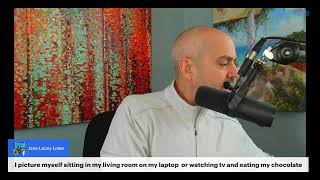
In this episode of the "Program Yourself Thin" podcast, host Jim Katsoulis reframes weight loss by treating body weight as a lagging, indirect indicator (the effect) and eating habits as the leading, direct cause. He argues that fixating on the scale distracts from the real lever—behaviors around food. By describing weight changes in terms of increased or decreased calorie consumption, listeners can pinpoint specific eating patterns (snacking after dinner, larger portions at lunch, etc.) and adjust them. The conversation shifts to practical tools: tracking calories to calibrate intuition, using volumetrics (maintaining food volume while reducing calories), and recognizing that diet strategies must be individualized—there is no one‑size‑fits‑all. Emotional triggers, binge cycles, and the psychological underpinnings of overeating are explored, with suggestions to re‑frame language (e.g., “I’m eating more” vs. “I’m gaining weight”), practice mindful enjoyment of treats, and replace restrictive mindsets with curiosity. Jim promotes his free hypnosis session, a training program, and his book "The Tao of Living at Your Goal Weight" as resources for building sustainable habits. Throughout, he emphasizes consistent, behavior‑focused attention, patience for delayed weight feedback, and the importance of aligning strategies with personal preferences and nervous‑system regulation.
Chapters
Everyone, welcome to today's program, Yourself Thin podcast. Today we're talking about you're not overweight, you're overeating. And I know you say, no shit, Jim, but listen, hear me out. Because a lot of times we get fixated on the weight piece, we get fixated on the scale. So, my God, I'm gaining weight. Oh, my God, I've lost weight. But not really, because weight is really a cause and effect situation where weight is the effect, meaning you can't change the effect itself. You have to change the cause. And again, the cause of your weight is your eating. And when you start to instead of saying, oh, I've gained weight, you start to say, I've been eating more. It actually is much more clarifying to your brain. And it may just sound like semantics, but I know what I mean. The more clear and literal you are when you describe the problem, the more close you are to finding the solution. So when you stop just saying, I've gained weight, I've lost weight, I don't know how to lose weight, it's never the weight. The weight is just a lagging indicator. The eating is the leading indicator. And as you reduce your average calorie consumption, your weight is going to reflect that. Now, we never know exactly how fast it's going to reflect that. So for some people, people, it starts getting reflected quickly. For some people, it takes longer, but the process is exactly the same of what you eat shows up as your weight, and what your weight is was created by what you've eaten in the past. Okay, leading, lagging indicator. And so when you start to describe this process in terms of, oh, my weight's gone up because I've been eating more, right? I know you know this, but this starts us down the path of actually being able to fix it. Because when we say, I want to lose weight, linguistically, that's not even possible. Literally, the only way you could possibly lose weight right now, if you chose to, is cut an arm or a leg off, right? That's— you have no way to actually lose weight. It's kind of like making money. Making money is a linguistic, you know, inaccuracy because you can't— you're not actually making money. You're providing value and then being compensated with money, but you're not actually making it. And losing weight, you're not losing weight. You're eating differently. And as you reduce the calories you're consuming, again, it shows up in your weight. So as you start to describe your weight process through this paradigm, what happens is you start changing your attention from the weight down to what you're eating, and that becomes the focus. And when the scale says, oh, your weight went up, we go back and say, oh, my eating's gone up. Where? And this is where things get interesting. Where has my eating gone up? And you start to notice the patterns because this is going to help you find the solution. Because if we just put weight on, we say, oh my God, I got to lose weight. It's very vague and unclear. If we say, oh, my weight's gone up, what's been going on here? I've been snacking more after dinner. I've been eating more at dinner. I've been snacking in the afternoon. I've been eating more cookies at lunch, whatever it may be. And it may be all of them, but we want to identify what are the exact behaviors, because it's behaviors that we have control over, not the weight. Does that make sense? The weight is an indirect thing that we can control through our eating. So we want to keep bringing our attention back to the eating. And even when we're putting weight on, what's going on here? Oh, this, this, this. And it clarifies it. And once we clarify— so, you know, I've been eating, I've been snacking more after dinner. Okay, what's going on there? Right? Then we start to understand it. So, well, maybe I've been more tired, I've been more stressed, I've been feeling lonely. I found this new snack I really like and I've been getting those. Whatever the reality of why you're eating more at night is happening, you've— you're focusing on it. You've got your eyes on what's really causing the weight challenges, right? And the weight that you're living at. And as you start to look at it this way, you can start to deconstruct it and find better ways to eat in the way that's going to give you the weight that you want. But the entire time you're focused on the cause, right? The cause of it. Cause-effect, cause-effect. We want to keep focusing on the cause. How are you eating? What are you eating? What's going on there? And the more you focus in on that, the better. So that you get— you don't say, oh, I lost weight. You say, I've been consuming less calories specifically because I've changed my breakfast a little bit. I've tweaked my dinner, whatever the specifics are. Oh, I put weight on. No, you didn't put weight on. You've started to consume more calories from somewhere. Where is it? Get, get clear, get specific. And again, that's the first step towards finding the solution of it. So I hope this helps you out. And if you want help being in this mindset, click the link in my bio or go to programyourselfthin.com. Go get the free hypnosis session I made for you. It's called The New Thin Me. Uh, and it's going to help you again connect to the body you want to live in, the person you want to be, and help kind of magnetize that goal. And on top of that, I also give you a training, um, to kind of take you through this whole approach and process. Uh, it's completely free as well. So go check that out. Uh, if you have any questions, feel free to ask them and I will put— where are we? There it is. I'll put this link in, uh, Facebook land over here. So if you want to get that hypnosis session, Go check it out. But yeah, I hope you're having a nice Friday. If you have any weight loss questions, feel free to ask them. What's up, Baja? Baja likes that. Nice. Yes, yes, yes. Baja says yes. My— mine is— speaking about Program Yourself Thin is a gentle introspective approach, and, um, and she appreciates it. Yes, Baja's awesome, and she's on her journey, and I love Baja's journey because, uh The, the really— everyone's got their own journey, you know what I mean? And every journey is so interesting in its own unique way. But one of my favorites about, um, hers is that she's really questioning a lot of beliefs she may have had about herself along the way. And I think that's the fun part. I always say in Program Yourself, then we take the weight loss and wrap it in personal development. And I think, um, you, Baj, are a shining example of that. Yeah, look at that. Been here since April 2024. Wow, that's awesome. That is awesome. Sorry for the typos. Yeah, no problem. I'm a typo master. As a matter of fact, I will tell you, like, I swear, uh, spell check has made me a terrible typer. And it's funny because the second I don't have spell check, it's like a nightmare because I'm just used to it. Like, I get real sloppy and I don't care because it fixes most the words. And when that doesn't show up, it doesn't even look like English. What's up, Sherry? Sherry says, hey Jim, your encouragement has really helped me to place my focus on behaviors first. I can be proud of that so I don't get worried about the scale not moving as fast as I want. Yeah, exactly. And I think, you know, again, the value of focusing on behaviors is it's very, it's very clear-cut and it's very direct. You know, I think the other issue with weight— I really get into this— but the other issue of focusing on your weight as the main thing is that it's an indirect thing, right? So you'll eat however you're eating, and again, everyone's weight shows up and is impacted at different time scales. But, you know, you'll eat however you're eating, and then the weight does what it does, right? Get whatever direction. Um, but what happens is there's, there's a longer time frame there, right? So there's you with your behaviors right now, today, that you're right, you're aware of, you're clear on, you know what they are, there they are. Um, and your mind and body are very clear on that. But then there's that period of time between when the behaviors happen and when the weight shows up. And of course, there's lots of behaviors happening all the time. So it starts to get confusing when we focus on the weight piece. So my goal is I don't really focus on the weight piece. I— the weight to me is secondary. My primary focus is my behaviors. So how this shows up in life is, you know, I have a sense of what I want to eat for breakfast. So if I eat the breakfast I intended to eat, I feel great. Very similar to almost as if I stepped on the scale and went down a little bit. You know what I mean? Like, I feel a sense of, of success and satisfaction and happiness with myself because I behaved the way I wanted to. And when I don't behave the way I want to, I don't beat myself up, but I'm aware of it. And I say, okay, what happened there? And I start to deconstruct it a little bit. Maybe I was tired. Maybe I was just in a mood. Maybe I was pissed off. Maybe all of a sudden the most delicious food in the world was put in front of me. There's a lot of reasons why things happen, but I'm on that level. Like, I'm looking at the behavior piece because it's just so much clearer and cleaner than trying to pay attention to just the weight piece of it. So I hope that makes sense. It's, it's such an important thing. And again, dieting is— dieting is not your friend. Dieting is a— it's a psychological operation worked on us. You know, again, the diet industry is a branch of the food processing industry. And so a lot of things we've learned about weight through dieting are really to our detriment. They're not there to serve us. And the idea of focusing on weight— and I know it sounds ironic at this point and counterintuitive almost— that if you want to lose weight, you think, well, the weight's the main thing I'm tracking. Um, but it shouldn't be. You know, just like work, honestly. You know, to me— and it's funny, I always had someone yesterday and they're like, well, it's been 10 days and I haven't lost weight. And I was like, well, you know, if you start a business for 10 days, how much money do you think you would have made? You know, in time frames are so important, but Um, to that point, you know, say you start a business. When you first start the business, if you're only measuring how much money you made, if that's the only thing you're measuring, not to say that that's, that's the main goal, fine. But if the only thing you're measuring is how much money you make, that's the only thing that makes you feel good. How do you ever get to the point where you're making money? Do you know what I'm saying? Because when you first start a business, you've gotta do a lot of things that don't generate any money right away. You gotta go like, just, just one example. You go get a, a business name, you go file a license for it, you start a bank account, you get a website. You haven't made any money. So do you, so do you look at it the week after the week of doing your business, you've done all that stuff. Oh my God. I haven't made any money yet. But that's what you're doing with the weight loss. You know what I mean? You've been so conditioned to only track the weight that you're not looking at the behaviors. And again, it's not just what is my behavior. So it's not just a white knuckle. I didn't do anything bad today. I didn't do anything bad. That's not good. Okay. So it's not just what we do, but it's how we do it. So to me, when I'm measuring my behaviors, it's like, okay, how do I want to eat? Okay. Oh, I did it. How did it feel to do it? Oh, it felt good. It was kind of natural. It was easy. That's, that's what I'm measuring. Right. And so I'm also measuring, oh, I had to really kind of force myself to do the right thing. I'm paying attention to that. Oh, that I ate the wrong thing. Okay. I'm paying attention to what happened there. That's where my attention is like 95% of it. Because what do you think is going to happen if you get your behaviors locked in? What happens if you train yourself to eat the right foods at the right times and the right amounts easily and naturally, what do you think is going to happen to your weight? Right. So if you can, if you can put yourself in that headspace and start to operate out of a state of faith, belief that if you get the right things down, you're going to get the results you want and stop fixating on the results. Because is it not the results or lack thereof that have stopped you from continuing down the path? Is it not the time when you felt like you were doing everything great, you stepped on the scale and you didn't lose as much as you thought and you got discouraged? Because you're putting way too much focus and attention on that scale, especially in the short term. And the alternative is not to try and not pay attention to the scale. The alternative is to direct that energy to the behaviors. And the more you do that, I think that the more success you're gonna find you have. Anna says, this week I started weighing my food, so what I max eat in one meal is 200 grams, and I lost 1 kilogram already. I'm working on my portion control. Yeah, nice job, Anna. Again, I will tell you, you know, obviously your path forward is your path. But when it comes to measuring food and tracking calories, I'm a big believer that you should use that as kind of a calibration tool. Okay, so you're weighing your food now, and there's a couple levels to that. On one level, obviously you're looking at what you're eating, you're measuring it, and you know, you're probably lowering your calories because of that whole process. That's great. But the other thing that's happening on a deeper level is you're starting to get a better sense of how to estimate the calories in certain types of foods and certain quantities. Quantities of food. All right. And what I'm saying to you is that there's two real big benefits to this. Number one is you just get better at estimating the food. Okay, that's one piece. But the other really big one is this, and this is how you set yourself up not to have to track everything every single day, is if you figure out, okay, this amount of food is this amount of calories, and you know that, and you do it, and it feels good, and you relatively enjoy it, and all that's good. You don't gotta measure it the next time. Well, maybe you measure it a couple times just to kind of really calibrate and get it dialed in. But once you figure out, oh, this specific breakfast here is this many calories and I'm losing weight eating it, great. You don't gotta keep measuring it. I've never understood that people that measure for the rest of their lives. Now, some people love doing that, and, and if you love doing it, then, then do it. Okay. But I find a lot of people really burn themselves out with the measuring all the calories, you know, tracking 'em all. And I think that when you track calories, you think of it, okay, how can I use this specific work I'm doing now of tracking all the calories? How can I use this now and keep it going forward in a more sustainable way? And so tracking everything now feels like you could do it forever, but at some point you're probably gonna get bored of it. You're gonna get stressed. You're gonna have other things come up in life. And so how do we use the tracking period to benefit us long-term? And I think it's what I was saying. That you start to realize, okay, well, I'll give you an example for me is like a piece of Ezekiel toast and a certain amount of peanut butter. And I know I put the same amount on every day, pretty much. I know that's a certain amount of calories that not only is going to help me maintain my weight that I want, but also it's going to keep me satisfied until lunch. You know, I'll eat an apple and peanut butter. But so I know that that's pretty much the same. Now, sometimes the apple is a little bigger, sometimes a little smaller, sometimes a little more peanut butter, sometimes a little less. But it's all in the same ballpark. And so I, I never really tracked calories, but if you did track calories, don't just think you have to track them forever. Start to create strategies built on your learnings from what you're doing tracking, so that yes, if you want to track, you can track forever. But if you don't want to track, you have a pretty good intuitive idea of this much food is about this many calories. You see what I mean? So you're doing two things at once. And of course, while you're tracking calories, you're going to do it forever, fine. But most likely at some point It's gonna fade away, but pull something out of that that's gonna stay with you, right? Don't be the all or nothing. I'm tracking every time. I'm tracking every calorie. I'm not tracking anything. You know, start to look for that middle ground. And that middle ground specifically is, is looking for, again, intuitive general ideas of, of this much food is this much calories. Okay? Now you may need to calibrate it every once in a while. That, that can be valuable too. But, um, work to make it an automated behavior in your mind. So great job, Anne. I think that's a, Great strategy, and it's got to be feeling good that you did it and, um, it showed up in your weight too. Um, Katie says, weighing and tracking helped me break my fasting then binging cycle. I'm down 32 pounds. Nice job, Katie, that's wonderful. Um, yeah, weighing and tracking, again, I, I, I don't like it, but to me, uh, program yourself. Then the golden rule is that there's no right or wrong, there's only what works for you. And I think that that really is the golden rule because, you know, for Katie here, weighing and tracking was a real solution. It just— it resonated. It fit for her. Okay. For me, it would be overwhelming and I would instantly avoid it and I wouldn't want to do it, you see. And so who's right and who's wrong? Well, we're both right and no one's wrong, right? It doesn't work for me. It works for Katie. Some things that work for me wouldn't work for Katie. And I think that gets to like the deepest point I'm trying to say to you all, that you're never— you're never taught or encouraged to do dieting. Because dieting is always saying, here's the plan, one size fits all. If it doesn't work for you, it's because there's something wrong with you. And I hate that message more than anything because I think it puts a lot of people in their head feeling bad about themselves when in reality they should be feeling bad about the strategy, that it's just not the right fit. And I think if you try different things, you start to get a sense of which things feel better than others, and you start to build around the ones that feel better and work for you. And again, it just reveals that there really is no one size fits all. There's a one-size-fits-one, okay? And it's up to you to figure out what that is. And it's not just one thing either. It's usually a multitude of things. So again, when you start to have that mindset and you add to it that you're going to have this, um, kind of approach where you're going to take from different things and you're going to create this comprehensive, holistic approach to mastering your weight, that's where again it becomes so exciting because it's not just weight loss. It's almost like it's puzzle figuring out, you know, puzzle solving. You're figuring out how do I work with myself to live at my goal weight. And so, so I think that's wonderful, Katie. I'm glad you shared that. And then I— and again, I like you in the same sentence, weighing and tracking helped me break my fasting and binging. Okay, so I think that's such exactly what I'm talking about. So here's Katie, who successfully lost 32 pounds, was trying to do the fasting thing. And I like— I'm glad that you said that because I want you all to feel validated that if you have tried fasting and it's actually caused you to eat more, that's completely a normal thing. Some people thrive on fasting, though, right? So there will be people say fasting, fasting broke my cycle of weighing, tracking, and bingeing. You know what I mean? This is what I mean. So there is no right or wrong. There's only what's right or wrong for you. Okay. And if you're— again, and I say this to you just to let you feel like you're off the hook and that I want you to feel seen in this way. That if you've tried fasting and you've found that you actually eat more, I, I find that to happen for a lot of people because you're so trying to restrict, restrict, restrict, restrict that when you finally kind of open the gates, you just, you can't control the eating. And so a lot of times people will stay in that paradigm of, oh, I gotta fast, I gotta fast. Um, but it just becomes a fasting and binging cycle. And so they keep fighting it when the best solution sometimes to let go of the fasting, or at least let go of the intensity of the fasting that they were doing. Um, but the deeper thing under that is to pay attention to what things feel like for you. That's what I'm trying to say more than anything is, um, you know, what's the best diet? Well, there is no best diet. There's what works for you. And if you stay sensitive to what feels good, what feels resonating, what feels doable versus what feels overwhelming and stressful and anxiety-inducing, if you use that as your main guide, it just, it leads you to a completely different direction. Right. They both lead in opposite directions. So that's great, Katie. I appreciate you sharing that. And it says, I don't track calories, I just weigh my food. Yeah, that's great. Then again, in weighing your food, what that does is it just, it calibrates your, your estimation skills, right? And most people have very shitty estimation skills, and some of that's natural and some of that's intentional in the culture and the way the food is kind of put in front of you. But I think weighing is, is again, what's happening is you're turning a just general idea of what you're eating into a much more specific one. And I think that process tends to, again, support being more aware of your decisions, and then you tend to make better choices. So that's great. Um, Jane says, I'm 10 minutes late every day as it doesn't come up on here on time for some reason. Oh, that is weird. That's weird. Um, Jane, I did try to fast yesterday for the first half of the day and then I did binge. Yeah, again, right? So, so it is funny. And then she follows it up with LOL. And I'm so glad, Jane, because again, it's staying in that— it's so funny. And I can tell you got a good sense of humor, so you'll find that you're the funniest punchline. And again, I don't say that to you specifically, I say it to all of us. I think all of us, if we approach this, this journey with a sense of humor, you're going to find out that you're the funniest person on the planet. And by funny, one of the ways I mean that is you do the dumbest shit ever and it's right in front of you and you just keep doing it. You're a smart person. It doesn't make any sense. And that's literally every client I've ever worked with, myself included. And so I don't think there's anyone exempt from that. So that's funny that you realize that, Jane. And so the big thing, Jane, though, is I'm really happy that you were aware of that, you know? And so, and I don't even care. Go fast again, binge again. You might have to do it 10 more times till it really sinks in, but at least you're internalizing it because at some point, I promise you, 'Cause every time you try and fast, you're gonna binge most likely. There might be once or twice that you kind of get through it and you're still gonna feel like shit 'cause you're gonna be so white-knuckled exhausted that you'll probably binge the next day. But eventually, if you just pay attention to it, that's the key thing, and you realize, okay, this is a strategy I'm trying, and as you start to see it consistently, eventually what's gonna happen is you're gonna have a new association that builds that's gonna say fasting for me doesn't work. And you're not gonna have any motivation to do it and try it and you're gonna stop doing it. And then you'll move on to something else and that will be a big win. And that may be, that next thing may be the thing that really solves this for you. But the alternative is that you could stay stuck in the binge, you know, the fast binge cycle forever. That's what people do cuz they just in their head are like, this is how I do it. This is what I gotta do. This is what I gotta do. And they give themselves one option and it's not the right option for them and they just keep trying to do something that doesn't, doesn't work for them. But again, instead of changing what they're doing, They just try and force themselves to follow it, you know. And again, metaphorically, it's kind of trying to fit a square peg into a round hole. It never really works. Um, Therese says, weight is so weird, Jim. This past week I was pleased with my behavior but up 3 pounds. Then after that one day, my behavior was terrible, and then I'm down 3 pounds. Like, short term, there is no connection. Yes, Therese, thank you, thank you. And please, any of you with those stories, please share them. Please share your stories of crazy weight loss that makes no sense. Because that's what I'm trying to tell you. I— it's such a— it's such an awful, damaging thought to have that you're going to eat well today and your weight's going to go down tomorrow. It's just— it's not your weight. I always say, like, people think of their weight as if it were like a bank account with credits and debits, right? You take this out and the balance goes down this much, you put this in, the balance goes up that much. But your— your weight is much more like the stock market. Does that make sense, right? There's just so many different factors and they're all running and they're all impacting you differently. And again, there's time as well, a time factor. And it's very difficult in the short term to make sense of your weight because it's not a linear in-out thing, not in the short term. Again, that's why we say weight loss is inconsistent, unpredictable in the short term, very consistent and predictable in the long term. All right. So it's, it's so important to know that because that really informs your expectations and your expectations really are at the foundation of your motivation. Because if you don't meet your expectations, you're going to feel discouraged. You're going to feel like, what's the point? And if you reframe your expectations to be more accurate so that you say, okay, I'm going to eat well now, and I don't know exactly when this is going to show up on the scale. It might be this week, it might be next week, it might be the week after. I don't really know. And so what I'm going to do is I'm going to find ways to eat better, lower my average calorie consumption that are sustainable, because it's the sustainability, the consistency over time is the most important thing, way more important than drastic calorie cuts. Now, again, what's your goal? If your goal is like the fastest weight loss possible, then the greatest calorie cut is going to accomplish that. But the greatest calorie cut is also the shortest lasting one. So again, if your goal is to lose the most amount of weight for the shortest amount of time possible, then go diet in the most extreme way. But if your goal is to get to your goal weight and live there for the rest of your life, then we need to have a different approach. Okay? And that approach is that we value the ability to stay consistent more than the fast results. And in the short term, that's hard to do because we're all impatient. But in the long term, I think you can imagine it's a much better strategy. Um, Yingzi says, at 5'0", it's hard to get into a calorie deficit since maintenance is only 1,300 calories. How to lose weight and live at goal weight? Um, yeah, okay, so, you know, I get it, the height thing is a thing. Um, but the answer to me is always the same when it comes down to reducing calorie consumption. The magic formula is to reduce calories without reducing food. You say, what? What would you say, Jim? Did you misspeak there, buddy? No, what I mean is the holy grail, in my opinion, because a lot of what we're talking about here is satiety. Hunger and satiety, hunger and satisfaction, satiety, feeling full, satisfied. And so, um, if we look at that side of things, calories are not the only things that satisfy you. That should make sense, right? Because you all have overeaten before and you're hungry soon after. So again, think about this, right? If eating enough calories satisfied you, then you wouldn't keep eating more calories. So yes, calories is one piece of the equation of satiety and feeling satisfied, but a bigger one— or sorry, I should almost say bigger, but, but as big a one at least— is A, volume of food, and B, the quality of food you're eating and how it's absorbed into your body. So this is why I think it's not a good strategy to just eat what you're— for, for most people, if you're eating a, a very high-processed diet, to just cut those foods down is not a good strategy. Because what you're doing is you're drastically reducing the volume of food you're eating. And so now multiple systems are getting involved with realizing that something's really off here. All right, off the bat, you're chewing those, there's less saliva in your body, there's less chewing, um, and less chemicals that that creates down to your stomach. Your stomach is not getting as full. So the stretch receptors are recognizing, hey, something's weird here. We're not getting stretched out anymore because we've cut the volume of food down so much. And now because you're eating the same food you were eating, they're quickly absorbed into your bloodstream. Processed foods are. And so now you process them quicker, and so you're gonna spike. You know, used to get this spike and crash, now you're getting this spike and crash. Okay, and so, and then it goes on and on. Excuse me. So, um, the holy grail, in my opinion, is to reduce calories while maintaining the same volume of food. How do you do that? You change the foods you're eating, in part, and you trade the processed foods for whole natural foods, because whole natural foods by and large are gonna be less calorie dense, whereas processed foods tend to be a lot more calorie dense. And so, you know, again, you take a cookie that's this big and is, uh, 150 calories for a little cookie. Um, you take an apple that it's, you know, 5 times the size of it and that's 150 calories. You know, to put it a different way, if we take an apple and, and a ba— stack of cookies that are the exact same volume, same size, the cookies may have 500 calories in 'em, whereas the apple has 150.. So not only are they gonna take up the same amount of room in your, your stomach, and so now the stretch receptors haven't caught on that you've reduced your calories. Okay. So we passed the, the second line of defense, right? Cause the first one is the chewing and the chemicals you, you create. They don't realize, right? Cause you're eating an apple, um, instead of a bunch of cookies, but it's about the same amount of chewing in the ballpark as opposed to saying, I'm not gonna eat any cookies. Now you haven't eaten anything. Now it goes down to the stomach and your stomach's getting the same volume of food. So it's like, okay, everything's the same. Everything checks off. And now it goes into your gut and the apple is slowly absorbing its energy into your body. And so you're getting a slow, steady thing of energy. And so will you notice that you're consuming less calories than you were? You will. But it's going to feel— it's not going to have the same edge to it. You know what I mean? It's going to be a lot. You'll be slightly hungry instead of starving. And I think that's the real calorie secret of changing your weight long term, is to not just cut the calories in the food, but to cut the calories and keep the volume if that's possible. And again, Volumetrics is a diet approach that explains that in more detail. Um, it's what, it's what Noom had been built around before. I guess they just love, um, I guess they love GLP-1s now. I'm not sure what Noom's doing, but anyways, they were just built around Volumetrics. And I don't even know if they say that. I don't know if they say that. I'm not sure, but Anyways, um, it's a story of my life, trying over and over again doing the same dumb things. Yes, yes, exactly, Jane. And I know it, but for some reason I've gotten stuck in this ridiculous pattern. Um, well, you know, you've been stuck in this ridiculous pattern, Jane, but I don't think you've noticed it as much as you notice it now. I, I think you've had a vague sense of what you were doing, and I think now you have a much clearer, detailed sense of what you're doing, if I had to guess. And it is that awareness, that enhanced granular detailed awareness that usually leads to the changes that you're, you're actually looking for. Uh, what's up, Darlene? How's it going? Uh, Yingzi says, makes sense, but, uh, but cookies are nice, chocolates are nice, just too little calories to allocate the fun foods. Um, yeah, I get that, I get that. Uh, but if you look at it this way, it's a little— I, I get it, I get that, you know, if you're shorter, um, you have a smaller window, right? Just like if you're shorter— I don't— I'm not really a baseball player, but I know like if you're shorter, you got a way smaller strike zone, right? So, so it is real. It's a real thing. Um, but again, if you're strategic with how you're dealing with it, I think you're gonna have a much greater chance of doing it. Um, yeah, it's a real thing though. But yeah, if you have any questions, feel free to ask them. Any questions are welcome. Yeah, and it says, thanks a million, you're the best. Well, thank you, thank you. Yeah, I love doing this. This is my mission in life, help people live at their goal weight, as many people as possible. So I'm here every day, Monday through Friday, usually around noon Eastern. Um, excuse me, excuse me. Oh, I've had a busy, busy day. I actually started my day, um, Lying in bed, I hear my name getting yelled, uh, the dog got sprayed by a skunk. You're gonna say that? That is— I will tell you, that's the worst way to wake up, pretty much. I will say, well, you know what was worse than that though, is waking up with hangovers. That was the worst way to wake up possible. But second, I would say, is your dog got sprayed with a skunk. And so yeah, I had to, um— it wasn't as bad. I, I have had times my dog got sprayed by a skunk and it's been a direct hit right in the face and That is a nightmare because the skunk smell is just like— it's like it— if you smell it, sure, but it's like sometimes it's so strong it like goes straight to your nervous system. It like bypasses your nose. It's so intense, it's like you can't even smell it, you just experience it. So gross. Um, but anyways, it's funny too because I'm like, my kid, my son, he's like, he's like, I gotta— he's like, can you pick me up from school? He's like, I smell like a skunk. I was like, how the hell you smell like a skunk? You're hiding up in your room. You weren't helping clean the dog. You're up in your room and you came running down and go to school. How could you possibly smell like a skunk? But then it dawned on me. I'm sitting in the coffee shop. I said, I must really smell like a skunk because I'm the one that cleaned the dog off. And I, I look around, I'm like, hey, there's no one sitting next to me. I'm like, do I smell like a skunk? Sorry. Anyways, enough about skunks. That's true story, true story. What's up, Booze? Oh my God, new painting, so beautiful. Yeah, new painting. Uh, I like to think— I always think that that's someplace in Greece. That's what I like to think, someplace in Greece that someday I'm gonna sit there and, uh, drink a coffee and have a spanakopita. A spanakopita. Yeah. And says, I went to the grocery store yesterday and bought a whole lot of Whole Foods and threw in a bag of chocolate eggs. So what, Jane? Oh, and of course I hate them. Yeah, Rachel. Um, yeah, I know, I get that. But again, you notice, Jane, the pattern I want you— see, you think you know your patterns, Jane, but you do not, okay? Please understand that more than anything, please. And so one of the patterns that seems consistent for you is the, you know, all of a sudden, you know, you get the eggs and you're probably saying, I'm not gonna eat those till tomorrow, I'll only eat one. And so you're, you really are in that all-or-nothing trap. And again, that all-or-nothing trap's always kind of moving, but you probably got the chocolate. I'm not gonna eat those till later. And you probably eat them in the car on the way home, you know, and there's that. So I know it sounds weird to do, Jane, but I would suggest that for a while, like a week, you just say you get the chocolate eggs because you feel it. Like, you know, let's just say you're at the store and there's chocolate eggs there and you're having that, that battle with yourself. I'm like, I get them, I can get them, I get them. If you can start to get sensitive to when you're just like, I'm getting them, And as soon as you get them, you say, no, I'm going to eat them all right now, but I'm going to enjoy them. I'm telling you, that is one of the most beneficial exercises you can ever do. And people resist it because you're so used to— you think your success is really wrapped up in your ability to restrict yourself and fight against yourself. But it's such a surreal exercise to just give yourself permission. And on top of the permission, you say, not only am I going to eat all these eggs, but I want to think about how I can enjoy these eggs as much as possible. 'Cause most likely you ate those eggs in the same way you ate the chocolate bars, which is that you ate them anxiously and you ate them in a way where you just want to get it over with. And so you're not truly— yeah, I did eat them in the car. I know, Jane. So it's like, that's what I'm trying to say. So, so here, let me just, let me clarify what I'm saying. I'll make it real specific and I'm speaking to Jane specifically, but I want y'all to see yourselves in this, right? And I know it's going to sound weird and you're going to resist it, but I would love you to do it. Okay. And what I mean is that you ate them in the car. Yeah, you gobbled them up. You didn't really, really get the most enjoyment possible out of them. How can the most enjoyment be that compulsive neurotic eating? And it's not only neurotic and compulsive, it's that way because there's just so much guilt and shame at the same time, just on the other side of your mind. And you can feel that. Okay. That's what I want you to get rid of by asking the question. How can I eat? How can I eat these chocolates and get the most pleasure possible out of them? Which for you, Jane, would be the exact— you've never asked that question. You have no answer for it, really. But if you started thinking that way, at the very least, it would be new territory. What would happen? We don't know. Who knows? But we know that saying, oh, I ate chocolate yesterday, no chocolate today. We know that doesn't work. So again, an NLP presupposition is that if something doesn't work, do something else. And ironically, it's one of the hardest things for humans to do. We get so fixed in what we think we need to do, and we will just keep bouncing up our heads against the wall even though it doesn't work. So again, I'm not saying it's easy, but when you just go at something from a totally different angle, sometimes, sometimes that can be the thing that leads to the biggest breakthroughs. So I would love you, Jane, even just during the weekend, let yourself eat whatever chocolate you want, but really ask, how can I get the most pleasure possible? And I think that's such a mind-opening question to ask. And if you do it, it's a mind-blowing experience because it's going to make clear to you that the way you're eating chocolate is literally the least pleasure you can get out of it. And I mean that literally. And I mean that for a lot of you dieters, the way you're eating your, your little treat foods or your little challenge foods or whatever, however you want to describe it, Jane specifically with the chocolate, the way Jane is eating the chocolate is literally the way to get the least amount of pleasure out of that chocolate. Now, I didn't say the least amount of pleasure because eating the chocolate is more pleasurable to her than not eating it. So I'll give you that. But I'm saying once you're going to eat the chocolate, the way you're doing it is literally the least enjoyable, pleasurable way that you could, you could eat it. And once you start realizing that. It starts to open up some other doors. So, so I urge you, urge you to do that. Yeah, Cherry says, I'm going to do that exercise too. I suggest you all do it this weekend. You got nothing to lose. See, you've got to get out of this mindset that every day is the last day that you get— you know what I mean? Like, you're in this perpetual, like, nervous system activated state. Oh, today's the last day. I can't eat chocolate today. I can't eat chocolate today. I can't eat chocolate today. 3 bars. Oh, I can't eat chocolate tomorrow. Can't eat chocolate tomorrow. 3 bars. I can't eat chocolate tomorrow. I mean, you are trapped. You have been trapped in that for decades, most likely. And the easiest way to break it is to say, I'm going to eat the chocolate. How can I enjoy it as much as humanly possible? And you know what you're going to get? You know what the answers, types of answers are going to come out? Let's relax. Oh, okay. I'm going to eat it. I want to get the most pleasure. Well, let's relax. Let's enjoy it. When would I like to eat it? How would I like to eat it? How would I like to appreciate it? What would I like to say to myself? How would I like to feel about it, right? Things you've never, ever, never, ever think about or question. And again, that's a big, big change. Angie says, love the new background. Thank you. Yeah, I like that. It's funny, I saw something— I don't understand what the hell it was, but it was like some like Facebook ad, and it was something about like virtual backgrounds, but they like it looked to me like— I guess it was a virtual background because it wasn't real. But anyways, what it would show is like someone's like, I don't know, like a logo. Like, I don't know if you all can see it. If you're on Facebook, you can see my— like the Program Yourself Thin logo, which looks like— it's gonna look backwards to you TikTok people, but like you can see it there, right? But it's like they, they— and I guess it was virtual, but they would have like— it would look like a sign, like almost like a neon sign or like a, a sculptured sign or something. Kind of cool looking, but I guess it was virtual background. I thought about getting that too. I might, I don't know. I kind of like this too. I'm too lazy. I clicked on it, I understand what the hell it was, so maybe I'll just skip it. Oh yeah, Shereen said, you have a skunk, smells like marijuana. Yeah, yeah, that's kind of true. I think I smell straight like skunk. It's like, it's that deep. I can't even smell it. You know, it's funny though, like I walked into my house, I was like, oh my God, it's still there. Yeah, I, I don't know. I'm very susceptible to nose blindness. I go nose blind extremely fast. So yeah, I probably smell way worse. I did change my shirt and everything, but my pants— I don't know how that stuff gets around. I don't understand. It's gunk smell. It's disgusting. Uh, uh, so says I binge because I'm sad. I'm sad because I binge. How do I stop it? Yes, the never-ending kind of loop, right? Um, but you're, you're not, you're not sad because you binge. I had this conversation yesterday and, um So here's another exercise you can do, you know, when you overeat. Well, and especially like if there's sadness at the core of it. Okay. So, so to get to this point, what I like to do— and I'm not saying this is always the case, but mostly that's the case— is that when you eat the way you don't want to, when you binge eat, let's just say, and binge eat, you know, just overeat to technical, you know, binge eat. When you binge eat, I like to think that the binge eating is a symptom of something deeper. And I find that to be very helpful framework to get to what some of the deeper stuff is. And, you know, sometimes it's a number of things, but, but this is a good process to go through. And, um, so Fuzo says, I binge because I'm sad and I'm sad because I binge. That's not really true. It feels true on a very general kind of vague level, um, but you're sad for other reasons, I guarantee it. And so you want to go into that sadness. What are you sad about? Are you lonely? Are you grieving someone? Um, do you feel stuck in life? You know what I mean? Like, that's sad. Sad is just a very vague term, and I would want to go into it deeper. I'm not saying that the weight and the binging isn't, isn't part of it. I'm sure it is, but I guarantee you there's more. I guarantee you there's more than the binging. And telling yourself that, Uzo, it's very compelling because it's just like that concept of like That circular idea that I binge because I'm sad and I'm sad because I binge. It's a compelling thought and you're getting trapped in that and it's not serving you well because it's, it's a tiny part of the story. I promise you there are other reasons you're sad. I guarantee it. And once you start to identify those, then you can go to work on the real solution. All right. So don't believe that. Don't believe that's the only reason you're sad. There's other reasons, I promise. Uh, Jane says, you're so right, it's embarrassing how well you know me. Yes, don't be embarrassed. Again, I, um, yeah, because Jane said, that's exactly what I said to myself, that I won't do it again today. Jane, that, that's, that's the thing I want you to notice. I want you to notice that pattern, and you're going to notice it and experience it. That's the process. But you're doing it right now, Jane. You are. This is the weird part, Jane, and I know this doesn't make sense to you, but it's like you, especially like this last week, week and a half, like with the chocolate for example Um, it's, I know it sounds strange. The work you've done this week by eating a lot of chocolate is actually helping you lose weight. And I know you said, huh? No, it's not. Yeah. Because you're thinking about a timeframe this big. I'm thinking about a timeframe this big. And I think you coming to terms with one of your core psychological strategies and seeing it for what it is, I think if it took you a month, 2 months of that, and you put 10 pounds on, seeing it over 2 months is going to change it forever. I believe that to my core, because this is the core strategy you do, Jane, that you've been unaware of. And again, it's what a lot of you do, where you, you eat the food and then you say, that's it, I'm never doing that again. And I always say this, you know, when we make us— when we make a mistake with our eating, we always do one of two things. We either go into denial Right. And that's kind of what Jane's doing. Oh, it's like I did it, but I'm never going to do it again. Okay. Or we start beating ourselves up. Right. And the denial is the denial of what you're capable of. Right. Because it's like you eat all this and you say, I'm not going to do that tomorrow. Well, what the fuck? You just said that yesterday and you said it the day before. And if you really got honest about it, you've literally said it for like thousands of days before that. And that's the awareness we need to get is, holy shit, I say this every single day like clockwork. I didn't realize it. I had a vague sense I was doing it, but oh my God, it runs like clockwork. And the more clearly you see that, Jane, the harder it is to unsee it, and it changes the whole, the whole thing. Tony Robbins used to always say, he's like, I have this metaphor in my mind, you know, we talk about like, if you got like milk and you start putting chocolate sauce into it and you start stirring it, at some point it changes, you know what I mean? Like at some point it goes from, um, white milk to chocolate milk, you know? And I think that that's what's happening here, Jane, is the more that you see it, the more clearly you see it, the more repeatedly you see it, something changes in you because you have been able to get lost in that pattern. And I don't know what's going on, I don't know what's going on. You've been doing that for so long, um, and once you start to see it, it just, it changes things in a fundamental way. I promise you, you will see it, I guarantee it. So I know this sounds strange, but, but I'm proud of you because you're literally doing the work, um, and this is the work, is to be resilient when you're not losing weight. Because yeah, you're not losing weight right now, but what you're learning is building you the foundation to be able to not only lose weight but to live at it. Okay. Um, yeah, Uzo follows it up but says, I'm just so stressed out because my birthday's in 5 months and I keep failing at my healthy eating, so I binge to feel better, but then I feel even worse. I want to finally look good in birthday pictures and impress all my guests. Um, yeah, but Uzo, again, I mean, even everything you say starts to get to the deeper reasons why you may be sad beyond just binging. And again, I'm not saying it's not that, but I'm just going to be honest. I'm just a 2-second psychoanalysis here is that you, you know, there's self-worth issues going on, right? There's self-worth issues going on that are probably more at the root of why you feel sad than even the binge eating, you know. And I think, um, seeing that is beneficial because then you go to work on the real issue. You know, it's not just binging. If you stop binging, you'd probably just be a thin, sad person. So, um, Smile says, yes, to not feel the emotions I stuffed down with the food. I am uncomfortable crying. Yeah, sure. And I think, you know, I say this every day, that in this culture we've been conditioned to use food as our main emotional management strategy. It's a lot easier to go to the food than to actually deal with the emotions. But that's primarily because you've never learned how to deal with the emotions. You have learned how to, you know, be steered towards the food. So yeah, um, Smile says, opinion on fasting, I think it leads to my binge. Yes, absolutely, I agree 1,000%. I was just talking about this. Now, for some people, they fast and it's just the miracle. It's like, oh my God, fasting was the answer. I— because I don't think you were here, Smile, a moment ago, um, someone had said, I, I began weighing and measuring and that resolved my fasting and binging cycle. You know, and I was joking, I was saying, you know, someone else might write the exact opposite, that my fasting, um, resolved my weighing and measuring and the binging cycle, you know. And so my point was that we're all unique, and so we can't just say like, oh, what'd you do to lose weight, you know, and then expect we're gonna get those same results. We can ask what they did to lose weight, we can test it out and see how it works for us, but we've got to bounce everything off of how it feels for us. And one of the most common patterns I see— now again, I'm biased, I get I'm getting people that things haven't worked for them. So, but, but the biggest thing I hear about fasting is exactly that, that they're fasting and then they're binging. And I've come to believe that for a lot of people, fasting is one of the best ways to train yourself to be a binge eater. I think the over-restricting naturally leads to overeating for a lot of people. Some people, it's just, again, it's the miracle cure. But for most people, it seems it's not. And what I'm trying to say is that there is no one-size-fits-all solution. You're, you're really in service and looking for a one-size-fits-one solution. You. So yes, I think you already got your answer. I think you've got the answer right there. Start believing yourself. Yes, for you it leads to binging. Okay. Which doesn't mean you can't fast, by the way. It might mean that you just want to have a smaller fasting window. I personally have found that myself. I started fasting over 30 years ago before there was intermittent fasting. And so I was able to take the time and figure it out for what works for me. I call it nighttime fasting, but it's probably 12 to 13 to 14 hours a day of not eating. But when I went to work on 6, I'm not going to eat till noon. That did not resonate with me. I didn't like that. I prefer to eat when I first get up. That feels better for me. And, you know, I remember doing— oh, no, you know, and it's like, no, you don't. You don't. There's no magical thing that happens with the extra 2 hours. And it's like, again, the more you start to trust yourself, understand your body, build around who you are, I think the better. And so I think you've already got the answer there, Smile. Just connect to it and realize you already got the answer and believe in that too. All right, uh, Jane says, I find that I get angry or frustrated at least once a day and it will set me off and it's just stupid things. I know I need better strategy. Um, yeah, and Jane, I'll just give you a little reframe here. Um, you don't need better strategies, you know. I want to make that crystal clear. You do not need— needs a very specific word. What does need mean technically? Let's Let's look that word up. And I, this is one of my favorite things in the world to do. I think words to me, you know, and I'm not a computer coder, but if you were a computer coder, you need to be very specific with your words. Okay. So need is require something, necessity or obligation, right? So it's essential. So you don't need better strategies, Jane, because you've got a strategy. So the need word is actually incorrect. You've already got a strategy, so you don't need one. You got one. What you really mean is you would like to have better strategies. And that shift in words is actually really important because need feels like it's something being forced on you that you're being required to do, right? The teacher's telling you got to do something, your parents telling you got to do something, you're rebelling against it. Jane, Jane, you ever feel like you're rebelling against something? Jane, do you ever feel like you're rebelling against something at least once a day? I joke with Jane because she could take that. But, but again, right, so, so, hey, you need to do this, you have to do this, you better do this, right? It's got that energy to it when you say, I want better strategies. The food is a strategy, and it's a strategy that kind of works in the moment, but in the big picture, it actually creates more anger and more stress and more frustration. I want to have a better strategy. What would a better strategy be? Hmm. Well, I don't know. If I could just calm down and relax naturally, that'd be cool. How are you going to do that? Um, I don't know. Go for walks, go for a bike ride, do a little stretching, do some jumping jacks. I don't know. You know, again, everyone's different, but it leads you to a better place and it's just got a whole different energy around it, right? You probably feel that, Jane, even when you wrote, I want better strategies. And you can soften that up more. It's fun to say it in different ways. I'd like to have better strategies. Better strategies feel a lot better in my life. Um, I would enjoy better strategies. I'd enjoy strategies that felt more comfortable and really, um, got to the core issue more effectively. I like saying it that way because the chocolate— come on, voice— uh, the chocolate is okay in the moment for about a minute, and then again, it just instantly leads to more stress. So I'm just saying this as a funny example, but like, imagine when you got stressed, instead you were able to go set up an hour-long massage appointment where you got a wonderful massage, right? Like, like, that would be a much more effective strategy for dealing with your stress than eating the chocolate bars, right? They're two totally qual— two totally different qualities of experience, you know? So again, those questions of how Um, what you want and how you want to achieve it are really important getting there. All right, what's up, Crystal? Crystal says, I was overfed even as an infant, so now when I'm even a little bit hungry, I have to eat or else something feels wrong. Um, yeah, I get that, Crystal, and I think that's great awareness you have. Okay, um, but I think, you know, what you do is, um, is you sit with the feel— something feels wrong, you know. So in essence, what you're saying is that you need some kind of nervous system re-regulation, and you're aware of it. So I think that's wonderful. I think that's the hardest part. But right now you're locked in the belief that if I feel even a little bit hungry, I have to eat or else something feels wrong. And I think what you're not really allowing yourself to see in that statement is if something feels wrong but it's not, Right? You know what I mean? Like, you have an overactivated nervous system because you've been trained that overfull is full, is satisfied, right? And there's a mismatch there, and you're aware of that. And you say, if I don't eat enough, something feels wrong. I get that's what it feels like right now, but you know that nothing is wrong. And so I think one of the best ways to kind of manage that is to sit with that, oh, something feels wrong, something feels wrong. Relax, ground yourself, calm down. And again, get yourself just a little bit hungry. Eat 10% less than you normally do so you feel that slight hunger and you start to feel that slight worry and that slight feeling that something's wrong and sit with it. Yeah, Crystal said therapy helped me to understand feeling hungry is not wrong, and in fact I have to feel it a bit every day to reach towards my goal of wanting to be smaller. Crystal, thank you. I'm really glad you said that. And I think that's, you know, program yourself. Then we talk about that a lot. That really what we're aiming for is to get familiar, um, first of all, to, to be able to see it, to become aware, get familiar, and then to be somewhat comfortable with feeling a slight level of hunger. That's the sweet spot. Now, that, that inside of that idea is that we're not going to get ourselves very hungry because, because that's, that's too much to deal with. We're going to get comfortable with a slight hunger because, in my opinion, slight hunger is the feeling of weight loss. It's the feeling of living at your goal weight because everything's relative. And when you reduce calories even by 10%, you're going to eventually feel it. Your body's a homeostasis machine. It's going to sense that the calories aren't the same level and it's going to say, hey, come on, get it, get it back to the same level. But if it's 10%, you can manage that. Most likely I'm kind of arbitrarily picking numbers, but you get the idea. So if we dial the calories down 10%, we have a much better chance of being able to manage that stress and that nervous system response. Than if we cut the calories 50%, right? And so, um, I think great job, Crystal. And I think you're on that path then, right? Yeah. Yes. Now, so yeah, and that's the work and that's what we're doing in Program Yourself Then too. Maybe not exactly that, that specifically, um, but that's a core of what we're doing is where intentionally a core part of Program Yourself Then is really regulating that nervous system, calming down, relaxing, grounding yourself, using hypnosis, and then being able to access that state regularly., in order to make better food choices, in order to be present with that slight hunger and realize we're still okay, you know. So I think that that's really important. Um, yeah, I chase that feeling a little bit. Yeah, yeah, yeah. Um, Jane says, I picture myself sitting in my living room on my laptop or watching TV and eating my chocolate, and that's a pleasant feeling. Yeah, Jane, exactly. And I was going to say that before, usually when people start asking the question, how can I get the most pleasure out of this food, it almost always is in relation to where and what you're going to do while you eat it. And so I think, yes, you're right, um, on your laptop while you eat it. So that's what I want you to do, Jane, this weekend is intentionally give yourself permission and literally plan how to get the most pleasure possible out of the chocolate. And what I want you to do is I want you to compare the experience of getting the most pleasure possible out of the chocolate with how it feels to eat all the chocolate in a rush in the car or to, you know, just gobble it up without even paying attention. And I know what your fear is, Jane. I know you fear that if I get the most pleasure out of the chocolate, that I'm going to want to eat more of it. And I think what you're going to find is it's the complete opposite of that. It is the mindless, stressed-out eating that causes us to eat more of it. And when we're present and engaged and enjoy it at the highest level of pleasure, we tend to eat less of it. I know it's paradoxical. It's counterintuitive. I get that. Um, but the only way you're going to be able to experience that yourself is to actually experiment with it and see if that's what you find. All right, Smile says, grateful to have found you today. I relate to so much you say and others have shared here. Yeah, thank you. Yeah, I mean, this is awesome. I, I get— I, I regularly say I'm one of the luckiest people on the planet, and this is a big part of the reason why is, yes, I do do regular lives. I'm here every Monday through Friday, uh, right around noon Eastern. Between noon and 12:30, I would say Eastern, um, every Monday through Friday. I've been doing this for over 3 years. Uh, this is a mission for me in life. And so, uh, yeah, pop in here and I gotta get out of here anyway. So if you're not my world either though, make sure you go get the free hypnosis session I give you. Um, click the link in my bio, click my picture up on the top left if you are at TikTok. And if you're on Facebook or whatever, you can click the link I just put in the chat window. Um, go there. It takes, takes 5 seconds. Go get the hypnosis session. I give you a training, give you a bunch of free stuff. Um, and, uh, yeah, go get that. And I'm here every Monday through Friday around noon, 12:30 Eastern. Uh, and if you can't make the live, it's also a podcast. So you can go search Program Yourself on any podcast platform. It'll show up and, um, you can listen whenever you like. And here's my book. If you want to get a book and you want to, uh, you know, really, I think, change your mindset and your body in the most comfortable, effective way possible, go check this book out. The Tao of Living at Your Goal Weight, right? Really, really, really, um, I think it's a great book. Uh, and yeah, it's got 5-star reviews, right? Over 80 of them. So yeah, people loving this book. Uh, 40 chapters, each chapter's a page, page and a half. Each chapter is a hypnotic story designed to reprogram your mind while you read it so that you naturally start making better food choices. Um, Jane says, good luck with my stinky dog. Yes, I am avoiding the dog, but you know what, I'll go in there later and after a minute or two I don't even notice the smell, which is gross. Because I smell like a skunk. So anyways, thank you, Crystal. I appreciate what you said as well, and I appreciate your comments and questions. Um, all right, I want to have a super— oh, name of the podcast is, uh, Program Yourself Then. Program Yourself Then is the name of the podcast, the name of my program. And, um, yeah, follow me. I put videos out all the time. I got all stuff going all the time. Um, but also show up here. I'm happy to help you out. This is literally my kind of my service. I'm happy to literally coach you on these, these lives, um, as best I can and move you forward. So thanks everyone, have a super day, and we'll talk soon. Bye.
More from Jim



Weight Loss Visualization: Wake Up in Your Dream Size #programyourselfthin #weightlosshypnosis



What If You Pretended to Be Thin for One Hour? #programyourselfthin #weightlosshypnosis




