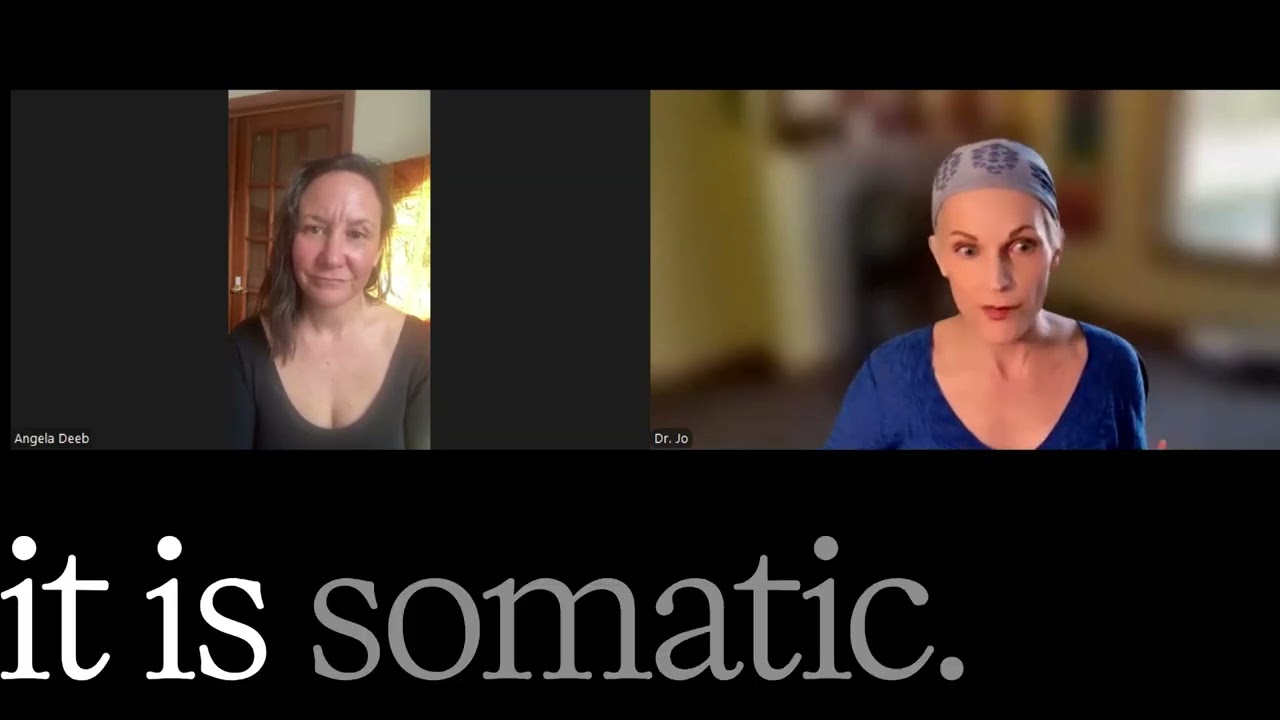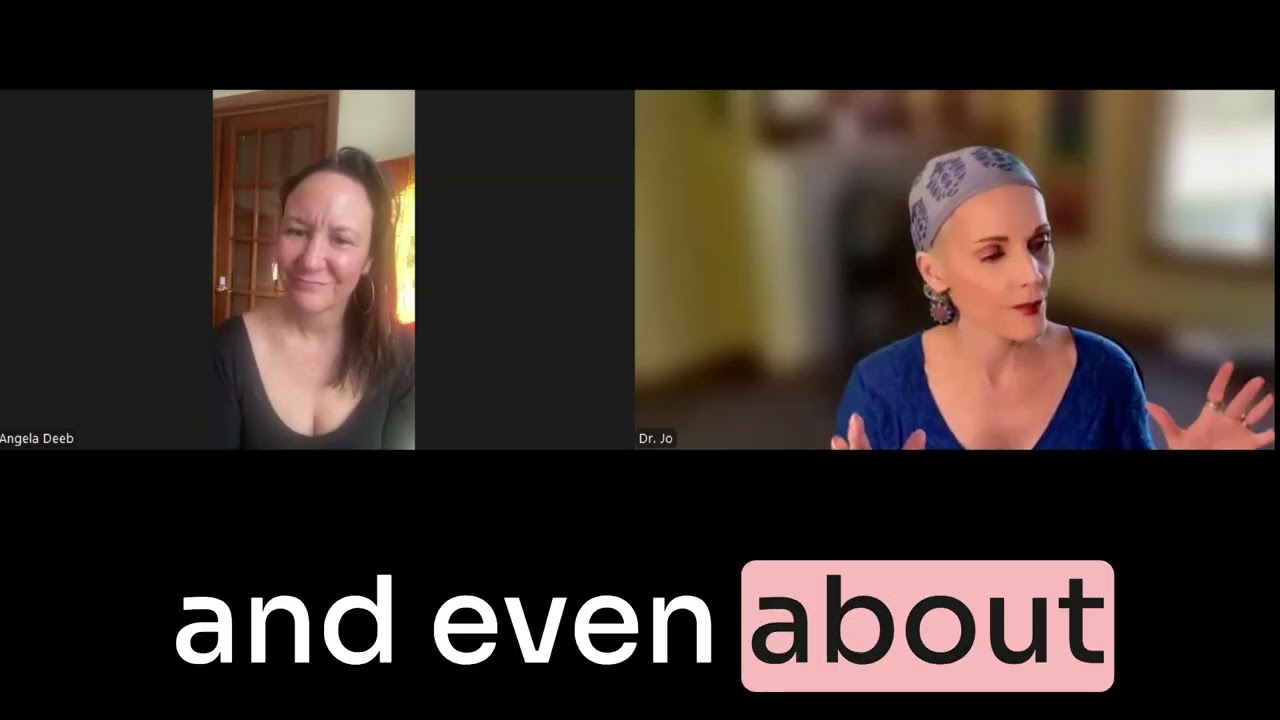
Brandy Burch survived a severe head injury at four months old, childhood abuse, foster care, and multiple suicide attempts. She describes the hospitalization at 24 that saved her life, her complicated relationship with antidepressants, and how music, art, and her son Sir keep her moving forward.
Chapters
to this computer. Okay, now it should be recording. Okay, now it says.
Okay.
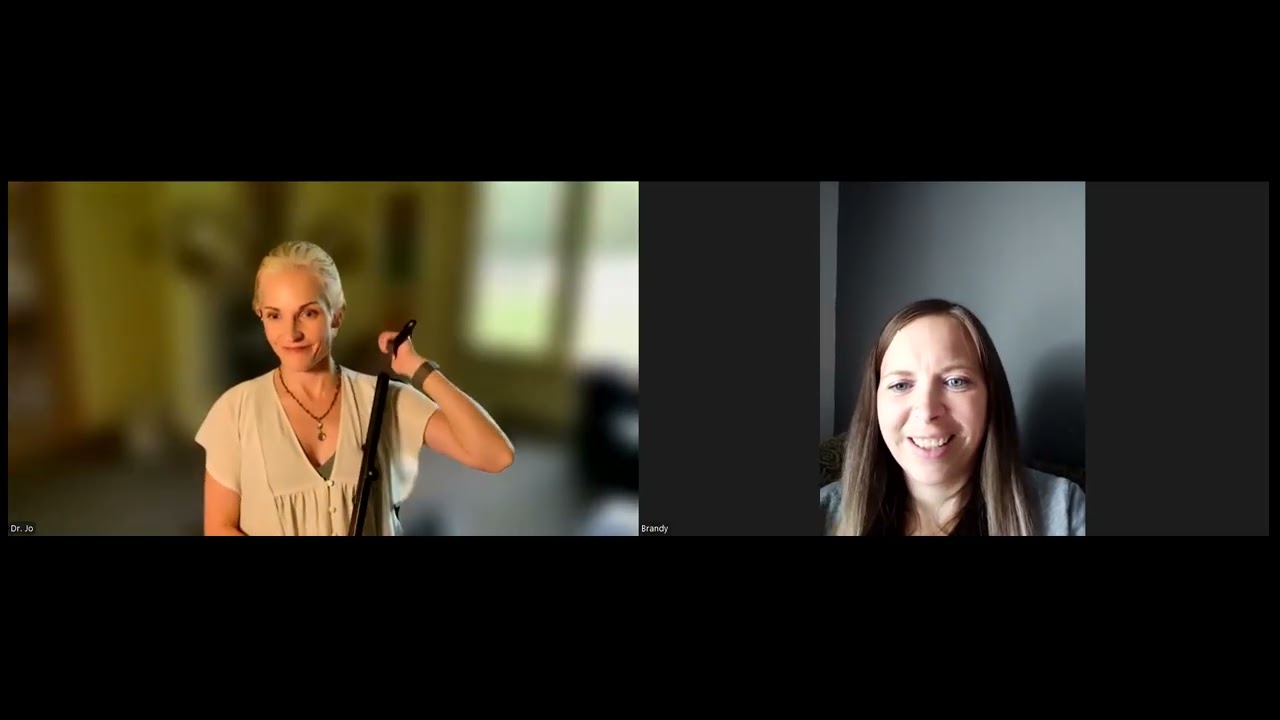
Welcome to Dr. Jo— Dr. Jo Gets Real. I just forgot my show for a second. It happens. My guest today is Brandy Burch, a good friend of mine, and she has a story to tell. She's a very wise woman with a lot of compassion and a really remarkable resilience story. So, Brandy, do you want to introduce yourself?
Yep, my name is Brandy. Um, I live in St. Michael, Minnesota. Um, I've lived in Minnesota for most of my life. Was in Alaska for a short time and Nevada for like a year. But other than that, mostly Minnesota.
And do you want to tell us about, um, what was the hardest thing for you growing up? One of the hardest things?
Um, well, to start with, um, from very young age, my life was pretty difficult. Um, so when I was a baby, I was thrown headfirst into a basement wall, and that caused me to have a fractured head, and I had a traumatic brain injury, which made my childhood really hard because I had to be very careful with concussions and stuff like that. And then—
And how old were you?
Do you know? Um, I was between 4 and 6 months when it happened.
So your fontanelle wasn't even— your brain hadn't even fully closed itself. Your fontanelle was still open. So at the time, and your brain hadn't fully developed. So that's a critical age at which to, to have that kind of TBI.
Yeah, I was in the hospital for 2 months.
Oh my gosh.
Yeah, so, um, a lot of people— like, I wasn't really expected to, like, live a normal life, right?
And who was there to take care of you at that time?
Um, so the person that did it was an ex-boyfriend of my mom's. Um, he, he was never convicted or anything because my sister who was there, she's— she was 7 at the time. She was too scared to tell anybody who did it.
Um, and your mom was protecting him, or—
well, my mom wasn't, wasn't there at the time.
Okay, so your sister saw it?
Yep. Um, I was in her arms at the time and I was crying, and I guess he didn't like me crying, so he took me and threw me to shut me up, I guess. And, um, so then I was in the hospital for 2 months, and then they put me into foster care for about 4 months while they like investigated even more during that time. To like make sure that my mom wasn't the one that did it.
Yeah. Oh, sure.
But then, um, when I was about— I think my— I think I was told about 10 or 11 months, I went back with my mom.
Okay. And your mom struggled too. Obviously she was abused, um, and that wasn't the first time. I'm sure she grew up in abuse and she struggled with her own mental health issues.
Yes, my mom had bipolar, um, and she was also, um, she had schizophrenic tendencies when she was manic. So like in her manic phases, that's when she would have the schizophrenic, um, Yeah, they're psychotic episodes. Yes, exactly.
Yeah, yeah. And that must have been terrifying for you to see.
Yeah, um, I was pretty young, um, when like things like when she went in those episodes, um, and there's a lot of my like younger childhood that is like completely blacked out that I have no memory of, which is your brain and your psyche protecting you. Yes, exactly. Like, I, I think that it's kind of like a mix of the brain injury of my memory and also—
yeah, yep. And forgive me, I have a neck injury, so I'm going to be like cracking and stretching my neck. It's So that's just what I'm gonna do, um, to take care of my body. Yeah, I think you're right. And I think, um, that's a really cool thing about our psyche is that we are never given more than we can handle. But I definitely— your brain injury impacts your memory as well. And you— I mean, you got through school. You were able to get through school. And not only that, but you also ended up— well, tell, tell us about your siblings.
Um, so I have, um, two full-blood, um, siblings. So I have my sister, she's, um, 6 and a half years older than me. And then I have, um, well, I had an older brother that I never met because, um, he would have been about 5 and a half years older than me. Um, his name was Joey, and he died when he was a couple weeks old, um, due to my mom's drug use during pregnancy.
Okay. Was he a premature baby then, or what happened?
Um, I don't think he was premature. Um, what I was told when my mom was alive was um, that when she found out she was pregnant, my sister was still very young. And, um, my mom was 21 when she had my, my sister, and so she was in that party mode.
Yeah.
And she was like, uh, I don't want to have this baby. And so she tried to induce a miscarriage by doing a bunch of drugs and drinking and stuff. And after a few months of that, then she decided that she did want the pregnancy, but by that time the damage has already been set.
Okay.
And so when he was born, he had two club feet um, a broken arm and a bunch of other health complications, and he only lived to be about 2 weeks.
Hmm, how sad. I wonder how that was for your mom in terms of guilt and, you know. Oh, too—
he felt very guilty.
I bet. And, and then you were the next one?
Yes, I was the very next one. Um, so, so 5 years after—
a lot of probably expectation on you then. Did you feel that?
Yeah, not really. I, um, there was— it was not at first, I guess I would say. Eventually, yes. Um, because when I was like younger, when my parents were together Um, I, I think on a combination of me being the first one born after them losing a child, and then also the fact of almost losing me, I was kind of put on a pedestal. So like, especially with my dad, so like it's interesting because like when my sister and I talk about our memories of our dad, my memories are so different than hers. And it's really interesting because she'll be like, oh yeah, our dad was so mean and blah blah blah. And I'm like, to me, like, and I, and I understand, like, my dad died when I was 6, so, you know, yeah, the highest memory I have is a 6-year-old. So like, of course, you know, there's a whole bunch of other things to it, but—
'Cause she would've been then how old?
She was 13.
Okay. So she was getting in her, you know, nasty teenage years where she was probably being a brat, right? And you were still the sweet little girl, but, but yeah, you may have been treated differently too.
Yeah, definitely. Um, There's one memory that I have. That's cool. Um, there's one memory that I have that, um, just like something so little. Like, like one time I was somewhere with my parents and, um, I was sitting on a couch and like for some reason somebody there, an adult took my blanket, and I was very, very—
an adult.
Yeah, right. And I was— I wanted it back, and they wouldn't give it to me. And my dad came, and I was like, he won't give me my blanket. And my dad ended up actually getting into a fight with him over it.
Oh, wow.
Wow. Yeah.
So he stood up for you?
Yes, absolutely.
Nice.
Like I was definitely Daddy's little girl.
Yeah, that's a nice memory. Yeah, yeah. And so hard to lose him so young.
It really is. I, I struggled with it a lot, and I, I said some mean things to my mom afterwards, like, you know, oh, I wish it was you instead, and Even though, of course, I didn't mean it. But, you know, as a child dealing with grief, you really don't know how to deal with it, especially—
that's right—
a bunch of mental illness and abuse around you.
That's right, because you've got so much anger stuffed inside. And as a child, your little body, you know, anger feels so intense in a little body. It feels like it could actually kill you or kill someone because it's just raw energy. So, you know, you suppress it and, you know, it comes out just in all kinds of ways. Usually if you suppress it and hold it in your body, then as an adult, um, it comes out in sideways, you know, whether you continue drinking or using or have an eating disorder or something to suppress it. And then eventually in recovery, You end up, you know, talking about hopefully these things, but also needs to be discharged through whether yoga or whatever, and often like somatic practices. And so for you at 6, you know, you're just, you're being able to be verbal about it, but you can't like cognitively process it. So you're like, mommy, I hate you, you know, because maybe it's her fault because you don't want to blame yourself, but you did yet at that age, you're still cognitively everything around you happens because of you. So you probably blamed yourself too. In some way.
Yes, absolutely. And then I, you know, my sister also, you know, she's 13, and of course, um, the, the circumstances, like, so my dad, he had cancer. That was like the main reason for his death. But, um, before, like, before he died Um, he had called and he's like, hey, you know, do you want to come with me? Because by that time my parents were separated and my mom and, um, her boyfriend had lived— were living here in Minnesota and my dad lived in California.
Okay.
He called and he was like, hey, do you want to come with me, you know, and visit for however long. And I was like, yeah, absolutely. And then I was like, wait a minute, um, and because I have, um, a, a, you know, a younger brother Shane who shares my both of my parents, um, he's 2 and a half years younger than me. And me, I think I was around 5, almost 6, or very close. And I was I was like, yeah. And then I, I stopped because I saw— I was looking at my brother and I was like, you know what, Dad, actually I think Shane should go because he doesn't get to see you very often.
And so you gave up your trip?
I did. Um, so I, I had him take my, my little brother instead. And on that trip, um, he ended up getting into a car crash which, um, had one of his, um, ribs puncture his lung, and he had lung cancer. So, oh boy. And, um, so like, that was— I felt really guilty for that, even though like, oh wow, of course it wasn't.
Yeah.
But, you know, it didn't help that I had that guilt. And then on top of it, my sister was telling me, oh yeah, it's all your fault.
Oh boy.
Stuff like that too.
Because she was of an age where she wants to blame someone because she doesn't understand either.
Oh yeah, exactly. So it was, it was really hard. Um, But it was kind of funny because while they were gone, I burned down my bathroom.
I mean, that one is funny. How did you do that?
Okay, so I watched too many movies as a kid. Too many movies.
Yeah.
Um, my mom's boyfriend at the time, he was watching me. He was sleeping on the couch, and on the coffee table there were only 3 things. There was a pack of cigarettes, a receipt, and a lighter. Yes.
Okay, so of course you need something to play with.
So I was like, okay, I'll light the receipt on fire.
Yes, of course. Okay, you don't want to smoke a cigarette, right?
So I, I lit the thing on fire, and then I was like— and then it was getting close to my fingers. I was like, crap, right? So then I went into the bathroom and I was gonna throw it into the toilet, but then I had watched Home Alone, and so I thought if I threw it into the toilet, it was going to explode.
Right.
So then I was like, okay, nope, can't do that. So then I was like, I'll just throw it in the sink and turn on the water. And then I was like, wait a minute, if it's gonna explode in the toilet, it's gonna explode in the sink.
Yeah.
So then I was like, it's getting down in my fingers and it's starting to hurt. I'm like, I don't know what to do. So I just threw it in the bathroom garbage.
Probably the thing to do.
Yep.
And it just went up in smoke.
Yeah, well, at first, like, it took a while, like a few minutes, like, well, probably seconds, but it, it was slower than I thought expected. But I didn't want to wake up Benny, was my mom's boyfriend at the time. I didn't want to wake him up because I didn't want to get in trouble. So yeah, I'm, I'm waiting for it to smoke and I'm like pulling the smoke to the smoke detector. Yeah. So that it will go off. And then finally it does. So then I go running because I knew he was gonna wake up right then and there.
You're like, was me?
I don't remember what happened after that, but I'm pretty sure I got in a lot of trouble.
Probably. I'm glad you don't remember. That's probably a good thing. I love that you laugh at it now. Did it like literally burn the whole bathroom? Probably.
No, not really. Um, it burnt— so, um, the bathroom was set up where there was a sink, and then right next to the sink there was a little space where the garbage was, and then the toilet.
Okay, so probably just burned that part of it.
Yep, it was just a little bit, just enough, because it Basically, it just had enough smoke. Like, there was fire and like there was burn marks and stuff, but it wasn't like major because by the time the smoke hit the detector, because the detector was right outside the bathroom, it was pretty good. But yeah, it was just crazy.
That is crazy. So let's fast forward into— so you get through school, and how did you end up being successful as an adult? I mean, you deal with your own— you have a child. How did you know how to parent when you really didn't get parented?
Well, um, so when I was, um In third grade, um, my brother Shane, the younger one that's 2 and a half years younger than me, and I, we went into foster care because my mom had, um, one of her episodes. And we were in foster care for about a year and a half, almost 2 years. Um, and Those parents, um, those foster parents were pretty, pretty good. They were very strict, but they were pretty good. And, um, like, obviously as a child I did not like it, but as I grew up I was like, you know, I'm really thankful for that. I needed that. Yeah. And then again, when I was in 9th grade, um, early on, like December, we, we were all put in foster care again. And then I was in foster care until I was 18.
So it's a lot of foster at the same place, or did you hop around?
I, I went to the same place because when, um, my brother and I went when I was in 3rd grade, he was in 1st grade. Um, they did, they, they did kids and, you know, we could be together. But when I was in 9th grade, they did, um, teen girls.
Oh, okay, makes sense.
Yep. So originally I was with them and then they did find a home for all of us. Um, so It was me, my younger brother Shane, and then we have a younger brother, um, Trent, and that is Benny's son. Um, and so they found a home for all three of us, but the home— we lived in, um, Buffalo before we got put into foster care, and my foster home was in Monticello. Um, and they found us a home to take all of us in Buffalo. And most of my first 3 months of 9th grade, I barely went to school. And because I was helping my mom out a lot and doing a lot of other stuff and just trying to survive. Yeah, exactly. So, um, I really— I, I thought about it and I was like, I would love to be with my brothers. But also, like, throughout, um, childhood and especially, um, while we were in Buffalo for the year that we had been there, I had basically kind of become like a pseudo mother.
Yes, you have.
And, um, I wanted to do, you know, to get good grades so that I could get into college and do stuff, like do— make my dreams come true and stuff. And I knew that if I went back, for one, I would— even though it was there was a foster parent, like, like, I knew that because I was so used to, like, parenting, I was gonna get into that. I was gonna stay in that role. And also I knew that was going to be harder to bring up my grades than to start over at a separate school.
So you were already finally, you know, putting yourself first, and you had the awareness to think, okay, so I need to, you know, make a change here and make a really tough decision that I separate from my brothers. I'm sure that was really hard.
It was, it was, it was really hard because there was a lot of internal guilt and also guilt, right? And I, I just kept telling people, like, I have to do this for me.
Like, good for you.
And, you know, we got to visit, we had, we had visits and stuff, and it was okay. But I, you know, obviously I wish we could have been together, but I knew that that wasn't a realistic Yeah, like realistic situation that was gonna happen. And there—
well, and what's— yeah, yeah, I was just gonna say, what's so, what's so amazing to me is like you had no one lifting you up and telling you, hey, put yourself first, you know, like think about what you want. You just kind of have this resilience and this sense of self, but by yourself, you know, on your own. So I think that's really remarkable.
Yeah, like, I did talk to my foster parents and my guardian ad litem and my mom and my siblings also, you know, like, and I kind of like already made up my mind when I was talking to them, and I was just like, you know, I just, I really need to do this. Like, I love my family But in order to be me and to try and be successful, I have to do this.
Yeah, you had already made so many sacrifices.
Yeah, and like, I don't know, I just, I've kind of always been like an old soul, kind of.
Yes. Yeah.
Yeah.
That's how you survive things like this. So what happened then after that?
Well, then I, um, I graduated and I did go to college for a little bit, um, but then I didn't have a very, um, high bank balance. So, um, it got really hard. And so in order to balance job and school, obviously job was winning out so that I could live. So then I had to drop out. Um, and then not too long after that, my mom died, and That was a struggle.
Yeah.
And it's interesting because even though I was— I had just turned 20, like, barely a month before that.
Um, so young.
Yeah, it's like, plus, like, if you're an orphan, even though you're technically like adult and everything. But like, the thing is, like, it wasn't— it, it didn't feel like I was just losing my mom because I had already lost my dad. It was, it was like I was losing both of my parents because it was all over again. My only other parent.
Yeah.
So like, it brought a lot of the feelings back from my father And I, I was in a really dark place for pretty, pretty long time.
Yeah, I can imagine. Yeah. And yeah, I can see how you would kind of regrieve your dad when, when you lose your mom. How did you get through those years? Yeah.
Um, Well, I did a lot of writing. Um, I used to write poetry.
Um, which means you're still a poet. You still got that.
Uh, I haven't done it in a very, very long time. Um, probably since around that time. Actually.
Really? Oh, we got to get you going on that.
Yeah, um, I've, I've like tried a few things since then, but there's just been so much going on and yeah, just not the same. I don't know, weird.
There will be a time, maybe.
Yeah, um, but, and then, um, I I had many suicidal attempts. Um, yeah, I, I did a lot of stupid things.
Of course.
Yeah, eventually I, um, I finally had a moment of clarity where I was just like, um, it was my last attempt and I was like I, I couldn't feel anything, and I realized that I could succeed at attempting suicide and not even feel it. And that, that thought that I could just be successful and I wouldn't even feel it, it scared me. Okay. Like, I was just like, how can I end up— end a life and not even have any feeling to it? Like, yeah, no physical pain, nothing. Like, that was very scary to me.
Like, am I already dead? Kind of, right?
Yes, exactly. And so I checked myself into the hospital. For, um, that wasn't the last time I put myself in the hospital, but it was the last, um, suicidal attempt I ever did.
Um, for you, how old were you? Do you remember?
Um, I was 24 or 20— 25. What? 25.
Good for you.
It was either— it was either right before I turned 24 or right after. But, um, yeah, so that was the last time. And I just— I checked myself in the hospital and I was— and I promised myself that I'd never do it again because it wasn't right and that I needed to learn how to feel in life.
Yes.
And not, you know, just survive and just go through it numb.
Yeah, because that's what it is too. It's just tolerating feeling, you know, and that's not easy. But you did it, and what courage it is to check yourself in, right? That's not a fun thing, but that's what it is. It's admitting that you need help.
Amazing. And it was, it was embarrassing, and you know, but I knew that that's what I needed to do, and so I did it, and I struggled through. And I mean, I still have dark days just like anybody else.
Yep.
But I know that I can get through them because I feel like I've probably gone through some of the darkest days I'll ever have. Yeah. And I tell myself that if I can get through those days, then everything else is just peachy.
Yeah, it's, it's kind of like you've survived the worst.
Yeah, right, exactly. Mhm.
What brings you joy?
Um, I like music, and I like spending time with my son and animals and just drawing and artsy stuff and Just, I don't know, I try to look for like the light in life. Mhm. Like sometimes I feel really pessimistic, but most of the time I try to be optimistic and just like find at least something each day that you know, I'm just like, hey, this is okay.
Yeah, tell us, because I love this, your son's name and why you named him that.
My son's name is Sir, and, um, my ex and I, we had, um, he had told me a story of— so in the way, like, many, many years ago when, um, racism was very, very, very prominent. Um, there was a story about a pregnant Black lady, and she was, she was going to have a son, and she wanted to make sure that her son was spoken to with respect no matter what. And so she wanted to give him a name that forced people to speak to him with respect, so she named him Sir. And we thought that was such a great story, and so we decided that when we found out we were having a boy, we would name my son Sir. And then he— his middle names, he has two, is Joseph and Paul. So Joseph was my, my brother's name, the one that died when he was 2 weeks old. And then Paul is the second middle name of one of my ex Harley's, um, best friends who died in the hospital, um, right before— or right after I found out I was pregnant.
So meaningful. I love that story. Love that. Such a beautiful story and such a beautiful name. Yeah, thank you, sir. He's certainly an honorable young boy. How old is he now?
He just turned 9.
Oh my gosh, he's getting old. I know.
I'm like, boy, you are aging me.
Yes, but he's doing well.
Yes, he is. Very happy boy.
Good, good. That's good.
Yeah.
Um, and how—
oh, go ahead. Oh, I was just gonna say it was funny because, um, in kindergarten, um, he came home one day and he said, Mom, it was so great. This kid came up and he knew my name. And I was like, oh yeah? And he was like, yeah, he came up to me and he said, excuse me, sir.
That's so sweet. I love that. Yeah, he's a great kid and you're a great mom.
Thank you.
And how are your brothers doing?
Um, so my, my brother Shane, um, he's doing pretty good. Um, he has 2 kids. They live up in Hibbing. They used to live in Chisholm. Um, and he lives with his long-term girlfriend and their 2 kids. And yeah, they're doing okay. Um, yeah, like us, everybody has—
yeah, up and down. That's for sure.
But yeah, so, um, and then my other brother Trent, um, he has a daughter and, um, he's a recovered addict and he's actually been working at Teen Challenge for—
oh, Teen Challenge!
Yeah, for a few years.
Oh, wonderful! That's a good way to stay sober.
Yep, Teen Challenge helped him get sober, and then he—
yes, a lot of people end up working there that have gone through the program.
Yep.
And how about your sister? Oh, go ahead.
And then my sister, she's, she's doing a little better. Um, she's, she's probably struggling the most out of all of us. Um, But, um, she's got her, um, so she's got my niece that is, um, 16. No, wait, she just turned 17.
Um, they're grown up too.
I know, it's crazy. And then, um, also my nephew who is 13, they live there. And then My niece's boyfriend, um, is living there right now too. Okay. But it counts. Yeah, but they're doing okay, um, especially, um, considering all the dark times that we've gone through. Yes. My nephew Devin passed away last March.
Yes, that was a really hard time. You guys have survived a lot.
Yeah.
And I know you've been kind of the pinnacle of the family, you know, so that's, you know, you've always been the strong one.
Thank you. I try. Oh, you do. I don't feel strong, but—
but you always manage to, to stay centered. Yeah. Any advice or words of wisdom that you'd like to share with the audience?
I would just say that even on our darkest days, there's at least something that we can find that brings a little light. Even when we feel like there's no light at the end of the tunnel, there's, you know, Like they say, you know, you can't see the stars without the darkness.
That's true. Oh yeah, I like that. And sometimes with our pollution, you can't see the stars. You have to look extra hard, but they're still there. We know they're there. Thank you so much, Brandy. It's been a pleasure. And, uh, yeah, we'll see you soon. Thanks.
Thank you. Thanks for having me.
We can, we can stay on for a second. Thank you, that was great. That was really helpful. Yeah, you do have such an amazing story. It's so nice to hear from you. How are you doing lately?
I'm doing all right. Um, yeah, just, um, so since I went off, um, my Um, Prozac. Um, I've gained weight, haven't been liking that.
Okay, but you could stand to gain some weight.
Not so much these days.
Yeah, so you— why did you go off your Prozac? Just so—
um, well, for one, it— I wasn't feeling any better on it.
Okay.
Like, honestly, like, I was— it was like I was on a very high dose too. I was on 80 milligrams. Oh, okay.
So that's— yeah, yeah.
And like, I, I couldn't feel really. Like, I was so—
okay, numb.
Kind of numb. Yeah, yeah.
That's not fun.
Yeah, I, I was like, this isn't right. So I, I need to get off of this. And then especially after, um, I saw, um, Dr. Joseph's, um, uh, video about, um, antidepressants and whatnot. And, um, it kind of was like, like I was already thinking about it, but like watching that video, like how he explained, like, um, a lot of antidepressants, like they, they do that long term is, you know, numb you. And so that kind of was like, you know, the little straw that broke the camel's back.
Yeah. That makes sense. Yeah, I think a lot of people are realizing that more somatic and body, um, treatments are more effective for long-term and stuff.
Yeah, so, so yeah, I've been off of it for a couple months. Um, good. And yeah, like, I'm, I'm getting feeling back and like Like, there would be times, like, when I was on it, like, I'd go years without crying.
Yeah, see, that's not— that's not fun.
Yeah, or helpful. Exactly. And like, even like Devin's funeral and stuff, like, I mean, I cried a little bit But like, it was, it was so like compared to what I knew I should have been like feeling and expressing, or even that what you wanted to feel. Yeah, exactly. And okay, like, you know, even though, like, even when I am like feeling things fully. Like, I, I'm pretty good. I'm pretty great in a crisis.
Yeah, you are.
But like, I just realized that like, I just— everything was just so far away feeling. I was so—
yeah, yeah, that numb is not a good feeling.
Exactly. And I was just like, this isn't right. And like, you know, sometimes some shows I might, I might have like shed some tears a little bit, but like, yeah, um, just like recently I started like really actually getting feeling back and like I've been watching, um, One Tree Hill. And like, I've been crying like a baby and it's like been so great because like, I'm like, hey, I'm a person.
Yeah, it feels better, doesn't it? Just like you were saying, like that feeling of, um, like I won't even feel this if I die kind of thing. Yes, it feels icky. Yeah, yeah.
Like, you know, like numb for A short time is great when you've been feeling so bad for so long, but numb for years is hell.
It's kind of scary. Yeah.
Yeah. And you look like you're feeling well.
I mean, you look beautiful. You look really good. Yeah, it's good to see you smiling. Yeah. Yeah.
Um, a struggle still, but you know, there's— it's, it's nice to like have a range of emotions and not just like numbness.
And that's right, just want. Yeah, because if you can't feel the, you know, if you can't feel the bad, then you can't feel the good either.
Exactly. And you know, when you're when you're feeling very, very bad, like numbness, that sounds amazing. And it is a— it is amazing for a short time. But see, that's the problem, is when people are put on antidepressants, it's never a short time, and it doesn't feel good after a while.
No, you just feel— you don't feel like a human.
Yeah, yeah.
Okay, well, I got a 4:30, so— oh, go ahead. What were you gonna say?
Oh, I was just gonna say, and that is just scary.
Yeah, it is, it is. Well, let's talk soon and catch up some more, and, um, I'd love to meet you, or I can come down and see you, or down, over, whatever we are, probably west. Yeah, you're west of me. So yeah, okay, bye, hon. Thank you so much.
I love you.
Bye-bye. Love you too, hon.
More from Jo

Mom and I off to Santa Fe and Taos for Yoga Nidra and Enlightenment #retreat #spirituality #family