
Are You the Right Person to Buy a Storage Facility?
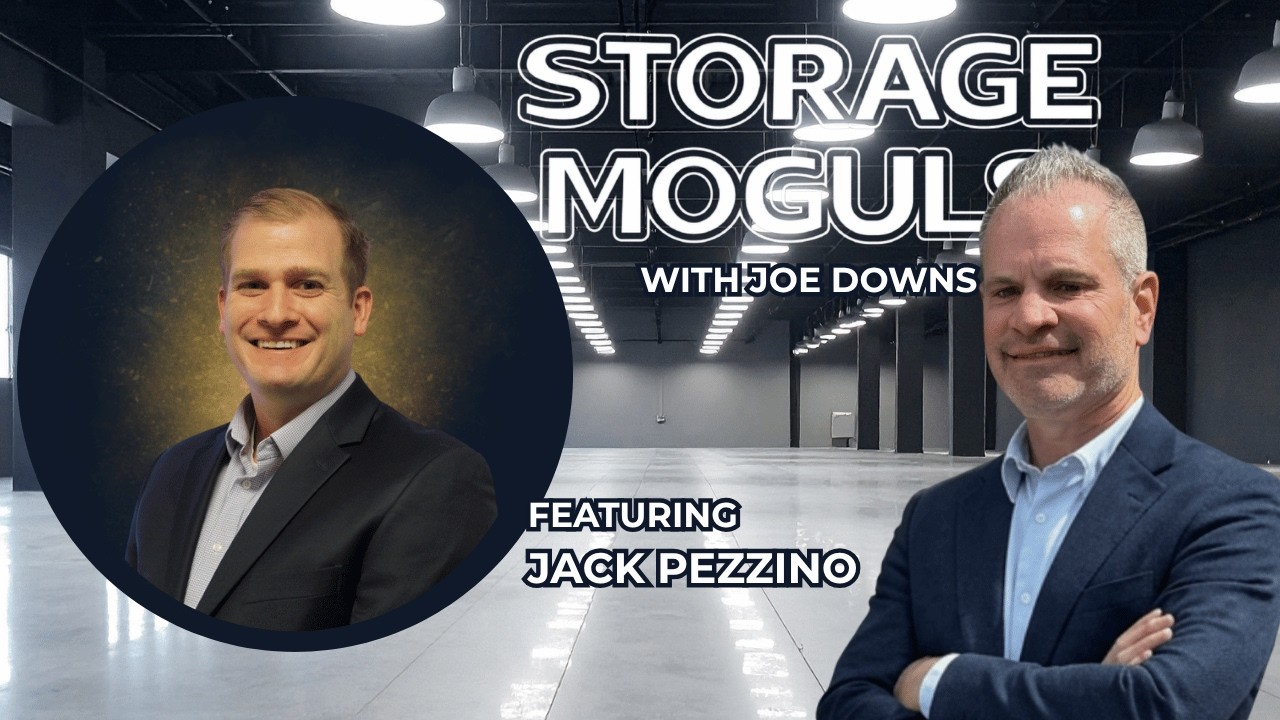
This content was created by Joe Downs. This content was uploaded by Joe Downs. This is a YouTube episode (Storage Moguls Podcast) titled "Are You the Right Person to Buy a Storage Facility?" (published 2026-05-19). It is an English interview-style conversation in which host Joe Downs introduces and interviews Jack Fazzino (Vice President of Education at Bellrose Storage Group and Storage Mogul) about mentoring first-time self-storage buyers. The discussion covers who succeeds in buying their first facility, common limiting beliefs and myths (financing, experience, age, capital), practical financing options like SBA loans, deal sourcing (off-market outreach vs. brokers), due-diligence pitfalls (notably tax reassessment), and the mentorship/guardrails Storage Moguls provides to move buyers from zero-to-one.
Chapters
Have you ever seen the Pepsi commercial with Jeff Gordon? He rolls up on a car dealership lot in a minivan, in a costume, disguised as a kind of a nerdy-looking guy, obviously with some kids as he's rolling in with the minivan. And he gets out and he walks by, I think it's a Dodge Charger, and he starts looking at it and the salesman comes out and says, Ah, I see you got your eye on the Charger. And Jeff Gordon, you know, in disguise says, oh, no, no, that's too much car for me. And the good salesman, of course, says, oh, well, you know, let's get in it and take it for a test drive and find out. And of course, that's the setup. And so, this is a Pepsi commercial. So, Jeff Gordon has a Pepsi can, and on the Pepsi can that he puts right on the front dash in the cup holder has a camera on it. And the camera, of course, is, ...is angled at both Jeff, as well as the salesman. And what Jeff proceeds to do is what you can already probably imagine he does. He takes this salesman for the ride of his life, although it doesn't feel like it to the salesman at the time. It starts out just with him, you know, punching the gas a little bit, and then it gets pretty insane. And frankly, it's a little uncomfortable to watch when you're thinking about what the salesman must be going through in this moment.
Yeah.
Many times, he's asking him to slow down, stop, get out of the car. A few times, he advises him that he's responsible for any damage that's gonna happen to the car. And every time he opens his mouth, Jeff takes it to another level. At one point, I think they end up on a shipping dock, going up a ramp, spinning the car around. The man is terrified for his life, basically, the last half of the ride. Jeff doesn't let up. He's screaming at him. They come back to the dealership. He does a 180, backs into the parking spot, and the guy jumps out of the car threatening to kill him and threatens to call the police. And he wants to kill him. And then Jeff goes, no, no, it's okay. It's okay. And he rips off his mustache and his mask, and he says, it's okay. I'm Jeff Gordon. And it takes the guy a minute, and And he goes, oh my God. And then he stops and he looks at me and he goes, can we do it again? And that's exactly, exactly what I wanna talk about in today's podcast. Because in fact, we started showing that video at the Self Storage Academy when we used to just to host, speak at the Self Storage Academy, because that's what it feels like Sometimes for those we train and mentor and teach how to buy self-storage, how to find it, evaluate it, underwrite it, negotiate it, due diligence it, close it. That's what it's like. And in fact, the reason we started showing that video was because one student said to me after they closed on their first deal, the first thing they said to me, and they were nervous Nelly all the way through. First thing he said to me was, I can't wait to buy my next one. And I immediately thought about that video, and that's why we started showing it. My guest today has taught and mentored dozens of first-time storage buyers who felt exactly that way. And he's the one on the inside of Storage Moguls who runs the mentorship program, who does the weekly calls, who walks through the deals with students, who's watched people go from, I found something online about storage and I think I might want to try this, but I have no idea what I'm doing and I'm scared out of my mind. All the way to the closing table. And he knows exactly who makes it and why. And today he's going to tell you. I'm Joe Downs. Welcome to the Storage Moguls Podcast. My company has acquired 20 self-storage facilities, over $50 million in assets across multiple storage niches, with 3 more under contract right now and 2 pro storage facilities in development. I've seen this business from every angle, educated hundreds of students, and learned firsthand who succeeds and why. That's what drove us to build StorageMoguls.ai, an AI-powered community with the tools, the structure, and the guardrails to teach people how to buy self-storage facilities and all storage facilities. Check it out at storagemoguls.ai. And that's exactly why we launched this podcast, to bring you the operators, the lenders, and the real people who've bought the deals so you can hear their stories and learn this business from the folks living it every day. And I'm fired up about today's conversation because Jack's got The inside view from the car. He was the driver. He was Jeff Gordon in all these scenarios. And obviously it wasn't as scary as what Jeff Gordon put this guy through. And obviously it's, you know, that, that was a 5 or 6 minute video. I highly encourage you to watch on YouTube because it is funny. And buying a storage facility happens over months. So it's not a compressed, crazy thrill ride. However, it is funny at the end when someone is finally successful and they walk out for the closing table or, you know, they get the final email that says we closed and we're congratulating them. The first instinct is, that wasn't so bad, let's do it again. Jack Fazzino is Vice President of Education at Bellrose Storage Group and Storage Mogul. He runs our mentorship program, leads the weekly live calls. Like I said, walks students through deals, personally guides them from the zero to one journey is what I call it. No self-storage facility to your first. And he's doing it better than anybody I know in the business. He's been in the room, on the call, on the site visits, in the underwriting sessions. When the light goes on for people, Jack's usually the reason why. Jack, welcome to the Storage Moguls Podcast.
Thanks, Joe.
Good to have you here. You're going to be— folks, you're going to hear more from Jack for different reasons over the course of the life of this podcast. But today I want to tease out from him really what the opening was about, the thrill ride. And again, it's not quite as exciting as the Jeff Gordon thrill ride, or like the kid who's terrified of the roller coaster, and then they get on it and they immediately want to do it again. It's not quite that thrill ride, but boy, is it exciting when you close. So it must be a slow motion thrill ride. But Jack, before we get started, I like to have fun on this podcast. So there's gonna be a series of true or false questions I'm gonna ask you, and you're not gonna know when they're coming, and it's okay. Just, I mean, I'm in control. This is, I'm driving. I'm the Jeff Gordon of this one. True or false? Self-storage is the only commercial real estate asset class where you can realistically acquire your first property for under $1 million.
I would say that's true.
A little bit of a leading true or false question there. Not sure. Not sure it was a fair one. It was— I think it was definitely, definitely— I got to work with Claude on that one. Obviously, folks, I'm not coming up with the true/false, but Uh, I appreciate that, Claude. It was, it was a nice setup for us, but it does set me up to give you this fact. It is true, although maybe you can buy others there. Uh, what I do like about this is, um, while— well, the, the stat— while large format facilities in major metros command multi-million dollar price tags, the United States has thousands of smaller rural and secondary market storage facilities that trade in the $400,000 to $900,000 range, well within the reach of many first-time buyers, especially when they're using the SBA where you're only putting 10 to 20% down. And that is almost never the case in multifamily, office, or retail at the comparable income level. So self-storage is genuinely the most accessible commercial real estate entry point that still produces real cash flow. So. Little self-serving, but did provide me the opportunity for those facts. Jack, I wanna start somewhere that might surprise people because there's a picture in most people's heads of who buys self-storage facilities. And in my experience, that picture's almost always completely wrong. So Jack, you've mentored dozens of students now. You're on calls every single week with people who are at the beginning of this. They've never owned a commercial property, let alone self-storage. They're not sure they can get financing typically. I mean, I was one of these people years ago. They genuinely don't know if they're the right kind of person for this. When you look across all of them, who actually does this? What's the avatar? Not who should. We know most people should, but only the only the 1% actually take that first step. But who actually does it? Who shows up and gets to the other side? Who gets from 0 to 1?
The ones that are the most curious, I would say, like the ones that attended the, like, I hate saying like, oh, you need to attend all the calls because you can attend all the calls in the world. It's applying what you've learned. Like they didn't come and, do the minimal work. It was like the ones that kind of like came in, really immersed themselves and kind of stuck to their buying criteria of, hey, if I, if I have a couple hundred thousand here and I can, I really should be focusing on a deal that's around like one, like $1 million to $1.5 million. They became disciplined where they weren't looking at the shiny object of like, hey, I'm going to look at this $4 million deal. That I don't know I could do or not. Like, so they were very disciplined and immersed themselves in that whole process, whether it was a single, like a one-man show or husband and wife, father-daughter, mother-son, whatever it was. Like, I mean, it was really kind of getting involved together and making it fun. Like, it was just Like when you kind of get into everything, like it's, it's a ton of work and you're learning how to buy such a fun asset class because it's not only real estate, it's also a business. So you're learning how to like basically set all that up where it's just kind of like then from there, like once you kind of have all that laid out, it's defining your superpower and running with it.
You gave me a little bit of the demographic there. A little bit when you said husband and wife team, although I don't think you were trying to answer a demographic question. I think you were just talking about how people are having fun when they're doing it together. But what are the demographics? Are they W-2 employees? Are they trying to get out of the rat race? Are they military? Are they already retired? Are they trying to protect retirement income? Are they—
Yeah.
High-income earners just looking for better ways to invest in real estate? What's been the avatar? Like, talk about some of the folks that have come through that are either already in their first deal or looking right now.
So it's a little bit of all that. So like, there's the folks that are looking to retire but still want to have like that passive income coming in where they want their money to work for them, where it's generating income. I mean, there's others that are high-income earners that again are kind of looking to diversify the investments a little bit. And then folks that, that have been saving for a while, have been doing a couple of businesses or different asset classes of real estate where they're jumping in because they want to learn storage. Where they kind of got brought in on like, hey, there's no toilets here. There's not as much that can go wrong with a residential house where I need to deal with all these tenants, that the lien laws are more in favor of the tenant than it is the landlord. And then you also get a bunch of folks in the military. I mean, you got Rod who works with us, who's a Navy vet. And then you also, I mean, The amount of military folks that we're looking to support as well, coming back to find that additional thing for them to do is another big one that we see. So it's a little bit of everything, but—
Let me put you on the spot for a second. Is there one thing they have in common? Is it money, intelligence, market knowledge? Or is it something else?
I would say it's that they want to learn it and they wanna get in.
So back to the curiosity.
Yes.
Jack, a lot of people come in with what I'll call misguided belief systems or misguided, they believe in these myths like, I almost don't want to lead the witness here, but I think you know what I mean.
Yeah.
What are some of the false beliefs or misguided beliefs that they've heard from the naysayers, whether they're related to them or friends, family, coworkers, whatever, that have them believing, I can't do this, I won't be successful at this, whatever, that turn out and they realize through the process, well, that was just flat out wrong? What are some of the most common misbeliefs that people come into this with?
I would say one of the most common misbeliefs is there's no money out there for me, where people don't think they can get lending, people don't think there's going to be someone out there to lend them the money to buy a deal. Like, it comes down to the risk of the profile of the facility and you. And like, there's— if you found a deal, there's typically a way to get it financed one way or another. And then for those that have had some—
That sounds easy to say. Give me an example. Because I once sat in that seat and said, who's going to lend me $1 million? First day of the Sorge Academy, I sat there. It all makes sense. The math maths. I get it. I got it that day, 8 years ago, whenever it was. But I still had my own self-limiting belief that I could do it. I understood that people were doing it, but certainly and surely those people were different than me. That's what I believed. So what— I've never bought a self-storage facility. How am I— what's a— what does a deal look like that I could have afforded? I shouldn't say afforded because you don't know how much cash I have, but that I could get a loan on. For me, it was the loan. Who's lending me $1 million? That's— I was like, why would a lender lend me $1 million? I've never bought self-storage before. That was my limiting belief.
Yes, the SBA has a great program, the Small Business Association. Now the thing is, is again, like storage is both real estate and a business. So it's not like you're knocking on the bank's door and saying, hey, I got a deal, lend to me. It's more, it's more of a thought process of you're going to give them a very well thought out business plan of like, Hey, this is why it's worth X and this is how I'm going to execute it to be able to hit my targets, which I mean, we're going to— like, I can say terms like the DSCR, which is your debt service coverage ratio, your cash-on-cash returns, where you're really operating it like a business. And when you're able to kind of give that business plan and show everything and you're able to hit all those restrictions and covenants that are in the loan docs, It becomes more real if it's a deal that fits within your credit. Like, you can't, again, going back to that, like thinking of that avatar of like, if I have, let's just say $100,000 and I'm looking at a $3 million deal, the math's probably not going to math. Where if I have that $100,000, like I'm going to be looking at that deal, that's probably about $1 million and under to kind of make sure I'm able to get— within that approval process within the SBA with the 10% down and being able to get funded with a proper business plan and all my closing costs and everything else like that.
All right, I'm gonna, I'm gonna throw some limiting beliefs at you and I want you to respond.
Okay.
I'm not smart enough.
Great, there's plenty of opportunities to learn. We have various different content for you to kind of immerse yourself and learn. If you're able to kind of really dig into the topic, it's definitely something that is learnable. Like, this was something about 8 or 9 years ago when I first got into real estate. I mean, we all had to look, we all had to start somewhere. So it's something that again is—
I'm too young. I'm only, I'm only in my 20s.
It's funny you say that because we just had a couple guys that just closed their first deal in their early 20s.
How old were they?
I, I want to say they were between 20 and 25. Can't remember their exact ages, but they were, they were young. And I mean, they, they partnered with—
I'm too old. I'm, I'm 60-something.
Again, that one's interesting to me because it's like a couple folks that I've worked with, it's, they've done something with their, their kids where they were trying to make it more as like a family atmosphere where they were doing something together and to enjoy retirement. So, Hmm. And knowing like my uncle also kind of does a lot of these like passive investments and stuff like that. And he's also in his 60s where it's just, He's loving it. And he calls me like every so often telling me, I need to get started sooner.
I don't have $100,000.
There's—
I only have $20,000 or $30,000.
So this is where it becomes you're learning a skill set of learning how to buy commercial real estate, where you can also wholesale. So there's ways where you can find off-market opportunities talk to sellers and generate income for yourself through building relationships with those buyers who are looking to sell. And you can either bring it to the community and wholesale it to make a fee where you're able to generate to eventually get to that $100,000, or you find that right partner where if it's just like, hey, This is like, here's, here's the story of this deal because you found this, this gem that people are willing to invest once they kind of see everything. Or if they don't want you a part of it again, they'll pay a fee for it.
So folks, here's, here's what I want you to hear. The thing that separates people who do this from people who watch other people do this is almost never knowledge. It's not money. It's not age. It's not market timing. It's just a decision. And the earlier you make that decision, the faster everything else falls into place. And that's why Storage Moguls exists. That's why we built it, for the people who've made that decision and wanna make sure they do it right. I hope you can appreciate all of those limiting beliefs. I had plenty of them myself. But that's all they are. They're self-inflicted. Don't self-inflict. All right, Jack, true or false?
Oh man.
SBA loans are available for first-time storage buyers with no prior commercial real estate experience. You basically already answered this.
True. We did just talk about that. I'm getting good at this game.
True, the SBA 7 and 504 programs do not require prior commercial real estate experience. What they do require, reasonable credit, typically 680+, demonstrated management ability in some business context, a viable deal with positive cash flow, and the ability to inject 10 to 20% equity. First-time buyers close SBA-financed storage deals regularly. And by the way, folks, they do. The you need a track record belief is one of the most persistent and most damaging myths in the business. Speaking of limiting beliefs. All right, Jack.
Yeah.
Let me ask you something that doesn't come up in most real estate conversations. What does it actually feel like to be a first-time buyer going through this process? Now you're in the car with Jeff Gordon.
So honestly, when you're in the car, that's such a great analogy because—
Hold on, hold on. Let me set up for you better because it— because what I want, what I know from talking to hundreds of students now, the information is never the hard part. Because especially when we give the frameworks, the underwriting models, the deal analysis checklists, they can follow the steps. But there's a point in almost every zero-to-one journey Where the intellectual understanding of the process meets the emotional reality of what it means to actually sign on the dotted line. So, Jack, you've been in the moment with people. Walk us through what that actually looks like and what gets people through it.
So going back to your analogy in the beginning, if you guys do watch that commercial, The guy sitting in the car who's super frantic and just super scared with everything that's going on is the perfect analogy. It's, it's kind of like learning and taking a step back and taking a breath of checking all of your data, like working with Adam and Kirby, who's been on the podcast and everything else like that. It was— they had a scary thing that happened in there on their deal where Not only did they have to get through like signing the dotted line and closing on this, on their first deal, they had, they had an instance where their operator like stopped operating. So they now they had a decision to make because they actually did have a great contract in place there where they could have walked away. They could have done the safe thing and they could have just been like, you know what? We tried, the guy didn't operate. Like, this facility is now below 50% occupancy, I believe. I think the lowest it hit was about 45% by the time they— like, so it was like, and they were buying it about 55%, 60%, where it— so now they not only have the fear of like, hey, we're about to invest, like, we're about to buy this like $600,000, roughly like $650,000 facility. The guy didn't operate. So, like, the conversation there, it's not an easy one, but it— the one book that we've read in the past is The Gap and the Gain, where we have that conversation of like, okay, like, let's take a minute real quick and just turn around and look where we're at. Because we get stuck in the gap too much where it's just, we forget to turn around and look how far we've come.
Yeah.
And when we had that—
what point does that happen? Is there a specific moment or phase where they hit the wall?
I would say every day.
Is it the first time they call the bank? Is it during due diligence? Maybe before closing?
It happens at multiple stages. So it's like when you, when you first get that accepted LOI, it's all of a sudden like, oh my gosh, this is real. Because now like you've contacted an attorney and you're getting that purchase sale agreement started. Then you get the purchase agreement signed.
Oh shit. Oh shit. They said yes.
And now it's just like, wait, we have an agreement and you, you review all your due diligence materials and everything's checking out. And then again, it's like, oh no. And it's kind of like sticking to the framework. And again, I like using the Adam and Kirby example because like they went through it all again. Like we had that conversation of like, what are you buying? And it was like, okay, well, this facility, the guy The website was unplugged. The— like, you couldn't access their website, period. The phone number was disconnected. You either called and it was like, the, uh, this number is disconnected, it's no longer in service, or it rang for 5 minutes with no one answering. But then when they called all the other facilities within, like, about a 7-mile radius, there was almost nothing available. So it was just that, like, they took a bet on themselves based on the data. And that story is a very— I love that story just because I think now they're, they're above over— they're over 70% occupied in less than a year where it was, again, taking that deep breath where they had 2 choices. They had to either walk away from that deal where they would have gotten back their earnest money deposit, which would have covered their attorney fees. They were so far into this deal at this point because this was Literally a week before closing, they would have had to pay their attorney. They would have had to pay for the survey, pay for the appraisal, pay for title. And then not to mention the 3 months of time that they just invested in this deal and stopped looking for another deal where— and then they had the website already set up. They had a lot of other deposits out there, like their entire earnest money deposit would have went to all the other fees where they would have lost probably anywhere between $20,000 and $30,000 on that. But they would have been safe. But again, they took that chance, but not just, hey, I'm going to take a chance and go play craps at the craps table. It was a data-based decision of, hey, no website, no one answering the phone, no one's been at the— no one's operating this thing. And then hold on a minute. How is everyone else in this area full? And this person is is losing occupancy. What is happening? And it was kind of like looking at everything again and like having like your checklist of everything you're looking at and sticking to the data. And once you're able to kind of like make data-driven decisions, you're able to deteriorate a lot of that fear and start to get more comfortable. And everyone that I've worked with, I mean, that's a pretty extreme example we've worked with, but again, Every week that we're kind of going through the due diligence, whether it's with me or with Rod and Kristen or with you, it's, hey, what does the rent roll look like? What's up? Like, what, what did the management summary look like this month? What are we getting ourselves into? Where, like, you're kind of going through each checkpoint and really kind of like using the data to validate where you're at within the process.
Yeah, well, and I think they also had guardrails, right? So I think a lot of people would have walked away if they didn't have the guardrails in place to say, hey, this is a crappy situation. By contract, the seller wasn't supposed to do that. You do have options, but not that much has changed here. This is why you're buying the deal, actually. So it's one step back, but still 2 to 4 steps forward. So they made a business decision to take the step back, but they did it because they had the guardrails. But sure, that was, you know, back to my question, that was definitely a moment for them where, oh my gosh, you know, the shit hit the fan and they had to check their own sanity. But, you know, look, that is the most extreme example I think we've seen to this point. I think you nailed it before. It's at each stage, It's almost like you're peeling back a layer of the onion and they all feel newer and more complicated than the last one. And it turns out when you look back at it, none of it was actually complicated. And I say this to people all the time, none of it's complicated. We do this, you've met us. It's just new. It's just new. And new is sometimes fearful, or it seems, they're optical illusions a lot of times, in my opinion. And those optical illusions happen in your head, but the fear doesn't go away. And that's the truth nobody says out loud. You don't wait until you're not scared, you move scared. And the structure, the mentorship, the community, the weekly calls, The people you've already, who've already done it, that's what makes moving scared survivable. And that's exactly what we build at Storage Moguls is the guardrails, the community. It's not a place that tells you it's easy, but it's a place that's with you when it's not. And I think that's so critical.
Yeah.
In terms of understanding that the fear is okay, you're going to do this with fear, but it's a lot easier to do it with fear when you have a guide. I imagine it's probably— I'll never, I'll never, I promise you, I'll never find out 'cause I have no interest. But I imagine there's an incredible amount of fear that goes into climbing Mount Everest. But you wouldn't do it without a guide, and you wouldn't do it unless you knew the guide was gonna get you through it, or you had reasonable belief, right? So, and in Adam Kirby's case, I think they knew they had the Sherpa at the very least, and the Sherpa was saying, yeah, still clear skies ahead, let's get to the top. Jack, true or false? The majority of the first-time storage buyers source their first deal from a broker. I would say that's actually good. This is a good one. It's false.
Really?
You are wrong.
Interesting.
The majority of first deals in the Storage Moguls community, and you should know this, I'm disappointed in you, come through direct-to-owner outreach, driving for dollars, direct mail, cold calling, and warm referrals. Brokers are an important channel, but the deals that new buyers actually close are overwhelmingly off-market or lightly marketed. I think you're questioning that stat. This matters because your ability to find deals is not determined by your relationship with brokers, although we do want you to develop relationships with brokers. It's determined by your willingness to do outreach, which is something any motivated person could do. Starting this week. Here's something I want to get specific about, because we'll guide you through it is the most overused phrase in education. And I want to talk about what the actual guardrails look like inside our program. What does someone who joins storagemobiles.ai and actually does the work get from us specifically that they couldn't get on their own, because the fear of going it alone is real. You know, you got the, what if I miss something? What if I overpay? What if the seller is hiding something I don't know to look for? So Jack, if you're the person who's in the trenches with the students on this, walk us through what the guardrails actually are, not the marketing language, what's actually happening? What's the real thing?
Okay, so we have office hours set up where it's just kind of like, hey, what are we stuck on? So if it's like the big thing that a lot of people do get stuck on are those off-market deals you were just talking about, because it's just, what do you mean I send mailers and then call and then do all the proper follow-up? So it's just whether you're stuck on that or if it's just like, hey, I underwrote this deal and I'm making an offer, that's where it'll be like, hey, that's awesome. Why don't we set up a one-on-one and why don't we go through that and let's, let's discuss the deal in detail where we're going to go through everything from what your assumptions are, from your, your rates to your expenses to the ever so coveted, the debt service coverage ratio, my favorite DSCR term. So like you kind of like you have that accountability buddy that's, that's there within the dealmaker framework. And then the— you have pod calls where we talk about deals and deal sourcing and then deep dive calls where we really dive into topics, whether it's underwriting or rent roll or P&L, or we bring in a marketing company to talk about marketing, or we bring in other industry experts to talk about third-party management, like one to do third-party management, hybrid, self-manage. There's just like we we just try to bring as much data in there, not only from us but the others in this industry. And the one thing that I love about this industry is that everybody's willing to help. It's just you you gotta ask. So like the guardrails here, I would just kind of say it's from whatever stage you're at, and then even when you get under contract, now it's like dog chases car. Dog catches car. Now what? We even we even have stuff for that too, where it's just trying to like basically say like all right cool, like you're under contract. That's great. Here's what we need to do now. Like at the like go to the go to the attorney. Like to like once you're under contract, what you're looking for for like like what to do in your due diligence period, what to do in your closing period, when to start shopping for debt. Everything is kind of very methodical and layered out with with. KPIs and deadlines where we don't give it all to you at once. It's more along the lines of like, when you're looking for a deal, let's keep you in this lane looking for a deal. But once you find a deal and you're starting to get under contract, that's where we start to introduce the other layers of it and bring you along the, the course that way.
What are the common mistakes that first-time buyers make that, that the program catches before they become expensive? There's a lot of little stuff that we could just save you time. It's not even necessarily a lot of money. I mean, time is money, but what are some of the low-hanging fruit, no-brainer? I mean, I could think of a couple off the top of my head, but what have you seen?
The big one that I'm always gonna shout from the mountaintops, and I'll probably get annoying on this with everybody, is gonna be the taxes. Always research your taxes. Like, every state, every county, every— like, everything's going to be slightly different. Where I've seen deals where taxes have gone from— and there was a student last year that actually was looking to buy a deal in Texas. Like, everything looked great in the deal. I feel terrible when this happens, but it was just like the one thing they didn't get to do was check the taxes. I'm happy I did this, by the way, just because again, like, I'm very prideful on making sure we're buying assets and not liabilities. But the taxes were going from $10,000 to $27,000 based on the purchase price. That wasn't just like I went on the website and I checked it. It was like, hey, like they talked to the tax county assessor and like the way that the way it was written is just if you purchased for the $1.5 million that they were, the property was currently being assessed, I want to say, at like like under $600 grand. So it was just with that reassessment, the taxes were going to change. And well, that changed the entire deal. Like, they needed to basically adjust the purchase price by a little bit. And unfortunately, the story doesn't have a happy ending with them closing. But that changed it. Like, that one little thing with the taxes would have changed their debt service coverage ratio, would have been like they would have— I think they would have been close to like a 1-to-1 ratio, maybe. Meaning like their income is paying just for the debt and there's nothing left over, which that like you would be in default with a lot of banks there. But taxes is probably the number one mistake made across all real estate classes of not checking for the reassessment. Other than that, like you can go with the low-hanging fruit of like trusting—
Falling in love with your first deal.
Falling in love, like trusting like the marketing documents that the owner gives you or the broker gives you. Where it's just like, oh, well, it says I can grow by 30% in the first year. Like, cool, how? And yeah, it's just like the big thing is though, is like with the taxes, it's just kind of getting, getting it to a point where it's to how you're going to operate the facility the way we—
I think the greatest, the biggest time waster I think we see is kind of falling in love with that first deal because it was one of the first people to talk to you as a seller and give you the time of day. And then underwriting the deal, and you haven't even underwritten the market yet. I think that's—
Yes.
From a time-wasting standpoint, I've seen, we've seen people go so far down a rabbit hole of underwriting a deal, and all those other factors you named can come in. We trusted the market intel from the OM instead of underwriting it ourselves. We trusted what the broker said about this. We didn't review the taxes. We didn't look at, Are there other facilities in the permitting process that are being open? We didn't look at any of that, but we were ready to sign a contract.
And— It happened a few times last year. We had to talk a few people out of that.
Yeah, but I, that to me is one of the biggest time wasters I've seen. How does the community element change the game? What does it mean to be in a room with people who are one deal ahead of you? Or even learning alongside you?
To me, that's where the fun begins because it just, it kind of shows, like when you're in a room with like-minded individuals and you're all trying to attain the same thing, it's infectious. Like you see one person start to get success, you talk to them, hey, how'd you do this? And like, you're no longer hearing us talk wherever, you're hearing it from the horse's mouth who just did it. And all the excitement that they have within that process and what they did, what they learned, how they learned it. And it's a very motivating moment for me to kind of see all of that. But when you're working together with good people towards that same goal, it just kind of opens it up to accomplish anything you set out to do. Where It's just, it's just infectious and just, it's so much fun to me.
What's the honest answer to what can you teach me? Like, what does a first-time buyer have to bring themselves?
I think it's again going back to that be curious, not judgmental, where you're just, you really just want to be more like Gumby and not so rigid of like, hey, this is how it was within X asset class. Like where you're just, you're learning the nuances and not just trying to get things done in 5 minutes. So I think that's a pretty important aspect to kind of getting started.
Jack, Storage Moguls, as you know, has multiple tiers, levels, whatever you want to call it. You can come in as a prospector, Learn the business, start looking for deals. When you're a finder and a dealmaker, which are up a level and up 2 levels, or let's just go to dealmaker. When you're a dealmaker, and that means you have cash, you're ready to get in this business, you're out there looking, you've gone through the same course that you've gone through as prospector and finder, everything. I find a deal. Dog chases car. Dog does a lot of chasing of cars. Dog catches car. Then it's the whole now what scenario. I've got a deal. I've underwritten it like you taught me to, Jack, but I'm still a rookie. What does the deal review process look like? How do you come in here and help me? How do you— I have an incredible amount of fear. You know, you could almost take the— use the Everest analogy here. You've given me the map. I've got all my gear. I've checked it. I've— I'm about to get out of my league here 'cause I don't know everything you do when you climb a mountain, but I've, you know, all systems are go, but I really don't wanna go alone. Because I'm guessing some things are going to go wrong along the way when I sign that contract. So before I sign that contract, what's the deal review process look like? How can I make sure that I'm— how can you help me? What do you do?
It's— it all comes back to the process and the guardrails. So the first thing we do is, hey, tell me about the market. What's the market look like? And once we validate the market, it goes into, hey, what are your competitors doing? And we go through all the competitors and what, like, where, where you fit within the competitor map. Are you at market? You below market? You above market? What, where are you at? What's the story? And then we go into the story of like, so notice how we haven't even started the underwrite yet. We're 3 steps in. We haven't even started the underwrite. So like, we're We're really kind of learning like the outside, like outside baseball first, and then we're going into the model once we have the market defined, because the market's going to drive the underwriting. Your competitors are going to drive the underwriting, and the actual story of what's happening at that facility are going to drive the underwriting. So those, those first, first steps are the most important. And once we kind of get through that, we kind of check your story to what your numbers are saying. And Like, we started this.
So you're over my shoulder, you're reviewing everything I do, you're checking to make sure it's right, I've underwritten it properly, I haven't missed any steps, you're with me to the end, what happens from there? So you say, yep, your underwriting's good, or fix this, or, you know, I don't like this assumption, but that's okay because this assumption was, You know, too conservative. Bottom line is we get through it. It looks good. Now what?
That's where it comes. Like, the way I kind of frame it is it needs to be something you believe in where, like, I'll kind of like, we'll guide you through it, but it's still—
No, I believe. What's the next step?
Send the LOI. Get the offer. Let's get this thing under contract. Like, it's—
We're under contract. What's the next step?
Oh, the next step. Oh, sorry. Okay, so the next step that I misunderstood. So the next step is like, that's where I connect you with Kristen and Rod. And you guys get the whole due diligence package of like, hey, here's what you do from now that that purchase sale agreement signed all the way to like, hey, we closed in the facility. Like you have a whole checklist of like what's going to get you there and everything in between from ordering title, who's doing title, who's doing the survey, like what's a property condition report? Do I need one? I always say you should just— that's, that's just me. Just because I kind of like to understand when I'm buying million-dollar assets, what's it like? What's the whole story going on there that I don't see? But then from there, even like there's additional services that like we used to— actually, I don't even want to say we used to. We still do it. Like we still like pay to have someone transition our facility just because it is— that is such a involved process, especially the first time you're doing it, where you got to transfer the software, you got to try and like, you got to like contact all your tenants, you got to like, there's so many things you need to do in that, in that process. Not that it's overwhelming, it's just a process. And when you have someone to hold your hand kind of going through all that, that's, that service.
So yeah, that's what I want. That's what I want the listener to hear. So when we're saying guardrails and framework, Framework is another buzzword that gets thrown around, and we probably use it in our marketing. We've got the framework. I'm pretty sure I say it, actually. But what does it mean?
Right?
So what it means is at every step of the way, there's someone there to hold your hand. There's a Sherpa. There's someone to help you make sure your underwriting's Lock, lock and stock, right? Ready to go. It's good there. You can use your own attorney, but we also have networks of attorneys who've done this, who we'd recommend, who you're not— it's not your cousin's brother who is a family, practices family law and is going to dabble in real estate. This is a self-storage attorney who's seen Dozens of these deals and closed dozens of these deals. And it's— and then what I, what I just heard you say was we've got the site inspection contacts and vendors and, and service that you can hire and use and transition team that you can hire and use and guidance on how to manage.
Yeah.
Either yourself or third party. And if it's third party, we've got a Rolodex of third-party managers to show you. So it's— at no point are you alone.
And this is still how we do it. I mean, we're still buying deals.
Including after you close, because you're in a community who's constantly talking about management and ideas and deals and issues and problems and opportunities and And that's what I wanted. That's what I wanted people to hear. So the guardrails don't make the decision for you. They make you— they make sure that when you do decide, you're not making avoidable mistakes and you're not making them alone. This business is learnable. The steps are replicable. And the people who've already done it are in the room with you doing it at storagemobiles.ai. The combination Changes what's possible for you. I mean, it's just, it's start to finish and it's a menu. It's what you choose. Totally removes the, I don't know how to run a storage facility fear, the, I'm afraid I'll miss something important fear, the, I'm too new, I don't know what I don't know fear. That's, you got people in the room for that. Jack, true or false?
Oh man.
Most people who buy their first storage facility had no prior experience in commercial real estate before they closed.
That's true.
That is true. And it's true by a wide margin. I can't even think of maybe one or two who had commercial real estate experience.
Yeah, maybe one or two.
I think across our community, the majority of the first deal closers come from W-2 backgrounds. Corporate, military, medical trades with little or no prior commercial real estate experience. And the skills that predict success in storage are not real estate skills. They're actually execution skills. The ability to follow a process, make outreach calls, underwrite consistently, and not quit when a deal falls through, and really immerse yourself. You said curiosity was a key component early in this, and I would agree with that. I think the people that are successful, the most successful, the ones that immerse themselves the most, which is what— that's part of the tools we've given people at Storage Muggles, especially with the multimodal learning, the ability to consume the same information through different media forms. And those skills exist across virtually every professional background. And real estate experience is learnable. Discipline and follow-through are what you're— what you bring to the table, folks.
One little thing to add to that, I would say, is, I mean, one thing you taught me when I first started is it's okay to make mistakes. Like, mistakes is going to be how you learn. It's just not— it's just making sure you don't make that same mistake twice. When you start making that same mistake twice is when it starts to become a habit, and you're really not learning from it. But I've made my mistakes. We've talked about them.
But we'll let you make little ones. We're not gonna let you make big ones.
Right.
Okay, last question, Jack. And I want you to actually think about this before you answer. And this is gonna be a little different for you since you work for me.
Oh man.
Than others that I've asked this question of. So be very measured in your answer. There's a book you're familiar with called Be Your Future Self Now. And obviously, at the beginning of it, and the whole premise of the book is about MrBeast. And it's the idea that you don't have to wait to become the person you want to be, right? If you want to become something, you have to start acting like that person today, right now, and doing those things that that person would be doing, that person you want to become would be doing. Does that make sense?
Yep.
So 5 years from now, what are you doing? Not what do you hope you're doing? What are you doing? Where are you? Do you have a portfolio? I mean, you're already invested in some deals. What does your portfolio look like? If you want to talk about that, what does your life look like? What are you doing at Storage Moguls? And what are you doing today, right now, to act like you're already doing those things so that you make sure that's exactly where you end up?
All right, thank God I read that book. Oh man, so this—
Reading the book is different than answering the question though.
I know, but— Going a little bit of backstory on me here. It's like I went from Wegmans to furniture sales to being on a golf course, having a conversation with my brother-in-law.
No, no, no. You're trying to qualify your answer. No way. I see what you're doing. This is a— you need to answer the question. The audience doesn't need to know your backstory, and I'm not giving you that, that the ability to give it to them.
Got it.
I want you Just answer the question. Where are you 5 years from now? What are you doing? And what are you doing today to make sure you're doing that?
So 5 years from now, like, I mean, this is odd because I am on the Bellrose team and plan to still be here, like, because we're, we're building the StorePro concept and I am thoroughly in love with that concept with the couple that we have. That we're building, the one that we're acquiring.
All these qualifications. Just answer the question.
So 5 years from now, I mean, again, I'm still building that StorePro concept, still building the education, helping folks get into their first deal, as well as like having a team to kind of continue to help more folks kind of hit their goals with cultivating those relationships across like the students and Like whether it's their first facility or their third or fifth facility, like that's, that's kind of like what I want to continue to do is like really kind of help folks get into that first deal and continue to build those relationships over time. And like how I'm doing that is I'm staying current. Like we're still buying deals here actively ourselves. I want to continue to do that with on-market, off-market, Like where I'm actually living it. And then like the exciting thing is now too is we're also bringing on, we're starting to build our team here as well where we're starting to train others to do this as well, which is what I'm very excited about because love working with people and helping people hit their, hit their goals. And it's One of the most motivating things to me is to see that person get into their first deal and then seeing how, like, they grow within that first deal. And then you hear they're buying their second deal. It's like one of those— like, it's one of the most motivating things to see as I've been kind of going through this in the last year.
All right. I think you should get into politics because that was as politically incorrect and non-answer as you could give, and will probably go down as the worst answer in the history of the podcast.
Perfect.
Because you're completely trying to cater favor to me and your partners at Storage Moguls and Bellrose. I give you an F, folks. If you wanna email Jack and let him know that you are also displeased with his answer, it's jack@storagemoguls.ai, jack@storagemoguls.ai. I can't even believe I'm gonna let you get away with that being the answer. Utterly disappointed. Jack, what you just described is the whole point though of why we're doing this. Not the portfolio, not the cap rates, the DSCR, the life on the other side of the first deal is what's most important. The second and then the third. And that's what this is actually about. And the reason I bring Jack on this show is exactly what you heard today. Except for that last answer. This is someone who, who sees it happen every week, um, with real people who are W-2 employees or changing careers, people who had never signed a commercial loan deal or even lease in their life, uh, who got themselves into, into motion, stayed in the process, and then closed on their first deal. And it's not, it's not theory. It's a pattern. And you can be part of that pattern if you want to. Now, if you've got people in your life who told you this was too risky, too complicated, not for someone like you, that's not unique and you're not alone. Almost every person who's closed their first deal in our community had that same voice. I had my own self-doubters, or I shouldn't say self-doubters, I had my own self-doubts, but I also had my own close relationships which are doubters. And sometimes, Sometimes we're related to them too, which is even worse. But the enemy isn't some abstract force. It's the story that got written for you before you ever found this business. And every single person who closes a deal rewrites that story, not just for themselves, but for everyone in their life who's watching them do it. So if you've been watching from the sidelines, here's what I want you to do. Go to storagemuggles.ai. You can surf for free. And the Storage 100's there. The Boat and RV 100's being recorded and released right now on YouTube. It's the foundation for what you need to evaluate your first deal and evaluate if this is the right place for you to take that first step. And I think it is. And it doesn't cost anything to find out. So every week on Storage Moguls, we're covering the full storage vertical, self-storage, boat and RV, pro storage, industrial outdoor storage, truck parking, small bay flex, light industrial.
All of it.
We will touch on all of it at some point in our podcasts, and we'll keep coming back to it. And like I said, I'll bring you interviews with people who have done it or are professionals in the industry or are the people that are going to help you do it. So please like, subscribe, and share. And here's why that matters, by the way. When you share this episode, you're telling everyone in your network that you're in this business, and that signal goes a long way. Share something based on something specific that hit you today. That's what I would do. Special thanks, Jack, to you for being on the show today and enduring some of my, how should I put it? My tender loving care that I have for you. And now I'm wondering, now the audience should wonder, or the listener should wonder if I was actually, that was the nice me or the mean me.
That's nice, Bryce. That's great. I wouldn't expect anything less.
No, seriously, thank you for sharing the insights. I know anyone listening just got a really good window into the fact that they can do this, the fact that we've got the team to help them, and that the full framework, now that I've defined what that is and that we've defined what that is, it's there for them. Thanks again for being on the show, Jack.
Thank you. Appreciate you.
Folks, there's a seller out there right now who's ready. Stop watching, start moving. Drive for Dollars. Send the LOI. We'll see you next week.
More from Joe





The tenant only paid for the first month! #selfstorage #horrorstory #realestateinvesting

What happens when a storage tenant stops paying? #selfstorage #realestateinvesting #storagemoguls



