
Is Your Storage Facility Properly Insured? Probably Not.
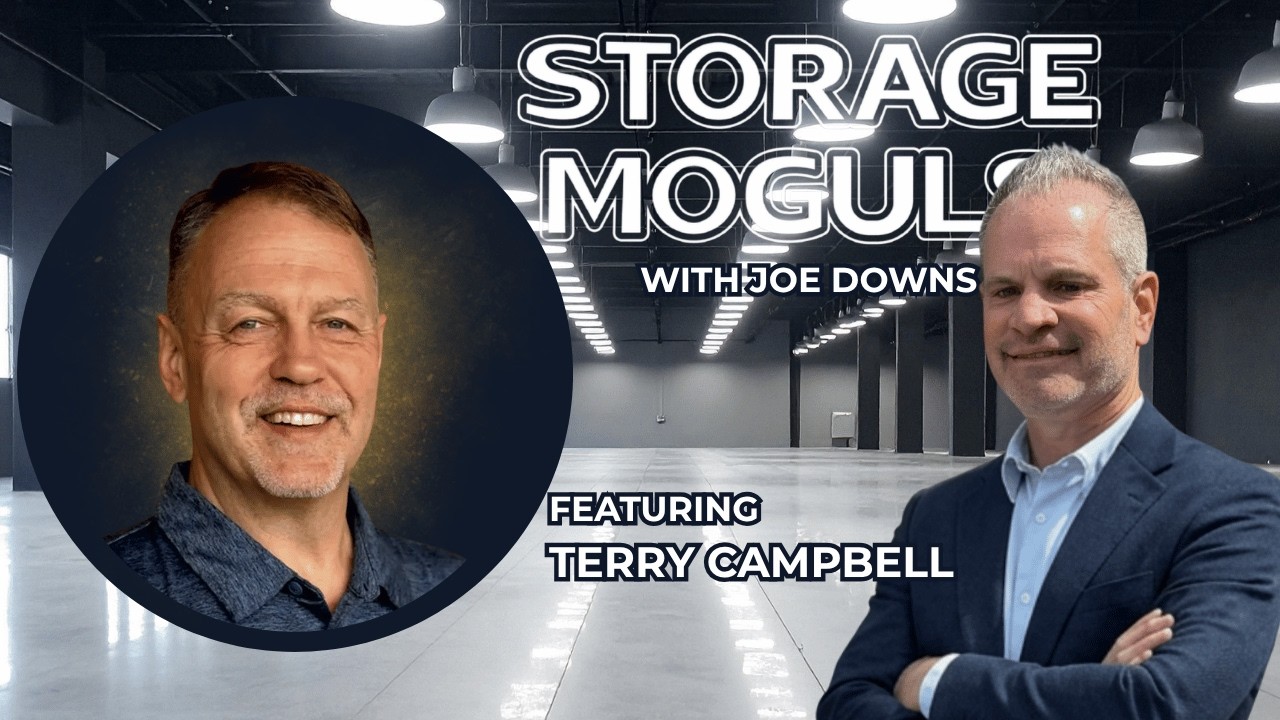
In this Storage Muggles podcast episode, host Joe Downs interviews Terry Campbell, a commercial insurance specialist with extensive experience in building, financing, managing, and owning self‑storage facilities. The conversation centers on the critical importance of proper insurance for storage operators, highlighting real‑world examples such as a FEMA flood‑map remap that drove a facility’s flood insurance premium from $11,000 to $84,000 annually and threatened the deal’s viability. Terry walks through the due‑diligence process, explaining how to check FEMA flood zones, the role of lenders, and the pitfalls of under‑ or over‑insuring, including coinsurance penalties and replacement‑cost updates. They discuss SBA loan underwriting nuances, common mistakes first‑time buyers make, and the impact of recent legislation (California’s rent‑cap law). The episode also covers insurance checklists for new acquisitions, the revenue potential of tenant‑insurance programs, how security features affect premiums, and the differing insurance considerations for traditional self‑storage, boat/RV, and flex‑space facilities. Practical advice is offered on annual policy reviews, engaging an insurance advisor early, and leveraging specialist firms to contest unfavorable FEMA remaps. The discussion ends with Terry’s outlook on his future, retirement plans, and a call to action for listeners to audit their insurance before closing a deal.
Chapters
$11,000 a year. That's what one storage owner was paying to insure a building against flood damage. Then a remap happened, a FEMA remap. Nothing changed about the property. Nothing changed about the roof or the walls. And that same coverage came back at $84,000 a year. Same building, same physical risk, nearly an 8x jump overnight. My guest today sees this exact scenario play out across deals nationwide. By the end of this conversation, you're going to know exactly how to find out if you're one remap away from a number like that before it finds you. I'm Joe Downs. Welcome to the Storage Muggles Podcast. My company's acquired over 20 self-storage facilities and over $70 million in assets across multiple storage niches. And I've seen this business from most angles, educated hundreds of students, and learned firsthand who succeeds and why. And that's what drove me to, to build this StorageMuggles.ai, which is an AI-powered community with the tools, the structure, and the guardrails to teach people how to buy their very first storage unit. storage facility. It's sort of like bowling with bumper rails. And that's exactly why we launched this podcast too, to bring you the lenders, the brokers, and other industry pros like today's guest, as well as the real people who've successfully purchased their very first storage facility so you can hear their stories and learn this business from the folks living it every day. And I'm actually, I don't know if I'm fired up about today's conversation, Terry, and I don't mean no disrespect to you. No, no disrespect. It's just insurance. And my opening hook there about that one buyer, that was me. So this is a little bit of PTSD to live through today with you. But I am excited to talk with and share with you my guest today, Terry Campbell. Terry, the hat he's wearing today, and I mean no disrespect by saying that, and you'll soon understand why, what I mean by that in a second, folks. Is the hat he's wearing today is a commercial insurance specialist at Johnson Insurance, and he's focused on self-storage and flex space. But here's what makes him different and why I said that. He sat in every seat in this business. He started on the construction side building storage facilities. He spent 7 years at Live Oak Bank underwriting SBA loans for storage deals, folks, and pay special attention to that detail because Because I know a lot of you who are getting into your first storage deal someday, SBA loan is— there's a— you ready for this stat, Terry? There's a 90% chance they're going to use a 90% SBA loan. I made that stat up, but there's a very, very high probability they're going to use an SBA loan someday to buy their first storage facility or maybe their second. And then Terry also ran third-party management as CEO of Copper Storage Management. So, and today personally owns about A dozen self-storage facilities. So while insuring the same business he owns, he's been in every part of it. So folks, if you end up talking with Terry, you end up buying your storage facility, you're gonna need insurance. You end up talking to Terry, you're not getting an insurance guy. You're getting a guy who's seen this business from a lot of angles, and that, that can be very, very beneficial. So Terry, before we get into it, um, Oh, first of all, welcome to Storage Moguls Podcast.
Thanks for having me. Glad to be here.
Looking forward to the, to this, uh, conversation and, and hopefully you'll look forward to a lot of phone calls from this. Before we get into it, uh, I do a few true/false, uh, questions every episode here, Terry. Um, it's all about the industry. I, I have high degree of confidence that you're gonna get them right. So here it goes. True or false? The average self-storage tenant pays around 2% of their household income for their unit while the average apartment renter Pays around 35% of their income in rent.
I'd say that's probably true.
That is true, Terry. Per the 2026 Self Storage State of the Market Report, storage tenants spend about 2%. And, and when you rent, you're spending about 35% on your apartment, which is exactly why a $10 rate bump barely registers and why existing customer rate increases work as a revenue Lever. All right, let's start with, uh, with, with a number that should make every storage owner listening and even those who are thinking about it a little uncomfortable. Terry, $11,000 a year in flood insurance coverage remapped overnight to $84,000 for the exact same building, same property. This is not hypothetical. It's a real deal. We consulted you on it. You didn't do the policy, obviously, because we had to back out of the deal and not do the deal. So, and this is over 6 months ago. So, uh, I, I'm sure you've looked at a lot of deals in between. Um, but that's the kind of blind spot that shows up in due diligence after it's too late to walk away. Terry, what actually happened there? What, what, what triggered that remap? And, and When, when did you— I know we brought it to you with a, you know, what do we do here? But when would— when does somebody find this out? When does the buyer typically find this out?
Well, you know, as far as why did it happen, who knows how FEMA goes about their process and thought process on when they do remap. Maybe they've seen something that's, that's happened a lot in a certain area and they go back in and review things and, and change their maps. There's also companies out there that go in and look at FEMA maps and are able to undo these things. So there's no solid answer to be able to know why they're doing these things, but it's definitely one of a couple of things, especially that an owner or a potential buyer should be investigating. Part of your due diligence should definitely be looking early on at what your insurance is going to cost. You should definitely early on be looking to see if you're You're in a flood zone, a FEMA flood zone. Normally a bank during their due diligence is going to catch that before closing, but sometimes they don't. We had one just recently. A customer reached out. He already owns the facility. Just last week. He owns the facility and he wants us to quote it. We've started bringing all of his facilities on board. We're taking care of them and covering them for them so they could just have one agent. So he brought another one over. Hey, I want you guys to quote this. to take over this renewal. And one of the habits that I have is anytime somebody calls me or sends an email, I pull up that address and look at it on Google Maps. Do I see anything particular that stands out that might be an issue? And also, are they anywhere near any kind of body of water, river, or anything like that? But in addition to that, my next thing that I do is pull up the FEMA map, every one, and just see, is it in a flood zone? Is it near a flood zone? This is one of the surprises, like, just like you explained. I mean, you gave a perfect example of why you've got to know this upfront and why you should be looking at that. To me, when the brokers are getting the listings, you know, they should be asking insurance questions. And I share information with a lot of the brokers. Look, here's a checklist of things you should be asking and finding out for that buyer. Flood insurance is one of those things. Or is the current owner, do they have flood insurance? And find out if you can, just look at the FEMA map. It's very easy. Is it in a flood zone? Because when I let this customer know last week when he sent me this email and we were on the phone and I pulled it up and looked and I said, hey Matt, you didn't select flood insurance as something you wanted quoted. Did you handle that separately? What's the story with that? And I took a snippet from the FEMA map and Stuck it in the email, sent it back to him. He said, oh my gosh, I had no idea it was in a flood zone. The bank didn't catch it that it was in a flood zone, and it wasn't just recently remapped. So always make sure, because that flood insurance can be higher than your property and casualty. It's per building. You got to get it quoted per building, and it is not cheap if you're in a flood zone. It's expensive. Now, that's some— we always push people to consider flood insurance because If it rains where you're at, you could potentially have a flood. There's several scenarios I could give you that people— Western North Carolina a year ago, well, it's almost 2 years now, in October got devastated, devastated from Hurricane Helene.
Ashford.
People who were nowhere near a flood zone, some that might have been near one but weren't in it, they didn't have flood insurance. And everybody All of us by nature are, are of the, oh, it's not gonna happen to me camp. Well, there's a lot of folks that it happened to and they lost everything because their buildings got destroyed, demolished.
That's why we pay for insurance, Terry, so it doesn't happen. Doesn't the—
Exactly.
The act of paying keep it away, keep the catastrophe away?
Nope. Doesn't, doesn't keep it away.
There seems like there's a direct correlation between paying for insurance and never needing it.
You would think so. You would think so. But it definitely, if you don't, if you don't buy it, it's gonna happen.
But it's, I mean, now that I'm, I'm reliving this situation, I'm just realizing two things I want to ask you about. It wasn't that the 100-year map changed. Was the seller knew he was in the 100-year flood zone. And even he never, he never had flood insurance, actually. He was 80-something years old, lived there his whole life and said, There's never been a flood here in 80-something years. And it wasn't the 100-year, now that I remember, it was the 500-year to add insult to injury. So, they changed the 500-year flood map. He didn't even have flood insurance. We obviously had to back away. By the way, for your new time, for first-time buyer, new buyer, Terry nailed it there if you missed it. Your lender's gonna probably require it. Usually, especially if you're in a flood zone. Our attorneys are the ones that picked up on it at the very last minute, by the way, because FEMA just changed it 6 months earlier. It was so we had to bail out of the deal last December of '25. I think in July is when the FEMA map changed. So we which that sounds like a long time, folks. It's not. That's that's a very short amount of time to you know you have to catch all that at the at the county level at the at With the title docs. But in either case, your lender probably is protecting you. If you're not using a lender, if you're buying for cash, you, you really need to make sure you're dotting i's and crossing t's here. Terry, I'm sure, is nodding his head in agreement there. Terry, I want to, I want to speak now directly to the owners. So if you already own this, our seller in this scenario, this happened up in Ithaca, New York, our seller up in Ithaca. I don't know if he sold the facility or not after, but he now knows he's in a 500-year flood zone. And you mentioned earlier, you know, folks that can do something to unwind that. He's convinced there's never been a flood here, never will be. Obviously he doesn't know that, but if he is so convinced and so moved that he wants to spend money, how do you go about undoing it?
If it's able to be undone, there's a company, there's probably more than one. There's one that I know of that I actually met at a self-storage trade show quite some time ago, and they have been successful. Now, this is a double-edged sword, okay? They have been successful at going in and looking at the new FEMA information and then being able to do surveys, use elevation maps, do all sorts of technical work that they're able to do and go in and get this changed back so where it's not in a flood zone. Or, and maybe not one of the bad flood zones, but maybe one of a better, if you want to call it that. But there's companies out there that do that. You can't really do it yourself. It's very difficult to do by yourself, but hiring a company like that that can do it. Now, I said it's a double-edged sword. We as advisors, insurance advisors, want to ensure you— want to advise you to do things that are going to protect you against certain risks. And we always tell people to consider flood insurance. Like those folks in North Carolina I was just talking about, western North Carolina, that's where I'm actually at. I'm in central North Carolina. But those folks in western North Carolina, if they would've had flood insurance and not— if they weren't actually in a flood zone, it's not that expensive.
Right.
It's not that bad. So we always tell folks, consider it, look at it. If you're near a flood zone or you're near a place you know that there's a good potential that something can happen, you might want to consider it. But so that's why I say it's a double-edged sword. We recommend everybody consider it because technically the way we look at it, if you're in an area where it rains, you're potentially in a flood zone. I mean, where I live in central North Carolina, last year, a year ago, July 4th weekend, We had Hurricane— not Hurricane, it was Tropical Storm Chantelle came up like from Florida and just liked the way we looked, I guess, because it came and sat for 10 hours. We got 10 hours of rain and 10 inches of rain in 10 hours. So it— and I mean, it was raining hard. Roads washed out. Places were flooded that should have never seen water. Even the water treatment plant in our town was underwater. People in this town, it was like 7 to 10 days, had no water. I mean, luckily for me, I have a well, but nobody was expecting that. So I guarantee you there's a lot of people that never had flood insurance that aren't technically on the FEMA map in a flood zone that have bought it because they lived through it. So we say we recommend it, but at the same time, if you got a situation like you're talking about and you want to try to undo it, there are ways of doing that. And I can connect you with the company that does that for anybody who's interested in trying to go that route.
Yeah. And, and to be clear, I wasn't suggesting people try to get out of flood insurance, your most basic flood. This was the 100-year to 500-year. It took us from $11,000 we would've happily paid.
Yeah.
To $84,000, which would've taken the value of our facility from $1.5 million to $600,000.
Yeah.
So, you know, obviously it just, the deal didn't work for us. And that, that's why I asked that question. But no, you nailed it. And, and that's the real question underneath all this is, are, are you overinsured or underinsured right now? In general, but in particular with flood insurance. And would you actually know, most owners have probably never even actually checked. Terry, is that something owners can do? Can they check with you? You field those inquiries?
As far as if they're in a flood zone?
Or just have them, have them look at your, you know, their, their current, uh, insurance situation. Is that something that you, you'll do for folks?
Yeah, absolutely.
All right. Make sure at the end of this, we'll, We'll have you give everybody your info. All right, Terry, true or false? California just became the first state in the country to legally cap how much a self-storage operator can raise an existing tenant's rent each year.
I think that's false because I believe it was New York.
Uh, New York is probably coming because it is actually unfortunately true. California SB 709 I didn't even know this. Effective January 1st, 2026. I actually thought, I thought it was defeated in California. Apparently it's passed.
Wow.
Caps the annual self-storage rate increases at the lower of 5% plus CPI or 10% and requires new leases to disclose whether rates are promotional. It's the first law of its kind aimed specifically at self-storage per the 2026 State of Self-Storage Market Report. That's not good news, Terry. That is not good news.
No. It's not.
That is rent control. It is by another name.
And that's why I fought New York.
We, well, another, another time, another day. We got out of some buildings in New York.
Yeah.
Uh, family thing, because I knew rent control was outta control. And thank goodness based on what's going on there now.
Right, right.
All right, Terry, I wanna understand how you got here because most insurance people I meet have never actually built or owned a storage facility.
Sure.
You've sat in basically every seat, um, in this business before you ever sold a policy. You, you built them, you financed them, and then you manage them and you own them. And that's actually pretty rare. So, uh, how'd you, how'd you, how'd you end up wearing this, the insurance hat?
I'll give you my paper trail.
You trying to play more golf? Is that what's going on here?
I'll give you my paper trail here. I, um, Like you said, you know, I was a building supplier. I mean, I was actually with Betco for 20 years. I started there as an estimator and worked my way into sales. Long story short, I started as an estimator. When I left, I was Executive VP of Operations and VP of Sales and Marketing. And, you know, we did a lot of self-storage. And Live Oak Bank, as you mentioned, they were looking to start a lending team. For self-storage in the SBA realm. And they reached out to me and said, we've had a couple people say we need to call you. You're the guy that we need. And they explained to me what they were looking for. And I'm like, I don't know why they told you to call me. I said, I do know self-storage. I know a lot about it, you know, but I'm not a finance guy. And they're like, we don't want a finance guy. We don't want to break somebody's bad habits. We want you to teach us the self-storage industry. We're going to teach you the lending industry specifically. So SBA. And I said, okay, let's do it. Our kids had just graduated from college. They're off the payroll. And I'm like, you know, I'll probably kick myself in the rear if I don't try this. So I left and went to Live Oak, started their lending team. I was there for 7 years and reached a point where, I mean, I traveled a lot. I traveled a lot and I was just burnt out on traveling. And at the time I was an investor with Coppers at Copper Storage Management. We'd been friends for years and had invested in facilities and They were looking for somebody to come in and take it, the third party, to the next level. And so I came on as CEO and part owner of Copper Storage Management there for a couple years. But that whole string of years and all those things that I had done, after about 2 years, I'm like, guys, I am burnt out. I'm gonna be one of those guys that retires early. I was 57 years old and I was like, I'm gonna retire. So I retired.
Wow.
I found out there are all sorts of side bets how long it would be before I was back. And whoever said 6 months won because it was right at maybe a little less than 6 months that I was back in the industry. But Johnson Insurance, who's in our hometown of Moxville, North Carolina, I've known the folks there. I met the CEO at an event, even though I knew his mom from being a schoolteacher, because that's the town my wife and I both grew up in. And they reached out, wanted to start a division to specialize in property and casualty for self-storage. Well, it didn't take much for them to convince me to unretire, and I did. And that's how I've ended up here. It's been right at 2 years, I think a week or so ago. It's been 2 years since we started this vertical at Johnson, and it's been very successful. It's been good. That's how I've ended up here. And like you said, and I still am an investor in 11 self-storage locations in the Southeast. So I see it through the eyes of the owners as well and the people looking to get into the business. I'm not just a vendor, and I even offer our insurance folks Other advice as needed. So it's been good from that perspective to be able to share that information. But I see it from a lot of different perspectives and that's helpful a lot of times to a lot of our clients.
And how long were you at Becca?
20 years. 20 years and 1 month. 20 years and 1 month.
So 20 years building them, 7 financing them.
7 years, 1 month.
7 years.
I always seem to add a month on there.
It's just for posterity. Uh, I'm actually gonna have Anne Mino on the show in a couple weeks coming up, um, with Live Oak. Um, love for you to give us, give the listeners a preview of what that's gonna be like. What, what, what's an SBA underwriting detail first-timers mostly, mostly, most consistently get wrong?
What do they most consistently get wrong? Well, it's not understanding cash flow, not understanding how the deals work, the things you need to make sure that you've done your homework on, putting together a good strong business plan. That's extremely important, I think, for any bank, but for the SBA programs, you've got— it's a cash flow-based loan. So it's based on cash flow, not your net worth. So you need to know going in, you know, do I have enough money? You know, let's assume you can get a 90% loan because we did a whole bunch of 90% loans. You just brought in 10%. So backing into that, am I going to have the cash to do it? Am I going to have the post-transactional liquidity after you close? They still want to see some money in the bank in case something goes sideways. It's not that you're going to finance 90%, you put all your money on the table and you don't have any more. You can't do that. I think a lot of times people don't understand they still need to have Money in the bank, but it's not nearly as strict as a conventional loan. It's not based on your net worth necessarily. It's not based on, you know, how much money you got in the bank, but there's no financial covenants. You know, I've talked to folks that have lived through the great financial crisis and nearly lost everything because banks were calling loans or requiring more cash to balance out their equity in the facility. So, you know, some, like I said, there's no financial covenant, so you don't have to keep a certain amount of debt-to-equity on that facility. As long as you can make the payments, that's pretty much all that matters.
Yeah.
As long as you make the payments. Where you've got financial covenants on other deals that may depend on so much in savings or a CD or your debt-to-equity And you're on the loan. So it's a great program. It has, just like anything, you got the good, the bad, and the ugly. It is a personal guarantee. You know, most conventional loans, but there are some conventional loans they don't. If you put enough equity down, you don't have to personally guarantee it, but you will have to personally guarantee that. And then you need to make sure you understand that. And you need to understand, here's one thing I tell people to understand. If you've ever, ever, ever, ever had a bankruptcy in your life. It doesn't matter if it doesn't show up anymore on your credit report. It doesn't matter if it's been more than 7 years. If you've ever had one, answer the questionnaires truthfully. Don't try to go around it because there's a, I think it's a 1919, is a form you fill out and it asks if you ever had a bankruptcy. And if you say no, because hey, it's gone off my credit report, they're going to pull a report on you called a PACER. And that thing will know everything you did since you were born. And if you say no, you've subjected yourself to fines and penalties, plus you're probably not gonna get the loan because the credit team will probably look at you as somebody who's not, um, somebody they wanna do business with.
Mm.
So that, that's another thing to think of. That doesn't mean, you know, some SBA lenders won't do loans for people who've had bankruptcy no matter what. Some will. I, you know, I still help folks along those lines from a consulting standpoint on getting an SBA loan. And that's one of the things I point out they need to be sure that they're honest about.
That's good feedback. Good insight. Terry, before we move on, last question. What, of all the things you've done, lending, management, ownership, insurance, what's, what's I want to ask you what seat taught you the most about risk, but there's so many different kinds of risks. What, what is the most, what is the riskiest of risks in your, like, what pops out at you and which seat taught you the most about it?
Uh, I, I would say probably, I'll, I'll say probably lending. It's very close between lending in here and doing the insurance, but the lending You learn the things that can happen, what can happen to you. Like I was saying, it's a big risk if you haven't done your homework. If you haven't done a lot of homework, ran through the scenarios, looked at the what-ifs, look at the worst case. You want to look at a worst case and then go from there. And if you don't, if you look at everything as everything's going to be great, it's going to be rose-colored glasses. For example, During the pandemic, you know, the numbers for us in the ownership side were great. Occupancies went way up, rates went way up, and everybody started underwriting acquisitions and new construction based on those numbers from that period of time. I knew, I was 99.9% sure that that was not going to be a good thing for people to do because it was going to come back to sort of a normal, what we called normal before the pandemic. And it has, it's proven it's— in fact, it's been a little worse just because Mortgage rates went up. People aren't moving. It's still the number one driver in our industry, but underwrite it in a way that, you know, you've got room. So I'd say from a risk standpoint, it was lending and just seeing— look at it from the worst case. And also, I've seen people who took out loans during that period of time. They paid too much. They expected those sort of performances, you know, from then on. And it's put 'em in a bad position. Their, their loans, especially if they had adjustable rate loans. I've seen adjustable rate loans go just through the roof. I mean, interest rates increased by over 5%, 5.25%, 5.5%, something like that. That does a number on your payment.
Yeah.
And if you've got, you know, your payment going up and then people not moving and occupancy going down, you just gotta try to factor for these things. And I think as far as the risk, That's it. Making sure that you've really done your homework, put your business plan together, what-if scenarios and things like that. And then, you know, secondarily, obviously, is the insurance, making sure that you've insured your investment and covered the risk, or at least the higher risk of things that may happen. And you've got, you know, from the insurance side, you've got to decide what your risk tolerance is. It's best talking through it with your agent to find out where that really is. What are you comfortable in having to pay out of your pocket versus You know, letting an insurance market carry it for you.
Great words of wisdom right there, Terry. Thank you. True or false? Roughly 1 in 3 Americans has rented a self-storage unit at some point, up from about 1 in 17 back in the year 2000.
True.
True is correct. And I'm still not one of them. Per the, per the, per the latest market reports, storage rental has gone from a niche behavior, niche Behavior niche niche. I feel like I change what I say niche or niche half the time. Behavior to something close to a third of the country having done it. Household penetration alone climbed from just under nine percent in 2005 to 12.6 percent in 2024, and it's still growing. It's just we're a consumer society. I don't know why we expect it, and we don't throw stuff away.
That's right. We don't.
Terry, here's a fear I think almost every storage owner has and almost nobody says out loud. And I don't actually know if I'm properly insured and I won't until it's too late. Right? I don't actually know. I think, actually, I don't know if people are wondering this, but they should be. That's the scary part is they're probably not wondering it. I don't actually know if I'm properly insured. I have had this conversation with folks, but I wish more people would have it. And they won't find out until it's too late. And that's not paranoia. Terry, you see this, the actual dollar consequences of this on both sides, overinsured, underinsured every week. Yeah, I don't actually know if I'm properly insured. A claim, a lender audit, a flood remap. Exposes a coverage gap that wipes out equity or kills the deal at the worst possible moment. What are we seeing out there? What, what do you see on the, on the day-to-day?
You're absolutely right. People, they don't, they think of insurance as a, a, a necessary evil. It's there. I got it cuz I have to have it. I deal with it once a year and I put it away. I don't think about it. I see people who are underinsured because, you know, prices of replacement costs have gone up and they have not. Number one, they have it, but their agent has not done a good job in staying on top of it for them and making sure they are properly covered. That's one of the things you saw back in '21, '22 when steel prices went through the roof. People weren't updating their replacement costs. So if they had to replace it, they would've been in trouble. So—
Hold on, let me pause you there for a second. Because I think I just— maybe I've been ignorant about it. Although I don't— this is not my role at our company to have to worry about. But I think you're right. So when the cost to replace something went up, if I was locked into a dollar amount of cost of replacement, I— and it went up by 25%, let's say— I am now only replacing 75% of my facility. Is that right? At least that's what the insurance proceeds will provide?
Sort of. That's a sort of a yes.
Okay.
But if you've insured your facility for at least X%, so if let's say you pursue that, you insured your facility for 90 to 100% of the value in January, and in December you had a fire and it burned down. You're still going to be, a lot of times you're going to still be covered. Here's the thing, the insurance companies, the carriers say most of the time, it's, you've got to be covered for at least 80% of that value.
Of the replacement cost.
Exactly. So if you're covered for at least that and the replacement value stays the same, you're good. But we always try to do this and encourage and I won't say require, but we try to force that you put a replacement cost in place, a policy in place for 100% of today's value. That way, if it does go up in that, that year and it goes up 20%, then you've got that cushion where you covered it for 100%, but you're required by the carrier to cover at least 80% to get it replaced. So by making sure that you cover 100% of that cost at the time of policy renewal, Or the new policy, if prices go up during the year and they had an 80% requirement, you have to be covered for at least 80% of that. You've done what you needed to do. You tried to be straightforward. You acted in good faith. So you have a cushion and that extra could be covered. But what I'm talking about was 100% increase in cost. Back then, at least 50, sometimes 100%. And people were not adjusting their coverage. Carriers were not, or, uh, agents weren't going out and asking that question. We need to increase your value.
Well, let's take a, a realistic scenario in today's world. I buy a facility for $1 million today. It's 10,000 square feet. All right. Um, 5 years from now, 4 years from now, right? You, you were referencing, which totally absolutely happened, the, you know, during COVID costs spiked. Let's just take a normal scenario, right? Let's say 4 years from now, the cost of the, uh, to replace the facility because there's a new steel tariff or something, um, is up 30%. I bought it today, $1 million. I insured it for 100%. 4 years from now, it's gonna cost $1.3 million to replace that facility. What's my actual coverage if I haven't changed my policy?
You're— so it's 4 years from now. There should have been at least 4 conversations with your agent and they should have been making sure that you've increased the value. But if that didn't happen—
I've ignored my agent for 4 years cuz I don't, I don't wanna talk to him because I know he just wants me to pay more for insurance.
There's a penalty. It's called a coinsurance penalty. And you're gonna get hit pretty hard. You're gonna be paying a big difference. You're not gonna pay— instead of your deductible of whatever it is, you're gonna be paying a huge amount because you were underinsured. And there's a formula to that. And, you know, I can go through that. I can't do it right here off the top of my head, but—
This isn't a buy it, set it, and forget it. This is something I need to stay on top of every year and make sure I'm properly insured.
Every year there should be a conversation held and I even get— and if you do anything to your facility, if you do improvements, if you— let's say you bought a facility and you insured it. Next year you go in and replace the roof or you repave it or you do something that's an improvement. Your agent should know about it when you do it because it needs to— well, they need to go back to the carrier and get the pricing updated. Because let's say, for example, you went in and put a new roof. Well, you increase the value. of that facility. But at the same time, you should be getting a much better rate because a lot of the factor, the cost is depending on the roof of a building.
Are you saying my insurance rate could go down?
Uh, it potentially could go down. I'm not going to say it will.
You know, we're recording this, right?
I know that. I know that. But I'm gonna say your rates should go down. Your total premium may not go down, but your rate should. It's just like, you know, people—
I knew the dollar amount was going up somehow.
Just, just like, uh, people ask, one of the Some of the things that insurance carriers like to see is new roof. They like to see tenant protection, tenant insurance in place, security fencing, gates, things of that nature. But even electronic locks, like a Bluetooth smart lock type thing, they like to see that as well. And I asked one of the carriers point blank, I said, look, if my customer puts in smart locks, Is that going to lower their premium? They said, what it's going to do is going to increase the value of the facility. I said, so if it increases the value of the facility, it replaces the— it increases the replacement cost. So it's going to be more. He said, theoretically, but it's going to drop the rate. So in the long run, you know, it'll probably offset it, but your rate will be lower.
And so more coverage for the same rate or maybe a slight bump in rate or something like that.
Yeah.
So the fix here isn't complicated. What I'm hearing is you need to answer the phone. You need to have an attentive agent. You should probably become friendly with them. Answer the phone when they call. Do an annual audit so you're not guessing. Right?
Absolutely.
It's not just about paying more. It sounds like, it sounds like I, I might be missing out on more coverage for the same payment.
It could, it could exactly be that. But the important thing is, Having the correct coverage so that you are taken care of if there's a claim. I mean, that's the whole purpose for it. We had one that renewed last year. We took over the portfolio and one of the things we found during our application process, they had not told their previous, previous agent that 6 months before they added $1 million worth of new buildings to the site. Those weren't even covered. Anytime you do anything to your site, let your agent know. Make sure you do that. Have a conversation at least once a year. Have you done anything different? Have you made upgrades? Have you added a building? You know, what's going on? So you got to have that conversation to make sure that thing— everything's being looked at. You know, there's not a one-size-fits-all. It's okay. What have you got? What are the buildings made of? Have you done any roofing improvements? Whatever.
That's, that's solid advice. Terry, true or false? The biggest self-storage REITs Treat tenant insurance programs purely as a pass-through cost to cover their own liability, not as a way to make money.
False.
That is— you are correct, that is false. Tenant insurance programs are actually listed as one of the REIT's structural advantages, a revenue-positive expense offset. So the big operators aren't just covering themselves, they're running it as a profit center. So that's something to consider.
Absolutely, absolutely. In fact, one, one of my facilities I'm an investor in One of the big boys, I won't say who, manages it for us. It's in Florida and they make about $130,000 a year, uh, in tenant insurance off of our customer base and we don't get a dime of it. Wow. Very annoying when I look at what that does to the NOI and my value. But, but I will say at the same time, we got them to lower their management fees and also cap them. So it helped offset a little bit, but I'd rather have the income.
Yeah.
But they do a good job. I mean, we're 95% all the time. We still raise rates every month. So I can't complain too much. Um, but it would be nice to have it.
Let's, uh, let's get tactical here. So if you're buying your first facility, here's what actually needs to be in place before you own it. Terry, you run this process for Real Deals. So what's that checklist look like? What does the owner need to have in place?
The insurance?
Yeah. What's the step-by-step process you actually run through to insure a facility correctly from scratch? You know, property flood where applicable, liability, business income, customer goods, tenant insurance.
Yeah. What we're gonna do, we're gonna, we're gonna send you an application. It's gonna have one that's a spreadsheet. It's called an SOV. It's gonna ask you about every building. It's gonna ask you some attributes about every building and size of the building. You come up with a replacement cost. We're going to send you another— there's 2 parts. The other part, you tell us, okay, this is the deductible you want, this is the coverage you want, these are the things that you're doing with your facility. So we combine those, we ask questions, we see anything unusual, we come to you and talk to you about it. But the coverages that you want, I mean, number one, a lot of times the bank's going to dictate what you've got to do and the amount of coverages. But you're always gonna have property insurance, general liability. I say you should always, in my opinion, have the 2 coverages that are specific to our industry, sale and disposal liability and customer goods legal liability. You should always have those. And my recommendation is you have a minimum of a quarter million dollars for each of those, preferably a million if you can get it. Because those claims can— the legal expenses and awards, depending on what it was. Again, you never know what's going to happen if anything does, but it could be bad. It can be expensive. There have been some very expensive ones out there, especially if you make the horrible, horrible mistake of selling the unit of somebody who's active service military. But those are the ones you definitely got to have. You're going to want to consider flood, you know, look and see, are you in a flood zone? Are you close to one? Consider it. Cyber, you want to definitely consider cyber. You want to consider hazardous materials and pollution. And of that policy for the pollution and hazardous materials, you want coverage It's usually going to be a separate policy because if, you know, when you get your policy, your property and casualty, it'll probably have a line item for some pollution. It won't be much, but it'll be for you. It'll be on for anything you do. It won't be for third party. So if somebody on your— and some of your tenants bring in something and cause a spill or they build a meth lab or whatever, it's not going to cover that. You need third-party coverage. And we have some of that that we've sold a lot of, and it's very reasonable for what it covers. So you want third-party hazardous materials and pollution. And like I said, cyber, because of all the technology that's out there these days and information being stolen. If you get a breach or somebody breaches your customers and gets their information, at the very least, you're going to end up paying for 1 year of credit monitoring per facility or per unit. That can get expensive. Legal fees of anything. All these insurances on the liability side help cover you from a legal standpoint. And if you— I know more and more folks are going remote now, but if you have employees, you want to consider EPLI, Employment Practices Liability Insurance, because, you know, it's mostly used for discrimination. Sometimes folks will, you know, they get fired because they do a terrible job and then they try to sue you because, oh, you fired me because I'm I'm too old, or fired me because I'm a man or a woman, or fired me for my skin color, or sexual harassment, things of that nature. But if you get a disgruntled employee, sometimes they try to strike back, and that will help cover your legal fees. And if there is an award. But sale and disposal and customer goods are the next 2, in my opinion, after liability, your liability coverage and your property. But there's several of them there that we ask you about. Uh, do you want? And we can go over all those, you know, if you have questions about them.
Let me ask you a couple rapid-fire questions here. What, what's a safe rule of thumb for projecting insurance in a pro forma before you get the— while you're waiting for the quote back?
Oh, it is so hard to do. It's so hard. Uh, normally I would say, um, contact— if you're using an existing policy that's in place. If you're doing an acquisition and you're doing, looking at the numbers from the current owner, get their policy, look at it, find out what it looks like. That'll give you a baseline. But a lot of times policies that have been renewed years and years and years, the new owner, it starts over. It doesn't mean it's a good number. We bought a facility. When we underwrote it, we looked at the current owner's numbers, we doubled it. When we closed, it was triple. My opinion.
Why is that? And that's actually my next question is what, what jumps out at you when you're looking at a seller's P&L? It was why it's going to jump for a new buyer.
Uh, well, if they've been with the same carrier for many years and they've never had a claim, that carrier just lets it just keep riding. And if they ever— number one, if they ever had a claim, that's going to change. But if they've never had a claim It's going to jump. And a lot of these policies that are in place now, they, they don't have customer goods and legal liability. So you don't want that policy anyway. And you have no idea. But I tell folks all the time, look, if you want a ballpark idea to use in your pro forma, call me. We can do what they call a price indication. We can get with a couple— there's a couple of carriers out there that we'll go to and they'll pull up the address and say, Based on these assumptions, it'll be roughly this. And we can do that. Sometimes we can actually pull up recent quotes and extrapolate and say, you know, yours is $20,000. We just did one that was $40,000. We can come up with a per $100 in value rate and assign it, you know, something close. But it used to be easy, but it's not anymore, especially the way prices, the rate premiums have gone up the last several years.
Yeah.
So that's what I would do is call somebody, call an agency, talk to them, because it is so hard to use somebody else's existing numbers and things have changed so much in the last few years. It's difficult.
Is there any way you could give us a— I don't know. You don't seem to want to commit to numbers right now, and I get it. It depends.
You can't. You can't.
What, what is the— how could you explain to the listener the delta between a facility that has no security features and one that has cameras, lighting, a gate, and fencing? Like, what, what— is there a way to help us understand that?
There's no way to give you a dollar amount. I will say there is a difference, and it's considerable. In fact, it's— those things are so important that some carriers that do a pretty good job most of the time on, on coverage and price won't even quote it. They won't touch it if it doesn't have a fence, if it doesn't have a gate. If— I mean, cameras are— most everybody will do them if they've got cameras or not. It's just going to affect your rate. But when you've got no fence and no gate, some carriers won't touch it. Uh, so that's definitely going to drive your price up. But so definitely, if you're looking at buying one, take that into consideration in all of your, your calculations, that you may need to put a fence and a gate Uh, if you're operating remotely, you, you pretty much need one anyway to make sure you're keeping people who don't belong out since there's no manager to stop. Manager to stop.
Is it, is it worth in your underwriting then? Is it worth going to you and saying, hey, give me a quote, uh, as is, uh, or, you know, I'm gonna add, I'm gonna add cameras and lighting, whatever. Give me a quote like that, but then give me one where if I fence this thing and gate it. I want to see what the difference is because to me, that's, that's a math equation, right? A CapEx expense today versus a reduced ongoing insurance bill, right? And what does that do to the NOI and the performance of the facility?
Yeah, we can, we can, we can do that. We can get those same carriers that I mentioned to give us, you know, give me a quote as if right now it doesn't have a fence, doesn't have a gate, if you're willing to quote it. If they add these things, what will the difference roughly, roughly be?
All right. Does anything jump off the page? If I'm a, I'm a, I don't have to be a first-time buyer. I'm out there looking at boat and RV. Actually, this is us. We're out there looking at boat and RV facilities. We're building, you know, Store Pros, which is Pro Storage. We're, we just bought another small bay flex Pro Storage style facility. Um, so we got boat and RV, small bay flex, let's just say pro storage is one category. And then, um, you know, traditional drive-up, non-climate controlled self-storage. Are there, what jumps out at you, uh, in terms of the differences of insuring those 3 types of facilities?
Well, with boat and RV, um, you know, it's, it's similar to self-storage. The thing that is different to me That I always try to mention is make sure that when they park and rent from you, that you have evidence that they have full coverage on their units. A lot of times people want to go park their RV and as soon as they get it parked, they want to go cancel their insurance. You do not want that. You want to make sure that they have the insurance, they have it in place, you've got evidence, and also try to get named as additional insured on those things. For example, if it's a boat and RV facility and somebody parks their nice RV and they had 3 e-bikes and overnight a lithium battery catches on fire and burns their RV to the ground and took the 5 RVs beside of it with it and then also ruins your canopy, you want their insurance covering this. So you need to make sure they've got coverage. And in addition, if you've got a lot of the higher-end, higher-valued units that are parked there, you yourself may want to lessen your exposure by having an umbrella coverage. Try to get a little bit higher coverage on your initial GL instead of the typical $1 million and $2 million aggregate. That's typically what it is. Maybe try to get a $2.4 million, but if you can't, if the carrier doesn't want to do it, then get an umbrella and add another million to slash $2 million to it because you know there's extra liability there because of the cost of these things. So that as far as boat and RV. Now flex space, uh, because of how flex— you know, if we're talking flex space like you're renting out a space to somebody who has a business, you're renting out somebody, you know, it's an Orange Theory or whatever, it's a different animal because you have to underwrite to all the businesses that are renting those units.
Mm-hmm.
You know, if you've got things that— if you've got, say, a body shop that's got doing any kind of hot work, It's going to be hard to insure. If they do welding, if they do anything that's hot, if you've got, you know, whether it's actually a garage, you know, mechanics or a body shop, either one, if they do any kind of hot work, it's dangerous. If they've got a lift, there's a liability issue there. So the more risky, I guess you should say, the business that are renting, the more the coverage is going to be. And you, but you've got to make sure you know who those businesses are renting from you, what their nature of their business is, that they've got liability coverage in place. So, uh, diff— a little different animal, but because you've gotta underwrite to all of those businesses that are there, not just your business.
Interesting. Now, small, small bay flex is a, it's a tangential cousin to storage, but it has its own nuances. And you just brought up one of them and, and, and Before I jump to the last here, I wanna, I wanna unpack something there. So I didn't even consider that. So small bay flex, you need to consider who you're leasing to.
Yes.
And what their style of business is going to do to your insurance coverage. I guess you can't pass that increase off to them because you've already quoted the rent. Or I guess you could, you can negotiate as part of your rent.
You can negotiate that. A lot of folks that do that, are doing triple net, uh, leases. No.
Okay, there you go.
As well. So, uh, if, if it's what it costs is what it costs, you know, and, and the higher the risk, you know, if you've got somebody high risk and you get rid of them or they leave, bring somebody that's not, it's going to bring your price down, increase your NOI.
Yeah, that makes sense.
But it's all relative. Those, those, those high-risk ones may pay a lot of rent. That's where the ones that are not aren't as It's a fun business.
Terry, true or false? New self-storage construction starts are actually down more than 20% from their 2023 peak, and supply growth is projected at under 2% a year through 2027.
True.
That is true. Construction starts are down, folks, 21% from the 2023 peak, uh, and the supply growth is actually 1.5%. Is it rounding up there? Terry, last thing before we wrap here. If someone's sitting on a facility right now, or they're sitting on the fence right now, just trying to decide, and they're either— they own a facility or they're looking at one, they're underwriting one, what's the first call they should be making right now?
If they're sitting on the fence about buying a facility, Yeah, poorly worded.
They're, they're in the due diligence process. Um, they're looking at the facility, um, or they currently own a facility and they're wondering about their insurance coverage. What's the first thing they should do?
Uh, call us. Let's talk through what you're looking at. Let's—
boy, that was a, that was a setup for you.
It's call us. Let's see what you're, what you're looking at doing. Let's, let's look at it. Like I said, I want to pull it up and look at it online when I'm talking with you, I want to look at the FEMA map while we're talking and then have our next steps in place on what we need to do to get you some pricing so you can have your numbers. I always like to say, look, let's wait and save the application until you have felt like you're going to, you know, you've got it under either an LOI or a PSA, but we can talk about ballpark numbers. And we can also talk about your other one that you have. If you have other ones, we can look at that at the same time and say, are there some synergies? Are there some economies of scale? Is it possible that if you've got more than 50% common ownership, let's do a master policy and save you some money overall? So having that conversation in general, to me, it's never too early to have that conversation and that call. I used to say that in lending, it's never too early to have that conversation because the longer you're armed with info, the better it's going to be in the end. So Call, let's talk about it. Let's see what you got you're working on, see what else you may have and see where, you know, opportunities may lie.
And how do they get in touch with you?
They can get in touch with me by emailing me, terry@gohjohnsonins.com, or they can call the office number that it'll switch over to me. It's 800- 255-7777. And, um, just gimme a call, shoot me an email, uh, and we, we can go through whatever you wanna talk about.
And that your email again was terry@gohjohnsonins.com.
So Go Johnson Insurance, but not the whole word insurance. Gojohnsonins.com.
Got it.
And that's T-E-R-R-Y. Sometimes people, you can see my name there in the, in the video, but sometimes people say, spell it T-E-R-I.
Yep. All right. So T-E-R-R-Y at GoJohnson, J-O-H-N-S-O-N, I'm sure, uh, I-N-S for insurance.com. Wonderful. Terry, I close out these podcasts with maybe an unusual question, but hopefully, hopefully you'll walk away, uh, enjoying the question. Uh, have you heard of the book Be Your Future Self Now?
I don't think I have.
Because it was written by Dr. Benjamin Hardy. He co-wrote Who Not How with Dan Sullivan. Bottom line, have you heard of MrBeast?
Yeah.
Okay. I don't expect you to know, have to be intimately familiar with MrBeast, but the fact that you heard of him is good. He is the most followed person on YouTube. So he's the most followed person in the world. This book opens up basically about him. He was a 17-year-old kid who was a gamer. I'll never understand this, but Kids. Although I walked, I walked into my son's room last night and the two of them are on the phone with two other kids and they're watching Fortnite, which I thought they were done with, but apparently not. And I said, what are you doing? Like, well, watching these two guys play Fortnite. They're two guys, they're buddies, but they're really good. I was like, man, this is still happening. Anyway. Um, and in fact, there's professional leagues to being developed now, watching kids play video games. But long way of saying, this is who MrBeast was. He was a gamer who had a following of about 8,000 people that watched him as a 17-year-old play video games. And one night he decided to record 4 videos and release them on YouTube. And they were about him and his goals and his dreams and aspirations and what he thought he was going to do and where he was going to be. And the videos, one was released 6 months in the future. One was timed for a year out, 5 years out, and 10 years out. The 10-year video was just released October of 2025. He was already the most followed person on the planet by the time that video was released. The premise of the book is, and what, what, what MrBeast did was essentially what Cortés did. He burned the ships.
Right?
There was no going back. MrBeast, Jimmy Donaldson or something like that, I think that's his name before he was MrBeast. He did the virtual version of burning the ships. He released publicly, this is what's going to happen, right? One year, 6 months, one year, 5 years, 10 years, this is who I'm going to be. So, and that's what the book is about. Become— being today who you expect to be or want to be, right? So it's be your future self Now, not later. So the way I ask this question is this: if you could get in a time machine and go 5 years in the future and view yourself, what do you see? Who are you? Where are you? What are you doing? How big is your storage portfolio? Maybe tell us who Terry is. 5 years from now? And then there's a follow-up to that is, what are you doing today to make sure that's what you see if you got in that time machine?
Well, I'll tell you, for me, it's going to be different than a lot of other people who are going to watch this, uh, and that are out there. I turned 60 this year. 5 years from now, see, retirement for me, like I said, I tried it. And retirement for me is going to be working a couple of days a week. So I think probably doing what I'm doing now, some. Our self-storage portfolio we have, I think by that point in time is probably maybe sold because my, some of my partners are several years older than me. So I think they're wanting to, you know, sort of ride off into the sunset. So for me, it'll be doing this. Doing some consulting. I do a little bit now. Mostly what I do is consulting around, you know, site visits or helping out with SBA direction, trying to help them get a loan. So something probably along those lines, and then continuing to spend more time with these 5 grandkids as they're growing up than working. So that's— I think for me, 5 years from now, that's definitely going to be that because I'm not going to retire and sit down and just play golf and fish and all that. I can't stand it. I mean, I like it, but I can't stand to do that all the time. So that's something along those lines is for me.
Okay. And what are you doing today to make sure that's the position you're in?
I'm working with a couple of financial advisors to make sure that all these pieces are coming together as they should. Tax implications are being addressed. The asset Asset allocation, i.e., wheels and things, which we've had wheels and things set up for years, but just, you know, tidying up all these pieces so that I can focus on whatever I want to without being distracted.
And it sounds like you're already doing those things as well, like consulting and, you know, building your portfolio. And, and that's, that's, that's great. That's, uh, yeah, I, I enjoy, I enjoy asking that question because I like people, I like forcing people to think about, hey, where do I want to be? And am I on that track? Am I doing those things today to make sure that that's where I end up?
Yep. And, and who knows, I've got a few people who want me to help them find facilities and maybe invest with them. So I'm, I may be doing that and just sort of in the background, not being in the front, uh, all the time too. So it's not like I'm going anywhere.
Well, that's great. Well, Terry Campbell, thank you for joining us today. Again, folks, you can reach him at terry@gohjohnsonins.com. And folks, look, Terry's whole story proves the point of the episode. Insurance isn't the boring line item at the bottom of your performance. The thing standing between you and one bad flood remap and losing a deal, or, or, you know, that's, that's an extreme scenario, but it could just be a simple Flood or simple fire or tornado or, you know, whatever, whatever happens along the way. If you're underinsured, I'm sure that's not your intention today. We all want to save a buck, but let's do it the right way. Let's do it the smart way. So, get the audit before you close, not after, and do it every year. Every week on Storage Moguls, we're covering the full storage vertical: self-storage, boat and RV storage, pro storage, industrial, outdoor storage, truck parking, small bay, flex, light industrial. And if I haven't covered it yet, it's coming. So please like, subscribe, and share. And here's why the share matters. Don't forget, when you share this episode, you're telling everyone in your network that you're in this business, and that signal is going to go a long way for you. So share something based on what you heard today and share, share something specific and share it loud, share it proud, share it often, share it everywhere you are, because you're going to want everyone to know you're in this business at some point in the future. And this is the passive, easy way to do it. In the meantime, check out storagemoguls.ai. If you're not involved, love to have you as a, as a member there. Folks, there's a seller out there right now who's ready to sell. So stop watching, start moving, drive for dollars, send the LOI. We'll see you next week.
Bye.
More from Joe





The tenant only paid for the first month! #selfstorage #horrorstory #realestateinvesting

What happens when a storage tenant stops paying? #selfstorage #realestateinvesting #storagemoguls



