
The Storage Facility Nobody Wanted. The Deal Everybody Missed.
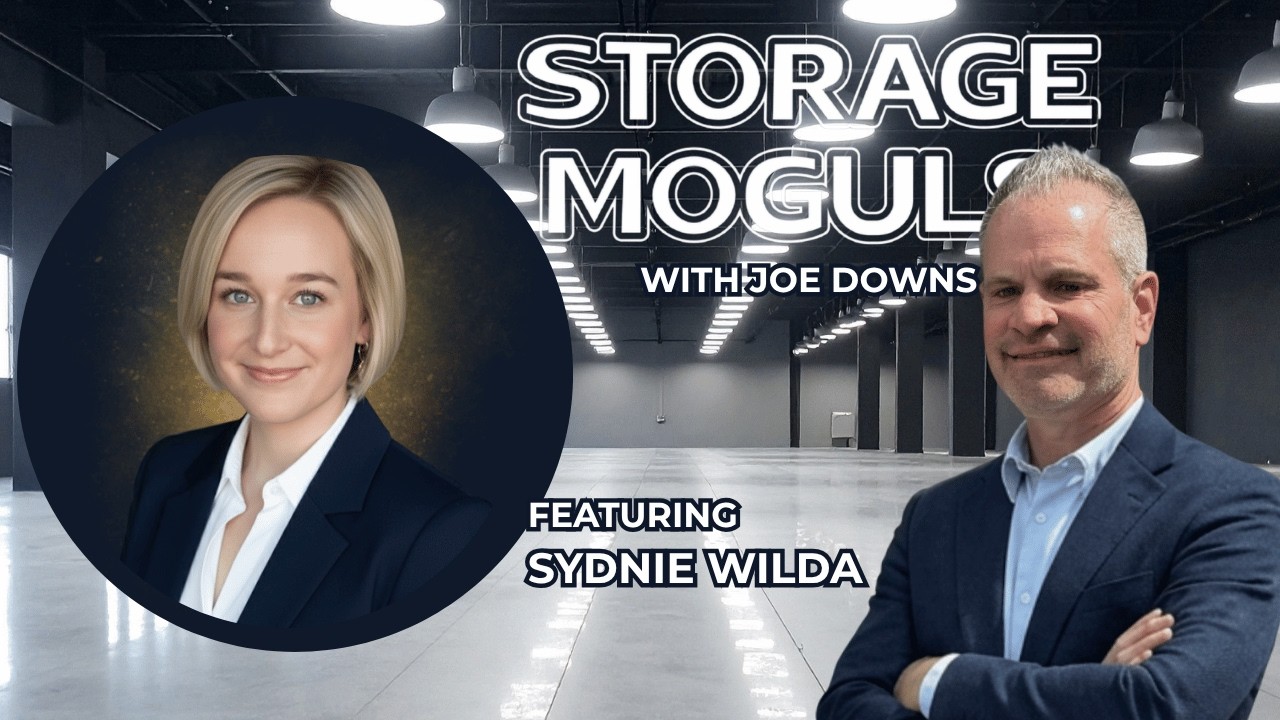
In this Storage Moguls Podcast episode, host Joe Downs interviews Sydney Wilder, an operations and property‑management expert at Anytime Storage. They explore why the boat and RV storage niche is fundamentally different from traditional self‑storage, emphasizing that these assets are "memory‑making machines" and require distinct customer‑experience strategies, especially around gate access and seasonal demand. The conversation covers common operator mistakes—treating boat/RV bays like regular units—and how proper mindset, pricing, and tenant communication drive low vacancy and high retention. They then shift to the broader self‑storage market, diagnosing underperforming mom‑and‑pop facilities by looking at rates, condition, and tenant experience, and discuss low‑hanging value‑add levers such as updating Google Business Profiles, raising rents, improving delinquency collection, and adding tenant insurance. Sydney outlines the critical day‑one transition tasks: ensuring software integration (gate, property‑management, website), reliable vendor contracts, and robust on‑site staff. The episode also provides guidance on selecting property‑management partners, evaluating their boat/RV expertise, and the importance of detailed proposals. Finally, they touch on growth mindset, future goals, and the community resources (StorageMoguls.ai, industry associations) that support owners in scaling their portfolios.
Chapters
I want you to think about something for a second. There are roughly 600,000 new boats and RVs sold in the United States every year. The industry adds somewhere between 25,000 and 30,000 new storage spots to accommodate them. Do that math. That gap doesn't close next year. It doesn't even close in 5 years. But here's the thing. The supply shortage is the smaller story. The bigger story is what most operators are doing wrong with the spots they already have. They're treating boat and RV storage like it's a 10 by 10 unit with a bigger door. Same rate logic, same tenant communication, same mindset. What they're missing is this: the boat in bay 14 is not a vehicle. It's the boat someone's dad taught them to fish on when they were 12. The RV in the back corner is the vehicle a family loaded every summer for 15 years. These aren't belongings. They are memory-making machines. And the operators who understand that, who run their facility like the caretaker of something that actually matters to people, those operators have the lowest vacancy and the longest average tenancy in any storage class you can buy. And it's not just boat and RV. There are mom-and-pop self-storage facilities sitting at 60% occupancy right now with rents 30% below market and a Google profile that hasn't been touched since 2015. The owner has run it the same way since 2003. He thinks it's worth $800,000. It's really worth $1.4 million if someone who knows what they're doing gets their hands on it. That is the opportunity. And my guest today has been inside both. I'm Joe Downs. Welcome to the Storage Moguls Podcast. My company's acquired 20 self-storage facilities, over $50 million in assets across multiple storage niches, with 3 more under contract right now and 2 pro storage facilities in development. I've seen this business from every angle, educated hundreds of students, and learned firsthand who succeeds and why. That's what drove us to build StorageMoguls.ai, an AI-powered community with the tools, the structure, And the guardrails to teach people how to buy storage facilities. Check it out at storagemobils.ai. And by the way, that's exactly why we launched this podcast, to bring you the operators, the lenders, and the real people who've bought deals so you can hear their stories and learn this business from folks living it every day. I am fired up about today's conversation. Let me introduce my guest, Sydney Wilder. Sydney, is an operations and property management expert with Anytime Storage. She has managed storage facilities hands-on, including for a period of time, one of mine, maybe 2 of ours actually. She's someone who's been inside the boat and RV side and the self-storage side. She's the person you call when you've just acquired a facility. You need someone who's actually done this to walk in on day one and fix it. Sydney, welcome to the Storage Moguls Podcast.
Thank you for having me, Joe. I'm excited to be here.
I am excited too. And I'm excited because this podcast is not only going to be informative, it's going to be a lot of fun. And speaking of fun, Sydney, before we get into it, I'm, I'm just— I'm gonna hit you. I prepped you a little bit, but I'm gonna hit you with a couple true or false questions along the way. So we're gonna see how you do. All right.
Sounds great.
Cool. All right, Sydney, so true or false, just before we get started here, true or false, roughly 1 in 10 US households rents a storage unit. Fewer than half of Americans own a passport. So 1 in 10, 1 in 10 US households, that's a fact, rents a self-storage unit. Is that—
I mean, I would have to say that that was—
Than half of the Americans who own a passport.
I'm gonna have to say that one's true because—
That is true.
Yes, that is true. I knew the boat one, the boat and RV, because 1 in 10 has one. So that one, that one I knew, but the second half tripped me up just a little bit.
Yep. So there's more people own a or rent a self-storage unit than own a passport in the United States. Isn't that crazy, right? I mean, I already have my passport, so Sydney, you're, you're, you're pulling the, the stat down. All right, Sydney, I want to talk about boat and RV storage specifically because I think most people who buy into this vertical are making the same fundamental mistake that they— before they even get the keys. And this couldn't be more timely because I'm in the middle of my Boat and RV 100 series on YouTube right now. So I was excited to— when the idea came to have you on, I was like, yes, this is perfect timing. So Sydney, you've managed boat and RV facilities, you've seen how they get operated. What, in your opinion, is the single biggest mistake you see operators make when they come from the self-storage space or vertical niche, whatever you want to call it, into the boat and RV niche?
I think the largest mistake that I've seen owners and operators alike make when it comes to boat and RV storage is running it like it's traditional storage. Because it's not. It's a completely separate niche that needs its own special attention and has its own special rules. So you have a lot more you need to be cognizant of when you're looking at boat and RV storage.
See, just, you grabbed right in my intro there and you ran with it. But, but here's the, here's the thing. I actually stole that from you in a conversation we had recently.
No, I figured you had, but no, I wasn't gonna call you out on it. I was gonna let you just Right.
No, but, you know, Sydney, when we had that conversation, I don't know, a month or so ago, um, it really— it made me think about how we were probably looking at it the wrong way. Um, and I really love that line I had in the opening there, that they're memory-making machines, because that's what they are. So I, I think what— I think the example used in the conversation we have is, look, you know, when somebody— when the gate doesn't open On a Saturday morning. If you're there to get, you know, your, your wife or spouse, whatever, sent you to the storage unit, you know, with the honey-do list of go get this and do this, gate doesn't open, it's almost like, hey, guess what? Gate didn't open. You're all, you know, where are my golf clubs? I'm going to play. Not, not when the gate doesn't open when you're there to get the boat or the RV. That's a completely different scenario. Walk, walk me through, walk, walk our listener through why What that difference is and why is it so immensely different?
I think the thing that people forget about when they're looking at this is it's a vehicle. I mean, everyone expects to be able to go outside, jump in their vehicle, and drive away. The only difference is, is that, you know, there's different restrictions, so they can't necessarily have it at their house, but they still need to have that same ability to grab it and go. So when you look at boat and RV storage, having that access is extremely important. You know, someone's showing up, you got to get out to the lake before the fish start biting. So you're there early, the gate's not opening, your buddies are waiting for you, you're trying to call and get ahold of someone, you're trying to figure out how you're going to make this happen. And if there's any hiccups in that process, people are going to be extremely dissatisfied because from the time that they purchase it, they've been set up to have a certain kind of customer experience.
Yeah, and that you're so right. And this, in this story, I think you told me that just stuck with me. Was, he said something like, think about the grandfather. And I think I even said that in my opening, who's there to take the grandson, the 12-year-old, 10-year-old out fishing for the first time. That's a big day, right? Kid got up early. He's excited to go with his grandfather. Maybe they hit the bait and tackle store for the excitement's building. And you get there and that gate doesn't open and it's completely deflated. Now, a grandfather who's paid his bill on time, he's been a great customer, whatever, he's about to take his grandson on, again, a memory-making trip. And an operational failure is the difference between their memories and their frustration, their excitement buildup, and then total deflation. And these things can happen, right?
Yeah.
But it's how you handle that. Or, and if I'm— if what's funny is, as I said that, I'm thinking how you handle it, it's already too late. If you're thinking about how you handle it, it's how you needed to be prepared for that moment, because that moment's coming. It will happen. So how is your facility prepared for that moment? Your gate will fail, folks. How are you set up for when it does? And if you're thinking about it, oh yeah, I should probably I should probably put a protocol in place to handle it. It's too late. That protocol needs to be on the gate. If this gate doesn't open, you call this number and we will have someone there in X amount of time, or we will do this, or we will do that, or we will give you the— we will tell you where the key is under the hidden rock or something, whatever it is. Because the difference between me not getting my boxes out or moving a couch that day Which, which could be important, by the way. I'm not completely undermining it. You know, maybe, maybe that's the weekend you gotta move the couch, but it's a completely different feeling being on the outside of that gate between having to do something I don't wanna do and not being able to do something I really wanna do. And, and when you highlighted that for me, it really just stuck with me. Like, wow, there is a distinct difference between managing a boat and RV facility.
Yeah.
And managing a self-storage facility, on the surface they look the same. But in terms of how they're used, how people— how they make people feel, which— who would think we'd be talking about feelings with self-storage and boat and RV storage? And, you know, we, we kind of joke around, they're just metal boxes, right? And here we are talking about feelings, but it's so important. Sydney, can you In your travels, can you think of an example where you had an issue at a boat and RV facility? It could be one of ours even. I know you guys manage a lot.
In that specific instance, there's a couple times where it's been like, hey, I'm here, the gate's not opening, whatever it may be. And they've called us and it's after hours or before hours or whatever. And so they're trying to get ahold of someone. And we've We've had people leave Google reviews. We've had the strangest things happen when those systems aren't in place. And that was one of the first, like, real big lessons that I think we learned when it came to access for the facility and trying to make sure everyone had it, because we weren't perfect right out the gate. There was still a lot we had to learn. We knew that there were some very distinct differences, but we didn't necessarily understand how. that needed to be approached yet. And so that's why—
So you learn from those experiences.
Yeah.
It sounds like you learn from those experiences. You mentioned Google review a second ago. Talk to me about that. Why did you say that?
So we had at one of our facilities, a gentleman called in and he was really actively trying to access the facility. The gate wasn't working. We had just, it was right after transition. They got through to our call center and they just were not impressed with the customer service experience that they had had. And so they left us a Google review and it was more so offensive to the call center than it was to us because they were just like, oh, this person didn't understand me. So you have to think of that side of it too and making sure that you have people in place that speak the same language as these owners because it's not the same as self-storage. They have to understand like going to the lake, what does that entail? You know, going camping, what does that entail? The long days, like if someone doesn't have that background knowledge and understand it, You're not meeting the customer where they're at. You're expecting them to come to you, and you cannot have that.
Here's what I just heard. That Google review hurt you twice. First of all, please tell me that wasn't one of our facilities. But secondly, actually, don't. I don't want to know. But secondly, here's why I say that. It hurt you twice because one, the gate didn't open, or if that— right, that's what you said, the gate wasn't opening. And 2, the plans that you did have in place, and I realize this is Just after transition. I'm not beating you guys up. This is how we learn. This is where these stories come from. And that's what I want everyone to know. These aren't made up. These are real life examples. We're people too. We're students of the game. We're all learning. Everyone I bring on here is still learning and perfecting. And and you know what they say about mastery? It's it's not a destination; it's a journey, and we're always on it. But what I heard was that Google review hurt you twice. Because the gate didn't open and the call center wasn't sufficient. So again, I'm not beating you guys up. It sounded— I think you just said it was right after transition. But by the way, folks, for anyone who owns a self-storage or boat and RV facility, after transition is your critical time. That's your tenant retention area. That's, that's the tenant retention zone. And things will go wrong. They always go wrong. That's, that's part of business. It's how you handle them, or it's how you prepare to handle them. It's, it's how you treat the customer in those moments that affects your retention. And retention is not a direct NOI, or there's no direct ROI on it, but there's a really significant indirect ROI in retention. Because if you lose customers, now you might have to play a rate game. You know, occupancy, occupancy growth leads to rate growth. So It's a lot harder— it's a lot easier, I'll say it that way, to keep a customer than it is to get a new one. And it costs money to get a new one. So right after transition is a very critical time period. And it sounds like in this case, what was set up wasn't adequate, wasn't good enough for what you were doing in that moment. And that's, I think, a critical— whether you're looking to get into this game, this business, Or whether you're already in it, I want you to remember these moments, this particular moment in the podcast, because it's critical. Sydney, talk to me about pricing for boat and RVs. In self-storage, we're managing occupancy and rates. And are there soft seasons? Sure there are. Are there better seasons? Yes, there are. But it's not quite the same as boat and RV from a seasonal standpoint. So talk to me about how, how do you price your boat and RV, um, spots on a seasonal basis? How do you manage that? Give us some inside baseball there.
This is where it's really fun and really unique because boat and RV facilities in the north are going to perform completely different and have different seasonality than storage facilities in the south. There are folks that, you know, the sunbirds that during that summertime window, they're gonna go up north where it's a little bit cooler, a little bit more temperate for them, and they may choose to leave their trailer or their boat up there. And then through the winter months, they go back down south. So it's very, very, very season dependent and very environment dependent. We have a couple of facilities that are in those more northern climates around the Great Lakes, and they have a completely different lease-up.
Mm-hmm.
than you would expect. Those ones typically lease up more in the fall, while our southern facilities, they see a higher spring peak along with most traditional self-storage. But it still hits at a different time because folks are kind of hitting that around the end of February, and then by the end of May, right after Memorial Day, everything's done. Like that is your leasing season for some of those facilities.
So you still have, you have your seasonality and then you have your geographical seasonality. So the seasons shift depending on where we are in the United States is what I'm hearing. So folks, like I've been saying on the Boat and RV 100, the Storage 100, we'll talk to you till we're blue in the face at storagemongrels.ai. This is not a hard business, but there is a learning curve. It's not hard, it's not difficult to learn, but you do need to learn. And this is why we're doing what we're doing with this podcast, bringing on pros like Sydney. So folks, there's a reason the operators who figure out the boat and RV difference have the lowest vacancy in storage. It's not the vehicles they're managing, it's the relationship, and that's the whole business. All right, Sydney, you ready for another one?
Give it to me.
The self-storage industry generates more annual revenue than the entire Hollywood box office. True or false? The self-storage industry generates more annual revenue than the entire Hollywood box office.
I want to guess that that one's pretty true too. It wouldn't surprise me if it was true.
You are 2 for 2. It is true, the storage industry does over— the self-storage or storage in general does over $40 billion a year. The entire US box office in a good year is worth— would you like to guess? There's a little bonus here.
$27-ish.
$10 to $12 billion a year.
Really?
Yeah.
Okay.
It's good to be in storage, folks. Forget, forget Hollywood.
Great time to be in storage. All right.
Um, I wanna talk about the mom-and-pop opportunity because there's a version of this that people think is risky and a version that's actually a business plan, frankly, hiding in plain sight. So Sydney, when you walk into an underperforming facility, what do you actually see? Gimme the picture.
When you walk into an underperforming facility, there's going to be things that automatically stick out to you. The first one that comes to mind for me is going to be the rates. The second is going to be facility condition. And I would say the third is probably going to be the tenant experience overall and how dated that experience can be.
Give me some examples of that.
So It's mom and pop, so maybe they don't have a website, so people have to come in or they have to call to try to reserve, and then they still have to set an appointment to meet someone in the office. Or they go online and it's not a user-friendly interface, so they can't rent a unit in less than 5, 10 minutes. It's taking 15, 20 because there's different questions being asked and different things that have to be filled in. They've made it all mandatory because this is how it's been set up. There's no after-hours lines, or if they are, it goes to Joe Schmo who lives on the back of the property in a shed and he's taking care of it. These things show how dated a facility can be and how it's actually performing. And I mean, contrast, you walk into a modern facility, it's clean, there's clear lighting, clean instructions everywhere, There's systems set up for people. So if someone calls and they have an issue, it can be taken care of very, very quickly. It's a very urgent request. And you're able to interface with different people, you're able to rent a little bit faster, and it just flows smoother.
All right. Thank you. That was a very, very good picture. And I asked you for a picture. And so when you did that in my head, and maybe in our listeners' head, 2 pictures were created. Let me tell you what was created in my head. And I want you to take my 2 pictures and make them real. All right, so in the first scenario, as you were talking, I was thinking about an old rural kind of dingy, I mean, they're outside, so dingy is not the right word, but Just kind of like the gates always open, the rates are painted on the side of the building, the weeds are growing, everything looks dated, you know, like almost like there's tumbleweed, you know, rolling down the aisle type of thing. That was the image in my head. And then you said a modern facility. And when you said modern, my brain went to like a brand new 4-story public, you know, urban setting or suburban setting, Public CubeSmart Extra Space, whatever. Take your pick. Shiny new, you know, everything glistening, whatever. But I don't think that's what you meant. That's just with the picture that came into my head. So take me through, or here's what I want you to bridge. Bridge those two. But remember the the the task at hand that I gave you was when you walk into. an old underperforming facility, what do you see? And you told us that. How do you make it modern? Because we're not knocking it down and building a 4-story building. I know that you can take that old facility and make it operate like a modern one. So what are some of the things you do with the— excuse me— the old facility to make it operate and feel and look like a new facility?
So when you're walking into that older facility that I kind of painted that picture for, the things that you can do right off the bat, which should scream for everyone, this is an amazing opportunity, is it's signage, it's paint, it's maybe it's repairing the gate, maybe it's upgrading the gate if it's standing open. You know, it's making sure that the people on site are, if you have someone on site, they're, they're well kept, they're nice, they're polite, they're friendly, they can easily address anything there. So they're very capable people. that are on site. You know, if you have an office, you walk in and, you know, you're greeted and someone is there and they're actively working on the facility in some way, whether they're, you know, responding to tenants via whatever facility software management system they have, or they're getting ready to go outside to do some facility maintenance. They're taking care of a door repair. They're, they're very active on the property and they're, they're making a difference. It's not something that's just being done passively, it's actively being managed. So maybe they're sitting there and they're doing tenant rent increases for existing tenants. Maybe they're sitting there and they're working on how to inform tenants about, you know, something coming up on property. There's active communication going both ways, and it's just a completely different experience than something passively being done and, you know, everything kind of being deferred for later.
Love it. In our experience, Sydney, um, when we take over an old mom-and-pop— and by the way, everything you described in that first picture is exactly what we're looking for. Like, that's the value add. That's what we want to find. That's— those aren't problems, those are opportunities, because we know how to fix them.
Mm-hmm.
And typically, um, what we see, the low-hanging fruit, is the Google Business Profile. Like you said, they haven't raised rates in years. They're doing a terrible job with their delinquency, if they're even trying. They don't have an auction process. They're not charging tenant insurance. Can you touch on each one of those, what you do and why they're so important?
Well, I think the big one that you just mentioned is that tenant protection, because having that in place is not only a benefit to the owner of a facility, it's a benefit to the tenant themselves, whether they have insurance that covers their storage unit or not, that allows that if anything should happen, because anything can happen, and any operator who says that something can't happen on their property, so it's not necessary, is kidding themselves because I have seen crazy things happen at storage facilities that you would never have anticipated. So tenant protection is a benefit for the tenant and extremely important not only to boost the NOI of your facility, but to really make sure that you're giving a tenant a positive experience because if you are able to get that to them, Then they understand that you can help them. They understand that you do have their best interests at heart. You're giving best tips on how to store your items. You know, you're, you're actively engaging with them in a different way.
So the bad Google profile, the below-market rents, the delinquency, the missed insurance revenue, none of that is a problem with the asset. It's a management problem. And management problems are the most valuable kind because they're fixable. And that's You know, that's what you guys do, right? That's, that's what we're looking to do when we buy facilities. So folks, everything we're talking about here sounds like a problem, but it's just an opportunity. And I, and I love that too. When you, when you see problem, you should really see opportunity. And that's, that's what we, we teach people and coach people and mentor people to, to do and see. So love that. All right, Sydney.
Yes.
True or false? There are more self-storage facilities in the United States than McDonald's, Subway, and Starbucks combined.
That one I'm going to have to say false on because I know that there's somewhere around 52,000. Is this where I finally get off track here and it was true?
I mean, it was set up for you to just agree and say true. I thought it was easy. Sydney, it's not even close. There are between 52,000 and 68,000, which is a huge range. Really depends on the publication you read. I've always said 55,000 to 60,000 is where I've found most publications say. I think that's right. Storage facilities in the United States. McDonald's, 13,800. Subway, 20,000. Starbucks, 16,800. Total $50,600. So if my math is— if, if my sources are correct, $55,000 to $60,000, storage wins every time. Besides, who would want to own those franchises? Terrible. All right.
Not when storage is at play.
Exactly. All right, um, let me ask you about something a lot of first-time buyers don't think about until they own a facility. And that's the day-to-day, the operational reality, what the phone looks like, what the software decisions mean, what, what's actually taking your time. Like what you wake up, you walk into the facility in the morning, or, or if it's remotely managed, you wake up in the morning, you sit down at your computer, what are you actually doing? What is a day in the life of the self-storage owner-operator, right? So Sydney, if someone just closed on that first facility, What is— you could start with day 1 if you want, or what are the first decisions that matter? And then what's like, what's a normal day-to-day?
Let's just start at day 1. If you've just purchased a facility, you need to make sure that all of your softwares work together. So your facility management software needs to be able to talk to your gate software, and that gate software also needs to talk to the operator. I actually came across some keypads that were incompatible with the gate operator. I had never seen that before. Um, so you have to make sure that that all works together. Your facility maintenance software needs to be able to integrate with your property management software. Everything has to work together. Your website, that one, that one is extremely important, and I think a lot of people don't think about it as often as they should, considering that that is the frontline of their facility and that is exactly how people are finding them. I don't know about you, but I don't exactly go driving around anymore. I just kind of put it in my Apple Maps or Google Maps and I'm like, hey, what is this and how do I get there?
Storage near me.
What I need, yes.
I think most people just go to Google and say storage near me. I mean, that's what I do for anything.
Well, but if your property management software isn't communicating with your website or your website is dated or you can't rent through it, you can't make payments through it, that is directly going to impact your customer experience on day one. Everything has to integrate.
I don't know what I'm doing. I just bought a facility 'cause I had money and my neighbor told me it was a good idea. And I watched the Storage 100 series on YouTube and, you know, that guy Joe Downs, he told me a bunch of things that, you know, he told me how to do it, but not really. So, you know, now, now I'm in it. Now I'm walking in the shoes. There's a lot going on here. If, if you're someone that really should be planning this before you close, but if you're someone that's planning to close on your first facility, who is there? How do I get help with this? I— you and I both know there's a lot more than what you just said needs to happen on day one.
Yes.
And, and I'm, and I'm— without taking 2 hours to— because we don't have that long on a podcast, What, what are, what are the— you just gave us the most important things, but who can help with those things? Because there's a lot of that, you know, I'm thinking rent prorations and setting up the, the software and the credit cards. And, you know, how do you get that done? We, we call it the transition of the facility, but the transition doesn't stop at closing. It starts at closing, right? So it really, it starts before it, but it continues at closing because now we own it. We've got the proverbial keys. And every dollar of rent from that day forward is coming to us. So what do we do? Are we alone? Are there other people that can help us?
You are never alone in storage. There is a very unique community that is built within this industry where you have your state associations, you have people within that state association that are happy to help you, you have property management companies that are happy to help you, especially if you don't know where to go or what to turn to. You have the National Self Storage Association that is given so many resources, and not only that, but you have the people that are actively helping you along this along the way with this. You have your attorney if you're struggling with anything to do with the lease. You have your realtor who can help make introductions to other owners in the area, so you can have that community built up from the back. You are not alone in storage. I have not met one single owner who's. thought that they were doing it by themselves and that that was the best way to do it because you have a community backing you.
Yeah, I'm trying to think, uh, thank you for that. I'm trying to think of like, how do you even decide what management software to use if you don't— your first time, and I've never done this before, how do I— I'm buying a facility, how do I know which one there is? What are my options and how do I know how to pick the right one?
So this is where it gets unique because this is a lot of, it depends, because a 200-unit facility is going to have different needs than a 400-unit facility or an 800-unit facility or a 1,000-unit facility. So knowing what you're walking into is extremely important. So the first thing you're going to want to ask is what is already in place?
Mm-hmm.
What's broken or what's working with what's in place, and that's going to help guide your decision forward. Do you want to have a more customized website, or do you want the one that just comes with your property management software? Do you want integration so that way you don't have to think about the daily pricing, so you can put something in place that does revenue management for you, and you, you know, you go in, you, you set your limitations on what you want to do, and you let that run everything on the back end? What tools you will need for your facility are going to be based off of the market that it's in and what currently exists versus what doesn't and what you're trying to accomplish with the facility.
I feel like I need to know, like, is there someone that can help me with that?
That's me.
How do I even—
I will happily guide you along the way.
I'm thinking like, I'm trying to put myself in the shoes of a first-timer, of someone who's, you know, look, the self-serving answer is you should go to storage moguls.ai and, you know, we'll take care of you with all the information. But assuming you're too good for that and you want to do it on your own, and I truly want to put this information out there for everybody, where do I even start? Like, how do I even know if I need a property manager? Because I think a lot of these, these questions would be answered by my property manager, right? If so, if I hired your company, Anytime Storage, I'm sure I would get all of this information, right? And I would sure I would get advice as to software and, and, you know, what to do. How do I even know if I need to hire you?
I think that if you step into a facility and you don't know where to start, And you don't know what you're doing and you need it to be successful, you look at a property management company, someone with a long track record of success with the type of property that you're in, knowing that they're going to go in and they're going to implement the exact same systems that work for every facility and keep everything running smoothly because they have everything standardized. If you don't want your facility to exceed— to succeed, you're going to keep trying and trying and failing different things. Because yes, you may be trying to learn, but the right property management company will also guide you and help teach you along the way the things you don't know. So that way you understand the why behind the things going on.
Every answer just leads to another question, Sydney. So here we— I'm going to keep going here.
Oh no.
That's— thank you. That's great. How do I know who the right property management company is?
You gotta talk with them.
What are some questions? Right. Well, there's a number of them out there. We've used different ones, so I'm very familiar with at least most of the industry. And then you've got some smaller one-off, they're companies, I guess, but they're really more, they're not as sophisticated. They don't have the systems, they don't have the staff, they don't have the processes and procedures. They don't manage the the same number of facilities with which to have all of those things, the systems and processes, procedures and staff. So how do I know that they're not the right fit? 'Cause, but they cost, maybe they cost less, right? How do I know they're not the right fit versus an Anytime Storage or, you know, I'll name some of the bigger ones, a White Label or a, why am I drawing a blank?
U-Haul.
Or even in the institutional, right? So all the way up to the CubeSmart managed and the Extra Space managed. How do I know who I should be talking to in the property management space?
The question you need to ask yourself is, how involved do I want to be with daily operations? And what does that quality of service look like with the companies that I am interviewing? Because You know, with a lot of the smaller companies, you might get a little bit more one-on-one attention. With a lot of the bigger companies, you might be getting more of that one-on-one attention. If you don't want to be involved at all, by all means, definitely look at the REITs. That's going to be a very universal experience for a lot of folks.
But I would imagine this— Sorry to cut you off. I would imagine the size of the facility Is going to eliminate some of the players, right? Some of the—
Yes, price is definitely going to, going to help narrow it down as well. But it's really that experience that you as an owner want for your facility. Because you're going to go, you're going to ultimately as the owner, you are responsible for going through and talking with these people and asking, how are you doing revenue management? What does my reporting look like? What can I expect to get from you as my property management company? How, how, how involved do you want me to be? How involved am I going to be? What, what do you need from me in order to make this happen? What does this process look like? You know, are you going to underwrite my facility for your management style? And what does that look like? It's, it's a lot of interview process to really dial in on what you and your facility need.
And let me tie this back to, um, um, boat and RVs for a second. Is every storage facility manager, third-party manager, are they all equipped— if they manage self-storage, are they all equipped to manage boat and RV storage?
No, they— there's a real—
What if they say they are?
Ask for references. Ask them to show you their facilities. Ask them to show— ask them if they can.
Yeah. Besides references, is there something I can look to, point at? Is there something that'll seem obvious to me if I'm interviewing different ones? Let's say I have a boat and RV facility and I'm looking at 5 different potential managers. Is there anything besides references? Because I'm assuming I'm only going to get the best references. Is there anything I can look to that would be obvious to me to say, you know what, that, that one's not adding up, or at least help me eliminate one or two of them?
If you're talking to someone who knows boat and RV storage, they will point out some of the smaller idiosyncrasies that exist within boat and RV storage. They're going to point out, oh yeah, if your space is, you know, 25 feet and someone says, oh yeah, I have a boat that's 25 feet, they're not going to put them in the 25-foot space. They're going to account for the trailer and they're going to say, okay, that person's going to need a 30-foot space. They're going to know that that's going to need to be something that is communicated to tenants as they're renting. They're going to know that they need to have some of the amenities on site. They're going to bring up the different leasing seasons. They're going to really dive into what makes it different, not what makes it the same. It's not going to be, oh yeah, we're going to implement these systems and this is how it's going to work and it's going to be happy-go-lucky from here on out. It's going to be, okay, so this is what's different. And these are things that you as the owner also need to be aware of with existing customer rate increases, with how the property is run, with maintenance. These are things that have to be done. Is everything numbered? They're going to really get into the nitty-gritty of things that matter when you're storing a boat and RV.
So you're going to see it in the details of their proposal. So here's And I agree with that. Even things like how they plan to market. If we're going to market to fifth wheel scenarios or 40-foot RVs, well, okay, but we don't even have 30 feet or 40 feet between the road and the keypad. So how are they turning in here? Or our drive aisles are only 40 feet. So how's a, how's a fifth wheel backing in? You know, so you can, you could see it in the marketing plan as, as I think part of, part of it as well is, is so folks get, get your proposals and the, and the, you know, the devil's in the details with everything. And, and in this case, I think you'll spot the differences in the details. Do they really understand boat and RV? And I think that's, I think that's cool. And I thank you, critical. Thanks for bringing that up. Sydney, what's the one thing that looks— this is not your true and false, by the way. This is not a layup for you. What's the one thing that looks most complicated before you own a facility that turns out to be a nothing burger once you own it?
I think for that one, it's going to be tracking down vendors. Vendors for different things. Because when you're looking at a storage facility, there are so many different moving parts and maintenance items that appear like, this is so crazy. How do I do this? How do I manage this? What, you know, who do I need to talk to? But really, once you get into it, it's you find a reliable door person, you find a reliable gate company, reliable landscapers, cleaning company if you need it. You have those people and you build out a base. And that is after that base has been built out, you're good. It's not always going to be running around like a chicken with your head cut off because something happened day one at purchase and you didn't have someone lined up. You find someone reliable, you find someone you trust, and you put them into place.
I think we just got a window into who you are or your Colby, if you're familiar with the Colby Index. I think I know what your Colby is now. That's interesting. That would not have been my Fear of my first one. My, my, uh, in fact, I can remember my first concern was how do you raise rents on people? Like, it just didn't feel good to be raising rents, but it turns out it's almost just programmatic, um, if you do it the right way. Um, but I was— that was one of my big fears is, oh, I don't know if I could raise rents on people. Which is weird. I don't know why, because I've owned single-family rentals and we raise rent.
But going back to, I remember my first price, like my first rate increases that I implemented back when I was just a little store manager. And it was like, okay, you want me to send these notices to these people? And back then it had to be sent via mail. It couldn't be in an email. So it was printing out letters.
What if they call?
Stamps on them. And I was like, okay, well, yeah, it's what if they call me? What if they need more background information? What if they don't want to do it? You know, what if they do move out? And granted, that wasn't really a concern. You know, the facility was stabilized. It was 93% occupancy. Like, we were doing very well at that facility and that property. But it was like, wait a second. You want me to do this and tell people they're going to pay $5, $10, $15 more than they're currently paying?
And then what if they move out was a concern too. But you do the math. It's just a, you know, if you're doing it in the right market, in the right cycle as well, you do the math. You should, maybe you lose 3%, which I'm not, you know, not a huge fan of losing customers. We already talked about that. You know, the retention's important, but $10 across, you know, let's say take 100 units, $10 across 90 versus losing 3. Uh, it's, it's pretty simple math. The math maths there. Uh, but again, you gotta have the right circumstances, the right market situation, um, you know, the right demand, etc. So, uh, so folks, the, the operational reality is almost always less complicated than people imagine it. And the systems are learnable. The software runs the systems, and the phone, which most people forget about, is still how you— how most of your customers, uh, find you.
So, well, and if you're doing research and you're joining the associations and everything, all of that is so freely available. Like, any question you could possibly ask, next to the really weird situations, has probably already been answered.
Don't forget about storage moguls.ai, Sydney, because all those all those answers are storage moguls.ai. Shameless plug opportunity, but I had to take. Sydney, the average storage tenant rents their unit for about three months. True or false?
False. I think the average is is a little bit further out than that. If I recall correctly.
You are correct. Would you like to hazard a guess?
If, if I remember right and I'm fairly close, I believe it's somewhere between 9 and 12 months.
I'm gonna give it to you. The reality is 12 to 14 months on average. People move in, they never leave. It's not quite the Roach Motel, but it's like the Roach Motel.
You know, you gotta—
No roaches.
Easy, easy layups.
With no roaches, no roaches at the Roach Motel. All right, Sydney, last question. And I want you to actually think about this before you answer. There's a book called Be Your Future Self Now. Have you ever read it? That's not the question.
No, I have not.
This is a pause, pause, little intermittent question here. You've not read Be Your Future Self Now? The amount of times you're on planes, you should download that audiobook and start listening to it. MrBeast, you familiar with him?
Yes.
Okay, well, I only became familiar with him because of my sons when I would walk in on them watching insane stuff on YouTube. He is, by the way, what the book is about. He's the very beginning of the book. He's the introduction. He's why the author wrote the book. And MrBeast has talked about this idea. If you don't wait to become the person you want to be, right, you start acting like that person today, right now, from where you are. Right. So, Sydney, here's the question. And if you're listening, I want you to think about this yourself. 5 years from now, what are you doing? Not What do you hope you're doing? What are you doing? Where are you? What does the— if you have a portfolio, what does it look like? What does your life look like? And what are you doing right now today to make sure that's actually where you end up? That's the whole concept of be your future self now. You You, you determine 5 years from now, and this is what MrBeast did. I'm not gonna spoil it for you, but you know he's a YouTuber, so you can probably imagine what he did. And he did— what he did was really, really amazing. And he was 17 years old when he did it. He's the most followed person on earth, and he's about 28 years old right now. So Sydney, listener, where are you? Not what do you want? Not what do you hope? Where are you? Who are you 5 years from now? And what are you doing right now today to make sure 5 years from now when we have this conversation, I can point back to this podcast and say, look, you did it.
For me, 5 years from today, I own Probably 2, 3 facilities at that point. I'm sitting on a couple different state boards for self-storage associations, continuing to educate, continuing to help other owners grow their portfolios, and probably working towards being on the National Self-Storage Association board. That's, that's a very long-term goal for me and something I'm very passionate about.
In 5 years? It's 5 years, Sydney. You just said it. It's 5 years. You gotta make it happen. I love that answer. I absolutely love that answer. Now, what you just did publicly was what Cortés did. He burned the ships. It's what MrBeast did, right? You now, you now have to become your future self. So you are going to do it, all right?
Absolutely.
It's not just a promise to yourself. It's now in public. It's now in public.
All right.
I, I, I can't— I love that answer. Thank you for that. It was great. All right, here's what I want you to take away, folks. It— whether it's a boat and RV facility with 200 bays and a waiting list, or a mom-and-pop self-storage facility running at 60% with rents that haven't moved in 4 years, the opportunity's the same. It's the gap between what it is and what it should be. The gap is real. It's measurable and it's yours if you know what to look for. And that's what we're gonna cover here every week. Self-storage, boat and RVs, pro storage, industrial outdoor storage, truck parking, small bay flex, light industrial, all of it. We'll have guests, we'll have folks who just bought deals on or now owner operators talking about their deals, lenders, the full picture straight from the people doing it. So if you're not already at storagemuggles.ai, go there, register. It doesn't cost anything. Uh, Storage 100 is 106 episodes, completely free, no credit card. It's on YouTube. There's no trial period. Just, just start. Start becoming your future self now. If you are like Sydney saying to yourself, 5 years from now, I'm gonna own 2 to 3, I'm gonna challenge her to, to do it in 3 years. Maybe even less, but she's got the 5-year goal and it doesn't matter. And that's the point. The fact that you'll start now to make sure you hit that 5-year— I don't want to give away too much of this book, but I promise you it'll happen sooner. Folks, please like and subscribe and share. And here's why that matters. When you share this episode on LinkedIn or Instagram or YouTube, you're telling everyone in your network that you're in this business. And that signal goes a long way. Your next partner, your next investor, your next deal may come from someone who saw that share. Share something specific that hit you today. Make it real. All right, Sydney, thank you so much for being our guest today. You're definitely gonna be back, not just for— we're gonna break down some more boat and RV stuff in the future. I'm gonna have you back for it. But we're also going to check in with you over the next couple years about where we are in becoming your future self, and I I have a feeling we're going to be pleasantly surprised. I'm Joe Downs with the Storage Moguls Podcast. Thanks for listening. We'll see you next week.
More from Joe





The tenant only paid for the first month! #selfstorage #horrorstory #realestateinvesting

What happens when a storage tenant stops paying? #selfstorage #realestateinvesting #storagemoguls



