
What Banks Really Want From First Time Storage Investors
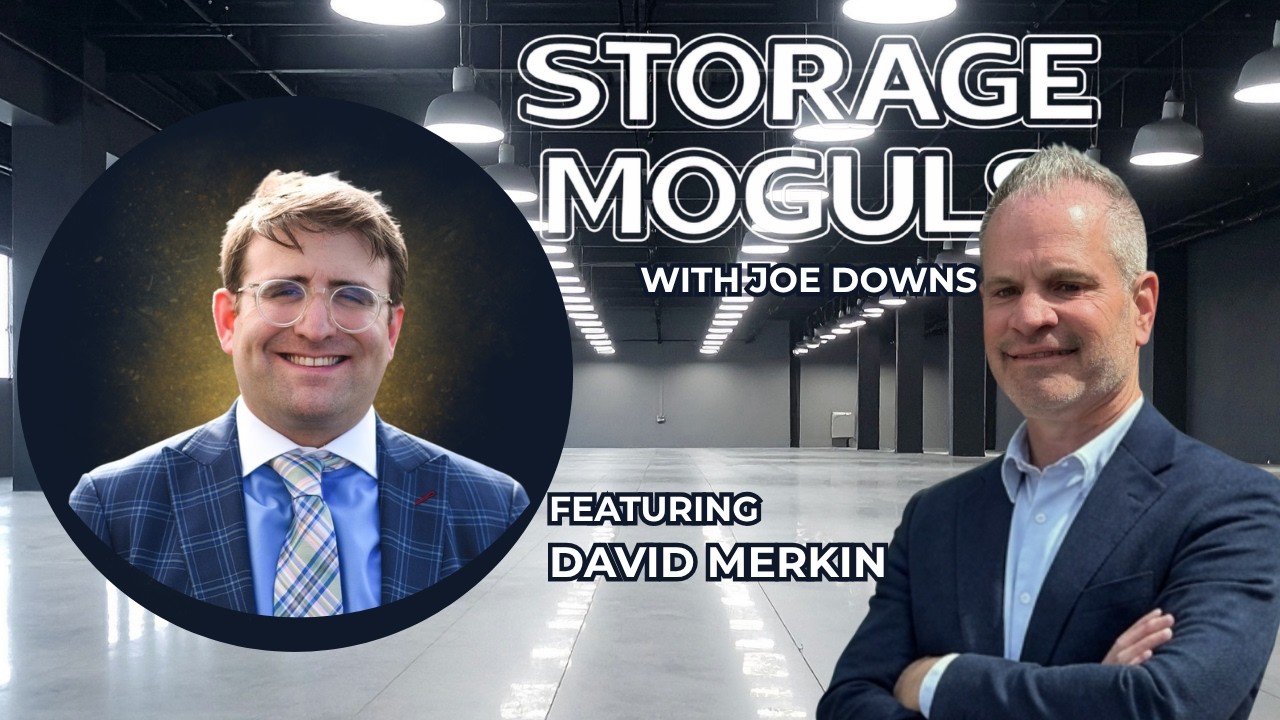
This content was created by Joe Downs. This content was uploaded by Joe Downs. This is a YouTube podcast episode titled "What Banks Really Want From First Time Storage Investors" (published 2026-06-16). It is an interview-style conversation on the Storage Moguls Podcast hosted by Joe Downs with guest David Merkin (senior managing director at Eastern Union Funding). They discuss how banks underwrite commercial self-storage deals, what lenders actually care about (sponsor credit and story, liquidity/net worth, property income, geographic footprint, and relationship/repeat business), how first-time buyers can overcome “gray” underwriting areas with a strong, transparent lender-ready package (rent roll, P&L, comps, personal financial statements, tax returns, pro formas), common deal killers and red flags (lawsuits, recent bankruptcy, poor reputation), the benefits of using a commercial mortgage broker and lender matching, and financing considerations for development or larger value-add projects. The episode emphasizes practical tips for packaging deals, mitigating thin balance sheets (co-borrowers/guarantors, fee-based partners), and the broker’s role in finding the right lender match.
Chapters
Every year, thousands of people find a legitimate storage deal, right numbers, right market, a real opportunity, and then they don't buy it. Not because the deal was wrong, because they never made the call, the call to the bank. That is, they convinced themselves the bank would say no before they ever picked up the phone. I've been on both sides of that actually, and today I've got a guy who's placed debt for hundreds of storage deals, sits in front of 200 lenders and watches that exact pattern play out— buyers who ghost their own deal at the finish line. His name is David Merkin. By the end of this conversation, you're going to know exactly what the bank is actually looking for, and it might not be what you think. I'm Joe Downs and welcome to the Storage Moguls Podcast. My company has acquired and built over 20 storage facilities worth over $75 million in assets across multiple storage niches. I've seen this business from a lot of angles, educated hundreds of students, and learned firsthand who succeeds and why. And that's why we built StorageMoguls.ai, an AI-powered community with the tools, the structure, and the guardrails to teach people how to buy their first storage facility. And that's exactly why we launched this podcast, to bring you the stories and the experiences from the first-time buyers, the lenders, the brokers, and other industry professionals who live in this business every day. All right, folks, buckle up for today's conversation because David has helped finance a few of our deals, and I've had dinner with him in Atlantic City. And let's just say it was colorful. I kid, I kid. All right. It was a lot of fun. It was a lot of fun. David Merkin is a senior managing director at Eastern Union Funding, one of the largest commercial mortgage brokerages in the country. He's been placing commercial real estate debt for about 15 years. As I mentioned, works with 200+ lenders and is an active self-storage specialist. He sat on the equity side of storage deals as well, so he knows this business from both chairs. David, welcome to the Storage Moguls Podcast.
Thank you so much for having me.
I'm looking forward to this. So David, I prepped you a little bit for the show today, but, and you know, for at least for what I want you to knowledge share with the listener, but I don't know that I mentioned the true or false questions I'm gonna be throwing at you. So good luck and try not to embarrass yourself.
Bring it on.
All right. I'm gonna start with one if that's all right with you. David, in commercial real estate, true or false, in commercial real estate, the lender cares more about the property's income than the borrower's credit score. True or false?
I'm going to say false.
Okay. Tell me why.
I think that when we're dealing with community banks, really, I would say number one is the sponsor. More than anything, banks do not want to be in the business of owning real estate. They just like money. They hate operating it. So, you know, if we have a credit score that's on the borderline, great. You know, that's obviously something you can work with. But if a guy comes in, he says, hey, I have a 450, you know, credit score. Well, I mean, the bank looks at that and they're like, we just can't trust you to pay us off. We don't want to buy the property.
Totally agree. That question was kind of set up for it could go either way, and I'm allowing it. Because the way it was poorly worded, I'll give you that. What about the property's income over a 680 versus a 780 credit score?
I would say the property income at that point.
And that's the way the question was really designed. But you're— I can't argue with you. You're right. You know, a sub-600 credit score or sub-whatever, wherever that 6 number is, credit score is a deal breaker as well. And I will— Good.
Yeah, Joe, I would just also kind of add to that. It's also important to understand the story, right? Like if a guy has a garbage credit score because he hasn't paid his credit cards, that's fine, right? That's something you can massage. If it's, well, you know, I own another commercial real estate and I'm 4 months behind my payment, that's really what scares them. So I think it's the reason behind the credit score is almost as important as the actual credit score itself.
That's great insight. And that kind of Lends perfectly into what I want to get into here. So, David, here's the fear I hear constantly from folks, and I want to put it on the table because it's— I think it's stopping real buyers from making actual moves on deals. Kind of like I said in my opener there, you know, and I hear it all the time. I'm a first-time buyer. I don't have a track record. Why would any bank lend money to me? By the way, this could have been a quote from me 7 or 8 years ago when I was sitting, you know, at my first self-storage academy. Going, this is incredible, but who's going to lend me a million dollars? Right. So I do hear that from people that have found legitimate deals. I myself have, have thought those very thoughts. You watch this play out certainly over— I'm sure you've seen it a bunch of times, you know, and across 200+ lenders that are in your network. You gave us a little bit of what a lender cares about, but what do they actually care about and why do What do first-time buyers get wrong? You know, when they're— when they think this is what the lender cares about the most and it's actually, you know, these 3 things over here. So walk us through that.
Yeah. I mean, I think a lot of times, you know, they're fitting in the box and saying, hey, this is what the lender is looking for and this is a lender's requirement. What I love about commercial real estate in general is there's— it's very gray, right? Like if they look at a situation, they say, you know what, You're right, this is this guy's first-time property, but he has an excellent business plan in mind because this is his first time. You know, I probably wouldn't feel comfortable with him operating the property, but, you know, maybe he'll have somebody like your firm and he'll say, okay, this is my first property. The way for me to sell myself to the bank is to really have somebody who's experienced. They'll manage a property. Once you build up a reputation and a track record, all of a sudden, you know, then you can take much more control of your property. Like, every— lenders were not born yesterday. They understand that every single borrower had to start somewhere. The question is, how can you position your deal in a way that they get that comfort and that same meaning that they could help you grow? Banks in general are not transactional driven. They are relationship driven. They love the fact that they could take you on your first deal and then you're calling them up 5 deals later and they could walk by your property and say, that was really incredible. And Honestly, the reason banks are out there is to help smaller businesses to be able to really grow. And so you—
yeah, so that's interesting. So you— I want to dive into the relationship part in a second. You said it's not transactional. I think what you mean to say is it's not just transactional. I mean, obviously the numbers have to matter.
Correct. Let me say it in a different way. When I go to a bank and discuss a deal, if I say, hey, you know, these guys are not looking for a more meaningful relationship to grow, but they only want A one-off deal, that's a much tougher sale. Banks are very into repetitive businesses with the same sponsor.
So if they're going to put some effort into this from the lender side, correct, they would prefer to know there's future business coming.
Correct. Which is why they spend a lot of time to really look into your business plan and really get to know you as a person.
So that's good intel. Let me go back to one thing you said that, that kind kind of hit me was, um, it's gray. It's a gray area. From where you sit and where I sit with the experience I have, I— that sounds great to me.
Right.
But I know, and I can remember because it wasn't that long ago— I'm not that old yet, I still— I can still remember things from 8 years ago, some of them— gray also sounds intimidating. It sounds, um, it sounds— I don't know if scary is the right word, but it just— it sounds, um, It's not comforting when I hear gray. Oh, that's gray. Like, I'm not experienced in gray areas when I'm doing my first deal. So I don't even know what gray means. I don't know if that means, you know, good luck, kid, or does it mean— yeah, well, where I sit now, I know what it means. But when I'm putting my first-time buyer hat on, I don't know what that means. Can you help?
Sure.
Give us comfort.
Yeah.
So what are the areas of gray and, and how do, how do you overcome them as a first-time buyer?
So let me, let me explain what I mean by that a little clearer. So when you're dealing with residential mortgages, there's literally a box. You have a credit score. Let's just say the number 700 for argument's sake. If you're at 680, there's no flexibility. It's a Fannie and Freddie loan. It's that simple, right? Same thing with certain liquidity net worth. Like it's a box, box, box. When you're dealing with the bank, they see the entire picture of everything and there's much more flexibility. So they're not going to say, well, I'm not going to do the deal because the guy's not at a 700. And that brings it back to my example where they might say, okay, well now let's understand the reason behind it. Okay, so maybe you can't get up to that number by closing, but we understand that it's not real estate related. So then we'll get comfortable with it. So, and I mean gray is that if you can paint a very good picture as to why you are a good borrower for the bank, then, then there's absolute high level of interest in that. But what I was saying, it is, as opposed to residential, which is very boxed, this credit score, this liquidity, et cetera, et cetera.
Yeah. Residential, I don't think is gray, right? I think everybody gets like, yeah, it's credit score, Debt-to-income ratio, it either fits or it doesn't, right? When we get into gray and commercial, like, here's one thing that, that would certainly— first-time buyer. The fact that I'm saying first-time buyer means we have no experience. So that would fall— you and I both know that falls into the gray area. But how do I overcome that? Why should I be comfortable with that being gray as a first-time buyer if I have a 700 credit score, if I've got all the liquidity I need? to buy this first deal. So I look good from a, you know, on the spreadsheet, let's say, just the numbers. Walk me through how I look good from the fact that I've never bought one before. I've never owned, operated one before.
Right. I would say it comes down to business plan more than anything. So if you're able to go to a lender and say, hey, this is my business plan, I looked at this property, let's just say You know, mismanaged. That's always like a big one, right? People say that the previous guy mismanaged it. So the economics of the deal are very strong. But, you know, the previous guy, he's 90 years old, not involved in his property. The property management company basically has, you know, they don't really report to him, etc., etc. But then I look at it. I live a mile from the property. Okay? I went through all this training within the space. I ran a tremendous amount of comps. I'm going to use a management company that's experienced. So don't only rely on me. So what I like to say is really your first deal, you're much more of an asset manager. That's probably the right way to look at it. You're overseeing everything. And if in yourself you could say, you know what, here's an example that I like to give people. I like to say, if you're bringing a property, okay, and you're raising money for it, that means you're putting your reputation on the line. You're playing with people's money. That's a very Very serious thing. What gives you that comfort level to take that money? Because if you burn your investors, that's gone, right? So if you can articulate and really feel that passion and believe that there's a true business plan here and it is a good deal, then most of the time you can also sell, sell that to the bank and get them comfortable. But honestly, somebody has to be very honest with themselves. The biggest challenge I have found that people have in commercial real estate is when they buy emotionally, not logically. So I might have an attachment to the area, or I saw my friend bought a property and I'm so eager, I want to be like him, I want to buy it. But if the economics don't work and the narrative's not there, you can't do something like that. So I think that it comes down to really the business plan and being able to attack all the different traps in order to put yourself in the best position that, yeah, I as a bank, I want to lend to you because you have a sound business plan. Obviously crazy things could happen, right? COVID happened and things like that. But by and large, If it's a sound plan, it should be financeable.
So if it's a sound plan and it's financeable, of all the, of all the deals that you've seen fit into that category that got rejected, what were the reasons that got rejected?
Great question. So it's a little bit similar to what you said about the debt-to-income ratio. So ironically, when you're dealing with community banks, the bigger challenge I have is people that own 50, 60 properties that are all in different stages of development. So when they take a look at, you know, your tax returns, this is specifically as it pertains to community banks. The debt-to-income ratio is a big issue. So ironically, it's easier for me to finance people who have a W-2 job making $200,000 a year, and this is going to be his first property versus a guy that owns 60 properties somewhere in development. So if you look at his tax returns, he has a crazy amount of write-offs showing almost negative stuff. And honestly, banks are not very entrepreneurial. They are risk-averse. So, you know, what I tell a lot of people, the borrowers, and when I'm getting a deal is I'll say, tell me why I should do this deal. Sell it to me. Tell me why it's a very good idea. So, you know, the bigger challenges that we actually have is those people that have more complex financials.
So that's, that's so interesting.
It's completely backwards.
Yeah.
If you think about it, because banks are literally, they're just in the business of protecting themselves.
So, so we're not saying, you're not saying, that's so interesting. So the, the first-time buyer in this scenario potentially has the advantage.
They absolutely do.
Because you're not, you're not saying we just need you to fog a mirror, which would be on one end of the spectrum. On the other end of the spectrum, you're saying there's so much going on here. Banks are rejecting deals not because of the deal itself, but because of the complexity of the borrower and how much they have going on.
Correct. Let me hear you.
And here, a first-time buyer is, has no complexity.
Correct.
So I, if I'm reading between the lines here, what you're saying is if it's a financeable deal, All I need you to do as the buyer is have a presentable credit score, obviously demonstrate liquidity and the ability to carry debt service if the property doesn't. I'm assuming that you're looking at that.
Correct.
And present a credible plan.
That's correct.
The gray area really comes down to— am I oversimplifying this? Is this a credible plan?
No, I mean, I think it— I think you're spot on. So let's just back into what's the logic behind why banks rather a guy who has a W-2 making $200,000 and then a job. It's pretty simple because, you know, what happens when the property doesn't go as planned? Okay, you have vacancies. If you have 7 deals right now that are not doing well, the bank's going to look at it and say, well, you know, when things aren't going well, where's— which, which one of us are getting the TLC? You've got 7 lenders. 7 different projects. I don't want to be in line. I want to know that if you're having any debt service issues, either vacancy or collections, you're going to take care of me first. So if there's somebody that has a W-2 job, I can consistently feel that you're making $250 grand a year. When I underwrote the deal, assuming that there wasn't a lot of profitability from the property, you can still service the debt. Well, that gives me the comfort level that I need. So yeah, the answer is if I have somebody that's making $200,000, $100,000 a year consistently, I feel more comfortable lending to him than I would a guy who has 40, 50 different properties. Just the complexity. Banks are not very— they don't like complexity. They like simple. Do your project, let me make my money, and that's it.
And David, I'm going to, I'm going to get into this in a little bit with you. We'll expand upon it. But you just, you just made me realize something I want to tease out of you right now. So would you say there's an advantage? So Eastern Union is a broker. You guys are a direct lender too?
No, we're just a broker.
Yeah. So I didn't mean just a broker. I meant you only broker. So is it fair to say that not all lenders in your network of 200 Not everybody matches up the same way.
Oh yeah. I mean, that's what's crazy and kind of cool about my business. On an average deal, we'll usually send it to a much larger group because of the fact that every bank kind of has a different parameter. So the answer is some banks are a little more entrepreneurial. We've seen banks that care much more about liquidity net worth versus the global cash flow. So it's actually, it's a, I mean, that's what makes my job fun is really the puzzle piece. Because all banks have different levels. Like, people will look at me and say, well, can you prequalify my— look at my tax returns, look at my W-2, and can you automatically prequalify? I was like, guys, I'll do a small sniff test, but I'll give you an example. There are groups that will just underwrite on tax returns, not P&Ls, look at certain add-backs and say, you know what, I don't agree with you. I don't want that to be an add-back. Or, you know, they'll go through every one of your K-1s and say— and I mean, the amount of details that you have really varies from lender to lender. So when somebody— just because one lender says, hey, I don't like this guy's debt-to-income ratio across his entire— not, not real estate driven, but cars, houses, etc., the next bank will say, you know what, we're really much more— you know, we're a little more savvy, we understand things, and we're much more focused on the sponsor's liquidity. Net worth the project itself.
I've experienced that myself in financing different projects, just what they're looking for, what they push back on, the more, the more detail they want on certain things.
Yeah, this is what the gray area truly means.
That's interesting, folks. What I want you to take away from this part of the conversation is a rejection from a lender is not a verdict on you necessarily. It usually could come down to sloppy packaging. Which David would never let you do, but, or the wrong lender for the deal type, right? Which is what we just talked about. The right broker, someone like an Eastern Union, takes that same deal to a different lender and gets a, you know, a yes just because he knows who to match your profile up with. And by the way, I think a lot of this comes down to not solely, but I'm sure there's a heavy weighting onto geography. Right. A lot of your, a lot of your lenders like to lend locally. All right. So I know in a lot of the deals we financed, many of the times it's the lender is, is has a local footprint for storage deals and they like, they like lending on storage in their local market.
Correct. The best thing for me to ever hear is when I speak to a lender and they say, you know what, I know the property, I drive by it all the time. I really like it. We have an office a few blocks away. Those are usually the guys that are the most entrepreneurial because then they'll go to their chief credit officer and through that process and say, guys, this is in our backyard. Like, we want to be the ones to lend on this. We want people to know that any real estate out there, we are lending in our backyard. Banks are very geographic focused, and if it's a deal in their backyard, likelihood is they're going to be more interested than a guy that just lends nationwide.
And, and I'm going to Somehow, for some reason, I'm continuing to glaze you here, as my kids would say. But the— I would say when it comes to the relationship part, we've noticed it matters, right? So if you are bringing a deal to, you know, local credit union versus me going direct, they don't have a relationship with me. They have no history with me. They don't know that, you know, or I'm imagining the lender looks at you as one filter already laying eyes on the deal, not wasting their time bringing them a package that, you know, they won't—
Correct.
Fund. So I think that adds a layer of credibility to it as well. It's, it's just nice also knowing I can deal with one, one broker and regardless of where the deals are that I find and that the broker is going to find a local home for it.
Yeah, I think you're perfectly spot on. I think that A lot of times the issue that we have and that we found that other people have is number one, really more than anything, being able to talk to the right person. So if you think about this, these guys have one shot to pitch it at credit. Okay? It's all in how they sell it. Just like I'm selling it to them, they have to sell it internally. So if they're not packaging it correctly, or the other time that we've seen is we have— we've seen loan officers have absolutely no pulse on what's going on. And there's such a disconnect between them and the chief credit officer, which is why we try to have it vetted at the highest level. But the relationships that we, that we form are with groups that have that track record. There's nothing that scares me more than when a new lender comes in there and says, I've been at the bank for 30 days. I was like, oh, I was like, clearly you don't really understand how to navigate it. But a lot of the times the challenges in the deals really come on the back end, not based on the information that was provided, but how it was presented. And do you have the right guy that's presenting it?
Yeah.
Like a good example I like to give people is there's a lender in our market. They're very active and we are very good friends with the loan officer. We actually hired his nephew to run our equity division. And that bank, before he got there, we just couldn't get any deals done. And then because he had such a good reputation in the market, every single deal before he sends out, the president of the bank signs off on his term sheet. And that really opened up my eyes because we've been working with that group with other loan officers. cannot get a single thing done. And it's just certain loan officers understand how things work, know how to sell it, know how to present it. And also, I mean, they'll deliver. Like, the worst thing that we ever find as brokers is underpromising and overdelivering. We— you have to manage our expectations and you got to navigate the right loan officers because a lot of time it's not about the bank, it's about who's presenting it to them.
Yeah, that's, that's so right. And I'm going to say it again, the right broker takes that same deal to a different lender and gets you a yes if, you know, you went yourself. yourself and got to know. And look, folks, a lot of times just finding the right match for you and that deal. And look, this business is incredibly learnable. It's not— I always say to folks all the time, this is not rocket science, but you do have to learn it. And there's a right way to package these things and find guys like David. And that's frankly exactly what we build at storagemobiles.ai. And that's why people gravitate towards us. All right, David, you ready?
Let's go.
True or false? Most small storage facilities in the US are still owned by private individuals, not institutional investors.
True.
That is true. Roughly 70% of storage facilities are still privately owned. Now, we are not, not competing with Wall Street deals here for the most part, folks.
No. And look, is it, The good part, it is for sure a challenge because a lot of these smaller stuff, you have the mom-and-pop set. If I told you the amount of deals I have where the previous owner just literally wrote on a pen and paper the rent roll, you know, it for sure makes it a challenge. However, it enables the smaller guys to really get deals that have meat on the bone, right? Like everyone has to start somewhere. Oh, for sure. And what you want to do is you really want your first deal to be able to build up that momentum. More than anything, that's what I'm saying. The logical piece versus the emotional piece. These mom-and-pop stuff, honestly, I've seen a situation where it's just a matter of TLC. You don't have to do any major capex. You don't have to do a crazy amount of marketing. It's just you got to give it the TLC that it needs. And now all of a sudden that becomes your true value add, and that's your launchpad to be able to continue to really scale and buy many more assets.
David, you keep it up. We're going to bring you on. Storage Muggles as a, as a coach and mentor. I mean, I'm loving it.
That's basically my main job.
It's great. All right, let me shift to the practical side because this is where most first-timers actually get stuck, I think. Not, not finding the deal, not even knowing what to offer. It's the moment they have to walk into the lender and actually ask for money. David, you know what a clean lender-ready package looks like, so Can you walk us through it?
Yeah, for sure. So obviously the first thing we want is the current rent roll and the profit and loss statement, right? Ideally, we like to see 12 months from a historical perspective in order to really underwrite that. Comps are very important so that, you know, we run our own comps, but we also have found that, you know, clients that are able to put together their own comps, The lenders are like, wow, you've really done a tremendous amount of due diligence. Personal financial statement forms are very important as well, as well as tax returns. You know, and as I had said, because of what we spoke about previously, and then, you know, I— with me and my clients, I put together an executive plan, right, where you're basically going to outline the entire project, why this is a good deal, why the bank should do it. You know, there's a lot of deals where, you know, maybe historically the cash flow isn't great, but, you know, what we'll put together in our package is a pro forma, which is usually like a 3 to 5 year pro forma. Obviously, you know, we got to be realistic in our expectations. We can't just— when we put stuff out, we don't like to put comps at the top of the market. Right. Because I'd like to try to match up with the appraiser as much as I can. But if you're able to put together kind of those big pieces, that's really the starting point and the thing that's going to launch everything else.
So you said some interesting things there. A lot of them are just boxes that have to be checked, you know, personal financial statement, tax returns, stuff like that. But you said if a borrower put together their own comps, that really— I forget exactly what I mean.
That's better, right? Because then they look at it and say, man, this guy's done a ton of due diligence.
So that's where I want to go with this. So So you're— is it fair to say as a first-time buyer, the more complete a package I put together with things like comps, from more of a qualitative standpoint, is that the gray area? Is that part of the gray area that's going to make you look at me a little differently? Like, yeah, you know, I'm a first-time buyer. First of all, should we disclose we're first-time buyers? But secondly, yeah. I mean, when is—
yes, absolutely.
I am realizing So, you know, I'm a first-time buyer. Are you and the credit committee looking at me differently the more thorough my package is?
Yeah, I mean, absolutely. Right. Because—
But to the point of that's probably helping me get the deal done, or if I don't send that stuff in, am I at a disadvantage? That's what I'm trying to understand. How much does that weigh in?
So I will tell you, The main concept is, is you want to be as front— on the front end, be as transparent and as detailed as possible. Because if during the process the bank finds out something that was not disclosed, the deal's toast, assuming it's something obviously that's a very big issue. So on the front end, the banks like to do a lot more due diligence because they don't want to spin their wheels either. And if you think about it, there's credibility. They have certain quota that they need to make. You know, different loan officers internally, not even on a commission level, but they all in the beginning of year, they have certain goals, right? So let's just say certain banks will be like, okay, my, my team needs to do $30 million. So they realize that that $30 million, how it's going to have to get approved, right? So the more information they have on the front end and the more detailed package, the more they'll get comfortable and the higher probability of approval and getting the deal done, because execution is really the key above all for all parties.
How about red flags? Are there any red flags out of the gates that just kill deals?
Yeah. I mean, I would say, look, any lawsuit that's done, if there has ever been bankruptcy in the past, if it's within usually the first 5 to 10 years, that's almost impossible. If it's beyond that, you know, you want to have a really detailed explanation. If you pled guilty, even much more of a detailed explanation. But think about it, just like, you know, before people are hiring new employees, you're going to go on social media. They're doing the same thing. I mean, they're Googling your names, right? And they're going to look at your LinkedIn, like stuff like that. And because remember, their reputation is really important. They never want to be in a position where they're known to lend to questionable borrowers. Like reputation is huge. You know, as an, as an example, not involved in this specifically, but what we find a lot of times challenging is to lend on like churches. That's a good example because when banks take a look at it, they don't want the reputation of I foreclosed on a nonprofit. Right. So I would say it's pretty similar in this situation that they will do a lot of due diligence on the borrower ahead of time because their reputation matters to them and they can't have it out there that we have borrowers that are defaulting and we have borrowers that are not qualified. That's not a reputation they can have. And they remember, they also have stockholders to report to. A lot of these banks are publicly traded or they have private stockholders.
David, if my balance sheet is thin as a borrower, so limited net worth, not a ton of reserves, what can compensate for that?
So the path of least resistance is bring on another borrower. You know, I think That, that's a really good question. So the, the reason I'm going back to the gray is I think that the number actually does matter, right? The idea is usually, but again, this is not a firm thing, the bank likes to see 10% liquidity and a net worth equal to or greater than the loan amount. So, you know, if it's below that, we try to mitigate it with a couple of different factors. The path of least resistance is You know, you get a guy that's willing to sign on it. A lot of people do like a fee-based where, you know, if you sign on my loan, I'll give you 1 or 2% a year or I'll give you a small ownership piece. To me, that's really the best way. I think other stuff is going to make it much more of a challenge, if I'm being very honest.
Yeah. And that's one of the things we talk about at Storage Moguls too, is in fact we have a GP split worksheet for putting deals together because at the end of the day, if the deal is a good deal, We'll find a way to get the, this thing financed.
I, I agree with you.
We'll find a way to get the equity for it. Because the worst thing that can happen is you lose a good deal over, I don't want to say technicality. It's not, it's not a technicality, but it's something that should be easily overcome, especially in a community like ours.
So. Yeah. I mean, I think you'll easily be able to get investors on good deals and, you know, especially if the risk profile is much less, I think it's much easier to bring on a guarantor, a fee-based guarantor, or somebody that you actually want to do a JV with.
Yeah, that's great. So folks, preparation is not optional. The lender is just evaluating your deal. They're evaluating how you think. So a clean, organized package says this is— you heard it from David— this borrower is serious. They know their numbers. They're not going to be a problem. They've done due diligence above and beyond what others have done. They want to be in this business. They're likely a repeat borrower based on, you know, the fact that they've been trained and mentored by storage moguls and, you know, they're buying their first deal and, and they've put together this great package, etc. So, you know, that all of that, the whole package, meaning you and, and what you're submitting is, is the package that the lender is evaluating. Included in there is the gray area. And building that package is exactly what we work work through and help you work through at storagemuggles.ai as well, so that you can, when you get to David, you are presenting David with a complete package. And not only that, you know, back to the Jerry Maguire line, you know, help me help you. You're helping David help you.
Correct.
Right? So he can shop a complete, thorough, well-organized package. I mean, that, and that at the end of the day, if it's a financeable deal, we'll know, you'll know, David'll know when he looks at it. And then from there, it's just finding the right lender and situation to match everything up.
And I would strongly suggest what we have found a lot of our clients, when you want more due diligence, is talk to the sales brokers down there, like take their temperature about that. You know, these are my assumptions. Like, do you think these are good ideas? And most sales brokers, if they see that you're actively bidding on properties and stuff like that, they would gladly help you just pass the sniff test. Or I would say really the other thing is mentors like you guys. Right? I mean, you guys have lived there. You've lived in the trenches. You've been on good deals and bad deals. So I strongly recommend for a first-time buyer, do serious due diligence. I'm not talking about just using Claude or ChatGPT. I'm talking about talk to the people that have boots on the ground and just drink their knowledge.
You know, you are not wrong, sir. We, like I said in my opener, we've seen this business from a lot of angles. We've made plenty of mistakes. We've learned from all of them. We don't repeat them. And that's what we share with our students at Storage Muggles. David, true or false? A borrower who uses a commercial mortgage broker— that's you— typically gets a better rate than one who goes directly to a bank.
So I'm going to— can it be a little bit of a hybrid answer on this? I would say like this. I, I would say that most of the time, yes, because you're bringing a bigger competitive landscape. Okay?
Yeah.
So I, I would say 90% of the time. Let me tell you the 10% that's not. If you have a guy that is a crazy high net worth individual and he has $20 million parked with banks, because banks love deposits. I mean, think about it. That's really their lifeline, right? They're taking your thing and the money you give them, and then they're going to lend it or, you know, invest it, whatever. So If you have a stupid amount of money parked with a bank, most of the time those guys are not going to lose a deal for 25 or 50 basis points. Now, if there are other restrictions, i.e., you hit your lending limit or it's not their footprint, then absolutely they wouldn't be a player. But if it's a super strong borrower that gives them other perks, most of the time they're not going to lose a deal based on interest rates.
Yeah, no, thanks for adding that color. And I Would agree. And I had this, you know, someone like you with access to 200+ lenders, you're also running a little bit of a competitive process, aren't you? So one bank gives you one offer. Competition creates better pricing and a better lender match. So I would agree with, with it being true. And I also agree with your carve out there that, yeah, look, and I would also— someone with a bigger balance sheet is going to command better terms. For sure. Somewhere else. And that's, that makes sense. That's the perfect segue actually, because I want to shift for a second. Most, most of our audience is hunting their first deal, probably something even under $2 or $3 million, right, is where they're going to land. But I know we've got listeners who are further along than that. And maybe you've got land and you want to develop self-storage, for instance, or industrial outdoor storage or pro storage. And maybe you've stumbled onto something north of a $5 million value-add situation even, or listed. It doesn't matter if it could be listed that, you know, fits for you or works for you or your borrower profile, even though you're new. David, I want people to know you're not a one-trick pony here. Walk us through what else you do in particular, those scenarios I just threw out. Yeah.
So construction is very popular. So actually, you know, I've been doing this for 16 years. I think probably my second or third year in the business, that was before ground-up storage was very popular. And I had a client that did a lot of fix and flips and he's like, you know what, there's really something to this storage. Hadn't even seen storage before. I was like, dude, what is that? Like, what are you actually doing? He's like, look, he's like, this is not really competitive. I think there's something here. And then what he did was He built it, cost of construction was cheap, and then he'd throw Extra Space's name on it and sell it for a stupid cap rate, right? And then, so at that point, development was really, really a hot commodity. Well, all of a sudden then everyone jumped to the development and then the yields became tougher to make work, right? Construction costs had gone up. Yes, maybe the pro forma was good, but all of a sudden people became more savvy and was like, you know what? I don't know if I'm going to give you a premium for sticking Extra Space's name on there. Right. Or the yields were not as great. So I think that the development, bringing it back to kind of like the development piece, I think it all comes down to your land basis. If you can get land at a really, really good basis and your pro forma projections are realistic. So I don't want like inflated because we have crazy rent growth year over year. I want like really the meat and potatoes as to if the market's at $300 for you know, a certain unit, I don't want it for $350,000 because you believe 4 years down the road we're going to have growth. Like we're going to have to go on the historical projections. But if they're— but if the economics work out, I mean, I have seen out there right now most of the deals that are trading are really more of the development deals because I think people are not paying a premium for these value-add deals anymore, these lease-up deals.
Most of the stuff that's trading is the stuff that if you could get the land at a good basis, David, for someone who owns land and wants to develop, I don't know, self-storage, iOS, pro storage, how does the financing differ from buying, buying an existing value-add facility? Let's say.
Excellent question. That is where imputed equity really helps. So if you own this property, let's just give the example. You bought the land 5 years ago, okay? And maybe you put $100 grand into it, but it's already been 5 years. Markets get really getting hot. You know, the demographics is great. All of a sudden, let's say you paid $1 million for the land. It's worth $3 million today. All of a sudden, I'm going to give you $2 million of imputed equity. So if your equity contribution, let's just say, is 30%. Well, let's just use the same example. So $10 million. You have no debt on the land. The land. The land is worth $3 million. All of a sudden I can fund 100% of your construction.
That's my equity.
Correct. Because you are contributing the land as your equity because there's imputed equity. You've owned it long enough. There's true seasoning behind it. So something that's not extremely liquid, ironically, that's probably the best example.
What about the debt service? Well, I mean, obviously it's not producing anything. I got to build it.
Right. So, so the interest reserve is going to be built into my total budget. So if there still is a shortfall, right? So what I'm going to do is I'm going to build the value of the land, the construction costs, and interest reserve. If that number equals the 70% of what you need for the construction costs, then we're in agreement.
In this $10 million— in the $10 million example you just threw out there, maybe $1 million or $600,000 or something like that was an interest reserve that's going to carry the debt service through.
Correct.
To stabilization, right? Correct.
To stabilization or until it starts throwing off some cash flow that you can debt service. The other thing I would say, Joe, is what I'm also seeing some people do is JV with the building owner. So if that guy's got no debt on it, you don't have a huge balance sheet, JV with the guy. Tell him, hey, you know, you don't really have the wherewithal. This is land. You've never done storage. I know what I'm doing. Let's be partners here. You contribute the equity and land. All of a sudden now you're the JV partner. You might not need to come to the table with any cash.
Yeah, it's a good point. What's different about placing debt on a $5, $10 million deal versus a $1, $2 million deal?
I mean, I think it's a level of hurdles that has to happen with the bigger deals. I would say it's different than that.
What's an example?
Than anything. So I think that when you're dealing with the bigger deals, right, like, so there's more units, the lease-up could become much more of a challenge. There might be more competition at that deal size. So you might have Extra Space having a similar facility right next to each other. So they're competing. So I would say that, that to that piece, it's a little more challenging. Also economy of scale. So if somebody is doing construction, you're doing construction on a bigger project, your construction costs might be better than on a smaller deal. That's probably like the main differences. But also if you're on the hook for a bigger loan, we're going to Expect a bigger sponsor, right? I mean, if you're going for a $10 million deal and you have $100,000 liquid, that ain't going to work. If you have a million-dollar deal, you have $100,000 liquid, that's going to work, as an example.
Okay, David, if someone is listening right now and they inherited land or found a larger deal, what's the first call they should make? The—
so that's honestly the first thing I would say is Either a market study or to a mentor and say, hey, I was floating this idea. Like, do you think that this is achievable? I mean, development has a huge—
You know what? You're right. They should call us first.
That's 100% because development—
call us first.
Exactly. Well, development has the biggest risk profile both for the sponsor and the bank, right? So the first thing is you have to see, can this actually be done? Can the market support it? What about the zoning? What's the level of approvals I would have to go through all that? So you have to really understand Kind of what all the hurdles are. That's number one. So I actually like if somebody's doing a development deal, and I think we did this with, I believe it was your deal where we did a market study. You guys had done a market study that really helps us. Okay, what is the scope here? Then you got to do the due diligence of the comps and then start to build it, fit it with the construction budget.
Yeah.
But I will say a lot of people we have seen is that the yield based on the construction cost and what the end value is, is not really that great. Meaning what we're not looking for you to do is build something for $12 million and then once it's constructed, it's worth $14 million. I mean, that's not a spread that really makes much sense for a development profile.
Agreed. Before I let you go on this, David, where do people find you? If someone's listening right now and they've got a deal they want to run by a broker, they just want to understand their options.
So I'm on LinkedIn. I think it's Dean Merkin on LinkedIn, our website, or people just text me. I'm pretty like, you know, I'm pretty available. Like where I'm coming from, I would love to just give people knowledge. I remember starting in the business and I had some really good mentors that really helped me. So, you know, to be able to pay it forward and help people succeed, that's awesome. So absolutely share my contact information with anyone. Be glad to answer any questions they have. I'm not a millennial enough, so like, I don't know how to use TikTok yet. Maybe I should figure that out. We got some interns. Maybe I'll ask them to help program a TikTok account for me.
All right. So folks, whatever stage you're at, the first deal under $2 million or you've got land and you're thinking bigger, the game is the same. I think that that's the takeaway I'm getting from this conversation. I hope you are as well. You got to find the right partner who knows the lender landscape for your specific Deal type, and that's actually what David in Eastern Union does. And at storage moguls dot a i we teach you how to think about that all of this before you ever pick up the phone so that when you do talk to David, it's a meaningful conversation with a deal that's actionable and ready to go. David, last true or false: The number one reason a storage deal doesn't close isn't the deal. It's the borrower talking themselves out of it before they ever send the package.
I mean, I'm going to say that's probably true because I think in my life, I believe most people are their own worst enemy.
Of course it is. It was a total setup for you.
Yeah.
Put the ball in the tee. Yeah, it is true. The most common failure point is the self-disqualification. And it's just— it's, it's not self-defeating. It is self-defeating, but it's because of the lack of knowledge and understanding. Borrowers assume The no before the lender even sees the deal because they— I think there's this mystique or this nerve. It's probably how people are with, with AI right now. A lot of people that haven't adopted it yet. I hear people all the time like, I don't know what to ask it.
It's overwhelming.
And I— it's a mental block. And I think that's what people have when it comes to these, you know, bigger deals for most people than they've ever thought about financing. You know, buy a house, maybe you mortgage $200,000, $300,000, $400,000, $500,000, $600,000. you buy a storage deal, you're financing, you know, it's in another bracket. There's a comma, there's another comma. Yeah. So it's, it's $1 million, $2 million, $3 million, $5 million. I don't even want to think about how much I have financed right now. And it's, and it can, can sound and start to be intimidating, a little scary. And I think that's why people end up talking themselves out of it.
Yeah. I think it's also because commercial real estate is patient capital. And I think like these people, a lot of people have their life savings or stuff like that. If they're going to put it to work, You know, they want to see instant results. Real estate's a long play. We've seen situations where a year 2 pro forma was awful, but they stayed the course and by year 3 or year 4, they crushed it. So I think a lot of times people are like, you know, if we're going to put in this much effort, we need instant gratification. I think that that's almost humanly impossible in commercial real estate to get any instant gratification. It will come, but you got to be patient and you have to be able to pivot and be smart. Not emotional, for sure.
Logical, for sure. And if, and folks, if you find yourself in that, in that category of, I, I just, I'm not sure, come to storagemodels.ai. We'll fund your doubt so the bank can fund your deal. Uh, David, what's that last question? And I want you to actually think about this one before you answer. There is a book called Be Your Future Self Now. Have you ever read it?
No.
Okay. Well, the whole idea, it's okay. It's Dr. Benjamin Hardy. If you ever want to read, it's fantastic read. Um, the whole idea is that you don't Wait to become the person you're going to be. You start acting like that person today, right now, from where you are. Mr. Beast—you've heard of him?
Sounds familiar.
You haven't heard of Mr. Beast? He's only the most followed man on the planet on YouTube.
I gotta check him out.
To be fair, I only know about him because I have two teenage boys who watch the insanity that he puts out there, and I've stumbled onto it. But and then I learned about this book. So. When he was 17, MrBeast, he's only 27 right now, by the way.
Oh.
He's the most followed man on the planet. When he was 17, one night instead of studying for an exam, he created and scheduled 4 videos to be released 6 months, 1 year, 5 years, and 10 years into the future. The 10-year video was only released last October of '25. He hadn't made it yet. He had a little following on YouTube, but he was nobody. He was just a 17-year-old kid. He was a gamer. He was one of those, you know, gamer, YouTube gamers. But he was, but he, that night he made a decision to start acting like the person he was going to be when he released those video videos to be released in the future. So, so my question for you, 5 years from now, you're putting your Mr., um, 17-year-old MrBeast hat on right now. What are you doing 5 years from now? Not what do you hope you're doing? What are you doing? Where are you? What does your portfolio look like if you own storage? What does life look like and what are you doing? today? So part, part A is what do you, where are you? Give me a couple highlights, big, big things in your life. And then what are you doing today to make sure those things happen? And by the way, if you do those, they'll happen before 5 years.
Yeah. I mean, I think so. A couple things. I'm looking to purchase stuff on the side kind of as like more residual income. I would say that right now—
5 years from now, you own what?
I would be very happy if I owned 6 or 7 facilities.
I'm going to— I'm going to get you to say the words 5 years from now, I own 6 or 7 facilities. Not I might not. I will be happy.
6 years from now, I'm going to own 6, 5, 6 properties if I can. My goal—
You already walked it back one year. All right, that's fine. Let's say 6. All right. So 5 years from now, you own 6 storage facilities of some— Okay.
And I would say Just kind of more high level. My goal is to really double down on origination because I think the market's coming down. And my dream is eventually to really focus more on family life balance, you know?
Okay. So 5 years from now, you own 6 storage facilities. Your production— we don't need the numbers, but your loan production—
I would love to double what it is today, be able to put money away and then cut back and really be more of a present parent because, you know, I always, I always think about this in a really, really dark way.
You— I'm going to say, I'm going to recap this for you again. So, so we get it right here. 5 years from now, you own 6 storage facilities. Your, your loan production is twice the volume it is today. And because of that, you have so much free time, you're able to be much more present as a parent. Exactly. Now, what— that's all right. You're not the only guest I have to help this with. You have to make— you have to make the statement, not the I would likes, the I would like tos, the nice tos, the goals would be tos. Sure. When do they start? Now we've got the picture. What are you doing today to make sure that happens?
So on the buying side, I am networking a lot with brokers. I'm speaking to clients that we already have, you know, Collaborating, see if they're willing to sell properties. We're doing that. And then in terms of doubling down on the origination, we're hiring more originators. This way we just get much more of a volume. We're also incorporating technology and AI to cut down our costs of our team. You know, once you have a lot more of AI when it comes to modeling and due diligence and things like that. So I'm hoping with all that stuff it's going to help I mean, it would not— hoping, got you. It will help my bottom line and I will achieve what I'm trying to achieve.
Sounds like the production, sounds like the production has been figured out. I want, I want you to, to look at what you're doing for the portfolio, starting to build a portfolio because you're, you're saying I'm starting to talk about it. So are you doing what it takes to own 6 in 5 years? That, that's my challenge to you. And, and I hope you don't take it the wrong way. I'm not trying to chastise you.
No, I mean, I for sure—
I'm trying to inspire everyone Everyone, every listener, every guest I have on, read the book. It is incredibly powerful. We all have it within us to, to become what we want to become, to own what we want to own, to be in places and lifestyles that we want to be in in 5 years. We control our own destiny. We just got to start doing it today. Yep. As if we already are. So that, that's the impetus behind it. Spot on. So, um, Folks, what David laid out today, the financing conversation, it's not, it's not the wall, it's the door. It opens when you show up prepared, honest about your numbers, and willing to let the lender say yes. So if this, if this conversation moved something for you, go to storagemobiles.ai. That's where we take people from zero storage facilities to their very first one. That first deal is the hardest one you're ever going to do, and it's the only one that changes Everything about your trajectory, folks. There's a seller out there right now who's ready. So stop watching, start moving. Drive for dollars. Send the LOI.
We'll see you next week.
More from Joe





The tenant only paid for the first month! #selfstorage #horrorstory #realestateinvesting

What happens when a storage tenant stops paying? #selfstorage #realestateinvesting #storagemoguls



