Licensing IP Into New Revenue Streams With Bob Serling & Johann Nogueira

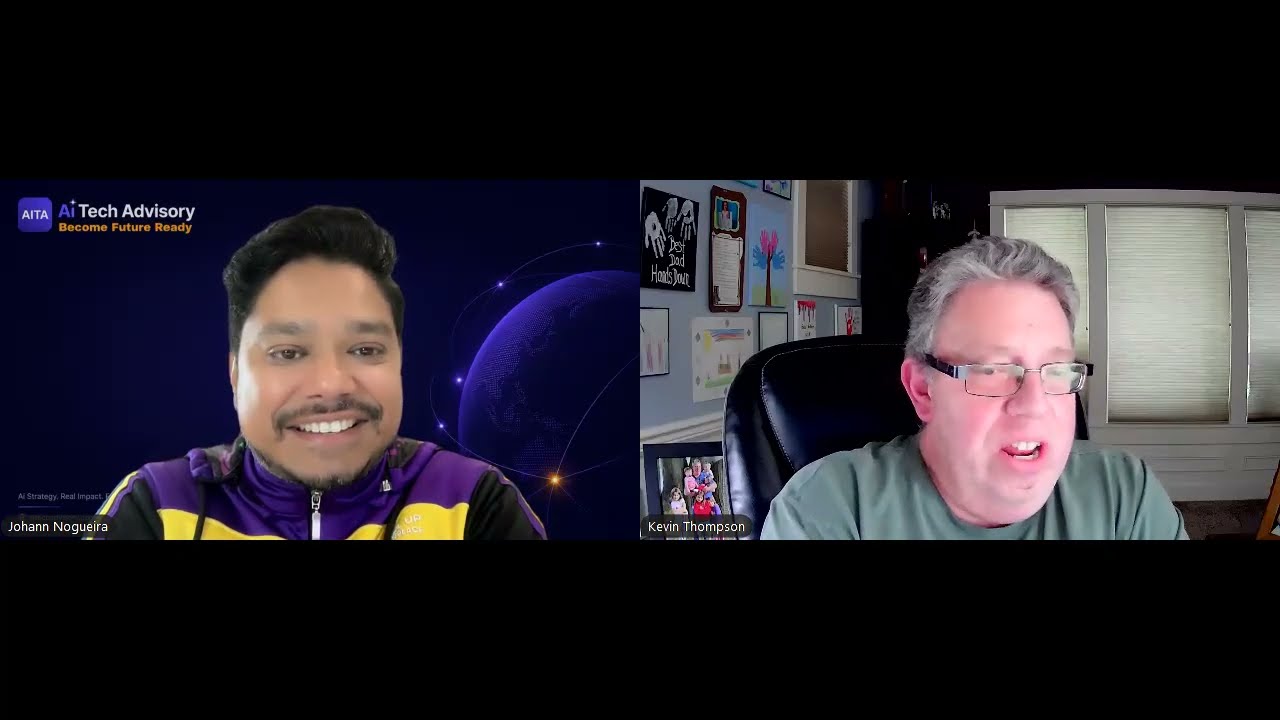
In this episode of the Inspired Insider podcast, host Dr. Jeremy Wise interviews licensing strategist Bob Regnerus (Profit Alchemy) and serial entrepreneur Johann Nogueira (AI Tech Advisory). The conversation explores how licensing intellectual property and business systems can generate passive, high‑margin revenue streams. They discuss the importance of mastermind groups and relationships, then dive into concrete licensing frameworks: the "toll‑booth" referral model, asset creation, syndicates/repeating circuits, reactivation campaigns, and direct‑mail tactics. Real‑world case studies illustrate each model – from Springfield Remanufacturing’s 22 spin‑offs, Johann’s building‑management app that earned $9 M via a direct‑mail sequence, a CBD‑infused dog‑biscuit licensing deal, a $40 M Tony Hawk toy royalty, and the White‑Label Suite that scaled to 2,200 agencies with $9 M in licensing fees. They also introduce Johann’s new AI‑focused product, Prism, and discuss white‑label opportunities. Throughout, the guests stress mindset shifts, the value of packaging existing IP, and the legal safeguards that protect licensing deals. The episode ends with resources for listeners: licensinglab.com’s free training and links to Johann’s AI advisory site.
Chapters
What I got you can't buy. It resides between my eyes. Walk through the fire, came out better on the other side. See life like a beach if you find the sand. Right now I'm feeling like a hundred grand.
You are listening to Inspired Insider with your host, Dr. Jeremy Wise.
All right, Dr. Jeremy Wise here, founder of inspiredinsider.com, where I talk with inspirational entrepreneurs and leaders. Today is no different. I'm going to formally introduce Bob. And Johan, before I do to both of you, I always like to point out other episodes of the podcast people should check out. Since we were just talking about Eric Berman, he runs Speakeasy. This is actually how Bob and I got reconnected after many years. He's got a great group online and offline, and he's part of my Top Giver series. He's just really a true giver of a human being. And we talked about the power of relationships and masterminds in business, which for me has been one of the biggest game changers. Well, I've had some great mentors in my life when I'm a part of mentor groups. I'm a part of EO Chicago. I've been a part of Brian Kurtz's group. I'd love to hear with you guys which groups have been influential for you.
Well, for me, of course, Speakeasy. I've known Eric for years and years, and we were in another mastermind, a small private mastermind here in San Diego, which led To Eric founding Speakeasy. So that's been really valuable. I'm not a member of Genius Network, but I've spoken at Genius Network. I've been interviewed a couple times by Joe for I Love Marketing. If I was going to join a really expensive high-end mastermind, it would be Genius Network. Because I just like the quality of people. To me, a mastermind, you get more from the people than the content. And that's not to shove the content aside, but that's what I look for. And Joe curates a great group. I prefer mastermind. I'm in San Diego and I prefer groups that are here. Because I don't like to fly for business. I don't sleep well in hotels. So, you know, I prefer stuff that's here. And I also, I participated a lot with Roland Fraser and Ryan Deiss's War Room. I spoke there, I did interviews with them, and that was always a quality group. And I think they're New one is called Boardroom. I'm not 100% sure, but they're really good too.
I mean, this really parlays to what we're going to talk about. It's just licensing, really. Licensing at its core is relationships. You know, it's forming amazing relationships and partnerships with people. So, this for me has been just a number one game changer. Johann, what about you? What are some groups that you've been a part of and/or have heard are good that you like?
Yeah, for sure. I'll give you an example of one of the best closes into a mastermind that I've ever had. So this gentleman calls up and he said, well, he emailed me. He said, hey, I just heard about you on this podcast. Loved it. I promise I'll only take 3 minutes of your time. Can I jump? Can I jump on your Zoom? I'm like, okay, cool. Yeah, he pumped up my tires and he's asked for 3 minutes. Done. All right, let's, let's make it happen. So I jump on and he says, hey, look, you know, I know exactly who you are. I've listened to your podcast. It's amazing. This is who I want you to be in the room with. And he opens up an Excel file and he goes, this person, 200 million subscribers on YouTube. This person, 8 New York Times bestsellers. This person. And he just kept— by the time he got to number 4, I was like, I don't know what you're selling, but I'm in. And it was a high-end mastermind, but he had 53 people on that list. And then from there, obviously signed up and it was just, you build friendships and lifelong friendships there with the right people. I love being the dumbest person in the room. The mastermind that I'm part of here in Australia is called the CEO Institute. Now, the CEO Institute is absolutely brilliant. They've got about 1,300 members, I believe, at this point in time, and they're expanding across. But the reason why it's fun is because not only are you with good people, but it's like a game. So to be in there, you've got to be doing— they've got the entry-level chapters, $3 to $5 million, then it's $5 to $10 million, $10 to $20 million, $20 to $50 million, $50 to $100 million, $100 to $500 million, $500 to $1 billion, right? So to me, it's a game of, hey, how can you accelerate that? And, you know, Win. Not that money's a win-the-game thing, but it's just a fun challenge. And you get to hang around people who have achieved so many amazing things and you just realize, wow, they're all just people who have just done more and been through more. And we can talk about masterminds and life and business, but I don't wanna—
No, I love it. They've kind of gamified a little bit. So like people are wanting to get to the next—
Yes.
You know what I mean? I mean, I think Bob, I know you've been to a lot of direct response conferences. I know like when there was GKIC and Dan Kennedy and Bill Glazer, they did that a lot of like, oh, I want to get to be in the whatever it was, like the next level group, you know what I mean? So, um, but I'm gonna get into it.
Go ahead. Can we diverge just for a second?
Sure, go ahead.
Me Maybe it's because I'm older, but that model doesn't have any appeal to me. And I'm kind of loosely part of a group of people who are figuring out how to intermingle our business and our lifestyle. So you're actually working less, achieving more, but you recognize your limits. So, I don't care if somebody else is at $50 million. If $3 million is what serves me and my family and what I want to do more, then that's what I look for. And I kind of like that orientation. So, I'm not part of the Instagram group of people who want to line up 12 more Ferraris.
Well, maybe if there was in the CEO Institute, there's like, Make three million and work two hours a week. Maybe Bob, you'd want to be in that group. Yeah, right. They qualify with how much are you working a week with the dollar amount, right?
Right.
But but I get it. Yeah, it's totally. It's it's people have different goals at different stages of life, and certain things are important at different different phases for sure. You know.
Yeah.
I'm excited to have this conversation about licensing because like um. Over podcasting for over 17 years, these stories are always— you always see, like when I had the co-founder of Pixar or Atari, like their stories, you see them like they've got it all figured out. But the reality is there's huge ups and downs and challenges. There's only one guest I've had on where that was not the case that I can remember. Maybe there's more than one, but— What was it? And it was lightning, and he called it lightning in a bottle or eating the pouch. And it was because of licensing, okay, that he spent the least amount of— didn't risk any of his capital, didn't— I hate to say it, like, didn't really do much work. The main company spent the capital and did the work, okay? And the founder was Big League Chew, okay? So I had the founder of Big League Chew on, Yeah. And people should watch the interview. And I was like, God, he made it sound so easy. Millions of— and he got a royalty for every pouch that was sold. Yeah. Except where he didn't have to put in the capital. And you'll talk about it, but like, I do remember that interview. I'm like, God, that is the key right there. Enlightening in a pouch. Right. And so you, Bob is the expert at this and Johann has used this in his companies. Um, And so before we get into it, this, by the way, uh, this episode is brought to you by, um, our company where we do 2 things. One, we help build amazing relationships. We do that by helping people launch and run podcasts, and we help them with, um, direct mail gifting. So sending not just one thing, but like, think sending your best partners or clients something every 3 to 4 months for 6 years. Okay. So for me, I'm always looking at ways to give to my relationships. I found no better way to profile the people I admire on the podcast and send them sweet treats in the mail. So if you have questions, email support@inspiredinsider.com. But, um, you know, Johann is a serial entrepreneur. I've had him on the podcast before. You could check out that episode. He's, um, achieved 4 exits. Um, he scales companies, um, with systems automation. Right now he's co-founder of AI Tech Advisory, and he spent more than 2 decades building, growing, and scaling these companies. It could be SaaS companies, it could be, you know, a number of different companies, which we'll talk about. But he helps harness right now, helps people harness AI to eliminate bottlenecks and scale faster. And Bob is really a veteran of marketing, licensing strategist, founder of Profit Alchemy. He spent more than 30 years helping entrepreneurs, um, turn their ideas and intellectual property into significant new revenue streams. Um, it includes creating a Tony Hawk branded skateboard. A toy that was sold all over the world, co-creating software that was used by Fortune 500 companies, and really developing innovative licensing and product strategies that have helped thousands of entrepreneurs and businesses. So first of all, thank you both for joining. Um, you could check out Johann's site at aitechadvisory.com, and if you want to check out licensinglab.com, and if you go specifically to licensinglab.com/ipc, You could see one of the free trainings that Bob has, 12 Ways to Make More Money Licensing Your IP. And I was asking, and Johann was asking Bob, like, what do you want to get out of this? He's like, I don't care. I just want to help people. I mean, that's, that's awesome. But why don't we start, Bob, with you and like some of the misconceptions around licensing? Okay. Maybe we'll start with that. Some of the basics.
The first, the biggest one is is that it's a mystery, that it is something complicated or magical or difficult to do. It isn't. It's really just a little shift in mindset from instead of selling somebody something, you're licensing it to them for a fee and a royalty. So They buy it, but they don't own it. And that's kind of like, there's so many things we license. So my hobby is nature photography. I use Photoshop and Lightroom, which are 2 very popular programs. I can't buy it. You used to be able to buy them and have standalone versions. Now you can't. You license it from them for, they have a photography special of $20 a month. As long as you're paying that $20 licensing fee, you can use it infinitely, every aspect of it. Once you cut it off, you can't use it anymore. You do— one of the differences, though, is that you still own your photographs, but that's really what licensing is. And then there's many ways to apply it. There's 2 major ways you can license things to people to use. As Adobe does, or you can license things to people to sell, or a hybrid of both. Johann has a great example of licensing it to people to use and sell. He did a masterful job of that. And then the other thing is that it is understanding what's licensable. So anything you have, any specialized knowledge you have, any business systems you've developed for your business, any expertise you have, any marketing systems, any, any type of knowledge that you have and can be duplicated can be licensed to hundreds and even thousands of companies. I'll give you one quick example, and then I'd love to hear Johann, you know, describe how he— what he did with White Label Suite, which is just amazing. But there's this company in Springfield, Illinois called Springfield Remanufacturing, and they rebuild blown-up engines from heavy equipment. Very elegant industry, right? Dirty, oily engine blocks from tractors and big hauler trucks and stuff like that. They do about $14 million a year doing that. They then— it was brilliant. They looked at again what I talked about, the processes they use to run the business, their material, their materials procurement, their bookkeeping system, their accounting system, their IT, their sales system. They built out I think 22 spinoff companies from all of their systems. All— each one of those is IP. And they took those and they went to the people that work in each of those departments and said, we want to build companies around this and you guys are going to run it and have a big piece of the profit sharing and equity. So the owners are essentially hands-off. They're just mentors. They built 22 of these. I think 16 of them succeeded. So now they're making $14 million a year again from rebuilding engine blocks, which is something we all aspire to do, right? Is being in the engine block rebuilding business. But they make $240 million additional from selling and licensing their intellectual property, which is just their business marketing and publicity processes that they use internally. They took all of those and packaged them and now sell or license them to other companies in dozens or hundreds of industries. So that's really the power of what can be done with licensing. And it doesn't cost you anything. You already have that IP. All you have to do is package it and document it in a way that it's really usable for others, and you can go out and start licensing it immediately.
I have so many questions on that, but I'm going to get to Johann, your example.
Oh, so I feel like a— I'm like, wow, this is so exciting to be on the show with one of my mentors. And Bob has changed my life in so many ways he will never ever know. And Jeremy, I, I just think you're absolutely incredible, and thank you for having me on the show again. So my example there that Bob mentioned is— I'll get to White Label Sweden in a second, but I want to— for people just to start off with, I'm going to give you foundation. So it was 2008, and I had my digital agency. And I'd heard about Bob's toll booth method, and I'm like, huh? Because I had— for those who don't know the toll booth method, I'll give you an example in a second. But I was meeting people all day, every day, and then there were some people who didn't fit what I needed, or the people who did fit, and then they said, hey, you've been— so in digital marketing, I used to build them websites back then. And so they said, hey, I have a website, what do I do now? I said, well, you need to go get some traffic. Oh, okay. What do I do after that? Well, you need to go and have your customer journeys and build your Infusionsoft and all this. We're talking 2008, right? So I said, hey, go to my friend. And so I said to my friend, I've got all these leads that are coming through. We're building 30, 40, 50 websites a month. I'm going to send you those leads. I want a 20% clip of the ticket when I send you a lead. They're hot qualified. They're ready to go. He's like, yeah, sure. That would be amazing for him. He didn't have to do lead acquisition. He was getting pre-made people. He knew our system. So everything was set up and ready to go. My— if I had to do that work, my profit margin would have been 20% anyway. So I was making 20% without having to do any of the work, and I was sitting there going, wow, thank you, Bob, you're amazing. So that's the toll booth method where you're just referring customers and making money. Now, I told this to somebody else. It was a business coach. Now, this business coach, he only works with coaches— he only works with tradesmen, the HVAC, etc., that did $2 million plus. So he had a campaign on Facebook where he was getting in all these tradies inquiring, and then when they came in, there was a whole system where he qualified them, etc. They get on the phone and he'd say, hey, look, you don't qualify because you don't make— you're not doing $2 million right now, but I want to send you resources to help you get to $2 million. And they're like— he goes, would you like that as my gift to you? And they go, yes, I would. And in that, it's like, okay, go get your website upgraded, go get on Google Maps, go get your Facebook ads happening, go get your videos, go get your brochures, and every one of those little steps, he was making 20%, 20%, 20%, 20%, 20% to refer people to other businesses. And on that, he was making $160,000 a month passive income from the leads that could not— he couldn't sell. So that's the Tolby Method. And so, Bob, I don't think I've told you that story.
There's one other thing to add to that. Not only is it passive income, but it's at 100% profit margin. You have no overhead, you have no delivery, you have no customer support. So that 20%, if you're making $100,000 a month from that, and you're making another $100,000 a month running your own business, well, your overhead to run your own business, your profit margin's probably 30%. But with those licensing fees, That's 100% profit margin.
Yep, exactly. And then strategy number 2 that I learned from Bob was asset creation. So we were doing installations of marketing automation into medical facilities, dentists, etc., chiropractors. And then Bob had spoken about, hey, you've got an automation book, How Marketing Automation Works, but no one cares. But if you've got a book on Marketing automation for dentists, marketing automation for chiropractors. Now they care. So it's hey, use this to get the foot in the door. And so we used to use that to get get the foot in the door and then fill up events. And then from the events, we had all the CRMs and all the other people who used to supply the chiropractors and dentists saying, hey, you've got a you got a congregation of all these people. Can we sponsor the events? And now they're giving me free money to run these events. I'm like, hang on a second. So the leads are coming through. These guys are referring all their people. The seats are getting filled, and I'm getting paid to run the. Thing. And then I get on stage, I do my thing, and now they're signing up to, to our software. I'm like, wow, this is an incredible business. So that— Bob, I don't, I don't know whether I've shared those stories with you. So that was, that was the inception of me back in 2008, 2010, that sort of, um, you know, that era. Then in 2012, I built a business called Building Interactive. We went into buildings and we used to build mobile apps and building management systems for buildings, again using Bob's licensing technology So I'll give you a little bit of history to how that business came about. I was living in a building and this guy said, hey, you know, welcome to the building. You're living in the best building in Melbourne. I'm like, great, this is fantastic. For anyone listening who knows Melbourne, that's Freshwater Place right next to the Crown Casino. Big giant black building with this beautiful F on it. And it's just, it stood out back then to 2012. And then I get a piece of paper under my door. The piece of paper says your windows will be getting cleaned. I said, okay, that's interesting. And then nighttime, another one saying the gym will be out of order for 2 hours. I'm like, okay, that's interesting. A month later, I've got an inch of paper sitting on the table. And I go to the building manager, how much is this costing me? He goes, it's $1 per sheet. Like, $1 per sheet, 500 apartments twice a day. This is ridiculous. Why don't we build a mobile app for the building? Back then, mobile apps were just coming out. He goes, I don't know what that means. So skipping forward, we built that, we licensed it to the building at $50,000 a year. Our guarantee was we'll save you $3 million a year. So it was a pretty easy guarantee for them. $50,000 was the licensing fee, but on the back end we were doing between $200,000 to $300,000 by the toll booth method. So Bob's toll booth method was anybody who's moving in and out of the building, right, they were clicking to disconnect their services and connect to another service. So we were clipping the ticket over there. The banks then started coming to— we had all the— actually, before I get to the banks, we had all the suppliers to the building, the restaurants. Uber wasn't— Uber Eats wasn't a big thing back then. All the restaurants, all the plumbers, all All the electricians, all the carpenters would pay to be on the app. We just built the app once, and now we just—it's a templated system. Then we launched that to all the other buildings around because they all wanted their own app, right? And now each building is a database. So now the banks came to us saying, "Hey, you've got this building. Each apartment's $1.5 million. All brand new buildings coming up here in Melbourne. Each apartment's $1.5 million. We would—what do we need to do to have a button on your app that says, you know, refinance or remortgage easy in three steps? Click here." And when they would do that. they would pay us between 3% to 5% of a certain agreed amount. But these houses are $1.5 million. It adds up very quickly when you've got 2,000, 3,000, 5,000 people in the buildings. So that was the Building Interactive example. I'm going to stop there because I have 3 more stories, but I don't want to just hog the— I'm just excited to share all the examples that Bob has helped me build.
Let me throw in one more example because the thing about Johann, is he is an absolute brilliant implementer. And when you listen to his deals, some of them can like hit you like a hurricane wind. There's so much to them, so many moving parts, and he's brilliant at orchestrating it. But it can also be very simple. So let me give you a dog biscuit example. So I had a client who is making CBD-infused dog biscuits. And CBD is very good for eliminating inflammation in dogs and cats, just like it is in human beings. Now, but the dosage is regulated, particularly in California where we live. And so he had come up with a formula that not only tasted really good, that the dogs loved, But the dosage was 100% accurate, and he had developed a method for measuring it and a bakery with a laboratory that could do that. So what happened was he was part of an industry group, and everybody would always complain that their, their inventory would have to be thrown out Because the state would inspect it and say, no, no, the levels are way off, too high, too low, too this. And so they started saying to this client of mine, well, don't you run into that problem? He said, no, no, we've fixed that. I've got this method and I've got a baker that implements it. And they said, well, will you introduce me to the baker? And he said, sure. He was well aware of my licensing methods. So be happy to. And I'd like a 10% commission for doing that on all your orders. They agreed. So when I talked to him, he had called me up a few months later and he said, hey, so I did this thing with the dog biscuits and I did this, this, and that, just what I just explained. And it's working real well. Is that a licensing deal? I said, of course it is. I said, how is it financially? And he said, well, we're making about $40,000 a month from our sales and we're making another $60,000 from the licensing and we don't touch it. I just introduce these people. And I said, well, that's good. And I said, that's great. And he said, well, I thought you'd like it. And as it turns out, it was my son. And he had just kind of learned it by osmosis from having been around me. And so he made, you know, he had a really nice income stream from that. And he's out of that industry. He's into a tech industry now, and he's still collecting royalties on some of those deals. And that was started like 9 years ago.
You know, I'm gonna let you tell your next story, but I just wanna comment for a second. Um, both of you really, um, have strong value propositions and positioning, right? Because like, Johann, when you went to it, you're like, listen, you could save $3 million, like just spend $50,000. And Bob, same thing with you. Like, they're throwing out batches of their product that's costing them X amount. So like, great, I'll pay 10% so I don't have to throw out hundreds of thousands of dollars of inventory or whatever it is. So, there's the way you both think in direct response and value proposition offer strikes me there.
Yeah. And it's just, how do you solve somebody's problem? They've got, they're in a situation that's untenable and you can not only turn it from horrible, not just to neutral, but to a real gain and a real benefit. And it's just easy. People say, well, wow, that removes a huge headache for me.
So, Johan, you went from digital agency to— go ahead.
Yeah, I was gonna say, so on the building side, this is another strategy that I learned from Bob, which I believe he called the syndicate. I've forgotten, so forgive me. I think it was the syndicate. And basically, I have a product It's a very— to sell to buildings, there's only so many buildings available, right, in a city. So I was going and talking to all these buildings, and I said, who else wants to sell to these building owners? And so I figured out there was about 7 different companies that wanted to sell to these people. So I went to them and I said, hey, look, I've got a meeting with this guy. Can I go sell your product to them as well? And they're like, aren't you a competitor? Don't— what do you mean sell my product? I'm like, I'm, I'm gonna go have the meeting. You've been wanting this meeting for 6 months. I've got the meeting. I'm gonna go in and pitch for you. And they're like, what's the catch? I'm like, no catch. This is— we're Building a relationship. If you see, see how I perform, and if you like it, then we will talk about you know commission structures and things like that. I said okay. I said all I need is your deck and army with it, and I'm going to show you how our products work together in synchronicity. And they're like okay. So we did that. And so all of a sudden I'm sending them deals. Now these aren't small deals; they're pretty significant deals. And they're like dude, thank you so much. This is amazing. Tell us about your product. I'm like well this is our product. They're like we can sell this to our database. I'm like oh great. I had no idea. Just kidding, you know. And so, and then I got one guy on, and then I got another guy on. So now there's 3 of us. Now I'm going into a company and I'm selling 3 products at one time. But in, in this industry, it's easy because they all have to have these products. It doesn't matter whether they buy from me or the other people, they have to have a supplier. It just happened to be me. It makes it easier for their accounting, and you know, they just need their point of contact. They only have to talk to one person. So now there's 3 of us. So I'm selling through two other people's products plus mine bundled together as a package that makes sense. Then the other guys, two other guys came. They're begging. They're like, "Dude, how are you guys closing all these deals? Can we be part of this thing?" So now we're going in and selling five products as a bundle that makes complete sense that the building has to have, and we created a monopoly. Now I didn't have to have any more stuff. I had forty other people on calls all day selling my stuff. To all the other companies, so I turned their sales team into my sales team. They had my sales team as their sales team. It was a symbiotic relationship. Everybody was winning, and we sort of created a little bit of a monopoly. And I believe this this was called the syndicate, right, Bob?
Yeah, I actually used to call it a repeating circuit, and but or the syndicate did the same thing. It's just it's a group where everybody symbiotically. Help sell each other's stuff. And, you know, there are even— there's a simplified version. There was this guy who was a musician and he sold sheet music. And so he made deals with companies that sold instruments, others that sold, you know, video recording for musicians and 5 or 6 different things. He had 6 people in his syndicate. Or what I call a repeating circuit. And once a month they would all pitch one of the company's products or services to their list, and then it would rotate through to all 6 people. Then it would repeat again, and it kept going, and they did it for years. So what happened was that everybody got a royalty or a commission from everyone else's products when they sold them. And then when they sold theirs, they got access to a lot more customers than they ever would on their own. And they didn't have to pay a penny. They didn't have any ad spend or anything else to do it. And they ran that for years and years.
Man, I feel like I'm— sorry, you go, Bob.
There was one guy And I can't use his name because it's his entire business. And he just sets up these. So he's a middle. He's a tollgate to the tollgate, kind of like what Johan does. He sets up these syndicates or repeating circuits for other companies, and he just he's like an administrator. He sets them up. He makes sure they run smoothly. He gets a piece of each one. He's got 52 of them running and he gets 52 commission checks every month. And I know that they're in kind of the mid-5 figures, and I would estimate that he's putting in no more than 6 hours a month to run the whole thing. So,
man, I'm gonna subscribe to your thing, Bob. Like, I just want a peaceful, easy life. I've— my stories are so— they sound so complicated, and yours are so simple. I'm like, this is amazing. All right, so I'm going to move to the next story that I have here. By the way, guys, before we jumped on this call, it literally took me 30 seconds to write down these— oh, here's all these stories from Bob that I can tell. So the next story I want to tell is, uh, Bob I've forgotten what this one's called, but basically, so I had a company called Earthlink. What we did was we used to do digital advertising for companies. And so these companies have existed for decades, and they would give me access to their infrastructure and all their people and all their teams. They've spent all the money to build it. I'm essentially borrowing it for a very short amount of time and leveraging all of their assets to make them a lot of money. And in return, I'd get a little clip of the ticket. So This company, it's a property company, and they're they're in the billions of dollars in transactions. And so I realized that their marketing absolutely sucked. And I said, "Hey, you've got you know you're spending all this money on advertising. Have you ever done a reactivation campaign?" They're like, "I don't know what that is." I'm like, "Cool, I'm gonna do this for free. You pay me on results, right?" So we ran a reactivation campaign to all their database, and they were paying. I've forgotten the number, but it was a couple of thousand dollars per reactivated client who would then go and buy a property from. Them. But when you've got a database of 60,000 people and every activation you're getting paid, it's a pretty good deal. And what did it take? It took 4 emails. So they built the infrastructure, they built the company, they built the credibility, they built everything. I came in, I rent— and didn't even rent their system, I borrowed their system through trust and through experience and everything else. And then they allowed me to send out 4 emails. They had to go through their lawyers and all those verification systems, etc. And then they launched it. And then they had results. Now I did the same thing with the manufacturing company over here. They said, hey, we need to— I was talking to the owner. He's like, I need to go get a $2 million loan. I'm like, why? He's like, I need to do all these things. I'm like, but you've been in business for like 25 years. He's like, yeah. I'm like, well, all these people have bought from you. Why don't we just send them an email and get them to buy? And he's like, what do you mean? Like, what's your average price that people buy? He's like, $50,000. I'm like, okay. Well, why don't we email your database and say, hey, you're gonna buy from me anyway. If you buy from me now, I'm gonna give you 10% off, or whatever the number was. And he's like, okay, but all right. This to him, it was a foreign concept. Now, Bob, I, we come from direct mail, from the Jay Abraham, Dan Kennedy, Bill Glazer, all that level school of thought, right? So anyway, so we send this email out. The first email yields $800,000 in orders. It's not that many orders when you're getting $50,000 orders, but still, he was gonna go and try and he's like breaking his mind. How am I gonna get a $2 million loan? I'm like, you already have it in your database right here. That was the first email that went out. So that's, that's that story. I'm gonna let you say something, Bob, because I can tell you're excited.
So that reactivation campaign, I've been using that same campaign for close to 30 years with clients. It doesn't change. And it never stops working because what people don't understand is they've invested a tremendous amount of time, effort, and money in building their list. But if you look at your list for almost any company, between 3 to 7% of that, and on average 5%, are paying customers. The other people inquired, they were interested, but they didn't buy for one reason or another. But a few months later, they're now ready to buy. And if you don't reach out to them, you've paid all this money to educate them on what you have, and they'll end up buying it from someone else. You can run a reactivation campaign. I recommend that people do it the exact same campaign, not one Word change once every quarter. Some of my clients do it. I had a cosmetic orthodontist who ran his every month for 8 years and built the business so large that he took an early retirement just from that, because now he wasn't converting 5% of his prospects every year. He was converting closer to 20%. And that just ballooned his profits. And it was amazing. He was a cosmetic orthodontist, like teeth whitening and all these different processes. So he didn't do drilling and filling and all that. And for most of it, dental technicians could do the work. So he wasn't even doing the work. Which allowed him to grow like crazy too. So yeah, reactivation is a form where you can do it yourself and be your own tollgate, but you can do it as a consultant. You could just go out to companies and do nothing but that. And I have clients in the ad agency sector who I've taught to do that. And they do primarily reactivation, then maybe one or two other little things. And it's, it's like shooting fish in the barrel that those are the easiest sales. They're there waiting for you, and it costs you nothing to market to your own list.
Now I've got, I've got one to add, and this is for Jeremy. This is a— so in the same company, this is where we're doing advertising. My friend calls me up and he says, hey man, I see that, you know, we've been friends since We were ten years old, right? He's like, "I see on Facebook you're running. You've got a digital agency. I've got a financial services company. Can you come and do some ads for me?" I said, "Sure, let's have a catch up. We haven't talked in a long time." So catch up with this guy, and he goes, "Dude, run the ads for me. I want, I want, I want, I want more leads." I'm like, "Okay, first thing I need to do is audit your company." And he goes, "Audit my company?" He goes, "I don't want you to audit my." I go, "I don't need to know your financials. I just need to know." all the technology and all the assets that we have. When we do the audit of the company, he's got a database of 12,000 people that he has paid for. It's over here in financial companies, they buy books from the bank. So it'll be a book of insurances, etc. Now, each of these 12,000 people that he had paid for, he had not talked to in 3 years. Each one in there was worth between $5,000 to $25,000. I'm like, you want me to run ads, but you've got gold sitting here. He's like, what do you mean? I said, give me 1,000 of these people. He's like, what are you going to do? I said, I'm going to do a direct mail campaign. He's like, direct mail campaign? I'm like, yeah, we're going to send them physical stuff. He's like, that's ridiculous. Isn't that from the '70s? I'm like, yeah, it works. So excuse me, it's hay fever season over here in Australia. Spring is coming. So there's going to be 2 more sneezes. We can cut that out.
They come in threes. It's okay.
Wait, are you allergic to licensing? Is that what's going
on here? No, I'm allergic to my dog running in the house with all the, all the hair, hay on him. Anyway, so 12,000 people in this database, they're worth $5,000 to $25,000. I'm like, let's do the reactivation campaign, direct mail. He's like, oh my God, these This is 1970s tactic. I said, yes, it works. So this is the campaign that we did, and Jeremy, I'm sure you will love this. We did. So over here in Australia, we have yellow envelopes. Over there in America, you have FedEx, right? So same thing. So we sent out these yellow envelopes with a confidential stamp across it, their name written on it, and inside they could feel like there was something chunky in there. And what we did was we bought these little dinosaurs from the equivalent of Walmart. There was 100 of them for $3, right? So these things are very, very cheap. So a Post-it note saying, hey, your policy's gone the way of the dinosaurs. They open it up, they can feel like there's something in there. They open it up, they're like, hahaha, take the dinosaur, stick it on their desk. We don't care. We just want their attention. A week later, and there's a call to action in it. Whoever went there, we'd remove them from the list. A little bit of technical stuff, but not really that much. A week later, they get another one and it's magnifying glass. And the magnifying glass says, read the fine print. They're like, ha ha ha! Again, yellow envelope, confidential, handwritten, Post-it note saying you you know use the magnifying glass to read the fine print. Third week, it get they get another one with two dice, and it says don't gamble with your business's future. You know, and then the fourth week is a chess piece saying we've made our move. Now it's your move. And then the fifth week, it's dude, we don't want your business. We just want to know that you're alive. Please go to this website and say I'm alive dot com. Click the button. So then, but now the sales guys will call up and say, hey, did you get the, did you get the dinosaur? Did you get the dice? Did you get the magnifying glass? And so my friend calls me up, he's like, dude, can you shut down this campaign please? I'm like, what do you mean? He goes, we're booked up for 6 months. I don't have enough stuff. Shut it down. And that campaign yielded $9 million for his company, which is documented in The Ultimate Sales Machine there. And yeah, pretty cool. So that, that was— do you want to speak on that? Any of you two, because I know you both played with this.
Jeremy, you got—
go ahead. Go ahead, Bob.
So what people don't understand, because we're so oriented to online and social media and this shiny object and that shiny object and even AI, Direct mail is one of the most effective mediums you could possibly ask for in advertising, and it's probably 3 times more effective now than it was 15 years ago because people get so little mail. And I don't do a lot of it anymore, but when I do, we go to postcards because colored envelopes and bulky mail, they're great and they work great, but they're expensive. If you take a postcard and print it in color and you've got a picture of that dinosaur or a picture of the magnifying glass or whatever, it gets people's attention and the open rates, the So there are studies that show that 80% of physical mail gets looked at, 80%. And in some cases with postcards, 100%. Now compare that to open rates for email, anywhere from 8% to a high of what, 20%? So do you want that or do you want 80%? And what happens too is the other reason I really like postcards, and then that's got to be a lead-in that would take people to a call or a sales page or whatever, but they're inexpensive, they grab people's attention, and you can get your major points across in 60 seconds. So the overall, I'm— is I absolutely agree with Johann that direct mail is an underused and highly underrated method and that it can be just— it can be amazing. And, you know, with the new technology, printing and mailing postcards is much less expensive. We used to send bulky mail FedEx. But now, even locally, at that time, we could mail FedEx anywhere in the US for $8 a package. Now, it's closer to $40 a package plus whatever's in it. So, but—
I love hearing all these stories because, you know, as you know, like, I geek out on direct response marketing. And even when I was a chiropractor, I love hearing these stories because it gives me ideas. So, anyone listening, hopefully, this is giving you ideas for your industry, but I would send An envelope was over a little bit of oversized envelope that had X-ray confidential and red stamped on the envelope. It's similar to like, if you think of emails, right? If the subject line sucks, first of all, it's got to go to the right person, right? We're talking lists. Then it's got to be a good subject line. In this case, the outside of the envelope, they're not going to like— and Bob, in your case, like, oh, if it's a postcard, they have to look at it. But in this case, I just want them to open it and then it comes into the offer, right? And so the x-ray confidential thing, they're, they're, if they see it, they're opening this thing. And, uh, the offer was really compelling. Um, it was an actual x-ray and you had to hold it up to the light and it was, um, I would send it for maybe a holiday or maybe for their birthday and they would get a free, um, we had supplements in the office so they could come in for their birthday and get a free supplement, pick up whatever they want. There's no strings attached. They don't have to book anything. It doesn't cost anything. It says, Like you could walk in, take it and walk out. Like you do not need to get anything. Okay. So it's a, as much of a no-brainer offer. Now, as you know, there's a law of reciprocity. People check out like Rebel's Chutney. So, you know, 90% of the people would come in and get it and they'd book a massage appointment or they'd book a chiropractic appointment with it. But listen, they could come in and there were people did just great. Take it. That's totally fine. So. That campaign was so good. I mean, they're opening it, but there's a compelling offer inside of it. So it was fun.
Yeah. Yeah. I mean, anything that grabs people's attention in a unique way is going to outperform the standard messaging they're getting blasted with day in and day out.
I figured, you know, I know we're right at time. If maybe each of you could tell one more story. Bob, we can't leave without telling the Tony Hawk story. And then Johann, if you want to talk about the white label suite or whatever story you had in mind, go ahead.
All right. I'll make it as succinct as I can. So this goes back, I don't know, maybe 18 years ago. My son was really into skateboarding. I live in San Diego. It's the skateboarding capital of the world. And so the thing about skateboards is they're made out of really thin plies of wood and they break real easy and they cost a lot of money. And when your kids are in competitions, they go through them like crazy at $40 to $80 a board. And so I tried to come up with a way to protect the board so they wouldn't break as easy. And it was a horrible failure. It didn't work at all. And the kids hated it. I take it, I take my prototypes to the skate park and I'd show 'em to the kids. And kids are, you know, they have no filter. They'd say, that thing sucks. Get the hell outta here with that. And these were 9 and 10-year-olds and the language was way worse than that. So then I decided to make it into a toy instead because there was an aspect that they liked about it. And I started thinking, well, what do young boys like? They like rude noises, they like explosions, they like fire, they like anything that's raunchy. And this was a boys' market. So I decided, There were these little plastic skateboards about this big, maybe 3 inches across, called fingerboards that kids would slide with their fingers and go back and forth. And it was like a $15 million a year industry. So I developed an attachment for those that grew out of what I was doing with my skateboard. And it had a little piece of flint on the end of it. And when you drag it, like the kids would with their fingers, it would send out a ball of sparks. And I called it Firefoot. And we made a real production model for real skateboards. So then I sent an email to all my friends and neighbors and people I knew in business in San Diego. I said, does anybody know anyone who's in the skateboard industry, works for a big skate company? I have an idea I want to run by them. My next-door neighbor says, well, yeah, my kid goes to school with Tony Hawk's business partner. Would you like an introduction? I said, no. So he made the introduction. Turned out that Tony's partner was also a really well-known skateboarder. And so we ended up partnering on it, and he had access to the toy company that made these little skateboards, and they had licenses with Tony Hawk and 6 or 8 other major skateboard brands that were on their skateboards. And so they sold really well. So I licensed my little piece to them, and it got known as the Tony Hawk skateboard, even though, I mean, that was the one that sold the most because he was so big a name in the industry back then. But it was all done through partnerships because Chris Miller, who was Tony's business partner and also a pro skateboarder, I developed a relationship with him. He had a relationship with the toy company. We walked in and walked out 20 minutes later with a letter of agreement. Now, here's the thing. They spent $1 million developing the product and getting it certified and all the liability insurance, because anything that's going to create fire, it has to be cold fire so the kid can't be injured and it won't set Johann's house on fire. So, and they spent $1 million with that. And All the patents, everything, that was all covered by their staff, their attorneys, their marketing. They spent $2 million advertising it primarily on kids' TV. And then at that time, Sports Illustrated had a Sports Illustrated Kids and all the skateboard magazines. Long story short, I don't know what it was they sold, Their return was, I think they sold $11 or $12 million worth of it for a $3 million investment. I got, I think I got a 3-cent share on each person, on each piece sold. Normally you get 5 cents, but we had to cut to 3 because they were paying so many royalties to the talent, Tony Hawk and the other people. But there was this army of people that were factories in China and all this stuff. I didn't have to do any of that. I spent $43 developing the prototype, partnered with another guy. We then essentially partnered with the company through a licensing agreement, collected royalties for the 2.5 years it sold, which is the basic shelf life of any toy. And didn't do anything but go to Toys R Us and Walmart and take pictures of us by the toys out there on the stands. And, you know, and it just sold all over the world. So that's the Tony Hawk skateboard toy.
Love it. And, you know, I'll let you go. I had a quick question, Bob. From the agreement side of things, is typically the other party drawing up an agreement that you basically
Yes. Yes, they are. The licensor— well, it depends. When you're dealing, when you're licensing to a billion-dollar company, those skateboards are still made. My model isn't, but the company that makes them, they do $5 billion a year in sales. So they're not going to use my agreement. They're going to use their agreement. And but agreements are all standard. There's not much to them that's different from one to another. And I, I always have a good IP attorney review the agreement. It's $150. But when you're licensing your own stuff with your own intellectual property, that's your agreement. You have the agreement created. So it's, it's a little different.
How do you start? How do you start? So Lots of people would have this question is these guys are a billion-dollar company. They're already making these skateboards. You've added a cool little piece of flint on there. What stops them from just taking it and doing it themselves?
Well, there's, there's a paper trail. Everything was introduced to them, was documented, right? And they have a reputation to maintain. If they know they can make $5, $10, $20 million on something, And they can pay us 3% of that. Why cheat us and ruin their reputation? Because they have 30 other toys in their line too. It's not worth it to them. And the truth is, I mean, every deal is only as good as the people in it. And when you meet people from these companies, the people in charge of the licensing divisions, They're nice people. They have the same goals they— we do. They want a better life. They want a good life for their kids. They want some vacation time, secure retirement. They're no different than anyone else. But— and you do have a contract, but there's nothing in it for them to steal it. It would— if they stole it and got caught, first of all, they'd have to— if you get caught, there's what's called treble damages in the United States. They have to pay you 3 times what they made. But it's worse reputationally to them. It ruins their entire business. So to steal a couple hundred thousand in royalties, to lose millions, tens of millions, hundreds of millions maybe in business, just isn't— the risk isn't worth it.
Man, this has been a masterclass even for me. I'm sitting here going, I have done things so complicated and And Bob just makes it so simple. Well, I look at it
and go, I'm not smart enough to do it the way Johann does. No, really, you are the master of leveraging every little piece of the deal and synchronizing them to work together. And quite honestly, I'm joking, but I don't have that skillset. I, I couldn't do it. I might be able to do it with a partner if I had a Johan, but I can't do that on my own. It's not my skill set.
Done. Sounds like a new partnership has just brewed. All right, I'll, I'll quickly finish off with these. I know you said one story, I'm gonna, I'm gonna link them both. So met, met this gentleman and I met on a podcast actually. And so this is 2021 and he said, he said, hey, you need, yeah, we need to be in business together. And Okay, cool. Let's let's talk. And then I ended up being in his city at this point in time. We were in lockdown over here. Went flew over to the Gold Coast and said, "Hey, I can meet you at six in the morning for breakfast if you like." So we catch up, and he shows me this software that he had built, and it was the most incredible software that I've ever seen. And so from there, I said, "This cannot work," and he shows me how it works. I said, "This is what you need to do," and I draw it out on napkin and said, "Go do this." And he goes and does it, and he comes back to me two weeks later. He goes, "Dude, I did what you said." He did a reactivation campaign. He rebundled it, created a different offer. He made $200,000. And he goes, can you just do this with me? I'm like, I already told you what to do. Like, there's no more I can add to it. He's like, nah, let's do it together. I'm like, there's no point. I go— he goes— anyway, after a little bit of— he's like, let's do it together. I said, look, I'll work with you until December. You can kick me out of the company at any time. That was 5 years ago. So we built the company. We had 2,500 agencies who were using the software. We sold the company in March and we're the best of friends. So that was the white label suite company.
I've got to interject one thing because Johann is so modest. Not only did they have 2,200 agencies using it, but they licensed the rights to those agencies to sell it to their own clients, not just use it for themselves, These are all ad agencies with all these clients. So I may have the numbers wrong, but it was something like Johann and his partner Walt were making, I don't know, maybe $1.5 million, $2 million a year in sales and another $9 million a year in licensing fees where the agencies were doing all the work for that. So it was absolutely brilliant.
Thanks, man. And now my new company, Bob, I really want to talk to you about this is— so AI Tech Advisory, new company. It's 3 months old for all, you know, what happened there? Oh, there we go. Cool. So this is the new company. And we were going in and doing things the old-fashioned way where we had to work across all these different departments. And we were doing it management consulting style, going in interviewing all the people, etc. I said, this is not scalable. So we need to scale this company. So we built a product. called Prism. Prism, in 1 hour, I can find exactly where in the company all the AI needs to be put in place to save them. On average, the companies that we're working with have about $20 million. On average, we'll save them between $3 to $5 million. And so if you just go forward slash Prism, that's where all that information lives. And Bob, I want to get your eyes on this. I want to talk to you about this after our call here because—
Sure.
This this technology is absolutely incredible, and what we do in one hour is at a minimum we're finding them fifty thousand dollars where we can implement AI. But on average, it's between three to five million dollars. So yeah, there we go. That's what Prism is. And now I'm getting calls from people in the mining industry saying, "Hey, can we launch this into the mining industry?" I had a guy yesterday saying, "Hey, can we launch this into the ERP industry?" So it'll be. licensing this technology. I've had about 12 requests to white label this over the last couple of days. So that's another consideration. There you go, my friends. That's, that's the latest of what I'm working on.
That's great.
First of all, thank you both. I, again, this is why I wanted both of you guys to come on. I could sit back, just listen to the great stories, take notes myself. Um, so people could check out aitechadvisory.com, and if you put The /prism on here, you can see what we're looking at. If you're watching the video, you can see it here. And then you could go to licensinglab.com/ipc. This is— Bob is generous enough to offer this free training, which is 12 Ways to Make More Money Licensing Your IP Than You Make from Your Main Business. So you can check that out here and it's a download. But anyways, both of you, thank you so much for Sharing your knowledge and your lessons, and we'll see everyone next time. And thanks so much.
Well, thank you, Jeremy, and thanks for orchestrating. It was great to be able to do it with the both of you together.
Fantastic.
Thank you very much, guys.
More from Johann

"Best of breed in the world" | Greg Cassar on Johann Nogueira #aitransformation