John Munsell, co-founder and CEO, Bizzuka - Episode 333
John Munsell built a web agency in the 1990s, sold it after recognizing ChatGPT's potential, and now runs Bazooka, which trains mid-market companies on AI strategy and prompt engineering through a partnership with Louisiana State University. He created two frameworks, the AI Strategy Canvas and Scalable Prompt Engineering, that became the core of the AI Skills Builder Series.
Chapters
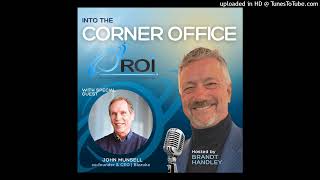
It all started with a very simple idea: tell the stories of how successful middle market CEOs made it to the corner office. I'm Brandt Handley, founder and managing director of Resource Options International, or ROI. We're the USA's premier executive search firm focused exclusively on empowering middle market companies to attract, hire, and retain A-players while transforming top executives' careers and lives. ROI's Into the Corner Office is dedicated to discovering how middle market CEOs advance their career, and we're making these remarkable and sometimes quite unbelievable stories available to you for the very first time. Listen and learn about the challenges they've overcome, the interesting people they've met along the way, and the lessons learned that steered these executives' unique journey into a middle market corner office of their own. I know you enjoy these CEO stories as much as I've enjoyed recording them. So thank you for listening today. And if you like what you've heard, rate us on iTunes or wherever you get your podcasts. I'm looking forward to you joining me on the next great middle market CEO adventure into the corner office. Today, my guest is John Munsel, co-founder and CEO of Bazooka. Bazooka is an Inc. 5000 company and a clear force in the world of AI strategy. Through his proven methods, John has helped over 600 business leaders in the past year alone. His frameworks, AI Strategy Canvas and Scalable Prompt Engineering, are transforming AI implementation across businesses and has become a mandatory part of LSU's AI curriculum. John is dedicated not just making AI accessible and profitable for all, but also making employees more effective and valuable, allowing companies to retain their workforce and thrive in the AI revolution. John Munsel, welcome into the Corner Office.
Hey, thanks, Brent. Great to be here.
Where does the podcast find you today?
Great question. Well, I'm actually in my house in a bedroom because the office I was in for 21 years, they sold the building and the new owners came in and said, We're taking over the entire space and we need you out of here in 3 weeks. So it's improvised.
Improvised.
Yeah. So all of my stuff is in storage. I mean, you know, fortunately I sold off the agency side of our company 2 years ago. So all of our employees are in different states. So I was able to, you know, quickly consolidate. But I'm rapidly looking for, for office space. But right now I am. Yeah, I'm in my kid's old bedroom.
What part of the country?
Uh, Lafayette, Louisiana.
Lafayette, terrific. Well, tell us about your early years. We always kind of like to get started where at the beginning, you know, where'd you grow up and what was your early family life like?
Uh, well, I, I grew up in Baton Rouge, Louisiana, and, uh, you know, it's kind of funny because I was actually born in Columbus, Ohio. So both of my parents were Ohio State Buckeyes. Pretty much all my cousins are Buckeyes. And my dad was in the banking business. And then we moved to Baton Rouge when I was 5. And then in the middle of the 3rd grade, we moved to Houston. And then in the middle of the 6th grade, we moved back to Baton Rouge. And so, you know, I kind of was bouncing around from school to school. And then finally, I went to a high school in Baton Rouge called University High, which is LSU's lab school. And then I went to LSU. So, I literally walked across the street from high school to go to college. So, nice, nice.
And Dad stayed in the banking business his whole career, or did he bounce around?
He did. Yeah, he did. He stayed in banking. In fact, he eventually moved to Bradenton, Florida, and started a bank. I think it was in like 1987. And then I moved down to Tampa in 1988. And started a company in, what was it, 1997. Yeah, I started a software development company. That was when the web was coming out and I was like, "Oh, this is the future." And at the time, I had been in financial services for 15 years and was working for Northwestern Mutual Life at this particular time. And that's when I saw you know, geez, the web is a whole lot more fun than selling life insurance. So, I started this software company.
You're a cutting-edge guy. I know you got into AI early and we're going to get to that in a minute, but it doesn't surprise me at all. Brothers and sisters, John?
Yeah, I got an older brother and a younger sister. Got it, right in the middle.
And if you think about, you know, that growing up other than, you know, kind of the bouncing around, what things that kind of inspired you? Were there things that, you know, your mom and dad maybe had some influence on, or, you know, what were those inspirations that you took away from your childhood?
You know, I think my dad always said, look, if you want to make money, you should work for yourself, which was ironic because he always worked for a bank. You know, he always had a salary. And I always remembered that, and I just kind of always had this entrepreneurial itch. I mean, Literally, the first job I ever had was selling lemonade, right? In the, I think it was the first grade. And then it dawned on us that if you really want to sell a lot of lemonade, you got to go where the people are thirsty. So, we loaded all our stuff into a little red wagon and walked down the street to where a site, a house was getting built. We served up all the construction guys. That's smart.
I love that. I love that. Go to where the action is. Another common theme I'm sure we're going to get to. And any other kind of entrepreneurial stuff you did as a kid other than lemonade? Did you have a paper route or any other kind of stuff?
Oh, yeah. No, I didn't do the paper route thing, but we bought some kind of reflective paint for concrete and we would go around door to door knocking on doors and we would paint their address on the curbs. You know, we'd do stuff like that.
The stencils, right? You'd have the stencils.
Exactly. Yeah, we did that. Mowed lawns, you know. Did all kinds of things, but I was always out there trying to make money.
Did you have a crew you did that with, or was that with your siblings?
No, I never did. I just did it because I played football. And it's like I tell people, if it wasn't for the lack of size, speed, and talent, I would have played in the NFL, you know. But I love football.
Three important ingredients.
That's right. That's right. But we had 2 a day over the summer, so I really didn't have time to go build out a crew. So I just picked a couple of lawns and would mow those. And that was kind of it. And then I worked at a clothing store. I was a bank teller. I did all sorts of stuff. I put myself through college.
I was going to say, was that—
Dude, I had to pay for— yeah, I had to pay for college. I was in a fraternity, had to pay for— the fraternity. So sadly enough, all of my earnings were, as you could probably imagine, a kid where the drinking age, which was 18 back then, I spent all my earnings on alcohol and women. So not that I had, I had more alcohol than women, just as a full disclaimer, as most of us did at that age.
And what about school, going through high school and junior high? Were you a good student? You had some favorite subjects?
Yeah, no, I was, I was a pretty good student. I was, I was, uh, I unfortunately, I, I got, I would say lazy. So I don't know whether lazy is the right word, but one of the things, you know, when you move from school to school, you have to meet new people, right? You're the new kid. And there, you know, at that young age, there's this peer pressure. There's this, who do I want to be friends with? I don't want to get picked on. I don't want to get laughed at. So I need to find the right people to be friends with. And so that made me do certain things and make certain decisions because I went from a private school to a public school in Houston, and instantly I was a year ahead of everybody. So I was making straight A's, and I thought, this is easy. But then people started to get— I don't know whether they were jealous or what, but they were making fun of me for always making good grades. And so I decided I needed to throttle that back. And so I throttled it back a little too much. And then when we moved back to Baton Rouge, I was back in a private school, and now instead of being a year ahead, I was a year behind. So, uh, but I realized, you know, hey, I could, I could I don't have to work too hard to make A's and B's. So I was kind of in that mode, which was not the right mindset. It did not serve me well when I got into the working world.
You know, was it pretty clear you'd go to college? Was that something?
Oh yeah. Yeah. No, I knew I was going to go to college. I wish though, in retrospect, I wish that I had taken it more seriously. And I wish I knew what I wanted to do, but I really didn't because, you know, back then there really were no computers other than mainframes. And my first job out of college, I worked for a real estate developer and they, that was the year IBM came out with the first PC and they slapped it on my desk and said, hey, figure out how to use this and then teach us. And, you know, when I was in college, we were using punch cards to do programming.
Fortran.
Yeah, Fortran. I thought it was interesting. I thought, this is really cool. And, and what I didn't, um, I guess because I was in college and you, on the one end, you're taking geography and music appreciation, and then you're taking programming and trying to balance all that out. And I thought I should have spent more time in programming because it was fascinating. It was a whole lot of fun for me.
Um, but when I got jealous Go ahead.
Pardon me?
I'm sorry, go on.
No, no, I was just to say when, when, um, I think it was my senior year, LSU came out with this thing they called the Widget, which was just a— it was a CRT or, you know, computer screen with white letters on it that allowed you to type in what you were typically putting on punch cards, but you could actually see each line on this white screen, and then you'd send it to the processor., and that, that was like, oh, well, this is easier than carrying around a deck of cards that you can drop, you know.
Right, right. And was LSU your automatic choice given its proximity, or did you take a look at others?
Yeah, yeah. Well, I, I think it was definitely my automatic choice because it was, it was close, but at the same time, I spent such a, a large amount of my high school years perfecting the art of mediocrity that I didn't really get scholarships, you know.
So And you studied finance, I think, right?
I did. I was a double major in finance and marketing.
Okay. Did they offer IT degrees or computer science back then, or was that still—
They did, but I couldn't see a path forward because I loved marketing and I liked finance. I hated accounting, but I knew the two kind of had to go hand in glove. And then, like I said, I got intrigued by programming, but I didn't want to be, you know, I didn't want to be locked in a room and have people slide food under the door just so that I could get my work done. So I didn't go that route. But, you know, when I got that PC, that was fascinating to me because there was no— at the time, there was no Excel, right? There wasn't even Lotus 1-2-3 when I got it. There was this program called VisiCalc, which was like the world's first spreadsheet. And I thought that was pretty cool. So, I built all sorts of stuff. At the time, I was working for a real estate developer and I was analyzing the office space environments of Shreveport, Louisiana and of Jackson, Mississippi. And I used that spreadsheet to do all these comparisons and stuff. And it was pretty cool. And then, I moved on to a bank in Baton Rouge. And that's when Lotus 1-2-3 came out. And I was like, oh, you can sort, you know, this is even more fun. So I really got into that. And I eventually— another buddy of mine and I, we created a spreadsheet that helped the bank spread commercial financial statements and create all the lending ratios you needed to make lending decisions. And that was kind of what really got the propeller on the top of my head spinning because I thought, this is fun.
That's excellent. And those jobs early on, did you have some leadership responsibilities?
Did you start managing people or were you more—
Tell us about that.
Well, so, my first one in the banking career, I was in the mortgage loan department. So, I was— it's kind of funny because I was doing construction loans by day and by night, I was waiting tables to make more money. And what happened is we acquired a couple of other banks and my boss was great. He was my mentor and he was just a really smart guy. And it was a lot of fun working for him. And when we acquired these other offices, we had to assemble their loan portfolios and turn around and package them in mortgage-backed securities and then sell them to the secondary market. Of Fannie Mae and Freddie Mac. And he was doing all that manually. And, you know, you had to time these things right to sell these mortgage-backed securities. It doesn't bear going into a deep discussion, but he was doing it all manually. And so, Lotus 1-2-3 came out with a program called Symphony, which actually incorporated communications, word processing, kind of a you know, hybrid database, which is really nothing more than a spreadsheet turned sideways. But what I did was I created a program that at night would dial up these different offices. We had one in New Orleans, Lake Charles, Alexandria, and Shreveport. And it would dial those offices up and it would download their spreadsheets that I'd created for them to, you know, put all their loan production in. And then at 2 in the morning, it would compile all that, and then it would print out a report on the old dot matrix printer, and it would be sitting on my boss's desk in the morning. So instead of him taking 2 and a half days to prepare the report, he'd wake up in the morning and it was ready for him. And that was, that was, that was like, you know, me programming stuff and automating stuff. And it was really, really cool. And that was, you know, again, it was one of those times where I was like, hey, this is a whole lot more fun than actually making the lending decision. So, that was kind of really where I got the bug even harder.
So, when did the entrepreneurial bug really bite you? Because, you know, you worked for Northwestern Mutual Life, you had some—
was it Citizens Bank I think you worked with down in Tampa and so forth?
Yeah, when did you kind of get that, hey, I need to really be on my own and What was the motivation behind that?
Okay, so, so what happened was I moved to Clearwater to manage a branch and turn it around. It was, you know, it hadn't been profitable and they hired me to turn it around. And so I had to be in sales and I had to be in marketing and I had to be in management. I had to do it all. And at the time, I also had to make loans. And I was like, you know, hey guys, what are y'all using to generate the loan ratios? And they were like, oh, we're doing it, you know, with this spreadsheet. And I looked at the spreadsheet, I'm like, oh man, that's, that's not what you should be using. So I called that buddy of mine who created it, uh, the one in Baton Rouge with me, and his name's Dean. And so he happened to have moved to, uh, Orlando. I said, hey Dean, do you still have that that spreadsheet? He goes, yeah. I said, well, give me a copy of it. And so, I got a copy of it and—
And this is before mobile, so you had to drive there to get a floppy disk.
Oh, yeah, yeah, yeah. Literally, pick it up on a big floppy disk, right? And so, anyway, I modified it, ran a bunch of macros in it to automate stuff, and then I handed it to the president of our bank and his head exploded. He's like, oh my God, I've never seen anything like this. It's really cool. And so then I called up Dean and I said, Dean, I think we could make a lot of money selling this to banks. Yeah. Right. And so he's like, okay, let's do this. Well, at the time, there was a company called Parsons Technology out and they were selling these little applications for PCs for like $69, $59, you know, and they're just little one-hit applications for your PC. And so I told Dean, I was like, dude, I think we could knock it out of the park if we sold this thing for like $59. And at the time, competitive products were $2,500. You know, they were big hairy things that would run on a mainframe, but you didn't need the mainframe. So we sat down every weekend, he'd come over and we would just crank this thing out and we turned it into a program. And then I bought some marketing material from a guy named Jay Abraham, and it was called Your Marketing Genius at Work. And I binge-read this stuff over like 2 weekends just so I could learn marketing. And back then, you know, again, there's no web, there's no email, there's no nothing. So it's all direct mail. So you had to learn how to write direct mail, learn how to create the envelope for direct mail, send it out in the mail, and then sit there and wait for 3 weeks waiting to see if a check came back. Yeah. That they'd had to mail you back a check, right? Because we couldn't take credit cards. We were two knuckleheads at a bank. So, he would wait and sure enough, checks would start coming back in the mail. And it was really cool. And then, we would do what we did. This is the killer, Brant, is where I really learned a lot about marketing from Jay was one of his key things was to not just test headlines and test copy, but to test pricing. So we went out and we tested, um, $69, $89, $149, $249, $349, $549. We tested all these prices, shot them to different parts of the country so nobody would be the wiser. $249 outsold the rest 5 to 1. So where we thought we were going to sell something for $50, we sold it for $250 and we sold 5 times as much of it on top of a 5x price. So that was a big, big moment for me. And that's when I was like, this is a blast. Marketing is an absolute blast. And ironically enough, that company I was telling you about, Parsons Technology, he eventually sold it for a stupid amount of money. And that guy's name is Bob Parsons, who is the guy who owns GoDaddy. So he did pretty well. Yeah, he did pretty well. We didn't do so well, but, uh, But we did well, and that was a lot of fun. So, that was my big, you know, first entrepreneurial thing that really got my juices flowing. Yeah. Yeah.
And then no looking back after that.
No, no, because like I said, that kind of married everything. But when I was at Northwestern Mutual and the web started to come out, I built an intranet for our regional office there in Tampa because they kept distributing everything through mail. And I was like, y'all, You don't have to do that. We can do this in the web and build a little intranet where people can click and see their reports and all that stuff. And so I built that and they loved that. And then a buddy of mine from New Orleans called me up and he says, you know, I'm thinking about building a website. And this is in '97. And literally you had to cobble together to access the web. And I was like, well, I'll build it for you. And he said, what would you charge? I said, I don't know, $100 a page. He goes, okay. And so, uh, we did it. And, um, and next thing I know, I started getting calls from other people to build their websites. And I was like, okay, I could make a living doing this. So I quit, started a company. Uh, my brother happened to be a graphic designer. I was not a designer. I was just the, you know, propeller head. And so we— he would design them and I would build them. And then we brought on a sales guy and then we We went from zero to, what do we do, $1.5 million in revenue in about a year and a half. So, it went really quickly. So, it was a lot of fun.
I'm seeing a pattern here and it reminds me of Wayne Gretzky. You know, one of his famous sayings was, "Skate to where the puck's going to be." John, you seem like someone who kind of gets some insights on stuff. Like, I love the lemonade and, you know, going to the building site and, you know, kind of seeing what was happening with the internet and now with AI.
AI.
What is it? Is it curiosity? You know, what kind of drives you on that? You've got to obviously have a level of risk, you know, welcoming, right, with that. But, you know, tell us a little bit about how you kind of go through that thinking.
Well, I don't know. I think it really is just how I'm wired. I love technology and I love I love the entrepreneurial side of things and I love marketing. And when I see something that marries those 3 things, then I go, oh, this is, this is going to be fun. And so when the web came out, it married all those because, you know, again, I'd gone through this direct mail stage and, you know, we did that for, I think, a year and a half and said, okay, that's, that's fun enough. But then when, when the web came out, I was like, wow, this is, this is technology. This is marketing, uh, and this is entrepreneurial, right? And it's, and it's where the market is going. So I was like, this is where I need to be. And, and that, you know, always kind of served me well is trying to figure out where's the starving crowd, right? You know, if you're gonna— it's like, you probably heard the story before. If you're gonna, if you're gonna, uh, have a food truck, you know, where, where do you want to be? Well, I want to be where the crowd's starving. I don't want to be just having a food truck somewhere. I'll go park it where I know people are hungry. So that's kind of what I looked at. I think when AI came out, I thought, okay, this is interesting. We were playing around with tools like Copy AI, and at the time it was called Jarvis. Now it's called Jasper. Those were really interesting, and we used them, but I was like, you know, these things just kind of talk in circles. So they give you a head start, but you still have a ton of finessing to do. But it wasn't until ChatGPT came out when I realized, oh, they took the training wheels off, didn't they? This is really powerful. And so at that point, that's when I sold off the agency and said, okay, this is where the future is. I'm going to shift all of my chips onto that table.
And now, Bazooka has been around for 20-odd years, so I guess it's evolved over time. When you first founded it or co-founded it, right back in— see, was this with your brother or was this—
yeah, so, yeah, originally it was a different company in Tampa, and then when the dot-com bomb hit, we had created this technology in that particular company And it's kind of not the best story in the world, but we were cooking with gas and we had developed this technology. We were the, I guess, one of the first web content management systems out there. And we built it in what we would call a component-based architecture. So, back in '98, '99, we built this system so that we could build websites for people rapidly. And we could click a button and it would instantly launch like a press release section or instantly launch a job posting board or whatever. So we had all those components built. And then as the dot-com bomb hit, I was like, ooh, we're not going to be able to sell six-figure websites anymore. We're going to have to drop our price. So the only way to drop our price is to take this developer's tool we built for ourselves and flip it to where it was consumer-facing so that the consumer could actually click the button and add those features to their website. So, we flipped all that around and then showed it to some investors and they're like, "Oh, wow, this is way different." And at the time, we had a few investors and this one particular investor looked at it and he's like, "Oh, this would be amazing." and we were scheduled to wrap up a term sheet on $1.5 million in funding at 2:00 PM on September 11th, 2001. Oh, gosh. Yeah. So, yeah, that morning we were meeting with a client at a restaurant. Somebody came to our table and said, "Man, hey, do you guys see what's going on?" And we're like, "No." And then they pointed to the TV and they're like, "Some plane just flew into the World Trade Center." I was like, whoa, that's weird, you know. And then we got up to leave and the second plane flew into the tower, and I was like, okay, we're under attack. This is, this is not good. And, and as we were driving back to our office, I was driving with my partner Lonnie, and we were listening to the radio, and then you could, you know, hear them saying that one of the towers was falling. And I was like, oh wow. I said, Lonnie, I think we're in those towers. And he said, what do you mean? And I said, I think we just lost everything. And sure enough, about an hour later, that guy called and canceled our meeting. And then on Monday when the markets closed, he backed out entirely. And all of our investors said, okay, well, we had fun, y'all. Nobody's going to be doing anything in this space for a while, so y'all should go get real jobs. And basically shutter it. And I said, well, excuse me, I said, that's kind of easy for you to say, but I'm the guarantor on a quarter of a million dollars worth of debt. I can't really pay that out of personal income because I can't stretch it over 30 years like a house. So I said, look, what I'll do is I'll take this technology that we built and I'll take on all the debt and I'll roll it into a new company. Company that we had already named Bazooka, you know, to do something completely different. But I said, I'll roll it in there and I'll roll you guys in with me, but I'm going to own the majority of the company, me and this other fellow Lonnie, my partner. And so they said, fair enough. So we did that and that's how we started Bazooka and we took off from there. So we turned around instead of selling 6-figure websites, we turned around to building 5-figure and 4-figure websites and licensing them, uh, the hosting for the consumer. Yeah.
Yeah. So let's fast forward to AI. Uh, when did you first kind of take an interest in that technology and, and how'd you first get involved?
Um, well, it, it, like I mentioned earlier, it kind of goes back to us trying to get copy written faster, and we used Copy AI and Jarvis. And that was about— he gave us a head start 2, 3 years ago when— yeah, 3, 3 and a half years ago. Um, and like I said, they were, they were just a great head start. It was really interesting. It would spit out a lot of copy, but none of it was very good. But at least it gave you a good head start. If, if you really used it enough, you would see the patterns and you would see but it just, it wasn't stellar stuff. But when ChatGPT came out, that's when I thought this is where the future is going to go. And so my youngest was about to graduate from LSU, and I have 4 kids, they've all graduated. And so my wife and I were getting ready to be empty nesters, theoretically. And so, yeah, so I thought, Well, no, not— it was, it was post-COVID. This was, uh, this is 2 years and 2 months ago, to be exact. And, uh, I thought, well, I'll sell all this. I'll sell the agency side off and go back into startup mode. And that would allow the wife and I to be, uh, or the wife and me, I should say, uh, to be a lot more mobile. So, we sold that off and retained a couple of employees and a handful of clients on the social media side. And we just started diving into AI, and I joined a few AI masterminds to learn certain techniques. And then one of the masterminds I joined was a guy I'd been doing business with for years, a guy named John Benson. Who's one of the, probably one of the top 25 copywriters in the world. He's the inventor of the VSL, video sales letter, great copywriter. And so I joined his mastermind because he was doing some cool stuff with AI. And in that mastermind, I learned a little bit of a technique that he was using. And it was a guy named Darby Rollins who had actually created it. And I joined Darby's mastermind group too. And what I did with, with that is I realized, okay, they're using it for a very specific purpose, but if I were to scale this up and make it bigger, and I could use it for a whole lot more purposes rather than just direct response copywriting. And so I took those basic principles and built this framework And from that, things just really started to explode for us. I started to figure out what was the problem the market wanted solved. So, I started this thing called the CXO AI Roundtable, and every Friday, I would teach people stuff about AI, and I would just talk to them about what they were doing and what they were interested in learning, lacking, whatever. And after about, I don't know, 10 episodes or so, I started to recognize what the problem was that I could solve. But we were using AI, you know, to help us build this brand and to teach people. So over that time, I probably had a couple thousand hours of AI time under my belt, and I was amazed at at how people kept saying to me, nobody's teaching what you're teaching. This is really unique. And it just, it kind of expanded from there to the point where I got a call from somebody at LSU who said, hey, your friend Roy Martin said you're doing some cool things with AI. I should come over and talk to you. You know, LSU's doing some great things with AI. I'd love to to show you what we're doing and see a little bit more about what you're doing. I'm like, sure, come on over. So we schedule something about 3 weeks out. I'm thinking the guy is really just trying to, uh, get me to donate to LSU.
You're looking for funding, right?
Yeah, right. I'm like, dude, I don't have any money. You're wasting the drive over here. But, uh, anyway, 3 weeks goes by and, um, I'm in my team meeting. We have a team meeting every morning at 8 AM. It's a Zoom meeting. And all of a sudden, you know, notice comes up on my screen that says, Roy Haggerty will be here in 15 minutes. And I'm like, who's Roy Haggerty? And I said, I said, y'all, I don't know who this is. Nobody ever comes to our office. I don't know who this is. And I go, oh, y'all, you know, maybe it's that LSU guy.
And so I have my checkbook.
Yeah. So I look, I look at my calendar and like, oh, it is that LSU guy. I said, y'all, I got to go. I got to clean up my office. So I clean up my office and Roy comes in, introduces himself, and then he says, okay, so I'm the executive vice president and provost of LSU. Do you know what that is? And I said, honestly, no, I don't. And he says, well, there's the president and then there's me. I'm over all of academia.
I'm the operating guy.
Yeah, that's right. And I was like, oh, wow. Wow. Okay. So anyway, he goes on to show me all of the stuff that LSU is doing in the ag side of the world with building LLMs to analyze things. And he said he's built a few GPTs himself. He's teaching a class with another guy that they charge $20,000 a person to do. I was like, oh man, you're out there. That's cool. And he goes, so what are you doing? I'm sitting here thinking, wow, I'm getting ready to get my hat handed back to me because I haven't done that. So I said, well, we created this thing called the AI Strategy Canvas and we'd run a few cohorts and I realized they weren't really getting what this concept we were trying to teach, which we call scalable prompt engineering. And so It wasn't until I created the strategy canvas that people started to really click and they got it. And so I showed him the canvas. He was like, oh, wow, that's fascinating. I've never seen anything like that. He says, do you have the prompts to match that structure? And I said, yeah. And I showed him a couple of prompts and he was like, oh, wow, that's next level stuff. I've never seen anything like that. I'm like, really? And he takes a step back. He goes, look, I know this is kind of off the cuff. And I'm thinking, okay, he's going to ask me for a donation.
I'm going to have to break it too.
Here it comes, right? And he goes, um, would you have any interest in teaching our honors students next semester? And I was like, whoa, I wasn't expecting that. I said, honestly, I, I can't do that. I don't think I could afford to do that. I can't afford to commute to Baton Rouge because it's, you know, it's an hour drive over a really treacherous set of interstate. But, uh, Anyway, I said, but I think that we could probably make more money and have a bigger impact on the workforce if we went through LSU's continuing ed and we taught businesses directly. I said, the mistake that I think all of the universities are making right now, and I don't know whether they're going to be able to clean it up in the next year or two, but nobody is giving kids executable skills. They're teaching kids theory, and when they leave the university and go work for somebody, then that employer has to teach them executable skills. So you're teaching people the what and the why, but not the how. I think we can have a much bigger impact if we just dive in and teach them how to execute. And now they're going to be immediately employable. And I said, the people that go through our training on day 1, and it's a 6-week course once a week, and we have office hours, you know, once a week as well. But on day 1, they leave with some kind of executable skills, and by the time they're finished, they outperform anybody in their, uh, in their role. Yeah. And so he's like, I love that idea, I'll connect you with Continuum. So we did.
Yeah, I love it. Well, listen, John, we're just about out of time. We could talk about this all day. Two last questions before I let you go. So, from a consulting standpoint now, are you serving those businesses? Is that part of your client base? Tell us a little bit about how you're currently structuring the consulting side of your business.
Yeah, absolutely. So, what we are is we're a training, coaching, and consulting business. And with LSU, we've now partnered with them and we've created this thing called the AI Skills Builder Series, which is a suite of video-based training that is geared for businesses that, that need to upskill their employees in AI. And there are 3 foundational courses. One is safety, security, and ethics. Another one is the AI strategy canvas. Another one is scalable prompt engineering. And after they all go through those 3 foundational trainings, they go into specific skills tracks to learn practical AI applications. So we have a skills track for HR, for sales, for marketing, for accounting, for legal, etc. So, we have 10 skills tracks, and that's what we're putting out there to people. And then I work with people by either creating bespoke training for them or workshops for them, or I act as a, what you might call, a fractional chief AI officer for them and helping them build AI strategy. But for the most part, we try to teach them all of our frameworks and methodologies, and then we provide ongoing support after that. So that's what we do. And it's like I said, right now the AI Skills Builder is co-branded and managed with LSU in conjunction.
If our listeners want to find out about that, where would they go to get more information? To bizuka.com?
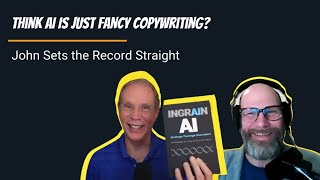
Yeah, so they go to Bizuka, which is B-I-Z-Z-U-K-A. And just as a bonus for you being the guy you are and for serving your listeners the way you do and in the field that you're in, if you don't mind, I'd like to just offer something special for your listeners. I'm writing a book now. It hopefully will be available in October. I've just had to revise 3 chapters and it's called Ingrain and it's how to build an AI-first culture in your organization from Strategy Through Execution. It teaches you all of these principles that I just went through. And what I would do is if your people go, if you go to bizuka.com/ingrain and fill out that little form, but you just mentioned that you heard about us on this podcast, then I'll send them a hard copy of the book. Book for free. That's awesome.
Terrific, John. Appreciate that. That's terrific. Well, listen, one last question. We ask this of all of our guests, and again, we could talk all day about this, but hopefully we'll have additional conversations because, as I mentioned to you, I want to figure out how to get you involved in our business as well. But the question is, what career and life advice would you give to someone who, you know, has their eyes on being an entrepreneur someday and creating their own business?
Man, that's a great question. I think that the main thing is to not be afraid to make mistakes. And that's how you learn, by making mistakes. You have to take risks to be an entrepreneur, but don't think you're going to get it right the first time. Be prepared to fail and embrace the failure as, as a learning experience and not as a setback. It's really what propels you forward. That would be my, my biggest advice is to just embrace mistakes as progress.
I love it. Today, my guest is John Munsel. He's the co-founder and CEO of Bazooka. They help businesses increase revenue, accelerate growth, and streamline marketing execution by leveraging artificial intelligence in all phases of their business. John, thank you so much for sharing your journey into the Corner Office.
Brent, thank you so much for having me. It's been a blast.
Hey, listeners, we're now including your questions with our CEO guests. If you'd like to send in a voice memo, send it to info@goforroi.com and we'll read it on the air to one of our future CEO guests. Thanks so much for listening and share it with friends. Thank you for listening to Into the Corner Office with Brant Hanley. We hope you enjoyed hearing our guest CEO's story as much as we did. If you want to hear more CEOs reveal their journey into the corner office, Please subscribe via iTunes and tell your friends and colleagues. For more information about Brandt, Resource Options International, and the Mighty Middle Market, visit www.go4roi.com.
We look forward to having you join us for our next episode.
More from John

AI Strategy for Business: Build an AI-First Culture Faster - The John Munsell Interview