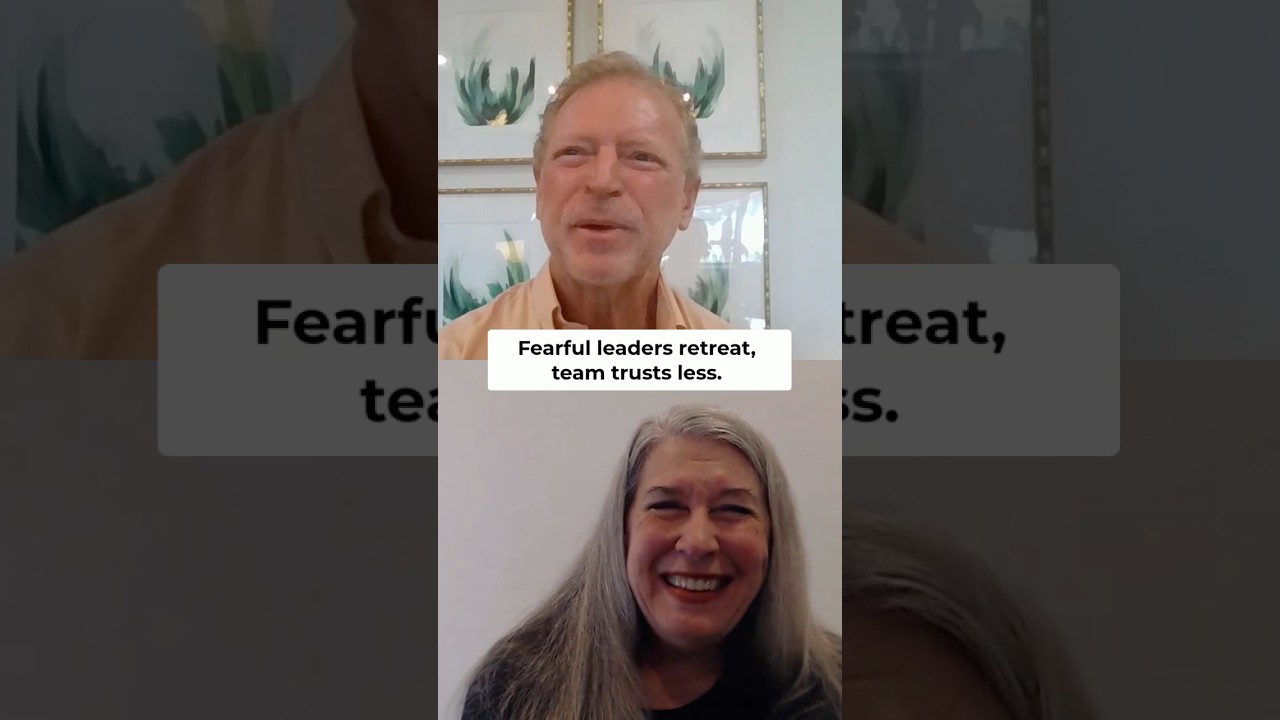
Mary Pat describes a brilliant leader who avoided tough meetings out of fear of looking bad. Once he recognized the pattern through emotional intelligence, he leaned into conflict instead, acknowledged the team's anxieties openly, and restored trust. The shift resolved the underlying problem.
Chapters
No, but another question I wanted to ask you, Mary Pat, is that can you give an example? Because I know you can, of how EI is actually— emotional intelligence has actually helped a leader shift and change their outcome. Something, something, an example.
So let me give you one. I had a client recently, very, just a brilliant person and so heartful, but got into a fear-based position and started to have a pattern of behavior of going into a meeting And every time feeling challenged in the meeting, they thought the best thing to do is to pull back. And so they pulled back thinking that was the correct thing to do. You see the patterns. So the pattern here was, I'm afraid I'm going to retreat because I'll have control. I'm afraid I'm not going to participate because then I don't look stupid. I am afraid that the decision that I'm going to make is going to be wrong and I'm going to be viewed as imperfect. And so you see, that's impression management. So when we get into a place of fear, the impression management is there. And when we can look at it and say, I'm afraid and I'm going to push through this anyway, I'm afraid and I'm going to participate and I'm going to show up. So the minute we saw the pattern and the minute he saw the pattern, boom, he was like, oh, I'm in. I'm being Socrates, asking the questions. I'm challenging. I'm going to lean into the conflict. I'm going to admit the fact that we're all a little afraid with this change process, but that we're going to get through it together. And then the team started to trust him again, and they were having vibrant meetings, and the problem eventually got addressed.