Healing My Gifit of Writing. Connecting with Creativity
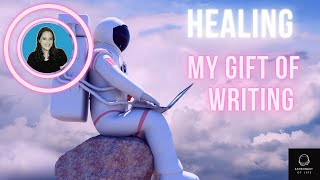
In this solo, first‑person video Joy D. Fanning (also known as Joy Brown) shares her 12‑year creative odyssey, linking writing, trauma, and spirituality. She recounts discovering storytelling at age 25, the whirlwind creation of her first draft, and how an abusive, unsupportive marriage stifled her artistic drive. After divorcing, she switched from nursing to an English major, learned the craft, and published her debut novel Tempus Viator. Years of intermittent writing, a blog for aspiring authors, and lingering imposter syndrome followed. In 2021 she re‑engaged via a Twitter writing group, overcame a LASIK‑induced visual break, and completed a second novel, Divided World, which she frames as both a creative product and a healing process. She distills her experience into three actionable tips—self‑compassion, incremental victories, and relentless perseverance—while emphasizing that creativity can manifest in any art form. The talk concludes with a promotion of a Feb 11‑13 meditation challenge, group meditations, personalized psychic/meditation readings, and pre‑recorded meditations available on Etsy and Insight Timer, inviting viewers to blend creativity with spiritual practice.
Chapters
Hello, my name is Joy D. Fanning, an astronaut of life. I am a psychic and a high vibe storyteller. Today, or basically for the month of February, I want to talk about creativity and how it relates spirituality. This is— to start us off, I want to talk about my own creative journey. For me, that's writing, and that's why I say I'm a high vibe storyteller, because I love to tell stories, not just my experiences, but I live for fiction, man. I am all things fiction. So I'm going to dive into that in a little bit, but I want to use my own story to address issues around trauma and false beliefs that we take on as truths. I do want to do like a content warning about the trauma. It has to do with my ex-husband and verbal abuse. So if that is triggering for you, then maybe this video, I will let you know when I'm about to talk about that. So if you want to skip forward, you can. Okay. I just want to be very clear about that. So when it comes to creativity, I think all of us have this beautiful gift of creativity that we get to kind of play around with a little bit when we are growing up. I'm assuming most of us, though if you've had a crazy childhood, then probably not. But if you had a fairly decent childhood, odds are you got to explore something creative. And I— but for me, then, like, I would be creative. I liked doing— I liked art class, I liked reading, but I never really thought about writing my own story until I was like 25. I remember the exact— not the exact day because I don't know what happened, but I was driving to work and I got this story idea, which was fairly common for me. I get story ideas all the time, and even back then before I wrote them down, I would still get them and be like, that'd make a good book, or I would watch that movie, things like this. And I was on my way to work, I remember I was just— I was digging this story, I was talking about it and thinking about it, and I When I got to work, I wrote it down. And the idea then became like a page. And then I just started writing chapter 1 out of the blue. And like a few months later, I had a first draft. So it was a whirlwind experience. I had never, never done anything like it before. And like I said, I was around 25, 24 years old. It was like 2009. Yeah, discover this. I, um, I dive into it because— but here's where the trauma part comes in, the content warning, where I talk about this. At the time, I was married to my first husband, which is a whole story, but, um, It was near the end of the marriage when I discovered writing, and I would escape in it. I'm not saying that's good or bad, but that's what I would do. But for me, it was a form of escape, and I would just get lost in the story with my characters, and I'd be writing and writing, and he didn't like this. I don't think he liked that I loved it. I don't think he was in a very dark place, and I found something happy. And so that didn't work, you know, it didn't rub— it rubbed him wrong. He didn't like the attention I was giving to writing. There was a lot of bad things about that marriage, but I think I was so naive, and I can't blame younger Joy. I really can't, because He didn't know any better, but I really wanted somebody to be excited about my writing. And obviously, if I could pick anybody in the world at the time, it would've been my husband, right? And that just, it didn't happen. And he was like, he never read it. And he was like, well, if it eventually makes money, then I guess you can do it. But I'm not gonna let you go to college for this. I'm not gonna, I don't really support this endeavor because I don't really see it going anywhere. And it just crushed me in a way. I still fought for it. When I got divorced, I changed my major to English. I was a nursing major, not because I wanted to be, but because he wanted me to be. It felt really good to switch it to something I liked, but I didn't deal with the trauma of that relationship until I would say, let's see, probably like 7 years later. So it took me a long time. And my journey with writing, I wrote that first novel. It was called Tempus Viator, which is Latin for time traveler. And it was like a teen, young adult sci-fi kind of story where people had the ability— not, you know, like 5 people had the ability to like just teleport themselves through time. And the main character was one of these people. She was like an orphan girl. They all kind of were. It had a bunch of cool stuff in it, but looking back at it now when I reread it, I'm just— it's not my writing style anymore. But at the time when I wrote, I had never— I had taken like Writing 101, the basics in college. I had never taken really the English classes. That's why I changed my major to it, because I could see that while I enjoyed doing it, I didn't really know how. So it was like, I want to learn the how, and I want to learn to be good at the how. So that's what I did. And I'm forever grateful for past me for doing that and for finishing it out and getting that degree and learning how to edit, learning how to write, learning how to do these things. And every time over the years— so this is a 12-year journey I'm talking about. So this is— that's kind of the beginning. And I would have a lot of other traumas show up in my life. So writing always kind of took this back, back, back seat. Like, I get to do this after I'm done helping everybody else. Because I was still, um, in this phase in life, like in people pleaser mode. So I would do things for other people. I didn't really feel comfortable doing things for myself. On some level, yes, but I, at that point, I felt it was more noble to do things for others. And not saying it isn't, but there's this level of self-care that needs to be there too. And for me at that time, it that didn't exist, really. I didn't really deal with the trauma around writing. I just kind of— I don't want to say ignored it because I knew it was there. I could sense it, but I didn't really know how to heal it. So I would just, in that sense, ignore it until I could figure it out. So I would tell people I love writing. I started a blog where I worked with authors doing book reviews and interviews and things, and I did that for 10 years. It was an amazing experience. It was called the Aspiring Author Blog. Notice that title, Aspiring Author, like someone who wants to be an author, right? And that was a little controversial in the writing scene, but It was a lot of fun, and I, I learned it was a little bit of imposter syndrome on my part because I wanted to like keep my foot in the world of writing even though I didn't really write. And what I would do though, what I would do is I would buy a notebook and I would write down any idea that came to me, and I eventually had just notebooks filled with ideas, literally piles of ideas. And sometimes I would attempt to write them, right? Like, I would make a short story, or I would maybe write— I think I started a novel once that was 30,000 words. That's not quite half. I didn't even make an outline. It was just kind of me playing, so to speak. It was like take on my take on an alien abduction story, kind of X-Files vibe. But no, it— I, I didn't— I still, year after year, I would do these things, but I didn't know how to heal it. I would talk about it in therapy, I would talk about it with people, you know, close friends, but nothing happened. And then last year In 2021, I was like, I'm ready. I, I've had this story idea in my mind for like 5 years. I think I've got— I've collected all the little pieces I need to build, put them together to build this unique storyline. So I kind of took a step of faith and began writing and It was so beautiful how it worked out because a lot of writers hang out on Twitter. So I'm on Twitter myself. I've done a lot of tweets in the writing community. Anyway, I saw this tweet by a screenwriter actually who led this writing group via Zoom, and I got in it and they wrote for 2 hours every morning So I was like, I did that. It was a little awkward about making friends, but I just let myself be me and be my quiet little self and typed away at my novel. And I got really far. I got really close to finishing, like 75% done. And then I had LASIK surgery and I could not see the screen for like a month and a half. It was a little blurry and the light was too much, so I had to like physically take a break from writing. And once my eyes healed and my eyesight is like perfect now, right? Like, what does that happen? And I could see the screen and it wasn't a big deal. Like, I still kind of fell in that old habit and I didn't write. And then in December I was like, I have 6 chapters left to write. I need to finish this book. I want to finish it in 2021. Yeah, I was like, I need to finish this book. I want to have it done before 2021, just the first draft. And I pushed through really hard in the midst of starting a business and a YouTube and everything else, and I freaking finished that thing, and it felt Amazing. And then my tweet about it went viral, which was just sugar on top, right? But I literally— it came down to like 7 PM on December 31st. I freaking finished it. And so that's kind of where I'm at now. I've— it did not— writing this new novel, the book, the second book I've written, felt completely different than that escapism I experienced with the first one 12 years ago. Like, it was a completely different experience. But what I loved about it was that I think in the past I always thought that in order to write a novel, I had to tap into that engulfing energy that I had in the first time, and then when it wouldn't show up, I would just stop. But this time I was like, no, I don't care if I fucking hate this story. I don't care what, I'm freaking finishing it. It's getting done. I'm writing the end. But then I fell in love. I freaking love my book, man. I freaking love this story. It's gonna be a 3-book series. I'm just, I could go on and on about it. I'm in the midst of the second edit, and my goal for February is to get this second draft done. Which is a lot because there's a lot to add in. I really want to do this, if only for myself. I think this story needs to be shared with other people. Of course, I want to try to publish it, but it's more than that. It's a dual thing because writing this novel right now, the title is called Divided World. When I'm writing Divided World right now, I can tell just by doing this action and, and sticking with it, it's the how to the healing. And it's— I'm not, I'm not gonna lie, it's not hard. I haven't edited at all this week. I've done stuff with my psychic business and YouTube and all that, so it's I'm obviously— I am not quite where I want to be, but when I do sit down and edit, I fall in love with my character again. I, I see it from a new perspective, and I just really realize how much I love this story and how much I love telling stories. So thank you, if you're still watching this, for just letting me kind of do my writing story out, because I hope this is helpful to people. I— and you can relate. It doesn't have to be writing. It could be painting, dancing, singing, guitar, whatever. Any type of creativity. For me, it's writing and more storytelling. I like to call it storytelling over writing because it's I don't know, that's a fine point. But so I wrote down, wrote down 3 tips for kind of healing and embracing your creativity, and I'm going to share with you now. So tip number 1 is to have compassion and just don't judge yourself for not being where you wish you could be. I wish for right? That I had all 3 novels written, finally edited, and an agent and a publisher. I wish I was at that stage, but I'm not. But that's okay. Like, I, I'm okay that it's taking me longer than I would want. I'm, I'm persevering through it. I'm not going to give up, but I'm also not judging myself. And I think that's important. And I don't mean don't judge yourself, like, well, don't use that as an excuse to like be lazy. Think of yourself as a friend, right? Like, oh, I put that on the list. Treat yourself like you would a friend, right? If you had a friend who went through something and is struggling, you're gonna kind of take it slow with them, right? You're not gonna like push them into it. So Do the same for yourself. So tip number 2, push forward even though it's hard. Small victories kind of ties into tip number 1. So yeah, it's going to be hard, it's going to be rough. There's books you can read about tapping into your creativity, like The Artist's Way. I'm sure there's courses out there. You could take. But if you're doing it on your own, basically like me, and you decide the how is to just kind of slowly do it. So I'm assuming you guys, my audience, does not know how to write a novel. Perfectly fine. It goes in steps, just like most things. You start with an idea, you turn it into an outline, Even then, there's little steps in between that. You take that outline, you start writing chapters, then you complete it, then you edit it till it gets to like the 7th draft. Yes, I am serious, like the 7th to 10th draft. Then you let other people see it, you get it edited, you write a query letter, you get an agent. The agent edits it, edits it. They submit it to some publishing editors. Those editors pick it up, they edit it, and then it goes to the public. That's how it works. So taking it step by step, like I said, I— when I started, it was like, I'm gonna put this idea on paper. That's the victory for today. Right now, it's when I go to edit, I want to edit this one chapter. I'm on chapter 7 right now editing. I want to finish chapter 7 edit. And I have my notebook. I write my notes. I change it up. I mix it around. Today's goal, chapter 7. You know, whatever. Translate this for yourself. But it's these small little victories that you can use to build on. Just dice it down. Ooh, I like that. Dice it down. Okay, tip 3: never give up. Never give up. Don't stop. Don't stop believing. Hold on to that feeling. Right? Don't stop believing, man. Even if you're not taking action, don't mentally get up— give up. So like, like I said, I've, um, total honesty, vulnerability, I haven't edited this week, which I could feel bad about that, judge myself, but I'm like, you know what, you did awesome work in other areas. Next week, now that that's done, we'll get chapter 7 done. So I'm not taking action this week on editing my book, but I can guarantee you it's been in my head all day. I still wrote notes on my story when ideas come down. It's not over just because I'm not taking action on it, right? Like, it's still alive up here, in here. So that's tip 3, is to never give up. Never surrender. I don't really know how that ties in. I'm not gonna— just movies. But yeah, guys, that's what I wanted to share. I think we all have a creativity in us. And I just— one story idea I have is a society where everybody expresses themselves in a creative way, and it's very different. It's a very Ursula Le Guin type of vibe. I haven't written it, but it lives up here. Someday it'll get down on paper. And oh, I love daydreaming about that and exploring that idea about what if everybody was like creating in the way they're meant to be creating. So for— I'm writing the books, right? I'm writing the movies. Someone else doing the dances, someone else doing the acting, someone else composing the music. Someone else is using their creativity to set the scene. Okay. Apparently we're making a movie now. You know, like it all fits together and— ooh, what a cool world. I like that world. I want to explore it. So those are my 3 tips. I'm kind of rambling now, so I'm going to stop, but I want to share a few things. One, on February 11th through the 13th, I'm having a 3-day meditation challenge. I did not realize that the 13th is the Super Bowl. I know as an American this is not cool. In my defense, I don't live in America and I don't watch the news and I don't really watch football, so I didn't know this. I mean, I knew it was in February, but I didn't know it was on the 13th, but I'm still going to do it. If you want to show up, I would love to have you, even though it's on the Super Bowl. I know it's a tough competition, but I'm going to keep the recordings there for you. So even if you can't participate on the 13th or something, it's okay. Like, I'm not going to judge you. Nobody will. And you can do it on your own later. But I would still love to have you. It's going to be a lot of fun and Also, I offer meditation readings, which is like my psychic reading, personalized meditations, and then I have pre-recorded meditations in my Etsy shop. You can also listen to my pre-recorded meditations on Insight Timer and here on YouTube. Yeah, on Saturdays at 12 PM Eastern, I do a group meditation. That's it for me this, this time, guys. I really appreciate it. I have much more videos coming this month in February about creativity and spirituality and how they mix together and all that great stuff. So please stick around, like and subscribe. I love you all. Namaste.