Meditation Stories with Intuitive Guide Anna Langeveld. Developing Your Meditaiton Practice
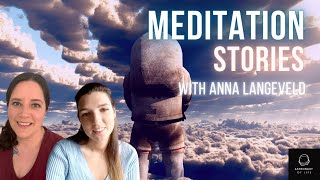
Anna Langeveld, a 28-year-old Dutch mindfulness trainer, discusses building a meditation practice after her own burnout at 23. She explains the difference between mindfulness and meditation, shares vivid experiences like meeting her higher self, and recommends a morning routine of 15-20 minutes of meditation plus journaling to anchor insights.
Chapters
Hello. My name is Joy D. Fanning, an astronaut of life, and I help people go inward to explore. This video is part of a series called Meditation Stories where you might hear me share some of my own stories, but the main part is to share other people's experiences because there are so many ways to meditate and so many things that come to us when we meditate. So without further ado, Here's the video. Hey Anna! Hi, how are you?
I'm good, and you?
I'm great. Yeah, it's morning for me and the sun is shining, Cubby's on my lap, it's a good morning.
Oh, amazing. Yeah, here also the sun is shining, so pretty happy about that.
Yeah, and you're in Amsterdam? Right? Yeah, that's like— awesome, cool. Yeah, can you, um, introduce yourself for everybody?
Yeah, sure. Um, my name is Anna, um, I'm 28 years old, I'm from the Netherlands, and, um, yeah, my specialty lies in meditation. I'm a mindfulness trainer and I'm working on building my own online business at the moment.
That's awesome. What— can you explain the mindfulness trainer? Because that sounds very intriguing to me.
What— yeah, of course. Um, so I did, um, almost 4 months of an online course in mindfulness to become a mindfulness teacher or trainer. And what they do is— I, I've been practicing mindfulness for about 6 years now and meditating every single day for about, I would say, 2 or 3 years. So I know a lot, I would say. And last year I made the decision to really look more into it. And yeah, I finished an online course in it. And yeah, it was really, really great. Um, so the idea is, uh, mindfulness to me is a way of life. Which means that you do— you live your life in a mindful way. And what that means is that you're being in the present as much as possible. So most of the time we either live in the past or in the future, and mindfulness is about coming back to the present moment. And really, um, uh, yeah, really being in the now, which is also kind of what you can read in, uh, Eckhart Tolle's book The Power of Now, which is a good one if you want to learn more about it, I would say.
Yeah, I have his book saved to my desktop. But I haven't read it yet. But like, obviously it's there. Like, it's, it's all—
I—
maybe I'll do that today. No, I will start it today. Yes, because I recently, probably just for like the last— I was gonna say 2 weeks, but if I'm being honest, we'll just say 1 week— like really taking this to heart because I've been struggling with like worry and everything and just being mindful and keeping myself in the moment, it's like freaking life-changing, man. Like, I go through the day so calm, and it's like I don't even think about the things I used to worry about or get caught in those loops. And it's like, okay, there's something to this. That's why his book is on my desktop, because I'm like, I know for a fact I need to read this to like Perf— you know, not perfect, but like gain more insight into how to do this, because right now it's just like my own, okay, I know I'm not supposed to think about the future. What am I doing right now? Right now I'm washing dishes. Okay, let's just be here washing these dishes kind of a thing. And yeah, and you often hear mindful— oh, go for it.
Of course meditation is a part of it. But the thing is, when people ask me what is the difference between mindfulness and meditation, I always say that mindfulness— yeah, like I already kind of explained it— is, is a bigger kind of concept.
Yeah, I agree. It's more— yeah, bigger concept. As I say, it's harder to put in a box for me because meditation's like, well, you, you know you release your thoughts, you don't get caught in them, and you kind of be in that observer space, right? But with mindfulness, it's not— you're not meditating, you're just, you know, focused. Your focus is on the now versus— and in meditation, your focus can be on your breath, or, you know, a certain chakra, or an intention. It has, what, a zillion possibilities which you can work with. But in mindfulness, there's not really just one, and that is the now and what you're doing in the now. So yeah, that's— that was exactly what I was gonna, like, lead us into, because I was like, they're often talked about together, right? And Sometimes people use them interchangeably, but for me, I feel like there really is a distinction and a subtle difference because it's all about what you're focusing on.
So you can practice mindfulness in different ways. So the idea that meditation, like I said, is one of the ways to, um, get back to the present moment. But another way is to take a mindful walk, for example. It's all about keeping your focus on the here and now. And, uh, one another example I can give for myself, for example, is cooking can be a mindful experience. And, um, what else, even washing the dishes or something like that. So the thing is, the idea is also that anything can be turned into a kind of a meditative or mindful experience.
Yeah, let's— the way you explained it just now, it seems like mindfulness is like a form of meditation in a way, but to me meditation is when I think about it, your eyes are closed and you're being still or something. I know there's like walking meditations and stuff, but typically you're still. And for me with mindfulness, there's no— yes, you could close your eyes, but you're usually in an activity and it's just being like Yesterday I did so well being mindful. Just with each work task, I was like, okay, right now I'm going to write this email and that's all I'm going to worry about or think about is this email and what I want to say and do. And okay, it's done now. Okay, we need to write this email. Okay, let's write. Like just with each tiny little task, I was able to just focus on it and not let these other thoughts kind of dig their way into my reality.
Yeah, and, and, uh, another way to be mindful of what you're doing at the present moment is to exactly focus on one thing at a time. And so, uh, I would say nowadays we are multitasking a lot and we're doing multiple things at once. But, um, yeah, that is a really good way for our minds to get really distracted, so, and, and to get scattered in a way. So, um, to be— to become more mindful, one of the ways is to really focus on one thing at a time. And also to— if you're, I don't know, for example, writing something that you're not doing anything else on your phone or something like that. Or when you're eating, which is actually also a good one, is that you're not watching TV at the same time or any other form of entertainment. So you're not distracted and you're not— you don't have too many impulses as well.
Yeah, I have to hide my phone because— literally hide it, you know, put it out of sight when I'm practicing this because I mean, each little notification or whatever, like, I'm like, oh, I have to go. You have that impulse, right? To just check it. And then your mind, you're like, well, this will only take a second. But then all of a sudden you're scrolling or whatever and you've just wasted like 3 minutes and maybe you read a cool meme, but most likely, you know, not much has occurred in that time. Right. So Yeah, yeah, that's kind of a new— like right now my phone is, is under my laptop stand, like I don't see it because I want to be mindful and focused on this interview, but now my cat is meowing at me, so that's— I can't control him, but I can control my phone, right?
But you can control the way you react.
Yes, no, I have like If you watch my videos, I feel like you can visually, visibly see me get annoyed with him because he, he really annoys me when I'm trying to do stuff like this and he wants attention or whatever. And I'm like, okay, I, I recognize that this is what I need to work on because poor little Cubie, he's just, you know, he doesn't realize what's going on, you know, like he's just being himself, and that's the fault of his own. Like, he doesn't get it, so I don't need to be mad at him or whatever. But he just opened the door. Oh boy. Okay, let me go close it. I'll have to edit this part out. Okay, but then give it a few minutes, he'll want back in.
Do you have like 3 more seconds? Because then I can open the blinds and—
Oh yeah, go for it.
It's like you're gonna edit it out, so I was like, yeah, I'm gonna edit it out, so don't worry.
Let me just— my seat—
get—
yeah, there we go. Okay, and action. So when did you start meditating, Anna? Did mindfulness come first or did meditation come first?
Um, so mindfulness came first for me, um, because when, uh, well, 6 years ago I suffered from a burnout. And, um, yeah, well, that was of course a very big, um, event in my life, and it kind of It was— for me, it was a huge wake-up call. I can definitely say that. Um, I mean, um, I have actually— most of my adult life I've struggled with, uh, stress and anxiety, and I just didn't really feel like I had the right coping mechanisms to, or had the right tools to cope with it. And when I suffered from the burnout, I got redirected to— or redirected— I— someone told me that I could maybe do a mindfulness course. And when I first heard that, I really wasn't that, uh, into— I mean, I was— I liked yoga, but I didn't do it that much. And mindfulness to me sounded a bit out there, so that's kind of interesting. I mean, I was 23, but still. And I got introduced to mindfulness, uh, yeah, back then through the course. And it was an 8-week course, and That course, uh, actually changed my life. Yeah. Wow, that's awesome. I think it's just because I got introduced to that concept and to meditation in general. And pretty interesting is that when I started meditating, um, I didn't like it. So the thing is that I— the idea was that we would meditate, sit still basically, right? Sit still, close your eyes, uh, for— start with 5 minutes. And already that was hard for me. And so looking back at that, it's pretty interesting how, yeah, that evolved. Um, I'm saying that also because when people find out that I meditate every day they are sometimes, they ask me, how do you do it, or something like that, or they want to know more. And they, they also tell me that they have a hard time meditating, so they don't, they feel like they can't keep the focus, or like they want tips on how to meditate or something like that. And I'm, yeah, but I want to tell them as well that in the beginning You're— everything new that you start, you have to practice. And for even for me, it was hard in the beginning.
Yeah, 100%. No, I would fall asleep, just straight up fall asleep. And I couldn't really— like, I learned from a— not from my therapist, but another therapist in the practice that I went to. And we had like this little class in the evening and their couches were so comfortable, right? Because they're therapists. And I would be sitting on the couch and each week we would learn like a different type of meditation. So some of them where you're like chanting, obviously I didn't fall asleep, but I'm like, I ain't gonna do this on my own. Like, what the— you know, this is weird. I'm not gonna go, um, for 5 minutes. That's But then like, I really enjoyed the silent ones or where it was just music and I closed my eyes, but I'd fall asleep. And I, at first, I didn't even like meditating sitting up. I had to lay down. And of course, that would— I would just fall asleep.
I'm reminded of the body scan that we did in the beginning of the mindfulness course, or not even the beginning, it's, it's a part of, uh, mindfulness where you body scan. For the people that don't know, is a kind of a practice where you focus on one body part at a time, but really slowly. So the idea is that you either lay down or sit up straight, but you can also do it lying down, um, is that you either guide it or you can do it yourself. But we did it with a guided meditation. Um, you focus on, yeah, like your right arm, for example, and then your right hand. And so you kind of scan through your whole body, one body part at a time. And because it was lying down, I would also fall asleep. And yeah, that was, that was not really the point.
No, but that's like you said earlier, if you're just starting out, you're not going to be perfect at it, right? Just like anything, it takes practice and like repetition. And that was true for me too. So like, after that little meditation course that the other therapist lady led, I didn't really— she like, she told us about Insight Timer and all these other apps you can use. But I want— I'm not sure I started it right away. It was a few months later when I moved from Indiana to Oregon. Which is across the country in America. I, in Oregon, I started to do it and I would do guided, but yeah, most of the time I'd fall asleep or I would get lost in a thought or daydream and then I'd hear that voice like, come back to your breath. Oh crap, yeah, breath. That's what I was doing. Yeah. And It was rare occasions I would have these very intense experiences. Like, I did a guided meditation on meeting your higher self, and I met my higher self, and it was like this big light body, and I— it was very powerful for me. Like, that was not a fall asleep one. That was pretty intense. Have you ever had any meditations like that where you've had like a maybe not intense, but like a unique experience?
Um, yeah, I, um, I've had, uh, multiple, uh, yeah, meditations where, uh, almost kind of an out-of-body experience. And, um, yeah, like you have— I would say especially if it's a longer meditation around maybe 30 minutes or something, then you really feel like— I don't know, you— the thing is, I find it a bit hard to explain, uh, what I experienced. That's why. But yeah, just very, very intense. And then also different visions. Not really like you, I think. But yeah, I mean, no, that's okay.
We're all different, right? I think, like, even now, I'm learning how to, like, to sense the energy and the way it moves through my body when I meditate. Do you ever sense— like, that's the best way I know how to explain it. I don't like You just feel it. I don't know, does that ever happen to you where it's like, oh, like I'm like getting charged up like a battery? Or sometimes I'll, I'll feel energy in my hands, like as if it's like this ball of energy in my hand. I don't know what to do with it, but I'm like, okay, cool. This usually I just stick it on my heart or something. Yeah, but yeah, yeah, yeah.
Um, If, uh, a good example of this is I did an empath realignment and protection meditation recently, and it was really very powerful because one of the kind of exercises, or in the meditation, the idea was that you would realign your energy and, um, it really did feel like I could call my energy kind of back to me, and I felt recharged afterwards. So, and I sometimes, when I do visual, uh, visualization meditations, I, they, they also guide you to visualize, um, kind of a protective bubble around yourself or with a different color. And yeah, and then when I do that, I, I really feel that energy as well. So it's not just— it's a combination of both, I think, where you kind of, you visualize it, but you also feel it.
Yeah, exactly. Yeah, no, that happens to me too. Sometimes it's both. Sometimes— well, if I see it, I usually feel it too, but if I don't see it, I'll still like feel it, you know. And I'm just in this talk, like, I'm thinking back to before I meditated. If I sensed energy back then, I wasn't aware that I was doing that. And for me, meditation— and as I've, like, I don't fall asleep anymore, right? Like, unless I'm doing like a sleep meditation. But it's, it's allowed me to be in that calmness now where I can pick up on that. And I feel like it was always there. I just wasn't aware of it. Or I, you know, like I did. I don't know, does that make sense? Like, and now, now it's like, oh, yeah, I can, I can move this energy up and down, or I can focus on my heart chakra and then feel it like pulsing almost and Yeah, and also when it, when it comes to those meditations where you kind of, uh, align your chakras or something like that, yeah, it's like really powerful.
And I feel a big shift like before I meditate and then after the meditation.
Oh, totally. Oh, totally. And sometimes, I don't know if this happens to you, but like my leg or my arm will like because of the energy, like, like they'll twitch or something, and it's like, oh, I'm literally realigning. Like, that feels almost electric, like, oh, okay, that's— we're doing that.
Yeah, yeah, I've had those kind of things too.
Yeah, like a ripple of— I don't know, it— and it's like your body responding.
I don't know. Yeah, and, and what— coming back to your question, um, you said what kind of intent— did I have intense experiences? So the thing is, um, like I said before, kind of hard to explain, but I'll try. Um, so one time I meditated and, uh, just felt like I just didn't Uh, well, I mean, uh, astral travel. So, I mean, but the thing is, I don't really remember. It's more of a kind of feeling in a way, or just felt like I wasn't really on Earth anymore.
No, I have to— I've gotten into the practice of journaling after meditation and writing out what happened. Because before I started doing that, I'd be like, I know, it felt more like a dream, where it'd be like, I had this intense experience. I'm pretty sure I was talking to somebody. But I don't remember who I was talking to, or where I went. Or I just, you know, I have like the residual energy of it. But after— but now I need to do this with my dreams too, which I need to have a dream journal. But I have a meditation journal where I'll be like, okay, like this morning I focused on our sun and my solar plexus, and I saw these entities and they like took me into the sun, and when I left I was all like glowing or whatever, right? And if I didn't write that down, I probably wouldn't be able to tell you. I'd be like, well, meditated with the sun, and I just feel really charged up. Like, I would forget that I had this experience. And it's taken me a bit to figure that out, um, because it's the ones— the meditations I remember before I started writing down, the only ones I remember were like super intense where like, I don't know, it was, yeah, like a very vivid dream. Or, you know, like I astral traveled there without even knowing it kind of a thing. And I'm like, oh, this is totally what happened, and I can tell it to you right away. And I have dreams like that too, but that's pretty rare. Most like, I don't— I know I had a dream last night, but I can't really tell you what happened there.
But like, the, the dreams are very so vivid that, yeah, it's almost like you're there.
Yeah, yeah. Like, and that actually, like, those type of meditations experiences were more in the beginning for me when I was in the falling asleep phase. And sometimes it even happened outside of meditation. Like, I used to, when I lived in Portland, Oregon, I would sit on my little balcony and I'd be smoking my pot and I just like be looking at the clouds or I'd kind of be like just relaxed, obviously, because that was the whole point of it. And sitting there and all of a sudden I'm transported and it's like I'm getting this vision and, um, I wasn't even like thinking about meditating or I guess I was being more mindful without even noticing it. I was just in that moment like, okay, and I was just— yeah, and it wasn't no music, no guided meditation, nothing. It was just me sitting there chilling. Boom, it was this. I wrote, I wrote a short story based on that, um, experience because it was so profound for me. Which I need to post it on my blog or something because it's— I love that story and I love that experience and I love that it happened kind of like on its own without, you know, it's pretty cool. So sounds like mindfulness and meditation have had a big impact on your life, right? Like you talked earlier, you had the burnout and then you learned about mindfulness and it just changed everything, right?
For me, um, it— like I already said, it started with mindfulness. So that was kind of the beginning, or the catalyst if you want to call it that. Um, and from there I was— started meditating, and then not every day, but just like really exploring more and meditating more. And then I also took kind of breaks in, in a sense where I was like, I don't want to meditate. So I didn't for months. And then I noticed the difference as well when I didn't meditate. So then I was like, oh, that's interesting. Okay. Like, wow, such a big difference between when I did meditate or when I didn't. And then I had some health problems about 2 years ago, and, um, that's when I got more serious in a way where I kind of promised— made a promise to myself, uh, or set the intention to meditate every day from that moment on. And so that meant also, if it's 10 minutes, then it's 10 minutes. But I'm just gonna— I'm gonna make it into a really, yeah, firm habit in that way as well, because every single day I'm meditating. And I think the thing is that meditation in general— and yes, mindfulness, but for me it's more meditation because I feel like meditation encompasses so many things and there's so many different ways to meditate. Has been such a, like, a positive thing for me and just life-changing.
Oh, totally. I noticed the same thing. Like, for a while I meditated in the mornings, and then I stopped. This is fairly recent, and I would just meditate randomly in the daytime whenever I could fit it in, right? And I realized, like, it felt different. My, like, not my personality, but like my emotions and just my energy. It was like something feels a little off even though I'm meditating. And it was like I need to go back to doing it in the morning first thing. And probably just for the past few weeks I've been doing that, and it's like Yes, that for me is key because I, I've had it. I have anxiety disorder, which I feel like I'm moving out of, but, and stress and worry is a big thing for me. And if I start that day, my day, just in meditation and like calming before I let in like the world kind of, oh my gosh, I keep, I'm able to keep that energy with me more throughout the day versus starting my day, getting going, and then being like, I'm so stressed, I need to meditate, and then I meditate. Like, yeah, it just removes that completely and I just stay calm. Yeah, but it took me a bit. Like, I, I don't always want to meditate in the morning, you know, or I'm like, same.
I have the same, I would say. But, um, what you said about starting your day with a meditation like just maybe even like the minute you wake up or something. It's just, it really sets the tone for the rest of the day. That's what I've noticed. Even right now, I'm also not doing it religiously every morning or when I wake up, but now that you're talking about it, I'm like, oh yeah, I know what it's like because I, I did have a period where I meditated first thing in the morning. And I also set an intention at the end of the meditation. I usually set an intention for the rest of the day, and I don't know, this day is gonna be wonderful or something like that, or this day I'm gonna be peaceful, something like that. And yeah, it really changes the— kind of sets the tone for the day, like I already said. And then Also, I feel like my mindset is already really kind of calm because meditation really, really calms me down.
Yeah, no, same.
And yeah, I mean, it doesn't always work that I can keep it for the rest of the day, but it's really nice when that happens. Yeah, for sure.
Well, for me, that's where the mindfulness comes in, and it's like I'm slowly building this awesome practice of meditating in the morning. And then for me, I have two passions, right? I love writing fiction, and I love meditating and also my spiritual business kind of thing. So for me, it's— I'm realizing, like, before I started this, I'd be like, I need to meditate and I need to edit a chapter in my novel. And I would just feel overwhelmed because I'm like, well, yeah, I need to do those things. But I also need to I need to make this meditation, I need to edit this video, I need to do that, and I would get overwhelmed. And but now I start my day with the meditation, go eat breakfast afterwards, or whatever. And then it's like, you know what, I feel just fine taking 20 minutes or whatever it takes me to edit this one chapter. That's all, that's all I'm doing. And then I feel so proud of myself for taking, you know, spending time on that passion as well, because I love my story. I love working on it and getting that creative time in. And for me, it helps to do it in the morning when my mind is like the most active. And then I go into my, my other, my work work, and I do that. And it's, but it's taken me a lot of time to kind of figure out what I need to do because I'm stubborn. And it was just like, eh, I know I'll do it, but then I wouldn't do it, you know? And like, man, it's been like a week and I haven't worked on my novel at all. And I feel guilty about that now. And I'm sorry.
Then you feel like you're procrastinating? Yeah.
And it's like, no, I love it.
I should really do this. I need to do this. Yeah, I know those feelings.
Yeah, yeah. So it— I mean, for all those people watching, like, have grace and patience with yourself is, is what I'm saying. Because definitely, yeah, like, I've been meditating for a few years now too, but I'm just now figuring out and sticking to it. That's like kind of a big part for me anyway, sticking to this morning routine where I do the meditation, I journal, then I eat, you know, I'm gonna go make breakfast, I'm mindful at breakfast, and then when I come back, I work on my novel and then I work on everything else.
And that's another thing I think is very important is to have a routine, or if you don't have a routine, at least try to incorporate some kind of healthy habits into your day. And for me, another thing, yeah, was to kind of create a morning routine for myself. And so what that would look like, I would say maybe similar to yours, is I wake up and then the first thing I do is I meditate for 15 minutes or maybe 20. And so that's already like a good start of the day. And then I do the rest of my things, and the to-do list, I don't look at it, right? And another thing is to not look at your phone first thing in the morning, but I'm still working on that one.
Yeah, like I said, I have to hide it, and that's so far— or put it in airplane mode or something where you know, it's not going off every few minutes or so.
You're not distracted by— yeah, totally.
Yeah, no, I— yeah, I, I do well with the routine, and I think sometimes I've rebelled against it because I'm like, no, freedom, I want my choice. But it's like, Joy, what, what works best for you? Just embrace that. Who cares? You know, it's still freedom for you. Just because you have this routine doesn't mean, you know, and I'm learning that. I talked about this in another group I'm in this past week. Like I have like, um, I have a to-do kind of a thing, but I don't necessarily go in order. I, that's where the freedom comes in. So it's like, okay, yeah, I'm going to meditate first, eat breakfast. Do like the morning chores and then edit the novel. And then let's decide which of these 5 things I want to do first. Which one do I feel more comfortable doing? And then I'll do it and then move on to the next one. And that's— that gives me that kind of freedom where I don't feel like bogged down. Because when I— before I worked for myself and I worked for other people, like in like a 9 to 5, I rebelled against that a little bit, being like, you have to take your break at 4 o'clock or whatever. And it was just like, oh, but I might need it now and not then. And you kind of have to live by their rules sort of thing. And I didn't like that.
But you really have to follow that schedule, right? In a way. And yeah.
Well, but that's the thing, like, for me it's best to meditate in the morning. I, I try to do it at night too, um, before I go to bed, but at least get it in in the morning. And like you said, it— for me, it's— for a while it was really long where I would do like mantras and I would literally spend like 2 hours in my meditation kind of time, but But now it's more to like more like 15 minutes meditation, 15 minutes of journaling, automatic writing, and done, you know. And I got my messages for the day. I got, you know, I've been able to align myself and I can move into it. So it's, it's pretty, pretty awesome when you figure out what works for you and, and then just play with it. And embrace it.
That's, that's a good thing that you say about figure out what works for you, because what I found is that I had a morning routine that was kind of, you could say, strict in a way, where I was using an app called Fabulous as well. And, um, it was really like you had a morning routine which is like morning meditation, uh, breakfast, you know, things like that. And it's all nice, but then you have to kind of check the boxes when you did them. But then I, uh, didn't do a meditation or didn't do yoga, you know, for a week maybe, and then I felt bad because I didn't do it. But then I kind of realized it doesn't really work like that, or that didn't really work for me, uh, like in the long run, because then my morning routine kind of changed, for example. And then, yeah, things kind of changed as well. Um, and then I found out that maybe I want to do a different order, or maybe now I'm not— and now I'm not doing yoga for a while, something like that. So then it became— I became more flexible with that. And yeah, still I have that kind of routine where I want to do a few things in the morning because I've— because now I'm slowly starting to figure out, okay, this really works well for me, but not as strict as I used to do it. I feel like it was a bit maybe even rigid where I was like, just like, okay, checking another box, you know?
Yeah, no, it's— yeah, I really like the finding what works for you, and that doesn't make you feel stressed, because it shouldn't make you feel stressed or guilty about—
Yeah, and you're also feeling like an obligation almost or something. I'm like, no, that's not how it's supposed to be. It's supposed to be something for you that has to feel good, right?
Yes, exactly. You know, this has been amazing. Thank you so much for, for for talking with me today. Is there any place on the internet or anywhere else people can find you if they want to connect with you?
Uh, yeah, um, I'm on Instagram and TikTok and Facebook.
Yeah, awesome, Anna! Thank you so much. This has been amazing. I love connecting with you always.
Yeah, me too. Thank you for having me on, and yeah, I really liked our conversation.
Oh yeah, big heart.