Meditation Stories with Michael Burkhardt. Being in the Flow State.
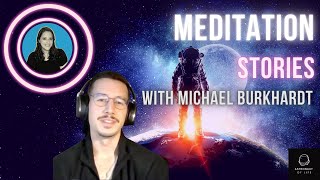
Michael Burkhardt describes how meditation evolved from five-minute sessions during graduate school to a transformative five-day temple retreat in Japan that sparked a career change. He and host Joy D. Fanning explore flow as conscious action aligned with heart and mind, and meditation as a path to freedom across physical, mental, emotional, and financial levels.
Chapters
Hello. My name is Joy D. Fanning, an astronaut of life, and I help people go inward to explore. This video is part of a series called Meditation Stories where you might hear me share some of my own stories, but the main part is to share other people's experiences because there are so many ways to meditate and so many things that come to us when we meditate. So without further ado, Here's the video. Hey Michael!
Hey Joy!
How are you?
All good, I can't complain. What about you?
All good? Yes, all good, all good. Thank you so much for joining me today.
For sure, I'm always happy to connect back.
Yeah, so just to like give our—
my viewers a little background, you and I met like 2 years ago In Mexico City, 2 years ago when the world was a little bit different and you could still go to the park and many people were there and you could enjoy a lot. So I remember it was a different time back then, but yeah, very happy to connect back now.
Yeah, me too. Yeah, me too. And one reason I wanted to connect with you is because that meditation group you led in Mexico City had a big impact on me, so I wanted to include you like in this series and everything, because I'm like, literally after this, I'm going to lead my own meditation group. So it's— you're very much an inspiration for sure. So thank you so much for that. But I know a little bit about your story, but I want to have you share it if you don't mind. Like, how did you get started in meditation?
Yes, happy to. Well, I think I got started because I was studying around 6 years ago. I was doing my master's and I was thinking, how can I be more productive? How can I be more creative? I was very much performance-driven, output-driven. And then I stumbled upon meditation. I read it somewhere and I thought, okay, I'm going to try this out. Maybe it helps me to, you know, learn a little bit faster in university. And then I actually tried it out. And I remember I was sitting down for 5 minutes. So I put the timer for 5 minutes. And that was the first time I just closed my eyes. And I, you know, tried to focus on my breathing back then. And it felt like, it felt like an eternity. So after 3 3 minutes, I thought it can't take that long. I looked at my watch and it showed me, yeah, it showed me 3 minutes. And I was really, I was impressed by it. I was impressed how restless my mind was, how many thoughts were coming in. And I tried it over and over again. And it took me a month to slowly really get used to observing thoughts and observing my breathing. And that's how I got started. And, you know, the more I did it, the more I realized that it's not about being more productive or being more creative in the first place. But that was my start. So that's how I got connected to it.
So like, how often did you do it every day? Did you do it just for 5 minutes every day? And like, it's like, I'm just gonna stick with this and try to make it to 5 minutes?
Yes, actually I tried to do 5 minutes at a minimum. And I then, when I figured, okay, it works, I can handle that, I went to 10 minutes, then I went to 15 minutes. I downloaded an app called, back then it was, I think, Insight Timer. Maybe that's the name. And this one also had guided meditations and it had music and it makes it easier. So if you are listening and you are thinking about starting meditation, starting with complete stillness is often more difficult. So it's easier to build a bridge and transition into the meditation by listening to music, listening to a guided meditation, because the mind can then focus on the music and can focus on the, um, the, the voice of the person guiding you rather than the thoughts that are coming in and all the sensations. So for me, that was the transition. And once it was easy for me to do 10 minutes, 15 minutes, 20 minutes, 30 minutes, then I went to the silence. And the silence is It's a different world. And that was my journey. You know, some people might start already with the silence. You can give it a try. There's no clear path with meditation, but that is my journey. And talking to people, I know that many people went a similar path. And yeah, that's how I did it. And then maybe one more thing, to be honest, which is I think also important. I went to a temple in Japan, and there I was kind of forced for 5 days to not look at my phone, to not be on the internet, to not work, but just sit, do meditations, walk in the garden. And I went basically from 20 minutes a day of meditation to 3 hours a day. And it was very hard, but I saw that it's possible. And that's also something that people, or we as humans, do, right? We put limitations in our mind. So we think, okay, I can do now 15, 20 minutes, and that's enough. And it might be enough to do changes, and it will definitely help to be more observative and to disidentify with thoughts and with our emotions and to bring in more clarity. But a longer session is where the, where the really magical stuff happens, let's say. So if you sit for 10-20 minutes, sometimes the mind needs this time to slow down. So it's kind of like the preparatory steps. So the mind slows down after 10-30 minutes. So now the question is, what happens next? And that's kind of what I explored in Japan doing it long.
Yeah, I had a similar experience. Like, even now I have like thought recess or like my pre-meditative where I just kind of let my brain do its thing and I switch into that observer mode. And I just let it take as long as it takes. It's usually 10 to 20 minutes. I'm very, I'm not in a rush because that just feeds thoughts, right? So, and then once I feel like, okay, I thought everything I need to think, then I'll go into like, I call my deep meditative state where I'll sit down and actually it's pretty instantaneous, not instantaneous, but, you know, very quick, I'm in that deeper state that you're talking about. And it, it takes a bit to get yourself there and to realize it's even possible, right? I think a lot of people stay in that what I call the thought recess, where they can get to maybe observer mode and then they just stop. And it's like, oh, but so much more lies beyond if you just going. Wow.
Exactly. There's, there's always a deeper level to it, and it depends a lot on the current state of mind that you have. So where are you coming from? How was your day? How much information did you process? How much new information did you get? What is your stress level? All of that depends how active your mind is and what type of emotions are being there. And that's why each meditation is different. So what I remember also in the beginning, especially if you have a very— when you're more logical, more rationally thinking, you try to always figure out a method. How does it need to work, right? So if I do it for 5 minutes, then it needs to happen like this and I need to get calm. And I don't like this thought, I don't want this thought, I want to push it away here and there. So the mind is actually coming up with a lot of ideas on how the meditation should look like, right? So, and that's also part of the, let's say, the learning, the realization. No, it's not about this. It's not about figuring out how it needs to be done exactly. Because there is no exact process of doing it. It's just a matter of doing it and then realizing certain aspects. And then you will figure out your own way step by step. And it will never stop, right? It will never stop that this is now the way for me that is always going to lead to this type of, you know, state, or after this many minutes it will happen like this. All meditations are different. What happens is that it will be easier to get into the observer position, and there will be a distance which will become bigger and bigger between thoughts, between emotions, between bodily sensations, and observing all of that, right? The distance. And if we are— the issue is we are often caught up in all of that. So if we are angry, we think we are anger. If we are restless, if the mind is restless, we think we are restless. In the end, it's just the mind that is coming up with something. In the end, it's just anger coming, but it's not that we are anger, not that we are restless. Those are aspects, aspects of the mind, aspects of our emotional states, and we need to be able to differentiate between this. And that's the observer, right? So that's the observer position that you take. And, um, yeah, and it is fun and not fun. All is valid.
Well, yeah, because you learn a lot about yourself when you go in that observer state, and just seeing what emotions and thoughts arise gives you quite the picture of what's really going on, I guess, and on the deep level. And yeah, it can, yeah, it can be fun and kind of annoying, I suppose. So Michael, have you ever had an experience in meditation that's really stayed with you that you wouldn't mind sharing?
Yeah, I think that What I remember is the time in the temple in Japan where it was very hard for me on the first day. Second day was also very hard, but then the third day I had a moment where I was very calm and I had a lot of thoughts processed up to this point on how my life should be, what type of career I could choose, all of these things. And at one point I had a feeling that reminded me of being very young, maybe age 8, 9, 10, where I was playing in the forest. I was riding the bike. I was just enjoying myself. I was not thinking about next step is to get this job, then you gotta take it, then you gotta have a family, then you do this and that. All of these, you know, preset kind of like steps. All of that I forgot. For a moment in this temple, and I was thinking, hmm, what is it that, you know, makes you joyful? And then I really felt like Michael being 8, 9 years old again, and I thought, okay, being in life and exploring, being outside, you know, letting in change, being open in terms of what life brings. And how it unfolds without all of these plans in my head. And that was a very powerful experience. And I thought, well, maybe I don't need to do the things that I thought I need to do. And then I made some decisions and I changed my career and yeah, this type of story, right? I mean, all of us have it in us. If there's a feeling in us, okay, you know, maybe that is logical and rational to do this, but my heart, my feeling is telling me something else. But that kind of voice, I think everyone has, right? And sometimes it's stronger, sometimes it's weaker, but listening to this voice can only happen if you give space. And meditation is a way to give space. And then there's more clarity. And then you'll make different decisions. I can say I don't regret those decisions at all. So I'm sitting with you today, and Mexico was a beautiful time. And, um, yeah, it's a very, you know, important aspect of my life. And Mexico, being with all of you, was a really beautiful experience. And so, yeah, that's what I can share.
I love that. Yeah, I— you're right. I think everybody has that inside of them. Obviously I do too. It's why I was in Mexico, right, at that time even, because I was listening to my higher self, or whatever you want to call it, right? Like that inner voice that was just like, try life this way, be more in the flow. I love how you brought up like the childlike aspect because that's exactly the kind of energy it is where you're just like, look, I'm just here to have fun, right? I'm just here to have fun and learn, and let's do it. And when you get in that state, it's— I don't want to say addicting, but it— you, you realize how joyful and blissful and peaceful life can be. And it's like, why in the world would you not want that?
Yeah, exactly. Yeah, why don't you want that? It's really because you have these ideas on your mind. But I also want to say, you know, it's not all about being in flow all the time. And it's a little bit also— there's also some— there's a very dangerous aspect of it that I want to emphasize. Being in the flow all the time, it sounds a bit like just living day by day, no plans, no vision, just flowing around and having no idea what's going on, kind of. That's also not what it's really about. And what I realized is it's about flow, but also responsibility. So responsibility means You also have to be responsible to your environment. You have to be fully responsible to your, let's say, friends, to your family, to everyone that you meet, to your work. So you take action, but now you take, let's call it, conscious action, which has more meaning for you. You don't just say, okay, I don't care about anything at all anymore and things are just happening. And that's not what this is about. And that's also not how life is happening because in the end, you have your heart. Your heart, let's say, it's the feeling. It's guiding you. It's your intuition. So if you are able to listen to your heart, it'll give you a direction. Now you want to continue in this direction. How to do that? You have the mind, right? So with the mind, you can come up with some ideas on how to do this. But then in the end, it's all about mind and heart in tune. So maybe at one point your mind is saying something, but your heart is telling a different story. And when you flow, then your mind and your heart is in tune. But in the end, it does not mean that your mind is completely turned off. The mind is very valid to, you know, make a decision and say, oh, I'm going to Colombia, okay, and I'm going there because the weather is nice, let's say, or I'm going somewhere else. I don't know, maybe you have a better idea. Why did you go to Colombia? How did that happen? Right, so, so maybe you, you, you can share that.
Yeah, for me, I got a job here. Yeah, I love how you mentioned taking action because I feel like I need to put that in like big bold words because, oh, that's, that's to me the link to make them to get in that flow is to combine the heart and mind. You then, you take action, and that's what gets that energy moving, right? And it allows for the flow. For me, for Columbia, I was teaching online to kids in China, and this was, yeah, early 2020, right? So coronavirus was in China at the time, and my bookings started going down, and I was like, okay, I think it's time to enact Plan B a little early, but we'll do it. So I got a job teaching in person here in Colombia, and it was very— I mean, I applied, I was in Costa Rica, I applied, and then a few hours later I got the phone call to come down there to take the job, and I would say within like 3 days I was teaching children in Colombia. It was crazy how quickly that manifested. But, um, also before I even left America, I— that inner voice was like, you're, you're gonna go to South America, but you're not gonna leave. And I was just like, nah, you know, that's just That's a fear or something. I know it feels different, but I don't want to believe that. So I didn't tell anybody that. And I made plans to go to Asia after, like in 2021, and just keep traveling. Right. And obviously that didn't happen at all. And I'm still here in South America, just like I was told 2 years ago or 3 years ago before I even left. So It's crazy how it all works out like that. And yeah, but it was me taking that action and listening to my heart, getting the plan from my mind, just like you said, and then putting it into practice. Like, okay, you know, is it time to go to Plan B? Yeah, I feel like it is. Well, let's try to get a job at a school. Okay. We did, right? And because I took the time to listen, I knew which step to take. Universe, God, whatever you want to say, stepped in and it just happened. And it all kind of worked out. And I, yeah, I think it takes some time to learn each step and how they connect. But Once you get to that point, then it gets easier.
Yes, and I think that you, you have this continuous exchange between, okay, what is it that I'm feeling, what is it that I— my intuition is telling me, and you can't comprehend that completely because there are things happening in the subconscious which are, as we know, right, there are many more thoughts going on in the subconscious that we are not aware of, but there is a lot of processing happening. And in the end, you cannot figure all of this out and bring it into your awareness and logically, rationally get there. And, but it's a feeling. And then you can tune into that feeling. And then you follow it, right? And then you have your little plan, but the plan should be adaptable. Plan might not be the right word even. It might be more a vision. So you have a vision of doing this and that, and it will be always the same kind of. The vision can always be the same. It might be, I want to explore my life. I want to— maybe your part-time vision is, I want to travel. Maybe your vision is, I want to see different places in the world, or I want to teach in different places in the world, right? It can be more something which is adapting along the process. And the plan is usually— the something very step by step. And then the mind might stick to the plan and you forget about the heart. So, and that's all a process of really, you know, getting to know your thoughts, getting to know, you know, your emotions. And then in the end, I think we all go a similar kind of path. It's all about freedom. It's freedom on many different levels. So it is about obviously having enough money to sustain yourself. It's about having friends, having connections that you can connect with and can openly, you know, share your thoughts with and be free in yourself. It's about physical freedom, going where you want, not necessarily traveling everywhere, but being physically free, making choices to move around. And then it's about mental freedom. Mental freedom means that you are able to get into the observer position. You are not continuously triggered by your thoughts. You are not reactive, but you can put this space between thought and then action. And then it's emotional freedom. So it's again, okay, emotions are happening, but do I need to act on them immediately? Am I reactive? If you are reactive, then you just, you act on them immediately. If you are responsive, you build up the space. And, and that's what it is, right? So it's the dance of freedom, figuring out freedom on all levels, whatever that will be in terms of how you do that, by teaching, by traveling, by building a tech company, by selling avocados on the street in Colombia, which are really delicious, right? In the end, it doesn't really matter that much. It's just about the freedom which crosses through all of these different levels. And it all depends on perspective. And that's, that's what meditation is. Essentially, meditation is a tool, let's say, for freedom on all levels. And that, I would say, is the easiest definition of meditation. Meditation is freedom. And it's difficult and it's easy sometimes. It's both, right? Because freedom in the end has all flavors to it. Being sad or being happy is in the end one thing. It's complementary. Sometimes you're very happy, sometimes you are sad. That's okay. But the reason is, okay, why am I happy? Why am I sad? Is it based in reality? There are many reasons to be sad, right? They are very normal reasons to be sad, and there are normal, let's say natural reasons to be happy. So if it's natural happiness, and if it's natural sadness, all is fine. And it's not about being happy all the time and trying to, you know, happy, happy, happy, going there to more happiness, let's say. There are a lot of sad moments and lonely moments. And that's super valid because it gives you depth and it gives you understanding. It gives you compassion about what's going on in the world. And those are all super important lessons. So also, I just want to emphasize that it's not just about, you know, trying to be happy all the time and all of this, which is also often with meditation. Many people, they sell it this way, right? They say you're happy all the time, I make you happy like this. It's the marketing technique. And it's not the truth. It's not the truth. So, but there is a way to not identify that much with the sadness and with the, let's say, more difficult type of emotions. And then it will be easier to process them. And you can be joyfully sad. You can— oh, there's a bit of sadness. Oh, what I'm learning here right now. So it's another way of going deeper. Okay. Yeah.
Yeah. I've had meditations where I've just been crying and like more like, especially like with working with my inner child and stuff like healing. And it's sad and happy. Like I'm sad that, you know, this happened and I have to process it, and it feels very heavy. Then I'm also happy at the same moment because I'm healing this and I'm releasing it. And so I like that you brought that up because it could— I mean, when you go deep on yourself and you do that work, it, it brings up those heavier emotions because it's time to just release them, right? Bring awareness and release them. And it could be this heavy, traumatic, you know, sad feeling, but also in balance with this 'I am now free of this' feeling. Like, yeah, I can, I can feel that pain, but I also feel the joy of it being released. And it's beautiful, really.
And after a while, you might be able to laugh about it. Actually, most believe that happens, right? It feels very hard, it's just very intense in the beginning, and then look at it a week later, a month later, a year later, and you're like, wow, it's laughable, right? So in the end, when you have these moments and these, let's say, unsolved little traumas or certain ideas about yourself, then at one point you realize it's laughable. It's really laughable. And there is for you the opportunity to go beyond these limitations and to change your perspective and to get into an empowered position and empowered state. And then it's all the learning experience. So it's all the learning experience and then getting closer and closer to, let's say, truth, to reality. Right? And, and if you are in reality, then nothing can really happen to you. Um, all is fine, right? Yeah, people have different capabilities. There are differences in all kinds of aspects when it comes to a human being, and that's all fine. And you don't need to be everything. You don't need to be perfect because that doesn't exist Anyway, there's nobody perfect. Somebody is better at this and worse at this. It's all just a matter of using words. But in the end, we are just human beings. We are on this planet and we have an ability to live life fully and we have the ability to be responsible, take meaningful action and enjoy and dance and sing, celebrate. And support each other in more difficult times, and then celebrate again, and support each other, and then celebrate again. And yeah, and become more free in the process. That's what I, I would say is, you know, meditation really about.
Yeah, that made me think of the phrase like the dance of life, where you're like, we comfort each other, we dance, we celebrate. Yeah, because it's the yin-yang, right? It's just that flow again where you're in the present, you're in the moment. If we're sad right now, we're sad, we're processing it, we're being in that moment because that's still a part of the flow, even if it's not blissful and happy.
But all complementary, right? Yeah, all complementary. It all goes like darkness and light. It's all complementary, which darkness and light makes life possible. And it all goes hand in hand. It's not that it's the opposite or it's something to be pushed away. It's cold and warm. If you are in the cold, you'll appreciate the warm. It's complementary. You need both to sustain life. And in the end, you also have to be careful about the words that you choose, because in the end, all of these words, they are just complicating things. If you do the meditation, you go into silence, you just tune into your feelings, and you tune into the state that you're in, you don't need words anymore, right? Like, words just disappear. You just— you just exist. You just are. Happening. And, and that's the state. You don't need to describe it, and you won't if you are in the state. You just, you're just there, right? And then you will see those are just words. In the end, it's all together complementary. It's one thing. No need to say, I'm like this, I'm like this right now. Just be. And that makes it easier, and that also reduces the confusion because we start to define this. What is sadness? What is that? What is all of this, go into the stillness, do the meditation, become more calm, and then just be, right? That's why it's often said also, go from thinking to being, go from doing to being. And being in the end can also be called flow, because you're not thinking, you're just being, and then things are happening. Maybe you're dancing, maybe you're singing, maybe you're writing, maybe you're teaching, right? Whatever it is.
I love that. Yes, Michael, thank you so much for, for joining me today, and this was such a fun time to talk with you and explore these ideas and concepts.
Yeah, it was always, uh, it's always nice to connect, right? It's really nice. So I, um I think what you're doing is really cool. I like the name Astronaut of Life. And as an astronaut, it's basically about exploration. And astronaut space exploration is one way, life exploration is another way. And life is so beyond the mind, it's so big, so much beyond all the thinking, that it's a worthwhile endeavor to explore. And that can be a purpose, right? So exploring life, learning, unlearning, getting rid of certain ideas, having new ideas, and then just, you know, enjoying the process, celebrating it, and being close to your heart. So that was very nice, was very nice connecting back to you, and I hope that the listeners Yeah, can, you know, do their own meditation and celebrate life a little bit also in these times right now, because there's too much thinking and separation going on right now. And there are too many opportunities to, you know, get your mind caught up with certain repetitive thinking patterns. So a bit of meditation can be very powerful, especially right now. So thanks a lot, Joy.
Well, thank you. Yes. And I agree with that. You hit it on the nail, man. Like, that's exactly why I chose that name because it has, to me, it has layers of meanings, right? Like, yeah, I love it. I love exploring, love exploring life.