Meditation Stories with Self Love and Confidence Coach Sasha Tarasova. Tap into Your Inner Peace
Sasha Tarasova, a self-love coach and energy healer, started meditating for three minutes daily after suicidal thoughts and now practices 15-30 minutes a day. She describes profound states like black void presence and pure light, uses journaling to process emotions, and created a free self-love journal to help people release old patterns and cultivate unconditional self-love.
Chapters
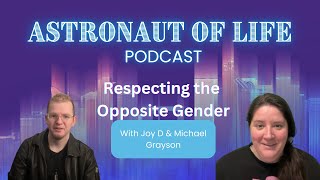
Hello. My name is Joy D. Fanning, an astronaut of life, and I help people go inward to explore. This video is part of a series called Meditation Stories where you might hear me share some of my own stories, but the main part is to share other people's experiences because there are so many ways to meditate and so many things that come to us when we meditate. So without further ado, Here's the video.
Hey Sasha!
Hi Joy!
How are you?
I'm great, how are you?
I'm great, I'm so glad you're here with me today. Thank you for, for doing this.
Thank you for having me, and I love your view, that is so nice.
Yeah, it was really cloudy this— oh yeah, yeah, you're in Switzerland, right?
Yeah, this doesn't very— doesn't look up to yours. Sorry about that. No view over here.
That's okay, that's okay. Sasha, can you tell me a little bit about, about yourself and like what you do?
Yeah, so as of today, I am a transformational and self-love coach. I am an NLP practitioner and energy healer. And I'm also a mental health advocate. Those are some of my roles. Yeah, I'm also a human being.
Yay, that's awesome! Yeah, trying to like life, trying to learn how to life, exploring life perhaps, right? Yeah, yeah, so here exploring. I love it, that's awesome. So a self-love coach, right? Is that what you said?
Yeah, self-love, confidence, mindset.
Oh, those go well, very well together. Yeah, that's awesome. And obviously we're here to talk about meditation. How did you get started in meditation?
For most of my life, I believed that meditation does not work for me. I think most of us have that experience because I tried and then after 2 days I was like, eh, it's not working, stop it. And then I tried again and after 5 days it didn't work, so stop it. And then I was actually going through quite a deep depression and one day, it was the day that was quite a breaking day for me where I decided that I need to make a change because I was in such a rock bottom that I was Googling like how, what was the least painful way to die. So after Googling that, I thought, yeah, I don't know if I, if I'm not like ready to kill myself just yet, let me try something else. So I started with Headspace app actually. And I started their 30-day challenge or something, and I did 3 minutes per day because that was the shortest you could do. And I listened, listened to it every day, and it was mostly just body scan and then a little bit of breathing, and that's it. And then thankfully, the Headspace app guy has an amazing voice, so I was— I really enjoyed listening to him. And after 3 weeks or so, a funny episode happened. I was in the kitchen and I was preparing tea, and then I dropped that bloody tea on the floor, like tea everywhere. And normally I would get upset and pissed and, you know, frustrated and everything, and angry at myself and angry in general, and that would probably ruin my first half of the day for sure. But that day I dropped the tea, and instead of reacting, I had this thought like, "Is this really a big of a deal?" And then I realized, like, what just happened? What the hell was that? I never experienced that before. What was this gap? And then I realized, wow, this is from meditation. And after, for the first time, experiencing the power of meditation and becoming aware of your own thoughts Then I was hooked. I was like, this is it, I'm doing this every day. And I've been doing it now, let me think, 4 years, a bit more than 4 years.
Wow.
There are some periods where it's like somehow, um, a bit slacking and I don't do it every day, but generally I try to do it every day.
Yeah, same here. Yeah, I, I I have a very similar story of like the reaching the rock bottom and wasn't quite ready to go the suicide route. So I was like, I obviously something needs to change because this is miserable. Um, I got a, I got a therapist and she eventually led me into meditation as a way to like help myself. And it, same thing, it was really hard at first. So I like that you mentioned Just starting with 3 minutes and it was— most people can commit to 3 minutes. That's like going to the bathroom, right?
Yeah, I think the biggest challenge for me previously was that you had to go anywhere from 10 to 20 minutes and after 5 minutes I was already— my back is hurting and I have like a million thoughts. I'm like, this is definitely not working. So yeah. You give up easily when it's like so much, so many challenges. But if it's only 3 minutes, by the time you're done with the body scan, you only have 1 minute left. And you can do 1 minute of breathing. Believe me, you can. I trust you.
Oh, wow. So have you— so you've meditated for like 4 years. I'm assuming you do more than 3 minutes now, right? What does it look like now for you?
Generally, I meditate anywhere between 15 and 30 minutes a day, at least. Sometimes I do it more than once. Sometimes I skip and it doesn't happen. But usually 15 to 30 minutes a day. And I like to start with 15 minutes or so of just, what is it, vipassana, just the breathing. And literally just going into this zone, into this amazing presence, and just really feeling present and coming back to my body. And once I'm there, then I would switch to visualizations and manifestations and feeling gratitude. Oh, I definitely every morning have to connect to gratitude and whatever manifestations after that.
Wow. Yeah, I'm I have a similar— I call it thought recess. That's what I do before my deep meditation because it takes me a bit to get in the zone, so to speak.
Yeah, it takes some time.
I'll just kind of pace my office here and look out my pretty window. And yeah, it takes from 10 to sometimes 40 minutes, whatever I need. And usually I'll end up writing an idea down or a to-do list. And I just kind of get all that out. And then the magic happens. Like, then I go—
well, if I do it first thing in the morning, then I— that period of settling in is much less because your mind is still kind of pure and fresh after waking up.
Good point.
Unless you had like a really weird dream, which I do always. They're always strange dreams. And sometimes I do like up to an hour of meditating, and sometimes I do a guided if I feel like it. But yeah, I started with guided. I think it's much easier to start with guided meditation, especially Headspace guides, his voice. And but eventually, eventually I grew out of it. I was like, no, I don't want anybody to tell me what to do. I want to do my own thing.
Yeah, no, I'm the same way. I, I, I like to visualize, and so guided meditations were perfect, and they kind of keep you on track. But now I, I kind of guide myself, and I'll just use music and I, yeah, basically guide myself. But it took a bit to get there, right? And now I write my own guided meditations. It's fun.
Exactly. It is a practice, and like any skill, it's a skill. Yeah, basically it's like learning to read, you know. You don't learn to read from one day.
Yeah, that's a good point. And that's another reason to just start small and work your way up as you get more comfortable with it.
Yeah, yeah, especially like for those people who are just starting and who are like me and they think that this definitely doesn't work for me, start small and have patience. Like literally come, just commit to 30 days, make it an experiment. Think of it as like this, not something like you have to do, but rather something fun, like an experiment. And just do 3 minutes for 30 days, and I will guarantee that at some point you will feel it.
Yeah, totally. So have you had any experiences that you could share with us that you've had via meditation, like either energy or seeing something or anything like that?
I don't— I'm not a seer. I'm not a— what is it? Clair— no, clairvoyant. Yeah, I'm not a clairvoyant, I'm a sentient.
So I just know.
Nice. And generally visualizations also, I don't always manage to like properly see it. It's more about like feeling it and sensing it. But I remember the first time, I think it was Joe Dispenza's meditation that I was doing maybe 2 years ago, where he would guide you to like first focus on, I don't know, your ears, and then the space inside the ears, and then your nose, and then the space inside the nostrils. And I was like, what the hell is going on? But, and then he would like, and then focus on like your, the space in your throat, and like really weird areas to focus on. But because it's, I don't know, it's new and it's strange. And I was like doing my best to put my awareness in these places. And at some point he guides you basically through your whole body, and that puts you in such a state of presence that eventually he says something like, and now you are nothing, and now blah blah blah. Also, he has quite a nice voice to lead you. And I literally felt like I was in this black part of the universe somewhere. I was like one with it, like I was literally nothing. And that felt amazing, and that felt so peaceful. And so that's when I think I experienced the— what Eckhart Tolle calls, um, the joy of being present. I think that's when I first experienced it, and I was like, whoa, this is amazing. And so So that after that, I realized, I learned that by doing this, not just body scan, but really thorough awareness on each body part, and then manage, if you manage to focus on and feel all of your skin at once, that is like, like now I can do it very quickly, and I can bring myself to the super present instant. Instantly, but very quickly. So if you just practice doing that, trying to feel your, your whole— not the body, but the skin of your body— that is just amazing. That's just great if you manage to do that.
Wow, that's amazing. I've talked to a few people now who have been able to go into that. I don't know, I feel like in Hindu there's a special name for it, but That black— it is blackness, you're right, but it's, oh, it's an overwhelming, peaceful, loving connectedness where— I don't know, I've been in it too, where it's, it's like you just get it, you know? Like, oh, okay, this is how it's all connected. Okay, well, it's all, it's all connected. It's all one. This is it. I mean, oh, wow.
And on the other hand, I also often experience the opposite of that, which is usually the NLP. NLP is neuro-linguistic programming. So a lot of NLP meditations, especially with my mentor, that's the way he does it. We often end up going to the opposite of that, which is the pure light. You're surrounded in just like pure light. You are the light, and everything around you is just wonderful, amazing, beautiful light. And that is also such an amazing experience. We're just like— it actually feel it like this. I feel my vibration like instant increasing when I go to this light. And when I come out of the meditation, I can feel my body vibrating because it's so nice. Such a high vibe place to be.
Yeah, well, yeah, and I like that you said it, it's high, like, because sometimes when I go into meditation, especially if I go like real high or real deep or whatever you want to say, when I come back to my body, like, I'm cold. Yeah, I might be tingly, and it takes a bit to like ground myself and be like, no, I'm in this body now. We are in here, we are not traveling, we are doing this. And it can— I think at first it kind of scared me because I didn't even realize what had happened, you know, like that I had left, or I mean, my consciousness was somewhere else. I wasn't focused on my body anymore. And I was in this experience. And then, yeah, so yeah, that's cool that you felt that too. I feel like In a way, it's our body like integrating those higher frequencies, you know, and like adjusting or something.
Yeah, I feel that meditation helps us to kind of get back to this balanced sort of space, like this neutral space first, and, and then once we start going higher and higher in frequency, what I found for me personally is some of the, some of the unhealed emotions or unhealed situations or all this nasty crap starts coming out. And this is where my journal comes to rescue. I really love journaling. And like when I mentioned that I was in a really bad place and I started with 3-minute meditation today, I was also doing journaling at the same time. So this combo together is great for, first of all, becoming more self-aware and more conscious, but also to dealing with whatever comes up, right? Yeah. And releasing it.
Yeah, because you're right, when we go in meditation, a lot of times I'm shown— now I am I can't say it either. Clairvoyant. So I do see things, and I'll be shown like, this is what you need to work on. And, and I'll be like, oh shit, like, I don't really want to work on that. Are you sure? Yep, this is what you need to do. And, or like, you need to heal this. Like, I'll see an entity or an energy, and it'll like show me an emotion, something, because sometimes I don't see it, I'll just feel it, and it'll be like this. It'll show me something I have in my energy body that's like, it's time to heal this past pain right here or something. And nice.
And that's why I'm like, I'm not always sure if it's like my intuition thought or if it's my mind thought. And I'm like, I don't know. This whole clairsentience thing is confusing.
It is. It's hard to learn that discernment on is this me, is this not me, for telling me to do this. Like, I have my own ways. I like do this, I call it like a pinch, where I'll try to like control it. And if it's, if I can morph, like if it's a feeling, and I don't like it, if I can make it go away or switch it like this, then it— I think it's me. But if it's like, oh, I can't manipulate this, this is, you know, this isn't me, this is something interesting inside of me.
And I'm so curious what it's like to be clairvoyant. I'm pretty sure it can be also, uh, petrifying for some people.
Yeah, well, I have an active imagination, and I think a lot of times I just thought, well, I'm imagining that. It wasn't until I started, like, what my guides, like, challenged me to do readings for people, and then I realized, oh no, that's not my imagination. Like, I saw this and that means something to them. They know what it means, you know. It, yeah, it's Cool.
I can tune into— that sounds amazing. I can tune into people's energies and I can like sense them and feel them, but not see them or anything like that. Nice. Everybody has their own gift, right?
And I, I love that because it is different for each of us, but we're all tapping into the same thing. Like, that's the connectedness again, right? That oneness. It's It's not like— yeah, we say my guides, but I mean, they could be guiding all of us. It's all just a big bowl of soup. Yeah, we don't know anything about it, but, but that's part of the exploring, like, to just try to figure it out. Like, okay, this is— and I think Feeling those vibrations, you can tell if it's a high vibe or low, you know, like once you get to that level of discernment, even if you're like me and you see something, you can sense its vibe and you're like, okay, this is an angel vibe, or this is, you know, this is Source vibe, this is super high, oh my gosh. But then most time in my like 3D life or in real life, Oh, people will say something usually about the news, and oh, it's just the energy around you, like, oh, what? That feels like garbage.
I stay away from that crap. Oh my gosh.
Yeah, well, it's— it just feels so different, and you're like, why in the world would you want to be in that energy? No thank you. No thank you.
Yeah, because they probably don't know others. Yeah, I mean, I've been marinating in negativity, in negativity for years.
Well, I think all of us, most of us have, right?
Yeah. And then, and then it took me really going to like the lowest of the lowest to actually start changing something.
Yeah, same here. I, I used to wish that was different, but now I'm like, you know what, it was a part of the journey, right? Like, I, I know what that feels like, and I know I can climb back out of it should it ever happen again. And it really— yeah, kind of once you climb out of there, it almost makes you feel like, well, I can do anything now. Like, I already know the worst that could happen.
Yeah, well, I feel that the process of climbing out of that is the process of us reconnecting with ourselves and our true self and our soul and like really getting to know ourselves. And once we get to like really this place where we know who we are, we're comfortable in our own skin, we love ourselves unconditionally, nothing can shake us anymore. Like whatever happens, nothing can beat us down. Because, yeah, just because we already got to this place that is unshakable.
That was perfectly said. That was beautiful. Yeah, no, that sums it up beautifully. I don't think I could say that any better. Yeah, no, it's—
and once you know, yeah, once, once we know our power, once we remember like who we are and what we can do, man, there's no going back, right?
There really isn't.
No.
And it feels like the sky's the limit at that point. You're like, well, now I, I know what direction I want to go, and, you know, I'm gonna shift everything to make that happen.
Exactly. And meditation is an amazing tool to help us come back to this power home, power station, and recharge, right?
Yeah, because it's a, it's a quiet energy. Especially in today's day and age with all the noise and shit going on. It's this quiet— yeah, it— and so you really do have to just time out, stop, and, and listen and find that inner light and whatever you want to call it, right? But it's in there. Everybody—
yeah, especially, especially for people who are empaths. Or people who are projectors, if you're familiar with Human Design, it is so important to take this time, quiet time. So important.
Yeah, well, it helps. Yeah, like you said before, it just allows you to tap into your own energy, right? Like your pure self energy or your higher self, whatever you want to call it. Which for me, that's unconditional love. It looks like light. And whoo! And then once you get in it, you can like just bring more of it. It's already there, but like it's— you're allowing it to—
yeah, that's manifesting 101, basically. Tune into who you are so that you can attract what, what is yours, what you want. Oh, I love that, because what you want is already there, right? You just need tune into it. Meditation is one of the ways to tune into it.
Yeah, that's why I love meditation, because it's like, to me, like the universal— it's a universal tool to help you in so many ways. Like, I mean, you can do guided meditations for everything under the sun, right? Like healing and exploring and tapping into this light, just calming your body, breathing, all sorts of things. Manifestation. Oh, it's, it's— that's— I'm in love. I just, I just think it's so great. Can you tell a little bit more about this journal that you've created? Because I journal all the time too, and I love how you mentioned earlier meditation and, and journaling.
Yes, so I have been working and procrastinating and editing a thousand times, well, a few times my journal. It's a self-love journal, and it's not my journal, but I'm just saying I created it. And it's not super long and it's absolutely free, and it's basically designed to help people on this journey of self-discovery because I firmly believe that in order to love yourself, you first need to know yourself. Because think of it like dating, you know, when you meet somebody, you don't like fall in love immediately. You first go on one date, then another date, start liking them, you start really liking them, and then eventually it grows into an amazing relationship. And love at first sight, this is That's not like unconditional love. Sure, it might develop into one, but I'm not talking about that. I'm talking about real deep love. You need to get to know the person first. And it's the same with you, especially if you're in a, in a like bad place, like depression or anxiety or something else. Most probably, and if you don't like or hate yourself, most probably because you don't— first of all, don't know yourself, don't know who you are. And secondly, it's probably because you're playing a role of being somebody else. At least that was my case with depression. I was just people-pleasing left and right, pretending to be someone I was not until I got completely disconnected. And so I feel that in order to find love— here's my cat— in order to find love for yourself again, you need to like step by step discover who you are and go on the self-discovery Recovery Journey. So this journal is designed to help you whether you're in really like— whether you're just starting, it's a good start. It's obviously not gonna heal you entirely on the spot, but it's a good start. And if you're like in the middle of it, I always find it useful to go through these questions that are in this journal. But I, I go through this myself every now and again because every time some new layers come out but I need to heal again and some new things come out. And, you know, throughout time our perception changes and maybe our thoughts and desires change. So I would recommend anyone going through it. It doesn't matter where on the journey you are because it's just always good to ask yourself like some like deep questions.
No, it totally is. And I like how you said how you do it multiple times, and even though it's the same questions, like, because you've shifted, it's— well, now you get to use it to work on different things, and there's always something to work on or heal or acknowledge or release, right? Like, it's this— it's a constant journey that doesn't end, that never stops. So I like that because for me, I get a lot of information on and guidance like in little tidbits and or layers that just build on each other, and or understanding as well comes in layers. So I love that, like, yeah, you can use it now no matter where you are in the scale, that since you're always going to be on this path, it's always going to be applicable, right?
Yeah. And, uh, one of my mentors, James Wedmore, he says that, um, the quality of