Meditation Stories With Transformation Coach Tina Djordevic. How Meditation Helped Her With Insomnia
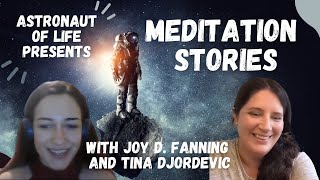
In this episode of Meditation Stories, host Joy D. Fanning interviews intuitive transformation coach Tina Djordjevic about her personal meditation journey and how it informs her work with women. Tina explains that she blends psychology and spirituality to help clients heal childhood trauma and regulate the nervous system. She recounts her early attempts at meditation in 2018, which felt impossible due to a constantly chattering mind, and how a breakup and severe insomnia led her to a paid app offering short, insomnia‑focused guided meditations that finally helped her fall asleep. This breakthrough sparked a deeper curiosity, prompting her to explore YouTube meditations, mantras, singing bowls, and breath‑focused practice. Tina describes intense bodily sensations—vibrations, pain turning into pleasure, and a heightened energetic state—experienced during hour‑long breath meditations, even noting how her cat sometimes joins her practice. She emphasizes the value of journaling each session to track variables such as music, binaural beats, bowls, posture, and mantras, treating the process like a scientific experiment. Both hosts discuss the importance of “observer mode,” where thoughts are seen as objects rather than identity, enabling clearer perception and occasional clairvoyant experiences. Tina shares that she now meditates every morning for at least 30 minutes, often an hour, viewing it as a spiritual practice that deepens intuition and guides her daily life. She also explains how meditation has helped her manage menstrual pain without medication by directing attention to the sacral area. Finally, Tina announces a new group coaching program for women that combines chakra work, somatic techniques, grounding, breathing, and mantras to heal the inner child, offering tools for participants to continue the work independently. The conversation blends personal anecdotes, practical tips, and promotion of her coaching services.
Chapters
Welcome. My name is Joy D. Fanning, Astronaut of Life.
And this is Meditation Stories. In Meditation Stories, I interview different people who talk about their experiences with meditation. I think meditation is like a gateway to so many experiences and things, and I want to not just talk about my own experiences on this channel, but share what other people are appearing and feeling all over the globe. So without further ado, here's the video.
Hi, hi, hi, Tina, how are you?
Oh, very well, very well. Thank you for inviting me today.
Thank you for joining. I'm so excited to kick this off with you. So we're gonna talk about meditation today. You know, before we get started, can you tell me a little bit about yourself?
Sure, sure. My name is Tina Georgievich and I'm working as an intuitive transformation coach. I work with women and I mix psychology and spirituality. So basically I apply my knowledge from spirituality and interwine that with psychology so I can help people heal themselves from childhood traumas to unstuck emotions that are still in nervous system, how to regulate nervous system, and so on. So it's really lovely, lovely journey.
Yeah, that is lovely. That is so beautiful. Yeah, to mix psychology and spirituality. I love that. What's such a— creates a deep, yeah, like a deep level of healing for people, I would imagine, to use both methods.
Yes, because I think that we need to make that connection between mind, body, and soul, because it's not just talking therapy where we talk constantly for months. We need to get inside of our body and really feel and hear what our body tells us. So yeah, that way we can dissolve on a really deeper level.
Yeah, I agree. Okay, so let's talk about meditation now. So how did you first get started meditating?
Yeah, that was back in 2018, 2018, when I tried to meditate and I couldn't at all because my mind was chattering constantly and I couldn't focus. I couldn't empty my mind. And I— that, that was really frustrating for me because I couldn't focus on breathing. I couldn't focus on Guided meditation, nothing. And later on, I quit. I really easily quit from meditation. I was like, okay, this is not for me, so why would I bother myself? Okay. And then I had a really bad breakup where I was suffering a lot, and I was super, super depressed, and During that period of time, I had insomnia also. I would cry myself out to sleep and I couldn't sleep at all. So I wanted to find some way that is not medication to put myself to sleep. And I found a really good app. I think it was Rise or something. It was paid app, but psychologists, therapists, and they created this special meditation for insomnia and really short ones, like 8-9 minutes long, and I was really surprised that I fell asleep. So I started to like it more and more, and then I became curious about it, like, okay, that worked with me earlier, didn't— why I wouldn't explore this thing more. So I started to put some practice. I started to check out the various on YouTube meditations, guided or not, with mantras or with just singing bowls and so on. So I created that as a habit. So I'm really happy now that that became really crucial part of my everyday life.
So yeah, that's awesome. Yeah, I think a lot of people, when you first start with meditation, it doesn't seem to work and you find it frustrating. I know that's how I started too. Yeah, especially on my own.
Yeah, it's, it's because unfortunately it's not part of our culture. We are Western or in Europe, and so we didn't think that way, that this thing is really important to concentrate, to meditate, to find that inner peace inside of us. So we never learn about this stuff. So when we first meet with meditation, we have that resistance or that for Indian guys or Buddhism or whatever, and we are like, oh, this is not for us. So yeah, but a bit persistence or conscious effort at the beginning can really create that momentum and change later. Effects will be really awesome.
Yeah, I agree. So what— can you share an experience you've had while meditating and, and kind of what happened and how it affected you?
Absolutely. I, I really was super curious about it, so I loved also guided meditations where I went to meet my spirit guides or to discover my spirit animal and so on. So I was diving deeper and deeper into this topic, and it is always nice to use our imagination and visualize things because that's how we create. And but the thing that really was powerful for me was when I started to meditate on my breath, only focusing on my breathing, like my inhale and exhale. I was surprised because I was just curious. I never meditated in silence without anything, just focusing on breathing. And whenever I had my thoughts or got caught up inside of my mind, then I bring myself back to breath and so on. And I started to feel my own energy. My body started to vibrate really, really high, and I could feel every inch of my body Literally inside. I never been there inside so deep. So of course, because of my posture that I was sitting in lotus, my knees and my hips and my back started to have some pain. But when you go through that pain, when you just accept it as it says, part of this journey, because that was 1-hour meditation. To be clear, it's a bit long, but you can go through that pain and really that pain on the flip side is a pleasure. It's not pain anymore. So you go through that and then you feel really pleasurable feeling. Oh my God, like this, that doesn't hurt anymore. So I'm good. And when you break that wall, you can continue your meditation. And I was like, oh my God, like I'm meditating in my room. I was spreading my own energy. I know that when I— the moment when I get up, I reverse myself, my position, and I put my legs on the wall, and I was like upside down, and I was like So my cat might get loud. Oh, that's okay, you can bring her too. She knows more than us about meditation.
This is actually a he. He's doing it. Okay, sorry, he's doing his little dance. I don't know.
Yeah, yeah, yeah. He's practicing massage.
Yeah, sometimes he meows pretty loudly. I've heard that. I'll edit it out if he goes crazy on us.
Oh, no worries. I think pets are always sweet in any kind of video or whatever. I had two cats and they knew to interrupt really important things, like especially male one, he would jump on my laptop and sit in front of camera, and then he's like, no, now I'm attention.
That's, that's QB for sure. Yeah, we might see his body at some point. Yeah. Do your cats ever sit with you while you meditate?
Sometimes, yes, especially male one. He loves to join me and to lay down in my lap and to, yeah, just give me his energy and vibe with me. So he's actually increasing my own vibration. So that's really helpful. And they love to observe things, and they, they know even if I shut off my door, they know when I'm starting to meditate. Like, they see through the door. Like, okay, they scratch the door, want to come in, and Yeah, if they want to join the party, they are always welcome.
Yeah, my cat— I have two cats as well, but the one you saw is— he's kind of like yours. He's the one that mainly sits with me, or if he doesn't sit on my lap, he just sits either under my chair or right next to me or something. Yeah, and same thing, if they're not in the room when I'm meditating, I No matter, like, 5 minutes in, no, I will expect to hear a—
Yeah, exactly, exactly, exactly.
Okay, well, before we got froze, I think you were talking about how you had your feet on the wall and you were feeling—
Yes, right, that electricity. And I, I mentioned that, uh, the day after I tried to force or to create, recreate the same feeling of being deep inside of my body and experience that electricity and really high vibration, and I couldn't because it came so naturally because I was just doing natural thing, breathing. And when I focused on achieving some goal I couldn't. And that would be really good thing to keep in mind and just leave all expectations about it, because every, every single meditation is different. I never ever meditated the same twice. So I, I love that, and that's why I also started to journal my meditations, because I, I really realized that It's useful, and I can explore from many different angles. For example, I put some mantras, and then I see how I— how my body responds listening to that and just breathing. Or I put something in bowls, or I put some binaural beats, or you can play with it. You can really explore and use your imagination, but be open and curious and let things happen naturally, and you will be really surprised.
Oh, I agree 100%. Yeah, and for me, journaling— I need to make note of what music I'm listening to because sometimes I journal on paper, sometimes it's on the computer. I have like 3 different places I'll randomly write in. But yeah, it's almost like taking data like a scientist is what it's reminiscent of. Because yeah, if you realize, wow, when I do binaural beats, I like go to another dimension and have this crazy experience. But if it's singing bowls, it's all about internal— it helps you kind of identify exactly everything, really. And like you said, there are— I don't know the statistics, but I would imagine thousands of ways to meditate and get in that state.
Yeah, absolutely. And that's why journaling is really a useful thing to do because you forget. We all forget. And then you can go back and read something and say, oh my God, I love that. Okay, we can repeat this. We can try. Maybe it will be different, but At least you know what suits you good. I even change many positions. Either I'm lying down or I'm sitting, or I'm sitting relaxed, or I'm sitting in lotus, or I'm sitting on the floor. You can really just explore and find what's the best suits for you. And yeah, that's awesome, then go for it. And I really think that people can start with meditation for 5 minutes. 10 minutes.
Exactly.
It doesn't need to be like, okay, I need to meditate half an hour or 1 hour. No, at the beginning, just be there. Give yourself that permission to rest for 5 minutes and to think about anything else. Just be inside of your body and focus on any sensation that you feel it during the meditation. Listen to your heartbeat, observe how your lungs are moving, how your belly is moving, everything that you can notice. It's about observation. So yeah, it's really good mental practice. Oh, well, it—
to me, it helps you get into observer mode where you're not identifying as your thoughts anymore. You can literally see them for what are. And when you can switch to observer mode, to me, that's when I personally have more experiences. And all my clairvoyance kicks in and I see stuff because I'm just observing. And I can switch to being like first person seeing what's going on. And but I can also switch to observer. And to me, that's like one of the first things you probably learn as you develop the skill of meditating. To me, it's a skill to make that switch, you know, from I am my thoughts to these are my thoughts.
Yeah, yeah, that's a really powerful thing.
Yeah, I think so. And I love how you said you don't have to go big right away, right? Like, it's just take 5, 10 minutes at the most if you're just starting, because I know I would try to do longer ones and I would just fall asleep or get lost in a thought and daydream about it.
Daydreaming, yeah, yeah, exactly. So yeah, and people, when they learn to be in observer mode, that's really helpful in any area of life because you don't cling to your thoughts. Positive or negative ones. You don't cling to your emotions. You are having them and you are aware. You're just awareness, like a space that is holding everything. And you can really play with it. You can, when you have a thought that you don't like, you can do this and it vanishes, it removes, and you switch to another thought. We have really a lot of things to explore even deeper and deeper about it, but that's the beauty of meditation. It's never-ending.
It is never-ending, and there's like— I think you said earlier, you don't experience the same thing twice. Like, even if you're meeting with an angel or, you know, whatever, the experience will be different, even if it's the same energy or whatever. Doing the same breathwork you're doing. It's going to be different.
Yeah, I think that also monks are not experiencing the same thing, even though they are really experienced meditators. But the point is that we as human beings are always ever-changing. Yeah, literally constantly, from the moment to moment, we are never the same. And that's That's the amazing thing because we are constantly moving and growing from all experiences that is happening in our life. So that's beautiful. Then you, you never know what might happen and you will be always surprised, amazed. Sometimes you won't be this, you will be maybe disappointed because you had some expectations, but you can be disappointed. Only if you have expectations. If you leave them, then you're good. It's like a play, like you, you have your own playground and create whatever you want to create.
I love that. So, Tina, what— how does meditation fit into your life now? Like, is it a part of your daily practice?
It's part of my morning routine. I Every single day meditate for 1 hour, and if I really can't make it for 1 hour, I cut it at least for half an hour. But I love to focus on my meditation because that's what keeps me really focused and present during the day and gives me that pleasure and experience that I know and I always I can remind myself that there is something beyond ourselves. So that knowing really sparks my soul to continue whatever life throws at me. So yeah, I love that.
Was it easy for you to start the practice of meditating for an hour every morning, or did it take a little bit of time to—
yeah, yeah, it took a little bit of time and Of course, I first, I start for 10 days, then I quit. Then life happens and then you have more important things to do and so on. And we are going in cycle. And then I was going back and forth, back and forth. And then I really strongly decided and I put like, uh, stick my word to it, like, okay, now I'm gonna do it. And no matter what, no matter where I am, I'm gonna do it. If I can't make it for 1 hour, at least I will meditate for half an hour, but I will going to meditate. So it's about also knowing why you're doing, what that means to you, but that meaning you will give to yourself a bit later, maybe not at the beginning, or if you have, that's even better, but for me came that later, what that really means to me and what meditation brings to me. So I more see that as my spiritual practice of work, because that way I am moving on vertical line in spirituality, and I'm deepening my intuition. I'm more connected and guided. So for me, that's really important thing for my whole life. So that's why I really respect my word now.
I love that. I love that. I meditate in the morning too, and it, it wasn't easy as well to get going, but then yeah, you kind of just reach a point where you're like, okay, even if I don't know why, I feel I'm being led to do this every day. And then there was one day I was doing it every day and I there was a day I missed, and I literally just felt the difference, right? Like, it was like, oh, okay, I'm like a whole other person if I don't do this in the morning and like calm myself.
Because yeah, yeah, that's, that's actually the thing. We don't maybe notice from day to day how much that means to us because we get used to it. But when we miss the day, then we realize, oh my God, like some huge part of ourselves is missing. Or maybe we can get cranky or more nervous, or differently stress affects us, and so on. I also started to— I had really bad cramps when I got my period and so on. And usually for 15 years now, I always take a pill even though I hate pharma, I hate medications and so on. But for that occasion, I will take one small pill to help myself with pain. But 2 months ago, I quit with that and I started to meditate. And I lay down, spread my arms and legs, and I just breathe, and I totally feel my pain. I'm inside of my womb, and I'm like, okay, that's okay, it hurts, but that's fine, it will pass. I won't die because of my pain, and I don't hold that strong resistance towards it. So when I'm in a lowland, a lowland state, then it should be passed like this, and I don't need any medications, and I don't need painkillers or anything. And I'm like, oh, this is I should have come up with this earlier. So yeah, it can really help with many, many things. Yeah, and with ego.
Yeah, well, I'm gonna have to try that the next time I'm on my period because, yeah, I'm the same way. I have to take a pill usually the first day or two. So yeah, just going meditating on basically your sacral area. And sending healing energy there. Why not, right? Yeah, that's awesome.
Yeah, meditation can do, can do really powerful things.
Well, like when we said earlier, you, you had— you're building that energy and you can put it wherever you want it, right? So if you bring your attention to your your sacral area, your womb, and you put that energy there with the intention of calming and healing and, you know, all of those things, it is gonna totally change your body and help you for sure.
Yes, yes. And we can really heal ourselves. I mean, you can use your hands and put them on your womb and then Feel how it hits, like feel how it's feeling inside, and you create that vibration while breathing and focusing your attention. And during the meditation, we learn that our attention is really what matters. Where we focus it, we can really produce any kind of result that we want. So body awareness and having that power of concentration and clear mind and detachment from our thoughts and emotions and everything is really like superpower. Like you're having a shield, like whatever someone tells you during the day, you're like, okay, that's projection, that's not on me, and you won't get hurt. You just simply more understand yourself and of course others.
I love that. Thank you for, for sharing those experiences, Tina. That was amazing. So if people want to get a hold of you, or basically can you tell us what kind of programs and, and things you have going on?
Sure, sure. Now, uh, during this month we'll start a new group or group coaching for women. Um, we are doing healing our inner child and reparenting it, but we are going through each chakra because I truly found that it's logical and it makes sense. Like, every chakra holds certain fears, emotional blockages, and so on. So when we go in that order, we kind of balance it, and then we are doing really deep, deep healing. So psychology and spirituality together is really powerful, and this is my invitation for all women that would like to heal their inner child and explore on a deeper level. We will do a bunch of techniques from somatic experience, grounding, breathing, and some mantras. I literally put good mix and combination. So sessions are pretty much interactive and deep. Thank you really for asking me this.
Well, yeah, that sounds amazing. I want to say I'm in that group, but if not, I'm gonna join it.
Yeah, I, I will send you.
Yeah, yeah, I'll put the link in the description for everybody as well because That's— to me, that's a beautiful place to start too, just working on the chakras and learning about them, their different energies, and what they, what they do for you.
Yeah, yeah, exactly. And, uh, it's not like, okay, it's 7 weeks program, it's not like we are going to heal our whole life during that 7 weeks, of course not. But my purpose is to equip people with a bunch of tools and techniques and to help them start and guide them through the process so they can continue even without me. And again, we have a supportive community where we share, and in group healing is really, really powerful. I was melting. So yeah, that's awesome.
Oh man, I— this is exciting stuff. Well, Tina, thank you so much for, for coming on here and sharing your experiences with me and everybody else.
Thank you, Joy, for having me.
Of course, and I hope to have you again soon, okay?
Yeah, always.