My Battle With Anxiety Plus 3 Tips for Anxiety
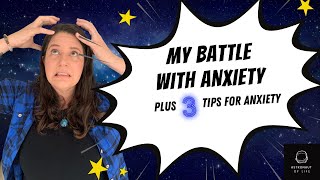
Joy D. Fanning shares 17 years of anxiety, panic attacks, and an abusive marriage, then how therapy, meditation, and breathwork helped her regain control. Her three practical tips: deep breathing, naming what you need, and using an internal song to stay grounded in overwhelming moments.
Chapters
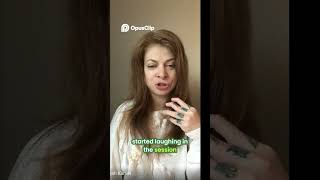
Hello, my name is Joy D. Fanning, an astronaut of light, and I help people go inward to explore so they can discover the astral realms for themselves. This whole month I want to talk about anxiety because it's been popping up like on my Facebook feed and other places, and I'm just seeing a lot of people struggling with it. I've struggled with anxiety for like 17 years, so I want to talk about this topic, and I just really want to explore it and how it relates to spirituality. I'm also doing these Meditation Story series, right, where I interview people about how they got into meditation, how they meditate, all that. And so many of them, just like myself, got into meditation as a way to cope with their anxieties. So I feel like it's very relevant. I'm gonna do a whole video later this month on meditation for anxiety. In this video, I just want to tell my own story with anxiety because Like I said, I've had it since my early 20s. That's like 17 years, and it's— I've had goods and bads, right? Right now I'm doing pretty good, but I'm not quite where I want to be. So I'm essentially making this to just say you're not alone. I don't have all the answers, that's for sure, but I just kind of want to share what I've been through, what works for me and what could possibly work for you. My anxiety came, came out and showed itself around like age 20 or 21, and I was dating my future— was dating my first husband at the time, and I had a lot of good friends, but I would I would just stop breathing and I would panic and it would take somebody like holding my face and like helping me breathe to calm down. And this seemed to happen randomly. I would have anxiety, these types of anxiety attacks quite often, several times a month for a while. Eventually it kind of settled down. I think my parents took me to the hospital once because I was having one of those attacks, but otherwise I didn't really get any medical treatment for it. And I didn't really even know what was happening, right? I didn't have it. I didn't know it was called anxiety. I didn't know it was a panic attack. I just knew it I would be watching TV, hanging with friends, and then all of a sudden I'm causing a scene. I can't breathe. I need the paper bag. It was very embarrassing and very confusing, and it was a very unpleasant experience. Every time it happened, I would be basically scared shitless because I couldn't understand why I wasn't breathing. I would think, breathe, but it wasn't working. And it was like I lost control of my mind and my thoughts. And for me, that used to freaking terrify me. So I was anxious because I was so afraid of my own anxiety in a way, like of how it manifested, right? I would lose control. I was so That was the main thing. By my mid-20s, a few years into having this, I ended up divorcing husband number 1 and kind of going out on my own and facing new fears and setting boundaries. I also had some traumatic things happen at this time, so I wasn't ready to deal with that traumatic thing, so I started drinking. And that kind of took care of my anxiety too. I didn't drink at work, but as soon as I got off work, I would drink. And that lasted for like 2 years where I would just drink a lot. I lived in a place with a lot of bars. It made it really easy. I'm not saying I'm proud of it, but that's part of my story, right? That was my coping mechanism for at least 2 years. After that, it actually got worse. I married husband number 2. Who turned out to be abusive. And obviously that caused great anxiety. And so I did get help because even though it wasn't manifesting with my husband at the time, I would go to work. I worked at a call center and I would just get essentially a panic attack again. But this time it was just— I was frozen in fear. Like I would get in the car think about going to work, and I just couldn't move. And it was, once again, it was like that losing of control. It happened many days in a row, and I was like, obviously this is affecting my life. I feel miserable. I obviously didn't like that job, and I was in a marriage that was not healthy for me. So I had a lot of negative things going on around me at this time, right? So I wasn't drinking as much, but I didn't have any coping mechanism. I was— I didn't know what to do. So I did go to the doctor. My doctor said I had generalized anxiety disorder and put me on Zoloft. And I was on Zoloft for 1 year. And it essentially, for me, just made me a zombie. I didn't have anxiety, so I was able to do my job. I actually ended up liking that job for the most part. But it did prompt me to go find— to go take adventure and stuff. But I just remember missing my emotions. I didn't really— I didn't have any. And being in a toxic relationship and not having emotions or feelings to help guide me, I feel like it contributed a little bit to me staying there because I literally just became a zombie. So it did help, but for me, it also had a lot of negative consequences, and I didn't like it. So eventually, I stopped taking it, which was not a good idea. I went through like a week of withdrawal and it was really, really trippy. Like, really, really trippy for like a week. And then I was fine. Once I got off my meds, I asked for a divorce. And for me, that was the one decision that I feel like the first decision I took where I kind of turned my life around, so to speak. And I didn't quite— I've had two failed marriages at this point, right? By now I'm in my early 30s, and this was actually the darkest time of my life because I had all this undealt with trauma plaguing me that I was carrying around because I was too freaking scared and anxious to deal with it. So At that time I was in college. I was trying to finish college. I was working full-time and my mind was like, just, I just called it the dark place. It was pure black. And I have a vivid imagination. I'm all colors and rainbows and shit. But at that point in my life, no, everything was just black. And darkness, and it was horrible. I couldn't make it through a day of work without crying and just having to go home and purge some of these emotions. And it got to the point I need help. So I got a therapist, and I was very adamant. I was like, look, I don't want to go back on any kind of pharmaceutical medicine. I want you to teach me how to deal with my shit. With this anxiety, with the other things I ended up being diagnosed with. And she was like, okay, let's do it. So for me, I was like age 31, 32, I can't remember, but I made that decision and I had to go to therapy for like the first 6 months, like every week. If I could afford it, I probably would have gone every day, but I made time and the money set aside to do that because I couldn't stand that depression. So my therapist taught me different ways, a variety of ways to help calm myself and encouraged me to kind of look at that up at this time. I was not spiritual at this time, but one of the ways that she mentioned was meditation. I took a meditation class at the little clinic and I learned all these different ways to meditate, and I began trying to just do it on my own, mainly using guided meditations. That was the main way I used to kind of self-soothe and help with my anxiety. Breathwork was another big one. Affirmations, cognitive behavioral, whatever, kind of narrow down why am I anxious. Oh, I'm hungry. And I feel rushed. Okay, I can control those things. I can go eat a snack. I can slow myself down, right? So all these things, of course it took me like a year to learn them all and put them into practice, but I did, and it really changed. A lot of positive things began happening in my life as I did this inner work. Oh, yoga was another one that I did because it just focus on your breath and moving your body, and it just kind of calms your nervous system and your mind. So, yeah, I'm gonna try to give it a go. Maybe it'll help. I also have used weed to help with my anxiety. I'm not saying this is for everybody. For me, it tends to help. I'm working on weaning off of that, but like I said, I'm, I'm not there yet. I'm still working on tackling anxiety, but I've come a very long way. I think in the past 2 years, I might have had 2 panic attacks, and comparatively, obviously I knew what was happening, I knew what to do. They weren't even quite as scary as they were in the beginning. So that's very rare. And I don't say this too much, but I don't even live in the United States. I'm super out of my comfort zone. Living in another country that speaks another language that I barely know. So I'm constantly having things that normally would trigger my anxiety that I've been able to overcome to live a lifestyle I want to live, which is so cool. And I'm so proud of myself, and I'm almost where I want to be, but I'm just going to keep chugging, right? Because that's all you can do. So what I do now is literally find balance between working and play. And my play is very creative, and I love to write, I love to paint, incorporate these things into my life very often. And that brings in the balance, which keeps me from feeling overwhelmed or rushed. I'm a very focused, fast worker, so I can get kind of caught up in this go, go, go, go, go. And that triggers my anxiety. I'll forget to eat and then I get cranky and then I don't, you know, it just kind of snowballs, right? So finding balance is like my main thing now. Just what can I do today to find balance? Well, my body feels kind of sore, so let's do some yoga. Maybe take it easy, go for a walk, eat lighter food today. And kind of listen to my body, listen to my mind. What do I need to do? So that's kind of the main coping way I do now is, is just to try to find balance in my life. Be my own boss certainly helps, and that's like a whole other thing of creating the life you want so you can do what you need to do, right? I might need more self-care because I have anxiety, so I've created a life that allows for that, and I allow it as my own boss. So even if you're your own boss, you might be like, well, I need to make money, I have to work, work, work, work, work. No, I work best when I'm in balance, so we gotta take that self-care time. I kind of wanted to do 3 quick tips that have helped me. Sometimes here in Bogotá, I have to go into a crowded street, and it can really trigger me with so many noises, so many people. I don't want to lose my husband in the crowd. It's— it can be overwhelming. So these are things I do that help me in that situation and any other kind where I tend to get anxious. So the first one is taking deep breaths, usually for a long, like 7 or 8 seconds, holding it for 7 or 8 seconds, and then releasing. The releasing is the hardest for me. To do in a long count. But just focusing on that takes my mind on something I can control, something that's calming. The second one to me, which is just as important, is assessing my needs. I have this memory of, of my time in an airport. My dad and I got off the plane. I was cranky and I was anxious and I assessed my needs and I was like, okay, Dad, I need to pee. I have a headache, so I need to go pick up some medicine. And I'm hungry, so I need to get some food. And then— then I'd probably be ready to, like, have a real conversation. So I'm gonna go to the bathroom now and start working on that process. Can you maybe go try to find a place where we can get a snack? And it worked beautiful. I took care of my needs. We got our snack. We had a bonding moment. We were talking, and we— jumped on our next plane. Old me, 20-year-old me, wouldn't have assessed my needs. I just would have been like, ah, I feel like I need to do everything. I need to pee, I need to eat, I need to do this, do that. And I would have been a mess, and I would have been mean to my dad. Assessing your needs— what do you need at the moment? Well, I'm in a crowded space, I need to get out of here. Okay, then voice it. You have to— maybe if you're with other people, you have to tell them, hey, I'm getting overwhelmed. I need a break. Can we go take a break in this coffee shop? I just need like 2 minutes of— and then I'll jump back in. But please, I need to calm myself down. It's perfectly fine to take these minutes for yourself. Do what you gotta do, man. Use your voice. Set that boundary for yourself that when I need time, I'm going to take it. Another thing I do with crowds and noise, which for me is a big trigger, is to just like sing a song in my head, give myself something to focus on that's not all these sensory things around me. This kind of helps me just kind of focus and work my way through to get to the other side. So those are my 3 tips. I'm going to be doing videos on anxiety all month long, every Friday. So just come back if you want more tips. Also on Mondays, there's gonna be a guided meditation all this month on different ways to deal with anxiety via guided meditation, so check those out. Also, I'm super excited about this, is my Astral Adventures series. This is a specialized meditation series on Saturdays. Um, you'll just have to check it out. It's kind of a lot to explain, but but you'll want to start at episode 1, season 1, right? So make sure you start there when you go check it out. Another thing I want to talk about is on February 22nd, 2022, I'm going to be launching my course to help you learn how to go into the astral realms for yourself and connect with your guides, do literally whatever you want. So if that sounds interesting with you— to you, something you might want to do, go check out my website, sign up for the pre— for the link for when it launches, and you'll be good to go. I hope this helped you guys. I love you all. Namaste.