The importance of taking action and complete it
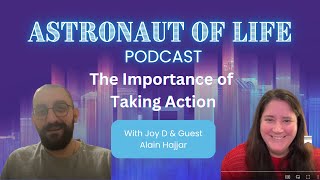
Joy Brown, creator of the Astronaut Life newsletter, talks about why finishing what you start matters more than perfect planning. She spent a year preparing to become a digital nomad, then pivoted her newsletter to openly discuss her services, losing some subscribers but gaining others. Gut instinct, not plans, often guides the best moves.
Chapters
Welcome to a new episode in Rising Clarity Insider. I'm having today with me Joy, newsletter of Astronaut Life. Welcome, Joy. How are you?
I'm great. I'm great. I'm so glad to be here.
Thank you. The subject today in our live session is related to action, the importance of taking action and complete it. Which is we discuss many aspects or many ideas related to the perfections, the perfect ideas, how to be patient also during your completing actions and fear of failure and a lot of ideas with Joy. Tell me, Joy, you're on Substack, for what reason, and yeah, and thank you for having a chance to, you know, to have a live session with me today.
Yeah, I'm very honored to be here. Yeah, I joined Substack back in January. I heard people talking about it on TikTok, actually, and got curious. I love writing and expressing myself that way, so it And the idea of a new authentic kind of social media was intriguing to me, and I am here for it. I'm, I'm not going anywhere. I really love being here and I've turned my articles, connected it with my website to just really like integrate everything with Astronaut of Life. So it's been a beautiful journey so far. Yeah.
Astronaut Life is based on personal stories and personal growth? What exactly?
Yeah, it started as my YouTube channel, which I still have, and I made guided meditations. Um, and I was viewing, you know, at that time I created the meditations and the YouTube. It was about exploring internally via meditation, right? So my little catchphrase was go inward to explore. But I'm— that was back in 2021. And now it's moving into this more just exploring life in all dimensions and ways. Like, yeah, still meditation, science, you know, the mundane of life, all of it, because it's all meant to be explored. That's why we're here.
Yes, for sure. For sure. What do you think about taking action and complete it? And what's the difference between having the plans? There's a lot of people good at taking plans, preparing, preparing, preparing, and not complete the action. Or they have— like, why people are stuck, do you think, in this matter?
Well, yeah. Oh, I love this question because I'm definitely an action person. And to me, there are two ways of doing it. The positive, in a positive way, and then you can also get stuck in overthinking and perfectionism that keeps you from actually taking the action, right? Which I think is what you're referring to. I don't really live there. Um, I don't know the other ones. In 2019, I took basically that whole year to prepare myself and my business at the time, which was in English as a second language teacher, to become a nomad, a digital nomad, and travel South America. Um, so that was a whole, like, almost 9 months of preparation. Right? But with the intention, I am gonna take this action. I am just researching the best things for travel, where I wanna go, booking my plane, booking my lodging, right? Um, so there is that preparation for some things that you do need. Other times you get that gut yes, and you're supposed to just go without the plan. Right? The plan will show up as you take the action. And I think when those types of actions, it's truly a leap of faith or trust in your internal yes and whatever, however you wanna word that for you. It could be divine. It could just be you. Right? But when we have that, that is potent shit, man. It's like to do that. And just take that leap. There's always something beautiful on the other side of that. And the plan will form.
The plan will follow, yeah. The plan will follow. I think people, they are mistaken by preparing the plan and taking the action because they are fear, fear of failure maybe, fear of like, they're always thinking about perfect, how to be perfect, perfect. And they are framed by the society or who will talk about us if we do this or that. So the fear of failure and always they are waiting for the right time, right moment. Tomorrow I'll do that, tomorrow I'll complete that. They're always having the right time. And in my opinion, there's no right time, to be honest. There's now or nothing, you know. And there's no right time in my opinion. And second thought is related to the perfectionism, that no one is perfect. If you take it logically speaking, no one is perfect. And there's no perfect time, nothing. Like we tend to be perfect, we tend to complete the action in a good way. In a perfect way as we accept it in our brain. You know, we tend to be that way, but no one can be 100% perfect. Even the nature outside, anything in life is not perfect. Anything, person, thing, anything. So I don't know, some people like In general, people, they suffer of like, they want to be perfect, everything organized and go so. But yeah, this is just the second thought. And the third thought is related to failure. Many times I failed. Many times I failed. I complete the actions in different ways. And I learn from my lesson. Because when I complete something in a in a bad way, I learn something new. It opens to me a new opportunity.
Yes.
A new opportunity, new method of working, or like different things. Sometimes I didn't understand the question, I didn't understand people, and I don't know what they are talking about, and I answer in the wrong way or complete any action in the wrong way. This is how I learn. This is how you grow. So logically speaking, the consequences of motion and action is different. So we can keep planning, keep put some points, to-do list, you know, like so many times I put to-do list points and never stick with it. Just do something else, complete at least. And the feeling of complete, completing the things is super good. Yeah, and there's a comment, I think a holdup can also be injustice in any regard. Super true. Yes. So in your opinion, if you can share an imperfection action that you did in your newsletter or during your writings, And how, how did you learn about it? Or how did you take time to, to take it?
Yeah, well, I'm kind of in a transition myself right now, right? Um, there's a lot of stories I could utilize, but we'll use this one. I wasn't sure— I, I knew I wanted a job, but I wasn't ready I wanted to take aligned action so that I was actually in waiting for that gut yes, right? Which we can talk about that whole waiting for it later. But I had a friend, I was on a video call with her and a few other women, and she was just critiquing in a loving way, this spiritual leader's offerings, like their services, and just the way she was going at it, I was like, oh my gosh, I want her to do that to Astronaut of Life. Like, I want to see where I need to improve, and I want her fire to like rain down on it and show me. And so I messaged her, and I was like, can you do that? Can you do that to me, please? I want this. And she did, and she was like, Joy, when I look at your website and stuff, like, or your, your writing on Substack, like, I don't know who you are. You're not, you're not sharing stories. Like, you need to, like, I don't even know what you're offering. Like, you need to tell me more about you. And I was like, oh, here I am thinking I'm being all Ms. Authentic, right? But like, I'm not. It was a beautiful fire. I accepted it fully and I was like, okay. And I got, it created this gut yes in me that like, this is where I need to take myself. I wanna pour my energy into astronaut life. I actually wanna talk about my services, which I get nervous about and get in that perfection, just, you know, procrastination energy and like, ooh, are people actually gonna want it? You know? And it's like, no, I love writing. This is combining everything I love together. Why the fuck not? Right? And so I just totally shifted how I was writing and, and the amount of it. And I've lost a lot of subscribers to it, but that's okay. Right? When you make that big change, yeah, people are gonna fall off. That's just— but I'm also gaining new ones. So. I'm still in that, but I had to take that action. And I think the post is coming up in a week or two where I, I show this video where I'm like, I need to talk about my services and I am freaked out and I don't, this is going to be a horrible video of me describing them, but here you go. And just doing that as messy and as imperfect as it was as You know, my nervous system was still tight about it all. Um, it's reteaching myself or giving myself that permission to be messy about it, to not have that perfection. I can still put myself out there, right? Um, so I'm like literally in it right now. Yeah.
I remember when I started, uh, started on Substack. Talking alone, you know, writing alone. No one was like seeing my, my articles. And now I have more than 700 subscribers, some of paid subscribers too. And I still keep going, even if, you know, it's not that a lot, but people are relying on my notes. People are liking my, my, my writings, which is super good. And keep going no matter what, completing Completing the article, write what I need to write in different ways. I was trying to change my style of writing, but it didn't work. So I was like, let's try to stay on my reality and real me, which is you get help from the AI for sure, from a lot of like softwares, but you cannot like copy-paste or whatever. You have to modify, you have to keep like writing in a real way because people feel it, people feel your words. Once you, yeah, once you read it as a reader, you will be like, like a reader, even if your own article or your own piece. You're different when you're a writer, different than you're being a reader. So you feel that difference. So to complete it and even changing the way I taught, I told people like to complete everything, even like sometimes learn, I teach them how to read. Some people, they are not into reading. Just, you know, read two pieces of things, like two articles and not a book. It's like, this year I was like completing more than 10 books. Last year was 3, the year before was 1, so more than 10 books this year is like a good target. And someone's saying, Everybody has such a good story on Substack. Shh, shh. Yeah, for sure. And it's based on personal stories. The community here is like super nice. They're supportive and they treat people in a good way. There's a lot of other applications that can be based on algorithm or whatever, but I don't believe in that. Here is like more you know, more close. People are really teach themselves and learn from others, especially personal stories in astronaut life. I don't know if you're like reflecting some other person's stories indirectly in your writings or just you're talking about your personal stories.
I'm using my own. I got plenty. I don't need outsourced.
No, I mean, I mean, if someone, if a friend is talking to you about his story so you can write about it.
Oh yeah. So far I haven't. I really have been using my own from all parts of my life, from way in the past to like current, right? But no, if somebody's open to it and they have a good story, yeah, I would probably ask to share, but it hasn't happened yet.
Yeah. And let's discuss sometimes about patience also, the patience. Like people are not patient, impatient to complete something or to achieve any goal. Especially, you know, like the cliché of just do it. And sometimes they hesitating to protect from their real harm if they complete something. And the difference between complete something and get harmed and staying in the comfort zone. Sometimes hesitation and not doing stuff, it's protecting themselves indirectly, which is super normal also. You never know until you finish the task. And sometimes you get harmed in different action.
So, so, yeah, yeah, I, yeah, with the patience, uh, again, it can go either way. If you're waiting for guide, like divine guidance or that yes, but to make a decision, to me, that's, that's a good thing, right? And you know the difference. We all know the difference, right? The other way is procrastination, you know, as a, and then you tell yourself lies about, oh, I'm just, you know, I'm waiting for the right timing. I'm just waiting for this, right? We can kind of write it off for ourselves just to make ourselves feel better. But, um, whenever I, I can feel when I'm in that energy and I will call myself out on my own stuff. Like, mm, no, this is not me listening to my body, right? No, this isn't me waiting. No, I'm just, I just don't wanna do it and I'm scared. Okay, let's reflect on why. Oh, I don't. What if I fail? Well, I've failed at so many things and there's always lessons at that. So am I actually really afraid of that? Not really. Not really. So let's just do it. Right. And oh, when you do do it, when you take that action, whether it flops or goes well, internally, at least for me, is like, I really did that. Like, I did that. I moved through that energy. I did it. I don't care if anybody sees it. That was good for me. I like, and then I get all like, I'm like my own hype man, right? And it makes me want to do it again because you never know which time is it going to flop or it isn't, you know, even if 2 people see it, if it touches one of them, of course. That's what it was for, right?
Yeah, yeah. But sometimes if you feel tired or in your bad days, it's okay to do nothing, you know? Yeah, yeah, absolutely. People also are misunderstanding between doing like a shadow work or doing nothing. Sometimes you're like taking vacation with your parents, going outside the country or outside the city, and you're still scrolling your emails or trying to book a call with someone or check like LinkedIn, whatever. This is not the rest. You have to take a rest to be, yeah, you have to take a rest to stay strong or to recover from your bad days. I remember like many times I had bad days, which is my body gets sick. Just sleep 2 days, doing nothing, no screens, no digital triggers. Just breathe, go outside for a walk, come and sleep. Doing nothing, literally doing nothing, which is super good because it gets you like protecting from harm, harming yourself, burnout, like depression, whatever it calls. So hesitation sometimes is good. Hesitation, not completing some stuff, it's good in your bad days or in your like not in your peak performance. Because people like they want to work, work, work, work and doing like making money, whatever. This is not the main idea of your purpose or whatever it's your purpose. Sometimes also they fail to like, what's my purpose in life or what's my plan? There's no purpose maybe, there's no plan. Just stick with it. Just go with the flow, stick with it, discover new adventures, whatever it takes. And complete that action when you're like in your performance or in your peak productivity. So yeah, so this is the misunderstanding between the comfort zone, which is also sometimes you can do stuff, your capabilities are super high, and waiting for the right time and hesitation and You know, like that's the difference between the two concepts. And especially the fear of failure, that they cannot allow you to complete that action. Like fear of failure of what, you know? Like sometimes, yeah, like sometimes logically speaking, I'm not talking maybe sometimes the feeling of like fear of failure is not good. Feeling. It's not a good feel. It's not a good feeling, but if you take it logically, like failure of what? You complete something in a bad way or wrong, which is another option of something different. That's the results. So, so also waiting for the right time, It's sometimes, you know, like harm yourself and you skip a lot of opportunities. So it depends on the, like how you perceive things, especially to be like positive in general. Because when you fail and like, oh my God, like I fail in this and you see another opportunity. So, and when you switch to be positive, like you see the energy around you is always positive. The people always positive, the people always smiling. It's really, it's really like crazy. How do you do shift, but also the perspective. So, also we can skip, like we can reach to the other, like the last point. In our discussion, which is about the, like, how people learn from their own mistakes. Do you think the people, they learn from their own mistakes, or just like talking, like, you know, the cliché of like, we learn and we move on? Sometimes because they fail and they stuck they are stuck in the same place, which is, I don't know, what do you think?
I think, I think we all will think we're doing that, right? But maybe not sit with it long enough because of how uncomfortable it can feel. But when you let yourself just sit in it and like really nuance it out and like, let's just dig for all the nuggets here that I need to find to Really integrate this. I don't know. I'm finding joy in that. Like, even though it's a mistake, right? Yep. Shouldn't have done that. Shouldn't have said that, or should have done this, should have done that. I will sit with it and it's like, okay, who, what part of myself was actually making this action, right? Oh, this was a wounded Joy who has this wound of abandonment said this. Right? Okay. Now we identified this. Okay. Well, what does she actually wanna say? Right? And I'll just nuance it out. When I figure out, okay, next time this happens, this is how I wanna respond to it. And it's, I may or may not do that. Right? And it's just be, to me, you're observing yourself, not with judgment, But just as an observer, like, hey, I really did, you know, that came up again and I took that opportunity. I said the thing. Ooh, and it felt so good. And now I know that I really did learn that lesson and I can really act this way and this is how I want to be. Or it happened again and I still didn't do it. So there's still something I'm not seeing or something I need to work on myself or move through, right? So it's Can you sit with it? To me, it's like, can you sit with yourself long enough in that space with love and no judgment to really look at what you need to learn and how to go forward in a new way? Like, how do you actually want to act?
Yeah, for sure. Right? For sure. Yeah, and sometimes you don't need a plan, as we said before. We don't need a plan. Just like some people are good in planning and then they do the action and then, okay, something wrong. We fail and then get back to the plan, which is— this is sometimes not correct. You did something else, a different plan, you know what I mean? It doesn't mean that your plan is wrong. It means like you did something else. It doesn't mean that you have to go back to discover another plan or to discover some different action that you already did it wrong. So it's just like you complete something different way. The people, they don't understand your way. That's it. And talking about joy in last point now, in our last thoughts, I think in my opinion, uncertainty is my challenge. You know, like sometimes I chase uncertainty, chase things like without plans. Without preparation sometimes, because sometimes I'm not, I didn't prepare or I'm not into my peak performance. I know my capabilities and chasing uncertainty in a good way gives me a taste of challenging what's next. You know, it's a taste of being ready in a different way, on spot, sometimes being ready. Like this conversation as an example, I didn't prepare. We put some notes together, we put some questions, but we didn't stick with— we don't— we ask the questions, but we didn't stick with the ideas. We keep the ideas flowing in real time, which is without preparation. So my opinion, I'm chasing uncertainty to give me a challenge, to give me a good and positive way of seeing things for the next day. And this is how people must chasing the things that they are not knowing or controlling the next day. Or they pray, they are like good, you know what I mean? And they're having plans, they put a lot of effort. But sometimes this is, you know, this is not working. Not because you are wrong. You know, this is super normal. This is life. And we have to keep going no matter what. To keep chasing happiness, to keep chasing good opportunities in order to grow and to be happy with ourselves. It doesn't mean that you fail in something, it's like, that's it. Maybe you try something else without even knowing what it is. Or without even go back to the plan, to the origin plan. So that's my last ideas. Do you have any final thoughts? Yeah, tell me.
When you, when you give space for the unknown in your plan, like, that's where the magic happens, you know?
Yeah.
Like, it's okay to detour and let it let it take its own shape. When we try to control it and conform, it's, it's in a way setting ourselves up for failure in a way. You, you don't have to be like full on, like, I don't know anything. I don't know what I'm doing, right? You can, you can give yourself some, some guardrails, but you need to leave some space for the unknown, for, for to allow that flow. Right. And you let it, let it kind of guide you in a way. And ooh, if you can get, get in tune with that and like buddy buddy with that, ooh yeah, life becomes so magical and it is full of surprises and opportunities and you're like, where'd this come from? Oh, I left the gate open, right? For this, for the unknown. Yeah. Oh no, I love that.
It's like, yeah, because you, Because you can't control everything, you know, like things like are super normal and sometimes you cannot control them. So as Carl's saying, without challenge we don't grow, which is correct. Without challenge, even without plans, because challenging sometimes, like the challenges sometimes they're coming without plans, without preparation. You have to be ready and just fail. Like, fail is a part of success, you know, like fail, you have to fail. And last time you said, Joy, you said like, start messy, start from any point, just start, you know, start doing, complete the stuff and then you will see how it goes. So it's super normal. I'm really happy that we did a great conversation. It was super smooth. I don't know if you have final thoughts, Leda, before closing.
No, I'm just glad to be here. This was a lot of fun. This was a fun topic to talk about. Yeah, I'm all—
And it's super— Yeah, sorry, go ahead.
No, no, it's good. I'm done.
It's super— it's a— yeah, it's a super simple topic. And hopefully for the next sessions, we can discuss another topic related more to the personal stories of astronauts' life. Or Rise Clarity Insider, because we share personal stories as a part of our big, like a big part of our newsletter.
Yeah.
Thank you, Joy. Thank you for joining me.
Bye.
Thank you. Have a good day.
Bye.