When Stress Becomes Physical: A Conversation on Womanhood
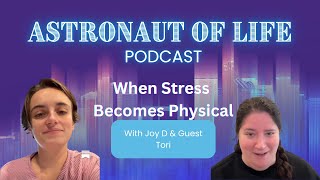
Joy Brown and Tori discuss how chronic stress manifested as fainting, seizures, and hormonal crises, only to be dismissed or misdiagnosed by doctors. They share their struggles with medication like Zoloft and their search for effective therapy, alongside practical coping strategies like yoga and meditation.
Chapters
And our main topic today is when stress becomes physical.
Yeah.
Um, I know you and I have talked, you know, one-on-one on our own journeys with stress.
Yes.
Um, when you may be living in this moment.
Yes.
Yes.
Yeah. Yeah, we're coloring right now. This is her new obsession. So we've got a lot of colors.
I believe it. I believe it. I've been there. Yeah.
Yeah.
I don't know if I could show it. No, we have, I don't know.
We have plenty of Pollyanns everywhere.
Myself. Yeah, no, for real. That's that age, right? Yes. Colors.
Oh yes. 2 is fun. 2 is a lot of fun.
Yes, it is. Probably more for them than us, but that's all perspective. It's all perspective. But that's part of motherhood, right?
Yes.
Yeah.
Yeah, it is.
And stress and Yeah. Just especially when it's your first child, which I know we both only have one child, so I don't know how much you feel like that. But like to, yeah, it's just a lot all at once, even though you have the 9 months leading up.
Yeah. But it's like a whole different thing because you think it's going to be one thing and then the baby comes and then it's a complete 180 of everything that you expected. And not in a bad way. It's just, there's so many things that we don't think about, at least for me as a first-time mom. And so it just like hits you like a brick wall and then you're like, oh, there are so many things that require keeping a human being alive right now.
And then let alone what you need for yourself.
Yes. Yes. Which we tend to definitely forget or push us to the back. Whenever we have kids and, um, yeah, that's, that's a big thing.
Well, especially if you've already learned that in life, just, um, without kids, right?
Yes.
Like for me in religion, you always put yourself last.
Yes.
And others. Yes. So that was like how, what I was taught love was, it was. This whole kind of skewed dynamic that thankfully I have moved out of once I became a mom. But yes, um, you can still live it.
Yes.
Without having to be a parent.
Yeah.
But yeah. Um, well, let's dive in if, if you're ready in our own stories with mental health. I know for me it was, I'm more My issue was anxiety growing up and yours was depression, right?
Yes. Yeah. A lot of depression. Um, a lot of anxiety as well, but more, I think that just led into the depression.
Yeah. Yeah. When did it start for you?
14, 13, 14. Around that age. So about half of my life is, um, has been like that. And it wasn't something that I feel like came on like gradually. It was just, yeah, one day everything just kind of flipped and then it hasn't been the same since.
Oh, Tori. Yeah, that's a That's a lot for a 14-year-old.
Yeah. Yeah. Yeah. And especially if you, um, don't have a good support system and, uh, good ways of coping and learning how to cope, it's, it's a really, really difficult thing to struggle with, especially by yourself.
And well, of course. Yeah. And, and then, I mean, you're only 14 and so. What you have available to you just in your mind and outward is very limited. Like you said, especially if you don't have that support or people encouraging you to get help or whatever, right?
Yes, it's, it, it is. And it's also really isolating, I guess. Um, because then you learn at a young age that the smaller you are, the more quiet you are, um, the less room you take up. the easier and better you are. Um, and you aren't like a burden or anything like that. And then so as you grow up and live in that, then that just kind of is how your brain is wired. And then you, you know, hit a certain point and you're like, oh wait, this is kind of a really horrible way that I've, you know, been dealing with things. Um, and like, for instance, for me, I, um, I had the perfect storm. I had, um, a lot of things happen all at once. And then about a year afterwards, I started having physical symptoms like passing out. I was having seizure-like activity anytime that I got stressed up— stressed out. My blood pressure went up any, um, I— my brain pretty much shut down. The doctor said that the cardiologist and the neurologist, um, We're in conclusion that anytime— like they said, think about it like this: if you were to walk outside and a lion is in your front yard, like charging at you, like how your body would feel, how your mind would feel, like all that stress and anxiety is what my body had been living in constant state for all of that time. And it's like you're nervous system is just overloaded. It's done. It's done.
I think that's when, yeah, when it hits you physically, you can't brush it off or, or ignore it the way you can when it's just mental, right? No.
Well, that, and you don't, whenever you start passing out or having blood pressure issues or seizures and, and things like that, stress and, and grieving isn't your first thing that you think about. Um, so I went to a neurologist, a cardiologist, an endocrinologist, um, therapy. I mean, literally pretty much anything that you can think of medical-wise to try to get what I had going on figured out. And everybody was just kind of like, ah, I don't know. I don't know. And then that's even more stress because then it's— and especially I feel like as a woman, it's very much also too, um, we're over, overworrying about things. It's just, you know, um, hormonal. It's just in our head. We're crazy. So then you start believing, okay, well, maybe I'm just not really passing out and I'm just stressed You know, just all of these different things. Um, and then that makes you even more depressed and anxious and just really confused and yeah. And so then after going to therapy, after having my daughter, um, she literally about a month or so ago was like, so I think I figured it out. Um, this. This is, this is, um, a stress-induced thing, and your, you know, your body is literally just, you know, freaking out. And I'm like, yeah, that's— yeah. She's like, okay, so how can we fix this? And I'm like, yep, what, what are we doing here? Um, because I was losing— I mean, I've lost of about 100 or so pounds. And, and it— being depressed and being anxious and having all of these things and then having nobody— sorry, I'm making yogurt. No, have nobody believe you makes things a lot more difficult, especially to cope with and do, which made my symptoms a lot worse. And, um, yeah, it made my symptoms a lot worse because I don't know how to describe it. Whenever you're already having the things and then you think that you're crazy and you shouldn't be having those things, it's almost like it spikes everything 10 times more. And so you're constantly fighting with yourself and then you're also not wanting to go and get any medical help because they're just gonna tell you that you're crazy and you're gonna spend thousands of dollars and then you're just gonna get right back into that depressive episode to where, well, there's nothing wrong. They keep saying that there's nothing wrong, so why do I keep going? So.
No, I, I totally get that. I, I'll share again, my story with anxiety happened with, in my sophomore year of college. And I didn't even realize I was anxious until I started having panic attacks out of the blue. Right. Um, And then freaking my friends out, freaking my parents out. They would rush me to the ER for them to just be like, she's having a panic attack. Like, and they're like, well, Joy, what has you so panicked? And I'm like, I don't know. Sometimes I was in the movie theater watching the movie. It's normal ass movie, right?
Mm-hmm.
Playing with my friends, not playing, but like playing video games. Because I wasn't calm. But, um, but it felt random and I didn't— nobody explained, oh, you're anxious. This is what's going on. This is normal for your age group. No doctors said that to me, not even in the hospital. They made it seem like, you know, this is something off with me and it's, there's really no cure and just kind of sucks to be me kind of a thing.
And yes.
I didn't even think about telling a doctor or therapy. Like nobody ever inserted like, maybe this could help you.
Mm-hmm.
Right. Um, it wasn't, that was at what, age 19, 20? Eventually the panic attacks. 'Cause that for a while they were like every few weeks. Mm-hmm. And they stayed that way for quite a while. Um, but eventually they did kind of stop.
I have lots of them.
Yes.
Yeah.
And it wasn't that actually things in my life got worse, not actually better. So, oh, it took quite a while. Until I, you know, literally 10 years before I was like, maybe I need a therapist. Maybe, you know, I, I had a, eventually I had medical doctors just put me on Zoloft. They didn't, again, they did not suggest therapy. They did not. It was just pharmaceutical here. Let's just give you a pharmaceutical. And that did take the anxiety away, but it also took all emotions away. And so then I was a zombie. I could do my job, I could navigate life, but I remember watching like a sad movie or a commercial or hearing a song that normally in the past would've made me cry or have a reaction to and just being numb.
Yes.
And being like, this isn't normal for me. Like, even though it's unpleasant to hear that sad song, like I actually feel like it's a part of me to react to it that way. And now I'm not, I don't feel like myself because I have no emotion to this at all. And like, who am I? What am I? How am I even supposed to know myself when I'm a zombie?
Right.
Right.
Right.
Yeah. So I, I called Turkey that medicine, not, not a wise thing to do. I cannot endorse that. But I, that is what happened. And oh my, that's when I was like, no, I am changing everything. I am like, I was in abusive, physically abusive relationship. I ended that, you know, and I, I started therapy and getting help, but it, it took a while. Even after that, I had to deal with. It was my internal world had turned so negative by that point.
Yes.
And I wasn't numb to it anymore due to that pharmaceutical. Right. And so it all kind of flooded back and I was like, I can't function. Like I can't, I can't even make it through a day of work now. How am I supposed to do anything else in life?
Right.
So it was like, I don't want to get to the point where I'm suicidal or anything. And I know that's where I'm going if I don't do anything. So yeah, I've been to therapists before, but I just, they weren't the right fit, you know?
Yeah.
Or I didn't feel comfortable enough. Like I had a therapist for a bit while in that physically abusive relationship, and I did not even feel comfortable to tell my therapist what was going on.
Mm-hmm.
Which he totally could have helped me, right?
Yes. Yeah.
He probably, but for whatever reason, I just wasn't, I was too scared to even admit it to, because it, one, it's admitting it to myself, right? Right. Let alone somebody else, even if they're deemed a safe person. I think part of it was he was a man and obviously I was having issues with men too. Um, the therapist, Diana Dumb. With years later was a woman and she wasn't religious. And I had like all of these little things, like I just need somebody like this. And she fit the bill and it was the, you know, just an aligned moment. Like this is the person I could open up to and kind of explore these things with. But it was quite a journey to get there.
Yes. And that's it. That's what's horrible about, you know, things like that is especially I, you know, had a recent visit, um, with a psychiatric doctor. And whenever you don't have good bedside manner, especially in a mental health industry, um, it's not the best. And so whenever your patients come in and see you and leave feeling worse than they did before they came in to see you is a problem. Um, and so like, that's, that's something that we also have to go through as well is like, I feel like with any doctor, you know, you want to be heard, you want to be seen, you want to feel like they listen to you and, you know, take you seriously. And so you want to be able to feel that way about your therapist or your, you know, your psychiatrist and stuff like that. That. And so it's really difficult sometimes finding people who align with your values and what you feel like you need out of things, um, and being able to get the correct help that you need. And so it's, it's good that with what we've been through also, we did not just give up on having a therapist and things like that. That's something that I like, you know, because it's— to me, I think of a therapist, obviously, you know, they're your friend, quote unquote, but also not your friend. Um, and so sometimes you make friends that don't last very long and, you know, aren't a good fit. And so you don't want to never have friends again if that's what you— you know what I'm saying? So, right, so it's, it's good that we both kept going and, um, well, not judging The whole experience on one negative, right? Yeah.
Experience.
Right.
Yeah. I, I had to go through 3 or 4 therapists where I'm like, yeah, I don't wanna tell you shit. And, um, there was time in between them. Like, um, yeah, I used to work in the mental health field and I got injured and so I had to go to a therapist once. Supposedly to talk about getting injured on the job, but they just wanted to talk about my past. And I'm like, that's not what I'm here for, dude. You're here to help me process this so I can go back to work. Like, I don't, I'm not paying you, or actually my, my work is not paying you to dig into my past right now. I need, I need help in this. And I'm like, I get it. You're a psychiatrist. Like, you wanna go there. That's fine.
Fine.
But like, no, I'm here for this. Oh yeah. Cause we just booked. So it, it didn't even like, it was like, I don't wanna tell, like maybe if we talk about the now, then I might open up to you.
Right. Yeah.
That's not what I'm here for. Like, uh, it took, that was a few years before I actually ended up with the one I wanted. Right.
Right.
And I wasn't even there like on my own volition. I had to go for work. Definitely was, was part of the process. But, um, besides like medication, I know with Wendy, the therapist I had that I eventually got, and I was like, I don't wanna be on medication anymore. Mm-hmm. I wanna learn every other way I possibly can to deal with my anxiety that does not include medication. Like, can you avoid that? And I'll do, like, I'll literally do whatever you say. Just help me because I don't like living this way. And, um, we mainly did like cognitive behavioral therapy and talk therapy, right? But eventually she was like, you should try meditation as a way to just calm your nervous system, calm your body. And, um, I was an atheist at the time, so it, it wasn't even presented as like a spiritual practice to me. It was actually presented. Cause I did a little course with them and it was like this, yeah, just a way to like get in tune and more body scans, you know, calming your breath, nothing spiritual, but it, it did become kind of the method I ended up having spiritual experiences and that's a whole other story, but, um, to keep it shorter, was there any, like, modality or thing like that besides medication that you have found helpful?
Um, so I really like, I started doing a little bit of yoga, but before that, um, I like to keep busy with my hands. And so I did a lot of crocheting. Um, painting. I picked up knitting, um, hand embroidery and things like that. Um, so like that's kind of always been my outlet is having a, um, like some sort of creative hobby, but something that I can sit down and do with my hands.
No, I have those same hobbies when I can, right? Especially like it's just Something for your body to do and it, and your mind to relax.
Release a little bit of tension.
Yes. Yeah. No, I've done yoga too. I think for me, the hardest part, unless I'm enrolled in a class, I don't, I'm not as consistent with it.
See, and for me, I'm, I'm, I'm not really a, a social butterfly, so I would rather just watch a YouTube video on my TV and have a mat.
Oh, but that's, that's cheap. I'm gonna— I'm not gonna hold it that long. You put me in a class, I'd have to be honest. It's hard, man.
There will be accountability in the classroom. That's the only reason why I'm in here, right?
No, I'll own my shit. That's totally the reason. No, I mean, I don't, I'm extroverted, but actually in those, I'm not gonna go up and talk to everybody. It's, it's literally for the accountability and the teacher being like, no, your foot's in the wrong place. Cause I know on the video I'm just gonna just cheat and be like, I'm just gonna rest in vanasana right now.
We can come back to this later. This. Matt's actually pretty comfy, so.
Yeah. There's some positions I like really enjoy and I'll just, just do those. But you know what? Anything's better than nothing.
Yeah. To me.
This is true. Yeah. Yeah. Hmm. Let's see here. We've kind of touched on the healthcare system and obviously we're talking about America.
Yes.
Which is notorious for their healthcare system. That's great. And just being a woman in this healthcare system is nuts.
It's fun. It's great. Right?
Well, you said something earlier about the bedside manner of these doctors and ugh, that changes so much, right? They could be telling you the exact right thing, but if they come off as an asshole, it's not gonna land.
Everything— I don't— yeah, I don't. Mm-mm.
No.
And yeah, I mean, yeah, I feel like any healthcare worker should have the best bedside manner, and that, that, that, that should just be like the, the qualifying baseline of You just have to be a good person and nice. Not, not saying that there aren't, you know, there are a lot of great doctors and healthcare workers. Just my experience with the doctors around me have not been the best.
So, well, I think there's, um, and I know women experience this, perhaps men do too, but with women are very vocal about it. Or maybe more vocal about, like just being dismissed by doctors, um, in a dismissive, derogatory way. And it is, um, sexist. And I'm not— they might dismiss men too, but it might not have that sexist vibe, right? Where I've had— and it tends to come from male doctors for me. Um, I once, for a long time, I had migraines for years and I would go to specialists, which in America you pay more money to see, right? Even with insurance. So I'm paying my $50 copay to see this specialist, this neuro whatever, right? To help me with my migraines. I, he doesn't do any scans. He doesn't do anything. He says, oh, you're a woman. You're in your thirties. Here's a pill.
Yep.
And I'm just like, and I was like, well, why do I have these migraines, doctor? And he's like, well, you're a woman. That's why.
Yeah. I just, I'm like, I paid you $50 to tell me I'm a woman.
And then he is like, why don't you have children yet? And I'm like, well, who the fuck are you asking me this? Because I was like 35 at the time and he was just like, why don't you have kids yet? And it's like, who, what the, what does this have to do with anything?
Yeah. I don't think that that was a question that I asked or came in here for.
Right.
Or—
I'm here about my migraines in my brain.
Right. Yeah.
And you're a neuro, like a neuro doctor. Yeah. You deal with brains and you're only, yeah. And then I, I think I told you eventually I was with my general practitioner who was, happened to be a female doctor, just paid $20 to see her. Right. And she's like, maybe you're drinking too much caffeine and this is a caffeine sensitivity, so. Give that, you know, eliminate caffeine and see if it, if your migraines go away. Mm-hmm. And I did. And the migraines— no pill required, right? No pill required at all. Just a small shift in my diet.
Just the simplest thing. Oh, am, am, am I, I am a woman still. Okay. That's good.
Yeah, I am a woman.
It's just the caffeine.
It's just the caffeine sensitivity. Like, yeah, but, um, now that's a physical health thing, right? But it also, we can also come up with these blocks in, in the mental health too. Like, yeah, like I told you when I told my general, not the lady who gave me the caffeine. Stuff, but another general doctor, she was a woman and I told her about the anxiety and instead of like, you need to get a therapist, was like, well, here, let's just put you on this Zoloft, right? And we'll try to get the prescription right. And it, that to me is still dismissive. There, there's ways to dig around. Now when you're pregnant, they do have you fill out the depression form, right?
Yes.
They're a little more aware of it cuz because of all the hormones and stuff. But I was like, that should be a practice in any office visit, not just when you're pregnant.
Yes. Yeah, I think so too. I think, well, because even now my daughter's 2 and I still, every time that I take her to the pediatrician, I personally have to fill out a form asking about my depression and stuff like that.
Um, Hmm.
And yeah, I mean, I think it's, I think it's good. I think it, I think that that is a very great practice. Um, because, well, I mean, first off, you, you know, have children in your house and things like that. And what, especially for me, uh, something that I didn't think about was The things don't just go back to normal directly after having a baby. Um, it literally took me a year and a half to even feel remotely normal. Um, and, um, I remember the first doctor that I went to while I was pregnant, um, pretty much told me, um, I could continue being um, a horrible person and take my Paxil that I was taking. Um, and there was no safe, uh, antidepressant medication to take while you were pregnant, and so I needed to get off of it cold turkey. Spoiler, spoiler alert, um, that is a horrible medicine to get off of cold turkey, especially whenever you're freshly pregnant with morning sickness, and then that turns into everyday sickness for 16 weeks. It was great. But, um, about halfway through my pregnancy, my new doctor that I started seeing, um, did the depression questionnaire, and I was like, oh, you know, this is just— this is normally, you know, a higher score like this, but, um, you know, I've always had depression. Depression. And she was like, well, I don't see that you're on any medication for it? And I was like, well, because my first doctor told me that there wasn't any safe medication. And she was like, that's incorrect. That's not correct. Um, and that's definitely not something that we play with, especially whenever you're pregnant or after, um, after you have your child, because the hormonal fluctuations that you go through— I mean, literally, you know, mothers, it's, it's really difficult to go through. It's, it's it's difficult to go through. And, um, yeah, so I'm, I'm really grateful of my OB-GYN that I had that delivered my, my daughter because she definitely helped out a lot. And that was her main priority was, um, mental health and making sure that I was good, not just for me, but for my daughter. And also reassuring me on, you know, certain things that everything is okay, it is fine. And that was, that was something really nice to have because I've never had that before. Yeah.
Want to have that from a doctor in such a vulnerable state. Uh, oh, that's so needed.
Mm-hmm.
Right. Is there anything more vulnerable besides maybe being in danger than being pregnant? Not right. I don't think so.
No.
As a female, like, and obviously it lasts for a while.
Right.
A good while. Um, Yeah, I don't, there's really no way to explain that I know of all those hormonal changes and just what it is to experience it and to live it and then to somehow mask being semi-okay. Obviously you don't do a good job of it because it's just so hard and Yeah, it's, I almost wanna say I wouldn't wish it on anybody, but then of course nobody would be wearing that.
Well, I figured out, so I, I guess this is something that I've always had, but it got worse after I had my daughter. I was having literally for like 3 and a half weeks out of the month, severe, not just mood swings, but like hormonal fluctuations. It— I would, I would wake up being like sick and like throwing up from being anxious and, um, and things like that. And I would go in like a 15-minute span, I could go from crying to laughing to wanting to burn the freaking house down to back to, you know, happy and laughing again. And it was absolutely miserable. It was, it was debilitating. It was— that is probably— that time period is probably one of the worst things that I've ever been through. And I go to my OB-GYN and I'm like, listen, I know that I'm crazy, I know that this is going to sound stupid, but this is what I'm going through, this is what's happening. And it starts, you know, around the time that I start ovulating. And she's like, she just looks at looks at me and waits until I finish spiraling, and she's like, so you have premenstrual dysphoric disorder. Um, and no, it's, it's a, it's a serious thing. It, it, uh, affects relationships. It's, you know, affects your work life, your home life. I mean, literally everything about your, your life just gets flipped upside down, thrown into a tornado, spit back out, and then Boom, there you go, girl. Have fun with that shit show and keep on living life, especially with the newborn.
Oh my gosh.
So she, yeah.
What was she able to do about that?
So she put me on, um, there for that. Um, therapy helps, but, um, also with my level that I was on, um, medication, which is there's a certain, um, birth control that you can be on. Um, or you can be on a pill that, um, puts you into menopause, or you can have a hysterectomy. So, um, wow. Yeah. So, um, I am on, uh, birth control and doing therapy. I'm doing cognitive behavioral therapy as well as dialectical behavioral therapy. If I'm— that's— I'm starting that in a couple of weeks. It's a new different form of therapy that I'm starting. Um, so yeah, so pretty much just learning how to cope and, um, handle my emotions. Because what was happening was, is with my hormonal fluctuations, it was also messing with my blood pressure and my fluid retention. So therefore, anytime that I got stressed out or had a hormonal fluctuation, I was passing out, having seizures, things like that. So it was pretty much just like a domino effect.
Yeah, yeah.
Um, and so being a stay-at-home mom and being with my daughter, I can't, you know, be passing out and having seizures and, you know, things like that. So, um, I've been in therapy for the past 2 years. It's really helped a lot. I'm to the point now to where I think the last time I like passed out was probably 3 or 4 months ago. Um, I still get dizzy, but I mean, just being able to cope and rewire the way that I think and, um, function and, uh, react to things definitely helps a lot. But it's also good because I'm having to teach my toddler how to do this. So we are, we're doing this together.
Oh, I love that. I love that. I can't even imagine Tori. Uh, cuz my, I, I don't think I have that. I definitely have PMS, right?
Mm-hmm.
Oh, that is so annoying.
Yeah. So imagine that like times 10, like for the whole month. It's You, it's psycho.
No, I was like, girl, no, it would put me in more pregnancy or postpartum type of, uh-huh. Intensity is what I'm sensing.
Yeah.
It's, it's, and that is freaking intense for anybody who hasn't lived that. That is intense as shit. It's, it's, you don't have, you're not in control because it's the hormones and you know that. but you can't change it. So you have to roll with it and then you're like, this is some weird ass shit. Like, I don't, this is not me.
And then like for me too, I had such intense rage. Mm-hmm. Like not like normal anger, but like rage to the point to where I would be like, I know that I'm being psychotic right now. I understand how psychotic I am, but also too. I am feeling the way that I'm feeling so intensely. So there's like no, right?
Yeah.
It's like my rational and irrational part of my brain are struggling for the one brain cell that I have and they're like, exactly.
Yeah. Well, this, I don't think people talk about these struggles. No. Not unless they've either already have moved past it. Or it's just, um, society-wise, we all know it's there, especially here in America, right? But it's still kind of shh, you don't want to know. We mask that.
Well, that, and I think that a lot of people make others feel bad whenever they are struggling, especially as a new mom, because you shouldn't be struggling. You should be happy because you have a new baby in your arms and everything should be perfect and peachy, but. That's not always the case, and we are struggling. And whenever we do speak out, it's not always the best reaction, even. And it's not even complaining, it's just saying, hey, I'm struggling, these— this is really, really hard, and I just need a little bit of help and compassion. And, um, and I think that if more people opened up, and not even, you know, about the bad things, but just, just opened up about things in general. People wouldn't feel so lonely and, you know, isolated and debilitated because people aren't just posting the good things and the happy-go-lucky things and the everything's perfect in my life things. Mm-hmm. There's no normal, there's no normal anything. I feel like it's always just showing the best version.
Um, Instagram Live.
Yeah. And that also put me into quite a depression. Um, being a new time, being a first time and a new mom. Um, oh yeah. Because of all of the other moms, you know, whether it be for breastfeeding or, you know, You know, losing all of this weight or, you know, doing, you know, bouncing back and getting dressed up. And I, I'm still in pajamas. I'm more than likely not getting out of my pajamas today.
Me too.
Just be honest. Um, I'm just surviving, but it, it really, because I was like, why am I, why can't I do that? Why am I not like these other people?
And I think it's also like, Is that truly their lived life or is this just their mask? Right. But, um, but no, I, oh, I remember, I, I know you and I have talked about this with the breastfeeding because it, I only breastfed for 3 months. I hated it. It was so stressful, all-consuming, you know, and I wanted to be that holistic mama who, you know, just always had her baby on her. Boob and like, and you know, like we're eating granola and I'm like, no, this is not my reality. As much as I wanna be Ms. Granola Mama, I am not a granola mama.
No.
And like, this is miserable. I am miserable. And I, and it's keeping my hormones in a way that I can't even, I don't recognize myself.
It's like, well, There's nobody talks about the actual hormonal changes that you're still going through every single time that you breastfeed, every single time that your milk drops, anytime that you're producing more milk. I mean, you're still, I mean, you don't lose most of your hormones until you stop breastfeeding. And then even then it starts going in a, you know, a, a decline. And yeah, it's just, you know, for me it was like, oh, I'm, you know, just gonna have, you know, my daughter and then, you know, life is gonna go back to normal. No, no, no. And even now at 2 years, I'm still like 75% back. But even then it's still, I have a long ways to go and even, you know, to be good. But having my daughter has also made me, like, for instance, with my breastfeeding, I, with the videos, I would watch videos and, you know, these moms would be breast, you know, pumping a whole bunch of milk and I would get, you know, maybe half an ounce or an ounce, which was normal. Um, but not what I saw. So I was like, this, obviously there's something wrong. I'm not, you know, giving her as much milk as she needs. And then on top of it, I had really bad gestational diabetes. And so whenever we were in the hospital, she had to, um, she had to have blood sugar tests done while we were there, um, quite a few of them. And so they said, you know, if she fails one, then she's going to have to stay in the hospital for the next few days to a week, um, so that way we can make sure that her blood pressure is good. So, you know, we're going to leave some formula in your room and, you know, just give it to her because you're obviously, you know, you just had her, you aren't producing as much milk, she's not getting as much food, which means that her blood sugar isn't the best right now. And so whenever we test it and if she fails, you know, it's not good. So, you know, from the time that I had her in the hospital, I was giving her formula because that's something that she needed. But I also got a lot of slack about that because I wasn't giving her solely my breast milk and I was giving her formula, which to me, it doesn't matter as long as my baby's getting fed. That's just my thing is, is just like, I'm doing the best that I can. Exactly. I was giving her what breast milk I could, and I did that for about 5 or 6 months. And then I just was just like, I can't, I, I can't do this anymore. I was beating myself up. I was depressed, the hormonal changes. With everything was bad. And so I was just like, she's fine. And even my OB-GYN and my pediatrician was like, it is okay, it is fine, she has gotten what she needs, it is completely fine, it is okay. And I was like, okay, that makes me feel so much better because there's just— there needs to be more support. And I feel like there's not, and a lot of people struggle, especially postpartum, and don't feel like they can talk about it, which really sucks because I feel like that's whenever you need it the most, not after you've healed, but while you're struggling. And then you also need compassion and understanding from fellow moms or even fellow friends in general. You don't have to be a mom