She Couldn't Buy It, So She Built It: Borough Broth's Ros Heathcote
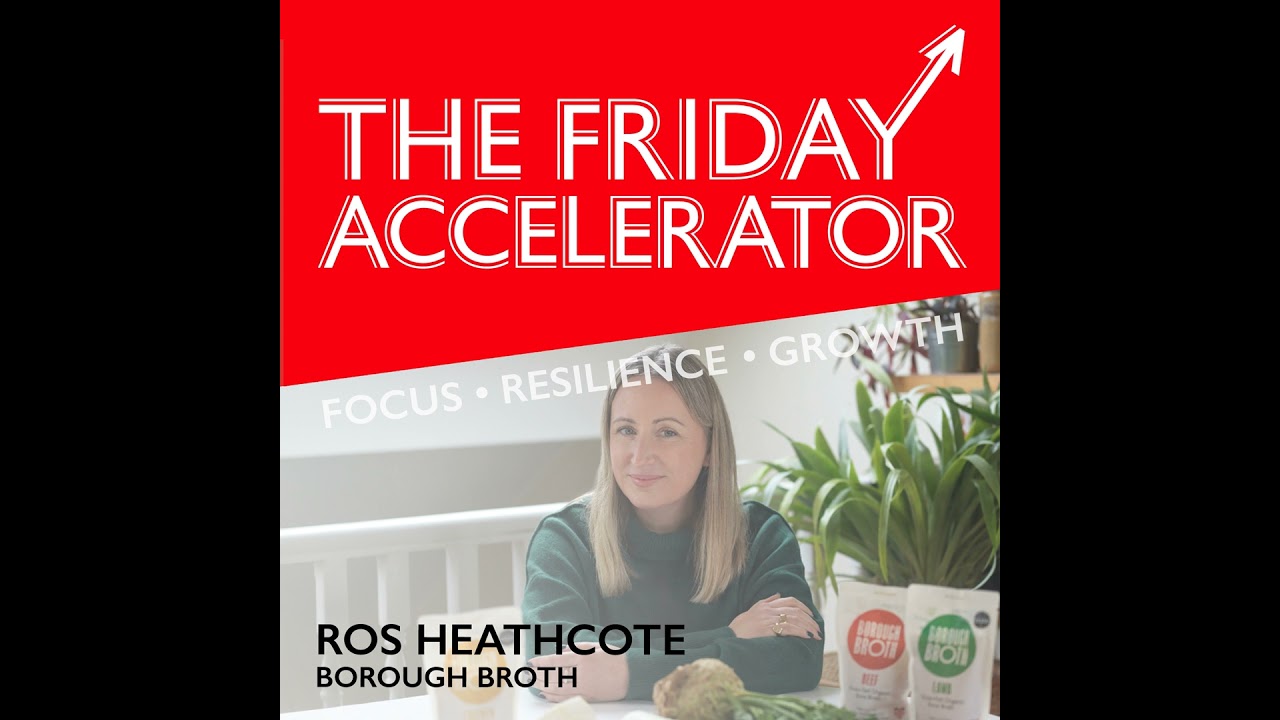
Ros Heathcote built Borough Broth from a kitchen hobby into a multi-million-pound brand after a health issue made her want better bone broth. She grew from a Selfridges listing to Ocado partnership, raised £125k from friends and family, then secured investment from Piper to fund a new factory and frozen broth cubes. She's now managing 53 staff and navigated long COVID and cash-flow crises that pushed her to the edge.
Chapters
Meat was out of fashion for quite a long time, so we kind of had to rely on the business being sustainable. You can kind of apply logic to any business when you just view it as processes. I remember just saying to the team, like, it's going to be fine, it's all good, looking at my cash flow and wanting to, you know, jump off the top of a building.
Ros Heathcote founded Borough Broth 10 years ago with no background in food, no industry contacts, and no manufacturing experience. What she did have though was a product that she simply had to bring to market. With a rare combination of entrepreneurial and systems thinking, within a year she'd won a listing with Selfridges. Ros admits that while it might look like plain sailing from the outside, there have been some real challenges along the way. Find out what made her want to jump off a building and what she did to rescue the situation. What are the demands on the founder of a business that's growing up fast? My name is Karen Green and this is the Friday Accelerator.
For those listeners who don't know much about you, which I'm sure there aren't that many, what's the elevator pitch for Bora Bora? I can't even say the word.
We've all struggled with that, even after 2 years.
It's not just me though.
We're a UK-based organic, flavor-led, low-processed food business. We manufacture all our own products and we work with British farmers and we predominantly make organic bone broths.
How did you come to decide that bone broth was, was your passion?
Well, I, I was making it myself at home and couldn't buy it anywhere, which was sort of quite frustrating and very quickly realized that, you Bone broth is a posh stock ultimately for anybody who doesn't know, but it's slow cooked and it's seasoned. So, if you're talking about technicalities, a stock would be a fast boil with bones, pretty much only bones, sometimes some aromatics, no seasoning. Whereas this is cooked slowly, we put vegetables, we put seasoning herbs. And so, it's sort of designed for sipping and it's delicious, obviously. But yeah, I couldn't buy anything like that on the market and everything I looked at had lots of— ingredients that you couldn't find at home that was sort of ultra-processed would be the term now that didn't exist 10 years ago. It was a sort of emerging trend in the US, but I was making it for my own health journey as far as healing my gut. And I went through a number of stages of sort of stripping out processed food as well as sort of aggravating foods, the sort of obvious things of dairy and gluten, just to try and sort of rebalance because I was, I developed allergies, basically was getting a bit itchy. Couldn't really understand why. Went to the doctors, they sort of, GP sort of said, don't waste my time. So I paid to have an allergy test and was told, oh yeah, you're, you're actually allergic to chemical fragrance, which was quite a sort of—
That's interesting.
New issue for me in my early 30s, which had never really existed before. So stripped all that out and I was still feeling quite aggravated. And the doctor at the allergy clinic had said to me, some evidence about gut health, if you can improve that, it might, you know, ease some of your symptoms and make you less reactive to things. So, I sort of went down this rabbit hole of gut health exploration, and there wasn't much out there other than a few blogs. I went and saw a naturopathic nutritionist who was like, remove these things from your diet until you feel better and eat these things. And one of them was fermented foods, and the other thing was bone broth. Really found that specifically was helping me feel sort of nourished and, you know, help me heal. And yeah, it was making it every day. Eventually got talking to the butcher that I was buying bones from, and he told me that they throw all their bones away at their abattoir.
Good for waste and sustainability as well though.
100%. Yeah. I mean, he was like, it costs us so much money to get rid of them and nobody wants to buy them because, you know, it takes a long time to get goodness out of them. It's a lot of time and effort and most people can't be bothered. So, as a sort of immediate and sort of rather cliché light bulb moment, when we had that conversation and I immediately left that conversation, called my mum, said, I'm going to start a business. This is going to change my life. And set up a business almost immediately, sort of logged into Companies House, set one up.
Surprisingly easy, isn't it, to set up a business? Running it's a bit different, but actually setting one up, Pretty straightforward.
Yeah. And it sort of feels, you know, and the letter came through a couple of days later and I was like, God, okay, this is legitimate now. I've got to do something with this. So yeah, found a kitchen and yeah, that sort of moment of inspiration turned into me starting a business, I'd say within a sort of few days.
And what were you doing before that kind of got you ready? To start this, if anything?
No, nothing got me ready for it, but I mean, I had had a sort of 10-year career in IT, basically. So, I was, at the time, I was working in data and analytics. I'd been a coder. I'd worked for a number of big blue-chip companies, basically. I'd sort of worked my way up from fixing computers to becoming a developer, to becoming a consultant. Had a very nice job working at Coca-Cola and yeah, I was sort of their business intelligence lead, which is basically data and analytics. So yeah, very, very different.
No accounting, no marketing, no sales, no product development, just enthusiasm and passion, which is pretty amazing. So.
Yeah, but I would, I would say because Because I'm an IT nerd, basically, that I worked at a number of different businesses that were completely different. I worked at Burberry, Coca-Cola, Vodafone, and what I realised was actually all of these businesses have a lot of things in common and a lot of this is processes. And so, you can kind of apply logic to any business when you just view it as processes. So, actually, I was just like, how do I get from a raw material to a finished product? Well, it's probably about, you know, 8 steps. So, I sort of thought about Everything like that in a sort of system way.
So broke it down. So in, in terms of your growth trajectory, what were the, what were the phases and the steps? Did you think about that when you were typing it into Companies House or, or is it grown organically? What's—
It was very organic. And, you know, initially I thought this would be a nice little weekend thing where I'll do some markets and I'll set up an online shop. And see how that goes. And, you know, just thought actually it'd be quite fun creatively. So it sort of was a nice blend of things where I could get creative with the branding, not that I was particularly gifted at that. And, but the developing recipes, I'm obsessed with food, so that wasn't hard. And then, yeah, the sort of techie nerdy side of creating processes and building a sort of production kitchen was like super fun.
And then when you get Salsa or BRC involved and everyone goes, whoa, now it's really not fun. But you'd have probably enjoyed that, I think.
I weirdly did.
Yeah.
Like figuring out what a HACCP was and learning that, I'm like, ooh, you know, this, this speaks—
It's a system. Lovely.
It's a system. And, you know, ultimately it's risk assessment and avoiding, you know, killing somebody. So I'm like, great, this is reassuring. So, all of that stuff sort of worked for me weirdly. And so, yeah, so it, I didn't have a big plan, but sort of after After a few weeks, we got a Selfridges listing and that was just through sort of Instagram and luck, you know, a lot of luck. So yeah, we were in Selfridges, then we launched with an online butchery who ended up sort of just, I mean, our volumes just went crazy.
What year was that then? How—
That was 20— well, we launched 2015, so I'd say around 2016. You know, I, I was making it at the weekends, small batch, one batch of each chicken and beef to this kitchen that I'd rented a sort of corner of that was a— they made sandwiches during the week. We ended up having 4 staff 7 days a week, sort of, you know, producing whilst I carried on with my full-time job. I sort of gave them, um, I sort of automated things. So they got mandates and gave them the process.
Yeah.
Yeah. Loved it.
Lovely.
So we cracked on with that for a good sort of year and a half and grew it to, you know, a size where I, we'd outgrown that kitchen. I realized I needed to quit my job and actually like Bite the bullet, prepare for Ocado, which was what I wanted, and yeah, take the jump, basically.
How did you get to Ocado? Did you apply online, you know, to reassure people that the system works, or?
Actually, I, you know, I met my buyer who ended up being my buyer for quite a few years and is sort of a friend now. I met him through Bread and Jam. Okay. So, and it was, they were then called Bread and Butter.
I remember, I've been to that, I think. Everyone but one or two when I had, I actually had COVID one year.
I think it was their first one, in fact, in 2016. They still do it now. And I always tell people to do it, but it's this pitch to the buyer. And sometimes you luck out and it's the right buyer. And other times it's completely wrong buyer for you. And, you know, they're not interested because they buy for, you know.
That's always the challenge.
Because they're never going to get every category in, but I lucked out. It was the relevant buyer for me. And he, he was like, I love it. I'm so into the idea of it. And I, and I, whereas lots of other buyers had sort of said, that's quite an expensive stock. Are people going to buy that? You know, couldn't really see the value. And then I was like, but we make it with spring water. We cook it for 24 hours. It's organic, you know, all the things that I'd be looking for as a consumer. And yeah, it fell on a lot of deaf ears, but he really took a chance with us. And they were our biggest customer for sort of 6, 7 years.
Wow.
So yeah, so I, we sort of moved into this kitchen. I took about £125,000 from friends and family to build a sort of industrial kitchen, get it to SALSA accreditation with the, with the view that this will prepare us for Ocado. And luckily we got Ocado. So within a few months, we sort of got our SALSA and launched in Ocado. So it was all sort of Worked out.
Good start. And, and from there, where's it gone from there to, to now?
So that, yeah, so that was sort of, we launched the Cardo and I, I wanna say 2017, I think 2017, 2018, early 2018, I think in the end. And I'd say over those few years up until about 2024, it was basically a Cardo, us growing on a Cardo and online retailers. We then were in Planet Organic and Whole Foods, and we grew out a lot with them. So we sort of grew very organically, but we went from sort of £300,000 in our sort of third year through to a couple of million by sort of— we moved factory in 2020, scaled up again. That was a nightmare because it was COVID. So lots of things got delayed. And we're still in that kitchen. We're about to move out of it. So yeah, so we sort of grew steadily. And then in about 2023, I think we were about, wait, what year are we in now? '26. So 2023, we're about £1.5, £2 million and basically have doubled revenue since then after we launched into Waitrose. And then since we've gone into Sainsbury's and Tesco's the last year.
So now you're on that upward trajectory. You obviously had a raise. How has that changed your life?
It's like, it's quite fresh. So we did the raise back in November. I mean, we completed the raise. It started in sort of April, I think. I'd say all of my sort of fundraising has been relatively unconventional. And I've had a number of people reach out to me and sort of say, how did you go about it? And in truth, Piper, who are our investor, I've sort of known one of their partners basically since 2017, I think, from one of those sort of— I actually think I met him at Bread and Jam.
It is a fantastic place to network, actually.
I always say to them, I owe you guys so much because it's quite a lonely existence. And then you go to an event like that and really just having a conversation with people, they're like, have you spoken to so-and-so? And it sort of opens a lot of doors, I think. So, so yeah, so I think, you know, and with Piper, they're very good at Like sort of early conversations with brands that are sort of just at the beginning of the journey and sort of watch from afar until they're at the right size for Piper to sort of consider investing. There was an article that we got in the Times, um, where it sort of declared our revenue and our turnover and, you know, that we'd made profit in 2024. And they sort of got in touch and said, you know, do you want to come in and have a chat? And It was just at the moment where we were like, we need to start fundraising. So actually it sort of worked out for me that it just was the right fit. They were always up there for me because they've sort of got an incredible reputation. They're B Corp. They work with actually more female founders than male founders, which I'm so impressed with when you look at their portfolio. So they're sort of not all about aggressive profit, even though obviously that they're finance people, they want to make money. But it's also about purpose. So that was really important to me and it was important to them. So it just felt like a good fit and we got to, you know, a number that we were all happy with and cracked on.
Slightly different question, but is Broth a one-trick pony or is there a load of MPD in the pipeline? That's not confidential that you can share?
So basically this investment that we've just taken, it's predominantly to build this new facility. So we are sort of at capacity where we are. We're, we're not like shorting orders, but we're, we've, it's sort of, we need to move pretty rapidly. So we've got this whole plan. We found this site that's ginormous, slightly dauntingly ginormous.
Right.
So that, that's what the lion's share of the investment's for. And with that, that's gonna increase, A, our capacity, but also our capabilities. on what we can manufacture because we're quite unique in the fact we manufacture ourselves and we don't outsource anything. But also that sort of creates a sort of boundary that means you have to be creative within those boundaries with regards to what we can produce. So we're not one of those brands that are like, I know, let's come up with a mayonnaise and sort of, yeah, let's find a manufacturer for it.
I haven't talked about it for a while actually, but my biggest example has always been certainly in the early years was Marmite because You know, everyone says, well, you need to have a range. And I'm like, well, Marmite doesn't have a range.
Okay.
Now they've got squeezy Marmite and they've got low salt Marmite and Marks Spencer's got lots of Marmitey things, but, but that's a, that's licensing and co-packing. So I think it, there is something to be said for a single strand, but yeah.
It's interesting because I think you're right. And we've, we've been talking about this a lot strategically and like, you know, you see other bone broth brands out there and it's sort of every week there's a new SKU. And I'm like, take my hat off to anyone who can do NPD that fast and have, and also just manage that many SKUs. 'Cause that's a, it's a, it's a lot. We do have some things coming out, which I'm super excited about. We're launching frozen concentrated cubes.
Oh, excellent.
So it's still broth, but we just found there's a real use case for people who want to just pop it in their cooking. You know, people that are not using a full pack in one go and also a concentrated version, which is sort of versatile in dishes versus sort of sipping it as a broth. So, yeah, so we're just about to launch those.
So, I think there's a real opportunity and where I live here in France, in Picard, you've got so many interesting, I don't know if you've been to Picard's, but.
I only know of them as a brand and I sort of use them as an example of frozen is coming, you know, like. People are going to realize sooner rather than later that if you want to remove preservatives from your food, look at frozen because that's the best way to preserve your food.
Brilliant. So we've, so we've got the broth, we've got frozen. So how big is your team now?
In total at the moment, the team, I think we're at a headcount of about 53. But that obviously, that's a lot of production and we, you know, we warehouse ourselves. So warehousing staff. So, in the office, I have a finance team that we're just growing. I'm just recruiting a finance director. I'm recruiting a sales director, and we outsource a lot of our sales at the moment, which is quite unconventional, but has worked really well. Then we have a marketing director, again, who's quite a new appointment and is also my fiancé.
Fantastic. Keep it in the family. We've got a whole episode on how you do that with Ella from FitBakes.
Oh, wow.
How she, how, because she works with her husband and how they managed to make it work and not kill each other.
That's good. Well, luckily, like, you know, I'm like, marketing's over there. When you need me, I'll pop in, but otherwise just crack on. So here's a budget. And he's quite happy to not work next to me every day. But so far so good. That's been really great. And I think, you know, he lives and breathes the brand because I do. So actually I couldn't pick a better marketing director. So that's, that's worked out really well. Thankfully. And, and then operations director, because obviously we have a lot going on in ops. And we're sort of, we've got loads of hiring, like lots of jobs out at the moment because, you know, since the raise, we're growing really aggressively in our leadership team, as well as just other roles such as product development.
It's taking it from, from that entrepreneurial founder piece to the next level. And like you say, then you've got a leadership team, whereas before you were the leadership team and you have people.
I'd say 6 months ago, you know, someone said to me, oh, are you having SLTs? And I was like, what's an SLT?
Now you have an SLT everywhere. I mean, we, let's talk about how you structure your week. When is your SLT?
It's every Monday because we're a bit strapped for space. We have a porter cabin. It's very glamorous as our office. And we have one meeting room in our factory. So on a Monday, all the leadership team are in on site. And that's our sort of day. And it's good because you sort of start the week, you know, I think sometimes the working from home on a Monday means it's a bit of a slow start to the week. So, we sort of hit the ground running on Monday. Everybody sort of cracks on. And I'm quite into this sort of agile, you know, because I come from tech. I'll go around the team and be like, you've got 5 minutes, give me this, this, and this. And they'll be like, oh God, okay. But it's actually quite good. You just get, it's really sort of... Makes us efficient and makes sure we're prioritising the right things, really. And the rest of my week is all over the place. We've had lots of events recently. Yeah, I sometimes work from home. I'm at home today. Our marketing team, because there isn't enough office space, our marketing team are in a WeWork quite a lot of the time. So, I'll try and spend a day with them. So, yeah, it's sort of a mix every week.
There's no structure to your week?
Not really, no. No, I wish there was.
What do you do Friday afternoon? Do you look back on the week? Say, has it been a success? Are you scrabbling to catch up with things? Are you thinking about next week? What do you do on a Friday afternoon?
I do sort of leave Friday afternoons for my life admin a bit. I might sneak off for a cheeky manicure or something, but only because I sort of work a lot. But yeah, ultimately I'd say the last couple of months might be slightly out of the ordinary, but I'm quite boundaried with switching off from work. And I've got quite a strict policy with the team that if you're going to send an email out of working hours, you have to send it a delay send. So, it doesn't arrive until Monday morning if you're emailing over the weekend. I don't care who's emailing what, unless it's a crisis, because there is always, and I have it myself, I have this sort of urge to respond.
Yeah.
And especially if it's someone who's above you, you feel you need to respond quickly. I have a work phone. And a personal phone. On a Friday by sort of 5, 5:30, I'll put my work phone on do not disturb and I try not to look at it all weekend, basically. That's taken a few years to get to that point and I don't always stick to it, but yeah. And I mean, I guess reflecting on the week would be nice. I think generally I've been pretty knackered because this is our busiest time of year. So, I generally just try and switch off.
That makes sense. So, So going back to process again, what's your goal setting process for the business and for you as well as an individual? I suspect you're quite driven.
Yes. And obviously with the raise, we have quite specific targets for the next few years. And that's been a really interesting process. We have monthly board meetings now. That was the one bit I was a bit concerned about when we took a raise because we'd not really ever had a formal board. We'd had a couple of sort of slightly loose, lack of agenda type boards where we'd have some advisors in and we'd sit around all day sort of just gossiping. But this obviously is very structured and it's half a day and we have a chairman who is incredible. So that sort of kept us quite disciplined. So we've got our basic goals for this until the end of the financial year, as far as where we're going to get to revenue-wise. Building out sort of KPIs, OKRs, and all those things we're actually in the process of doing. That's something we have KPIs in operations. But as far as setting my personal goals and objectives, We're sort of at that point where we're starting to put that together. So, nothing too formal other than making sure every, I mean, my job now is quite systems-focused and really making sure everybody's got what they need to do their job well. And, you know, if I see something goes wrong, I'll always be about process. I'm that annoying person that's like, well, how, you know, it's not about blaming someone. It's about figuring out how we fix the process to ensure it doesn't happen again. So, that's kind of what I like to spend my time on.
A lot of businesses I see get to this stage and you get the investor in and then sometimes the founder isn't the right person to, to run that business. I don't think that's the case with you because you're not a typical entrepreneur. You're entrepreneurial, but you're process focused as well, which is unusual because most entrepreneurs are like, oh, shiny thing, this shiny thing, this shiny thing over there. And actually, once you get into an investment and you need the structure, Then it's a different ballgame.
Yeah, it's interesting. I mean, obviously I've gone through quite a lot of assessments with Piper, our investors, uh, not to be like, are you right? But more just like, let's understand what type of founder you are. It's been really interesting for me because I've not really done it myself since I was a consultant and I can never remember what the results of any of those tests were. And what I hear is I'm not typical as far as I, we're, we're looking at EOS. I don't know if you're familiar with that. an entrepreneurial operating system, but it's about sort of building this structure. It's like the new buzz thing. So, I saw a few businesses I know are trying to implement it and some that already have. And it's about, I mean, it is process, which I'm all over, but it's about the structure of the business. And the sort of shorthand of it is at the top of every business, there is a visionary and an integrator. And often the founder is the visionary, and then you need someone who's the integrator.
Yeah.
Um, and I would say, whilst I, I have been a visionary, so to speak, although I find it a bit icky saying that, I am very much, my nature is to integrate. So it's almost that I, I've sort of, you know, my marketing director, Matt, who is my partner, is very creative. So I'm almost leaning on him a bit more for some of the vision now. And I love the integrating, but I'd like to keep my hand in both.
But I think that's, I think that's really strong because I think you, you, you know the business, you understand the business, but you can also now cope with the rigours of the change of the business from smaller to invested on a, on a much more significant growth trajectory.
I love numbers too. So yeah, so I'm all over our numbers, which I think is probably why I'm obsessed with How we get there. I think a lot of, a lot of my friends who are incredibly creative entrepreneurs have no interest in the finance side of things.
Which is a paradox. And it's always a frustration when I come into a business and I go, well, are you making any money? Well, let me tell you about the purpose and the story. I'm like, yeah, I know, but are you going to make any money? Does it make money? Will it make money? How will it make money? I think people, it's not that they miss the point, but they also think that they'll make money later.
Yeah.
Money will come. And I'm like, money's not going to, it's only going to get worse in most cases for margin. It's not going to get better.
I think you're right. And there's also, I've seen a number of businesses that sort of treat a food business like a tech, for a tech business from the sort of noughties where it's like all about revenue and actually sort of margin is, you know, it's all about which I would, you know, they don't, they say something like You can't bank a margin.
That's my, one of my favorite phrases from, from being a buyer. You can't bank a margin. Well, you can't, can you? Because if you sell nothing, then you've got nothing and a percentage of nothing's still nothing. So you've got to have both. There are certain businesses that I have real bugbear with because they've been so heavily invested. And I think a lot actually of the plant-based businesses that got a lot of investment and some of which have actually died away. Because they were investing so much. And yes, they had this massive sales trajectory, but there wasn't the margin behind it.
Meat was out of fashion for quite a long time. So we kind of had to rely on the business being sustainable because that whole plant-based movement was kind of shadowing what we were doing for a long time. And I think now it's gone full circle and people are sort of understanding sort of high welfare, you know, protein, all of those things that we've sort of been quietly working on. I think in a way it sort of helped us that we weren't in vogue for a long time.
So let's, let's think about if you had an extra day in a week, what would you do with it?
I think at the moment it's finding the balance between being strategic and getting in the detail. And I love getting in the detail. And I have to sometimes really try and cordon off some time where, no, do not disturb, because I want to get to the bottom of why the warehouse You know, stock adjustments aren't working and like systemic problems, which I really enjoy and, you know, fix the problems. So, I always want more time for that, but I also, that's something that I need to start delegating more. Really, I need to start thinking way more long-term, way more strategically. And that's sort of, we're putting more time in for that. And now I have a leadership team. We're all holding each other accountable. So, for me, probably an extra day a week would be spending a lot of that with the leadership team and really bouncing ideas off each other and having a bit more time to sort of not be on our laptops and have a think about what we should be doing next.
What gets in your way on a daily basis? Is there, is it like any chilled or any food business? It's like 20 different things, but you get to the end of the day and go, what was that? Or?
Operationally, we're fine. We've got a new factory build, a lot of that.
That's going to be a big job.
It's a big job and we, and we have a team behind it, but the advice I've had from other businesses that have built factories is, as the founder, you know more than anybody how this factory has worked and how it should work. And so I do like to keep my hand in and say, well, what about that process? Where, what are we thinking about this? You know, I think just challenging them on their thinking. And sometimes I like to think adding value rather than annoying everybody.
It's a bit like moving house, isn't it? In theory, moving house shouldn't be complicated, but because there's so many moving parts that it is quite stressful.
It's moving house and building the inside of the house. And, you know, it's other people's money. So, I'm trying to make sure we're really, really on top of everything and that The other advice I've had is make sure you lock down on a plan right at the beginning and don't keep changing it. Because that's where I've seen sort of factory builds end up costing huge amounts of money because the plan keeps changing.
Yeah.
So, a lot of time on that at the moment. Also, we've just had a number of things. We're doing a lot more with our marketing team. So, a lot more events. We had a Whole Foods window display. So, stuff like that where we sort of take time out of my day to go and we'll film around it and stuff like that. So, it's sort of a real mix of ops, strategic, and sort of the more fun marketing stuff too.
Do you, have you in the last 10 years ever got burnt out?
Actually, over COVID, I had long COVID and that was in 2020 and we were building our first proper, like, factory because prior to that we were using someone's kitchen unit and It was sort of already sort of partly built. And this was a big, big build with a bit of extra cash and all that stuff. Whilst that was going on, I sort of had, I'm going to say about 50% of the energy I would have now or prior. So you'd sort of be fine. And then at sort of a certain hour, you'd have to go and lie down for 2 or 3 hours and just, you know, you could barely lift yourself off the, off the bed. So, um, I had that for a few months. I'd like to say it was predominantly COVID, but it may have also been just burnout. I think it was probably a bit of a combination of the two. And, you know, we've had moments where retailers, I mean, I have to say the retailers we work with now are really supportive. We're sort of part of different accelerators and, and there's a real focus at the moment for looking after challenger brands. And I feel we've had a really good journey when people are like, oh, aren't they awful, the supermarkets? I'm always like, they're pretty great. Like, I can't—
They have their moments. So, I have experienced moments in my previous history. I'm sure.
No, and I'm sure that will come, but we've also, we've worked with certain businesses over the years. Luckily, I'd say not any that we work with anymore that have really let us down, sort of a buildup for a launch and then delay it by 6 months. I think that happened once where we'd invested heavily on doing a range specifically for a retailer. And yeah, at the nth hour they were like, really sorry, we've just, you know, the leadership team have decided we're gonna delay all of this for 6 months. And, uh, I remember just going, like, saying to the team, like, it's gonna be fine, it's all good. Looking at my cash flow and wanting to, you know, jump off the top of a building and just going, switching off my phone and going for a long walk on Hampstead Heath, just thinking, what the hell am I gonna do? Like, what the hell?
What did you do?
Got an overdraft, got a loan, found some more efficiencies in production. I'm pleased to say, didn't, you know, didn't lay anyone off. We'd hired to sort of meet that demand, invested in kit. We'd invested in all this MPD, but we sort of just got through it just because I was really on top of my cash flow. So, we sort of found a way, but it was hard. It was really hard. And I didn't have a, it was just me and a bookkeeper at that point. So, there was no finance director to sort of Help me.
That is tough. That is tough. I've seen it several times.
We have large overheads that don't stop. It's just 24/7.
You've got to keep going. We've talked a lot about process. What's your one tool thing that you like to use most? Do you have a, something you use, an app or a productivity tool?
Asana. I'm obsessed. Obsessed with Asana. And it's funny, I've had a couple of interviews recently and when they say, oh, I like to use Asana, I don't know if you've heard of it. I'm like, you're hired. You know, like this is amazing. Again, it speaks to me about, because it's all about you create your processes and there's a workflow and there's an accountability to everything. So that's a hugely incredible tool I'm very pleased with.
What other resources, podcasts, books?
You know, like I say, I do generally try and switch off from work as much as possible. So, I have a pile next to my bed of all these sort of books that I, you know, intend to read and then start and then never finish. I'm terrible. But for me, podcasts, when I'm driving, I like to listen. Podcasts like this are really useful, industry-specific. So, yeah, I find those really helpful. To be honest, when you just hear a founder have an honest conversation, It's really, really refreshing because often in print, or if you look at LinkedIn, everything looks fantastic. And I met a founder yesterday that was, you know, introduced by a friend and I, you know, we had a coffee and he was like, oh, such a relief to meet you and know that it's not all been plain sailing. And I was like, I'm sorry if it looks like that from the outside. And he's like, yeah, it does.
But it's true, isn't it? We all have these moments where we go, right, I'll portray this, this good side. And actually, occasionally when you do put out something where you've gone, this isn't so great, you do get more engagement than, than the sort of, look at this loveliness, loveliness, loveliness. Unless, you know, it's, it's like a raise or something where someone wants to go, oh, we'd like to be part of that. So. Yeah.
And it's hard because I, I was talking to him about that as well, just finding the balance of like, When to share when it's hard and when not to. There's also, it can implicate other people. Saying a retailer's just let me down is not something you want to put out there. Not if you ever want to be listed with them again. So, you know, it's sort of, I really admire people that do it, but I also have spoken to retailers who were like, well, we'll never list them again because they publicly, you know, mentioned us on LinkedIn. So it is hard. You know, also WhatsApp groups. We haven't, I'm on a number of those where it's just founders and it's sort of real talk.
Okay. Let's do some A or Bs then. So just to finish, perfect or done?
Oh, done. 100%. Okay.
Uh, work early or work late?
Ooh, I'm a middle.
Are you? I don't know if that's a choice, but, um, no, you can only be one or the other. No, if that's what you are, that's what you are. It's an interesting A lot of people are either. I'm a, I'm an early person. Does that mean you will work early, you will work late, or you just work 9 to 5 or whatever the—
I am pretty strong with on the 9 to 5, but I'm most efficient between sort of 10 and 4. That's when I'll get, you know, I won't, I generally don't take lunch. I try to, but I don't. So I just crack on. I'm like nonstop, basically. Yeah. If I have to work more hours, it will be late. Relate.
Okay. What about data or instinct?
Oh, data.
I didn't know that one already. Finally, what about hire for skill or hire for fit?
Ooh.
It's a tough one.
It is a tough one. I also, I think it depends on the role, but I would say skill.
Yeah. It's interesting, isn't it? Because Richard Branson often says, find me the right person and I'll skill them up. But when, you know, you're looking for a sales director, you don't really want to have to train them in sales. You're hoping they've probably got that one sorted.
I think, yeah, it depends at the time you are in the business. If you're an established business and you can risk that role being not very skilled, you're fine. But when you're at a fast-paced growth trajectory, You want someone to hit the ground running. And I'm quite famous for hiring people and being like, here's your laptop, good luck, you know, and, and, and, you know, they kind of sink or swim, which sounds brutal, but it's more that we just don't have time.
I've got one last question actually, because I'm just interested. So how long do you give somebody to sink or swim?
Again, it depends, but most of our probations are 6 months.
That's a fair amount of time to learn a role and And to have a good crack at it.
Yeah, absolutely.
Which is fair. Well, thank you so much. I know you've got to shoot off, but thank you so much. It's been absolutely fascinating. I could talk to you for hours, actually.
I really enjoyed it.
Hopefully see you at Bread and Jam or IF— are you at IFE?
I'm speaking there.
I'm speaking at IFE as well, so we'll see you at IFE.
Fantastic. See you there.
Thanks again to Ross for taking the time to talk about the rise of Borough Find out more at borobroth.co.uk or find them everywhere from Tesco, Sainsbury's, and Waitrose to Whole Foods, Planet Organic, Abel Cole, and Ocado. You can connect with Ross on LinkedIn. The link is in the show notes. And don't forget, we're both speaking at IFE in London at the end of March. Hopefully see you there. If you've enjoyed this episode, please share it with someone who's on that journey too. I'm Karen Green, and I help challenger brands, founders, and scale-ups achieve faster, smarter growth.
More from karen



Why Selfridges Said Yes | Megan Tan on Supermarket Listings & Retail Strategy