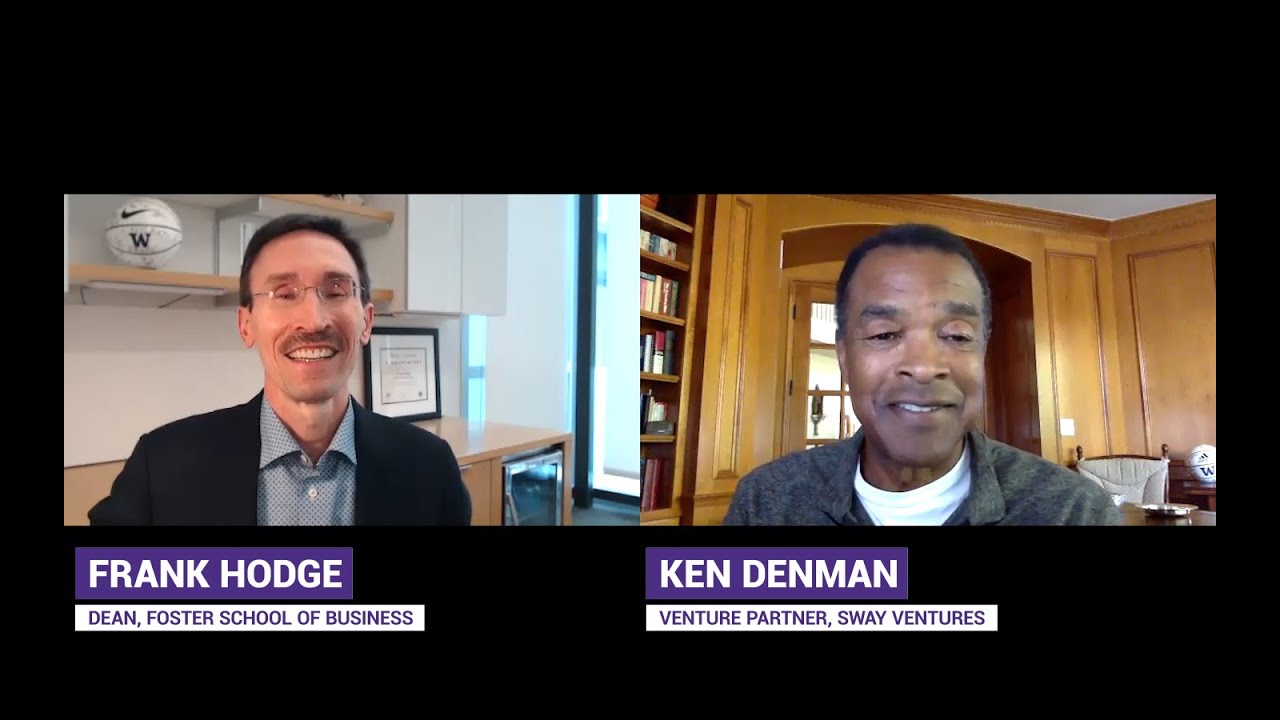
In a CTIA 2010 interview, OpenWave CEO Ken Denman outlines the company’s role as a mobile‑internet innovator serving roughly 75 mobile operators and 35 cable/MSO customers. He introduces new announcements focused on helping operators move from defensive data‑traffic management to offensive revenue generation. The centerpiece is the enhanced Passport service, an inline notification and charging engine that alerts users in real time when they approach data‑usage thresholds and offers on‑the‑fly purchase options (day passes, extra gigabytes) to avoid bill shock and increase monetization. Denman then details a partnership with Nielsen, combining real‑time network usage data with Nielsen’s sociographic and demographic segments to create a contextual advertising insight engine, integrating behavioral analytics and location (GPS) while acknowledging privacy concerns. He predicts video will dominate up to 70% of mobile traffic by 2012, creating storage challenges as rich‑media messaging grows; OpenWave aims to provide “infinite” mailbox solutions for operators and subscribers. Finally, he comments on the expanding ecosystem of new players (Amazon, Google, Sony, etc.) and asserts that a collaborative, multi‑player environment will benefit the industry. The interview emphasizes operator‑centric tools, data‑driven advertising, and future‑proofing network services.
Chapters
TranscriptAuto-generated · 10 min
Hi, it's Rich Turrani coming to you from CTIA 2010 in Las Vegas. Today on our program we've got Ken Denman with OpenWave. He's the CEO and we're thrilled to have him on our program. Thanks for watching. Ken, how are you?
Great. It's nice to be here, Rich. Thanks for having me.
So you've got some big announcements at this show, but could you give us a 30-second overview just on your company first, please? Great.
Yes, I'll be happy to do that. OpenWave is a leading innovator in the mobile internet space. We have a long history of innovating in this space. We compete today in the contextually aware mediation and IP messaging space in particular. We have about 75 mobile operators around the world that we enjoy the pleasure of serving today, and we also provide service to about 35 MSOs or cable companies around the world.
Now, in terms of your announcements, could you give us a little insight on the things that you're launching this week?
Yeah, Rich, we're really excited about a couple of the announcements that we're bringing to bear. Our industry is dealing with a mobile data tsunami that's coming at it in a very big way. And operators are looking for solutions that will help them— solutions and tools that will help them navigate it. In effect, you know, at some level, paying defense. And we have a lot of great tools and solutions that we've announced over the last several weeks to address those concerns and to provide options. This week we're focused on a couple of things that help the operators play offense. And we're excited about those. For instance, the first one is our— an improved Passport offering. Passport is a service of OpenWave's that is an inline notification and charging engine, effectively, that that allows operators to sort of in real time notify their users when they reach certain thresholds of usage. So for instance, if a user had a 5 gigabyte package on a monthly basis, when they reached 80% of that package or 4 gigabytes, they would get an inline notification on their device that they had reached that threshold and alerting them. So you avoid bill shock. But it's also important that you just not notify them, but you play offense.
Right.
And you offer the user Options. And so now you can say, do you want to buy several day passes to get you through the end of the month? Click here and it's done, invoice ready, charged on your bill. Or would you like to add an additional 2 or 3 gigabytes to the month at a certain price? So providing a range of options that really let people consume and use with a great user experience on the fly. So we're excited about that one.
So by offense, you mean it's a way for carriers to kind of proactively take control of their networks and find ways to monetize.
That's exactly right. So it is— obviously operators are focused on optimizing mobile data traffic across their networks for obvious reasons. They want the user experience to be strong for all users, but more importantly, the more capability and service they can provide, the more money they're going to make. But beyond sort of managing the The overall data flow and making sure that they can avoid network blockage. There's a real opportunity to, as I say, not just play defense but to say, look, in this window, in this time, in this way, in this package, I can offer you more service. I'm going to provide it to you such that you can make a decision on an impulse. You can make a decision in real time. You don't have to come into a store and make a decision. You don't have to go online. Boom! You can make a decision right now to consume.
So in terms of challenges that operators have, are there any challenges beyond what we've talked about?
Yeah, there are challenges, additional challenges, and not just for the operators but for other people who want to have a relationship with the industry. For instance, advertising, mobile advertising, is still a largely experimental area. Lots of promise, but it hasn't actually really been delivered yet. We had an announcement today that we hope and believe could be part of moving this industry forward or this opportunity forward. We announced today a partnership with Nielsen Company, a leading information and media company. We are working with them to build an insight engine leveraging their sociographic and demographic information and the 66 segments that they track. combined with the contextual information that we have of real-time network information on user behaviors and traffic patterns on the network. When you bring these 2 groups of information together, it provides an opportunity for the advertising industry to have a real shot at having a common language with the mobile industry. We believe this could be the beginning of Allowing advertisers to enjoy the pleasure of being able to deliver great content to a user specific to their particular circumstances and therefore increase greatly the opportunity that they're going to present something that's of interest to the subscriber. We'll be providing this really as a tool and for the benefit of the operators primarily.
So is it, is it Integrating any behavioral analytics too, or is that a different area of the market that doesn't play?
It absolutely is integrating behavioral analytics. So it's integrating behavioral analytics from the perspective of the subscriber in terms of what's going on in the network, what are they using, what are they doing, but at the same time comparing that to broader information that we know that is also behavioral, that's maybe not real-time, and this is the information that's on the Nielsen side, that's more sort of database-driven. So if you take the real-time information that we have in the network about what someone might be consuming or enjoying right now, and how the network is performing, and combine that with the database information, we have an opportunity to present better and more timely and hopefully more relevant options to users.
Especially when you throw GPS into the equation. Exactly. I mean, I know that privacy advocates are probably concerned to some degree, but at the same time, if we get beyond the privacy challenges, the benefits to the advertising community will be so great that it makes sense to me anyway that more and more wireless broadband offerings could be subsidized by that advertising revenue. So it could turn out to be a win-win for consumers as well as for advertisers. Yeah.
Exactly. So we're very focused on enabling the operators with the capability. They will manage their responsibilities very well. We're very confident in that. But it's absolutely an opportunity. And you mentioned location specifically. When we talk about contextually aware, when you think of mobile becoming the default and how you get context for mobile, one of the starting points is location. There's no more, maybe, important context than location from a mobile perspective. But there are other contexts that are also very, very relevant. And when you combine those with, again, this sort of database of sociographic and demographic information, I think we have an opportunity to turn the corner with mobile advertising.
I agree. So what's next for the company?
Well, we're very focused on driving forward with a focus on the things that I've talked about, but also on helping operators survive the implications of video. Video in particular are having a massive impact on networks. We think that by 2012, as much as 70% of the traffic, of the content on mobile networks could be video-related. And so when you think about that and you think about the fact that we're seeing increasing amounts of multimodal messaging, that is social networking and the impact that social networking is having, is certainly a contributor. The fact that many individuals want to have simultaneous sessions up on their devices, and they might be, you know, on Twitter and Yahoo and Google, Facebook, all at the same time. These kinds of things are going to tax mobile operators. We want to help solve some of those solutions, bring some of the solutions to that problem. If you think about the fact that increasing amounts of rich media are being appended to messaging of all forms, there is a second-order problem that's going to be coming at us. And we think that second-order problem is around storage. And when users are appending rich media to messages, it tends to increase their emotional quotient, their sense of the value of those messages. And therefore, they probably want them stored longer. And we're seeing that in our business today. Our cable operators, our mobile operators that we do business with are increasing— are requesting increasing amounts of sort of mailboxes, increasing sizes of mailboxes, and they're looking for ways to do elegant storage. The goal for us is to help bring infinite storage, or the perception of infinite storage, to our operator customers as well as their subscribers. So there's a whole lot of very cool problems out there that we want to turn into opportunities.
Well, that sounds very exciting, and I'm looking forward to The ability to have infinite storage on my mobile network as well going forward. So if you can enable that, fantastic, and allow the carriers to make money while you're at it.
Absolutely. We want them to do well because that's how we get paid.
That's fantastic. And we want them to do well because we also want them to reinvest in faster networks so that we can surf more quickly on the go, right?
Yeah, we haven't seen anything yet. The reason that we want mobile operators to do well, as well as the new players, by the way, we haven't talked about them and we don't have time to do that, but There are a lot of new players coming to the space that I think are additive, and a rising tide really does lift all ships. So the fact that Amazon, Sony, Google, Yahoo, I could go on and on, Nokia, Ovi, the fact that these folks now are viable, real players and service providers in their own right is not a negative to the industry, and I don't think it's a negative to operators. It's really a matter of everybody finding their role, doing it very well, and I really think it's going to be great for the industry.
I'm looking forward to seeing you back on the program and talking about the progress. Thanks, Ken.