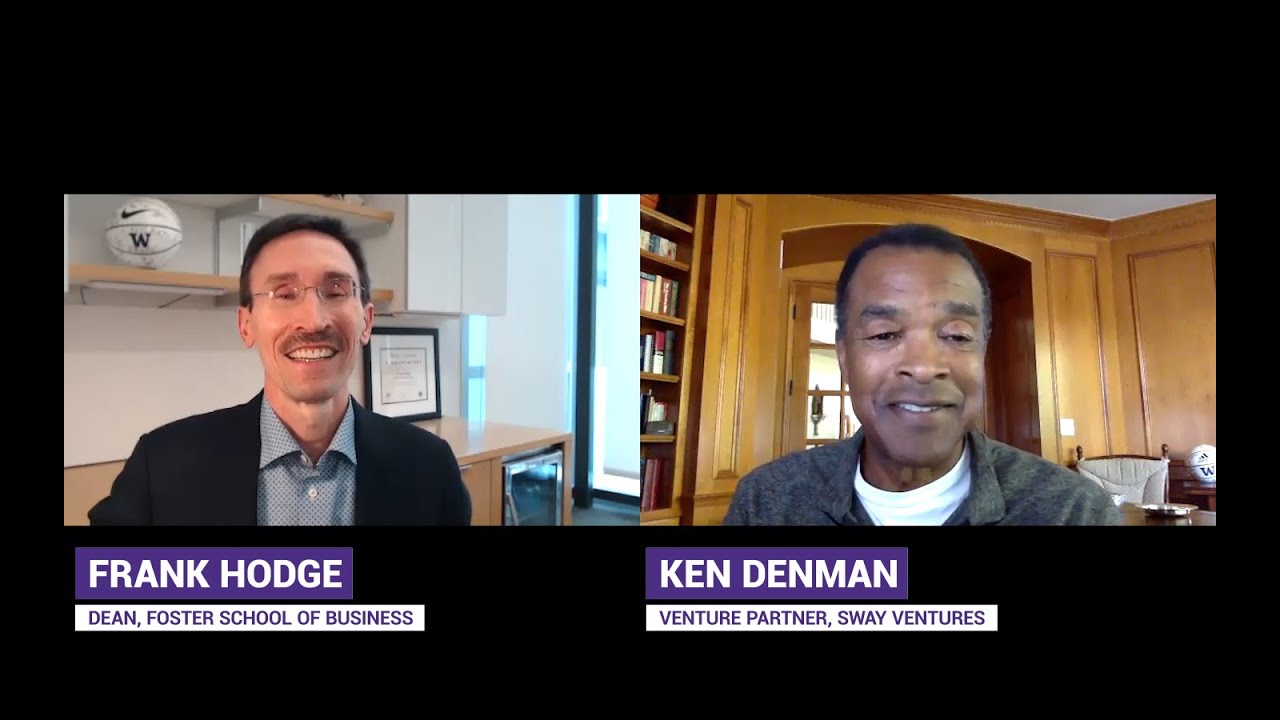
In this TMC Newsroom interview recorded at the CTIA Wireless Show, host Rich Turrani speaks with Ken Denman, CEO of OpenWave, about the company’s three strategic focus areas. First, OpenWave tackles network congestion through its Media Optimizer solution, which uses multiple techniques to extend available bandwidth and recently announced a partnership with Juniper to integrate Media Optimizer into Juniper’s MX router platform via Project Falcon. Second, the company pursues price‑plan innovation, advocating for dynamic, user‑centric packaging that moves beyond static tiered plans, leveraging subscriber usage data to offer personalized, value‑based bundles. Third, OpenWave aims to monetize the mobile ecosystem via its Implicity/Amplicity platform, built on HTML5/WebKit, enabling developers to create cross‑device applications and allowing operators to expose billing and data capabilities through APIs; Sprint is highlighted as the first carrier customer. Denman emphasizes execution, product rollout, and customer bookings as the next steps, expressing confidence in the value these innovations bring to operators and subscribers.
Chapters
TranscriptAuto-generated · 11 min
Welcome to the TMC Newsroom. My name is Rich Turrani. Thanks for watching us today. We are at the CTIA Wireless Show in Orlando, Florida. On our program, Ken Denman, who is with OpenWave. He is the CEO. Ken, welcome to the show. How are you?
Thanks, Rich. It's great to be here. I'm doing well.
So we haven't talked in approximately a year, I believe it is, since the last time I saw you in the Las Vegas show. That's correct. And I was hoping we could catch up on some of the exciting things happening at your company.
Great, happy to do it. We've got a lot going on.
So if we can just start with the 3— you mentioned 3 areas of focus for your company. If you could go through that for our viewers, I was fascinated and I'm sure they will be too.
Well, absolutely. First of all, one of our key areas of focus is network congestion control. We do a number of really cool things to help with that. It obviously is a major problem going into the mobile data tsunami. The second area of focus for OpenWave is what we call price plan innovation. This is a major opportunity for mobile operators as they think about how do they manage their bandwidth and also deliver a great user experience in the face of scarcity of capacity. Capacity at times, but also in a timeframe where they want to be more aggressive in terms of packaging and presenting value to their customers. The third area of focus for us is ecosystem monetization. Operators are also looking for ways to participate in the mobile ecosystem and all the over-the-top services that are going on around them. They have value to add to the equation, and they need the tools to be able to participate. So those 3 areas are areas of focus for us.
So if you had to talk to me a little bit about carriers and customized pricing, maybe you give me some fascinating insight into things that could happen in the future with carriers. Share your insights, please, on just some of the things that carriers should think about in terms of customized and flexible pricing models.
Well, from our perspective, one of the keys is thinking about the user experience and how you're presenting and packaging and delivering value to subscribers. So from that perspective, we see a world moving forward where it's really going to be about how users consume media of all forms and how they consume applications, how rich media impacts their lives. Therefore, We believe that operators are going to want to have the intelligence to understand what kinds of media, what kinds of applications, what kinds of rich content are consumers interested in availing themselves of. And if they can understand that, then they can begin to think about value propositions and how can they move away from tiered pricing where it feels to subscribers like they're reducing value, giving them less and charging them more. Right. And moving to an environment where they're actually, based on the user's habits, saying, look, we see that these particular premium services, this particular premium content is what you really want to avail yourselves of, and therefore we're going to make a package that's specific to your requirements, specific to your interests, and we're going to package that and put a price on it. That represents more value to you, not less value. And maybe that package and at that price represents unlimited usage for those premium services, and other things may be incremental. But the things that you most value have a great price point on it and hopefully a great value. We think that's the real tier pricing that we're going to see in the future. Not sort of rote gold, silver, bronze packaging, but packaging that is more specific to you as a user or people that look like you, you know, as an anonymous group that we will help operators identify and help them also present the solutions and give you an opportunity to press yes and say, yes, I want that right now. I want to purchase it instantly. I don't want to have to call anybody or talk to anybody. I just want it. I see the package, I value it, let me have it.
Now, one would imagine that the stickiness of such a package, if done correctly and if the subscriber responds is going to be immense. You just can't— you won't lose those customers, right?
Absolutely. We believe that the ability to dynamically understand subscribers and deliver value like this is the height of stickiness. It is the essence of, these people understand me, they're presenting me offers that are extremely relevant to how I work and live, and in fact they're so relevant That when I get pinged or I get notices from this particular operator, I'm incredibly interested because there's so much value here.
So I was hoping we could talk a little bit and do maybe a deep dive into network congestion control and what's happening in that space and your recent news and how customers are responding.
Well, we had some big news several weeks back, a few weeks back around our next step We have for over a year now, maybe a year and a half, been working on helping operators solve the problem of network congestion control. Obviously, it's an issue, unfortunately, but the reality is bandwidth is constrained at the same time where the mix of services, content, capability that subscribers want is growing. Devices are getting more powerful. Networks are getting faster. faster, but the reality is we have limited bandwidth. So operators can continue to sort of invest in, and will have to invest in, cell sites, backhaul, and all that good stuff, but they know they just can't continue to build infrastructure. They need network intelligence to be able to handle the severe congestion that appears in certain areas at certain times. And if they can do that, if they can dynamically control the bandwidth that's available or extend the bandwidth that's available while not harming the user experience, then they're in a much more powerful position. And that's where we want to take them. So we developed something we call Media Optimizer, which has multiple techniques to both extend the bandwidth that's available to subscribers but also delay investments and allow operators to invest in other areas. And that's where we've been focusing. The news that we announced at Mobile World Congress actually was that we have a partnership with Juniper, and we are going to be integrating Media Optimizer within Juniper's MX router platform, and we'll be interoperating with the Junos platform via APIs. And this is all part of their Project Falcon. But this was the first partnership that— and the only partnership that Juniper announced around media optimization. They're building a great ecosystem. Kevin Johnson and that team really do believe in an ecosystem approach. We're very happy to be part of it. And we have a clear path now for how we will move to 4G as part of the Junos architecture, and our customers are very excited about it. As one of our large customers said to us recently, you are clearly relevant to our 4G plans now. We really understand how you fit, we understand where you sit in the architecture, and we are really excited about the direction. So it's music to my ears.
So what's happening in the world of Applications and having to develop applications for multiple devices. I know that's another area you're playing in. What are you doing there to help customers?
Yeah, well, this is another important area. Obviously, we want to help operators go on the offense. By that I mean it's important to obviously manage your bandwidth well, but we think as important, if not more important, is to participate in the mobile data marketplace that's going on around operators. and the over-the-top revenues that represent a phenomenal market opportunity. So we have developed something that we call Implicity. And Implicity is based on the thought that the browser as a— on the browser as a development platform. And we believe that WebKit moving to HTML5 is the development platform of the future. It allows developers to quickly develop and deploy applications and deliver content across OSes and across form factors, across different kinds of devices. There's a lot of fragmentation out there. It's very costly. It's costly to subscribers. Frankly, it's costly to developers. This is a way forward to get to a common development platform and really allow the economics, frankly, And the numbers in terms of lower cost and more developers getting to play. We're really excited about this. Sprint is our first customer and has signed on to lead the charge here, but we have a ton of customers in the pipeline who are very excited about this development. These are operators I'm talking to. So they see a real opportunity to leverage the data, the information, the billing capability, all of the things So these are things that operators have an advantage or have sort of a unique position around. The question for operators has been, you know, how do they expose this capability to the ecosystem? Via our Amplicity platform, we're able to use APIs to give developers a way to move quickly, deploy, write once, read many, and that's the name of the game. So we're, again, another So
what's next for the company?
Well, it's all about execution now. We need to do— we're focused on delivering, you know, against our roadmap. We have product today, we're selling today, we're really excited, so that's a focus. And then, you know, we're going to continue to take these products forward. I'm not going to go further than that in terms of looking for new things. I think we've got a lot on our plate. Our customers are excited about seeing the results. And now it's about delivering value to them and making bookings happen and touching subscribers around the world via the innovation that we've delivered over the last year.
Awesome. Well, thank you so much for being on the program, and good luck with all of the interesting things that you're doing.