Freedom Money Bill Liao Episode 23
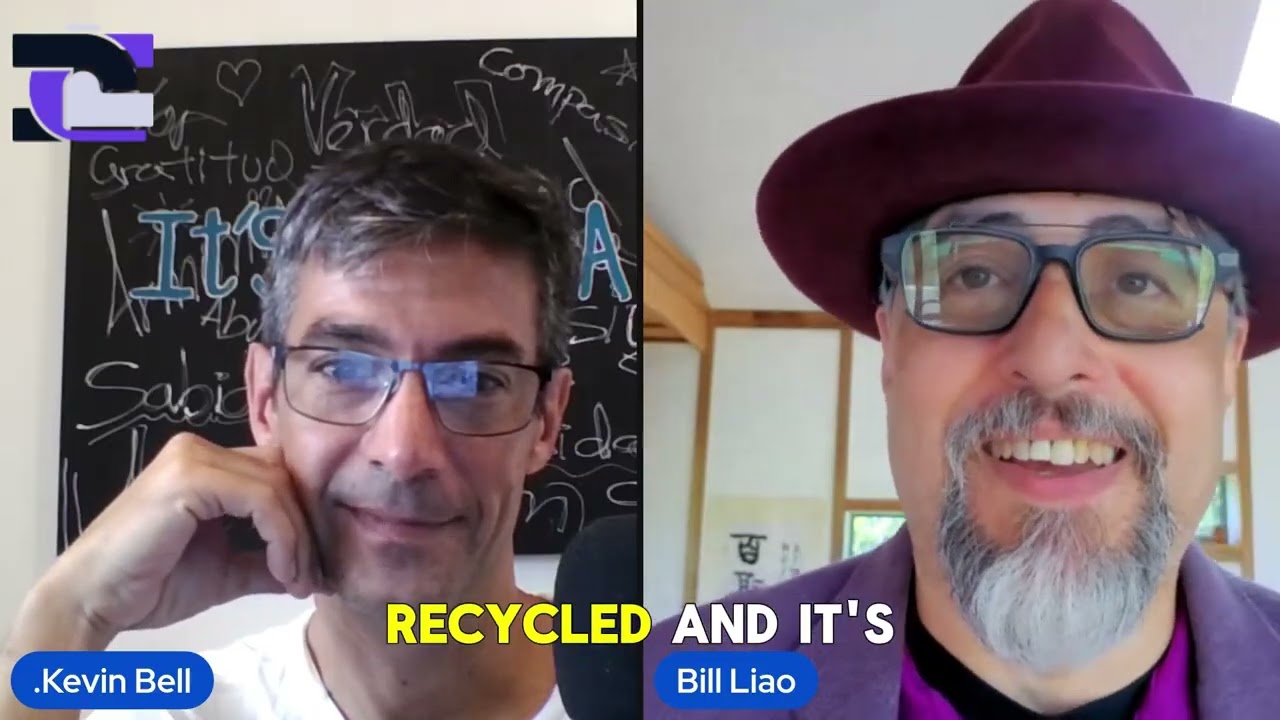
In this episode of the Freedom Money Podcast, host Kevin Bell, CFA, interviews Bill Liao, a serial entrepreneur, investor, and founder of initiatives such as CoderDojo and Blue Forest. Liao recounts his early skepticism toward Bitcoin, viewing it initially as a distributed database, and later recognizing its value as an intersubjective belief system akin to other currencies. He critiques the current centralization of Bitcoin mining, custody, and infrastructure, arguing it diverges from the original vision of a decentralized, widely distributed network. Liao discusses the cultural durability of Bitcoin, noting its name recognition and potential quantum threats. Shifting to his broader investment thesis, Liao emphasizes biology and biomimicry, highlighting nature’s zero‑waste, self‑organizing systems as models for sustainable human and planetary health. He describes founding CoderDojo, a self‑replicating, low‑cost coding education movement, and its merger with the Raspberry Pi Foundation, illustrating decentralized learning. Liao outlines traits he believes separate successful startups from failures: clear articulation of purpose, accountability, visibility, and strong teams. He expands on the concept of “inter‑subjective actualization,” using his Blue Forest project—over 110 million trees growing and livelihoods improved—as an example of collective impact. The conversation touches on misconceptions about universal basic income, referencing a rat study misinterpreted as showing resource abundance leads to societal collapse, and argues that purpose and roles are essential. Liao also compares edge AI’s low energy footprint to centralized AI, suggesting that future Bitcoin could be re‑engineered to run on basic Android phones, enabling mining and transactions via cheap, solar‑powered devices. The episode concludes with Liao’s view that a backlash against wealth concentration will drive broader Bitcoin decentralization and invites listeners to follow his writings on Medium.
Chapters
Welcome to the Freedom Money Podcast, where we explore Bitcoin, financial freedom, and building in the Bitcoin space. Before I get started, I'll just add that this podcast is for educational and informational purposes only. Today on the podcast, we have Bill Liao with us. Welcome to the podcast, Bill.
I am very happy to be here, Kevin.
We're excited to have you. I know, uh, you have some Bitcoin-adjacent things and involved lightly in the Bitcoin space. Um, and so maybe I'll start, I'll start there. Your introduction to Bitcoin, how you became familiar with Bitcoin, and where that's led you today.
Yes, uh, my introduction to Bitcoin was way back when. Um, and you know, I, I have to admit that when I first encountered Bitcoin, I was pretty deeply skeptical because it basically occurred to me as a techie, as a distributed database, um, and, uh, not a lot else. And so I was like, well, how does a distributed database become a currency? Now, at the same time, I was very familiar with local economic trading systems, which are essentially virtual currencies without a blockchain.. And they were very popular off and on throughout times of hyperinflation and money shortage and credit shortage. And the thing about those local economic trading systems, some of which still exist to this day, is that they highlight the fact that, as Yuval Harari would put it, any currency is an intersubjective belief.
So it's a shared hallucination.
Yeah, I think it's a subjective belief. It is a shared hallucination in a way. It's less hallucinatory. Like, you can't really spend a shared hallucination in the way that you can spend a Bitcoin. And later on, as a fund, SOSV, you know, in the days when it had China Accelerator, which was a generic accelerator program, SOSV invested in a company called BitMEX and a young founder called Arthur back then. And it was a relatively small investment, but, and boy, did it increase in value. So I have seen massive capital flows generated across various cryptocurrencies. When I look at the underlying infrastructure of Bitcoin, I see two things that are difficult to reconcile. One is the net transaction volume that you can conduct over the Bitcoin chain, and the other is the somewhat lacking distribution of the chain itself, given that there's a fairly massive amount of consolidation. Um, and so I think what was originally envisaged, that people would run Bitcoin miners habitually, and so you'd have a lot of miners distributed across the world, uh, in a very diffuse network. The reality is you've got hyper-concentration of mining in very small regions controlled by relatively few people, which is kind of the opposite of what was originally intended. Now, in terms of the actual value of Bitcoin itself, I think that if you consider all currencies and subjective beliefs, Bitcoin itself has enough name recognition now that it's likely to hold its value for the foreseeable future. It's funny, even Deutsche marks are valuable to collectors, even though Germany went to the euro. And in fact, certain Deutsche marks are very valuable. So things can hold value just by virtue of the fact that enough people believe in them. And I think Bitcoin is well and truly established in that, in the zeitgeist. And is unlikely to just completely go away as many people predict, with one exception. That exception is if the quantum protections don't work, and the cryptography that makes Bitcoin unique basically evaporates. Some person could mine all Bitcoins instantaneously.
Yeah, I'll, I'll kind of forego the quantum argument. I think it kind of entails one party just taking this huge technological leap ahead of all other parties, but I don't really— I don't know, we may agree to disagree there. But I, I think you do bring up some very interesting points on the miners. And it's, to me, it's something that runs not just across mining but across, you know, all a number of areas where centralization rears its head in the world of decentralized Bitcoin finance. And so whether that's the miners, whether that's, you know, Bitcoin Core, whether it's the institutionalization and custody at Coinbase or what have you, the ETF and strategy and all these centralization, um, maybe, maybe you can give, give me a bit of your thoughts on centralization or decentralization and how it impacts this.
So, you know, one of the core arguments that was expressed to me by enthusiasts at the start and we don't know necessarily the inventor despite multiple claims, so, uh, we can't know whether this is truly true or not, was that the essence of the idea is that centralized finance is part of the problem because of the moral hazard it contains. So you centralize control of money in very few hands, and there's a fairly outsized chance that it's not going to be fair. And by fully decentralizing, the argument was that there would be more fairness. I'm not sure it's worked out that way. Uh, I have seen a lot of get-rich-quick kind of stuff. I've seen a lot of concentration of wealth, whether that's been by the miners or whether that's been by the exchanges or whether that's been by the speculators. You know, it doesn't seem like the original intent is being fulfilled. And, you know, for instance, if for, for instance the wallets themselves had a maintenance cost associated directly with maintaining Bitcoin. In other words, if everybody's wallet was a slight miner and was, you know, a blockchain provider, that would decentralize it back again. As it is, the wallets tend to be also owned by the civic providers. Um, and so again, you're seeing a concentration of power that makes it very difficult to reconcile the idea of, uh, you know, uh, a currency for the people, quote unquote, uh, and just another equivalent to fiat with slightly different technology.
Um, so, uh, but we'll come back to Bitcoin. But I think what I'd like to do is I'd like to kind of get a better understanding of your fund, your investment thesis, and, you know, where, where you see value these days, where you see opportunities.
So my purpose in life is a world that works for all living things because civilization thrives. And the core thesis that I have is that biology is a really, really powerful access to that. And most of the work that I do is related to healthcare biology, like human and planetary health. And, and the reasoning is fairly simple. Um, nature doesn't have a waste stream.
A way to dream?
Doesn't have a waste stream. Like, there's no trash in nature. Yeah, there's poop, and poop is immediately recycled, and it's 100% recycled. Like, there's no, there's no trash heap. There's no landfills. There's no, you know, high-temperature incinerators. Yeah, yeah, nature is really good at recycling everything and upcycling everything and continually growing things. And that model is biology. And so if you invest in finding biomimicry and finding clever biological solutions to things, there's a very good chance that you're going to mimic nature's lack of trash, which is ultimately good for our planet and ourselves.
Yeah, I mean, it was my experience was when I left Canada and moved to Costa Rica about 3 and a half years ago and built a house on the beach. And I'm looking at these things, like all these creatures, the birds, the crocodiles, the whales, the whoever, the vultures that come in. You know, I had a whale wash up on the shore, and by the end of the day it was gone.
Yep.
And you know what, what you're saying is exactly right, but What I find so interesting is, you know, we live in a world where, like, there's no central authority telling them what they need to do. They can figure it out on their own, and it's something kind of inherent in them telling them, whether it's coordinating with the wind and where food is and evolution and, you know, the environment's pointing them in a certain direction, but nobody's, you know, nobody's telling them, nobody's putting them in cages, regulating the temperature, giving them food, and, you know, telling them what to do. And you can see that they're living their optimal life. Indeed. Anything that we do that kind of You know, I feel like in, in the human condition, a lot of those, you know, we put these walls around and some people are more likely to bump into them than others. And, um, what we're doing when we do that is we're kind of taking away the tails of society. And you're coming, bringing up nature, and this is the way I see it too, is, you know, if we're not letting those tails develop, then we're kind of restricting evolution from happening on a human level as a species by centralizing things. And I don't know, I don't know that everybody sees that as clearly as I do. But is that kind of your view of this too?
I think I have a closely adjacent view. Firstly, let me just say, for those of your viewers who are deeply religious, they would suggest that indeed something is telling all of nature how to do everything, and that would be God. And that's fine, whether it's God or whether it's, it's beautifully evolved self-organizing systems is actually irrelevant to the point. When I, uh, co-founded CoderDojo, which is a free club for kids to learn to program computers, it was with the concept of creating something that was self-organizing, and it worked extremely well. So CoderDojos tend to be self-organized, they spread themselves, and they tend not to consume a lot of money to do that. In fact, back in the day, pre-COVID, you know, when we started out back in 2011, we got to, uh, 127 locations in 25 countries running every week with really high-quality coding learning happening for thousands of kids, and we didn't even have a bank account. So that was the power of the distributed system, where it self-organized around a set of contexts and core principles and worked. And we have examples of that all around. I mean, you could argue that the entire open source software movement tends to be, uh, decentralized in that way and self-organizing.
Was there, was there anything you did, Bill, in, in terms of I want to dig a bit deeper in terms of the origin of CoderDojo and kind of what made you realize there was this need and opportunity to build it in that way.
Well, the, the reason that I knew that there was a need was because as an investor I kept seeing startups that had no technical people, and when I looked at the sources of technical people being schools Computer programming had been removed from both the primary and secondary education systems around the globe. So computer programming had become an entirely tertiary education province. And knowing coding as I do, and knowing that it's a language skill, by the time you get to university, if you're learning coding, you're never going to be as fluent or creative as if you learned it when you were a kid. And that's true to this day. You know, those kids that learn to code far outperform someone who learns it later in life. Whether that's just by dint of the years or whether that's by actual brain development is an open question. I would argue it's both. So my particular view, given that I homeschool my kids, is that the education system is another example of those centralized things. And so I wanted to make sure that Codedojo was self-replicable and very light on centralization so that it could thrive. And that works to this day.
Amazing.
It sounds like a lot of design thinking though.
I mean, it, it It's an incredible story in terms of the number of people, the continued growth. What's next for, for CoderDojo?
Well, CoderDojo merged with Raspberry Pi Foundation many years ago, and between CoderDojo's code clubs and Raspberry Pi Jams, it continues to thrive and grow. So there's no limit.
Amazing. I don't know if it's ironic or what the word is, but here in the community I moved to, to Costa Rica, there's a youth empowerment center and surfing school, the Surf Dojo. And the dojo is a very precise word, and, you know, really it's about teaching these kids empowerment, you know, nature.
I actually, actually Dojo means temple of learning in Japanese, and it is a structure that predates the Western education system, and it's heavily focused on experiential learning, not teaching, and it's heavily focused on sharing what you've learned in order that others may learn it.
Interesting. Now, now I know what it all means. Um, and, and so through this, and, and I guess through every, you know, touched a number of different, uh, startups and, and other things, but you've seen, you know, probably thousands of early-stage founders at this point. One of the questions I'm always interested in is what, what separates the ones that, that make it versus the ones that don't.
Sure. I mean, there are so many things that we look at. I would say that the one job of a CEO is to synthesize clarity out of ambiguity. And so founders that don't religiously and relentlessly make what they're doing clear to their teams are not going to work in the long term. I would say that One part of that clarity is accountability, and startups that have no accountabilities also fail pretty religiously. I would say that startups that fail to articulate what they do with that clarity that we were talking about also tend to fail. And if they can't get visibility for that clarity, they also tend to fail. I would say that startups that don't have a team tend to fail. You know, there are all these stories of the lone hero who wins and does everything. When you dig behind that, you almost always find a team of people working really hard that are actually making it happen. And, you know, if you're, you know, You can be successful, absolutely successful, and not be a great person, by the way, provided you have the priority.
I don't know if that's true. Depends how you define success.
Well, if your business still continues to run and grow. Yeah. Are you a happy, fulfilled, actualized, Human? No, in many cases not. I think one of the things that we've been sold a lie on is this idea that self-actualization is the highest human ideal. That's actually a lie. You can be fully self-actualized and totally miserable. It's not true. What is true is that intersubjective actualization. Just like money is an intersubjective belief, the pinnacle of human existence, as far as I can see, is powerful intersubjective actualization, where we— where in the old saying, the tide raises all the boats— where we work together to achieve something. That's where you really find the pinnacle.
I, I agree with that 100%, Bill. I think You know, just being in shared creation with other people is really, uh, yeah, yeah, that's the calling.
Especially when it's properly actualized, you know, like where there are accountabilities and you do actually make something meaningful together that, that changes something for the better. There's no better feeling. You know, when I, um, co-founded Blue Forest with an idea of partnering with you know, some of the poorest village women in the world to tackle climate change hand in hand, uh, you know, that, that movement that we created has gone on to be extremely durable. And, you know, we don't talk in terms of trees planted anymore, we talk in terms of trees growing. And, you know, having 110 million plus trees growing that are supporting many, many millions of livelihoods is a massive and something I'm very proud of, a massive amount of intersubjective actualization. And that is true pleasure when you see, like when I see a trap cam of a wildcat traveling a wildlife corridor that didn't exist before what we did. And the person maintaining that trap cam I know is living a better life than she ever had previously, you know, that's a real cause for celebration. And, and that's my daily WhatsApp feed, right?
Yeah, no, you should be extremely proud, Bill. I mean, we're, we're all proud of you and the work you're doing. And it, you know, it's interesting to hear the impact it has on people. And I'm, you know, kind of thinking of shifting the, the conversation back to the Bitcoin world, but The— I don't know, the thought I'm having is kind of like there's, you know, I see Bitcoin solving a lot of problems in the world and not just specific financial problems around payments and, you know, store value and other things, but, you know, its impact into other things. And I think what the situation you're describing is, you know, you're empowering people And there's additional benefits to that that kind of spill into other aspects. And so do we want to go back to Bitcoin or talk about the benefits of sustained work?
Well, I don't know if you're familiar with the research that was done that produced the Beautiful Ones.
The movie?
No. So there was a study done on rats where they were given infinite resources in a confined space. And over many, many generations and many, many iterations of this study, the colonies of rats would die out. They'd be a boom, there'd be a bust, and then there'd be a steady state for a long time.. And regardless of how many resources they had, eventually they would go extinct. And the Zeitgeist said, oh, well, you know, if you make things too cushy for an organism, the organism dies. And that's an incorrect interpretation. What was really happening was that the society broke down and the rats lost their roles. And without a role, they just started obsessing on something. And this showed up in the male, young males who had no role. Like they didn't have a mate to find, they didn't have, like they just had nothing to do. And so all they did was eat, sleep, and groom. They were the most beautiful rats in history. And that's the story of the beautiful ones. Now, that unfortunate interpretation of that has penetrated society to the point where many people believe that Universal Basic Income would be a problem and would actually lead to, you know, the death of our species because they look at the wrong interpretation of that data. Universal Basic Income with many available roles for people to carry out in society, especially into subjective actualizing roles, is the opposite. It's a way to thrive. And to the extent that that can be decentralized with a tool like Bitcoin, I think that there could be a very bright future for a lot of people. There are, as we said earlier, many problems to solve with something like Bitcoin, both that it could solve and also that need to be solved with it. For that to become true. And unfortunately, there's this overconcentration of wealth and this overconcentration of power associated with all cryptocurrencies. And the resulting moral hazards have been quite stark and, and, and quite deleterious. So there has to be some way of recreating it or creating it anew or doing something such that you avoid the trap of overwealth concentration. If you look in nature, there are certainly top predators, apex predators in natural systems. Even they have something that limits them. Currently, there's no limiter. I call it billionaireism. It's not capitalism, it's a mutant form of capitalism where there's just this toxic overconcentration of wealth. To the extent that Bitcoin can be reimagined, repurposed, redistributed. I think there's a bright future for fixing many ills, and it hasn't been done yet.
It's, you know, I don't want to dismiss it, and much like what you were saying before about quantum, it's more of a timing issue. But when I think about this, I do think It's still in the first inning here. There may be, over time, I would expect distribution to be wider. I don't know to what extent that's happening now, but that would be interesting to know.
I think there's an interesting proxy to that in AI. A, um, AI slot video, uh, you know, let's say 90 seconds long of AI slot video on a Premier AI platform, you burn about enough energy to cook 80 steaks on a barbecue for that 90-second video. If you have a local copy of Gemma, which is Google's free-to-use edge AI on your phone, and you ask it a perfectly reasonable question about contract law, your phone won't even get hot. So there's a power and an environmentally reasonable thing to do with edge AI. I think Apple is about to launch some very capable edge AI hardware that makes AI both very sustainable and also much easier to distribute. And, you know, with Gemma— Google's Gemma, for instance— you could put that on an average Android phone. So, you know, somebody anywhere in the world at almost any income level now can get their hands on an average sort of Android phone, run that AI and a copy of Wikipedia locally, and that's a huge step up from where they are.
Huge. No, I, I, and to me, to me, Bitcoin is the same for money. There's like, you know, a quarter of the world that can't access banking services, and here you go, there's no, no lineup here, better money. Well, I mean, the government, there's a fixed supply, you can transfer it electronically.
Yeah, look, all those things are true. I, I mean, that experiment has been proven within Pacer, right? Which predates Bitcoin. The infrastructure to make Bitcoin work, the high-end cryptography, those sorts of things are quite processor expensive. That basic Android phone may or may not be able to do what's needed to have a distributed proper Bitcoin.. But it's— and it could certainly run a pretty decent AI model and have a copy of Wikipedia. So if I was to be reimagining Bitcoin, I would be reimagining how you tighten up the algorithm such that it could run on a basic Android phone as a miner and as a wallet.
I'm not ready to reimagine Bitcoin yet. But I have really enjoyed this conversation.
Code refactoring happens all the time, Kevin. It should be happening. Code refactoring happens all the time. Just because you have a piece of code that works doesn't mean that it's optimized.
For sure. No, absolutely. But I think you were changing the rules to chess.
There's a difference between optimizing and Chess has had many different rules over the years.
So I guess, I mean, I've enjoyed this a lot. I'm curious, I mean, we've spoken a lot about different things— AI, uh, evolution, Bitcoin. What, yes, what, what's next in the Bitcoin space specifically though? From your vantage point?
Well, I honestly think that there is a bit of a backlash happening against wealth concentration. And so that reimagining that I'm talking about, where anyone with a basically capable phone can realistically mine and transact Bitcoin, uh, I think— and, and that phone being solar-powered and remote and still connected, whether that's by a distributed network or whether it's by a satellite network or whether it's by, you know, other means. I think that that— or whether it's even just local trading communities using the technology as a local infrastructure base— I think that's going to happen. And I think it's going to happen because it can't not happen. You know, there's just too many people getting access now, learning how to code themselves, learning what their devices can and can't do. This, it's too cheap now to avoid it. Yeah, we used to talk about the $100 laptop, right? A $15 phone now has more power than a $100 laptop.
Yeah, well, the $100 laptop, you know, would be like a $200, $300 laptop now because of inflation.
Actually, you can get a Raspberry Pi for still, you know, 50. You know, like inflation hasn't killed it.
So, Bill, I really appreciate your time. Where can people find you when they want more information?
Well, I'm a relatively unique person. If you search Bill Liao, there are only a few of us. So, and I'm the one with the hat. So every platform, Medium, I've written quite a bit on Medium and I continue to slowly put out articles there that I fervently wish that people benefit from. Good.
Well, I will check those out and again, appreciate your time and thank you for your insight.
You're very welcome, Kevin. It's been a pleasure.
More from Kevin



Why Bitcoin is more than an investment I wrote the Bitcoin Bible #podcast #interview #bitcoin


When banks freeze accounts the importance of self sovereignty #podcast #interview #bitcoin

Retirees inflation can erase your savings read Bitcoin Bible #podcast #bitcoin #investing


Taxes KYC and How Governments Are Making Bitcoin Harder #podcast #bitcoin #interview #investing

How SeedSigner Sparked the Bitcoin Hardware Store #howtoearnmoneyfromusstockmarket #bitcoin

The three essentials wallet node and miner #podcast #howtoearnmoneyfromusstockmarket #bitcoin

How the Bitcoin Hardware Store was born #podcast #bitcoin #realwaystomakemoneyfromhome