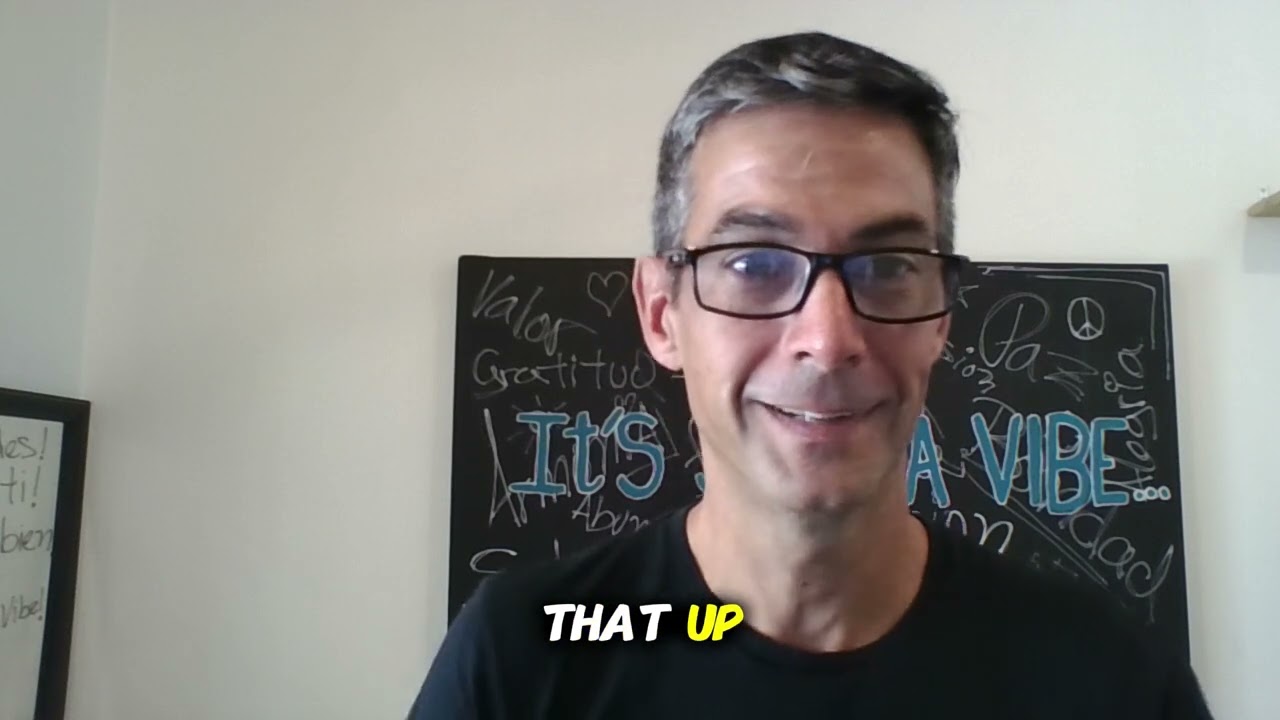
Freedom Money Ronny Avendano Episode 27

In this episode of Freedom Money, host Kevin Bell, CFA, interviews Ronnie Avendano, Cadena Bitcoin’s country manager for El Salvador. Ronnie recounts his personal path from a finance student in Canada to a Bitcoin advocate who moved to El Salvador during the COVID‑19 pandemic, discovered Bitcoin Beach, and became convinced of Bitcoin as a hedge and a sovereign money system. He explains how the Bitcoin Hardware Store in El Zonte was born out of a need for a physical, low‑barrier venue where newcomers can learn about self‑custody, purchase hardware wallets, nodes, miners, and related accessories, and receive hands‑on guidance without judgment. The store’s mission is “Bitcoin for everyone,” and it runs weekly educational classes covering topics such as the mempool, BIP‑110, mining, and Bitcoin fundamentals. Ronnie outlines a long‑term vision where, by 2030, everyone would own a wallet and the store would no longer be needed, and he discusses plans to replicate the model throughout Central America, especially in Spanish‑speaking markets where financial freedom is most urgent. He contrasts the regulatory friction emerging in Europe and North America (taxes on unrealized gains, KYC/“Kill‑Your‑Customer” laws) with the demand for Bitcoin in the Global South, arguing that Latin America’s economic instability makes Bitcoin adoption a practical necessity. When asked about competition, Ronnie notes the rise of advisory services and the importance of staying focused on mission despite market negativity. He advises builders to ignore detractors, stay mission‑driven, seek supportive communities, and keep building resilient Bitcoin infrastructure. The conversation ends with a reaffirmation of the importance of self‑custody and the financial empowerment Bitcoin can provide.
Chapters
Welcome to Freedom Money, where we explore Bitcoin, financial freedom, and building in the Bitcoin space. Before we get started, just remind everybody that this podcast is for educational and informational purposes only. Today on the podcast, we have a very special guest, Ronnie Avendano, uh, from San Salvador today. Welcome to the podcast, Ronnie.
Thanks for having me on. I'm actually on my way to San Salvador. I live about an hour away from the city, which I like, you know. I'm in the middle of the jungle, uh, in the middle of, uh, kind of nothing, but it's not too far from the city. And so when I need to go up there, I make sure that I have a full day, and today's one of those days. Another full day here in a beautiful Bitcoin country. Thanks for having me.
The, uh, the one thing I've noticed in my experience with El Salvador is the roads coming into and out of San Salvador are much better than the roads coming into and out of San José in Costa Rica.
I've heard that. I've heard a lot of that, uh, being repeated over and over again, that El Salvador has some really good roads. Now, being from Toronto originally, you know, the roads there can be pretty choppy. So El Salvador, yeah, I gotta say, the, the roads here, they're not perfect, right? We do have our potholes because we do have serious rain, we have some serious wind, but the roads are in pretty good condition, especially when you compare to the rest of, uh, America.
Yeah, so we've got a lot to get into. Um, just to let the people watching know, Ronnie has joined Cadena Bitcoin as country manager for El Salvador, and I'll let you speak a bit to that. Um, helping with some compliance and regulatory challenges that, that, uh, all regulated businesses need to deal with, and having your expertise and experience is invaluable Given that you've just recently started here, I wanted to focus most of the discussion on the Bitcoin Hardware Store. But before we even get into all of that, I'd like to hear in your words, uh, journey to Bitcoin, how you discovered this technology and, uh, when you fell down the orange pill rabbit hole.
Yeah, you know, I get asked questions quite a lot, and I had somebody ask me the hardware store yesterday filming a documentary. And, um, so, you know, still top of mind. And the very simple answer is I was not a Bitcoiner in Canada, and I was living there. I was born there, and, you know, went to school, went to Ryerson. I know you're familiar with that, uh, that neighborhood, that school. Studied business management, studied, uh, did my BCom there. So my background is in finance, is in business, and heard about Bitcoin originally around 2016, 2017, and then made my first purchase of Sats on a custodial exchange, obviously. I think it was 2017, 2018. So very briefly did I go through my very first cycle of, you know, swings of ups and downs very briefly. And, you know, it cycled in 2017, 2018, and went from like $800 to $8,000, kind of just like overnight. And I was like, oh man, this is cool. Like I made some money pretty quick, but then it dropped down immediately and I kind of forgot about it. Right. It was just some money that was sitting on an exchange. That was 2018, 2019. Obviously we know what happened in 2020. 2020 with COVID and myself having a Salvadoran passport decided that I didn't want to spend my COVID winter in Canada. I already didn't like winters in Canada. I think you can attest to that. So I decided I'd come down to El Salvador since I had a Salvadoran passport. I'd come down here and experience maybe what life would be like here in Central America. And I traveled Central America. I'd been Guatemala, I've been to Honduras, I've been to Nicaragua, I've been to different places in, in the region, or just kind of became home simply for the fact that I had my passport here. But when I landed here, the very first place I went to was, um, Bitcoin Beach, El Zonte, right? And it was simply for the fact that people here based around, you know, when you compare to the rest of the country, there's a lot of English-speaking folk here. And of course, for me, I wanted to feel comfortable. And so my Spanish wasn't the best. I wasn't born or raised in El Salvador. So what ended up happening was I just wanted to spend time in a place where I could assimilate a little easier. And that just happened to be El Zonte. That just happened to be Bitcoin Beach. While I was here, I started attending meetups. And going to Bitcoin events because I have that financial background. And I had seen— again, I started seeing in 2019 Bitcoin going from $8,000— well, I think it was $4,000, if not $4,800, somewhere around there— all the way up to $20,000. And I was like, oh man, like, I'm a genius again. Like, I'm so smart. So I came down here, I started talking to the folk, I started seeing Bitcoin rise up as we're going through COVID. I didn't really understand why at the time, obviously Bitcoin was going up. I mean, for me at the time, Bitcoin was a hedge against inflation, right? And it was a hedge against the unlimited money printing, especially what I saw during COVID So that made sense to me, and that's what got my curiosity going. That's the reason that I attended ended these meetups here in El Salvador. As I'm going to these meetups, I'm starting to meet— let's call them seasoned Bitcoiners— people that have been in through a couple of cycles and understand a little bit more as to what's happening. And it's pretty much where I learned that you need to study Bitcoin, and once you know what Bitcoin is, these drawdowns don't hit you emotionally as much as they would if you don't know what you're holding. So we're going through this again right now. Bitcoin, you know, hit— went below 50% of a drawdown, you know, or I guess higher than 50% of a drawdown. I think it's like 55% of a drawdown from its all-time highs. And, you know, I feel super comfortable right now. Again, I'm not living the best life that I think we were all living at $126, but I'm very comfortable with what holding, and I'm looking to continue to buy more. And that's because here in El Salvador, people use Bitcoin as money. That's because here in El Salvador, the Bitcoiners that come from all over the world are using Bitcoin as a way to interact and share value. Whereas if you were to use, you know, if you're coming from Europe, if you're coming from Asia, if you're coming from North America, you're coming from Canada, you're not using the same currency. So that creates a bit of a conflict between vendors, merchants, and, and consumers and customers, right? So from a freedom standpoint, it just makes all the sense in the world. And that's what got me to dig deep, really, like even more into what Bitcoin was. Because again, going back to 2022, 2021, Bitcoin was starting to crash from $69,000 down. But I'm meeting people that have so much conviction in what Bitcoin is and what its value is that I wasn't even— I wasn't even worried. I was like, oh, down? Like, we're down 80% from all-time highs, and I'm— this is the moment where I'm like, all right, I'm spending everything that I have and I'm going 100% into Bitcoin. So that was 2022.. And then the very first thing that I— well, the very first thing that I did was obviously get my Bitcoin off of an exchange into self-custody thanks to Bitcoin Beach at the time and to Seed Signer. Shout out Seed Signer. If you guys don't know about the Seed Signer project, it is an awesome, fantastic, open-source Bitcoin self-custody project, right? And so the Seed Signer team was down here in El Salvador for the very first Adopting Bitcoin conference, and that's where I got to learn how to use a Seed Signer device. So as I'm going through the Seed Signer, learning how to use an air-gapped, uh, an air-gapped hardware wallet, because the very first that I got, I'm not going to mention the name, it starts with an L, ends with an R, and it says Ledger in between, was an absolutely terrible, uh, hardware wallet to use for security. So I started using the Seed Signer And that's when I started learning about really the importance of open source projects, the ethos of Bitcoin, decentralization, non-KYC, like all these terms that we hear a lot of these days. That's where the journey of the Bitcoin Hardware Store started, because there was nowhere that I could go on just like a random Wednesday like today. I could go to go pick up a wallet or pick up a node or grab a miner. And I said to myself, man, you know, I, after I finished Ryerson, I started working with a company called Sherwin-Williams, and they're one of the largest retail brands in the world for at least for paint-wise. And I said to myself, it'd be really cool if there was an experience. You know, most people don't know about paint and they don't really care. They grab the bucket, they put it on the wall, and that's it. That's as much as they need to know. But I know a lot about paint, unfortunately. And, you know, being at a Sherwin-Williams store, when people would come in and ask me, you know, what kind of paint, what color paint should I get, I'd start asking them questions. Well, like, what kind of wall do you have? What, you know, what kind of prep are you going to be doing? Is the wall currently painted? And it was those similar questions that I saw a lot of big people new to Bitcoin make, you know, like, where do I store my Bitcoin? How do I use the network? Where do I buy my Bitcoin? Bitcoin? And all those answers vary on where you live, on, you know, what— if you want a single sig, do you want a multi-sig? How comfortable are you with using a laptop versus a phone? These are different, these are different ways of using the network. There's no one solution that fits all. So that's where the idea of the Bitcoin Hardware Store came from, is, is there a place that exists where answers, you know, questions be answered in a very personal way, obviously following security protocols. You know, we're never going to ask you for your seed, you're never going to generate a seed inside the store that isn't just a demo seed, and we'll walk you through all those things. So we want it to be a place where people could come ask any type of question, just like as if it was store and not worry about being judged. There is no wrong answer, there's no wrong question. Just come and ask away and we'll try and help you out and get you on to the Bitcoin network. So that's the, um, that's the origin story of the Bitcoin Hardware Store.
Um, yeah, I mean, it, it's amazing. There's a few things I want to dig into there. Um, I think the first is In, in terms of the mission with the hardware store, so it's, you know, for those who don't know, this is a physical location in El Zonte with an actual store with product, physical Bitcoin products that you can hold and touch that have value.
Um, so that you need to connect in a secure manner to the Bitcoin network. Right? So we're talking hardware wallets, nodes, and miners being, you know, the big three, which I would, I would highly suggest that anybody interested in Bitcoin, or I would recommend that every person has these three things for themselves, right? Because your, your wallet, that's your offline self-custody, super secure way of your Bitcoin. Your node is the way to verify your own transactions. Your node is your way to verify that everything on the network is true. And then the miner, so that you can have— or not yourself, but, uh, you know, whatever transactions you deem to be valid, uh, if you are the lucky miner that gets to mine a block, then you are the one that chooses which transactions get through. And so I think those three things together are extremely powerful for creating a sovereign individual. So those are the three things that we focus on. Now, of course, we have books, we have board games, we have products even from other Bitcoiners who come to El Grande and leave their product there for us to kind of sell. You know, we're talking about, uh, you know, right now someone just left me a prototype or something called the El Zonte Block Clock, which is pretty cool. I've had people leave me sunglasses, metal, you know, metal engravings and all sorts of different stuff. But the main thing really is Bitcoin self-custody in your wallet, Bitcoin self-custody via a node, Bitcoin self-custody via mining, and then obviously your backup metal, your backup metal seed phrases and all that sort of stuff. So it's a physical place you can come to in El Salvador, in El Zonte, where we do use Bitcoin as money. Because I, I haven't used dollars in a really long time, and so I thought this would be the perfect place to set up a store.
In my notes here, it says beside the question, it said bonus points if it, you know, promotes freedom and inclusion. So we'll give you those bonus points. Uh, education is a big part of this. For you, Ronnie. And it's, um, you know, it's pretty incredible, uh, you know, the resources that you've available for new people, the classes you have. And, you know, if you can just touch on how that touches the mission.
Yeah, so I mean, our mission is to have Bitcoin accessible to everyone. We want everyone to be able to use Bitcoin, but most importantly understand Bitcoin. And again, going back to the purpose of the store, most people do not know who to contact with Kevin Bell questions, right? They don't know where to go for their resources. So one of the things that I've been doing since we opened is every Monday at 5 PM you can come to the Bitcoin Hardware Store and you know that I'm going to be giving a class on a specific topic about Bitcoin. So yesterday we did a talk— or sorry, Monday we did a topic about the mempool, right? We're talking about what is the mempool and what it is and what it isn't, because I think there's some confusion as to what it is and what it isn't. And then also how this current, uh, conflict, internal conflict that's going on with Bitcoin and BIP-110 and, you know, spam.
We could let the meme pool now, correct?
So yesterday we were going through, or Monday we were talking about as an individual user that maybe isn't even aware about the difference between, you know, BIP-110 versus Core, but how this is going to affect your transactions over the next 30 days. What do I see? What do I foresee in the mempool pool over the next 30 days. And so we were just talking about, you know, thinking about whenever there's this big moment in Bitcoin, like during the halving, we saw fees for transactions spike to about 500 sats per vByte. So that ended up being about $50 transactions, right? And so these are the things that I want to communicate to the Bitcoin, to the to the new Bitcoiners or Bitcoiners that are looking to learn, that, that technical ability yet, is listen, the BIP-110 stuff is extremely technical and you don't need to understand it. But what you do need to understand is how to use Bitcoin during these high volatility moments. What are the potential possibilities? You know, what are the theories that we think could happen if there is a chain split? How does, how does the normal person know how to use Bitcoin during these high tensions? What are the possibilities? Is there going to be a chain split? Is there not going to be a chain split? What is a user-activated soft fork? These are the questions that we answer to your everyday Bitcoin people. Because believe me, the Salvadoran that is here using Lightning every day, they do not know about BIP-110 versus Core. And they probably don't care. They're just accepting Bitcoin because it is money. Now, you need to understand what is happening and how to use the network while there's this high contention moment, and that's what we want to focus on here at the Bitcoin Hardware Store. So, you know, we have classes on the mempool, we have classes about mining, we have classes about what are BIPs in general, and these, these classes that we do on a weekly basis— I've been doing them for 2 years. These classes that we do on a weekly basis, those are strictly to complete the mission. Bitcoin is for everyone, and we want everyone to understand Bitcoin. And when I opened up the store, I was very honest with myself about, you know, what does an exit strategy of the Bitcoin Hardware Store look like? What is, what is the absolute best case scenario for the Bitcoin Hardware Store? Scenario for the hardware store was, you know, by 2030 everybody has a wallet, everybody bought their, their wallets from the Bitcoin Hardware Store, and we no longer have to exist. That is, you know, best case scenario for me, is we've done such a good job so quickly, hyper-Bitcoinization, that there doesn't need to be a Bitcoin Hardware Store anymore. Just to kind of give you an idea as to what our mission is.
That's, uh, in terms of what you're building right now with the Bitcoin Hardware Store, I, I think we've spoken about it a bit, and I think there's a plan to expand through Latin America. Um, I want to bring it to Costa Rica with your help, of course. Um, but can you talk about that a little bit?
Yeah, I mean, during what, what are the, the pieces I would say that motivated me to start a store, as I mentioned to you, was BitSigner. And a lot of these projects, even like Cadena Bitcoin, that come to El Salvador for conference season, you know, will be around for Bitcoin Historical, will be around for Adopting Bitcoin, but then they're gone. Like, you know, it's funny enough, you and I didn't even meet in El Salvador, and you were down here for what, 3, 4 days maybe? But we did meet. We didn't need— but we didn't really have a chance to like to talk, and I didn't even get a chance to ask you about Dana and really get the details of it. And so that was one of the things that I just thought, this is so unfair. This is such a great community, this is a great event, this is, you know, an opportunity for lots of people to learn about the different protocols in Bitcoin, the different apps in Bitcoin, the different ways to use Bitcoin. This shouldn't just be a 3-day event. This needs to be 365, you know, 24 hours a day, 7 days a week, 365 days a year. And it's that same reasoning that we want to be all over the world, and specifically Central America, considering the fact that my main focus really is the Spanish-speaking population. I think Bitcoin is a fantastic technology. And it's just— I'm seeing it grow. I'm seeing the real opportunity be in the, uh, in the south, they call it, right? In the south. And that's the equator. And I don't under— I don't know, and I'm not going to make any assumptions, and I'm not going to say anything outlandish, but for whatever reason South of the equator, there are lots of people looking for financial freedom, and they're looking for it today, right? Or they were looking for yesterday when their currency crashed, when their government wasn't allowing them to use their money. Now, north of the equator, people don't seem to have or put that much importance into it because the financial system works for now. The financial system is allowing you to remove your money for now. It's not really your money if it's in the banks, right? But the financial system works. In Canada, you have Interac. It doesn't charge you really to do any transfers. Uh, the US, you have, you have PayPal, you have, uh, Zelle, Cash App, which aren't really charging you, right, do these transactions. But in the South, that stuff doesn't exist. So it just makes makes so much sense in the fight in the, in the Global South, especially in Latin American countries, that you see places like— see places like Argentina, you see places like Cuba, which are just adopting Bitcoin at unbelievable paces. Uh, Bolivia right now, I think they're using USDT because they've run out of physical dollar bills. So in the Global South, Bitcoin is just making it's, it's more urgent, I would say, to find a solution because of the problems I'm having. And this, I'm going to put this very simply, right? I, I, and I truly believe everybody can have the price that they deserve. So in the, in the North, where people make $100,000 a year, they, they can afford, you know, quote, they can afford to miss out on Bitcoin, have, you know, multi million-dollar homes and whatever, whatever. But in the global south, like, these people need to afford Bitcoin right now when it's still under $100,000, when it's still cheap in my eyes. So they're paying attention to it because this is the price that they deserve.
I have a theory about this, and I find I talk to people in this space, like an extraordinarily high percentage, And I don't know if it's correlation with, you know, coming from Venezuela, Argentina, and these, these countries where maybe they're more inclined to see government corruption corrode the money faster. Um, but you don't really have to explain Bitcoin to somebody, you know, south of Mexico and the value proposition, because these people intuitively know that their are corrupt and from them through the money. And in Canada, in the US, it just seems like, I don't know, there's a high percentage of people who think that government is looking out for their best interests, which, you know, I'm not, I'm not sure is always the case. I do want to switch gears here, Ronnie, because— and you've kind of faded out a bit, so I hope, I hope you have good connection. But I'm curious really on two things. Have— are there many other competitors in the Bitcoin hardware space in terms of an advisory that you see? And then what do you see as the next step in the space? I think you're going through— there we go. Did you hear any of that? Yeah, I was just saying, um, you know, I'm curious.
I agree with Right, so I'll give you a perfect example, uh, like right now, and we were talking about this recently, and it's gonna happen slowly, right? But people are starting to wake up because in the Netherlands, right, you now have— and in Australia I think as well— you now have the government taxing you on unrealized capital gains. So this is money that you haven't even made yet and the government already wants to start taking it from you. Uh, in Europe there is the Know Your Customer, or as Francis says it better, and I really respect Francis, the full Bitcoin, the Kill Your Customer law, right? Why is it called the Kill Your Customer? Why do we call it the Kill Your Customer versus Know Your Customer? Because these, you know, the governments have to hold your information and serve, uh, you know, keep it on a server, but they're not really doing a good job. Of keeping our data safe. And you know, in the, in the customers— we have customers from all over the world, right? I have customers from Europe, from the European Union, telling me that their exchanges will not send you your Bitcoin unless you sign off that the, that the address you're sending it to belongs to you. So you have to sign a message with your key in order for the exchange to send you your Bitcoin, right? So we're already starting to see in these developed countries how they are using or not using Bitcoin, or how they are, you know, starting to create a lot of friction for their population. And so slowly but surely— I don't know how it is over there in Costa Rica, Kevin, but I can tell you that in El Salvador we're seeing a flock of Europeans, a flock of Canadians, just a whole bunch of people moving down to El Salvador because they're just completely fed up with what's happening in their home countries. And now, you know, I've been here in El Salvador, and going back to your original question, why do I think growth in Latin America is so important? It's because of that. Is because they, they've already got tyranny, that tyrannical government. That was a perfect example. They've already experienced government corruption, and they've, they've experienced it and lived it through, through decades. And when you go to a place like Guatemala, when I go to a place like Honduras, when I'm in a place like Mexico, there's a lot of Bitcoin understanding because they understand understand how the corruption is fighting against them, and so they see Bitcoin as a potential exit, uh, of the, of the— Amen.
So, uh, I guess last question. I know you got a busy day, and, uh, I look forward to making more content about Kadena and educating people, and I think you're definitely the guy to do that, uh, with me. So What is your advice for builders in the space?
Well, okay, so I would probably suggest— and again, this is, you know, I really thank for that question because I've only been doing this for 2 years. I have focused entire, you know, every second, every day of the last 2 years focusing on Bitcoin and Bitcoin education. And right now I would say we're kind of going through a bit of a tough time considering all the infighting. I want to say that's happening in the space, and that can keep a lot of people from building. And so what I would say to the people who are building, build, is stay focused on your mission. Find out, find out your vision and stay focused on that, because there's going to be, well, the outside world telling you that you're building something that doesn't doesn't really work or that no one's going to use. But believe me, that's, that's all especially coming from, again, from the north where people don't see the value of it yet, where Bitcoin is only a speculative asset, it's not really money yet. It's coming from a place where people don't see the value of what Bitcoin brings yet. But you continue to build If you see a gap in the market, put your head down. Don't listen to anything. Maybe not— don't listen to anybody, but don't listen to any of the negative negativity coming out. The market will tell you whether you're doing a good job or a bad job. Listen to the market. Listen to the general market. Listen to the trend. Don't, don't pay attention to all the negativity because it's going to come. Stay focused on what you're building. Get around people who are looking to build the same thing. Like, one of the great things about the community here in El Salvador, and I'm sure the community in Costa Rica is the same, is that you have people that have similar mindsets, want to accomplish similar things. And so they're the ones who are actually going to give you advice that pertains to what you're trying to build. Find that that will support you, find that community that believes in you, and keep your head down and just continue to build. Because, uh, yeah, Bitcoin is the future, so we need everybody to be doing this together and to build for the community.
I think that's, uh, extremely well said. I thank you for that, Ronnie. I'm not going to take up your whole day. I know we got a bunch more content to do on the educational side, but I wanted that, uh, we introduced you properly. I appreciate the time.
Yeah, no, awesome. I mean, I'm excited to continue educating people about Bitcoin. As I mentioned at the beginning of the podcast, my background is finance, and so when I saw what Dana Bitcoin was doing, you know, one of the biggest— one of my biggest fears when educating or helping others is making sure that they understand the importance of self- Now I'm not saying you need to self-custody everything because that's not for everyone, right? But the importance of self-custodying your Bitcoin and diversifying your earnings and everything you've got, something that you truly control, is extremely important. So if you can do that with Bitcoin and then you can just use, you know, financial strategies that have existed for forever and doing it in the self-custody portfolio manner where there is no third party. Like, to me, coming again from a financial background, I was like, this is— that's what— that's what most about what you're doing, Kevin, is what excites me the most about, uh, joining the team, is that I think this is just an absolutely fantastic financial product, and the market will, will see that.
Well, appreciate the support, Ronnie, and, uh, appreciate all your help and look forward to talking soon. Thanks again.
More from Kevin



Why Bitcoin is more than an investment I wrote the Bitcoin Bible #podcast #interview #bitcoin


When banks freeze accounts the importance of self sovereignty #podcast #interview #bitcoin

Retirees inflation can erase your savings read Bitcoin Bible #podcast #bitcoin #investing

Taxes KYC and How Governments Are Making Bitcoin Harder #podcast #bitcoin #interview #investing

How SeedSigner Sparked the Bitcoin Hardware Store #howtoearnmoneyfromusstockmarket #bitcoin

The three essentials wallet node and miner #podcast #howtoearnmoneyfromusstockmarket #bitcoin

How the Bitcoin Hardware Store was born #podcast #bitcoin #realwaystomakemoneyfromhome