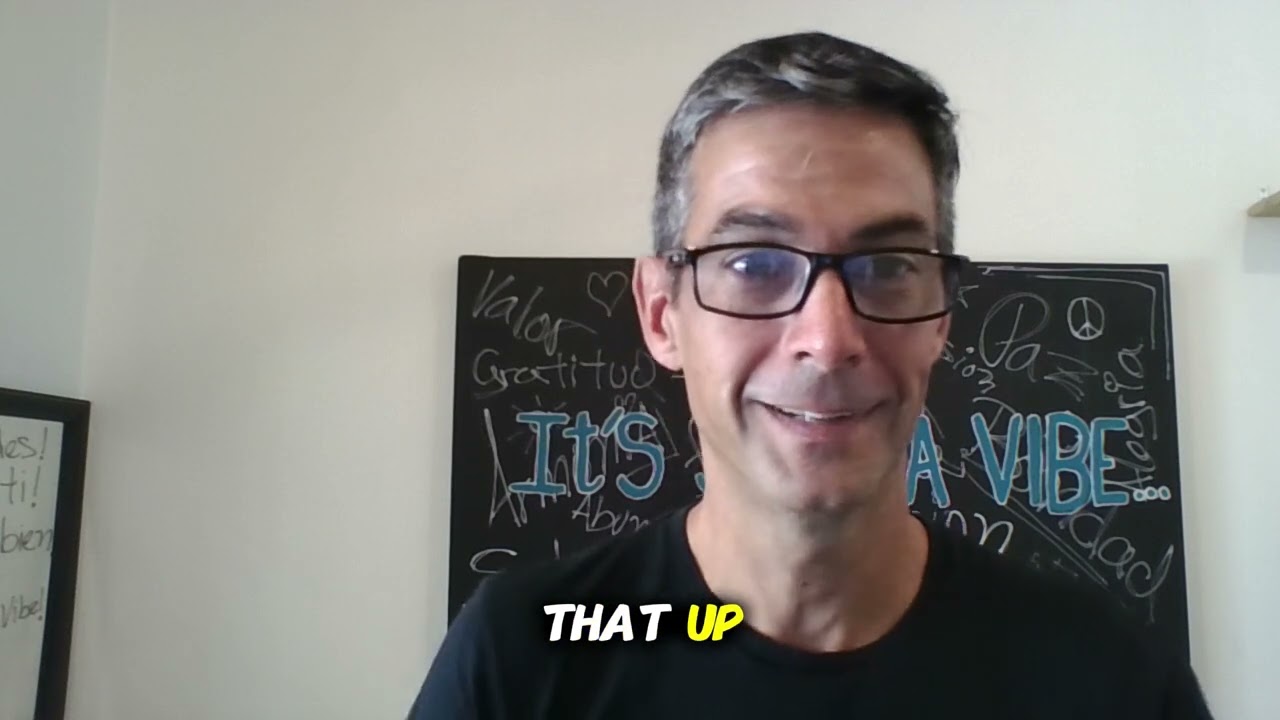
Freedom Money Episode 28 with Antonio Duscio

In this episode of the Freedom Money Podcast, host Kevin Bell, CFA, interviews Canadian Bitcoin pioneer Antonio Duccio, early Kadena adopter and author of The Bitcoin Bible. Duccio explains why he was drawn to Bitcoin in 2012, emphasizing its anti‑inflationary nature, portability, and the ability to control one’s own money without reliance on banks or governments. The conversation shifts to recent Canadian bank‑account freezes tied to the trucker convoy protests, illustrating the risks of custodial systems and the broader threat of governmental seizure of assets. Duccio stresses the importance of self‑custody (“not your keys, not your coins”) and recounts how his experience in traditional finance informed his advocacy for Bitcoin as a sovereign store of value. He describes the motivation behind writing The Bitcoin Bible—a beginner‑friendly guide that consolidates common questions from friends and family about buying, storing, and using Bitcoin. The dialogue then moves to Kadena’s non‑custodial lending platform, where Duccio highlights the appeal of retaining full control over one’s Bitcoin while earning yield, contrasting it with the counter‑party risk of centralized exchanges and DeFi protocols that have suffered failures (Mt. Gox, Celsius). Throughout, both speakers discuss the systemic issue of monetary inflation eroding wealth, using examples from Canada’s pension and housing markets, and urge listeners to consider Bitcoin as a hedge. The episode concludes with information on where to find The Bitcoin Bible and Duccio’s upcoming projects.
Chapters
Welcome to the Freedom Money Podcast, where we discuss Bitcoin, financial freedom, and building in the Bitcoin space. Today on the podcast, we have Antonio Duccio, uh, from Canada. I'm very excited to have Antonio here. Antonio is a user of the early adopter of the Kadena platform and, uh, very excited. Um, welcome to the podcast, Antonio.
Thanks, Kevin. So happy to be here.
What better way to spend a Saturday morning?
I know, eh? It's a beautiful day over here too.
And you're in Canada? You're near Toronto?
I am, I am. I'm just outside Toronto. Perfect.
And so one question I'd like to start with, with everybody, is really understanding their Bitcoin history. And so you've been in this since 2012, I think.
And so pretty close.
What did you see back then that most people in traditional finance miss today?
Well, I spent many years prior to that in the financial services industry. So when I started investigating Bitcoin, there were some key things that really stuck out for me. One of those was that this was an asset that was anti-inflation. It was inflation-proof. Nobody could print more of it, uh, and, uh, make what I already have in the bank worth less, basically. So that was, that was a key thing that got me digging into that rabbit hole, I guess you could say, you know. And then being in business for as long as I was and experiencing the ups and downs and, uh, dealing with banks and governments and regulators from my own business, I realized that this was an asset that I could control, totally control. I didn't have to rely on a government or a bank or some type of other central figure to allow me to use my own money, basically. So that was very important to me. And then Once I start, like I said, digging deeper, I'm thinking, "Geez, it's got these two great features that I can't get anywhere else." And then I realized it's not only like gold, an asset that I can buy and put under my floorboard at home. I can also use this as money. It's usable. I can send it to anybody. I can use it like money. So it's got all these great features. That I've just already mentioned. And yet I could still spend it if I chose to spend it. And it was easy to spend it. And I guess the last thing was that you can have all these assets built up. You can work your rear end off in your life to save money, to buy gold, to buy silver, whatever. But then you decide, I like to travel. I decide to go to Italy. Well, what do I do with it? All these other assets aren't easy to take with you. This I could even take with me anywhere I go. It's that easy. It's as simple as putting it in my pocket and getting on a plane. You can't do that with an asset like gold or silver or even your monies that you have in the bank. You want to try wiring it to another country or send it to another country, I dare you to walk into the bank and start that process and see what hoops you have to jump through. So in any case, those are the biggest factors that led me to really start looking and delving into this technology called Bitcoin.
I want to push, double-click on this idea of control and self-sovereignty. And so we're both Canadian. And Canada has a special place in my heart when they decided to start freezing people's bank accounts who donated to the trucker convoy. And, you know, in my life up to that point, I had, I think, been under this assumption that maybe government was trying to help people. But this was kind of a shocking thing to me. And never did I really question the idea that if I did all the right things, I would be able to get my money out of the bank. And so to me, that was something that kept coming back. And, you know, maybe, maybe you can talk about the importance of self-custody and, uh, you know, I, I, I, I, I could have—
I could run a whole seminar on just that topic alone, uh, but I'll, I'll, I'll keep it simple. People don't recognize, uh, how important that actually is, especially to what we're coming into now from an economic front, uh, you know, the storm that's ahead of us. I think a lot of people— that the truckers convoy is what really brought it out into the open, right? But you look at something even on a grander scale. You look at the U.S. government and how they've been able to use the financial system and the U.S. dollar and, and, and turn— and they weaponized it. They've been able to freeze bank accounts of countries like Russia. Look at what's going on with Iran. If it's not even their money, believe me, it's not your money. And they can do it to you even easier. In Canada here, I personally, my wife, friends I know, just for trying to send money to a Bitcoin company, have been frozen out. I've been debanked by some of the biggest banks here. No reason, doing nothing wrong except I sent a couple of wires to a Bitcoin company to buy Bitcoin, you know.
And it's funny because you see this stuff, you know, there's a wire service provider today that this week some Bitcoiners have come out and said that their accounts have been frozen. And I had the same thing trying to send money to a crypto exchange from a Canadian bank. Like, I had to go in, fill out multiple forms, you know. And yeah, I mean, it's a bit of a— Yeah.
And that's—
Sorry.
Yeah, absolutely. You're absolutely right, Kevin. For the average guy, they're trying to purposely keep it out of reach. They're trying to show you who the boss is. You can work 9 to 5 every day for the last 100 years and save all your pennies because you want to retire, then you go try going to the bank and withdrawing your money or asking for more than $2,000, you know. It's, uh, I think a lot of people, they trust the banks so much that they're going to be met with a rude surprise if they ever want to withdraw anything of substance, even to go on a holiday. And a lot more people are starting to see that, and there's a lot of reasons why that's happening. More people are seeing it now. Money supply, the whole thing, which I don't want to get into today. But more and more, it's becoming a common occurrence to the regular person who's been satisfied with keeping deposits or their savings at a bank. The other thing, again, coming from a business perspective, is the power of the courts in a country like Canada, especially for self-employed people. You can have your funds— a court or some judge can arbitrarily freeze your assets, snap of a finger.
So before this, I owned a mortgage brokerage in Canada. We dealt with a lot of small business owners and successful business owners. You know, the, the stories of, you know, people's accounts being frozen over things that they had no opportunity to even defend themselves.
Yeah, well, and, and that's the thing here. I've been in business my whole life, and any lawyer will tell you, uh, if, if you're in business, expect to be in court. You know, that's just the way it goes. We live in a litigious society, and, uh, in North America And the regulators— I fought the regulators with my previous business for years. I went, I had, I had a product which was brand new to the marketplace, and I went with the regulator here in Ontario from one day getting a letter stating, uh, we've never heard of this, please tell us what it is, to less than a week later getting a cease and desist order. Like, one day they don't even know what it is, and the next day they're arbitrarily given a cease and desist order trying to put you out of business, uh, and put the onus on you to defend yourself, get back. And, you know, like I was saying, we live in a litigious society, and even, uh, our legal system, it's not justice, it's a commodity. If somebody sues you, you better have the resources to be able to defend yourself or you're going to lose. They'll run you in the ground. We've all heard those stories and for reasons. And that's a big reason, like you said, frozen funds with the truckers convoy, which brought it very prevalent, brought it into the average household of seeing how simple it is to take your monies from you. But there's so many reasons why Bitcoin works just on that front alone. And like I said, I could spend a whole seminar discussing self-custody and why it's important.
But it's not even only money in the bank, right? Like when you're talking about physical assets, you can get houses and properties tied up in court processes and a bunch of other nonsense. Like it applies to really everything. And it's—
oh, absolutely, absolutely. And the reason I focus so much on bank accounts is because that's most people, that's The bulk of their assets, that's their investments. Everything is at the bank. They have their house, they have their car, and they got their money in the bank. That's just life. That's, that's why I focus there, cuz I can reach more people and have them absorb what I'm saying cuz they're actually experiencing it. They're dealing with the banks.
Yeah.
But you're right. It, it affects real estate. It accepts, uh, it, uh, impacts your stocks and bonds or whatever you have with a brokerage account. It affects everything. Safety deposit boxes, you know.
So switching gears a little bit. Sure. You know, you went and wrote The Bitcoin Bible. And so what was the moment that you knew that you needed to put all this into a book?
Okay, good question. You know, funny, because being in the investment world as I've been pretty well my whole career. If I would have looked at Bitcoin when it first came out, with really going into this rabbit hole and, uh, looking at recognizing all the features which makes it so unique, I would have treated it just like any other investment. You know, I would have bought it. And you know, you hear the stories— this guy had 1,000 Bitcoin And he ended up selling it all because it went up to $2 or something like that, you know. I probably would have been one of those guys too. It was an investment. And I recognized— when I recognized that it was more than an investment, it was a whole, uh, flip in the financial world, you know. It's a whole new system. That's what really cemented it for me. And at that point I started with obviously friends and family. Being in the investment world, I always get my friends and family that look to me for some type of advice or bounce things off of me. And I tell them all the time, put a portion of Bitcoin for all the reasons. And I could explain it 100 times. And we've seen the booms and busts in Bitcoin. Everybody's heard the stories where it goes up to $400, then it went down to 2 cents or whatever. I'm making those numbers up. You know, it was at $120,000 last year. Now we're sitting at around $65,000, uh, US dollars. Now we've all heard those stories, right? And so, but every time you have one of these boom and bust cycles, it seems like the same people, same family members, uh, same friends keep coming out of the woodwork and asking the same questions. And a lot of this, uh, a lot of these questions that they're asking are very simple. Things. Difference being, unlike myself, they usually don't spend a lot of time looking into it, uh, or because they're not using it yet, it seems very onerous or very difficult, which it's not. Like years ago, who would have thought we'd be paying with our tap in our phones? Or, uh, I remember when the first ATMs came out, the Johnny Cash machines. Here at the time, I think it was Canada Trust brought out the cards. You go to the ATM and you withdraw monies, and then you start to use your debit card as opposed to cash to pay for a lot of your items. It comes directly at our bank account. It took a long time to do that transition, but it's simple, isn't it? Everybody's doing it today. Hardly anybody carries cash anymore. We've become basically a cashless society. And this Bitcoin phenomenon, I consider it in the same boat. It's very simple, but because you're not using it, we tend to make it more difficult than it is. So what I decided to do is because I had these same questions, I said, "You know what? I'm going to document this for my friends and family. I'm going to start putting together how it started, where it's come from, all the features and benefits, how it's growing, why it's going to be around for a a long time, uh, how to buy Bitcoin, how to transfer to your own account or your own wallet. I'm gonna put it all in one place so whenever they want, they can look at it at their own pace, on their own time, and slowly start to immerse themselves in this, uh, technology. And that's the way you're going to learn it, is just download a wallet, play around with it. There's nothing that can go wrong really until you put your own Bitcoin in it. You know?
Yeah.
So I wrote a book, uh, and it's at the end of the day, it's an educational guide from A to Z, where it started, uh, and how to self-custody. Uh, it's got everything in there that the beginner requires to get going in Bitcoin and understand Bitcoin. So I did it for friends and family. I thought it was very important that they have a guide that they could refer to on their own terms and their own time.
No, I, I think it's incredibly important because what I find is, uh, one of the hurdles is this 100 hours of, you know, people like— I, you know, have a lot of friends in TradFi, people busy with young families, and people are like, you know, it's, it's some work that needs to be done for them to understand it and feel comfortable at the beginning.
So it's Yeah, and the book is written, uh, the book is purposely written in a format that it's easy to read. It's very easy to read and very easy to digest, you know. Uh, so what I like to tell everybody, you're going to whip through it if you're just gonna, uh, it's what I want you to do after you whip through it, go through it again, you know, read the little chapter, half a page or whatever it is, and then go and actually refer to the charts or the websites that I refer to and see how easy it is to look at what's going on using the website and applying what you get. Like how many people own so many Bitcoin, that's easy to find. It's so transparent. You just gotta know where to look. And all that is in the book. So go through it. You may find it very simple, but then go through it and slow it down and actually immerse yourself. Do maybe one chapter a day for the next whatever days.
So one of the things you touched on in the book and, you know, continue to touch on is this idea of not your keys, not your coins. And having been in the sector since 2012, we've seen a few, uh, centralized failures from Mt. Gox to Celsius and everything in between. Um, did you get sideswiped by any of that? Did any of your friends and family, uh, were they all able to avoid that?
Uh, no, fortunately, uh, not I or, uh, friends and family that I'm aware of. Uh, the biggest, uh, issue I see when it comes to things like that, or friends and family, uh, losing Bitcoin, is that they fall for scams. You know, they think Elon Musk is promoting something And they end up—
there's an airdrop coming.
Yeah, there's an airdrop coming, or send me whatever and I'm going to send you back, uh, 10 times more. Uh, I don't know, uh, people— and it's funny, being coming from the financial services background, even in regular, regular system, in the fiat system, the investment world, it's so prevalent, uh, you know, you You tell somebody, look, park your money here, you're going to make 10% guaranteed, and they'll hem and haw, but then they'll go walk next door and somebody will tell them, you're going to get 20%, you know, and they're all over it. They'll commit their life savings. I just don't understand. I don't understand that type of herd mentality, but it happens.
And yeah, and, and I think, I, I know that segues kind of nicely into to, you know, Kadena and what we do. And, you know, you do see a lot of this in the DeFi world where, you know, it's more and more yield, uh, you know, and I think that led to some of these blowups. And a lot of times, uh, you know, with these products, I say all the time until, uh, Kadena came around, your people were giving up their custody to earn this yield and Um, you know, are you able to talk about why that's maybe a bigger deal than people realize?
Yeah, it's important. That's an important, uh, thing that you raise there, Kevin. Uh, not your keys, not your coins is not just an arbitrary saying that you should take lightly. I actually addressed this in the Bitcoin Bible as well. And, uh, what people have to recognize is in the Bitcoin world, in the crypto world, your wallet is your bank. You are the bank, and your keys are a set of words that only you have when you open this wallet. And nobody can access this wallet unless they have this key to open the bank, to your wallet. So it's important that, uh, you learn how to protect that.
Yeah.
And a lot of people, they They take that lightly at first because they're so used to going to the bank, handing over their money, and there's a bank manager, whoever that's entrusted to look after, make sure their money's always going to be there, nobody's going to rob the bank. Um, here it's important that you take that responsibility seriously. But the beautiful thing about this, as we've discussed, is it gives you complete control over that wallet. Unlike the bank, it never closes. There's no holidays. You have access to your wallet, to your bank, 24 hours a day, 7 days a week, no holidays. And this is where you get that control. You have the control. Nobody else can freeze those funds, take those funds without your permission, or unless you give them access., to this wallet. And that's very important. Uh, self-custody this day and age is, uh, well, you've mentioned it with these, uh, exchanges that went under over the last bunch of years. You know, you give up, you give your custody, you allow somebody else to hold it, you just don't know what the future is. The government decides to shut them down, and they could do that arbitrarily for any reason, and your accounts are frozen. Then you're gonna have to wait for, uh, a trustee or whatever bankruptcy proceeding. It could just be a fraud. The central exchange, whoever's running it, could decide to abscond with your funds, just close the door tomorrow. Uh, much having money in a bank, you can't access it unless they give it to you. So having your own keys and controlling your wallet To me is one of the most important things that Bitcoin allows us to do.
Yeah, I think, um, I mean, one thing I keep talking about is counterparty risk, and I see it as— so my mind was foreign exchange. Yeah, and foreign exchange is an over-the-counter market where there's a physical settlement at the end. And so the idea that you're going to lose money on this position if the trade doesn't settle is one thing, but The idea that you sent, you know, €11 million to another bank and you didn't get your US euro at the end of it is real risk. And so the banks have these ways to measure and limit that risk. And people don't seem to have that same understanding that the bank is essentially a counterparty or the exchange that they're dealing at. And, you know, with the new Fed chair coming in, I saw in some of the congressional testimony, they're asking him specifically about bailouts for crypto. And I think it's very clear that there's no bailouts in the crypto industry. I think everybody gets that, and there's a tremendous amount of trust. But I think kind of two points I want to make. One is, uh, with, uh, the counterparty risk, you can quantify if you're sending your coins to this trusted third party. It's not— you're not to the government. It's not a risk-free transaction. And, you know, there's an adjustment in terms of higher interest rate these counterparties pay. And if they're not investment grade, it's, you know, 2, 3, 4%. And the reason for that is because there's kind of once every 50 years, once every 30 years, you're not going to get your coins back. So that's kind of the first point. But the second point is with what the Fed is saying, you know, they're saying equally no bailouts for banking and the You know, to say that explicitly, that there's no kind of guarantee within this system, uh, is, you know, I think really, really interesting. And I think people are going to learn, you know, that this whole financial system is kind of a house of cards with a lot of dependencies on centralized counterparties have, you know, incredibly opaque financials.
Yeah, you mean like a big Ponzi scheme?
Yeah, exactly. So switching gears, you're using Kadena and you've been, you know, one of the adopters. And for me, I'll say a couple of things. I find the people who use Kadena for the most part are to date have been very early adopters of Bitcoin. So it's been a pleasure meeting people who understood Bitcoin much before I did. But Can you give me a bit of feedback in terms of what made you willing to try this, what you were potentially cautious about?
Yeah, well, obviously the caution came in at the very beginning. Kadena was new, right? Development continues in Bitcoin world, and it's going to— and I was waiting for something like this. We could see lending platforms coming to the market for Bitcoin. And just like the BlackRocks of the world and the Fidelities and the Vanguards, it's— Bitcoin has continued to develop, and lending is one of those areas. And, uh, at my first drawback was that Kadena was so new, but like anything else, as I did my research, the thing that really stuck out to me was the control that I had over my wallet. As you already mentioned, not your keys, not your coins. I'm not entrusting my Bitcoin to a third party to hold it for me, and hopefully they'll be around to give it back when the term of the loan is up. And give it for a variety of reasons. They could be a government or shut them down because of processes. But with Kadena, I had my own wallet, I had my own keys, and I knew that once it runs through the process, I get paid when I'm supposed to get paid. But the important thing is I always have access to my own Bitcoin. I'm not handing it off to somebody else, and I don't need that trust to hope, hope, you know, I'm gonna get my Bitcoin back. At the end of the day. That was, that was, uh, Takedana for me. Uh, like I said, once I got through the new thing, I was happy to see that somebody had, uh, come along and developed something like this which was non-custodial.
I, I like— for, uh, the entire point is the non-custodial nature. I mean, the fixed supply, the transferability, and a few things, but without the, you know, control over your money. It's like, I really didn't know the point of Bitcoin if to do simple financial transactions we have to have this trusted third party or some other crazy sidechain that's, uh, you know, a vulnerability and, and kind of a vector. And so like you said before, this is your bank account, and I, I just see it as now we have better money clearly, that's not printed at will by some corrupt government. And we can just build financial tools directly on that that are secure. So all these other layers of trust never, like, it didn't to me to begin with. I still don't know.
Well, yeah. And you're absolutely right. Coming from somebody that's been in this world for a little bit and understanding Bitcoin, I guess, a little bit. I think for the newbie, the development side and some of the things you discussed maybe are a little bit over their heads at this point, but what the new person or what the average person that holds Bitcoin or is looking to borrow or lend their Bitcoin is what they have to understand is the key thing here is that you don't give up custody of your Bitcoin. You still possess the keys to that Bitcoin. You don't have to trust a company or a person to be around when you got it. It's time to get your Bitcoin back. That's what the regular person looking to do, borrow or lend Bitcoin, needs to understand. The most important thing to me anyways.
Yeah, no, I, I appreciate, you know, a few things, Antonio. So, you know, I really want to thank you because you've given, you know, feedback on the platform, you've introduced other people, um, to this ecosystem. And, and I look back on kind of where things were 6 and 9 months ago, and, you know, the user experience has improved and will continue to improve. So, and it's— wow, that's thanks to users.
Yeah, well, that's one thing I got to congratulate you on, uh, using it that much more friendlier and easier. And, uh, you continue to make improvements, so it's been great. What I've been seeing, the development I'm seeing from your end, from the working parts that the regular person wouldn't see, has been to me exponential, which has been great that you're, uh, that you can evolve. So Congratulations goes to you and the Kadena team for making it easier. And I hope— well, I know we'll continue to see improvements like that on the platform.
Yeah, there's a lot coming. There's a lot coming. So I'm not going to take up your whole Saturday morning, Antonio. I'm sure you have some fish to catch and other things to do. But where can people find the Bitcoin Bible and follow your work?
Well, The Bitcoin Bible is available everywhere books are sold. You can ask for it at your local bookstore, or you can order on Amazon or Goodreads, wherever you buy your books. And you can also follow me at AntonioDucio.com or TheBitcoinBible.ca. And just, I'm looking to make some changes to The Bitcoin Bible. Perhaps release a second edition, just update, uh, some of the things that I put into companies and big corporations that have come into this space. So I'm looking to do an upgrade, another addition to the Bitcoin Bible. And, uh, I'm working on another, uh, which is more than just Bitcoin. It talks about the financial system, uh, in its entirety and how Bitcoin fits into it. So stay on the lookout for that. That's going to be an interesting read, how people are getting poorer without even realizing it. Think they're getting richer, they're actually getting poorer. Yeah.
Once you realize that that's how the system is designed, that is intentional design of the system. Monetary policy is affected by giving banks money and then having that triple down to people. And, you know, I look at the technology now and we talk about like we can airdrop money on everybody if we're printing money, if we want to be fair about it.
But yeah, yeah, you know, everybody's heard by now, everybody's heard that, uh, saying, uh, you'll own nothing and be happy. Canada for sure. Well, I'm telling you, uh, get used to getting poorer where things are heading in the financial system. Prepare to get poorer is what I'm going to tell you at this point. It's a scary situation. And you know what? I'll leave it off at one point just to drive that point home. We began at the beginning, talk about why it's— I said one of the most important things was that Bitcoin was anti-inflationary. You just couldn't print it away. There's a reason why you walk into Walmart or Home Depot and you see all these retired people working. Most of them are not there because they want to be there, you know. Most of them are there, I'll tell you right now, because they saved a million dollars and they retired at 60 or 65 and they thought, wow, I got it made, right? And then the government goes and prints a ton of money over the next 5 years and their million dollars is only worth really half a million dollars now. They don't have that nest egg that they thought they had, and the government can do it that quick.
And their indexed pension went up 2% a year, and the money supply went up by 8% a year, and house prices went up by 15%.
That's right. So if any of you are retired and you're listening to this podcast and you're in that boat, read the Bitcoin Bible, get yourself some Bitcoin.
Thank you, Antonio. Good advice. I really appreciate the time. Always a pleasure. And we will be talking again very soon.
Thanks, Kevin. It's always good to catch up with you. Good luck. Keep up the great work with Kadena. And I appreciate you having me on your podcast here.
Thank you.
Have a good day.
More from Kevin


Why Bitcoin is more than an investment I wrote the Bitcoin Bible #podcast #interview #bitcoin


When banks freeze accounts the importance of self sovereignty #podcast #interview #bitcoin

Retirees inflation can erase your savings read Bitcoin Bible #podcast #bitcoin #investing


Taxes KYC and How Governments Are Making Bitcoin Harder #podcast #bitcoin #interview #investing

How SeedSigner Sparked the Bitcoin Hardware Store #howtoearnmoneyfromusstockmarket #bitcoin

The three essentials wallet node and miner #podcast #howtoearnmoneyfromusstockmarket #bitcoin

How the Bitcoin Hardware Store was born #podcast #bitcoin #realwaystomakemoneyfromhome