Freedom Money Ep15 Matt@o21solutions
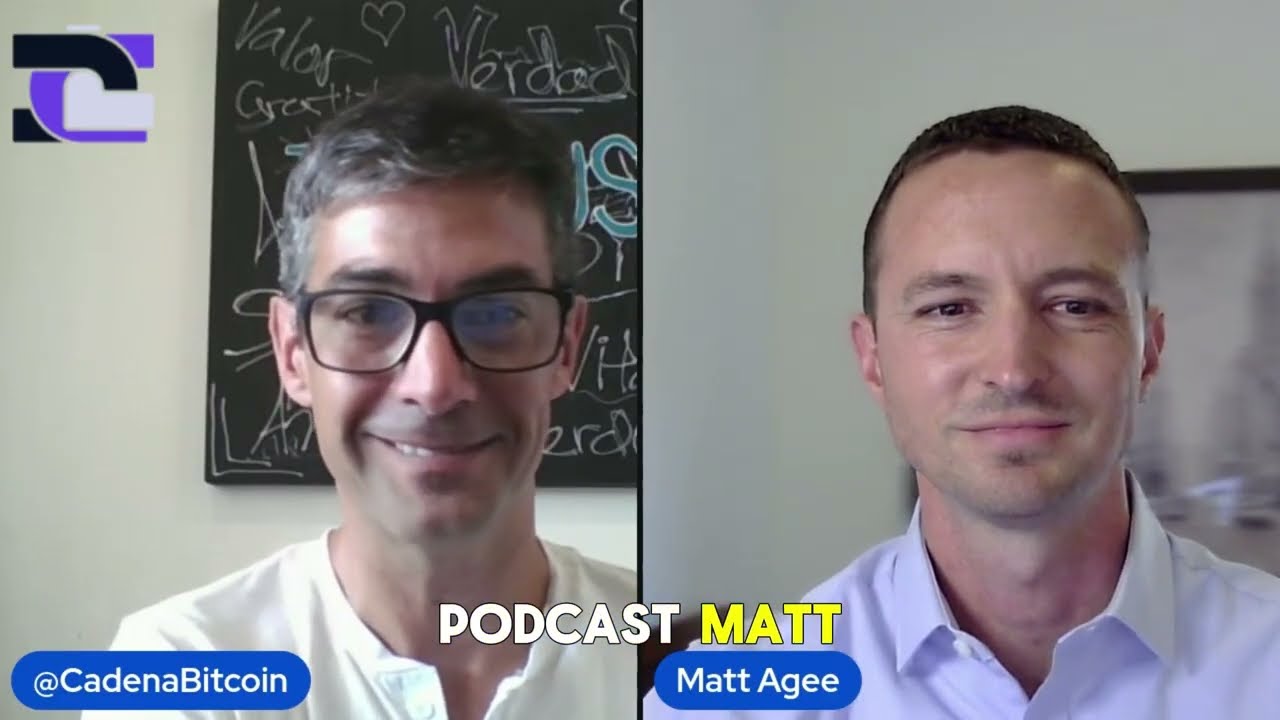
In this Freedom Money podcast episode, host Kevin Bell, CFA, interviews Matt Agee, founder of Oak21 Solutions, about his personal path into Bitcoin and how his firm helps corporations adopt the cryptocurrency. Agee explains that Oak21 offers a "Bitcoin strategy as a service" that assesses a company’s core business and designs holistic solutions across mining, energy efficiency, treasury accumulation, and payments. He highlights how energy producers can monetize stranded power by deploying mining equipment on‑site, turning operational losses into Bitcoin revenue even when Bitcoin prices are low. The conversation covers corporate treasury uses such as long‑term store‑of‑value, digital‑credit‑type preferred stock, and point‑of‑sale payments, citing examples like Square’s merchant terminals and the Steak ’n Shake model. Governance and custody are discussed: most large firms rely on single‑counterparty institutional custody, with multi‑institutional arrangements emerging, while true self‑custody remains rare. Agee shares a recent client case—a family office developing a mining operation—detailing how he guided them on liquidation versus hold strategies, custody, key‑management, and Bitcoin‑backed financing. The interview wraps with advice for builders: start early, iterate, seek feedback, and recognize that building can mean creating relationships, services, or software within the Bitcoin ecosystem. Contact information for Oak21 Solutions is provided at the end.
Chapters
Uh, today on the podcast we have Matt Agee from 021 Solutions, and, uh, welcome to the podcast, Matt.
Thank you very much for having me, pleasure to be here.
Uh, one place I like to start with everybody to lay the foundation is just, uh, briefly get an overview of your journey to Bitcoin.
Yeah, so I've been a Bitcoiner since 2020, and of course I think like most people I was aware of it before then. Um, and, you know, maybe a little bit of background. I, uh, have a computer science degree and spent my career in technology and IT. And, and so for, for that reason, I was very interested in kind of the technology aspect of it, but always thought I was kind of late to Bitcoin or just didn't really understand it. And at that time, I was pretty interested in like, okay, what can you build on it? What kinds of applications are out there? And anyway, like, I eventually made my way to Bitcoin and Bitcoin only. But had a little bit of a diversion in kind of the late 2010s, um, and then really sank in in 2022 during the whole, um, you know, financial collapses of banks in the United States, um, at the time where, you know, sitting in spot Bitcoin and self-custody multisig, uh, was, you know, a very comforting place to be at the time. And So yeah, I mean, short, short story as far as the Bitcoin journey. Um, probably not unlike a lot of people's, uh, individual experience.
Yeah, I, I was a bit later than you, but I think that's fair. It kind of has to be around you for a while before it sinks in. Um, so tell me about the company now. I understand you're helping energy companies, corporate treasury companies, and I guess a lot of companies driving Bitcoin adoption now. So I'd love to hear what's driving that.
Sure. So Oak21 Solutions, we really try to do Bitcoin strategy as a service, is kind of the, the tagline. Um, we focused on business adoption of Bitcoin and we have a holistic approach. So we focus across all of Bitcoin's capabilities, be that mining and energy efficiency or a treasury accumulation strategy or payments. And we try to understand our clients' core underlying business and how Bitcoin can fit into what it is that they do. How does it make sense for what they do? And once we understand that, we develop a strategy that might go off, and we focus on a program management or project management execution with high-quality Bitcoin-only service providers. And the underlying thesis is, you know, we've seen a wave of institutional and corporate adoption, and there's just an array of different ways that people can integrate and adopt Bitcoin and put it into their approach. And we try to help our clients make sense of what that means for them and what that looks like for them, and then quickly how they can accelerate the implementation of that. And then we back out of the equation and move along to the next company. So that's what we try to do. Um, and so yeah, go ahead.
Just, uh, you know, I'm curious today Um, you mentioned a lot of ways. Obviously, I think we both agree that Bitcoin's better money and better technology and able to help people. Are there kind of specific ways now the corporations are adopting Bitcoin and taking advantage of it, whether it is payments or—
Sure. Um, so my background is in energy, right? So largely integrated oil and gas companies. Um, so I worked at ExxonMobil and at Amazon Web Services and Um, and, uh, I think, you know, energy is very important and we'll probably get there too. But, you know, reliable energy, affordable energy is very important to people, and that's why I focus on energy companies. But Bitcoin and energy also go hand in hand. Like, we know that Bitcoin is energy money. There's lots of operational and monetary problems that Bitcoin solves, and, you know, whether that's the mining space or treasury or long-term savings technology, you know, Bitcoin can play a role. As far as how Bitcoin— as how companies are today integrating it, you see everything from just kind of more pure-play Bitcoin treasury accumulation to digital credit type preferred stocks to payments. Like Steak 'n Shake is a very popular example for me, like somebody who's building a Bitcoin strategic reserve out of a Bitcoin circular economy. And there's other companies that bought it one time and it just sits there and helps their balance sheet over the long term as it grows. And there's just a number of different ways that businesses can do it. And a lot of mining companies are taking advantage of it as well.
And I'm assuming you're seeing broader adoption, you know, more and more companies having interest, but I know we talked about, you know, potentially the price impacting how people look at these things now. So, you know, curious what the impact is there.
Yeah. So I'll go back to energy, right? And so if you're an operator, an oil and gas operator in Texas, out in West Texas or New Mexico in the Permian, you may have operational problems that don't go away because the Bitcoin price is down, right? If you have— if you're producing energy, if you're producing natural gas that has no offtake, and right now the price is negative, that's still a problem, and Bitcoin can still solve it even though the price is down. You may still— like, losing a lot of money— like, losing less money is better than losing a lot of money, if that makes sense. So it's an operational problem that can be solved by deploying remote data centers, generation capacity, and ASICs to mine natural gas at a field site that's currently losing more money than it otherwise could be. So in this market where Bitcoin has fallen from $126K down to $60K and is kind of bouncing around in the $60K to $70K region, That's where I'm trying to lean into, and that's where problems are still actively being— trying to be solved with Bitcoin. And there are natural places like that in the world where, you know, it still continues to solve problems. We view Bitcoin as a solution, right? Bitcoin is a solution to monetary and operational problems. We don't call it a hedge, and we try to lean into those areas where it still makes sense to It still makes economic sense to deploy and accumulate Bitcoin. And we were also talking about how, right, human nature being what it is, like, now is the time where, you know, companies should have already developed a Bitcoin strategy and should be actively deploying it now as the prices are lower, you know, approaching the 200-week moving average, where historically that's a great time to start to, um, you know, to enter a Bitcoin position for long-term savings.
Yeah, I think, uh, history shows that buying on the dips has worked pretty well. So do you have, um, you know, I'm interested on the Treasury side too, uh, you know, specifically for payments. And, you know, if we're seeing any increase in that, to me, you know, the finality of settlement was certainly a very attractive feature, and you know, compared to the old wire system or other things in terms of transferring value between companies? Are they adopting, adopting this and where else would they adopt it in their treasury but just store of value in terms of an accumulation strategy?
Yeah, I mean, I think there's, there's a ton of opportunity. And, you know, like I said, I spent time at Amazon and let's just take them as an example. Like they have an online retail store, obviously. They have payment and loyalty schemes like Prime. You know, you see companies like Fold doing this with rewards. And so I would love to see that ecosystem really develop the Bitcoin as money use case. And that's a, that's a divisive kind of topic depending on who you are. But, you know, I think back to the Steak 'n Shake example or even the big story this year is Square. Block enabling payments at their terminals with Bitcoin, just opening up a mass number of retailers to accepting Bitcoin as payment. That's really kind of the step change in the ecosystem that I've seen this year. So, you know, luckily it's very easy now if you're a business, you're running Square, to accept Bitcoin. That just kind of changes the game a little bit. And so you may, you may need somebody like me less, less and less as those types of very pervasive solutions become just easy to do. But Square, Zaprite, or those types of companies who are in the ecosystem, you know, somebody like me can come in and help if you're a company interested in Bitcoin payments, marry you up with the right service provider, you know, develop a strategy and match you with the right partner to go off and implement, um, you know, your, uh, your payments approach.
So what, um, So what's next for the company? Like, what's the direction and, you know, where's the growth that you're seeing now?
So we've spent a lot of our time with really small private entities, and that could be family offices or small businesses. And honestly, that's where I think 85% of the activity is that people don't see in the corporate world. Um, you know, we, uh, we have a relationship with River and they're very good about posting very publicly some of their business adoption that you don't see. And so I love that when they post that, um, you know, and my background being at large corporations, I feel like one of the things that I've tried to do is in the corporate adoption space have it be less about, you know, kind of the number go up treasury accumulation strategy over time and more about, you know, what is Bitcoin, why should we adopt it, and how does it make sense with my my unique company and company culture, what it is that I do as an underlying operating business, and how does it actually fit in? What are the synergies with it? And coming up with that, I'm really excited about how companies will begin to adopt it. And I think we're only at the tip of the spear as far as the types of models that we see. You know, every business, in my view, will, will— yeah, hold Bitcoin, will adopt it, will accept it as payment. Will settle transactions, to your point earlier on it, um, and how, how that plays out, I'm excited about being a part of.
Yeah, I mean, my background— so for about 15 years I, I was in foreign exchange sales and trading, and so the payment piece is really interesting to me too. But again, I mean, if you're a corporation, even a big corporation, small corporation, you're dealing with, uh, international payments or international currencies, you have all these risks that you need to deal with. And, you know, when you're holding in the world of fiat currency, the only thing you really know is that it's going to be worth less and less over time, right? And so you have an off-ramp here, and, you know, once you get it, it seems pretty obvious that if you're holding things for the long term, you know, if you're going to hold dollars for the next 50 years, you're going to have nickels at the end of it. So, you know, using, using something to store value makes a lot of sense. And, and, you know, the tools just being built today, you know, I think are, uh, you know, like you mentioned with Square and payment technology and how it's becoming more integrated, I, I just see that accelerating at this point. So pretty excited.
Yeah, I mean, there's just so much going on in the world that's, that's an advertisement for Bitcoin's capabilities in terms of you know, neutral, decentralized money, right, that you can just transact with, with, you know, peer-to-peer. And a peer could be you and me, or a peer could be me and the government of whatever, you know. And the ability to transact without intermediaries, without permission, you know, whether it was the COVID era or whether it's the conflicts today, There's just so much going on that is continually to make the case that Bitcoin is the money of the future in our opinion.
So I mean, I was going through, I saw these posts on Twitter yesterday from River in terms of the clients, and I find there's always a dentist in there. Maybe somebody with a retail store, but what is the dentist doing when they adopted? I guess what are the concerns that they have that caused them to adopt it in the first place? Um, like, what's, what's driving this? Yeah, just that we're talking about, or do they have different concerns?
I mean, I'll just tell you an anecdote from, from my personal life. I did with a small business owner is, um, you know, they, they ran a law firm, right?
And they—
the law firm was doing incredibly well, and, you know, they were, they were making a ton of money, and so much money it's like they don't know what to do with. And, you know, if you're, if you're an individual or a business and that you're you're privileged enough to have that kind of a problem, it's like, what do you do? What do you do with the money? They already have rental properties, they already have experience with real estate and rentals, they already have experience with other investments, and they just weren't comfortable continuing on with another type of strategy. And, you know, they had a rental property that, you know, unfortunately had a— it was like lakefront, but Over time, like, the lakefront premium went away because the, the water receded to a certain point where it was no longer, um, like, as valuable as it was, as it once was. So, like, we know that real estate can have problems, um, you know, that, that cause its value to fluctuate unexpectedly. And so they were looking for a new outlet for long-term savings that didn't require ongoing maintenance, that didn't require, you know, a tax burden if they were to hold it. And so that's just one example, but, um, you know, I think people with excess money are looking for a place that's secure, that doesn't require a lot of maintenance or overhead, that will perform better than anything else in the market. I think Bitcoin is, is ideal for that type of long-term savings technology.
Yeah, I mean, you know, I see more and more adoption over time. It's just essentially gravity, but Also, you know, for me, when I look at the alternatives, I mean, you know, real estate can seem, you know, significantly overvalued and come with a bunch of headaches, as you mentioned. And then, you know, if you're buying bonds, what are you locking in? Some negative real return. And equities, you know, can be as volatile as Bitcoin. And it, you know, from a portfolio perspective, the diversification makes a lot of sense. But when you really start getting into the risk-return profile You know, talking about 2 to 5% allocations maybe doesn't make sense. And I think the number that people get to is, you know, eventually much higher than that is kind of what I'm expecting, especially as it becomes integrated into additional financial products. Do you— I mean, what do you see specifically in the mining sector? Are they using Bitcoin to finance equipment? How is Bitcoin helping miners continue to improve their operations?
Well, mining is interesting right now. I mean, I focus on energy companies with stranded or excess power or energy that they'd like to monetize into Bitcoin. And so like I said, they're solving sometimes an underlying problem. And they don't even care about Bitcoin. They don't want to know about it. They don't want to hold it, they just want to liquidate it for dollars. Um, and so part of what I try to do with them is, okay, let's educate you on Bitcoin's core value proposition as, as money long term. Um, you know, it's, it's historical performance and why that may continue in the future and why you may want to hold it.
And so you're kind of, you're spelling it out for them, right? Like you're putting it, you know, they're using it, right? How can they not think about the value? What's their alternative? Yeah.
So working on that, a lot of it has to do with corporate governance or just their ability to hold something that isn't in their core remit. So they may only have authority to hold certain types of commodities or instruments, or it's a perceived risk. Or if you're an energy company and there's the historical thought around environmental concerns or energy usage, that can have a detrimental impact to your public perception of your ESG credentials. And so there's some reluctance on that front, even though that's changing now that AI and HPC are sucking all the air out of the room on that front. So there's a number of different reasons that keep people still from getting it fully. But if you're participating in the network mining, that's your foot in the door. Long term, people will start to get it. This is probably the first cycle where there's been massive corporate adoption. And now we're in kind of the bear market. And I think people like to see things prove themselves, even though Bitcoin's proven itself. Corporate adoption hasn't really yet done that on a larger scale. And so some people may be waiting for the folks like BlackRock and and Citi and Morgan Stanley to come in and prove things before they, you know, before they feel comfortable getting into the mix.
I'll bite my tongue a bit here. One of the things that I find pretty consistently in these discussions can be a bit of an obstacle to adoption are some of the regulatory issues. And I'm curious if there's regulatory issues that you find your clients need to deal with, you know, kind of across all these sectors, uh, before they can move on to strategy?
Um, I think not so much regulatory anymore. I don't think it's really a regulatory issue. I think it's really more about, um, you know, board-level governance on, you know, for example, certain energy companies may have a remit as to what businesses they deal in. And so like an oil and gas company may have in their corporate governance policies that they're only going to deal in certain commodities that they're able to themselves process as part of their, you know, their, their infrastructure. Um, so like they may not be able to trade in copper or soybeans or something because they're in oil and gas and that's what they do. Like they don't have the ability to process soybeans in their network, so they can't trade in it. And so right now Bitcoin is not a part of their mandate, it's not a part of their remit. Although I could make the case that Bitcoin is money and companies can take possession of and process money, um, it's primarily just that level, right? So it's, it's executive, um, you know, courage to put forth Bitcoin as an alternative approach to a treasury strategy, and then, um, you know, updating their various internal policies, guidelines, and, uh, and governance material to be able to actually, you know, buy and hold the asset or acquire the asset.
And then when they buy and hold it, is it self-custody or is it institutional custody? In a lot of cases, how does that decision get made?
Yeah, I think, I think large corporations, um, it's not, not self-custody. It's, it's typically single counterparty custody is what is the, is the biggest, um, share of it. I think some people, some businesses are using multi-institutional or collaborative custody with certain providers. So those are the two biggest ones that I see. But rarely is it self-custody. Now, I would advocate longer term, the value proposition of Bitcoin being sovereign money and having the permissionless aspect of it, You know, there are ways to develop those strategies, but I think at this point, you know, a lot of businesses are even just buying the ETF, right? So it's— there's a vast scale, but they're just starting to dip their toe into it. And maybe one day, hopefully, we can make our way to the promised land of, you know, everybody's self-custody multisig, and that's in your own internal technology stack and not outsourced to some counterparty.
Yeah, no, I think— I mean, you probably see it. It's, it's just, it's incredibly early in this adoption curve. And so, you know, I'm trying to understand if you can give like a, an example of a way that you've recently helped a client adopt Bitcoin and how it's helped them.
Yeah, so I worked with a small family office recently they were already on board with Bitcoin. They were already taking some of their money. Like I mentioned, some of these people have money that they kind of don't know what to do with, or they had a problem where they're looking for some alter— some other alternative. And they had already made the decision that they wanted to acquire and develop a Bitcoin mine with a— with another partner. And, um, I did— I did a training of kind of a Bitcoin Fundamentals 101 overview of Bitcoin for businesses and you know, the long-term value proposition of it as a long-term savings technology. And they were looking for— okay, we were planning to liquidate all the Bitcoin to kind of recoup our initial investment and eventually expand to multiple mining sites. And I helped them come up with, well, here's some scenarios where, you know, you can do a portion of liquidation and a portion buy and hold for long term. And what does that look like? What is your custody approach? What is your key management approach? And then in the event that you wanted to— and what does that look like for your payback period and for your reinvestment for your future goals? And then in the event that you wanted to access liquidity for subsequent investments or Bitcoin mines or whatever that may be as part of your strategy, rather than liquidating, what's the landscape of lenders who are in the space? And what is the What terms are they offering? Who's out there? Who's doing what? And what would a lending approach look like? So as an independent, unbiased consultant, I can come in and help people understand the vendor landscape. Who are the service providers? What are they doing? What are they not doing? And what works best for you as a customer?
Amazing. I don't want to turn it into an ad for Cadena Bitcoin, so I'll take a few things offline, but It's really interesting, you know, again, the financial use cases I'm highly interested in. And so it's really interesting to see the growing use case of collateral or, you know, other things in Bitcoin. So I guess the other thing I'm curious of, I mean, you've been in the space for years, I would say probably longer than most. What advice do you have for builders in the space? And, you know, I find this an interesting question specifically for you because I think you're, you know, connecting a lot of new builders in the space. And so I'm curious what your advice is.
I think the biggest advice that I've learned is just get started, just get out there and do things, even if your original premise isn't 100% baked. Like, don't let that be the enemy of progress for you. If you have an idea, go after it. Start talking to people. Put yourself out there. Every step change in terms of progress that I've made has been just because I've gone and done something in real life. I've gone to some event or gone to some conference.
Yeah.
And, you know, feedback is a gift. So, you know, you, you put something out there, um, it has a reaction, and you can adapt to it. And Failure is learning. So I would just say Bitcoin needs more builders, and builders don't have to be writing software or using cloud to create some software tool. You can build by building relationships or building networks or building services in the Bitcoin ecosystem. And so building can mean different things, but also just get out there and do things is my advice to people.
Yeah, I think that's good advice. I mean, again, the podcast is helping me connect with a number of different people that I wasn't always connecting with. But the, uh, you know, what I always like— for me, Bitcoin gave me a lot of hope leaving, you know, the fiat world and seeing a lot of, uh, things that, you know, made me uncomfortable. And it's, uh, you know, great that there's an opportunity to build in the space. And what I found was when I did start to connect with the community, it was just, uh You know, everybody has so much value to offer and is so aligned with the idea of advancing this technology. And so, you know, a lot of great relationships as a result.
It's really interesting because it's like I was a consultant for AWS for a while, right? And when you work for a company and the underlying platform is accruing value, like you're compensated usually with a salary or whatever benefits come with that. Choosing to work for Bitcoin is different because you don't get a direct— Bitcoin doesn't pay me a salary. The benefits accrue from the adoption as more and more people adopt it and use it as a store of value or as money. So it's been interesting to work independently for a neutral global platform that's decentralized and has no kind of compensation authority. But like you, I find that people who get it are willing to help. And if you're, you know, if you're authentic with, you know, with your approach, Bitcoiners all over the world are willing to help you because ultimately the value accrues to the network and that benefits everybody who's plugged into it.
Yeah, no, it's amazing that everybody working in their own self-interest can lead to better solutions for everybody. It's almost like economics works when you, when you don't screw up the money, right?
Funny.
Um, yeah, so I, I really appreciate the time, Matt, and, you know, I think as much as anything, appreciate people who are driving Bitcoin adoption. So thank you. Um, where can I send people, uh, for more information or to get in touch?
Yeah, you can find me at 0221solutions.com. So that's the letter O, number 2, number 1, solutions.com. And my email is matt@o21solutions.com. So you can find me there. I'm also on X at O21 Solutions.
Amazing. Well, very nice to connect and we'll talk soon.
Thank you for having me on. Appreciate it.
More from Kevin



Why Bitcoin is more than an investment I wrote the Bitcoin Bible #podcast #interview #bitcoin


When banks freeze accounts the importance of self sovereignty #podcast #interview #bitcoin

Retirees inflation can erase your savings read Bitcoin Bible #podcast #bitcoin #investing


Taxes KYC and How Governments Are Making Bitcoin Harder #podcast #bitcoin #interview #investing

How SeedSigner Sparked the Bitcoin Hardware Store #howtoearnmoneyfromusstockmarket #bitcoin

The three essentials wallet node and miner #podcast #howtoearnmoneyfromusstockmarket #bitcoin

How the Bitcoin Hardware Store was born #podcast #bitcoin #realwaystomakemoneyfromhome