Freedom Money Ep16 Michael Linback
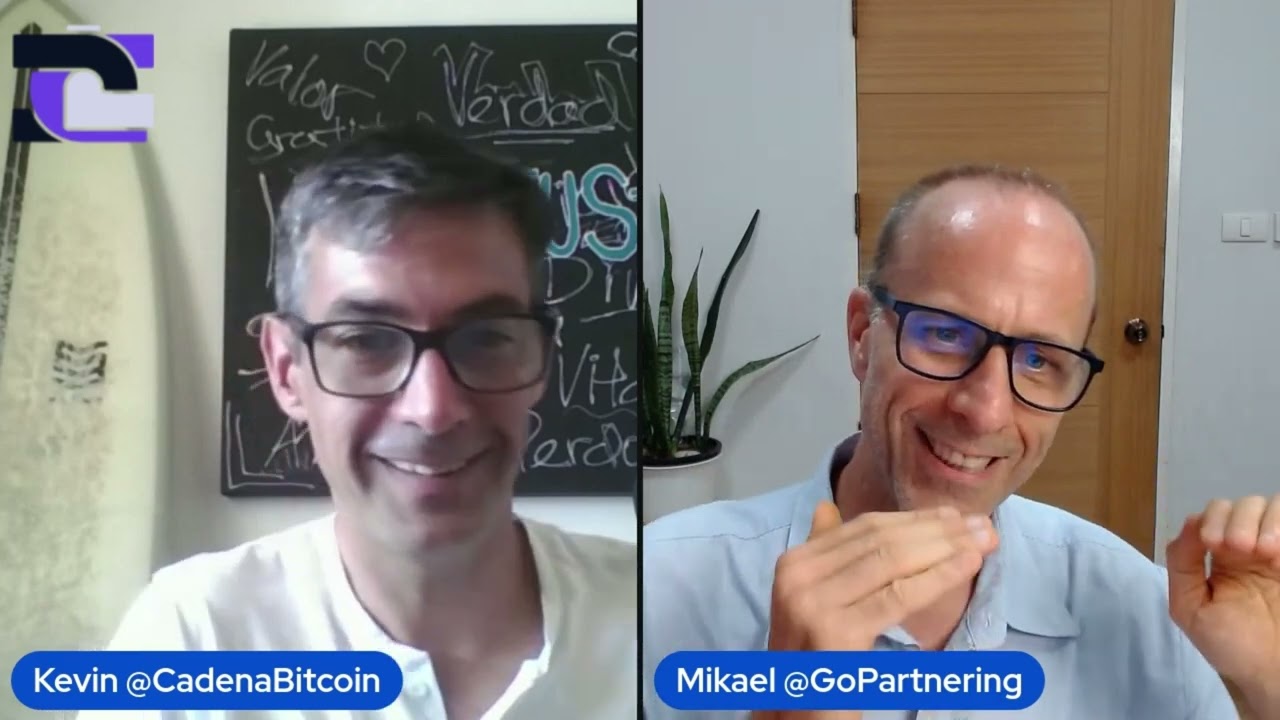
Michael Linback, co-founder of GoPartnering, traces his path from early Bitcoin skeptic to believer in it as a store of value and alternative to fiat money. He built an AI lead-generation engine for B2B firms and argues that technology adoption depends on psychology and user perception, not just the tech itself. One client saw a 30% increase in qualified leads and doubled revenue.
Chapters
Today on the podcast, we have Michael Lindback from GoPartnering. Welcome to the podcast, Michael.
Thank you. Thank you very much.
Where I always like to get started is understanding people's journey to Bitcoin. So how did you come to know this, this thing?
Well, as an engineer, I graduated a very long time ago. You know, the whole part of Bitcoin was actually from a technology side in the beginning. So like in 2012, '13, around the number, that's when I sort of got very interested about the technology actually and what it was potentially be able to do. Now the blockchain and everything that it comes down to, but at the end of the day, well, I did discover that this might be a very nice asset in terms of value appreciation. Now that really turned things around. So before my realization about the value, well, that's when I gambled a little bit more and, you know, lost those bitcoins and so forth, like most of us. So that's kind of part of my journey, but eventually ventured further and became fairly serious in terms of seeing Bitcoin as a potential vehicle for appreciation in value.
So this is incredible to me because I was late to the game. I, uh, it, you know, in, in 2012, in terms of the network and how things were and kind of, I, I guess, your experience in financial products and seeing this appreciation potential, I'm trying, you know, I'm trying to understand I guess in a bit more detail from the technical pieces that attracted you to it. You know, was there anything very specific that led you to believe this had this potential?
Well, I mean, to be absolutely honest, the current financial system that we have in the world, at least what most people are using, I wouldn't say is really built for human beings. That's kind of the expression I use. Now, what does it mean? Well, it means that we have an unlimited amount of, well, coins, whatever that might be called, if you call it US dollars or euros or yen, but we have an unlimited amount and we have a small amount of people that are making decisions about the amount, which means the rest of us is just tagging along. And it took me some time to really understand this. Of course, it wasn't, you know, quite obvious right away. No, no, because I was into the technology. Oh, you can transfer this and do this, you know, the tech part of it basically. So it was more in the beginning that part, like, oh, you can transfer, you can do this and this and this. I wasn't really considering the sort of value compared to what we are mostly talking about today, like dollar value, because in the early days, as you probably know, Bitcoin was just a tech thing. It was like a gimmick. It wasn't really, you know, considered any sort of value, so to speak. Yeah, it went up and down in value, but, you know, it wasn't really considered as something sort of valuable. But anyway, that is actually the starting of my journey. I realized that this is a way of transferring value, or as let's say exchange value, without without having to use third parties, without having to use intermediaries, without having a lot of strange regulations on this side or that side or whatever that might be around the globe. And instead, more of a money that is— or a money, well, I call it money— that is created by the people for the people, whoever that was who actually created the technology behind Bitcoin, which is still actually not 100% defined yet. Even though there's a name, Satoshi Nakamoto, you know, still isn't really— who is it? Is it a team, or who is it? No one really knows, I think. But that way of transferring value without the old system sort of being part of it, that was really very interesting in my opinion.
Yeah, I think, um, I think for me something similar. I mean, I look at the central banks, and if people really understood you know, these 8 people kind of controlling the strings for, for the US dollar or other currencies. Being Canadian, you know, seeing the central bank have a mandate and do certain things, it's, it's, uh, it's literally the most anti-human policies you could, you could possibly, uh, imagine, right? And, and, you know, we just accept this. Most people are just kind of accepting this as these people, these people are the experts and know what is best for everybody in terms of the optimal money supply. And if you scratch on the corners at all there, you see how just completely absurd that is. So congratulations for picking that up early. So that leaves, you know, a 15-year journey to today. And, you know, maybe connect the dots between how things progressed for you over that time to where you are today at GoPartner.
Sure, sure, I'll try to do that. It's a long time to connect, but let's do it. Now, as I said before, started technology-wise, more curious about the technology, didn't really care about value or whatever. Down the road it went, gambled away a couple of Bitcoins and wasn't really super concerned even though I was starting to understand around, you know, 2016, 2017. You know, I was like, um, this is maybe something really valuable, this might be something to really be precious about. And in 2000, uh, what was it, 19? Yeah, no, actually '16. In '16, I went into a school, well, an online school in that case, and that was teaching trading, investing. And that was quite interesting. I did have some experience, but I thought, hey, if I combine my experience with this experience, well, that's going to be a really nice house to build. So that's kind of what happened. And that is, I think, really the point in time where I started looking at this as a serious asset, so to speak, like something that can actually be used for not just payment, but also investment and trading and so forth and so forth. And of course, spending time being taught these type of investment strategies and how you can think about it. And being part of sort of a community where this thing that we speak about, central banks, currency, is like day-to-day talk, that's normal. It's not something that is very strange. And once you start reading about it and sort of digging into what is the financial system, how does it really work, and since I also became actually part part of this company later and started working as a cold-chain trader and head of research. Well, that kind of gave me a lot of incentive to really dig deep and really understand eventually what, you know, the global finance system is, how it is built, how it is working, what Bitcoin is, what it is not, and how that actually is working and potentially how we can leverage this going forward. Now, that led me down the road and, um, I want to highlight one thing that I'm still sort of holding quite dear to my heart, I would say, because I still think it is true today, even though it's getting a little bit confusing or blurry, you might say. We talk about democracy in the world. We can discuss back and forth about that, how far that takes us right now in the moment in time. However, when it comes to, for example, deciding how many Bitcoins is going to be available on the blockchain. As far as I can tell, that is still actually one of the most true democracies that exists in the world. If you want me to break it down, I can break it down on top of the 51%.
Yeah, I'm happy to go into that, but I thought you were going a different way about kind of how printed money can kind of subvert democracy. That's my angle. Like, in Canada, they just printed money, gave it to the media and then, you know, got people to think whatever they wanted them to think. Um, and still do.
I mean, honestly, the world's currency, well, what used to be the world's currency, US dollar, uh, I mean, that was backed by gold, and probably a lot of us know that. So up to 1971, there was a fixed exchange rate. You can go with $1 to the bank and you got a piece of gold. Kind of good. And that was a little bit sort of better in one way. However, what happened after that was, just as you mentioned, you know, hmm, all right, we're not going to tie it to anything anymore. So what is the actual value? And this you can actually turn— I'm going to go a little bit higher in thinking level, maybe you can actually turn this around and then you can think about, well, what is the dollar value of a Bitcoin? Is the Bitcoin more valuable or is the dollar sinking?
Yeah, well, that's, that's the framing, right? And it's the same with houses or whatever, right? Are they increasing in value, or is the value of the currency decreasing? Hmm. And I think we know the answer, right? But we measure inflation based on a basket of consumer goods where there's a lot of competition to make those goods, and we, we don't measure financial asset inflation and the fact that stocks now trade at 50 times earnings, bonds have negative yield, and, you know, houses don't cash flow. And so that's kind of missed in the data and allows this scam to continue.
Yeah, I mean, if you look at the inflation, I actually say this might be a little bit radical when I say it, but when someone tells me something about trusting the banks and the system and so forth and so forth, and I do have a fairly good relationship with them, I usually say to them, well, inflation doesn't exist. And then they look at me, it's like, what? What do you mean? Well, I say inflation is man-made. There is not— I mean, has— let's say you buy a liter of milk in the supermarket, has the capacity of producing milk gone down the last year or has it gone up or is it there's a shortage or it's like a massive demand or what is happening? Well, at the end of the day you will find many, many things that actually makes this thesis that I, or this statement that I said true, because nothing has really happened with the product or the production or the delivery or demand, but the number, whatever value you have on the price tag, has to go up. So is it actually inflation, or is it someone that wants it to be that way?
Well, um, I don't have all the answers, but, uh, yeah, I mean, I, I think when I initially started reading some of Jeff Booth's stuff, I was just blown away, right? Because it makes it really obvious But as technology is improving, prices should be going down. And I think we would, you know, we would obviously see that if there wasn't a huge amount of money printing. So through this journey, you now are at GoPartnering. What is the mission of GoPartnering?
So on this podcast, I'm actually going to mention the deeper vision on GoPartnering. I mean, I can first say what we do today. Well, we build lead engines, for example, we help companies set up a great lead engine they can run themselves after 90 days so that it can acquire new clients, which is what most companies need today. Naturally, we're using technology.
We can talk after.
There's technology and AI, but it's also a lot of experience in terms of how to actually get this running and get it done well. Because there's a difference between using AI, which people say a lot, and actually understanding how you can utilize that technology. And, uh, that really is still a human's prerogative. You cannot replace a human with an AI unless that AI is actually very well trained on you and your business. And that's what we do. Now, um, the bigger mission Or actually I would say, why did I start this business at all? Well, first of all, I didn't really find my place in this world, to be very honest. I didn't really felt that I fit in, so to speak, in most cases. So when you don't fit in, what do you do? Well, you either go your way or you create something on your own. And that's what I'm doing. Now, why am I into technology and why do I think that something like AI technology or whatever we are using is going to help us a lot? Well, I like technology. I think it's cool that we can do things with technology that was, you know, not really possible before, or it's different, same as Bitcoin. However, the bigger mission, the bigger vision is, can we help people, businesses do something in another way so it saves time, frustration, brainpower, and eventually money, so we can get back life.
And so, I mean, this is incredibly, uh, timely. So we, we've just launched our 2.0 version and are, you know, going through and using some AI strategies, frankly, to acquire customers. Um, but, you know, very interested I tend to agree with you because some of the things you can do with AI can lead to, you know, you're automating emails back and forth to people you've already contacted in real life and, you know, different things that don't, I don't know, aren't integrated into kind of a coherent strategy, a number of different pieces. So, I mean, where do you find that you're able to really help clients the most?
Well, as I mentioned, one of our primary offers right now is that what I call the Lead Engine. And why I call it engine is simply because, well, what can I say? I mean, when you buy a car today, they're mostly so trimmed and good in the engines, you can jump in and drive, you know, that's kind of all set and done, and you can basically step in and press the pedal and go. Great, fantastic. Now when it comes to, let's say, acquiring new leads or getting prospects in front of you with meetings and so forth, even if that recruitment or if it's customers, that's a little bit of a different engine. It's a little bit different car, so to speak, and it does require trimming and tweaking and testing and kind of iterations. And because here's the thing, there's a lot of lead engines, a lot of software, a lot of platforms, a lot of tools out there today that provides the functionality of potentially getting new prospects into your business. A lot of them, not a problem to find that, millions. However, I don't think there is any tool today, as far as I know, where you can go to this tool and sit down and say, hey, here's my business, make it good for me. Doesn't work. So you actually have to either yourself, if you prefer to do it yourself, understand your business, your offer, your market, your target audience, and so forth and so forth. Create your one breath brief and really, really get that honed in. So you can actually do that outreach to the right lead at the right time to find the right prospects, get them to your company. Now that you can do yourself. And a lot of people do that successfully also. However, we realized that a lot of companies, they don't have the time, the energy, or even the interest to do it, to be honest, because it's not that easy. Because even if you are the best tool in the world or the best AI, you can say today, maybe you still need to make sure that this machine really understands your business, your offer, your target audience. How to speak to them, how to, you know, all this type of things is very human judgment. AI can do a lot with the right instructions, with the right training, but that is why we build the engine for confidence.
So, I mean, what are the challenges you run into apart from maybe some pushback from people who are trying to do this themselves? But I guess I'm curious across a number of, uh, kind of lines. One is, you know, in terms of regulatory issues, you know, I'm curious, you know, how those intersect with what you do and, you know, other challenges you might run into.
Absolutely. And it's a good question because yes, there are definitely intersections, as you call them. And if they are legal or platform-wise or channel-wise or whatever they might be, there's a lot of complications. And especially when it comes to lead generation, because that is sort of the frontline. You're very much in the frontline trying to, you know, gather and fight the storm that most people are doing. So yes, it does change a lot and there's a lot of challenges, but this is also why, I mean, yeah, I can say this. I'm not going to say everything clearly because it's still in the works in the background, but It takes a lot more time to kind of get put together what we are working on in the background, and that is to find different ways of actually taking care of what we call the prospects. Because at the end of the day, it's not that difficult to get a list of people, you know, or get, you know, emails or whatever that might be. That is not very difficult, actually. The most difficult part usually, and I'm talking B2B here, not B2C, so business to business, most difficult part is actually to build that trust. And to build that trust, that is a little bit of a different engine. I mean, what are we talking about now is the lead engine, that is the front line, getting people through the door another bit further and nudging and so forth. But in the background, what we are sort of architecting is more of the next step. All right, so you already have a list or you have contacts or you buy contacts or whatever you do, and now you want to see if any of these 10,000 people, 20,000 people, whatever, maybe actually is a good fit for your business. Now you can spend time on doing that and calling and mailing and whatever you want to do, but in the background we are Considering how we potentially can build this process and system that we provide to businesses. So whenever they have a list or they might even have a list in their CRM, well, let's use that to reach out again and build that trust over time, slowly but surely until they are qualified warm prospects in front of you again. And I think that is a little bit more better. You talked about complications and legal implications. Yes, the frontline lead generation has a lot of challenges. The nurturing part, not as many challenges, you know, not so, it's still difficult, but it's not changing every day. And that's something I personally prefer because I prefer a little bit sustainability and longevity, but it's also a bit more tricky or challenging to actually build that into a really, really good engine. So that is something that has happened.
So obviously AI, Bitcoin, big, uh, big words these days, and you're kind of at the intersection of both. Uh, my favorite word today. What do you see as next in the space? Where are things going?
Oh, that's a tricky one. I mean, there's so many speculations. I call them speculations because, you know, who knows really. But if I'm going to be really honest, I think Bitcoin is going to be taken over by the governments and the financial system.
Come on.
Not maybe, not maybe in the most obvious way that people think, oh, they're going to buy all Bitcoins or they're going to shut down the blockchain. No. I don't think so. That is not going to happen. However, there, you know, there are many roads. I can only speculate, but let's take one speculation and see where that leads us.
Let's say— I think I already know where you're going, but let's go.
I mean, oh, we're going to release Bitcoin 2.0, which is much faster and much cheaper, and you can have it on the phone, and you can do this and this and XYZ. And everybody's like, yeah, yeah, very good, and they get it, and they don't understand that this is not Bitcoin. This is built on Bitcoin, which means you are not in decentralized control anymore.
I thought that's what stablecoins were, but—
well, stablecoins is, you know, there's already use fully on, so that's not really an issue for, for the, you know, for the people who want to control the system. But I think they cannot control the Bitcoin blockchain, so if people people who truly understand the technology, like what is a Bitcoin, kind of never leaves the blockchain, this is what it is, and Satoshi and so forth and so forth. Uh, if you really understand the nitty-gritty of it, I think it's likely not going to happen that anyone takes over the blockchain, so to speak. I mean, it's not impossible, there's always a chance, but I don't think it's very likely. But to construde this system and create something that looks better or they get most people to use it, likely to happen.
It's, yeah, it kind of, it's a bit painful to hear you say that. It like hurts my soul a bit, but I'll say this, there's a lot of, I lost my train of thought, but I don't see it going that way. I do see Obviously a lot of institutionalization and a lot of traditional financial players who are suddenly becoming interested in the space, but I'm not sure, I'm not sure the new system looks like the old system. And, you know, I think we'll go through a time, and I think Satoshi laid it out very clearly, that the primary benefits of this technology are lost if trusted third parties are required. And everything I've seen built in the space is, you know, involves a lot of trusted third parties. And, you know, I do think we get past that. I think, you know, when we first got computers, we were using them as typewriters, and now we're, you know, using AI type of tools. And, you know, I do think there's an evolution that will happen. I'm optimistic. But, I mean, you've seen a lot of stuff in the space over Yeah, I'll let you touch on that too, but I'm curious, after seeing so much being built in the space, have you— do you have advice for builders on what they can do now?
Hmm, I mean, I guess it depends on the perspective of the builder. What are they looking to do or to achieve?
Well, say they wanted to change the world and drive the adoption of Bitcoin as money, for example?
Well, I mean, as a CMO, engineer, and so forth, you know, there are a couple of ways to change anything, basically. But technology doesn't change anything. There's one part of it, that is the technology, but the other part is market and, you know, the perception of the majority., and that's the combination I have— technology with psychology. So what I see is that you can build something amazing technology-wise. I mean, there's been many projects out there in space, and I mean, some of them are still here, Monero and so forth and so forth. Many interesting projects that leverage this technology to build something that is more let's call it user-friendly, anonymized, doesn't disclose too much and so forth, and truly decentralized. But you also need the other part. Let's call it psychology for simple sake. The other part is the psychology. How do you actually get people to use it? You know, how do you get enough volume to be used? Because that is really what a currency is. If a currency isn't used enough, or at least held like Bitcoin— mostly hold them— it doesn't have a place or value.
No, I get this, Michael, and it's— for me, this is a very real thing. I mean, we talk about payments and Bitcoin being used as payments and being used as money, but where I am, I couldn't pay for anything with Bitcoin.. And, you know, maybe in 10 years I can, but as soon as I'm outside of El Salvador, I don't see anywhere I can pay with Bitcoin, you know, in the real world. And so that's a challenge. What I run into with my business is often, you know, conversations with maxis who are just hodling and, you know, have some kind of ethical issue with leverage or credit. But, you know, if the money is just sitting out of circulation and not used, you know, in financial products, for payments, for other things, I, yeah, I don't really see the point either.
Now, good and bad, but we live in a world with human beings, whether we talk about Bitcoin or AI, and human beings have emotions and needs and wants. And expectations and so forth. And you have to have some way— I mean, depending on what you're planning to do, but you said change the world. Well, that means you have to have a majority that actually is kind of at least utilizing what you're doing. Otherwise, you won't change much, unfortunately. That's just how it is. I mean, there's a reason why GoPartnering only works with B2B businesses. Because the reason is that when you sell, when you create something, build something for business that are selling to other businesses, then it's a little bit more balanced. It's not the flashiest that wins all the time. It is not the latest hype all the time. It's more like, okay, you built something good, is it working? Okay, number one. Uh-huh. Can you prove it? Okay, number two. Thank you. Do you have any use case? Number 3, thank you. And when you have that, which we have now, I mean, well, one of the latest clients doubled his revenue in one year using us for 12 years, 12 months now, and running really well and got about 30% increase in qualified leads coming in. And when you have something like this, then it's no longer about the flashy Instagram or you know, this type of marketing that works with— I'm not going to say it's majority, but, you know, a large part of the population. And for me, that fits my heart better. I prefer to not lie. I don't want to blow dust in someone's face. I want to actually be as truthful as I can. And in B2B, that is a little bit more allowed and more Good to do.
Interesting. Well, I really appreciate the time today, Michael. You've provided a lot of insight and a lot of helpful information. And, you know, I think your business is obviously going to do well. So I'm going to take that conversation online— offline, sorry. Where can I send people who are looking for this type of help to find you?
Well, I mean, GoPartnering is the website and the name and .com is the domain, so we've been around for a while.
Easy peasy.
Yeah.
Well, again, thanks, thanks again, Michael, and appreciate the time, and we will do this again soon.
Sure. Take care.
More from Kevin



Why Bitcoin is more than an investment I wrote the Bitcoin Bible #podcast #interview #bitcoin


When banks freeze accounts the importance of self sovereignty #podcast #interview #bitcoin

Retirees inflation can erase your savings read Bitcoin Bible #podcast #bitcoin #investing


Taxes KYC and How Governments Are Making Bitcoin Harder #podcast #bitcoin #interview #investing

How SeedSigner Sparked the Bitcoin Hardware Store #howtoearnmoneyfromusstockmarket #bitcoin

The three essentials wallet node and miner #podcast #howtoearnmoneyfromusstockmarket #bitcoin

How the Bitcoin Hardware Store was born #podcast #bitcoin #realwaystomakemoneyfromhome