Freedom Money Ep17 Blake Fonfara
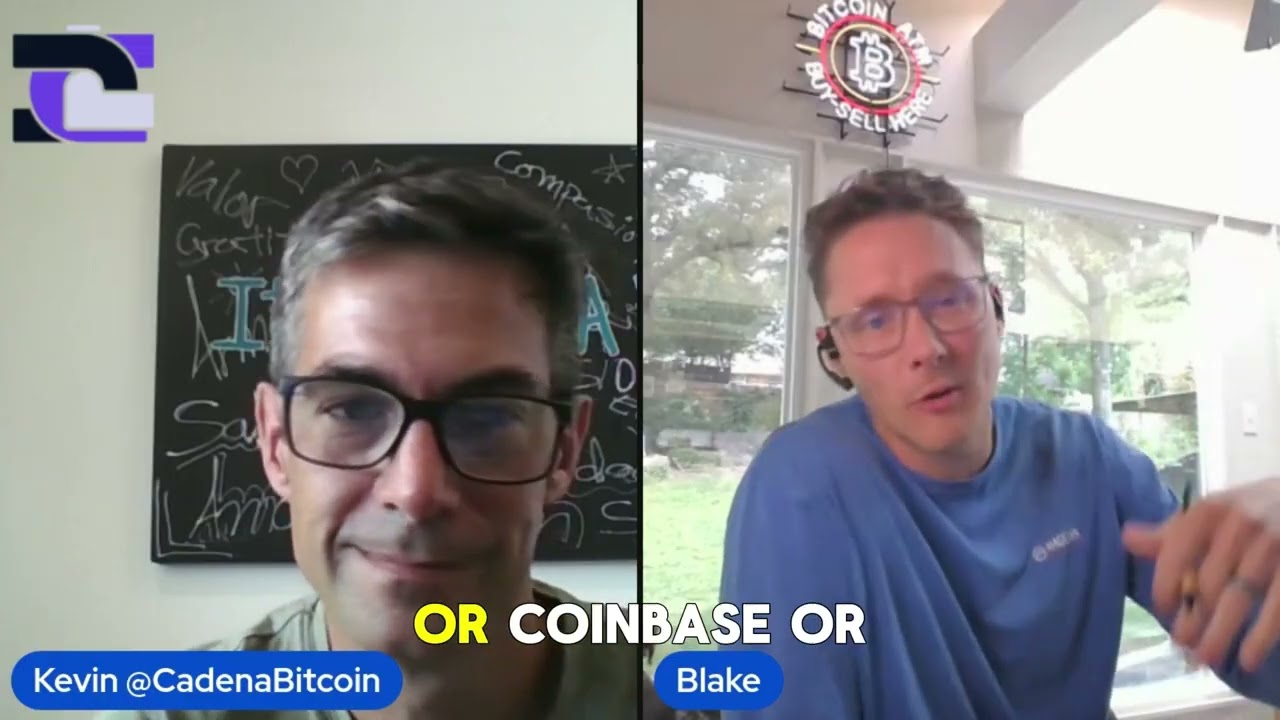
In this episode of the Freedom Money Podcast, host Kevin Bell, CFA interviews Blake Fonfara about his decade‑long journey with Bitcoin. Blake recounts how he first encountered Bitcoin in the summer of 2017, initially attracted by the prospect of quick gains, and later deepened his conviction after reading The Bitcoin Standard and other resources. Leveraging his background in accounting and finance, he launched a single Bitcoin ATM in Dallas‑Fort Worth in 2020, eventually expanding to five or six machines while maintaining a full‑time corporate job. A request from an ATM customer for a large wire transaction sparked the creation of an over‑the‑counter (OTC) desk in late 2024/early 2025, prompting Blake to quit his W‑2 job and focus on the business full‑time. Blake explains the niche served by cash‑only ATMs—customers who prefer cash, have bank restrictions, or need quick, low‑fee conversions—and how many ATM users transition to the OTC desk for larger trades. He describes the client base: baby boomers and high‑net‑worth individuals using Bitcoin for diversification, inheritance planning, or as a hedge against fiat debasement. The company, originally named Dallas Bitcoin ATM, rebranded to Flux Private Brokerage (FPB) to convey a more professional, private‑bank‑like service. FPB now operates in 37 U.S. states under a FinCEN‑registered money‑service‑business framework, with KYC/AML policies, and is pursuing additional money‑transmitter licenses to expand further. Blake discusses regulatory challenges, the need for state‑by‑state licensing, and the ongoing legal support required. Looking ahead, Blake considers but has not committed to adding services such as lending or trading platforms, preferring to stay focused on simple spot OTC transactions and personalized consulting. He shares observations that many clients view Bitcoin as a diversification tool and a way to pass wealth to heirs via cold‑storage wallets. Finally, Blake offers advice to builders in the Bitcoin ecosystem: act early, be tenacious, and treat the venture like an airplane that’s barely off the ground but can fly with persistence. He directs listeners to the new website fpbrokerage.com and his X (Twitter) handle for contact.
Chapters
Welcome to Freedom Money Podcast, where we explore Bitcoin, financial freedom, and building in the Bitcoin space. Before we get started, this podcast is for educational and informational purposes only. Today on the podcast, we have Blake Fonferra. Am I saying that right? Yeah. Welcome to the podcast, Blake.
Thank you, thank you. It's a pleasure.
Um, where I like to get started with everybody is, uh, their journey into Bitcoin. So are you able to tell us how, uh, how you got orange-pilled?
Yeah, I, uh, it's probably— let's see, it was 2017, and I remember just going down the YouTube rabbit hole at some point early. It was in that supercycle. It was probably like that summer of '17. And, uh, at first I just got into it because it seemed like a good investment that was you know, exciting and hot and was going to make a quick buck. And then it was really in the bear market that followed that '17 run-up where I got my conviction, you know. It was like whether or not I'm going to hold this dying asset or not. And ultimately I did enough research, read, read The Bitcoin Standard, and, uh, I started going down more podcasts and YouTube rabbit holes on this stuff and discovered that this was ultimately an incredible asset, an incredible technology. And so I held on to it, doubled down, bought more, uh, and then eventually I started a business in 2020. I think we're gonna get there, but, uh, you know, I— it all led to that starting the business in 2020.
So, so 2017, I mean, this is almost a decade ago. Um, yeah, what, what, uh, I mean, do you remember anything specific that kind of piqued your interest or made you realize that this was going to be the future of money?
Um, in 2017, no. I remember the way that I found it was I was just looking for an investment that would outperform the traditional boring mutual funds and things that I was putting my 401k into, and I wanted something more exciting. And just kind of getting in— I was young, I was probably, I don't know, 24, 23 at the time or something, and just, you know, looking for something, an exciting investment. And that's how I stumbled across Bitcoin initially. But then it was, you know, in the years that followed that I really discovered what made Bitcoin truly a valuable asset and not just a quick flip or a quick buck. You know, it's not just— I feel like that's kind of what gets everybody into initially is the promise of incredible returns. And then eventually you do your research or you get shook out or something, and then you discover, you what it truly is. But then, you know, after I got into it, started— I set up a hardware wallet, moved money around, sent some Bitcoin to friends and things, and I realized how cool it was to transact in it and how fast it was. And, you know, the true value of it not being a centralized asset. And, you know, kind of go down that whole fiat debasement idea that we all— I feel like we all struggle with that at some point of like, why 'Why do I even pay taxes if, uh, if they're just going to print more?' And so understanding that this is a finite, you know, decentralized asset, I feel like it finally clicks at some point, and that's when you really get excited about it.
Yeah, you have to make money to pay taxes, apparently. So anyway, um, so, uh, with the company, I'm really interested because I know you got started in the ATM space, and I'm curious about the evolution since 2020.
Yeah, so I, uh, a little bit of background. I, I've been in accounting and finance for my entire career, about 10, 15 years now. And, uh, so I've always kind of had the ideas and the, the understanding of money and, and finance. Uh, but then in 2020, I actually read the book Rich Dad Poor Dad, and for the first time kind of changed the way I thought about some things. And that's ultimately what convinced me to start a business. I didn't know what I was going to start a business in. You know, it's like you go down the rabbit hole, like, I should buy a rental property, should I buy a car wash? But I was like, but I'm obsessed with Bitcoin. And so I was like, what kind of business can I start that would somewhat put, you know, further the Bitcoin ecosystem where it's kind of like, you know, because I went down the rabbit hole, maybe I'll do a vending machine business. But then, you know, but I love Bitcoin. So then ultimately I started a Bitcoin ATM business, which is essentially like, you know, the cross between a vending machine and Bitcoin, and put one ATM in our local convenience store here in DFW and, uh, just wanted to see how it would do. And I was blown away by how many people were using it on a daily basis. And so then we opened up another one and another one, and eventually we got to, I don't know, 5 or 6 of them. And we were just doing ATMs, and it was just a side— just a side gig for me. I had a W-2 job at a big accounting firm, big consulting firm, and this was ultimately just kind of a hobby. But then it started taking up more and more of my time, and it was actually profitable and successful. And so I had a decision to make that I'm either gonna— I can't do both anymore. Like, there it was getting to be too big, which is the best problem in the world to have. But then had to make a decision of like, am I going to take this thing full-time, um, and drop my W-2 income, or Or do I just try to sell off this little fleet? But ultimately, I had one customer who had been using our ATMs for a few times and they were doing large transactions. And she just reached out to me and said, "Can we just do direct transactions? Instead of me using the ATM with cash, can I just send you a wire?" And it never really crossed my mind that that was possible before, but I told her, "Yes, oh yeah, absolutely, we can do that. No problem at all." And I quickly emailed my lawyer like, hey, is this— are we, are we able to do this? Is this something I can do? And it turns out that, you know, because we had the ATM business, we already had all the right paperwork and legal stuff. And so we were technically able to do that. And so that was the beginning of our OTC desk, essentially. And that was also what prompted me to then quit my W-2 corporate job and take this thing full-time and really lean into this OTC desk. And so that was probably late 2024, early 2025.
I just have— I have a quick question about the ATM business. And so, like, why, why wouldn't people be using an OTC desk or an exchange? Like, why would they be using an ATM instead? What market is it serving?
Uh, with our ATMs, it's cash only. And so You know, for people who want to buy and sell Bitcoin with cash, it makes it a little bit less traceable. Or— and it's not like shady or black market or anything, but I know we've had some people who, you know, they do $3,000 at the ATM with cash. And I call them up to make sure, one, they're not being scammed, two, they're not doing anything shady. We ask them a bunch of due diligence questions. And in a lot of cases, it's like, they just sold their motorcycle on Marketplace, or they, you know, they had a big garage sale and they just had some cash. And instead of going and depositing $1,000 in the bank account and then moving it from the bank account to Coinbase and then from Coinbase to their wallet, they can just come to an ATM and do it immediately. That's part of the market. And then also our Bitcoin ATMs, they're a two-way machine, which means you can buy Bitcoin with cash and deposit it straight into your Bitcoin wallet. Or you could sell from your Bitcoin wallet and it would dispense cash out to you. And so there's a number of people doing that as well. You know, just you need a quick couple hundred bucks because you're going to the state fair or whatever. You just want to, you know, withdraw some cash. And so there is, yeah, there is a market there. And so it's, it is interesting talking with some of these people sometimes when I'm just trying to figure out why are you doing this? But, but yeah.
Okay, sorry, I, I appreciate that. Thank you. Um, and so then we're talking now the transition to the OTC desk.
Yeah, so I had that one customer and, uh, it was enlightening to me and it was exciting that, you know, somebody would want to do a large transaction like that. Uh, and so then maybe it was, uh, irresponsible of me, but I then pretty much I was already on the verge of like, I gotta figure out if I'm gonna quit my corporate job and take this thing full-time or not. I've only got 5 ATMs. They're like profitable, but I'm not killing it. What should I do here? But I don't have the time to do both. And then I had this one OTC customer come through and that was kind of like the light bulb moment for me. And I immediately quit my corporate job and said, all right, we're taking the OTC desk live. And so You know, I update the website and I, you know, try to— and I, in my mind, I'm thinking that people are just going to start walking in the door and just pouring through. And ultimately, I didn't have another OTC Desk customer for like 6 months. And so I got a little bit nervous. I was like, oh boy, was that the right choice or not? But then eventually that OTC Desk, my original customer, she came back and she's still a customer of ours today. Um, now it's been almost a year and a half now, and, uh, and she's still a customer today. But then after maybe 6 months of having that OTC desk open with no new business, um, I had a few clients come through. They booked a call with me, uh, we did our consultations, and, uh, and now I still have some of those— some of my early customers that we had right off the bat there They are still our customers today. But it did— it was a period of about 6 months that I was kind of questioning things of like, did I make the right choice?
The value of cash for an entrepreneur.
Yeah, exactly.
But committed are you?
Yeah, exactly. But, uh, what was nice was actually through the ATMs, we got a few more OTC desk customers just because we were listed on Google Maps, um, and it was people who had come to the ATMs and had done big transactions. And, uh, and then eventually I talked to him on the phone and I'm like, why don't you use our OTC desk instead of using ATM? It'll save you a bunch of fees. Um, and actually, that reminds me, another reason why some people use ATMs instead of going to Coinbase is because, uh, their bank has blocked them from transacting with Coinbase because they've done too many transactions or too large or whatever. Um, and so I have a couple customers who particularly They've been, you know, they went down the Bitcoin rabbit hole and they're— and they might be, you know, baby boomers or older and they're trying to convert much or all of their assets into Bitcoin because they've gone down the rabbit hole and they're just convinced that this is where they need to go. But their bank won't let them convert that much money or that quickly from US dollars into Bitcoin by sending it to Bitcoin or Coinbase or Kraken or anything like that. And so then eventually they just get so frustrated with their bank, they say, well, then let me just withdraw $10,000 in cash every single day. And then they're coming to these ATMs and they're just shoveling it in and buying Bitcoin because that's the only way that they can get Bitcoin at that point, because their bank had just pretty much throttled them, or, you know, they were on the verge of closing their accounts.
But they could do that with the, with, uh, the OTC desk too, right?
Exactly.
So that's another reason why they might do an OTC desk is because I've definitely had this where the bank says no, like, we need to fill out this additional paperwork. Here's all these questions, you know, as soon as you're sending a significant amount to an exchange. I've had that. You're like, yeah, we've been through this a couple times now.
Check, check, check. And, you know, in the bank's defense, they probably— they see a lot of scams. They probably want to prevent you from being scammed, but Also, their business is US dollars, and if they see people fleeing from US dollars into something that they don't control, they don't own, I think they also, you know, their knee-jerk reaction is just to throttle it or to stop you from doing it. And so, so, so yeah, that's another use case for why people were using the ATMs. But then I then convert them into OTC customers. So it saves them a bunch in fees, saves me from having to go maintain that machine that might be 30 minutes or an hour from my house. And so that's how we started getting a few more OTC customers, was just kind of converting ATM customers into OTC customers. But to your point, by using the OTC desk, you're, you know, essentially you're wiring money from your bank account to our bank account, and it has our LLC name on it that has nothing to do with Bitcoin or crypto or anything. And so the bank doesn't know that you are buying 'Bitcoin,' because it doesn't say Coinbase or Kraken on the wire. And so, ultimately, that's what we stumbled into. We got lucky with that, was when we set up the business in the first place, we set it up under a generic LLC. And so, now the bank is listed under generic LLC. It's not listed under Dallas Bitcoin or whatever the name of the company was before, now Flux Private Brokerage. And so, it doesn't trigger any warnings from the bank. The bank thinks you're just working with a consulting firm, or you're just wiring money to your, your little small business, whatever. And so it's actually turned out to be really good. But, uh, but yeah, after we crossed that 6-month kind of valley of death, then we started getting a few customers. And since then, um, we've done very little marketing, but there's a lot of word of mouth now that I'm recognizing that's happening with our, with our very happy customers. You know, they talk with their cousins at Thanksgiving, or they're, you know, talking with people and friends when they're golfing, or, uh, you know, it begins— the word begins to spread. And now, now we have pretty constant, pretty steady flow of new customers and business, and it's been just remarkable to see the growth. But, but yeah, for about 6 months I was questioning everything and was getting a little bit nervous.
Well, yeah, I think it's an amazing story. And so just more questions about the customers. Are they coming from Dallas-Fort Worth exclusively the United States? How big a geography can you serve?
Um, I guess, yeah, at first it was just DFW, and, uh, and it was just because it was coming from our ATMs for the most part. Um, and then, um, it began, it began spreading outside, and, and now we're, we're late, we're legal and licensed to do business in 37 states. And so we can do business in the U.S. and only the U.S. and in about 37 states. And so Um, we, we now, you know, it— word has spread and we're doing a lot of California, Florida, Arizona is probably our biggest, uh, 3 or 4 states in, in addition to Texas. Um, and so I guess to answer your question is now we are outside of Texas and we're doing, we're doing business pretty much across the US.
Sounds like a lot of licensing. We'll get to the video. So now I know, um, you're kind of going through, or recently went through, a rebranding. So, uh, tell me a bit about that.
Yeah, so when we started, when we started the business, it was Dallas Bitcoin ATM because we were— we had one ATM in Dallas and that's it. Uh, and then, uh, as it grew, I kind of just— and we got into OTC, I rebranded it to Dallas Bitcoin, which is very similar obviously. Um, but then, uh, and I was doing it all by myself as you know, sole entrepreneurial thing. And then I finally, about 6 months ago, hired my first employee, and he's a digital marketing guru and kind of helping me with the rebrand. And so him and I were brainstorming, like, how do we make this feel a little bit bigger than just Dallas Bitcoin? And how do we make it feel a little more professional? And how do we make it feel more like a— like you're talking talking with your CPA or, or a, or a law— a lawyer in a law firm or something a little bit more professional feeling. And that's how we kind of settled on this Flux Private Brokerage to make it, you know, more palatable for maybe high net worth or older individuals who want to just work with a human on, on this stuff. And that's really what sets us apart now from like, uh, Coinbase or any other giant exchange is like, if you're going to do a big transaction, you you probably want to speak with a human. You know, you probably want to schedule a consultation, have a video chat with somebody, get all your questions answered. You know, if you need help setting up a wallet or you have questions about how to send things or how to store things, ultimately, we are now your private Bitcoin consultant that you can now transact through. You get us on speed dial, you have our emails, and you can set up a video chat and talk with us. And so that's ultimately where we took it was from this kind of Bitcoin ATM local business to now kind of a broader, bigger feeling, more professional feeling private brokerage. And so that's ultimately how we settled on that.
So, okay, uh, so one thing I, I like to dig into sometime is some of the, uh, operational or technical challenges. And so I'm curious going from Texas to 37 states, kind of the regulatory, uh, nonsense that comes along with that, and, you know, any other operational challenges?
So, uh, with our kind of base licensing that we had to do the Bitcoin ATM, that allowed us— essentially, we are a money service business, uh, registered with FinCEN, um, with which covers kind of— that's what ultimately covered us to allow— to enable us to do business in Texas as an ATM business. But then ultimately it's the same licensing to be able to do OTC as well. Um, and so with that, those 37 states, they all require kind of that base level, um, uh, legal framework. And so we, we do have a KYC and AML policy that we have to adhere to very closely. But ultimately, by doing that, that allows us to operate in those 37 states. And it is an always changing environment. And so I do have a lawyer who I'm in contact with regularly, who she keeps me updated on. Like, for example, California, we can do business there today, but as of July 1st, something is changing and we'll have to get additional licensing. And then, you know, if you want to do business in those other 13 states, 14 states, whatever that is, that we, we have to get additional licensing. And so that is something that's in, in the works right now. Um, for example, uh, you know, uh, I don't know which state it is, but essentially those 13 states, you'll need a money transmitter license, which is somewhat difficult to come by. Um, you have to have audited financials, you have to have a surety bond, you have to, you know, fill out a bunch of paperwork. It takes 6 months or something to do it all and just costs a bunch of money.. But ultimately then you can have access to those states as well. So that is ultimately what's kind of in the pipeline for us is we see that in order to keep growing, that, that probably makes the most sense is to get licensed, you know, by July 1st, have the California stuff figured out. And then the other 13 states, you know, pursue a money transmitter license in each of those states. And it's like, you can't just get one money transmitter license for all 50 states. You have to get one for. Virginia and one for Maine and one for Washington and one for Alabama. And it's like, I don't know, you have to pursue them one by one. So it is kind of a big lift to go from 37 to 50, but the 37 is just that baseline, uh, legal framework that we currently have that allows us to do, you know, stay in those 37 states.
Well, congrats on, uh, persevering. That can, uh, you know, be challenging. So in terms of the services that an OTC desk provides, yeah, I mean, we've spoken before and, you know, I have this vision of all kinds of financial services being available on Bitcoin. Do you find the clients— is it— I mean, it's spot transactions, it's really converting dollars to Bitcoin, Bitcoin for dollars. Is there any, uh, you know, anything you see coming next in the space?
Um, that's a good question. I, I don't know. I feel like I wrestle with it from time to time of like, should we offer more than just OTC? I mean, essentially it's, yeah, spot transactions. I also tell our customers like, we are your— consider us your, your Bitcoin consultant. So if you have questions on, you know, is this a good wallet, should I set this wallet up, can you help me with transactions. You know, is this a reputable platform? Is this a shady platform? Like, ultimately, we're your somewhat of a Bitcoin advisor, kind of try to help you steer out of some of those common pitfalls. I think we've all made them where you, you try to get yield on your Bitcoin, you put it on a shady website, and before you know it, it's gone. And so we try to steer our clients away from some of those. But ultimately, what's coming next I don't know, like I said, I wrestle with it. Like, yeah, it does— it would be interesting to have a lending platform or a trading platform maybe. But, uh, then again, I also try to keep it as simple as possible because I don't want it to be too, you know, have too many buttons and too many options. And, you know, ultimately it becomes a very noisy business if you have too many things going on. And so I wrestle with it. All that to say is I wrestle with it. I like the idea of just a super simple, just an OTC desk, less is more type of thing, be really good at this one thing. Um, but, but it is tempting sometimes to think about some of the other opportunities that we could possibly mix in so we're not just kind of a one-trick pony. But, uh, I guess all that to say is in the short term, I don't think there's anything in the short-term pipeline of what we're going to add, but, uh, maybe in the long term. It'll be interesting to see how things develop.
We'll, we'll take this offline.
Okay.
All right. So what do you think, uh, so for the OTC desk, I understand. I mean, so what do you see as next in the space more generally? Not necessarily price predictions, but, you know, yeah, I guess one thing I'm picking up from in this conversation is that you're kind of listening to the market speak in terms of ATMs and listening to what your clients want and then being able to service them. So, you know, it's kind of with that spirit and vantage point, I'm curious what, uh, you know, what are people thinking? And I— the other thing I'll say is, I mean, you've, you know, seen huge growth over the last, what, 12 to 18 months in a market that isn't super bullish for Bitcoin. And so you still see this kind of grassroots adoption and people eventually, you know, cashing in their chips at the fiat casino for real money. And, uh, you know, I'm just curious, is it just continuing to grow? Is that the CAGR and we're just not seeing it in the price? Or is this, uh—
it's interesting. Yeah, that's a good question.
Where do you see it?
In talking with my clients, it seems that a lot of these individuals have been interested in Bitcoin for a while. These are my OTC clients I'm talking with. They've been interested in Bitcoin for a while since Trump came into office. Maybe they saw it on Fox News more often or something like that, and they recognize that the price is down. And I think that, um, you know, if you're 65, you've been in markets for a long time, you, you realize that in, in a good asset, when the price is down, that's a good time to buy it. And so we, surprisingly, we have a lot of customers who are selling properties and using those, those funds to then now buy Bitcoin, um, you know, selling residential properties, commercial properties, um, and converting that over into an asset. Because I think they see that, well, I've been sitting on this rental property for 10 years, it's done really well, it's a great time to kind of maybe take some chips off the table and then move it into an asset that is relatively down, but ultimately they think it has a bright future. And I, you know, I obviously agree with them. I'm a Bitcoiner, and so I agree with them that it's a great time to be buying. You know, it's scary because the price is down, but ultimately, if you look back in history, those are always historically the best times to be buying an asset is when the price is down, when you're scared, you know. Um, And so ultimately, where I see the space going, I don't know. That's a good point. I have some— I guess I'm just speaking from the clients that I talk to. I have a number of clients who are baby boomers and older, and they're buying Bitcoin and they're putting it into different wallets a lot for their heirs, where they're like, I've got a wallet for my grandson, I've got a wallet for my nephew, I've got a wallet for my daughter. And it's ultimately like they're converting a lot of their other assets into Bitcoin for their heirs. And I don't know exactly the reason. I mean, they think it's a good investment, but maybe it's because it's more liquid, or it's just easier to just break it up and put their name on it. You know, this is Susie's wallet, this is Joe's wallet, and it's just— it'd be easier to distribute things after they pass. I don't know exactly, you know, what they're thinking.
Yeah, I do think inheritance is a bit of an issue. For, for a lot of people in terms of usability. And if it's Bitcoin, it's just, you know, presumably that's going to happen easier than going through a whole process. Yeah, I don't know. I'm curious too. I mean, it sounds like there's a mix of clients you're dealing with who are like, I'll say, Bitcoin maximalists, or are some people, you know, I owned a mortgage brokerage before Before, you know, you'd have people with 5, 6, 7 rental properties selling one to buy Bitcoin. You know, there's a big diversification argument of why that would make a lot of sense. Even with markets, are people looking at it as kind of part of their portfolio, or people are looking at it as like, I'm escaping this corrupt system?
It's a mix. I, you know, I could probably count on two hands the number of Bitcoin maxi clients that we have, uh, where they're converting all of their assets into Bitcoin. Um, but I would say most of them that we talk with are probably just diversification. They're kind of dipping their toe in, you know, but they're— they have a lot of money. And so by dipping their toe in, maybe they're only putting in 5% or something, but still a pretty, pretty large transaction. Um, And, you know, we encourage our customers to put it on cold storage wallet. I show every single one of my customers a Trezor wallet. I'm like, you need to be putting this on there. Put this in your safe. Put it in the, you know, the lockbox at the bank, whatever. But, you know, don't just walk around with $500,000 of Bitcoin on your phone. You know, you're asking for trouble. And you wouldn't— you wouldn't walk around with a bar of gold in your pocket. You wouldn't walk around with a big wad of cash in your pocket. Um, and so ultimately, yeah, I, I would say that probably most of our clients, this is a just diversification. It's getting, you know, they saw something on Fox Business that said, you know, Fidelity recommends 3 to 5%, and so they just, you know, and they, a lot of these people, they want it in their possession, you know. There's, and maybe they've got the ETF, or maybe they've got exposure through other, other assets that are exposed to Bitcoin, but You know, there's something to be said about that cold storage, having your own Bitcoin, you know, to be able to transact it between a couple different wallets or send some to your grandson for Christmas or whatever. You know, like there's something about that that I think they like.
The government can shut down all your bank accounts and like take your house, but it's a bit harder to get cold storage.
Yeah.
So I mean, you're crushing it and congratulations and you know, on the business growth. What, what's your advice for builders in the space? Hmm.
Uh, well, I'd say it's, uh, it's a good question. What's my advice for builders? I don't— I, I feel like I'm— I, I feel like I tell my— I have 2 employees now. I feel like I tell them this every day, is that we're flying this airplane, and I feel like we, we're flying, but we're like 2 inches off the ground. And so I don't know if I have the authority to give advice, but, uh, but, you know, just push through, you know. Like, it's, it's one of those things I feel like if you're passionate about something and you're excited enough about something, you can almost make, uh, anything work, you know, like through enough tenacity. So it's— you can, you can do anything you set your mind to, really. Um, and, and so then that's probably for any builder in any space, but in the Bitcoin space I'd say that we are early. It doesn't feel like we're early because Bitcoin's already hit $100,000, whatever. But I would say that we are generally early. You know, the asset's only been around for 15 years, 17 years. And so it's, you know, I think we're in like the first or second inning of the ballgame. And everybody says that, but it's definitely the truth. And if you can get your feet in there and start building something like this is, Ultimately, there's a long ways to go, and I think, uh, it's gonna be exciting to see how things take off. So I guess if you're a builder and you're looking to do something, you know, just do it. Just, just bite the bullet, jump in, and, uh, do it wholeheartedly.
I think, I think that's great advice, Blake. Um, yeah, I, I think, you know, I think you touched a bunch of things there that are really important. So yeah, I, uh You know, I, I guess to wrap up, where, where can I send people to, to find you?
Um, well, we just rebranded. We have a new website. It's called fpbrokerage.com. Um, stands for Flux Private Brokerage. We, uh, we aren't yet on the socials. Uh, we're, we're kind of spinning all that stuff up right now. But, um, but yeah, you can start with the website. I am on, on X. I don't know if I— I, I'm on X. I'm not super active on it. Um, but you, you might be able to look me up, Blake Fonferra. I might— that might pull me up, I'm not sure. But, uh, but yeah, it's, uh, probably the best place would be our website.
And you can—
we got a button there, book a, book a call, and you can, you know, quickly get in touch with us online for the video chat there. So amazing.
Well, I, I really appreciate the time. I really appreciate you taking me through this kind of 10-year journey. Sounds pretty exciting. You know, I'm looking forward to the next 10 years, and I, I couldn't agree with you more about like how, how early this is. It just, uh, yeah, it is really obvious when you work in the space.
Yeah, absolutely. Well, thanks for having me. It's been a pleasure.
Thanks again. Talk soon.
All right, sounds good. Later.
More from Kevin



Why Bitcoin is more than an investment I wrote the Bitcoin Bible #podcast #interview #bitcoin


When banks freeze accounts the importance of self sovereignty #podcast #interview #bitcoin

Retirees inflation can erase your savings read Bitcoin Bible #podcast #bitcoin #investing


Taxes KYC and How Governments Are Making Bitcoin Harder #podcast #bitcoin #interview #investing

How SeedSigner Sparked the Bitcoin Hardware Store #howtoearnmoneyfromusstockmarket #bitcoin

The three essentials wallet node and miner #podcast #howtoearnmoneyfromusstockmarket #bitcoin

How the Bitcoin Hardware Store was born #podcast #bitcoin #realwaystomakemoneyfromhome