Freedom Money Ep2
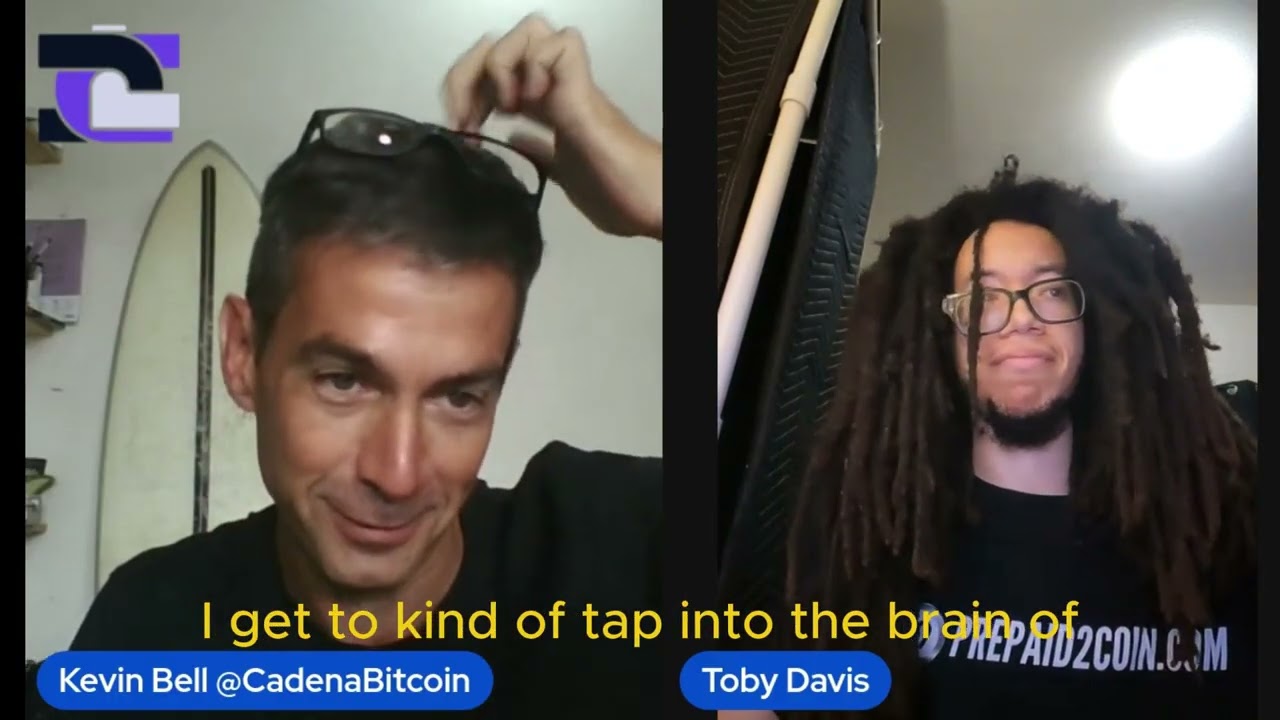
In this episode of the Freedom Money podcast, host Kevin Bell, CFA interviews Toby Davis, founder of Prepaid2Coin, about a practical Bitcoin use‑case: converting gift cards and prepaid cards into Bitcoin to onboard unbanked and underbanked users. Toby explains his early exposure to technology and Bitcoin, the discovery of a market gap where existing platforms (e.g., Paxful, LocalBitcoins) offered unsafe, high‑fee conversions, and how Prepaid2Coin was built to provide a cheaper, regulated, and user‑friendly alternative. The conversation covers the target demographic (U.S. low‑income users and global unbanked populations), pricing disparities (U.S. fees up to 50% vs. 7% abroad), the company’s compliance‑first strategy (banking partners, no‑action letters, legal expertise), and the custody model that encourages self‑custody while allowing custodial options. Toby outlines the product roadmap, including a prepaid crypto card that lets users spend Bitcoin directly at merchants, and discusses competitive advantages stemming from regulatory alignment and banking relationships. The interview also delves into broader industry challenges—banking resistance, platform gatekeeping by app stores, and the role of Visa/Mastercard—while offering advice to founders: focus on underserved niches, ensure founder‑market fit, and prioritize compliance. The episode ends with contact information and a classic “buy Bitcoin and HODL” sign‑off.
Chapters
And so today we have a very, very special guest. Toby Davis is here from Prepaid2Coin and really here to talk about Bitcoin utility and a very specific individual use case. Welcome to the podcast, Toby.
Thank you, Kevin. Glad to be here and always glad to talk about Bitcoin.
Yeah, same. Maybe we can just start with a bit of your background and a bit about your company.
Yeah, so jumping in a bit about my background, I was born here in the San Francisco Bay Area, grew up in Berkeley, which, you know, being so adjacent to San Francisco, very tech-enabled place. Grew up seeing a lot of different innovation and saw and heard about a lot of different new technologies kind of early. So, for example, we had a startup here in Berkeley that did robots with food delivery as early as 2016. So, you know, a lot of the things that we're seeing getting rolled out in other parts of the world, you know, I've already seen it 10 years ago. So similarly with Bitcoin, I got into Bitcoin pretty early, been using Bitcoin just kind of as an early user since around 2011, 2012. And since then, it's been pretty amazing to see where it's gone, honestly. I mean, myself and everyone else in the early days, well, everyone else that I talked to, you You know, we never thought it could be what Bitcoin's become today. It's truly amazing.
I think it, I think it's still just the beginning.
I agree with you. I agree with you.
So what about prepaid to coin? What, uh, I, I really want to get into the value that you're providing for your clients because I think it's incredible. And, uh, you know, the, the use cases are ultimately what drive adoption and You know, I think there's so much value that's being created for people when they understand this technology that it's really incredible. So I want to hear what you— everything about what you're doing.
Yeah, so the reason we started Prepaid2Coin is we saw that it was kind of a niche where people really wanted to transform their gift cards and prepaid cards into Bitcoin, to the point where secondary platforms like Paxful are doing billions of dollars of trading volume. And, you know, there was no safe and easy way for people to do it because while someone could go to a platform like Paxful, LocalBitcoins, and be able to, you know, trade their gift card or prepaid card for Bitcoin at, you know, maybe 50% of the value of the card, or in some cases even higher, um, you know, we didn't find that that was a safe or economically effective way for people to onboard into the ecosystem. So we wanted to create something that would be cheaper and all around better, um, and of course, you know, regulated. And so that's why we created Prepaid2Coin. The way we kind of spotted it was I was in the space prior with a previous business that I built, um, in the Bitcoin space where just basically selling Bitcoin, um, and essentially grew that to about a million sales per year, a little over a million sales per year. And then from there, that's when I identified, you know, hey, there's a lot of people that want to pay with the prepaid card, but, you know, they can't do so with our service. So why not create a new service that takes advantage of, you know, this huge niche that's there, essentially? And then once we started getting more into it, we noticed that, you know, people that are unbanked as well also face the same challenges with not being able to onboard into the crypto ecosystem at, you know, affordable rates. I mean, what we've seen is a lot of the Bitcoin ATMs and BTM operators in the space, they're charging here in the US, especially in some of these more lower-income areas. Predatory pricing such as, you know, starting at around 26%, we've seen as high as 50% just to purchase Bitcoin with, you know, cash. So a lot of these people in these communities that are kind of marginalized by the traditional financial system are essentially shut out of being able to enter the cryptocurrency ecosystem at all, as well as, you know, just simply invest in Bitcoin. So we wanted to make sure that, you know, since Bitcoin was created to provide a freer version of money to everyone, that, you know, everyone was actually included in that.
It seems, uh, seems aligned with what we're trying to do in terms of democratizing finance and, you know, offering services that would be available to everybody, including kind of 2 billion unbanked people in the world. Just a bit on the regulatory side, you mentioned regulated, um, and I'm just trying to understand. I was looking at your website earlier, you need a driver's license. So is, is it really just the US market? And can you talk more about the specific, uh, demographic that is affected by this and that you're able to serve?
Yeah, so it's very interesting. We've actually been doing a lot of market research and some other markets like APAC, some places in the EU as well. And we find that there are lots of places throughout the world where people face these challenges with, you know, the unbanked being able to convert their cash into cryptocurrency easily and affordably. Though it is less of a challenge for those that are not in the US, we found, as BTMs in a lot of these other countries are, you know, we've seen rates as low as 7%, honestly, which I don't think you'll ever find here in the US. So we found that because of the way that a lot of these BTM operators try to take advantage of those in kind of lower income neighborhoods and those are that are just kind of shut out of the financial system, it really created an opportunity for us to be able to provide economical rates for them, even with it still being a little bit higher than what you see in some of these other countries.
So, so for you, Toby, what's the next step in terms of what you're building? And I guess, you know, again, any more in terms of why you're building? I think you've covered it well, but this is—
Yeah, I mean, going into a little bit more about why we built Prepaid2Coin, there's a lot of people that, you know, purchase prepaid cards or gift cards and they think that they'll be able to use them for typical everyday uses such as shopping on Amazon, shopping at Target, or, you know, just paying bills, typical everyday uses. And they often find that they run into challenges trying to use the cards as, you know, they're effectively meant to be used, which is why we provide an easier alternative with Prepaid2Coin, where they can, you know, take that gift card, get rid of it, transform it into Bitcoin, something that is, you know, essentially, as we said earlier, much freer form of money where they can transmit that Bitcoin wherever they'd like to. Now the next step for us is going to be actually introducing a prepaid card that allows the users to be able to spend that Bitcoin directly with the merchant of their choice. As right now, we send that Bitcoin directly out to the user, and at that point, the user is able to use, you know, one of the many services available, such as, you know, Fold or Bitrefill, to purchase a gift card, which then they can go use at the merchant of their choice. But we find that, you know, the more you streamline the process for that end user, especially, you know, for individual consumers, just makes it easier for them and increases adoption. So That's what we're looking forward to doing here.
Yeah, I constantly live the same thing with my business every day in terms of, you know, making it as easy as possible for people to interact with it and understand what it is and removing all the frictions. So, uh, definitely, uh, you know, feeling that. I guess, of course, the other, the other question you know, that always interests me is kind of the challenges you're running into, you know. And I know there can be challenges on all kinds of sides, from technology to regulatory to client issues to, you know, internal issues that you might be having. So I'm curious what kind of things you run into, right?
I mean, everyone in the industry always says it's never a boring day working in the crypto industry, um, but You know, like many crypto companies, we face challenges with banking. I mean, especially during the recent crypto winter we faced during the last administration, but I'd really say in recent years, things have gotten a lot better. And at this time at Prepaid2Coin, we really got some great banking partners that really help us be able to transform cards into crypto and accomplish our mission. Now there are, you know, other minor challenges that we face presented by things such as, you know, overly restrictive or, outdated money transmission laws, but, you know, that's something we've been able to navigate relatively easily due to our team's deep kind of legal and regulatory compliance experience. And we've been able to obtain, you know, several no-action letters from, you know, several state regulators and navigate that process effectively. So we found that, you know, we really wanted to learn from some of our former competitors like Paxful's mistakes in the compliance department. Um, you know, they did billions of dollars but eventually had to shut down. So we built the compliance stack first, revenue second, as we really wanted to build something that was going to be around for the long term, if that makes sense.
Yeah, I mean, the regulatory piece is obviously very important when we're dealing in financial services. Um, I'm curious kind of on the technology side itself when you're giving people Bitcoin, what is that, self-custody Bitcoin? To, uh, how exactly does that work?
Yeah, so we don't have any site wallets, um, any, you know, company-hosted wallets that we provide to users. So we do encourage self-custody. So we encourage that the user download something like, um, you know, Exodus or any of the other various wallets and uses that to custody their Bitcoin themselves. But We also do allow users to send that Bitcoin to custodial exchange wallet if that's what they'd like to do. For us, it's all about that user being left with the choice to essentially put that Bitcoin wherever they'd like. So nice.
Yeah, I mean, again, choices are really good. That's kind of the entire point of Bitcoin, and, uh, that's, that's amazing. Um, I'm curious, I mean, you've been in the space a long time. OG, it seems like, right? Seen a few things in that time, I'm sure.
Certainly.
And is there anything, like, any things that you can pull from that and that you do pull from that and that you can give advice to builders that would be helpful? For me, this is the best part of the podcast. I get to kind of tap into the brain of really smart people and, you know, see what's been successful in building in the space.
Yeah, I mean, for me, I think it's, you know, obviously you want to build for the gaps that others are ignoring. I mean, if there's a gap that you see and, you know, it's— there's clear demand but nobody else is doing it, um, just because nobody else is doing it doesn't mean you shouldn't strive to do it. So I encourage builders out there to You know, go for those spaces in between.
Like, like a niche.
Exactly. Find your niche that works for you and make it work for you. And, you know, on that note as well, I think that founder market fit really matters as well. So if you don't have an edge in the industry or the niche that you're trying to create a project in, I don't think it's a good idea for you to go into that niche. Most of the time, as you know, someone else that does have that edge is going to have a much easier time building that than you will. So I think it's always best to find your competitive edge and, you know, get in where you fit in, so to speak.
Do you have many competitors in the space now? And if so, what do you see as your edge?
For us, it's really been interesting, as, you know, I talked earlier about some of the banking challenges that we faced. And, you know, we really seen with our competitors that's been very restrictive for them and Most of them have actually gone away due to not being able to find banking in such a restrictive space, which is one of the major reasons why it was very smart for us to go with the compliance-first approach, as if you're going to be working with regulated banks, regulators, I mean, it's best to prioritize their complaints, any worries they may have, and kind of get that out of the way on the forefront before focusing on you know, striving for 100x in your revenue.
So, so kind of asking permission rather than, uh, seeking forgiveness afterwards, right?
I know that's something that, you know, a lot of founders, especially in the crypto space, you know, hate to go, um, that route, but I do think it's the route to go if we want to make sure to be able to include everyone in the ecosystem. It's not going to be able to be done without the help of the banks. I mean, You know, people have to have a way to actually on-ramp into the ecosystem. Maybe once we reach 50% world crypto adoption, we can talk about, you know, operating entirely separate and independent from the banking system. But, uh, for the time being, I think we're gonna have to live with them and work with them.
Frenemies.
Exactly.
But, but I think, um, yeah, I mean, you raise a good point that to me, you know, talking about this with other guests Uh, you know, and, and in business in general, I'm, I'm just shocked at the banking situation for everybody. And this is from, you know, wallets to prepaid cards to, you know, really anybody in the space. Like, uh, my business is based in El Salvador, and it's pretty hard to open up bank accounts. Um, and you would think that wouldn't necessarily be the case, so Or maybe people think that's not the case, but even, even in El Salvador, it's an issue. And talking to, you know, other service providers in El Salvador, they're, you know, this is a known issue in the space. And, um, I, I agree with what you're saying in terms of, you know, at this point banks are kind of still needed. But to me, a bit of the experience I had before was dealing in a mortgage business, and it just became, you know, exercise in collecting documentation and asking people for information and making them jump through hoops. And at some point, I really have to think if you can make a user experience that is, you know, cheaper, faster, and better in every single way than banking, that the banks, you know, kind of, you know, maybe fall by the wayside and don't have that, uh, you know, importance in society. And I think for me, the other piece of that is the only reason the banks exist in their current form is from public, you know, uh, funding. And so the next time they fail, I think they're going to have a harder time maybe, you know, being recapitalized by the government when they wouldn't be, you know, they weren't willing to give the sitting US president a bank account. And so I'm really interested in terms of how this unfolds and You know, to me, you know, there's all this risk in the banking sector that, you know, if you're in the banking sector, you talk about counterparty risk and all these other things. But if you're a client of the banking sector, you don't really, you know, you just kind of assume your money's safe. And it's safe because there's an implicit public bailout when your bank fails. Whereas that bailout doesn't necessarily exist in the crypto or Bitcoin space. So, Uh, you know, as we see more and more adoption, and, and, you know, I don't, I'm not sure it necessarily needs to be 50%. I think once you make these tools accessible to people, uh, and you look how quickly, uh, you know, kind of paradigm-shifting technologies get adopted, it's, you know, we're talking about something like the internet or You know, like you look at consumer technologies from television to the microwave and other things, it's not, you know, I think, I think we're starting to see the point of inflection. And that's why, you know, I think, I think the price action these days is particularly interesting because it doesn't correspond to anything I'm seeing in the real world where there's increasing merchant adoption, you know, additional use cases, financial tools, and interest in Bitcoin as an investment and as a medium of exchange?
Yeah, I think it's interesting. I really think it's a question of when we start to see some of the rails that actually move the money start to come on board, such as Visa and MasterCard, as I feel like they're a big reason that the banks have so much control that they do. As you know, your everyday person wants to just be able to spend their money, um, pretty simply. They want to take their debit card and swipe it whether it's attached to a bank account or not, um, I'm not sure that that's something that your everyday person that just wants to spend their money cares about. And when we get to that point where an everyday user can just take cash and easily load it, you know, at the store onto some sort of crypto card where they can both access their cryptocurrency and also be able to spend that, you know, like everyday money at any merchant, I think that's when we'll see the point, um, where banks will have a real challenge on their hands. And, you know, a real problem.
Yeah, I, I think it's on the consumer side. I also think it's on the investment side. I mean, it's, it's frank— it's just better money, and the entire system is now capitalized on debt that can't possibly be repaid unless it's printed money. And right, there's some tough choices that need to be made and kind of, you know, balancing budgets and, and other things. Otherwise, government is just going to eventually take over everything, it seems. So Um, yeah, very true.
And I mean, we're seeing a little bit of that happen as well with the, uh, deep government involvement with some of these firms like Circle, um, Tether. And so it's going to be interesting to see how that develops as well. As I mean, we're taking the control out of, you know, the banks and giving it to, you know, these private firms. So Well, yeah, to a degree.
There's, there's so many interesting things. I mean, for, for my business, and, you know, I love Google and I love Apple, but we have an app, and so we have it in the, the App Store and Google Play. And in, in some ways, uh, it's almost like they've become the de facto regulators of whether we can distribute this or not. And so you have these kind of tech behemoths, you know. And if you believe any of the conspiracy stuff about COVID maybe they're, you know, taking some directive, you know, from some higher power in terms of what they can and can't do. So yeah, it's, uh, and, and then, you know, again, from a banking side, I think, you know, having worked at banks and still have friends who work at banks, it's, uh You know, they'll say, well, we can't, you know, take these people on because it's this KYC risk. We don't know where the money's going and all this other thing. So they can kind of continue to put this shield of nonsense up and do it under some regulatory cover. And to me, you know, again, if we get to this world where people can do what they want and make individual decisions and be able to transact freely, whether it's with gift cards, prepaid cards, you know, self-custody Bitcoin, what have you, and the tools exist for them to do that, I don't see anybody choosing the banking sector. Like, I just don't.
That's true, that's true. I mean, once it's made simple enough with the right infrastructure for the everyday user to be able to understand it and easily use it, I think that's when we receive the real kind of turning point there. You know, I strongly believe that Bitcoin's future isn't really determined on, you know, institutional involvement. It's really more on boring infrastructure.
Yeah, no, I agree with that. I think, you know, this has been incredibly helpful. I'm, you know, grateful for the time. I'll kind of leave it to you with the last word, and if there's any any way people can get in touch with you?
Yeah, I mean, everyone, please follow us on Twitter, Instagram @Prepaid2Coin. That's Prepaid, the number 2, C-O-I-N. You can also find our website at prepaid2coin.com. So that's prepaid, the number 2, coin.com. And the advice that I have for everybody out there watching is buy Bitcoin and HODL.
That's, uh, that's some solid advice. And, you know, thankfully I read that disclaimer at the beginning, but that's solid advice at any time for anybody. I really appreciate it.
Agreed, agreed. Appreciate your time as well.
We'll talk soon. Thanks again.
Talk soon. Thanks, Kevin.
More from Kevin



Why Bitcoin is more than an investment I wrote the Bitcoin Bible #podcast #interview #bitcoin


When banks freeze accounts the importance of self sovereignty #podcast #interview #bitcoin

Retirees inflation can erase your savings read Bitcoin Bible #podcast #bitcoin #investing


Taxes KYC and How Governments Are Making Bitcoin Harder #podcast #bitcoin #interview #investing

How SeedSigner Sparked the Bitcoin Hardware Store #howtoearnmoneyfromusstockmarket #bitcoin

The three essentials wallet node and miner #podcast #howtoearnmoneyfromusstockmarket #bitcoin

How the Bitcoin Hardware Store was born #podcast #bitcoin #realwaystomakemoneyfromhome