Freedom Money Ep9
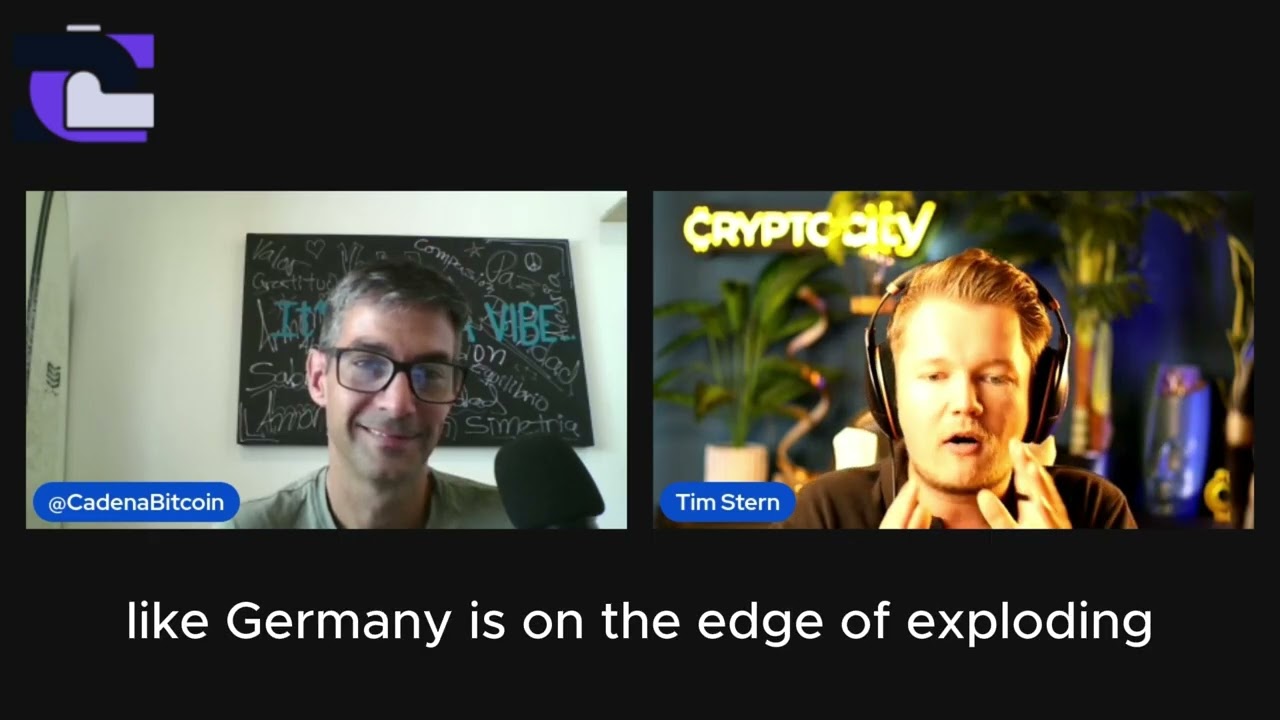
Tim Stern, a German entrepreneur, built Crypto City on Margarita Island, Venezuela, a DAO-governed community where residents own land and vote on projects using blockchain. The $2 million hotel, marina, and housing are financed through smart contracts that automatically refund if fundraising targets aren't met. Stern moved to Venezuela in 2020 seeking freedom from COVID restrictions and predicts completion by 2030.
Chapters
Today on the podcast, we have a very special guest. Tim Stern is here. Welcome to the podcast, Tim.
Yeah, thank you for having me, and thanks for this great opportunity to be on your podcast.
Um, maybe a good place to start is, uh, your journey to Bitcoin.
Yeah, my journey to Bitcoin actually began way back in around 2015-16. Unfortunately, I didn't buy enough because I was too young, right? But whoever bought enough Bitcoin at the end of the day, um, I've been into crypto, uh, around 10 years now. I run a big academy in Germany, actually, where I have around 10,000-11,000 students. And we took this Bitcoin journey to another step and transforming it into an actual form of living together, but we are going to talk about that a little bit later.
Yeah, so I agree that you can probably never have enough Bitcoin. I think I, you know, I worry about this more than anything, some— most of the time. So I'm curious about your evolution now, and, you know, I do want to get into this now in terms of your your company's mission and where this has brought you.
Yeah, so basically, I don't know if we can agree on that, but I think many of your listeners, depending on where they are, they can maybe identify with what I'm about to say. I think our birthplace, our birth country, I'm from Germany, but I think I speak for a lot of people in Europe, a lot of them feel that we are going into a direction which is not exactly not exactly only favorable in terms of crypto, in terms of entrepreneurship, in terms of personal freedom, in terms of personal security. And a lot of them, a lot of us are looking to emigrate somehow, right? And I did this step in 2020 when I was deciding that I'm fed up of all the COVID stuff going on. And I packed my stuff and I got a flight to Margarita Island, actually, in Venezuela. Just wanted to check it out for some months. I noticed the island since 2004, since I'm 8 years old, as my dad emigrated there in 1997. But of my little plan to stay there for like 3 months, it extended a little bit. Now it's around 5 and a half years. And yeah, never decided to go back. And we got a lot of interest from, from Germans, from people from Europe, and we decided to do our own little project, a so-called private city. And yeah, as I'm a big fan of crypto and using that for around a decade, we decided to call it Crypto City and implement some really cool techniques from the blockchain into our daily form of life in the form of a DAO. As many of you know, DAO means a decentralized autonomous organization, and we're using it for government purposes, but actual government purposes, right? So how are the forms of ourselves to live together? How can we do a change, how can we introduce a change of rules. And everybody who owns a plot in Crypto City has a voice and can do votings on, on the DAO. So that's one pillar of what we're doing. And the other pillar we're doing with the DAO, with our decentralized autonomous organization, is we are financing projects together in Venezuela. Um, because, you know, Venezuela just recently got a regime change, but it's still not 100% risk-free to invest in big projects in Venezuela. So what we do is basically we do digital crowdfunding and split the risks with ourselves, like in our Neighbors group, for example. We buy a hotel around $2 million, and this gets split up into different investors, and everybody can put down, I don't know, $10,000 USDT, $30,000 USDT, $50,000 USDT. Maybe somebody doesn't want to put anything down because he's not interested in a hotel. And we have a lot of projects where we invest together and use our European skills and form of doing business in Venezuela, which is kind of still in the '90s. So we have a big market opportunity here.
Yeah. So I'm curious, it sounds very familiar, your journey to Venezuela. I had a similar journey from Canada to Costa Rica. COVID became a bit strange and they started freezing people's bank accounts and it didn't It didn't seem like it was particularly welcome. And the, the funny thing is I have a good friend here, the guy who actually helps me with these videos, who is from Margarita Island. And so, cool, we live in this tropical paradise here and, uh, couldn't imagine, you know, a better place to live. But sometimes he does bring up Margarita Island as potentially a more beautiful place. It is. So I'm, I'm curious I do want to get into a bit more details of the DAO and how that works specifically on the financing side. And, you know, how, you know, if you can get into a bit more detail there.
Okay. So the DAO was basically born out of a necessity because, as you know, Venezuela is sanctioned for many, many years. So it's a problem anyway to bring fiat money from Europe into a continent like Latin America, you know. The German typical bank, if you send $50,000 to the Caribbean, they're going to call you up and block the transaction and say, what are you doing? And it's pretty, pretty annoying if you do a lot of projects and you want to deposit $20,000 here and $10,000 there and $20,000 there. So we just settled to use crypto as Venezuela is a very, very crypto-friendly country. Actually, you can pay your gasoline at the gas station in USDT here. Or your, your supermarkets, your groceries. You, in a lot of supermarkets, you can buy crypto, which was also born out of a necessity as the local currency, the bolívar, was hyperinflationating so fast that people just settled to use USDT because it's hard to get US dollar cash. And that this somehow transitioned into kind of being normal to pay your I don't know, wherever you are, at your bar, when you buy a hamburger, when you are buying your groceries. Even some big real estate deals are done in USDT out of a necessity. Right. So what we did with our DAO, I was thinking about how will I bring together 300 entrepreneurs from Europe or maybe from Canada in the future? How do I— I'm going to bring them— how I'm going to get them on a table and how will I make them do business together? And I think a DAO actually is a very cool form which is really underused of organizing a big group. Because what's happening normally, you want to do a project, you have 3 or 4 business partners, you know, and then one day you're sitting at a notary and it's time to sign, right? Suddenly you have one of your business partner who gets cold feet or whatever, and the wife calls up and says, I don't think it's a good idea. And then you've worked on a deal for a month or two. And on the day of signing, it's going down. With using a DAO, you can do a really, really cool thing. You can flip this completely 180 degrees. And for example, if you do a project right now, um, we are doing, let's say, a hotel. It's worth $2 million, you know, and we want to finance this together. We open up a project in our DAO, and a little smart contract controls the funds deposited. And then we have a little countdown, for example, let's say 90 days. You and me, we decide to do this project, you know, we both put down $250 $100,000. We want to raise $1.5 million. And then we open a project, a countdown has like 90 days, 120 days. And then in this kind of window, people can deposit and be a part of that project. When the countdown is over, the smart contract is gonna check the liquidity pool. Hey, has the financing come together? If so, liberate the money, and then you and me get access to it, and we can start doing the business and open the company and sign everybody up. Or option number 2, the money didn't come together because our neighbors maybe say, hey, Tim is way too busy and this Canadian guy, he doesn't even have a hotel background. So it's maybe a bad idea. And we only got, let's say, $300 grand together. Then the smart contract is going to repay every investor automatically. So you flip the script completely. Instead of signing and then paying, you pay, it gets frozen. And then once you have all the money together, you sign and then the money gets liberated. And that's how we're gonna do a lot of projects in our Neighbors Group, ranging from, you know, real estate, from food production, from— we even have a racetrack starting right now. It's a really funny project because our target group are European entrepreneurs or entrepreneurs from all over the world which are just fed up with their own system and they just want to have this Caribbean lifestyle and do business together. That's exactly what we do.
Yeah, it's— I mean, there's so many things you touched on there. Um, I'll just add kind of on the LATAM piece, although they have their own currency here, it's just tied to the US dollar. It's always 500 to 1, really, no matter what the exchange rate does, if you're just in a friendly local transaction. So it's kind of, you know, makes you— and it's been that way for 4 years, and it kind of makes you question why they have money. And you see what's happened with the bolívar. And it doesn't take a long time to explain the benefits of cryptocurrencies to people in Latin America, or people who, you know, have really been on the front edge of, you know, seeing currencies just being manipulated and used for, you know, as the tool of government control that they are. Yeah. Um, and it becomes really obvious. And then, you know, people move away from it. And so it seems obvious to both of us that this is the next step. And I think one of the things that I think, you know, I was pushing back on in Canada, and maybe you were pushing back on in Germany, is kind of a bigger theme that runs through this world in terms of centralization versus decentralization. And I certainly felt like there was this you know, pull to kind of mass, I don't know, pharmaceuticals, fake news, you know, government institutions that are growing in importance over time. And, you know, ultimately it really kind of brought the, I don't know, Square's cage of the box just got smaller and smaller in terms of what was permitted behavior or permissible thoughts or anything. Um, do you find that where you are in Latin America, it can support the type of freedom that people are really looking for?
I think if you, if you really analyze what's happened in the last 10, 15, 20 years, um, I think you have to be on one of those countries, or have to be in one of those countries which are kind of still back, you know, like a little bit underdeveloped. Because I'm just talking about CBDCs, EID, total control, CO2 budgets in Germany, all this big bullshit, you know, which is happening from all the leftist, woke, whatever bubble. Um, you can't fight it. I think the time of fighting is over, at least in Germany, you know. If you're looking at, uh, German, uh, voting polls, you know, they're still voting for left and green. I don't know how the fuck— I mean, yesterday Porsche reported that they have 98% of drops in their gains. 98% from 5.6 billion down to like 90 million. Like, Germany is on the edge of exploding and the Germans are still voting for leftist bullshit. So what's gonna happen? You can either decide to stay and fight and protest Or you can decide to go into another country which is friendly to your entrepreneurial views of the world, you know, and start doing a nice business in a great country, which, yes, okay, it's a little bit underdeveloped. Maybe every 10 days you have 10 minutes of no electricity, but you can go around that, you know, you have a little electrical backup system or whatever, and then you get rewarded with great sun, with great shores, beaches, people, you know. Low taxes and just a great way of life. And then even if you can use crypto in Venezuela because it's so much use, it's so cool. I mean, I love it.
Yeah, it's— it— I think that resonates, uh, exactly with, with kind of how I feel. Like, it, it, you know, just, just, uh, it's less the direction that things are going and, you know, or more just that it's not going to reverse. Like, at no point is there going to be You know, less government and we're going to— so it's both the magnitude of the change and the direction of the change. It's like, it's not even on the radar that we may want to slow down and not have the government run every aspect of our life in Canada. Like, it doesn't even make the debate because the newspapers are published by the government. So kind of keeps things, keeps things simple that way. So what's the mission of the company then? Is it to build these communities? Is it You know, what's the bigger picture, Tim?
So what we're doing, basically, I'm a big fan of deglobalization and getting back to a kind of tribe, you know, where you know your people, where you know who's your neighbor, where you know who you can rely on, where you know you're not going to get backstabbed and everything. Our mission basically is to kind of create a community which is going to be influential, which is going to be with great values, which is going to help Margarida Island and grow, which is going to create jobs, which just is also a community which basically highly values freedom, right? So we have a voting process. Actually, every new neighbor who wants to buy a plot of land has to present themselves to our already existing group. In the moment, we are 53 or 54 families, and you actually, you write like a CV, what you did and what's your values and what you want to do in Margarita and everything, and then the group's going to decide is this a fitting neighbor or not? And once you're in the group, you're already— you're also going to vote about your next neighbor. So I'm a big fan of not recreating Germany again in Venezuela because I was running from my stupid German neighbors, you know, like the typical German, you cannot do this, you cannot do that. It's after 10 p.m., blah, blah, blah. You know, like the typical German leftist, blue-haired, a little liberated woman. No, we don't want it. We want to have a strong community of entrepreneurs which are gonna have a lot of projects in Venezuela, have a nice life, and yeah, maybe create something which outlasts ourselves to the next and the following generation.
So what— I mean, obviously a lot going on in Venezuela now. Do you feel the changes happening on the ground at this point?
Oh yeah.
Oh yeah. What's changing? What's happening?
For example, since a week you can have a US bank account with your Venezuelan company, which is going to accelerate growth of the country by tenfold. Because you basically— it was not possible to get fiat money into Venezuela on a normal way. You always had to do like limbo dances via, I don't know, United States and then Panama, and from Panama to there, and from there you change it to crypto, and then crypto to Venezuela, or you just pay directly in crypto, which is way easier, you know, because the blockchain is not going to ask you if you send 10 or 10,000 USDT. You know, it's just freedom. But with this new change of laws, you can actually now send money from Europe, from the United States, from wherever to Venezuela and use it here. Also, you have an American embassy which just opened up. The end of the sanctions is going to come. There's now a direct flight from Miami to Venezuela. And the travel warnings to Margarita got recently eliminated from Germany. It's just a part travel warning now to Venezuela, but not to Margarita anymore, which means there's technically the ability to have direct flights from Europe again to Margarita like it was 20 years ago. Yeah, a lot of money is coming in. I get calls every day from all over the world from people with a lot of money who want to invest in Venezuela right now. Just had a Canadian yesterday coming actually to my office. You know, he has a big group and he's going to a conference in Panama now and talking with 300 people about Margarita as a destination for investing. I think this is going to be Ibiza again, like it was in the '90s. And if you come on board right now and you can buy apartments in Margarita for like $50,000 and you can pay in crypto, which is pretty cool. I mean, where else in the world? And yeah, I see a lot of big changes happening.
So what stage of building are you at now?
We are building— what we did the last 2 years is we created 40, 45 artificial terraces which they have like different height points. It looks like a big, big staircase. We moved 1.1 cubic million meters of earth, which is like 400 times the Big Ben in London. Right now we're doing all the terrace walls and we're starting to cut the streets, and at the end of the year we're gonna start building all the housing. And then we already did like the water and the internet and all the amenities around it there.
And so how long from that, about a year?
No, I think it's gonna be finished in around 2030.
Oh wow.
Because we have a port as well, which is gonna be 170 places for the boats. We have a beach club, we have the entrance, we have the Marina Club. We have the old people's living home next to Crypto City because the parents of the people emigrating to Venezuela, they have to live somewhere as well. So we did like a full service, you know, 3 times a day food and doctor's appointments and blah, you know, all for way less than half of the cost.
That's a huge opportunity for LATAM right there. Yeah, that is.
Yeah, they do it in Thailand already. Yeah, but LATAM didn't still do it yet. Yeah, around 2030.
So just questions, because I find everybody in this space, uh, you know, sometimes runs into these regulatory hurdles or blocks. Do you have anything like that that you run into? Or I guess more generally, what are the, what are the specific challenges that you're dealing with today? What keeps you up at night?
I mean, I have a long journey now in Venezuela. I have, I'm pretty known there. I have been on state TV several times. I've been to tons of radio shows. I've been to tons of interviews on YouTube. Obviously, it's not that easy to get a project with that magnitude off the ground in Venezuela. You have to have everybody on board, you know, your alcaldía and your local major, and you have to get the permission from the environmental, and you have permission, have to have permission from the ocean institutions and blah for the marina. This was a good year and a half of, yeah, permission fights, and, but in the end we got it because we are kind of a symbol of hope in Venezuela. There was a point in time where the government had a problem with its name because they were not happy of the name Crypto City because everybody was thinking that we do big mining operations and we have our own money, and this is all sounds like, you know, like money laundering and blah blah blah. But after I explained to several institutions that It's a project where you're gonna have 300 entrepreneurs just using the blockchain to fractionate investments into real-world projects in Venezuela. Then they understood it, they were like, oh, okay, cool, that's actually a nice project which is going to create tons of jobs and everything. And then we were pretty, pretty good off, actually got invited to Caracas several times, you know, to speak with a lot of officials and everything. Pretty, pretty funny journey, uh, being here in Venezuela as a young German guy who kind of stumbles around with all the institutions. But, uh, yeah, where we are, where we are now, we're pretty, pretty happy right now. And now you have, uh, the government change, which, uh, maybe is not only good for Venezuela, but in the international, in the international picture, uh, people are less scary right now, or less scared to come to Venezuela right now because the big change happened, you know.
Yeah. Yeah, so, um, I'm trying to go decide where to go. Normally I say what's, what's next in the space, but I'm curious, you know, not only what's next in the space, but what, what's next in Venezuela?
I think what's next in Venezuela, um, Margarita got declared a special economic zone. So, uh, if you register your company in one of the special economic zones here in Margarita, you pay zero taxes This is going to attract a lot of capital, especially now where you have the regime change introduced. I think Venezuela itself is gonna, gonna be ramped up again with their oil production. I have a lot of friends on the mainland which sent me videos, you know, with the big machine suddenly moving again with, you know, big like metal sheets and everything where they're gonna ramp up all the production now again. One of the biggest sugar plants just got opened again in, in Sucre. Then you have the big good tier plant which they produce tires and shit. I think Venezuela has been on a really, really low point, and I think you can compare it to Germany in 1989 when the wall fell for East Germany. You know, I think that's exactly what's gonna happen. You're gonna have millions and billions and billions of dollars coming into the country, and you're gonna have turbo capitalism in the next 10 years. And if you're early on and playing with the game, you know, have a share of the pie, you're gonna have a nice, a nice life.
Interesting. So I mean, I guess that boils down to your advice for builders. So I mean, you've been in the space a while, you're a young guy, um, what, what's your advice to be successful?
It's my advice to be successful, a good question. Um, I think if you get out of a jurisdiction where you're going to be annoyed every day and where you have to do administration every day and being occupied with papers and permissions and whatever. This is like 75% of a workday in Germany, right? Like documentation, administration and paying your blah and paying this and paying that. You never get off the ground because once you earn a little bit of money, the German state is going to take it away. Instantly. How you want to grow like that? For me, once I had an IT company in Germany, I'm an informatics guy originally. I had 2 years of a little IT company where I had like 1 or 2 employees and we were like fixing servers and stuff for like computer, for like companies in Germany. Once I got off to Venezuela and suddenly having to report to basically no one anymore, and just do my business and have way less paperwork. This was like such a turbo.
It's like you're kind of untethered. It's like you're this hot air balloon and they just cut the ropes and you're now free to fly around the world.
Exactly. That's exactly what's happening. And also, you should get into AI, man. If you're still using ChatGPT just for ChatGPT, you're stupid. There's so much great opportunities right now with OpenClaw. I have like 25 agents parallel running, searching all the web for articles in my niche and whatever, and it's great. If you don't use AI, you're gonna get, I don't know, you're gonna be left behind.
Yeah, I'd agree with that. I, you know, I'm running a number of different agents doing a number of different things, helping me with a number of different projects. I honestly have no idea how I could get any of this stuff done without that help. It just, you know, I'll have different agents, you know, Claude doing one thing and different AI tools doing other things.
Love to see it.
Incredible, incredible. But there is a limitation because you do end up with a bit of slop sometimes, and you do end up, uh, you know, you can kind of reach the limits of AI knowledge, I find, sometimes if you're, if you're really Sorry, can you rephrase the question? No, I'm just saying sometimes I find that with AI you can run into the end of the AI knowledge if you're pushing something new, you know, you're like, ah, you don't really get it, I have to figure this out on my own.
I think it's most of the time a prompt problem. I mean, if you know how to do the prompts, it's probably gonna work 80, 90, 95% of the time, right?
Yeah, well, it should for sure. Well, I mean, this is, uh, amazing to, to see what you're building. Uh, I know we looked at the pictures before. I don't know if you want to bring any up now, but it is incredible. Um, and it's amazing, you know, uh, really interested to hear about your journey. And frankly, you know, it sounds like you may be more scarred from your German experience than I am from my Canadian experience, but I just found you know, my whole life in terms of everything from watching hockey to all these different things I did. And there's a certain way you view the world, whether it's through language, through a number of different things. And when you're in a place that's totally different, you kind of have to rebuild, you know, all these connections. And you— I think when I did that, I just I couldn't believe the amount of bullshit I had fucking swallowed, right? Right. It's crazy.
I mean, try to explain to a Venezuelan guy that we have 69 genders in Germany. They're gonna think you're crazy.
Yeah, yeah. Well, where, where can we send people, Tim, who want to learn more about the project and more about you?
We have a website called cryptocity.land, uh, L-A-N-D. Unfortunately, most of it is in German, but you can use your browser translation tool. And there's also a live chat. This is actually still me. It's not agent, it's nothing. It's actually coming right to my phone. If you have questions, we have also like a Telegram group where I'm sending videos from Margarida, infrastructure videos. I do a lot of YouTube. You should definitely check out Margarida, especially if you have some crypto lying around which you want to kind of I don't know if that's my side or your side.
I hope it's your side. Check, check.
Ah, now we're back.
Here we go. Uh, I was just gonna end the recording. I didn't know what to do.
Yeah, yeah. Is it mine or your internet? I have 500 Mbps fiber optics.
I'm hoping it's yours, but it's possible it's mine. That's what happens in Costa Rica. The developed world, developing world, you know. Like, you have the same thing.
My dad's an internet provider, actually. He made the whole island with fiber optics. We have 55,000 clients and around 500 employees, and I have fiber optics to my computer directly. It's pretty cool.
Well, we need that here. Investigate Starlink pretty soon. Anyway, very, very nice to meet you, Tim, and great. Best of luck with the project.
And thank you.
Look forward to connecting soon. All the best.
Hope you're gonna visit us soon.
I hope so too.
See you, mate.
Take care.
More from Kevin



Why Bitcoin is more than an investment I wrote the Bitcoin Bible #podcast #interview #bitcoin


When banks freeze accounts the importance of self sovereignty #podcast #interview #bitcoin

Retirees inflation can erase your savings read Bitcoin Bible #podcast #bitcoin #investing


Taxes KYC and How Governments Are Making Bitcoin Harder #podcast #bitcoin #interview #investing

How SeedSigner Sparked the Bitcoin Hardware Store #howtoearnmoneyfromusstockmarket #bitcoin

The three essentials wallet node and miner #podcast #howtoearnmoneyfromusstockmarket #bitcoin

How the Bitcoin Hardware Store was born #podcast #bitcoin #realwaystomakemoneyfromhome