Freedom Money Matt Wilson Episode 25
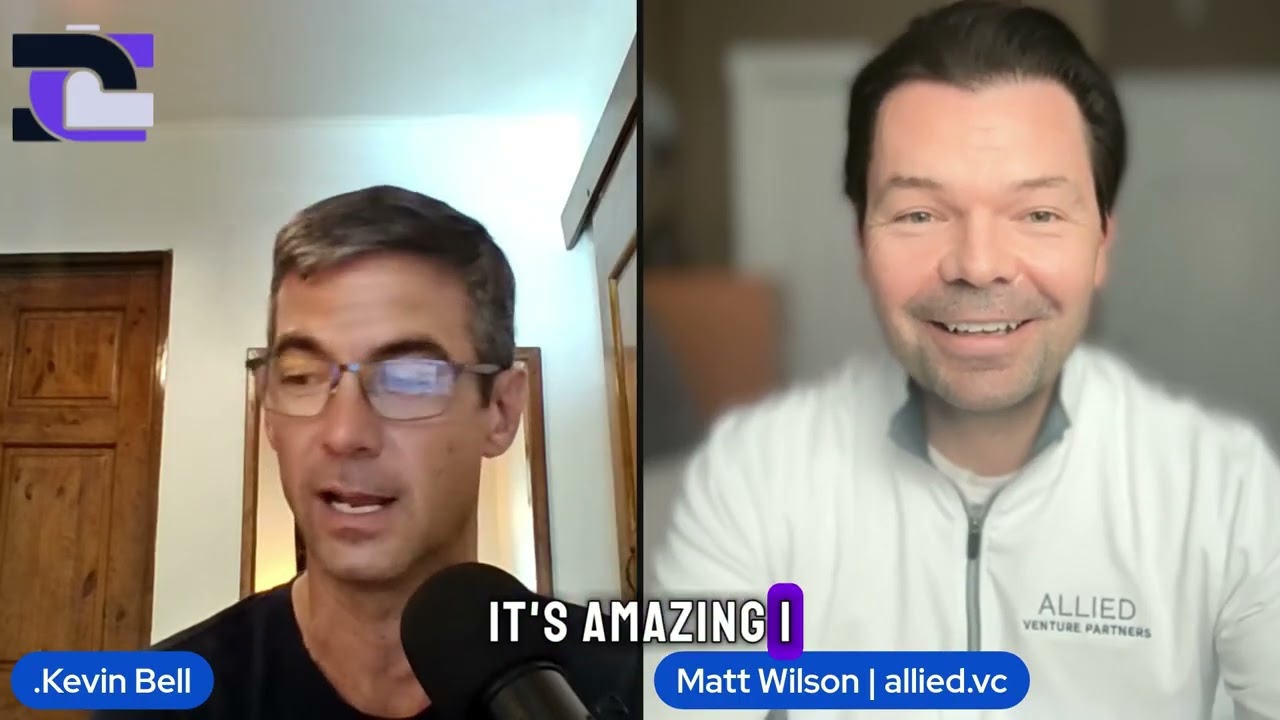
In this Freedom Money podcast, host Kevin Bell, CFA interviews Matt Wilson, founder of Allied VC, a global angel syndicate based in Calgary. Wilson recounts his transition from founder to angel investor, the launch of Allied VC during the 2020 pandemic, and how the syndicate now manages over $7 million across 25 portfolio companies with a network of 2,000+ LPs in more than two dozen countries. He explains the advantages of a networked‑capital model versus traditional venture funds, highlighting how founders gain access to operational help, customer introductions, and downstream funding through a distributed LP base. Wilson outlines Allied’s industry focus—enterprise software, fintech, marketplaces, AI/ML, and selective crypto‑adjacent bets such as Phone Bank (stable‑coin settlement) and Club Orange (Bitcoin community platform). He discusses operational challenges of running an angel syndicate, including achieving “minimum viable consensus” among LPs for each deal and filtering the flood of AI‑generated startup ideas to find durable, venture‑backable businesses. Regulatory considerations are addressed through a back‑office partner that handles compliance, with Wilson expressing bullishness on stablecoins and optimism about recent U.S. legislation (the Genius Act, Clarity Act) while noting uncertainty around quantum threats to crypto. The conversation turns to AI’s impact on fundraising: seed‑stage companies now often launch with $0.5‑1 M in revenue, valuations have surged (median post‑money $35‑40 M for YC batches), and Wilson acknowledges a potential AI bubble but stresses that today’s companies generate real revenue. Finally, Wilson offers practical advice to founders—build quickly, talk to many customers, protect proprietary data, and consider building a moat with unique datasets—while noting he provides informal go‑to‑market support to portfolio companies. The episode ends with contact information (allied.vc, LinkedIn @MattWilsonYYC).
Chapters
Welcome to Freedom Money, where we explore Bitcoin, financial freedom, and building in the Bitcoin space. Um, just a quick reminder before we get started, this podcast is for educational and informational purposes only. Today on the podcast, we have Matt Wilson of Allied VC. Welcome to the podcast.
Thanks for having me, Kevin.
Um, so where I like to get started, a good, uh, kickoff point is really, uh, your background, and I'll, I'll kind of start the conversation by saying it's maybe less Bitcoin-specific and more, uh, financial and venture capital-based.
That's fair. I'm a former founder. I previously built and sold a company back in 2012, so I've been investing now for about 15 years. And after I sold my company, I started working with founders predominantly on their sales and marketing and go-to-market strategies. So I was working with startups during the day, and then at the same time, on the evenings and weekends, I was looking at ways to get involved in either venture capital or angel investing. And I'd always been a public market investor since high school, but was really curious to know how to— having gone through the startup experience myself, how can I maybe invest in some of these startups and companies that I was working with? So I started angel investing, joined a bunch of different angel networks, some venture capital funds as an LP. And over the years, just started writing small checks and learning through my network. And then after about 5 years or so, I started to realize this gap where the founders I was working with during the day were also struggling to fundraise. So that kind of shifted my focus into how do I help these founders get access to venture capital and funding opportunities. And because I was angel investing and building my, my investor network, I was able to start making those connections. And, and basically how that transpired was just putting together short 1 to 2 page deal memos and then trying to introduce companies and send those deal memos off to relevant investors in my network. And did that for a number of years, got a lot of first meetings, got some companies funded. And, um, after— by about 20— 2015, 2017, because I was sort of positioning myself and gaining a reputation as somewhat of a super connector between founders and investors, I then started to think, well, maybe I could syndicate some of this deal flow myself. And long story short, I went back to business school, got my MBA, and then graduated in, in 2020 thinking that, well, maybe I'll work at a venture firm for a few years and then eventually spin out and launch my own thing. But as luck would have it, I graduated right at the height of the pandemic in spring 2020, and no firms were hiring. A lot of firms weren't even deploying capital. Nobody knew where the market was going. So I essentially sat on my, my business plan for Allied over the summer, and then by October I said, I'm just going to launch this and see where it goes. And here we are, 6 and a half years later, we've deployed over $7 million across 25 portfolio companies, and we have a global network of over 2,000 investors. So it's been a really interesting ride.
Amazing what, uh, what you can accomplish by just taking the next step and putting one foot in front of the other. Um, I have specific questions about going from startup founder to investor. Um, I mean, you identified some of the gaps I think that founders typically have in terms of fundraising and go-to-market. Um, and so that's really interesting, uh, to me. But was there something that you saw on, you know, as a builder that was missing in the VC space for you that you thought you could address?
Yeah, for me, like, the big thing was being not based in, in Silicon Valley or New York or Boston, sort of the more historic venture capital centers. So like, you can be a great founder and build a great company, but if you're not in one of those, those cities, historically it's been really tough to raise, raise funding or experience funding from venture capital investors. So for me, it was really about sort of building those networks. How do I get tapped into those experienced venture capital networks? And then leverage, leverage network to help introduce founders to more experienced investors. Because unfortunately, we see it a lot in some of the smaller and mid-tier markets where you have investors, but maybe they're not as experienced, or they, they, the founder with, with that are not overly founderly friendly. So, um, yeah, a lot, a lot, seen a lot of bad stuff over the years. And for me, having gone through the founder, um, the founder process and exiting my company, I just wanted to help, help founders get connected to more established venture capital investors who were going to hopefully act in their best interests and not, not provide them with a set of handcuffs and liquidation preferences and all the other stuff that some investors like to throw in there.
So as a founder, what would be the advantage of dealing with kind of a network as opposed to, uh, maybe different pools of capital?
Yeah, so we, we're fortunate we have venture partners in all major cities across North America, and then we also have an LP base that's global, right? We have over two dozen countries, people representing. So, um, we really have the ability to tap into different local unique networks as opposed to a traditional venture capital fund where their LPs might be a group of endowments or, or investments that really aren't going to step up on an operational level to help the company succeed. So whenever we invest in a company, I always tell our founders, like, whatever your, your issues are, whatever you're trying to, trying to accomplish, let me know I'll share it with the network, and 9 times out of 10, someone's either dealt with that issue or knows a contact to reach out to. And I've seen founders get support with everything from customer introductions to downstream funding to hiring, IT, sales, marketing, name it. So it's really the power of that network that, that we leverage for our founders and make connections and introductions wherever we can.
Amazing. So the founders don't need to reinvent the wheel on every Everything.
Exactly. Yeah. You know, and I tell founders too, like, when you're doing your round, yes, you're going to want some more traditional venture capital firms. They're great as well. They bring their own value. But if you can, try to, try to bring in at least one or two angel networks like ours, because the power of that network— I've even seen, um, you know, some of our angel investors write really small checks like $2,000, $5,000 into the seed round, and then, you know, introduce them to their Series A lead for the next round who writes a multi-million dollar check, right? So you can never sort of discount people either based on their, their background, the size of their check, because you just never know. Everyone is so well connected, and, and the background and expertise is just— it continues to blow my mind even today.
Amazing. So one thing we haven't even touched on yet is the different industries. So you're, you're based Calgary, right? Correct. Yep. So I think of kind of oil and gas country, and, uh, is it open to all industries, or is there a specific focus?
Yeah, no, so I'm based in Calgary, which is kind of interesting because, yeah, we are the oil and gas capital of the country, and there's lots of money here, but Unfortunately, I'm not an oil and gas guy by trade. I don't come from that industry. My previous company was actually a CPG company. So interestingly enough, I guess I have so many scars from the CPG industry that I purposely invest in CPG now. But my focus when I transitioned to angel investing was really software-focused. You know, what can we, you know, code once and then replicate infinitely and ship globally, right? So we're, we're generally agnostic in terms of software, but we do focus mostly on enterprise software. We've done a lot of fintech, we've done marketplaces, platforms, APIs, AI/ML, and then we've done some consumer software as well. And we're not necessarily Bitcoin or crypto focused. We'll cover all aspects, but there are a couple investments in our portfolio that, that are crypto Bitcoin adjacent. One of them I'll mention is a company called Phone Bank. That's FONBNK, and they've essentially built the stablecoin settlement layer for global commerce. So really interesting story. The founder was over in Africa about 7 years ago, and he walked into a local corner store to buy a SIM card for his, his cell phone, because a lot of these emerging market countries, they still operate on SIM cards. And I've always said you can buy pretty much 2 things anywhere in the world. It's either a Coca-Cola or a SIM card. So he goes in, he buys a SIM card, and then as he's putting it into his phone, he thinks to himself, I wonder how I can convert the value of that SIM card into Bitcoin or, or a stablecoin or some type of other digital asset. So that was the seed for Phone Bank, and they built the platform, and now they're live in 17 countries. They process tens of millions of dollars in transactions each quarter. But really interesting use case because people can now, you know, go in for $10, buy a SIM card, and then convert that value into Bitcoin or some type of other digital asset, and then obviously transfer it all over the world and do whatever they want with it. So So really interesting on-bank— sorry, on-ramp there for people who necessarily have a bank account. And then one of the other companies I'm an angel investor in for about 5 years now, they started, they were called Orange Pill App. I believe they've rebranded now, they're called Club Orange, but they're essentially a social community for Bitcoiners. And what really drew me to that investment was whenever you have a really high-value, passionate, community like Bitcoiners, I think it makes a lot of sense to build a platform that helps bring them together and, and connect with other Bitcoiners. And it's been a really interesting experience watching that platform grow over the years. And I believe now they even have a dating component. You people have found their spouse or significant others through Bitcoin and connecting by sharing their passion in Bitcoin. So that's been another really fun one to watch.
A passion for conspiracy theories and, you know, all kinds of other things. It's amazing. I, I've heard— I've heard about Club I've looked at it, uh, and, and definitely need to join. And I think a bit of it, how it was promoted to me, was, you know, it has this huge audience that you could very, uh, easily— and so it's, uh, you know, the other thing I would say about Bitcoin is that community, I think, is, uh, you know, very strong and important. Um, so that's— yeah, it's great.
It's one of the strongest communities I've ever seen, for sure. Absolutely. I mean, even through all the ups and downs over the years And it's been, it's been a real watch. Like that community is bulletproof in my opinion, for sure.
So what, one of the challenges that, you know, I don't want to put words in your mouth, but a question I typically ask is about some of the tech and operational challenges and in the, in the regulatory challenges become, you know, are quite often mentioned. And I think that's probably the same for financial services in general as You know, I think regulation gets tighter and tighter over time. Do you have any specific challenges you're running into? And then, oh, you know, part B is regulatory challenges.
Yeah, we, so we're pretty fortunate. We use, we use their back office. So thankfully they handle a lot of the regulatory components. Really, I couldn't do what I do without them. They've been a fantastic partner since day one. So I do really speak highly of them, but In terms of running, running an angel network or an angel syndicate, there are operational challenges for sure that I definitely see on the LP side of things, because we're essentially a marketplace platform connecting LPs with founders, right? So on the LP side, we have to reach what I call minimum viable consensus. And basically what that means is because we're syndicating each investment on a deal-by-deal basis, and LPs and investors have the option to either invest or pass, and then they can scale their check size. You know, as much or as little as they want. We basically have to reach a certain amount of consensus and raise enough capital in order to successfully fill an allocation and make an investment into a company. So let's say if our target is $100K, we have to, we have to get enough, we have to get $100K in interest from our network in order to make the investment successful. So that's always been, um, been it because, you know, if you have a really hot consensus deal where everyone's throwing their money in, sure, that's, that's easy and great, but As we know from, from history and data shows us that the best investments in venture are typically the non-consensus ones, the ones that don't appear obvious right from the start. So if there's a really interesting opportunity that, that I have a conviction in or I really like, it really then comes down to me conveying that to the network and getting enough people interested and involved in that deal in order to successfully fill our allocations. So thankfully we have a lot of LPs that are really interested in sort of those non-obvious early bets. And we haven't had a problem filling allocations to date, but that's always, that's always an operational challenge. And then on the founder's side, I'll mention that particularly in the last 24 months with the proliferation of AI and vibe coding tools, we're seeing so many startups now come to market. It seems like everybody and their cousin is starting, you know, an AI vibe coded app or some type of piece of software that they're trying to turn into a company now. So the hardest part of my day has become determining what's durable and what's venture-backable or scalable. And, you know, can the next cloud update totally derail this tool or the company? And then, you know, you might build a great piece of software that gets to $500K or $1M or a couple million in revenue, but, you know, can you go to $10M in revenue? Then can you go from $10M to $100M? Then can you go from $100M to $1 billion, right? And what's long-term durable venture-backable. That's the hardest part of my day because we're, we're true venture investors to our core and at our hearts. So we're looking for those real big moonshot opportunities. And I think from the founder's perspective, like the answer to that would be, you know, what do you have that's proprietary and unique to you, whether it's, it's some type of proprietary tech that you can then specialize on top of. That's really what I'm looking there. But it's an ongoing challenge because we're seeing so many opportunities come to market right now and just getting flooded with deal flow. I've never seen so much deal flow. In my 15 years of investing. So it's, it's a great time to be a founder, and it's a really interesting time to be an investor, for sure.
So I— there's so many interesting points touched on there. Um, I don't know where to start. The, uh, you know, just for my understanding, to be clear, again, you're in this marketplace. Do you find you're spending more time dealing with founders now, or investors, or does it balance it out? Is that half your time on each side? How does that work?
It's fairly balanced. Like, thankfully, because we do have, like, we have that helps to manage the LP side, you know, all the tax reporting, investor updates, things like that. It's pretty streamlined there. In terms of the founder side of things, like, I look to add 4 to 6 new companies to our portfolio each year. Right now we have 25 companies. We're actually in the process of closing our 26th investment. So we're getting to the point now, I guess, where, you know, there are, there's 26 founders I'm managing. And we're continuously looking at bringing in opportunities each year. So yeah, no, it's definitely getting to the point where I'm quite busy now on both sides of the table managing LPs and founders. But thankfully I've built some internal tools that we use to help automate and streamline a lot of that communication. But, and then we've had a few companies from our early years that have since shut down. So it's maintained manageable there because adding 2 new companies, but then 2 companies shut down, it stays stays flat. But, um, yeah, no, it's, uh, yeah, so far so good. I'm able to manage everything solo at the moment with a handful of venture partners.
So are there, uh, so the active businesses, if other partners, if you pass on the investment and other partners get involved, then you're no longer necessarily involved in a day-to-day role. And so those are the 25 businesses where you're having some type of participation that requires time investment.
Correct. Yeah. Yeah. So those are the, those they have actively invested in over the years, over our last 6 years. So yeah, maintaining those, those relationships, talking with founders on a weekly or monthly cadence, getting the investor updates. We don't take board seats or participate in boards. We're not, we're not big into that, but there's a couple founders, for example, that I'm sort of a board member of. So they like to bounce ideas off me or people from my network or team. So Um, but yeah, it's—
I, I'll just from experience, I mean, having that network and the expertise where you can ask people questions is super helpful. And obviously, uh, people who have done it before have, uh, you know, special knowledge to share. You talked about a lot of changes that are happening in the VC space with more people, uh, being able to create companies. What does that lead to? Like, what's, what's next for the space?
That's a good question. If, uh, if, if only I, uh, every investment would be a winner, But, um, no, I think, I think like one topic right now that I'm hearing in my day-to-day is with regards to the AI-related job loss. And obviously that's a big question. We just had some, some employment data numbers out past week that seemed pretty favorable. So, um, obviously AI is here to stay. I think we're going to see some job loss, but I don't think it's going to be that much different than any of the other prior technological cycles that we've had. And I think by that I mean, you know, we're going to have— you have the organization that's always going to be sort of at the cutting edge, adopting the AI tools, moving the innovation forward. And then historically, you've always had sort of the bottom 10% of an organization that, you know, either gets filtered out, let go, or probably now automated with AI. So then it really leaves that 70% where I think it comes down to the individual, you know, do they adopt the AI tools and become AI native? And filter up towards that top 20% of indispensable people, or do they sort of stay in their, their old ways and refuse to adopt AI and then eventually filter down and get automated away? So, um, yeah, we'll see how that plays out over the next couple of years. Obviously, we haven't seen mass job loss yet. In fact, the, the recent employment reports, we've been actually adding jobs, so that's a good sign. But, um, in terms of just touching back on the regulatory frameworks, as it pertains to Bitcoin and crypto, I'm really bullish on stablecoins. I think that the Genius Act last year was excellent for the industry. We've obviously been asking for regulations and frameworks for a long time, so it's great to see that. And then I think with the, the Clarity Act as well, that's going to really help propel the industry forward and again generate more, more clarity, frameworks and regulations, get more people involved. But otherwise, yes, regarding Bitcoin specifically, I'm definitely not the smartest to be commenting on. I am, you know, watching with interest the quantum debate. I think it's going to be really interesting over the next couple of years as quantum computing comes to the forefront. Will quantum be able to crack Bitcoin or other cryptocurrencies? I honestly don't know. I'm not smart enough to answer that question, but I think it's going to be a really interesting scenario to watch. And maybe that's partially what's leading to the current sort of price suppression on Bitcoin, like stuck in the mid-60s. Maybe people are hesitant, or maybe they're not sure how things are going to play out, because, you know, on the other side of the risk asset spectrum, we're seeing equities continue to make fresh all-time highs. So, um, I really don't know. It's going to be an interesting one to watch over the next couple years.
Yeah, I mean, the quantum is certainly, uh, you know, I think in that maybe touch sentiment. I don't, I don't know that the issue that people expect it to be. Um, but, you know, again, there's technology and change and keeping pace with that, that obviously everybody needs to pay attention to, to different things. The price, yeah, I don't, you know, like kind of talking short-term things, but because of the divergence from, I would say, other risk-on assets since October, it feels to me that there's, I guess, something specific in the market. And so, you know, I think time will, will reveal what that is. Yeah, it does seem like selling of Bitcoin happening and, uh, no real, real explanation other than, you know, whales, whales need to sell.
Yeah, it's interesting because I had this conversation with a founder last week. We're in diligence right now with, with a company that's, um, well crypto-related and adjacent. But yeah, that was my question. Like, since October, historically, you've seen Bitcoin and crypto move sort of in tandem with other risk-on assets, particularly like the Nasdaq, for example, you know, higher-risk equities. And then since October last fall, it's sort of bifurcated, or it's completely switched, right? Like, it's decoupled. So I don't know, it's interesting to watch. To your point, I don't quite know what's keeping the price down, but I guess, yeah, time will tell.
But yeah, there's, uh, you know, fun to see, you know, things don't always go up. There's, uh, a time things do and a time things don't. And so maybe just switching to kind of tactical information for builders, and do you do much work on the go-to-market side now in terms of advisory work with some of the companies you're working with?
I mean, I'll do it informally. I don't, I don't formally do it, like I don't have a go-to-market consulting practice or anything getting set up there. But yeah, for our portfolio companies, absolutely, if they need help with go-to-market or sales or marketing strategies, I'm always happy to step in and fill that, fill that gap in the interim until they hire someone to do it full-time.
And any, any specific advice for, for anybody really just on—
Yeah, for sure. I mean, it's never been faster, easier, or cheaper to, to build some type of initial product, get it into the hands of early customers. So I would tell founders, like, build as much as you can. With whatever resources you have. Don't wait to raise money in order to start building a product and then just talk to customers, right? Like you can never talk to too many customers. If you think you've talked to enough customers, talk to 10 more, talk to 20 more, right? Like you can never, you can need market insights and, you know, in terms of discovering that pain and what customers are willing to pay for. And then I guess sort of, you know, as it pertains to today's day and age of building a company, 'cause everyone is using AI now for coding, don't give your data to the large model companies. It's really interesting what we've seen over the last couple weeks with regards to the large accounting and consulting firms that, you know, have been partners with OpenAI and Anthropic for the past few years, but now we're starting to see both of those AI companies go after their core business. They are not your friends. Don't give them your data. If you can build some type of proprietary data set and then, you know, verticalize and specialize on top of that with your own proprietary models, I think that's going to be your long-term defensibility and moat. But obviously those, those foundational model companies and hyperscalers, they have large compute commits that they have to fulfill and they have large valuations they have to grow into. So they're going to be going after every lucrative vertical and industry that they can get their hands on. So yeah, build what you can, talk to customers, and, and keep your data in some type of proprietary data moat.
So with AI, I mean, does this change the fundraising in terms of amounts to raise, stages to raise? Presumably things can be done with less investment now.
Yeah, I think like the goalposts have definitely shifted. Most of the companies that I'm seeing now come to market to raise a seed are already doing $500,000 to $1 million or more in revenue. And they've bootstrapped their way to that level of revenue. Even now, one of the companies that we're looking at they, they raised $1 million years ago and they've gotten to $5.5 million in revenue. So, um, you know, companies, it's been— they're really efficient now at either bootstrapping away to that first million, um, and then when they go to market, because they have that revenue and they have that growth rate, they can command higher valuations. So that's the other side of the equation that makes the job quite difficult right now. And, um, there's, you know, YC is another, uh, another, um, you know, gas on that fire as well that's pushing up valuations. But even if you look at the latest YC batch, um, you know, I think the median and post-money valuation was over $35, close to $40 million now, which seems absurd for, you know, early-stage, seed-stage companies, but that's just how the market is going right now. Will it stay like that? I don't know. I think we're getting a bit frothy, and I wouldn't be surprised if we saw a little bit of gas come out of this AI bubble that we're in right now. But yeah, it's interesting times for sure.
If I can call it an AI bubble, is it a bubble?
I think it's bubble. There's bubble. Sure. I think like the biggest difference, and I was fortunate to be public market investing back during the dot-com bubble, but I think the biggest difference that at least I'm seeing now is we actually have earnings and revenue and EBITDA. It's not just slapping up a website with no product and no customers and then, you know, raising a billion dollars. So at least now we're seeing companies generate revenue. We're seeing incredibly high growth rates. Even some companies like Cursor, for example, getting to $100 million in revenue in less than 2 years. Like, that's just absolutely unheard of from, from previous cohorts and technological shifts. So the big difference now that I see is there actually is revenue. Now, how much of that revenue you can argue is circular versus actual true revenue, we'll see how that plays out. I know NVIDIA is probably invested in every AI company under the sun, so the money keeps flowing around in circles, but there is still revenue there that we can count and attribute to companies, right?
So yeah, yeah, no, it's, it's amazing. I really appreciate your time, Matt, and, uh, expertise and help, uh, taking us through all these changes. Where can I send people to find you?
Yeah, people can go to our website, allied.vc. We take cold inbound pitch applications as well. If you're, if you're working on a startup, we'd love from you. And then you can also connect with me on LinkedIn @MattWilsonYYC.
Amazing. Well, again, thanks for the time and, uh, look forward to doing, doing it again soon.
Thanks, Kevin. Appreciate you having me.
More from Kevin



Why Bitcoin is more than an investment I wrote the Bitcoin Bible #podcast #interview #bitcoin


When banks freeze accounts the importance of self sovereignty #podcast #interview #bitcoin

Retirees inflation can erase your savings read Bitcoin Bible #podcast #bitcoin #investing


Taxes KYC and How Governments Are Making Bitcoin Harder #podcast #bitcoin #interview #investing

How SeedSigner Sparked the Bitcoin Hardware Store #howtoearnmoneyfromusstockmarket #bitcoin

The three essentials wallet node and miner #podcast #howtoearnmoneyfromusstockmarket #bitcoin

How the Bitcoin Hardware Store was born #podcast #bitcoin #realwaystomakemoneyfromhome