Freedom Money Rich Rosdal Episode 26
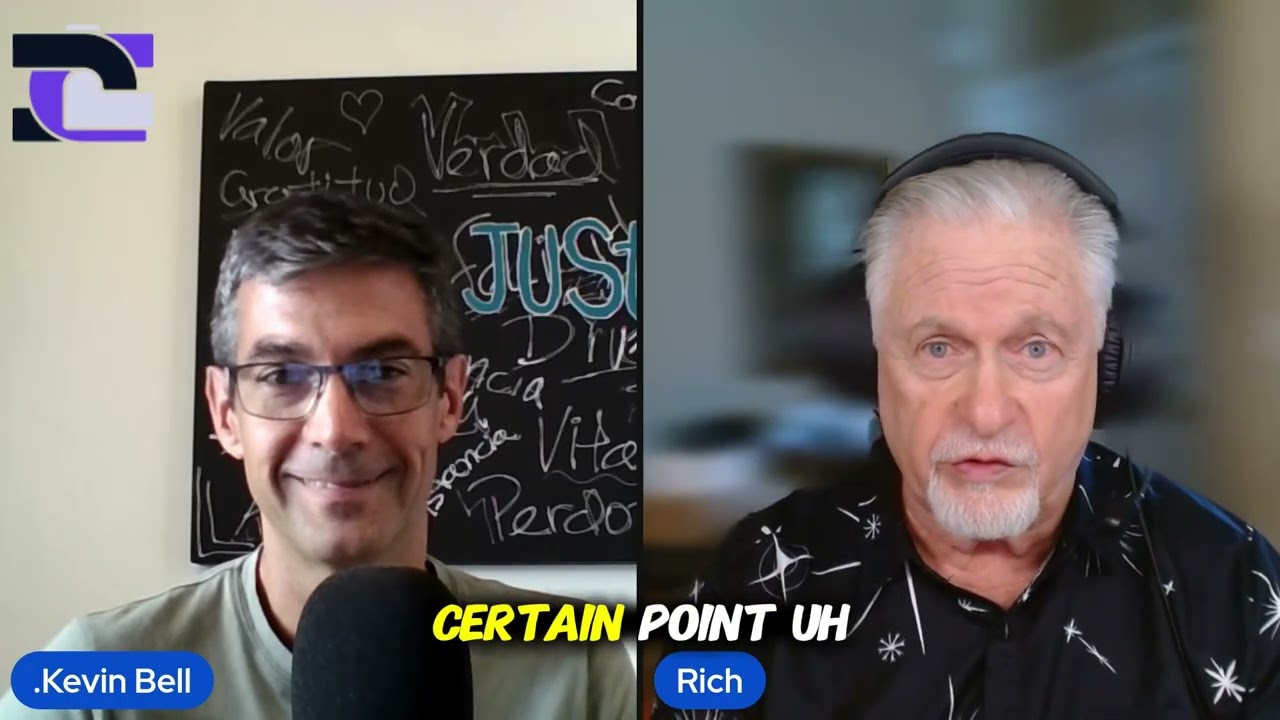
In this Freedom Money podcast episode, host Kevin Bell, CFA interviews Bitcoin analyst Rich Rosedahl. Rich recounts his entrepreneurial background, the creation of his on‑chain analytics framework, and the publication of his book Reading Bitcoin. He explains a five‑stage market‑state model (compression → accumulation → expansion → distribution → markdown) and how transitions signal buying opportunities. The conversation dives deep into Bitcoin’s fixed supply, on‑chain exchange balances, and the impact of institutional owners such as ETFs, MicroStrategy, and sovereign actors (e.g., El Salvador). Rich contrasts the traditional four‑year cycle narrative with a halving‑cycle view, noting how recent price drops were driven by large holders reacting to perceived cycles. He describes his analytical pipeline: over 50 on‑chain inputs fed into multiple LLMs, whose outputs are synthesized into a daily Market State Report, currently showing ~45 % compression, ~40 % upside, and ~15 % downside. Macro considerations—interest‑rate yields, liquidity, and potential U.S. legislation (the Clarity Act)—are discussed as possible catalysts for a shift to expansion. Finally, Rich shares advice for builders (understand before you build, treat decisions probabilistically) and promotes his subscription service at btcintelligence.ai, offering discounted charter rates for early members.
Chapters
Welcome to Freedom Money, where we explore Bitcoin, financial freedom, and building in the Bitcoin space. Uh, before we get started, just to remind everyone, this podcast is for educational and informational purposes only. Today on the podcast, we have Rich Rosedahl. Welcome to the podcast.
Thank you so much, Kevin Bell.
I'm, I'm really excited to get into it because I know it's a, a bit of a market focus, so I'm excited. Um, but I want to start really with your background and, uh, specifically your Bitcoin journey.
Well, this is a little bit of history, uh, because it relates to my Bitcoin journey. Uh, in the early '90s, I started a company, uh, called Clarity Technologies. It was an IT training company. I had 3 partners. Uh, we each invested a total of $5K. And so with $20K, we built it up. We had two divisions. One of them was a systems integrator type business, and the other was the IT training company. So about three years in, we sold off the, uh, the systems integrator for a dollar because it was unprofitable, uh, and we did it to find a home for our staff. And, and that worked out. A couple years later, we sold the company, um, for $4 million, just the training side, uh, and, uh, we sold it to a regional, a multi-region, uh, education company. There were 4 regions: Chicago, my area, which was San Francisco, San Jose, and Walnut Creek, California. And then Dallas and Houston. And we sold it, uh, 2 years later for $25 million. The company we sold it to didn't really understand our side of training. They were the largest training provider in the world at that time, but they put us out of business in 2 years. So the moral of this story is that the core lesson is that Capital without structural understanding is a liability, not an advantage. So I came to Bitcoin as an inflation hedge and discovered the price was the output, not the driver. So I developed a framework in a little over 2 years. It was like 5,000 hours plus working with ChatGPT back and forth. Querying, prompting, understanding, learning, and ChatGPT was learning as well. And I published a book called Reading Bitcoin in March of this year. And then from there on, just kept refining the framework. And we can discuss that a little bit later if you'd like.
I'm, uh, I really enjoyed that story. My first job out of university. I worked for a big American bank and I was at this job for a year. And in that time, there was a great opportunity for me to go to New York, uh, to really learn a process and bring that process back to Toronto. And so I was in New York for 3 months, apartment in Times Square, and, uh, we moved this process back to Toronto. And then I left, I got another job with a different bank and within a year they had moved it back to New York. They had just, and there were like multiple people, you know, huge amounts of money. And that was kind of my first experience with exactly what you're talking about.
Yeah. Yeah. It's tough when you, uh, you're no longer in control of your own company.
Yeah. But again, I mean, capital is a tool when you used effectively. I guess I have questions, you know, from selling the company, does it create an investment problem, and then you're looking to learn about investments, or, you know, how does it connect into Bitcoin?
Oh, I— it was just the lesson I needed to understand what was happening beneath the surface. The surface being price. Most people who make predictions about Bitcoin and, um, you know, just talk about where it's going are working only off price. And, you know, we've seen how the, the pundits have done on predictions. You know, it was supposed to be, uh, $250,000 at the end of 2025. Uh, well, it went in the other direction. And, uh, so I needed to understand the core fundamental pillars underneath price, which are supply, liquidity, and ownership. And in understanding those, I have a much better idea of where it's going. For instance, when price was dropping, I wasn't as panicky as I would have been. I understood that, um, you know, I understood exactly what the market state was And when I say exactly, back then I only had 6 inputs. Now I've got over 50. So I understand better now. But, you know, people are calling Bitcoin right now at $20K or $40K. It's not in the data. The data shows supply is reducing. Even as price goes down, it can reduce.
With, so I think we can dig into them a bit and quickly, uh, I mean, supply.
Yeah.
So to me, uh, the thing that makes this really interesting is it's a fixed supply. And so we have, you know, the ability to kind of wrap our arms around it and make some assumptions. And, you know, know some absolute truths that we don't necessarily know with a company that's buying back its stock or issuing shares or, you know, the money supply that's, uh, you know, ever-expanding. And, you know, they put out statistics, but I don't think they really have a really good idea of what these things are. They apply the money and these things. So when I think about supply, And so we talked a bit about before, there's, I guess I want to start with the ETF flow because that's been, you know, I think a big driver over the last couple of years, what we'll call the institutionalization of Bitcoin.
Yes.
And maybe, and I, you know, I think MicroStrategy is into that.
So treasuries and ETFs.
Yeah. And so there's public information available about that.
Yes.
So we know when they're buying. Roughly. Uh, the ETF flow is daily. And, you know, I'm really curious to dig into the data because some of what you were saying before was about some of the other data being daily, and I never really thought about it that way. And so I'm excited to learn what do we know from the ETF flows.
We track the ETF flows. They come and go. Uh, a lot of it is because ETFs would be like a whale, but it's a whale that represents millions of entities. You know, all the investors in that fund are part of the ETF. So as the flow goes, so goes the ETF. And, uh, but overall what we're seeing is there's a transfer, and a lot of it has to do with Treasury companies, especially, uh, Strategy. But the, the whales are, are accumulating heavily. And, you know, I don't think it's just Treasury companies. I think there are certain banks that are, uh, like foreshadowing the Clarity Act because they want to get good pricing now. So the bottom line of it is that ownership is getting stronger. All this time we've seen retail and even some of the original diamond hands selling, uh, hoping to get a $20,000 or $40,000 price later and get back in. But if we never get back there, they're going to have to chase, and the old diamond hands are going to become like the new FOMO guys.
When you say the whales, you're really talking about strategy in the ETFs as the whales at this point?
And, you know, just the large individuals, the family offices, uh, you name it. I mean, just the, the larger holders. But certainly she would be the whale of all whales, but, uh, many degrees of whales and sovereigns.
Isn't Coinbase the ultimate whale?
Um, yeah, maybe, maybe. Although I think that the next 2, maybe 3 years. You and I discussed this a little bit. We're going to see the sovereign states starting to get in on the action. And I think they've been in on the action on the, you know, quietly. A sovereign is not going to announce they have a Bitcoin position until they've loaded up.
El Salvador is consistently buying.
Yes, El Salvador. Let's say El Salvador is public about it. But El Salvador is a totally different case than any other sovereign state because, uh, Bitcoin is pretty much the currency, right? You're down there more than I am.
Yeah, I mean, what I find so interesting is it's really different in Costa Rica. I couldn't pay for anything in Bitcoin. It's like Bitcoin doesn't exist. And I was in Bitcoin Jungle not too long ago and it just doesn't feel like it's a currency here. I would imagine most of, most of North America would probably still be in that category, I'm assuming. Although, right, but in El Salvador, it's, you know, definitely an option to pay with Bitcoin. You know, I would say pretty much, uh, you know, anywhere. And there's much more interest in the community And yes, uh, I find, I find the community is pretty interesting because there's a lot of rabbit holes and, you know, different topics— how Bitcoin is related to health, how Bitcoin is related to, you know, the money, politics, really everything. And I think everyone kind of gets this lens, it's like a mirror reflecting back at them, you know, for, for their life. And that's why, you know, some of the things about kind of your, your specific Bitcoin journey. I'm trying to connect the lens with which you're looking at this.
Well, my lens isn't currency, mine is collateral. Uh, why spend the best asset when you can spend fiat is my feeling. That's how I feel about it.
But, but I'm thinking more in terms of the personal lens. You had an education company, right? And now you're coming at this as an educator. Is, right? And so, uh, you know, I'm curious if that's how you see what you're building now, or if, um, you know, when you talked about some of the changes and more focused decisions you're making with the content going forward, so I'm curious, you know, how you see what you're building.
Well, uh, is it time for me to explain the framework?
Yeah, let's, let's dig into it.
So, uh, market state has 5 different states. Uh, compression I think of as the first, although, you know, they're just confr— compression flows to accumulation, accumulation moves into expansion, then we get to a point where, uh, there's distribution. And that's— price can still be going up, but whales are little by little getting out. And then we get to markdown, and that's what people think of as crypto winter. And after we get to a certain point, uh, we go back to compression. So, um, one of the key things in the framework is that there are two transitions that are most important. There's from going from compression to accumulation, uh, there is, uh, that's a great time to buy. That's actually where we are now. I think right now is the best time to buy, but I think every time it's the best time. Well, if you're a maximalist, that, that's true. However, I do think that there's a danger buying when we're in distribution, especially if you're— you have a, an LTV that you're watching. Not on— not as I like the way you do, uh, with Cadena, but in the Ledin, you know, all those guys, uh, you can get, uh, dissolved when you— when you get liquidated when you go too low on your LTV. So, but, uh, getting a loan in distribution on those platforms can be dangerous.
Well, it's, uh, kind of amazing. I mean, I was looking at this recently and it's a highly volatile asset and, you know, it makes you highly likely to be liquidated or have a margin call.
Yeah.
And so really, you know, it's really not a great feature for the borrowers. And so, yeah, uh, but I, I think the piece of it that I think about sometimes is, I mean, you're, you're then in the position where it's selling, like it's liquidation, it's causing additional selling. So it's, it's not good for the market either.
It's cascading drop. Yeah.
And it's kind of cascading at the worst time, right?
Yeah. Right. Right.
And so, I mean, how do you, how, when do we move from crypto winter to, uh, you know, a basing phase? Accumulation phase because it seems to be dragging on this winter.
Uh, we're definitely in compression, but I think we've had an accumulation current for 2 straight years, uh, underlying whatever state we've been in. Because if you look at, uh, one of the on-chain, uh, information providers, you'll see that supply has been dropping for 2 years straight on exchanges.
So let's talk about this. I know we talked about this before, and sometimes I'll see this on Twitter and people, you know, so why, why do exchanges need to have balances to begin with? They're client balances.
I'm sorry, could you repeat the last part?
Are these client balances on exchanges?
Well, it's hard to tell. I mean, they're There are client balances on exchanges. We know that. And it's their own limit, as we discussed. So a whale might have 10, 20 Bitcoin on an exchange. Somebody who has 1 Bitcoin might have 5,000 on an exchange. But, you know, certainly most of the held Bitcoin is in wallets, as we know. But there's quite a bit on exchanges. So the supply we see on exchanges right now, we're at about 2.7 million coins on exchange, on all the exchanges combined, not just Coinbase or Kraken or whatever. But that has been dropping. Now, a percentage of that is sellable supply. So, you know, when we see it go up, Somebody is transferring their Bitcoin to an exchange either to sell or to put into collateral or for whatever other purpose. And when it leaves, it's typically going to a wallet. And so, you know, I can't tell you exactly what the sellable supply is, but the best way to track it is to look at What's happening overall?
Overall being the price?
Overall supply on the exchanges.
So I was pushing back on this a bit before because to me, I mean, if I'm using, you know, Bitcoin from cold storage to an exchange, I can do that, you know, pretty, pretty quickly and easily.
Yeah.
And so to me, it's kind of interchangeable. And, you know, we talked about before, I would just set my credit limit. I'm not comfortable. Losing more than, you know, $5,000 or $10,000 on an exchange. So it's usually like straight through, then maybe money going into the bank account and coming the other way from time to time, right?
Yeah, I agree with that.
So, but the, you know, so in the aggregate, when I think of the exchanges, there's a bunch of people who just leave their coins on the exchange and they just leave it.
Yeah. So a good portion of what's on exchange Exchanges could be in a wallet if people were being very tidy. If they were keeping their house very clean, everything would be in cold storage. But, you know, we, we like to have Bitcoin available for emergencies or whatever, you know, because not every event is, is a lending event. You can't always spend fiat. Well, you always do spend fiat typically, unless you're in El Salvador or wherever they accept.
You know, again, but, but I think this is, um, this is interesting to me because I think about, I'm maybe, maybe need fewer than 50 variables to keep track of. And so, you know, strategy and the ETFs are buying, you know, I would say these days, or it seems like we can talk about once more. What's going on with strategy later. But I'm not sure the exchange data gives me that information.
I don't know, it doesn't give you all the information, but it's not just exchange reserves. Like I said, I have over 50 inputs right now, and I, you know, frankly, I don't have them all on the top of my head, but they're in my dashboards that I supply to my 4 different LLMs, which give me, each give me a separate report. And then those reports are, and here's my least favorite word, synthesized into one report. So we take the combined information from those models and put them together into one state report. And because of that, we get a weighted direction. Uh, right now we're looking at a 45% upside and about a 40% downside and about a 15%, roughly, downside. I, I'm sorry, I think I messed that up. 45% compression today, which is on my website. Uh, 40— no, 40% upside, 40— 45% upside, uh, 40% compression. And then 15% downside. So if I said it, then I said it right. If I didn't say it that way, I said it wrong. Uh, and I mean, the way I read that is kind of slightly bullish. Slightly bullish, but still we're in compression right now. We're in accumulation, we're transitioning, uh, even though accumulation has been in an undercurrent. Uh, so when you talk about crypto winter. Now I'm, I'm going to get into something a little controversial here. So we get into a discussion about this. I don't think we're in a 4-year cycle. I think we're in a halving cycle. And I think there's a ghost of the 4-year cycle. So in other words, the halving cycle is the amount of Bitcoin that's available and on a given day basis every day by the miners. Uh, the 4-year cycle is how we interpret what's happened in the past, and because of that, I think that a lot of whales and retail thought they were going to outsmart Bitcoin even though we were in a steady climb. And when October 10th came, everybody— not everybody, but a lot of big large holders got rid of their Bitcoin anticipating winter. And because of that, we went down 50%.
It's like, it's like when the weatherman predicts the weather and it turns out to be true, right?
Exactly, which is 1 out of 10 times.
Yeah, no, but it does become self-fulfilling. It's, uh, There's a word in physics for it. It's like, you know, it's interacting with each other. Entanglement.
Yeah. So according to the 4-year cycle, we're not going to go into expansion until October at the earliest. I think it's possible we go earlier. It depends upon when liquidity, either liquidity or a non-sovereign state. Those are the two scenarios where we jump into expansion. If we started to get liquidity, then— or free-flowing liquidity, I should say— uh, the other two pillars are very strong: supply and ownership.
So the— I'm more a believer in, uh, I think the credit cycle, both the halving cycle, okay, or, or, uh, you know, really any, a 4-year cycle. Because I look at the events, it's Mt. Gox. And to me, the issues with some of these predictions, right, and some of these, uh, you know, it's, it's all very useful information, but what happens sometimes is, you know, trading, this is like, you know, everything's good, and then your drunk uncle shows up at Thanksgiving and Mt. Gox disappears, and then you have FTX, and then, you know, it's, it's, it's these things that kind of come out of nowhere that have real risk. And I think, you know, we talked about the liquidity with some of the, you know, how the market operates in some of the centralized systems. And to me, the You know, again, the market activity— I would say when I look at real corrections in Bitcoin and the crypto winters, to me they're credit or, you know, a failure of the system more than a 4-year cycle. And so, you know, what it feels like is since October there's been some steady selling of Bitcoin, and to me You know, when you see the supply and you can see the numbers of Bitcoin that are being accumulated by strategy over this time, it's significant. And so trying to reconcile it has been tough. And I think there's, you know, maybe we find out down the road something else was happening behind the scenes. It's— yeah, I think it's pretty interesting.
I'd be interested in, in, uh, maybe offline Uh, getting some more of your, your thoughts about the credit cycle, because I could buy into that and I'd like to feed that to my models. Yeah.
And so I guess this is the next question is, you know, what's next for the models? You keep, you know, knowing where to build and what to build and where to add on.
Well, to be quite honest, when I talked to another author, somebody who was clearly thought through, what's happening under price, below price, I should say, I learn more. And when I learn more, I feed more to the models and they get smarter. So, you know, the other thing is I only have 50 inputs now of where I see my framework going in the future is as the company is building, I'm going to take some of the profit and buy higher levels of on-chain data. You know, right now I'm at a pro level. Eventually, I think I'm going to have to be at an institutional level. And when that happens, it's just going to be more intelligent.
Yeah. And this, I think, gets back to what we started with, which is the fixie and the on-chain data. Is, you know, uh, you kind of have a finite data set, right? Like there's only so many transactions and you can see them all. So conceivably everything is knowable.
Right. Right. But, uh, you know, I, I, I have high hopes for what the institutional, institutional data says because, uh, there are numerous reports that even I'm not feeding to my models. You know, 50, over 50 is a lot, but in the future I just plan to keep growing the intelligence.
So a couple pointed questions just to finish. What do you, what's next in the space?
What's next in this space? We're in compression, so it's possible we could stay here 6 months. It's also possible that You know, one thing that I think could alter things is really a fourth category that I've been tracking lately, which is macro news. Uh, initially I kind of ruled out macro news and thought, uh, the news isn't really what's driving things. But if an event like the Clarity Act passing or the Bitcoin Act passing in the United States, um, government, we would see banks flowing in on how much Bitcoin they own. And what that would mean would be a supply— it would be a supply war. Everybody would be fighting and prices would reprice consistently. And that's where we'd see expansion to maybe a greater degree than we've ever seen it. But those are unknowns until they occur. I, I see the Clarity Act as having some hurdles still. I don't think it's done deal. Uh, you know, the Agriculture Committee doesn't even understand what they're dealing with to a certain extent. Uh, the Banking Committee has come up with something, but there's also the Democrat versus Republican issue, and You know, Democrats don't want to let Republicans win. And, you know, it goes both ways. Republicans never want Democrats to win either. So it's going to take some bartering to get those both acts passed.
What are we— how much does the market discount this? Like, when I think of market efficiency and what we talk about in, you know, traditional finance, isn't the market just discounting this and Bitcoin's being bid up as We're getting more and more closer to the passing of the Clarity Act.
You know, I don't follow the betting sites, but I think it's a good idea. Maybe those should be inputs as well.
Probably. And then, uh, I mean, you've built businesses before and you're building something substantial here. What's, what's your advice for builders?
Oh, uh, understand what you're building before you build. You know, it took me 2 years to even get to an initial level of understanding. Where I am now is nowhere near where I hope to be in tomorrow or 10 years or whenever. But I never— and this is true of you too— you never could have written your book unless you understood what your perspective was and the way you absorb the information. And same is true for me. I needed that 5,000 hours of back and forth with ChatGPT to get to a point where I understood all the variables. I started off saying, you know, where do you see the price in 3 months? And ChatGPT would accommodate me. But eventually we got to a point where we said, forget price, let's look at what's underneath, because that's all that's really important. Tomorrow the price could drop to $49,000. Um, but do I think it will? No, based on what I'm seeing in the data. And, you know, I, I see various analysts on social media predicting things like that. Uh, so there's a lot of noise, a ton of noise, and it's very confusing for everybody.
Yeah, no, but it, it's helpful to have, you know, a dashboard, something you can look— yeah, exactly. Um, yeah, and I think, you know, the message that I would have for anyone in this is it's not— it's, it's a game of probabilities. If If anybody really, you know, had the magic wand, um, you know, and, and I think as this market develops, there's so much, uh, you know, potential because I don't think, you know, it's making me question everything I know about marketing. And, uh, you know, like, I, I think there's ability to outperform with stocks. I think having information is kind of helpful to potentially understanding your position and how this can tie into other things.
Right.
You mentioned the macro and sorry to, I was trying to try and end it and keep it to 30 minutes, but I do want to get into this because in the report you talk about rates a reasonable amount and liquidity and something you were talking about before. Where do you, where do you see that now?
Okay. Uh, well, we, we touched on this briefly. I know you follow the 10-year more than I do. Uh, I'd be interested in having an offline conversation on that. I follow the 30-year more because I see that as the liquidity governor that is keeping liquidity down right now. Right now we're at 4.94% yield on the 30-year, and when we get to 4.5%, that's when we'll be in much better shape. When the market will be much more healthy from a liquidity perspective.
The thing that I think is tough now is finding, finding the patsy on the other side of that trade that wants 4.95% when printing money at, you know, 6 to 8% a year and, you know, telling people inflation's 3 to 4% and paying taxes on the full nominal gain. Like, it just seems like it's, it's a, you know, bad idea unless you're tied into it and you need for regulatory capital and you're a bank. Like, it, it is completely nonsensical now. And to me, I think the reason, like, look at where they're borrowing and it's all short-term borrowing and there's talk of all these. And so to me, that's where the rates are being set on the margin is where there's that liquidity and it's all like less than 5 years now. And rates, you know, I just, it seems to me the only way that we're going to have bonds enough to drive yields down is when the central banks come in and buy them again. Like that's, that's the way rates go down. And right. I guess it's a question. Right.
Yeah. And then there's the question of, uh, what is the Fed going to do in light of, you know, it— Warsh is, uh, Kevin Warsh is on record saying that he wants to shrink the balance sheet. Well, that's been tried before. We don't know if it's going to work. Maybe. And that's why I guess he— what he did, what he announced in his FOMC meeting, notes after the meeting. Was that he's forming a committee to follow the balance sheet and to come up with— he didn't go into a lot of, uh, specifics, but, uh, it'll be interesting to see what happens because his premise is that when the balance sheet is, uh, trimmed, that bringing rates down will be easier. So, you know, this certainly is not my lane. I'm not a Fed expert, but it'll be interesting to see how that pans out because that will be— that will have a great impact on liquidity.
Yeah, I find it's just, um, you know, the numbers used to make sense in terms of you could, you know, balance the budget and Over time it would go down, but we're, we're, it seems like we're well past that. And so it's really, it's be interesting how they continue to generate confidence in this paper.
It will be, it will be. And, and yeah, I have to tell you, I say I'm an expert on the subject and I wouldn't be. I, and so I, I think I'll wait and see before I say any more about it.
Well, uh, I appreciate your time today, Rich. I, you know, know we kind of scratched the surface and there's a lot, uh, more we can get into, and I'm pretty sure that—
yeah, I look forward to it.
And so where can I send people, uh, to find you?
Okay, uh, well, uh, I have a specific link for Anybody that wants to sign up for the Market State Reports, uh, the individual level is $49 a month, uh, and that will never go up. Uh, so that will be, I mean, assuming fiat doesn't, uh, you know, explode.
Uh, but you might, you might want to hedge that.
Let me hedge it. The intention is don't raise prices. Um, however, that's for the first 50 charter members. After that, it's $199 a month. So there's quite a— it's like a 75% discount right now. And for anybody watching this video, the site to go to is btcintelligence.ai. And then when they're on my website, uh, on the top toolbar, there's a link for current market state that will be password protected this week. Right now it's open. So if anybody gets this before it's, uh, password protected, they can look at it. Uh, but, uh, for anybody coming through Cadena, they'll be guaranteed the charter rate even if we surpass 50. But otherwise the price will go up.
And we'll have, uh, I think links on, on the website through the partner section, as we do with other partners, and add links to the show notes.
Okay.
Um, so yeah, it— and I look to get into it more. And, you know, I think you're right. I think there's a much more, uh, interesting conversation had when we're not just talking about price.
Yeah, exactly. Yeah. I mean, you know, price is a roller coaster emotionally, financially, you name it. And that's what gets, you know, the smaller retail customers. They see, wow, Bitcoin is going through the roof. I'm going to buy in. You know this. Everybody knows this. And then the next thing you know, we're in Bitcoin winter or what people call Bitcoin winter. But, uh, you know, and then they sell at bottom and it's unfortunate. So that's part of what I'm—
it's a story as old as time, right? It's just if people knew, know what they had and then they looked back and exactly right. Thank you very much, Rich. We will do it again soon. Thanks.
Thank you, Kevin. I look forward to talking to you offline also, if you're open to it.
Absolutely. Talk soon.
Thank you.
More from Kevin



Why Bitcoin is more than an investment I wrote the Bitcoin Bible #podcast #interview #bitcoin


When banks freeze accounts the importance of self sovereignty #podcast #interview #bitcoin

Retirees inflation can erase your savings read Bitcoin Bible #podcast #bitcoin #investing


Taxes KYC and How Governments Are Making Bitcoin Harder #podcast #bitcoin #interview #investing

How SeedSigner Sparked the Bitcoin Hardware Store #howtoearnmoneyfromusstockmarket #bitcoin

The three essentials wallet node and miner #podcast #howtoearnmoneyfromusstockmarket #bitcoin

How the Bitcoin Hardware Store was born #podcast #bitcoin #realwaystomakemoneyfromhome