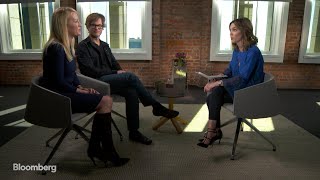
A short transcript of a conversation between Julia Hartz (Eventbrite CEO) and Kevin Hartz about leadership transitions, building an inclusive company culture, and recruiting strategies to improve diversity. Eventbrite reports being nearly 50/50 gender-balanced; the speakers describe hiring mothers as a deliberate competitive recruiting advantage and using maternity-leave periods as opportunities to recruit, while emphasizing that inclusion requires deliberate treatment and culture beyond policy.
Questions this video answers
Almost 50/50 ("we are actually still almost 50/50").
Chapters
You are one of few female CEOs and founders and I know when you took the job there were nerves about whether people would take you seriously. How did you overcome that? I put my head down and focused on what we needed to do as a business. This has been a tremendous growth period for Eventbrite and I had to get to work and so I sort of let all of that fall away and I just focused on building the right team for the future, on executing, on really making sure that the culture, which is global, right, we have Breitlings all over the world that everyone understood that we were going to be okay. Because I think these big moments of transition can be unnerving. It can create uncertainty even if you know there's nothing wrong. And so I needed them to know that I was aware of that and that we are all in this together. And then as you take the helm, like when I felt the difference of being CEO, that made me really respect some of the founder CEOs that I know in, you know, the women that I've watched grow their companies. It's sort of like when you have your first baby and then you go back to work and you have immense respect for the women who have children and work. I felt the same way about taking the reins as CEO. The company Eventbrite actually is pretty solid when it comes to gender diversity. I'm curious to hear from both of you how you did that. We are actually still almost 5050 despite, you know, we have acquired some companies that have different gender ratios. We have always been focused on trying to build a company that looks like our community and our community of creators global, right? So diversity has to be embedded in what we do. So me being a female CEO certainly provides a great embedded role model at Eventbrite. But inclusion is entirely a choice. And you can have great diversity and really not great inclusion.
I think that just as a company needs a competitive advantage, whether it's a technology advantage or a network based business, there's a recruiting advantage needs to be built. And all the great companies have come up with very specific recruiting advantages. Whether it was like Microsoft recruiting from young students out of College in the 80s, we saw this unfortunate bro culture here in this very competitive San Francisco environment and we saw all this talent available. So for us, hiring moms and looking broader than people that look just like ourselves was a competitive advantage.
So how did you do that?
There's a stereotype of the 20something male engineer. And you know, you have these incredibly talented women in the Bay Area that have maybe had children, and they maybe unconsciously get written off. And, you know, we saw that as our competitive advantage.
The maternity leave is a great time to recruit someone, by the way, because you have this moment of reflection. And there is a varying degree of which companies decide to support people who are going through such an important milestone. And don't even get me started on this is a great subject for me to pontificate on. So it's very curious to me that especially in the US Corporate culture, we basically penalize people for procreating, which pregnancy is a medical condition, it's a disability, despite anybody's broad religious beliefs. Like, I'm pretty sure we're supposed to be procreating on some level as humans. And so that, I think, is curious when you look at it and you say, okay, this is not only a moment where somebody's going through a major life transition, and this is for men and women, but they're also fearful of what their life is going to look like. Are their careers going to go off track? Are their peers going to think about them differently? Are they not going to be able to juggle, you know, or as I like to say, put the jigsaw puzzle together. There's always a piece missing under the couch, right, of just life, of balancing kids and career. And so all of our sort of policies around that are great, but it's really about how we treat each other. It's about how we show up for each other. And so part of that, I think, is identifying that really talented candidates, especially in competitive markets, may be reflecting on what their experience is at their own company, right, during that leave period. So that is now officially our public secret that we've shared with everybody.