Founder Mentality: Building Teams by Identifying Great Talent (Kevin Hartz, Eventbrite)
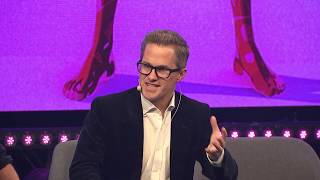
Onstage interview with Kevin Hartz about the ‘founder mentality’: what makes great founders (grit, relentlessness, extraordinary backgrounds or day-to-day perseverance), the importance of mentorship and bespoke investor support, and hiring as the central, hardest task—including the difficulty of firing bad fits. Hartz also discusses tools (psychometrics/AI) as aids not replacements, the ebb-and-flow of capital markets (lean startups vs. overcapitalization), and the broader role of technology and founders in society.
Chapters
Everyone, and welcome. Kevin, welcome to the stage.
Thank you, Jeff.
We're going to spend 22 minutes unpacking founders and people. I'm sure we can cover the whole difficult subject in 22 minutes easily. Let's go.
Before we start, I want to make sure everyone in the entire arena could just be a little quieter, please.
If everybody could help us out, that'd be great. Yeah, Okay. I guess you've had an incredible career so far. The arc of what you've seen in your 20 years in the Valley is pretty spectacular. And the businesses you've been involved in give me a sense of what it was like to become a founder when you first sort of jumped ship and said, hey, yeah, I'm going to. I'm going to take this on and found something. And I especially want to get a sense for the people in the audience of how that might have changed over time as you see the role of founder now.
Well, to be honest, like, I really haven't. You know, I've had the good opportunity to see a lot of different great founders, and it hasn't changed much at all. And Jeff, you're a founder, you, Courier magazine, and have built a business yourself. It is very similar and maybe under different circumstances, and we won't say a long, long time ago. But I think it's. In my case, maybe what was unique is I found myself to be unemployable, meaning I couldn't get a job, no one would give me a job. And so as a result, I really had to start my own business.
That's quite a common thing we hear from people. Actually didn't quite fit in.
You're supposed to laugh. That was a joke. And then it's true.
It's true for me as well, though. I didn't fit in either. It's totally how. How it started out when you. You work upstream a lot now. Like, obviously, you know, you have your chairmanship at Eventbrite, but you work with a lot of startups, you see a lot of investments come past. What are you looking for in a founder? Like, what are the sort of core things? And is there such a thing as a truism across all of them, or is it really unique to the sort of operation you're looking at at any one time?
Yeah, great, Great question, Jeff. I mean, I looking around and I see a great founder there in the front seat, Julia Hartz. I happen to be married to her.
Oh, you know her.
We're related somehow.
Disclaimer. We got out of the way. That's Good.
But, you know, when we talked on video conferencing in preparing for this, you know, it got me thinking a lot. And it is like, what is that grit? What's that intellect? What's that drive that keeps somebody going? And then just in the last 24 hours, to run into Alex from IR Labs, who just spoke on the other side over here, to run into Ross Finman with Escher Reality, who is building an AR business that's now part of Niantic. Ross was homeschooled. He grew up in Northern Idaho on a llama farm and then ended up in Carnegie Mellon. And then his PhD from MIT. I mean, how many people can really pull something like that off? And then being at the pioneering edge of augmented reality, these are the extraordinary people that I love to interact with and makes what I do a real pleasure.
And so that's interesting. When you talk about sort of the extraordinariness of a founder, do you think you have to be extraordinary? And I guess even this word founder is a weird one, because what does a founder like? It's a leader of a business really, isn't it? You can be a founder and have three people in your team, or you can have 300,000, I guess. But for you, where does extraordinary kind of sit in with the other mix of talents that a founder might need?
You know, that's a great question. I think that the Valley kind of characterizes these extraordinary backgrounds. Again, you know, having a ross, having an PhD from MIT in slam mapping. But there is the extraordinary nature of what you do day in and day out to ensure your business is a success. And really looking back at what these founders and the good fortune that I've had to work with a lot of exciting founders, whether it's Pete Flint who started a company called Trulia, it's Ben Silverman who started a company called Pinterest, it's the battles that they went through that really made them extraordinary over time. Maybe not growing up on the llama farm.
So that's so interesting. I think that this process of almost becoming a founder. You're not a founder the day you start the company. It's actually a growth process as you go through it. For people in the audience, I'm sure we've got some very extraordinary talents in the audience here today. But for someone extraordinary, people don't often realize they're extraordinary. For someone out there just thinking, how do I kind of train to be a better founder? What can I do to kind of develop myself? Are there observations you have over the course, I guess, of your career for what you might recommend to founders you've invested in or people you see along the way. How do we get better at that job?
Well, this is a very magical time for all of us in, you know, this industry and that is because we're, we've got, we're, I don't want to say in a negative way, but we're awash in capital. So there's never been more capital available. But at the same time, I think the downside of it is that it's not as bespoke, it's harder. I think when Julia and Renault and I started Eventbrite, we had so many close mentors and people that were there to help. And maybe this sounds like a sob story or one of these back in my day stories, but really the challenge today is finding the mentorship. The information is there. Like it's extraordinary. Your magazine inspires me when I read Courier on the entrepreneurial tales. So there's lots of stories, video content, how to out there, but it's really finding somebody that's, that's been through or has some aspect of business that can, can, can help give you advice and short circuit a lot of the mistakes that are made.
So get out and find a mentor. That's one of your sort of.
I, you know, I'm, I like to operate in a more bespoke fashion. I like to work with fewer entrepreneurs and spend more time with, with them.
And is that something that as an investor now with your investor hat on, is that something you see as the role of actually an investor as much as supplying capital? Is it to grow and development, develop that the people that you're investing in?
Well, it depends on your investment style. So just in the public markets you have investors that are momentum investors, value investors, all sorts of different investors. My style is to invest in fewer founders and spend more time with them. And in fact what I'm working on these days is to spend an immense amount of time at the foundation stages with, with founders, however, that's not always the case and you just, if you're very comfortable and I see a lot of founders that, that have the conviction and can figure things out, maybe without that, then taking the money without the help. Please do that all day.
It's fine if they're going to do it. Yeah, let's not get in their way. So I guess when I speak to, I get to speak to a lot of founders. In the course of what we do at the magazine. One thing that does tend to come through and it is almost a cliche, but that your judgment with assembling great teams and finding great people is almost one of the most important things you can do as a founder. And in fact, many people I speak to say, look, now my business has got to a relatively stable stage. Basically all I do is look for great people. What does that look like for you through your career? Like, did you realize that right at the start, was there a point where it kind of just like came and hit you on the head, that I got to start focusing on people more, less on the other parts of my business?
I think it's something that we have to remind ourselves of every single day is how important, how important the people are and the effort or the ease of what it is to compromise. I just had a roundtable with some really great, a couple Finnish entrepreneurs and some Estonian entrepreneurs and we talked about that they're in that early formation stages of their business. But the most important decision is that yes or no decision to hire that person. Is this somebody that I've got to get, I've got to fill this seat, or is this somebody that you're really going to learn and grow from? And part of what's fun about building a business is being around like remarkable people, these incredible people. And that opportunity to hire and find that right person is so great. But also the pressure to go out and just fill a seat is great too. And so really, really focusing on the people. It's the Soylent Green thesis, if you understand the reference to the film. It's all. It's people.
It's all people.
It's all people.
That's kind of scary thought. Let's unpack that a little bit though. For me, in terms of that pressure, especially that you talk about, I felt that pressure myself. On the one hand, I've got a role, I need to fill it straight away. We don't have many people in the business. On the other hand, you make the wrong choice, you're in deep doo doo for a while. How have you navigated that path? And I guess especially what I'm always interested in is where have you screwed up along the way? Where did you make mistakes in hiring, especially in the early days, I guess.
Well, it, I mean, the mistake in hiring is that it's just the wrong fit, that the person's not right for the position. And you see, you see it in the work reflected, you see it in, you know. So I think oftentimes founders will maybe blame other factors like, oh, the competition was so tough, or the market changed, but it was really a failure in the right team. I always like to find people and I'm that myself where I'm very hard on myself. And, and I always, like, you know, at the end of the day, the buck stops with me. And so if I don't have the right team member to fulfill a duty and something goes wrong, that's on me. And that brings us to that hard part of having to let people go, having to fire people when someone's not a fit. It's. It's hard to make that choice, but it's. It's something we have to do and inevitably happens in a startup.
It's one of the toughest things of being a founder, actually, isn't.
It?
Is.
It's heartbreaking because a lot of times you'll have a really close bond.
Yeah. With that person, especially in a smaller. Yeah. Operation.
So Julia felt like that when she had to kick me to the curb. I'm just kidding.
I thought you were going to say the opposite. So we often hear stories of people going for jobs at some of the bigger valley players like Apple or Google, and hearing about seven interviews and all sorts of different psychometric tests and AI aided testing. Now across social media, to what extent is finding great people science and to what extent is it just an art and a judgment thing?
You know, I'm learning that I'm spending a lot of time kind of trying to understand. Like, I spent a lot of time and I found a lot of great investors really understanding the psychology of what makes a founder want to do these crazy things day in and day out. And, you know, a lot of times I would find it would be an immigrant, for example, you know, like Max Levchin, who I've known through and admired for a long time through the PayPal mafia, you know, him leaving the Ukraine, coming to the United States with no money, dumpster diving to find computer parts and building his own computer. He just has that grit and relentlessness. And so as much as you can kind of hack that, it's important. There's a company out there started by a fellow named Ray Dalio called Bridgewater, and he employs a lot of this great book by.
Yeah, and actually that's someone I was kind of basing that question on because you read Principles and. Yeah, he's really heavily into that. He's a guy that I really rate. But also I just wonder, are we there yet? Siri still doesn't understand when I ask, you know, what the weather's going to be like or whatever. Can, Can I really get us there at this stage to be able to, to help us pick the right people?
I think it could be a tool. You know, I'm, I'm not going to discredit psychometric testing. I think it's really interesting. And now to hire macro investors. I don't think that's the end all, be all. If it could aid in finding the right people for the right job, then absolutely, why not? We should bring that expertise into our industry. It's part of innovation in these odd things that today seem very foreign. But in the future will be a standard. I hate to say it, but yeah, we'll all be taking standardized tests and then we'll end up in our career. Career path.
Yeah. We may not get our jobs that we have. We might be. We might be off doing something. I might be flipping burgers next week if I have to do one of those tests.
That'll be a robot.
Yeah, actually, yeah. Gee, I'm really in trouble. It's about all the other. Only other thing I can do. I wanted to talk a little bit about, you know, you mentioned kind of the founder wanting to go off and do crazy things and, you know, that. That being part and parcel of what we do when we start a business. Now that you've done all that, you know, you've been an incredible success with the businesses you founded and powered. Is there a bit of you that thinks you want to go off and change things at a bigger level now to take that, that drive, whether it's in politics or philanthropy? I know you do quite a bit of philanthropic work, but does that drive still power you, that sense of being a founder?
Well, I, you know, I'm still very optimistic about technology. I think there's a heavy backlash. The world works in this, in the, you know, it's a pendulum. It swings one way or the other. And right now there's a tech backlash.
Yeah.
But if you look back and see the profound impact of technology and how it's improved lives and brought a lot of the world out of poverty and eliminated a lot of horrible diseases, I'm very optimistic and I think that's where I can have my greatest impact. And we'll continue to do that. Politics. You know, I live in the United States, so we refer to it as a shit show. Is that a Finnish.
I don't know if it's a Finnish term. It's certainly an Australian term. Yeah, yeah. But even that shit show itself, it feels like. And perhaps it's naive from a distance to go the very people who are re. Engineering the way we pay for things, the way we invent things, the way we buy things. Is there not a role for them in reinventing how government works, how Congress works together, etc. In what feels like the most divided nation we've probably seen since Civil War? Do you kind of see a role for the Valley in that and for founder Spirit to.
Well, I think that, you know, I think we're in a very polarized period right now in the United States. And, you know, I think it's a temporary piece where we. We. It'll swing back the other way. I think, you know, unfortunately, tech had played a role in that, and so there is some obligation that. That we push the other directions. But I'm. I'm for one, not going to be that one.
You're not in there announcing 2020.
Well, one of my favorite professors from Stanford University had something called Remsen's Rule. And it was everything the government touches turns to shit.
Right?
So I'm probably going to, you know, probably taking a letter. I was actually very involved in student politics. I was chair of the Stanford Democrats and very involved in politics. And what I saw of spending some time on Capitol hill and in D.C. is that the biggest impact we can have, or where I felt the absolute impact we can have is in technology and in really fixing a lot of these areas of renewable fuels, of better curing diseases and otherwise. And that's done through technology and I.
Guess, kind of outside the system to an extent, rather than trying to change the core system itself. That media narrative you were referring to before, I think it's really interesting. For a long time, the founder was the hero, and it was held up by the media as can kind of do no wrong. And then, as you say, we've had this backlash where almost now founders are seen as kind of too powerful, too big, too much the enemy. What does that do to the new wave of talent kind of coming through? You and I chatted about this briefly when we were chatting the other day. But does that kind of take the shine off talent wanting to move into this territory, or is this still just such a great area for bright, excitable people to get into?
Jeff, it's a great question. It reminds me almost of 2008. If we all remember back to 2008, we had this horrific market crash and there were a lot of opportunists in the field and people just in it to make money. And I think what this does is clear out and really make way for those that really want to build and have a big impact. And I think there's still a lot of heroes in technology like Julia here at Eventbrite. She's embarrassed.
Doing a great job of embarrassing her for sure. With that in mind though, just back to that sense of like when you're out meeting younger founders and younger people building companies, is there kind of a push against not wanting to be too big now? Like actually this sense that these big tech giants is not where the ambition is so much now that actually we're quite happy to be smaller and a little more anonymous that we don't want to attract the kind of attention and scrutiny that that feels like is coming to. To the larger guys.
Well, I've noticed in universities there's a shift towards some founders wanting to build really just family businesses. Not really family but, but more of a spoke businesses and non venture funded businesses that, that can have more ownership and in that sense.
And do you think that's a personal decision or something that's sort of being forced by. By the market?
I think we swing. I think, you know, things again the theme here is this ebb and flow of the markets, this boom and bust or this hero and villain. And in the same way there's been so much capital in the market, there is this now how much can we build a business without having to be over diluted by, by investment capital?
Does that tighten? If we, if it looks like we are entering a little bit of an economic tightening next year, maybe, maybe more. Do you think that changes the nature of that or, or actually exacerbates?
I mean I think it's, it's helpful. I think that over capital, I mean the, the best, some of the best years and some of the in why Eventbrite is Eventbrite is because we were lean. We came out of, we, we grew out of the 2008 recession that was so horrible. And we were very focused on every penny and very focused on providing value to our customers. And that's really all we thought about is serving our customer and not about the next fundraise or anything else. And as a result we built a very durable business that's really blossomed over this last decade.
That leanness that's forged in slightly tougher times.
It is really, it's something that always kind of stays with you. Now when we've had these big fundraises it sometimes almost acts in the wrong manner. I would call it similar to Boyle's Law. If you know at Boyle's Law the gas fills up the size of a chamber, the more money you raise, the more you spend. You're not necessarily more efficient. And so I would really think about how to be capital efficient with what you have. Whether you're bootstrapping or you do end up raising a lot of money. Raising investor money is not the end all, be all end goal.
Yeah. Fantastic. Well, I think really wise words to finish on. I know you got to catch a plane, so thank you so much for your time and for sharing your wisdom with us today.
Jeff, a pleasure.
Thank you.
Really enjoy your Courier magazine.
Cheers. Thank you.
Do I get a copy?
Yeah, yeah, I got a copy.
Cheers.
More from Kevin
Kevin Hartz, Co-Founder of Eventbrite, scaling online ticketing & new autonomous security at Sauron!
Kevin Hartz: "How I Lost Airbnb at Seed Because of an Exploding Term Sheet" | E1180
Kevin Hartz: "How I Lost Airbnb at Seed Because of an Exploding Term Sheet" | E1180