Kevin Hartz: Optimal Traits and Sustainable Advantages [Entire Talk]
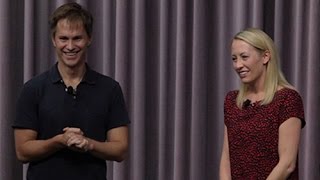
In this comprehensive talk, co‑founders Kevin and Julia Hartz recount the origin and evolution of Eventbrite, weaving personal anecdotes with strategic insights. Julia describes her unconventional path from a beach‑bum ballerina and MTV executive to entrepreneurship, while Kevin outlines his academic background, early exits, and experience at PayPal and Zoom. They detail the bootstrapped early years (2006‑2008) – a tiny phone‑closet office, a three‑person team handling product, marketing, finance, and customer service – and how a relentless focus on customers, low‑cost acquisition, and a self‑service platform drove early traction. The duo introduces the “startup organism” metaphor, identifying three essential nutrients: customers (high‑protein), capital (sugar), and talent (vitamins). They discuss capital‑efficiency, the 2009 funding struggle, and the eventual Sequoia investment that enabled rapid hiring. A major theme is their people‑first culture: sustainable values derived from customer feedback, a “relentless evolution” mantra, and concrete practices (free meals, massage days, trust‑bank). They explain how Eventbrite’s horizontal, long‑tail market strategy – serving everything from tech meetups to speed‑dating – and the accidental success of free events created a powerful network effect. Differentiation is achieved through a proprietary fraud‑detection system, an open API for developers, and a swift mobile‑first product shift. Growth metrics (1.1 million events, $1.1 billion ticket sales, presence in 190 countries, 2 million weekly buyers) illustrate the transition from a ticketing tool to a global marketplace. The founders also share practical lessons on co‑founder dynamics, role division, and the importance of healthy paranoia to survive economic cycles. The talk concludes with a forward‑looking vision of becoming the de‑facto consumer habit for live experiences, while emphasizing adaptability, efficiency, and talent as sustainable competitive advantages.
Chapters
Thank you everybody. We are entirely humbled and honored to be here. This is one of those sort of pinch me moments and I know it's especially surreal for Kevin to return back to campus and relive his glory days. So today we really wanted to tell you a little bit about our story and focus on the early days because I think it's so easy to forget about where we began given the day to day that we focus on now. And in our introduction, we've obviously had some tremendous success, but we have a long way to go. We wanted to really focus on our stories, the beginning of Eventbrite and then some observations that we made actually years ago in 2008 around the startup environment and the organism you need to grow to survive. So to start from the beginning, we did a little his and hers part of this because this is really fun for us to do together. So my story really begins way back in the early days of my childhood actually. I grew up in Santa Cruz and I was a sort of beach bum ballerina. And why I tell you that is because I actually wasn't the child with the lemonade stand. I was really good at taking direction and making adjustments and pleasing people as a ballerina. And I never in a million years imagined that I would be an entrepreneur. And that's the truth. Some people say, like, oh, I never imagined I'd be here. I really never thought I'd be an entrepreneur that wasn't on my roadmap for my life. And I parlayed a major in television production, they actually have that down in la, into a career as a television executive at MTV Networks, where I was fortunate enough to cross paths with sort of groundbreaking cultural phenomenon called Jackass. And I was on the team that brought Jackass to the air. You're welcome. Or I'm sorry, my parents were confused. But I then was able to join the team at FX and further my career in sort of great groundbreaking content creation with Nip Tuck, Rescue Me and the Shield. So how did I end up going from there to here? It really has to do with this guy. So crossed paths with Kevin at a wedding of my boss at MTV marrying his classmate from Stanford. And as you can imagine, one half of the church were sort of too cool for school MTV kids, the other half were really cool Stanford kids. And we were the product. And it was really from there on that I was able to vicariously live through Kevin because he was building his second company, Zoom X O O M, which he'll tell you more about. And for me, that was actually the moment in which my path completely jumped the rails. And I was able to identify in his journey two elements in the technology industry that I was missing in the entertainment industry. One, velocity and two, meritocracy. And so that sort of began the transformation in my own life to realiz that I could actually build something, I could actually be an entrepreneur. And I'm a great operator. And so with that, we founded Eventbrite in 2006, which after Kevin tells his story, I'll give you a little bit more detail in those early days.
And now we're onto the his side. Thank you everyone so much for having me, for having us. And my background is really centered around learning. And I came from a family that was very intellectually curious, that really, really valued education. It's why we're all here today. And after coming out of Stanford and after getting a master's in Oxford in British history, George III has so much to do now with my application towards technology. I just followed a path of intellectual curiosity and learning and that was really the pursuit. So lo and behold, I ended up in tech. If we had made this the three hour entrepreneur lecture series, I would explain exactly how I got to tech from George iii. But lo and behold, I ended up in tech. And after a successful, kind of quick, successful exit in the late 90s, I very foolishly rolled all my gains into some friends I knew from colleagues I knew from undergrad and another group from UIUC University of Illinois. That startup turned out to be PayPal. In fact, I had this wonderful front row seat of watching the rocket ship of PayPal which I'm sure many of you know the story of how this company assembled such talent and, and really blasted off at a time when the rest of the world was collapsing in the tech industry during the collapse. And that was of course very instrumental to me. I think being the lessons to entrepreneurs is be keenly observational. And when you see one of these rocket ships, when you see these phenomenal teams, you take notice and you start to observe. And zoom came out of that Zoom, to explain a bit more, is a international money transfer company and it's a, it's a story of disruption. It's a story, and it's been over a decade long story of disruption, of going after a incumbent western union that charges high fees to immigrants for sending money back to their families overseas. And that's a company that we built really on the backs of PayPal. Again, when you see a large opportunity, and that is PayPal, and you see the talent of the team, they opened up an API. We built on top of that payments API at the time. And Zoom was born out of this. Eventbrite, a transactional business similar in many aspects. We also started on the back of PayPal, came out of this unusual combination of a married couple and our third co founder, who was actually based remotely in Paris, and that was Eventbrite. And I'll let Julia talk more about the founding of Eventbrite.
Yes, I'd like to point out how crazy Renault was to start a company with a couple. We weren't married at the time. We were actually engaged. We had never been in the same room at the same time for more than two days. So we got engaged, we moved in together, we started Eventbrite and we got married in the first six months. So if that's not trial by fire, I'm not sure what is. And then had a child a year later. So for us, the three of us, unsuspecting co founders, sort of against all odds, I guess, put our heads together and really thought about what kind of industry we could disrupt with technology. And it wasn't about just being disruptive, it was about the idea of democratizing an industry. So when we thought about ticketing, we thought about the ways in which people could access great live experiences and how important live experiences, just like today, are important to human connectedness. We thought about how technology would either fuel or kill the live experience, the offline experience. And our bet was that the advent of technology would actually make it easier for people to gather offline. We weren't sure how because again, this is very early social media days. Kevin was actually an investor in one of the first social media sites, Frontster. But we had no idea what role online would play in these offline gatherings. But we had a hunch that we could build a product that would be self service and would effectively enable anybody to gather others around. A common cause, a passion, an interest. When we started Eventbrite, we actually started in this warehouse in Potrero Hill. And let me point out, our office was a phone closet in the back of the building. And I remember pushing sawhorses and doors for desks into this tiny little phone closet. Three days after I had just packed up my window office on the 42nd floor of Fox Plaza in Beverly Hills. And I thought, why is Kevin so happy? I mean, he was giddy, his feet were barely touching the ground. And I thought in, I thought I could maybe trust that the giddiness, there was something behind that, and it's actually the eternal optimism that entrepreneurs have. And that was the beginning for me of learning how to adopt some of that optimism and also tapping into what I'd always kind of known about myself, which is I love to learn by doing. And so that's what we started to do. We just started building. There was never a time in the early days when we sat around and talked about things or pondered things, or were hesitant, we just jumped right in. So I was the marketing, customer service and finance department. I found our customers, I talked to them on a daily basis. And finance, I'm great at numbers, but we really didn't need a balance sheet because we were not making any money. Kevin was probably. So I would take our customers feedback and send it to Kevin who would then develop our product. And Renaud built the site and we all QA'd and we did that for two years. So it was just the three co founders for two years and we bootstrapped the company. We actually spent less than a quarter of a million dollars in the first two years of building Eventbrite and getting it to a break even status. So when we think about the early days of Eventbrite and we think about Eventbrite as the startup going back in time, we think about this talk that Kevin gave back in 2008. I'll never forget, we had no team, it was really just us. And we spoke at a university and Kevin gave this talk about the startup environment and what kind of organism you need to be to survive the startup environment. And we used all these different examples like Netflix and PayPal and even Bebo. And when we were looking back at these notes, because this talk we thought was very applicable to this opportunity, we realized that Eventbrite has actually grown into a company that can fit a lot of these examples. So today we're going to take you through this idea of the startup environment and sort of the three threats or hazards you face as a startup and then the three characteristics that you must have to have a successful startup organism. So the first is access to nutrients and I'm going to cover customers. So as I mentioned, in the very beginning we had no customers. So we had to find our first sort of early adopter group. Thankfully, that group lived in our backyard. They were tech bloggers gathering people around tech meetups, like minded people gathering for meetups or talks or conferences. And at the same time, because we had built this self service, easily accessible platform, we had other types of users quickly adopting the platform. Like speed dating in New York. Does anybody even know what speed dating is? I Mean, that was in 2006. This was like the way in which people met each other. So we knew right off the bat that our customers would be wide and varied because we were building this whole horizontal platform that can meet the needs of any type of event organizer. And that was actually part of our strategy. It was a little bit crazy, but part of the strategy. And so by staying close to our customers and really building a relationship from the beginning, again, I was the customer service department. I literally was answering customer service emails from the labor and delivery room when we had our first child. And the story goes, they had to take the, the computer away from me. And everybody said, oh, she's so dedicated. And I said, well, no, I just don't want, I don't want to know what comes next. So having that lifeline with our customers was actually incredibly important to us in the beginning because not only did it give us direct feedback on what we were building in real time, but it allowed us to future cast what our customers would need as we began to grow
the second sort of fuel to the organism. This startup organism is something if we've talked about customers, as I would put them as the high protein, the most nutritious form of it, capital is kind of like the sugar, so it gets you going, but it doesn't last. And it gives you kind of a burst of energy, but you can't survive off it on your own. And over the years, I'd gotten pretty good at raising capital with Zoom. Zoom as a money transfer business, was a very capital intensive business. We were moving money all around the world. We had massive fraud attacks. We had to build out all these areas that we hadn't foreseen. And so it felt like during those times, albeit very exciting, we were on our heels a bit raising capital. And that was a message to me. That was a message really that's in the necks, you know, in Act 2, that I and we at Eventbrite would be very capital efficient and be able to lean forward and go after capital when we needed it. So as Julia mentioned, we effectively bootstrapped the company for the first two years. And that was on this diet of customers, the right diet. And then it was time to raise money. And always, when you know, as the adage goes, the capital is always there when you don't need it, when you desperately need it, it's not available. And the lesson here is that we built ourselves into a position where we didn't need the capital. This happened to be though, in 2000, end of 2008, 2009 and the markets collapsed and we were terrified. We didn't know what was going to happen with the business if we expected a downturn. So we started to go out and, and raise venture capital and literally everyone in the valley turned us down. I still run into people and they go, oh, I remember meeting you and saying no and no, we don't, we don't want to do a victory dance or anything quite yet. We still have a long ways to go. But in short, we were in early 2009 at a point where we just said, well, let's just put our heads down and build the business. We took on a little bridge money and lo and behold, the business had taken off. And I really think that that was because we focused around being customer centric those previous two years and saw the business really blossom in 2009 versus most others. In all these companies that had become bloated with capital and reliant on capital had failed. And we culminated 2009 with Sequoia Capital investing $6.5 million at the end of that year with Roelof Botha, one of these, one of our favorite PayPal mafiosos investing, leading the investment and joining the board.
The third thing that we think about is talent. So, you know, it was just the three of us for the first two years and then after we raised our, we actually raised an angel round to hire our first team and that was around 15 people in the third year of Eventbrite. And that was such a transformative time for us because being three co founders, you're doing a lot and there's a huge opportunity to bring on talent that is way more brilliant than yourselves in many more areas than you could possibly have imagined to focus on in the beginning. So in the beginning it was really just about product and customers. But once we tapped into talent and were able to bring talent onto our team, we were able to extend ourselves way beyond where we had been in the first two years. Now I want to back up and say in 2006, founding a company and placing it in San Francisco was actually contrarian. I know that's kind of mind boggling now since we are battling the real estate wars and the talent wars in San Francisco, but the conventional wisdom was that you place your company down here near Stanford. And we felt sort of this inherent pull towards San Francisco. A, to be contrarian and B, to be near what is crucial and what is the lifeline to our business, which are live experiences. So San Francisco, being a very culturally dense metro, is a great place for us to be, to be very close to, to our subject matter. But what we found was that once we got started and once we were able to access talent, who wanted to be part of our vision, who were sold on that vision of bringing the world together through live experiences, that was really a turning point for Eventbrite because it became abundantly clear to Kevin and I that we weren't just looking to build something and flip it or to create just the best business model for for revenue's sake, but really to create an amazing company. And so the nutrient of talent is very, very, very important. I can't underline it more. I'll talk about it more today actually. But really understanding where you can access talent is extremely important. And we actually took a bet on San Francisco. But I think that as we look at where the trends have taken us and now how abundant the talent is here, but how fierce the competition is to get talent, we understand that we were right in saying that talent is a crucial nutrient for the startup organism. And I think that the PayPal story is such an interesting one because they tapped into two lifelines for their talents, Stanford and uiuc. And I think that if you follow that legacy like Kevin has from conception to now sort of reality, it's quite astounding to see what a group of very talented people can do both together and then apart. Maybe you want to go through the PayPal story or talk about the talent there.
I think that's absolutely right on in that that focus of Max Lepchen and Peter Thiel around highest caliber talent early on brought such depth and breadth again from as our board member, Roelof Botha was CFO of PayPal at age 26 when the company went public and has led investments that range from YouTube to Eventbrite to Evernote and so on, to Peter Thiel himself, to Jeremy Stoffelman at Yelp, Elon Musk, David Sacks with the Yammer. That talent density is just something that in my observation of that team, that they really had these trusted great leaders in each part of the company that really shows their strong skills, not just what they accomplished with PayPal, but what they went off and did on their own. Again, the list of Companies there, Yelp, LinkedIn with Reid Hoffman and so on, is extraordinary and it was inspirational and it was informative. That businesses need not only competitive advantages in terms of technology or business practices, but talent is such a great competitive advantage in the ways to bring that talent in and gather that talent and retain it is a core part of, of thinking when you're starting your company.
And as we've progressed and as we've grown, I've had the great pleasure and luxury to only focus on talent. So actually one third of the founding team of Eventbrite spends all their time focusing on talent. That's how important it is to us. And back then we didn't have that luxury. But I think it's been a game changer for us to be able to put the focus that we need to put on talent to build this very people centric company. So we think about the landscape of any market and trying to democratize a market or disrupt a market, and obviously there are incumbents in that market. And when we went after or thought about ticketing as a possible opportunity for us to enable through technology or disrupt through technology, or simply democratize, we thought about ticketing as sort of the last bastion of E commerce, where it could be categorized by three things. Bad customer experience, high fees, and little to no innovation. So to us, that was sort of a green light in terms of opportunity because we felt that we could easily do the opposite of all those three. But we could have just gone after Ticketmaster. We could have just said we're going to disrupt Ticketmaster and and were going to take their market share. Thankfully, we thought better of that and had a hunch that there might be this gap between people who were using Excel spreadsheet, email and paper checks to run their event or collecting cash at the door, and Beyonce and Jay Z at ATT Park. Turns out there's a huge gap. And this, what we call the long tail of ticketing is enormous. It's everything you do in your everyday life where you gain access. So think about today. This could easily be ticketed. Cooking classes, yoga seminars, obstacle races, food and wine festival, music event. You name it, we have it. And in the beginning, we didn't know how wide this would be in terms of how many categories we could actually see on our platform. But we let our customers take us there and we didn't try to go deep into one category or one geography or one size of event. We sort of let it just organically evolve. I would never give an entrepreneur that advice. So I think that it was very special that this ended up working out for us. But because we went after an underserved market of people like you and I who are creating paid events, we actually had this amazing greenfield to grow into over the years. And I think one of the more astounding things is just how many categories keep coming onto the platform. So Much so that we see trends before they even happen. So we see things like obstacle races with tough mudder or electronic dance music events becoming mainstream or food and wine events are having their day in the sun. Food and X wine, beer spirits, bacon. Huge a thousand bacon events on the platform last year in the U.S. we love our bacon. So I think that what I'm trying to illustrate is capturing this opportunity that wasn't from the get go, very attractive is why Eventbrite's here today and why we're seeing the growth that we're seeing. I'm still talking. Extremely. Do you notice I'm also driving too? This is indicative of our relationship,
Julie. We divide and conquer. That's our secret. If you've seen that we haven't talked over one another yet. Very important.
You're just letting me talk. Yeah. And I also do the driving. So Kevin kind of mentioned our funding story and I want to point out that in terms of the startup environment, one of the things I think you do really well as an entrepreneur, Kevin, is have healthy paranoia. And I think that healthier, productive paranoia is increasing. Incredibly important to setting yourself up to endure extreme seasonality. Because as we know, things can shift quite rapidly in our world. And by building Eventbrite in an efficient way because we didn't really have much money to spend, but thinking about ways in which we could build this lean startup has actually set us up for success. Kevin mentioned in 2008 and 2009 when we first failed at raising money. We don't tell that story often. I think I like to try to forget it. We actually saw one of the strongest growth years in the history of the company in 2009. And the reason was people were coming in droves to adopt the platform to generate revenue on their own. So think about people who had either left their corporate jobs or lost their corporate jobs due to the macroeconomic environment and had discovered Eventbrite to use our platform to teach classes based on their skills or to gather people around common passions and generate revenue. We saw these do it yourselfers come onto Eventbrite in 2009 as a massive trend and we really understood the enablement market and were able to lean into that opportunity. So we actually had a tremendous year in 2009. And when we went back to the VC community at the end of that year and showed them our plan and what we had done, it was a completely different discussion in terms of raising money. But I think in terms of the sort of big picture on extreme seasonality, you should always be expecting the worst, we see this as somewhat of a cycle that Kevin all yeah, this is
not to scare, it's to just make you aware that, you know, our startup organisms have to survive in different environments and you know, we can become a kind of very, you know, happy critter and then all of a sudden find ourselves in those deserts and that's when the economy switches or swings the other direction. And that is like if there's any concerns or any notion of what's happening today, today we're in one of these extreme wonderful periods. And when people ask how things are going, it's wonderful. Capital is aplenty, there are so many opportunities out there, but things inevitably change and it's really a chance. It's this Darwinian notion again, back to the organism analogy or the biology analogy is that the conditions change and you don't want to be a non adaptive critter during one of these periods. And yes, it happens, I don't know, seven or eight years, we can't really predict when it does. If you look up at the last four impacts that have really struck hard at technology, you see over those years, it just periodically happens. And we talk a lot about the pendulum of capitalism and how as a startup we act during each of those periods. So when times are going really well, we want to certainly take advantage of that and but we also want to think of how we continue to increase our efficiency. And you're starting to hear that in the market today out there there's more tweets and discussions of, well, things might be getting a little overheated. Let's really think about the money we're spending because at some point the pendulum, it never shifts back to the center, it always swings to the extreme other direction. And that's again that Darwinian period where survival becomes a challenge and building an efficient organization, being able to say, having optionality that you're not just dependent on your next $20 million venture capital raise that you've planned out and then the market window closes, that dries up. What do you do in that case? That is the mode of thinking as a startup is to have an option A, B and C and not just the option A of the big financing.
So we think about this startup organism and the optimal traits that a startup should have to weather these conditions. And we think about first and foremost this highly efficient organization that Kevin has outlined. And maybe you want to double down on that.
So taking this example, highly efficient. This dovetails to that notion of surviving that seasonality. We developed certain attributes, I Wouldn't say that they just popped up by accident, but through a lot of iterations and tests in the early days of Eventbrite we did various things that we learned and observed from that really helped us to define our business later on. For example, if you put down a zero dollar value ticket, you can host as an organizer, you can host a free event. And that was almost an accident. We didn't, we didn't intend to set out to build a free event functionality. We went out to build functionality that there was a member, non member and member of the press and the member of the press would be free or we wanted to have the option of having that free registration type. And lo and behold, people started publishing free events and they published them in a far greater number and percentage than actually the paid events. And our initial we were kind of aghast, like they can't do this, they're using our product and we're not being paid. And then we took a close look at that and looked at the content being created, which was in its day and still is being indexed by Google and search engines, the invitations, the awareness that was being raised by those using Eventbrite as a free service. And when we started to look at this in a quantitative measure, we found that that was actually future fueling the growth of the business, that more free events, free events out there, more organizers in this virtuous circle grows. In fact, another area of efficiencies we really latched onto is this notion of what we call attending to organizer ato, which has the unfortunate same acronyms as account takeover. So please don't confuse the two of those hackers out there. But our ATO rate was that percentage of attendees and it's measured in basis points that convert to paid organizers. And what that meant is that as we optimized towards that metric, we saw more and more customers coming from that segment. And we didn't have to spend marketing dollars, we didn't have to spend sales dollars against that. So if you pit us from an efficiency standpoint against a traditional ticketing company, that's 100% sales against Eventbrite, where the vast majority of your sellers, your event organizers are self service, are finding the site on their own and converting, you're always going to win that game. Your cost of acquisition go to zero or effectively zero. We can take that investment money that we would have spent on sales and invest it into building engineering, innovating more on the product, offering outstanding customer service. And that's a notion of efficiency to
really cling Onto at Eventbrite we have this sort of unofficial internal motto of relentless evolution because we believe that complacency is death. And so when you think about Eventbrite, the model we set out to originally enable anybody to be able to create a live experience and sell tickets. So we were an organizer tool set. As we built our platform, we understood that we could actually create an open platform that was self service that anybody could use. And we could also open up an API that would allow thousands of developers to build niche features and services that we simply weren't going to build because we are a one size fits all solution. So we really focused on driving organizers to this platform to understand how they could use Eventbrite and for ease of use and to sell more tickets by promoting their event. And then something really interesting started to happen. Last year we had 1.1 million actively attended events on the platform. Now, Kevin mentioned our free service. Two thirds of those are free. Out of that 1/3 of paid events we generated for organizers, $1.1 billion in gross ticket sales. I'm not giving you those big numbers to impress you because you don't look very impressed. But I'm telling you that what we realized was that we had built something that was scaling and it was global. We ticketed events in over 190 countries last year. We could still continue along our way and build this ticketing platform and keep grabbing market share and moving into new territories. And we're learning how to scale, scale our service even more efficiently than before. But what's really interesting is that about 2 million people a week buy tickets on Eventbrite and over half of them are repeat buyers. When we survey those repeat buyers, they don't know that they've used Eventbrite. So we have a true opportunity there. Not only do we have an opportunity to extend our brand to consumers, we truly have an opportunity to create a global marketplace for live experiences. And so when you think about the adaptive qualities you have to have as a startup, there truly is no greater satisfaction as an entrepreneur than to disrupt yourself. And I think right now, this very day, our team of 450 breitlings throughout eight worldwide offices are stretching themselves to imagine a future where we are the de facto place that you come to find live experiences. We have to become a consumer habit to really achieve this idea of the marketplace and to really nail this idea of liquidity. And that's so exciting to us. And we could again be just building this ticket, this global ticketing platform and eventually move up to, to the head and try to go after Ticketmaster once and for all. We've identified this opportunity that's just too great to pass up. And so I think about the sort of pain that we're about to feel as we morph into this idea of the marketplace and we go after something that's so right in front of us but entirely difficult to nail. We think about marketplaces like Amazon as an inspiration and I'm grateful that we have the team that is willing to be brave enough to be adaptive because again, complacency is death and we're in pursuit of relentless evolution. We just wanted to put a white haired monkey up here.
Julia talked about the adaptive qualities of our startup organism and we talked about our shift in movement into the consumer side. And that's an enormous bet. Another one, by the way, that we always should mention that you've all witnessed over the last few years is the movement to mobile was something internally that everyone at Eventbrite realized and we just said let's sit down, let's spend X amount of time and move everything over to the responsive web, to the native apps. And it's that type of again, adaptation, you know, I think in that more universal example that companies need to go through. Otherwise, if you look back again at maybe my George III history lessons do pay off, you look at these repeating repetitions of history, you have brick and mortar retail is being disrupted by the Internet in the same manner now we see traditional web companies being disrupted by mobile. So that adaptive nature is just absolutely key, but differentiated is first and foremost a lot of what we think about in terms of beating the competitors. If you've read Peter Thiel's book, you've read about you don't want to be an undifferentiated airline, you want to have this competitive, sustainable advantage. I'll mention a couple about Eventbrites and one is that the service is self service and that sounds like a duh kind of moment, but when you're moving billions of dollars in small amounts all around the world, it's actually just a real honey pot for hackers, for fraudsters and so on. And so we've continually been under fire from fraudsters and as a result over the years we've built a fraud detection and deterrence team that in the engineering and operations around that we consider very proprietary and give us advantage when we see new competitors entering the space or trying to gain any kind of scale. Fraud really acts as almost an air cushion of sorts. We've effectively deterred fraudsters from our site and they swarm over to a competitive side or a like site and overrun that. And that's from the kind of algorithm side and also the operations side of creating a silver bullet to stop the bad guys but not stop your customers in a self service manner. So that is a kind of specific example of differentiation. The other that we alluded to that Julia will speak to is just around talent and thinking around talent as differentiation.
Sure. So in 2009, when we raised our six and a half million from Sequoia Capital, we were at a stage in the company where we knew exactly where we wanted to go and who we needed to get us there. And the plan called for us to grow our team of 30 to 100 in less than a year. At the same time, we were watching all of our sort of fellow tech entrepreneurs go through their own hyper growth stories and come out the other end with broken cultures, loss of identity, and they really had to go back and self correct on some of the hiring mistakes they'd made or they'd kind of lost their way in terms of the soul of their company. So the idea of growing from 30 to 100 terrified me. And at the same time I felt this irrational love and loyalty towards the company, not unlike what I feel for our own children, to be honest. So I put all of that together and realized that the only way that we were going to go through this hyper growth state and grow our team successfully was if somebody, and preferably a crazy person like myself, but basically any founder you have a little bit of crazy, would be focused entirely on people. And I think what I realized about myself is that through this journey of being an entrepreneur and, and trying to blend my background with Intellivision with this newfound reality as an operator of my own company, I realized that I had a keen sense of how I wanted to make people feel. And so I dug into that and took a leap of faith and said to Kevin and Renaud, I'd like to focus entirely on people and specifically the Breitlings. We had built up our customer service operation and our marketing operation so we understood how to try to find people and how to service them and, and really what that meant to the Eventbrite experience. But we hadn't thought about how we were going to scale our team and what we hoped our culture would be. And one of the things that I think differentiates us from other tech companies is the idea that our culture is designed to be sustainable. So it's actually a manifestation of every single Breitling who is currently at the company. We have the free meals we have massage Mondays we have the cool office. Those are just table stakes these days. In the startup world, it's actually about how you treat people and how you make them feel that makes all the difference in the world. So what I'm most proud of is not how cool our company is, it's that I know I work at a company where we'll always do the right thing and where we're truly people centric. And that actually means that we put people before the company and the company before ourselves. And that in practice, isn't always the easiest way to operate. And we get into some really interesting debates. We do things the hard way, we sort of take windy paths to things. Things are not always clean and streamlined and sometimes messy. But ultimately the fabric of our culture and who we are as a team is what is going to lead us to success. It is what is going to give us the opportunity to be an independent, standalone company for the long haul. So we did a lot of talking. I hope you guys gleaned a little bit from us about the early days of Eventbrite, the startup environment that we've observed, as well as the three traits that we think are optimal towards the startup organism. But now we want you guys to let us have it. We want your hardest, most awkward questions or not.
Do you mind if I start? Before we go into the audience, can I ask a couple quick questions? Just because I know these are questions that might be on people's minds. First of all, thank you.
That was fantastic.
I get now how Eventbrite's really the unique love child of all of the experiences you brought to the table. And it adds a lot more color to me. I wanted just to first ask a question about being a married couple as a co founding team and just go deeper onto that. Is it more easier, more difficult to have honest work conversations with someone when you know that you're going to be going home with them at night?
Well, I think you answered that. It's very simple. I mean, backing up. As we're married, we have to be very cautious and aware of the rules of engagement because you don't just create a feud with a co founder, you disrupt a wonderful relationship. So, you know, as we reflect back, we really found and we really thought about how we're complementary in expertise and Julia's passion about really bringing on and retaining talent as a core aspect of the business. And then whatever I do becomes, you know, very complementary. And so a key to it is not to overlap, but the other side of it is that there just has to be a truth in directness. It's something we're always working on. But I'm proud of the fact we got through a whole presentation together without talking over one another or anything.
I think it's also about clearly defining your roles and dividing and conquering. As Kevin mentioned, we were given that advice by dear friends of ours, Michael and Xochi Burch, who have co founded many companies together, including Bebo. And we took that to heart. That's like our motto. We have really very few times broken that golden rule, and there's a reason why that rule's in place. But it also allows you to get from point A to point B two times faster. So when you're a co founding team of three, you shouldn't be overlapping and hopefully you have complementary skills. And so I think it applies to all co founderships. I'd say that one nuance I'll point out, and hopefully it's obvious, is that we have one CEO. And we're really lucky that Kevin's our CEO. He truly is my mentor. But I think it's really important as you grow your team to have clearly defined roles of leadership. And while we cooperate the company with many other people on our executive staff, Kevin is our CEO. And so I never want to get any Julia embodies.
Hire or work with people that are smarter than you are.
Yeah, exactly. So I think that for us, it's worked out. I'm not really sure where that went, but you were anyways.
Did I say that in reverse?
No. The best at. There's so many asides and it's like it's being recorded.
So talk about it at home.
Yeah, we'll talk about it at home.
Okay, fair enough.
Fair enough.
That was great. I know there's a bunch of questions. We'll open it up and I'll let you guys drive.
Let's start in the front right here. Julie said that really in the beginning of the run Bright, you guys tried to service all outdoor events, but did you ever have a very narrow beachhead market or were you always as diverse as you could be asked? Well, the tech bloggers that were starting to hold conferences was really that beachhead. And that was interesting. That was that it wasn't as defined as we've seen some of, you know, the case study of tech history of Documentum in crossing the chasm and so on, but it was a beachhead and it did follow a pattern that there was that these media companies were making a good, decent living off advertising. But then starting to hold these conferences and so on really supplemented it. But what's magic about what has been really magical about the market we're in is that it is truly horizontal. And what we hear from the sort of would be competitors and different players in different spaces is, oh, if you're going to service bands, if you're going to be in the music space, you can't be in the endurance running space. Or if you're in the conference space, you can't be in the politics space. And in fact, we've shown that this can be a wonderful horizontal platform. And that's magical when you can across all these different categories. But that initial beachhead was tech and don't do as we did. Really do spend a little more time focusing on the beachhead. We were all over the place early on. How about the one in the back in the blue shirt? Yes. I have a question for Julia.
I was wondering if you should elaborate
a little bit on how you created that culture of valuing people first and how you maintained it. Sure.
So I had no idea what I was doing. Let's start from that point. So I think that I approached everything quite earnestly and objectively and I did some sort of soul searching around what kind of culture we wanted to create and what kind of culture we had. At a team of 30, we were doing our first branding exercise at the same time as I was doing the soul searching. And we asked our customers to define or use words to describe eventbrite the service. And they came back with words like accessible, genuine, delightful, innovative, empowering. When I looked at that list, I realized it actually described the team of 30 and that how cool that was that the two were intrinsically linked. The people should reflect the product and vice versa. So instead of reinventing the wheel and trying to come up with core values or a mission statement or just ripping off Zappos, I really kind of defined our culture tenants around that and we used that list to start hiring. So we looked for skills and impact, this list of culture tenants, and then the sort of fourth thing that I had identified in our group, which basically we call it the make it happen spirit. But I'll define it in an easier way. It's grit. So it's really that ability to stretch far enough to make something happen and to give back to your community, whether it be your team, our product, our company, or the customers. So that's kind of where I started and I realized that I wanted to create a sustainable culture. And it dawned on me really early on that in order to create a sustainable culture, the culture could not be defined by one person or one group of people, had to be defined by everybody. And so a lot of that first year was just me sitting back and observing and then finding moments where I could provide a resource or tailwind or encouragement to somebody who was giving back to our culture. And that's how we started to create that sustainability. Because if you think about culture, the word is just beaten to death. I mean, overused, and I don't even know what it means anymore. But if you think about culture, it keeps you centered. It should be that centering force for the company, for the team. So no matter how good things get and no matter how bad things get, ultimately if you create a sustainable culture, you should be able to stay in that center place. Right? And so as we've created this sustainable culture, that's really a manifestation of every single Breitling, good or bad. If we make hiring mistakes, we see it in our culture. I want that to happen. I want that mirror to happen. We really are building this bank of trust. And so I value the bank of trust. When we have to debit from it and deliver bad news, we quickly credit it. But I think it's all about that center place and that trust and sustainability. And so it's a work in progress. Somebody mentioned, oh, one day we should write a book about our culture. And I really hope that doesn't happen because I never want this to be over. I never want it to be in a place where I've. I've clearly figured it out because I love to keep learning and I think that we're a work in progress.
How about Mida here?
Yeah, hi. Thanks.
I don't know if this question will be too rude to us, but I'm really curious to find out because as Eventbread is scaling, you'll be working with more events, right? So how do you actually ensure the security of these events that you work with? Just to give an example, because recently a group of friends and I actually took part in a hackathon through Eventbrite. And then just one day before the hackathon, we actually received an email to say that, oh, this hackathon is not a false alarm. It's actually a birthday surprise that he organized for the friend. So as I'm just wondering, how are you guys going to answer such issues?
I mean, it's a very challenging problem. We're a marketplace business of buyers and sellers. Sellers. And we're facilitating that connection. And so we have to kind of look at the signal and the noise, we have to look. We have to continue to build out our trust and safety team. And we look for anomalies that don't match the patterns of typical events, and both from a host side or organizer side and an attendee side. So it's trying to solve that with technology and people, but it's extremely challenging aspect of the business.
It's a virtual good, but a real experience, which is a very different problem to solve than a physical good. Did you go to the birthday party? No. Darn it.
How about right here in France? Can you talk about the referral program and its role in your career? Sure.
The attendee to organizer, the conversion, that virtuous cycle. Is that what you're asking? Yeah, yeah. We met with Jeff Jordan. Do you remember this way back when, in like 2008 or 2009? And we met Jeff.
He was a former senior executive at PayPal and he's now at Andreessen Horowitz.
Yeah. And we were talking about OpenTable.
Right? He was at OpenTable.
Yeah. So he was telling us about this virtuous cycle that OpenTable has, and we were sort of salivating over it and realizing that there were these distinct people, parallels between our businesses. And I remember wishing that we had such a virtuous cycle where we could turn our buyers into sellers. And that actually started to happen organically, and maybe not so organically. Maybe that was really the inflection point for us when we started to tune our service to that. But what we found were the, you know, we have tens of millions of attendees, and just a very small percentage of them, not even 1% of them convert into paid organizers, and they become organizers. And so to really fuel that growth takes a lot of iteration and a lot of sort of tinkering behind the scenes. But it is so powerful, if you think of en masse, that the tens of millions of consumers that we can convert into sellers, that it actually has become the number one driver of paid organizers for us and is a huge flywheel of growth for us. I think when we tapped into that, that was one of the sort of biggest discoveries and biggest accelerants for our success. When we were able to identify that it's.
That observational piece is, in effect, as a startup entrepreneur, entrepreneurs, you're conducting experiments and you're looking to see where it takes, what patterns emerge. We saw very early on that in 2006 that SEO was a big driver of the business. We learned. We took a page from Jeremy Stoppelman in Yelp and the work they were doing there and optimized towards SEO. And then we saw, somewhat surprisingly around that time as well, this growth of Facebook traffic to our site. And when you see that happening organically, you try to understand that behavior and dig in and accelerate it. In that case, it was people sharing in their news feed and with their friends what they were doing. And it was a very natural action. And then you accelerated a PayPal lesson there. As PayPal really drafted off ebay. At first, it was merchants on ebay started to integrate PayPal, and it wasn't a proactive program of PayPal. They saw it happening organically, and they built features towards that, and it took off. So, really, as an entrepreneur, you want to find those vectors of growth, retention, different drivers of the business. And oftentimes, when you conduct all these different experiments, they'll come to you.
More from Kevin
Kevin Hartz, Co-Founder of Eventbrite, scaling online ticketing & new autonomous security at Sauron!
Kevin Hartz: "How I Lost Airbnb at Seed Because of an Exploding Term Sheet" | E1180
Kevin Hartz: "How I Lost Airbnb at Seed Because of an Exploding Term Sheet" | E1180