Kevin Hartz - The Story of Eventbrite
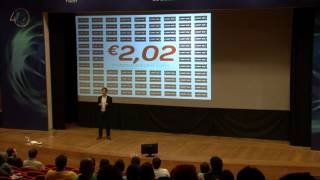
Kevin Hartz gives a 2013 keynote describing Eventbrite’s origins, product and global expansion and pre-announces a Portugal launch. He explains Eventbrite’s mission (using an online platform to bring people together offline), details product features (simple event publishing, social/Facebook integration, analytics, PayPal payments, mobile scanning app and iPad will-call), presents customer examples (small classes to mega concerts), cites business metrics (≈$0.5B gross ticket sales run rate, 21M attendees in 2011, ~70% free attendees), and highlights three driving trends—social media, mobile, and big data—before closing with lessons for entrepreneurs (watch customers, lean into organic growth, think globally, stay true to core values).
Chapters
Sam. Thank you, Ricardo. It's really a pleasure to be here. Ricardo has put on an incredible conference. There's a few things before I get started with the formal presentation that I wanted to say is that Eventbrite, we are just launching, we're launching in about a month here in Portugal. We're very excited about it. We pre announced it. I'm thrilled to be here, to be in Lisbon and to talk to a lot of different users that are using the English and clunky version that hasn't been localized to your country. And we're going to be working hard to bring you a great service that you're going to really love. So really, tremendously excited about that. Secondly is I'm an entrepreneur and I know I've spoken to many of the people in the room here. There are many entrepreneurs out there. And I want to just remind everyone Eventbrite is a company that this year will process over a half a billion US dollars across our platform. We have 200 employees, but we started as three founders and we started as three founders in a rundown warehouse in the South Market district of San Francisco. And we really started during the first, during the credit crisis of 2008 was those tough years that we all remember that a lot of you may be feeling now here. But the tough times are always the best time to start a company. They're the best time to really be building because you really learn how to survive in the hard times. So Eventbrite is something that didn't just become massive and blow up overnight, as we say. It was something that we've been working on for six years. And a good chunk of that time, a good portion of that time was spent bootstrapping the business, not taking salaries, working, you know, doing all sorts of odd things to try to get by and make ends meet. And merely by sticking with it, we got to where we are today. I'm really excited to share our story and that's about Eventbrite. But a lot of the lessons here, I also want to reflect back at the end of my presentation on entrepreneurship and bringing that to Lisbon and into Portugal. So Eventbrite, we, you know, as I mentioned earlier, I'm a product of Silicon Valley and there's a lot of excitement and innovation happening in Silicon Valley and we're now seeing that all over the world. But there's also a lot of criticism that's happening that I'm hearing and that is that we're spending a lot of time in front of computers. So one study out there says that three out of five people spend more time in front of their computers than they do with their significant others, with their spouses or boyfriends or girlfriends or so on. Staggering number to me. Another figure is that Americans under 25 spend about seven and a half hours a day in front of a television or in front of an electronic device or computer. And there's been a lot of critique of Twitter. It's 140 characters and what can you really express in 140 characters? And I see things as very different. I see that technology is something that has actually united us more. It's something that has allowed us to connect and communicate. And really what Eventbrite is all about. It's an online platform. We're building an online platform to bring people together offline. Humans are inherently social creatures. We're social beings. And in the 1940s there is a psychologist named Abraham Maslov and he created a pyramid of need. So that pyramid spoke about at the base levels, human beings need food and water to survive. But also what really defines us is that humans are social creatures. And that sense of belonging, that sense of human gathering is fundamental to human survival and human needs. And really, while we're spending all this time online, what it's helping us do is helping us connect and it's helping us to power live experiences. So Eventbrite uses an online platform and technology to bring people together offline. And that is more than just merely tickets to a concert or to a conference or so on. When you attend all these different events like the conference here today, we have a chance to meet and interact and learn and grow in much more of a fashion than a synchronous method such as or asynchronous methods such as the television. Let's look at just some of the things, the events that Eventbrite is powering. So it's a broad category. When I see this large list up here, I think of ebay in the 1990s and all the different categories of e commerce goods. What we've seen sprout out up on the Eventbrite platform is that same event. Exciting diversity of different uses for our platform. Let's take three in particular. Photography classes, food festivals and fundraisers. These are three types of events that we see on Eventbrite. And what we've done is we've created a simple and easy to use solution for these types of events to help our customers sell more tickets. And I'm going to tell you a bit about how we do that. First, we allow you to publish an event page. And it's part of what I would say of the importance of web properties and now mobile properties is simplicity. We made it as easy to publish as publishing a Tumblr blog. Enter your details of your event and publish. Once you've published, you've created your event page. We provide a whole suite of tools, tools that allow you to spread your message through the various social networks, to use email, to use widgets, to to get the word out about your event. High and low and third collection payments have always been a very hairy part of difficult and challenging part of the ecosystem of online. And we've made that just drop dead simple. We'll launch here in Portugal first with PayPal and then expand to a broader range of payment payment types over time. Finally, what you don't see in typical platforms is a lot of analytical views into what you're selling and where you're selling. We're providing geographic maps, we're providing insights and analytics and really helping you learn about your customers, have that customer data and thus sell more tickets. Let's talk about a few different customers that use our platform. Bibi came from a large retailer, a big corporate job and she started teaching cooking classes and she used the Eventbrite platform. Today she's franchised that or grown that to four different cities. Actually serves 50,000 different served 50,000 different students to date on our platform. Another example is Megan. She holds an endurance running race, a 10k run she's been running. She's been holding it for four years and does that in over 10 cities. And finally to really speak about the length and the breadth of Eventbrite is that in September we ticketed the Black Eyed Peas concert in New York City. New York held a a concert that was hosted to raise money in awareness for poverty. Over 60,000 people used Eventbrite to buy tickets and attend that event. And so what we're talking here is really about creating a platform that can serve from the smallest event organizer that has just a few people, such as a photography class, all the way up to these mega concerts. That's really the Eventbrite platform in a nutshell. And I'm going to try to echo back to your own entrepreneurial experiences. But in building the company and building Eventbrite, we've really ridden a wave of three different trends out there. These trends affect all of us in the room. They're impacting the Silicon Valley and I'm going to speak about them in particular related to our own business. First is social media, how that has over the Years had a massive impact on our business. Next is the mobile phenomenon. And third is big data. So social media. When we started Eventbrite, which was way back in 2006, we felt, well, we were going to grow. People were going to discover us through Google, we were going to do SEO, construct our site in such a way that search was going to be the primary driver of our site. And Google Drives a tremendous amount of traffic to our site. But what we saw organically happening were that people were coming to Eventbrite from Facebook and we were trying to better understand that because that traffic was starting to surge. Until now, Facebook is the single largest driver of traffic. So let's try to break down and explain why that was the case. There were two reasons. One is that we very early on integrated with Facebook's API event API, and so an event organizer could easily publish. We gave our event organizers a one button publish, where you could publish your Eventbrite event and republish it into your own social graph. With Facebook events on Facebook, that was just a wonderful synergy and partnership and integration. But what was really driving traffic was something more fundamental, and that relates back to this inherent social nature of human beings, and that is that when somebody attends an event, they often want to share that with their friends if it's a social event, or their colleagues if it's a professional event. And we were seeing originally people just cutting and pasting the URL of the event page back into their Facebook news feed and sharing that with their friends. We then connected heavily with Facebook through Facebook Connect and saw an explosion of growth from that. In fact, every time somebody shares on an event on Facebook from Eventbrite, it drives an additional €2 to the organizer. So each share by a customer, and that is customer marketing, is really helping drive this phenomenal growth. If you look at more social events and social events such as concerts, it's driving an additional €10 in ticket sales for every share. And on top of that, it's also driving a lot of awareness back. It drives on average about 15 visits back to the site. So let's look at that in aggregate numbers. I have to obscure things. You know, we've got all these famous bloggers here in the audience, so I don't want to give away my numbers, but you can see the growth of the business up through 2008. And then we integrated Facebook Connect and really saw the business boom. So this is a very important lesson, and that is really get out of the way of your customers. When you see your customers doing something, when you see an organic activity on your site, don't stop that, encourage that and really grow into it. I think my favorite example was watching PayPal struggle when it initially launched. And then one day People started using PayPal, eBay sellers started using PayPal on the site and they saw this, they integrated with that, and the rest is history. So remember to watch your customers, see what they're doing and learn from that. Let's go into the second trend that we just can't ignore, and that's the seismic shift from the desktop to mobile. Smartphones have grown massively. We've seen all the numbers out there. There is a venture capitalist, famous venture capitalist named Mary Meeker who gave a presentation just a month ago in New York. And she spoke, she put up some interesting data and that was that in India, for example, mobile smartphone, mobile usage has surpassed web usage and we expect that to follow in the world throughout. We've been able to use mobile devices because they've become commoditized, because they've become so inexpensive. We've been able to use mobile devices to do things that only the traditional ticketers and only the biggest customers could afford before. So we built a scanning app on an iPhone and on Android device that each week scans over 30,000 customers through a number of different organizations. So in the past, when you'd go to a football match or see a concert, you would have your ticket and it would be scanned by this very expensive and clunky device. This can now be done on any iPhone or any Android device. And we think that's pretty revolutionary and we call this democratizing. Again, bringing things that were only available to the, the highest end of customers and bringing it to the mass market. It's a very important trend in Silicon Valley and mobile is playing a very key role in this. We've also launched what we call at the door and that is an iPad tablet device. And that's for allowing will call, that's for swiping credit cards. And it allows venues to, to collect money and really bridge the gap between the online sales and the offline sales as well. All done through something that can be downloaded through the App Store. So we've talked about social and mobile. Let's talk a bit about big data. This is really the byproduct of a lot of great open source services. MongoDB, a lot of advancements in cheaper commoditized storage has given us a wealth of data that we can use for all different purposes. We've seen these three commerce leaders, Amazon, Pandora and Netflix. All really benefit from. In the case of Amazon Merchant or product recommendations. If you go onto the Amazon site, you'll be recommended products based on what you've bought or what you've looked at before. In the case of Pandora, you listen to certain music, it makes recommendations and these are called algorithmic or data recommendations based on what other people are listening to and applying it in your case. And finally Netflix, if I like these certain films, the Netflix algorithms are going to recommend these in a similar means. We have a data services team at Eventbrite that is recommending now events to our attendees. You've attended these events in the past, we think that you'll like these events as well. And in effect we have this mutually beneficial relationship where our consumers or attendees are finding great new things to do and our organizers are seeing greater and greater ticket sales in gaining new customers that they would just not have had exposure to before. We also use big data to stop fraud. Whenever you have a self service payments platform such as Eventbrite or PayPal or so on, you're battling the fraudsters constantly. And building sophisticated fraud algorithms has been something that's derived from from all the data that we collect. We offer a friction free experience. When you are launching a web service or a mobile service, one really needs to think about how to minimize the number of clicks or fields or entry points and make it just drop dead simple. And looking at it not just from a usability standpoint of what the customer is doing, but also how customers convert on a quantitative basis has been tremendously powerful for driving our business to this half billion dollar gross ticket sales run rate. And finally we're working on in delivering advanced payouts, the status quo of ticketing has been when your event ends, you get your money. And that doesn't help when you need to market your event, when you need to really get out, get the message out, reserve venues, put down deposits and so on. And we've worked through different algorithms to be able to pay customers out that we've never met before. And we do that on risk based analysis. So we've talked about these three trends. Let's talk about the actual numbers of Eventbrite users. So in 2011 we had 21 million attendees attend Eventbrite events all around the world. What's very interesting about that is 2/3 of those, about 70% of those are actually free users. They've attended events on Eventbrite that are free. And you would say why would you have a free service like that? Or why would you have a service where only 30% of attendees are paying. Remember that those 30% are going to drive this year half a billion dollars in ticket sales. And that 70% is really doing something amazing. And that's raising awareness of Eventbrite, getting our brand out there, acting as, in a sense, as a free marketing vehicle. So what we've created is this wonderful flywheel of growth where more attendees attend more events and more attendees actually convert to event organizers. So buyers converting to sellers. To the extent today where that's the number one source of acquisition, we hadn't attended that intended that in the beginning we were looking at paying, spending lots of money on advertising. But when we saw our free service take off like this and we encouraged the free service, we found again we learned this very important lesson which has become our major source of customer acquisition. So where are we going? We, you know, we've often, and I'm trying to frame this in a global tone because I'm here in Lisbon, but in the United States, I think in Silicon Valley, one of the things we suffer is this tunnel vision and that Silicon Valley tends to think still too much in terms of the world as the United States market. And, and what's really important now is that we live in a global market, that most of the Internet traffic happens outside of the United States. It's happening in Portugal, it's happening in Russia, it's happening in China and many other areas. And as an entrepreneur and as an investor, I'm telling entrepreneurs to really think globally sooner and not looking at borders in the same way that I think that we did 10 years ago in our own case. We found organically a customer sign up in Mexico, for example, just this one case, and it was a salsa festival. And actually 60,000 people attended that salsa festival. That was an organic event. It was one of our biggest events ever held and it happened outside the United States with no sales or marketing or otherwise. We now, as you can see these dots on the map here, are going live in many different countries around the world. And you'll see Portugal is up there as well, that we're again excited to pre announce it, going live next month. We talked a lot about, I've spoken a lot about social recommendations and learning about the customer. So really based on what type of events you're attending, but also based on what type of interest or who you're connected to socially or through LinkedIn or so on, we're making better recommendations in serving the consumer. And we just can't be more excited about the direction of Eventbrite in the future. So I'm running out of time and I want to leave enough time for Q and A. But really in closing, just to emphasize because I know we have a lot of entrepreneurs in the office, watch for those trends that can open up new markets. In our case, it really was social, really was mobile, it was big data. But what are those other things that are happening that are changing the technology landscape scene that are making your startup available? Be open to new opportunities. Be very observant. Watch what's happening with your business. Watch your customers. As we saw, Facebook became such an important piece and that was organic originally and also our free service became such an important driver, something that we never expected. So really lean in into those successes and finally stay true to your core values. Eventbrite is it can be described as a ticketing company, but we're really here to bring people together to drive social experiences, to drive these live experiences where we can learn and grow and share and be entertained. Thank you very much. Love to take some questions. Thank you. Kevin.
More from Kevin
Kevin Hartz, Co-Founder of Eventbrite, scaling online ticketing & new autonomous security at Sauron!

Kevin Hartz: "How I Lost Airbnb at Seed Because of an Exploding Term Sheet" | E1180
Kevin Hartz: "How I Lost Airbnb at Seed Because of an Exploding Term Sheet" | E1180