Kevin Hartz tips on getting funded
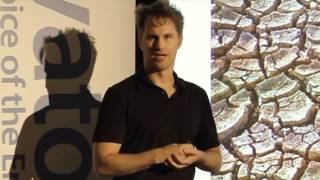
Kevin Hartz, Eventbrite's CEO, walks through raising venture capital from firms like Sequoia. He stresses hiring great people, balancing vision with execution details, and showing traction. His pitch advice: 12-15 slides in 15-20 minutes, start investor conversations early, and respond fast to follow-ups.
Questions this video answers
2006
Approximately $275 million (month of September run rate); he also cited selling over $200 million worth of tickets that year.
$9.5 million raised; over $5 million cash on hand.
Roughly $0 (mostly organic/referral-driven).
12–15 slide PowerPoint deck; present in 15–20 minutes.
Chapters
With great delight and curiosity and intrigue, I would like to bring up Kevin Hart. He is the founder and CEO of Event Eventbrite. It is a totally game changing company in the event management space. Of course everybody here knows it and without Kevin we probably wouldn't have had this event.
I just saw my hair in the reflection and I'm a little worried right now against that mirror. Can everyone hear me? Great. Well, thank you so much, Bambi. It's really an honor to be here with such a great group and I'm very excited to talk to the entrepreneurs tonight. I'm Kevin Hartz, I'm co founder and CEO of Eventbrite and I'm on my third company. The last two, Zoom and now Eventbrite were backed by Sequoia. And I've really, I would say I've spent a lot of my career trying to stay around very bright and talented people. It's where I learn. I consider myself a student kind of endlessly in school and I like to be around very bright people and learn. And I really first got that exposure with being involved in PayPal and there were some phenomenally talented and bright people involved in PayPal and that really kind of impressed upon me that importance. And when I in a sense followed Ruloff both to Sequoia Capital and received funding from Zoom, I had the opportunity to work with them further. So really as this first bit of advice is really stay close. Find people that are great mentors and very talented and stay close to them. That's really been my overall formula for success. Let me first talk about Eventbrite. Very excited with how the business has just transpired. We're really out there to transform ticketing and it's so exciting to go into a market that's stagnant and devoid of change and really we aspire to breathe life into that market and have a real passion for what we're doing and that's bringing people together around live experiences. Whether it's this event here tonight or whether it's a Photoshop class or whether it's a large music festival, we're really focused on that mission. Some more just details about Eventbrite. We started in 2006 and we bootstrapped the company with two other founders, Julia Hartz. Here in the audience is the second co founder and my wife and Renaud Visage, third co founder. We started very modestly in 2006 and gained a lot of momentum since then. This year we'll sell over $200 million worth of tickets and you know with that said, I of course have to put in the plug that we're hiring. And really where we've seen our success is bringing great people around me, as I mentioned, finding mentors, but also finding that next wave of great entrepreneurs and great company operators. And we've been able to attract some massively talented people. That's really a big differentiator and we're always out there looking for the best and brightest. So send me an email. Kevinventbright.com well, I talked to Bambi and we came up, or I came up with this topic of raising money from, how to raise money from Sequoia Capital. And it sounds like a late night TV infomercial or something of that. But when you consider who the audience is or consider Sequoia Capital or any other great institutional investor, they really have one thing in mind and that is to be at the front row, the front center stage, to see the world change and see entrepreneurs do great things. And as I mentioned, entrepreneurs, it really centers around the entrepreneurs. And to talk, before I tell you how to pitch in all these details of your business, really it's important to kind of talk about what kind of entrepreneurs they're looking for. And interesting. They're looking for those that are on the outsiders and really come from a different frame of mind. They actually come from. They look for those that are not well known, they look for the unknowns out there. And as Mike Moritz has always said, they look for those in quoting him that are unbound by the heritage of the past, meaning they're looking at problems in a different way, such as Google entering the search market in a very crowded space in 1998. And finally, and I would say maybe this strikes some with controversy is that they look to youth and they look towards youth because it's really that 19 or 20 or 21 year old that really has special insights into the future. And that is something that I don't see but is very keen at that age. And this model is time tested. These are the three founders of Airbnb, a company I love that's just around the corner. This is a model that's been in place for 30 years. And so you look back at Steve Jobs and Steve Wozniak in that first photo and you look at, say, some of the newer companies, the Dropboxes or Airbnbs, and it's really a time tested formula that they use here. And I don't know, I find it almost contradictory in the sense that they use this traditional method, but this traditional method of identifying great Entrepreneurs really drives change and innovation in the valley and throughout the world. And that's just a very exciting notion to me. So really what they're looking for, they're looking for entrepreneurs that really are going to think big and really want to do big things and in effect change the world. I'll bring it back to my own experiences at Eventbrite and really when you're going out to fundraiser and it's really not just the fundraising moment or the time that you're thinking about fundraising, it's really how you build your business. There's always this kind of bifurcated model where on the one hand you're thinking about the macro side of the big thing that you're trying to do and to accomplish, and on the other hand the micro side, the details and the very specific attention to detail that you're going to get to hone your business and make it really great. So on the macro side, we're out to transform ticketing. As I mentioned earlier, it's very stagnant and ripe for disruption and ripe for innovation. On the micro side, there are just so many details that we've honed into. It's really putting together and hand picking and building a team where you do make mistakes and have to correct, but really putting together not just a bright and talented team, but a cohesive team that can work together. It's the micro side of really thinking about the details of how do you delight the customer. We're starting to use this phrase, we want our customers to have a double rainbow experience. So that's being echoed through the halls of Eventbrite these days. It's rigorous operations and we talked about, actually Dick Costello touched upon that there's a new wave of companies that are really focused around data and data driven, especially as you scale to make keen decisions and feed that back into how you change and optimize and build your business. So really it's the macro and the micro that the investor really needs to see that's going to impress them. Thinking big, but then also executing on the details. And with Sequoia or any others, it's very challenging to pitch a seed investment even as things this market is picking up right now, and I may touch upon that my perspective of that a bit later. But it's really important to have traction, to show that growth. Eventbrite was cash flow positive at the time and had tens of thousands of sellers of ticket sellers on our service at the point where we were funded by Sequoia. I like to think about the startup and successful startups as almost an organism, the startup organism. And, and you can apply a lot of these kind of darwinistic characteristics to startups in the sense that you really need to be a highly efficient organism to survive in the harsh environment of the ecosystem around you. So two very important attributes of our business, or two details of our business, is that we have roughly $0 customer acquisition costs. And what that means is that we've built a business where the majority or pretty much all of our customers come from organic mechanisms or referrals or so on. And that's very important because we're not spending a lot of money to acquire customers and requiring that capital. And the second aspect of it is that we're now, I talked about us doing $200 million in gross ticket sales. And what that is is actually we measure ourselves on the success of our customers. Well, as of this month, this month of September, we're on a $275 million gross ticket sale run rate. And what we're most proud of and what we're very excited about is we've done that with relatively little capital. So we've raised in the history of the company $9.5 million and we still have over $5 million in the bank. And we've done that to get this company in orbit. Adaptive Peter Thiel will be speaking in a little bit, but I think they really wrote the book and are cited quite often as the company that really kind of pioneered that notion of pivoting. They started. Many know this story, but they started as a company called Fieldlink. I had the opportunity to invest, or I invested in this company, Fieldlink. So I can't claim, claim any kind of special insight on what became PayPal and their market, but really, what an amazing team there. And they were able to realize that it was too nascent. It was the late 90s and mobile security wasn't quite ready. They pivoted to mobile payments of passing money between mobile devices, which we're now starting to see more and more finally come to fruition these days. But again, the market wasn't ready and they realized that and were able to pivot to the product that we're familiar with today, which is PayPal. Another great example is YouTube. Not many may know this, but Javid and Steve and Chad started. They launched their company on February 14th of 2005 as a video dating service. They went to Craigslist and tried to pay women to post videos to attract men to the site. It wasn't working. What they did do is that they noticed that people started to post videos and share those videos with others completely unrelated to it. And that observation, that keen observation and that pivoting was key, that within two quarters they were up into orbit. Finally, is the notion of differentiation and what kind of sustainable advantages. In the case of PayPal, it seems like a very simple concept. You send money from person A to person A, sends money to person B. But in reality, there's a complex, dark, tangled web of fraudsters attacking payment systems like that and see that as a very efficient way to launder credit cards and steal money. And while dozens of other PayPal replicants went out of business during this period, either because they clamped too hard down on fraud and made it almost impossible for a consumer to sign up, or they made the service too simple for fraudsters to overrun, either way, these competitors fell. What PayPal did was really use a silver bullet method of behind the scenes without inconveniencing the consumer. And we hear a lot these days about low friction and easy conversion. Well, PayPal very much understood that concept in the early days. The team there, David Sacks and Peter Thiel and Reid Hoffman, really understood that notion and built an easy to use service that had a very sophisticated fraud algorithmic system on the back end, detecting and stopping fraud. Another example I love is the group over at Netflix of Netflix launched and still is predominantly a DVD fulfillment rental service, as everyone here knows. And Netflix really sped up the process and really delighted their customers, or they, as we say today, gave them this double rainbow experience by setting up these very sophisticated fulfillment centers around the United States and now going out around the world, which could turn a DVD around very quickly. And the fact that you could get this quick turnaround really delighted the customers and from a metric standpoint, lowered churn. It lowered customer acquisition costs because people would talk about this and really differentiated itself among the competitors and even Blockbuster in this space that if people noticed just the other week the, the final death blow of Blockbuster as they're filing for bankruptcy. Finally on the point, you can do all these great things, but you have to remember that there are conditions outside of our control, the macro environment, and they can be very harsh conditions and very unavoidable. We saw that in the 2000 technology crash, then we saw it in a much broader base crash in 2008. And really that is building a company to last and building it to weather these macro environments is the test of time. I will say that as the pendulum of capitalism swings, we've swung from now from very hard times and very harsh times and I see that swinging very far. The other direction I see that as SOMO real estate fills up and becomes increasingly competitive just in the last quarter, or as I see the challenge of recruiting and competition for employees really picking up and the financings valuations rising. As I know many investors here in the room are seeing many signs of of a bubble or a very frothy environment ahead of us, but we have to maintain and stay focused and keep our companies level headed in these environments. With that said, I want to give some very specific and pragmatic advice from what I've learned in pitching and presenting to investors. First is the goal here is the hard part is really building a great company that's ready to present, ready to be in front of investors. And you have to ask yourself that do you have the results or do you have the numbers and things that you need that you're ready to present? And if so one thing that I will just kind of say is a mistake that often happens is that new entrepreneurs will reach out oftentimes just at the point that they're going to go out and fundraise. I highly recommend reaching out to investors early, getting onto their radar, socializing the product if it's live, getting to know the partner, at least getting a dialogue going because it's very hard to make a quick decision under in oftentimes a competitive or non competitive situation. And if you can develop a relationship beforehand that's very important. So some back work in terms of delivering things here. I of course had I've had nearly a decade relationship with Rule of both of the partner I've worked with on both Zoom and Eventbrite but when we started Eventbrite we I continually sent him updates almost on a monthly basis. I would probably say, well I wouldn't say to pester him that could work the wrong way but to be updating people that you are interested in working with from an investment standpoint. So your first goal is really to or your second goal then of course is to get a meeting in front of a partner in the firm and really developing a concise presentation. I recommend a 12 to 15 point presentation deck. PowerPoint deck nobody really reads business plans anymore. There's what you can express through visuals and Data in a 12 to 15 page PowerPoint deck. Should be suitable enough to drive an investor to make a decision to meet or have a phone conversation. A very good guide and an amazing template that I've always used and recommended to other entrepreneurs is on the Sequoia website. It's on sequoiacap.com ideas. You've had a presentation, it's gone well. You've picked the interest and intrigue that partner. What generally happens, what happens at Sequoia or what happens or the general process for other institutional firms is that you'll be invited back and you'll meet typically individually or in twos and threes with other partners in the firm to start to that partner will be your champion. And you can gain a lot of insight, first of all by communicating with that partner through finding out where the Achilles heels are the business. But then you'll be socialized through the partnership and really before you meet each partner and progress each step further, getting to know the partner, getting to understand their background, learning about what their forte is so you can actually ask intelligent questions and learn from their business. My goal at Sequoia, every time I pitched, I said, look, this is like getting into a top school. It's just such a minute possibility that, well, if I don't get the funding from Sequoia, I'm always going to get free food out of them. So you can always get, you can ask and get a lunch or something and always get great, great advice. And I got a lot of meals and a lot of great advice. Fortunately, I got term shoots as well, which was nice, but I always had that backup plan. But I got phenomenally good advice and it was always a delight meeting. Try to get through the presentation in really 15 to 20 minutes tops. And the reason is that you typically have 45 minutes or an hour or hopefully even longer if they're really engaged to present, but you'll be interrupted. If you're doing well, you'll be stopped and asked a lot of questions. So if you have a very concise presentation and you go through it in 15 to 20 minutes, you're leaving a lot of time for the space to be filled in with questions in between. If the room is silent and you're just. If it's only your voice speaking, it always makes me nervous. It means, are they engaged? Are they interested? So you really want to engage the audience and get the partners talking. And then there's. What will happen is that you'll be asked a number of questions offline. In the case of Zoom and Eventbrite, we responded. We always respond very quickly and concisely and professionally. We put together these memos to address the different issues that would be brought up about the business and the investor. The best investors in Sequoia Capital, they're looking at how you actually respond and your level of professionalism and enthusiasm. So that if you don't, if it takes you a few days to respond, that's almost a sign in itself. The final goal is the partner presentation. Famous notion that you go on up to Sand Hill Road and you stand before this, stand before a partnership and present to the full partnership and that kind of yes or no decision is made out of then you're early. In this case, you're presenting to a large audience and need to make sure ensure that your AV is set up. So in this case, prior we had spoken, I'd made sure my presentation was was here and up to date. I brought my own clicker. You can use one of these Bluetooth clickers or you can use your MacBook and use the remote there. And always just one little good piece of advice is that I've been taught in presenting a stand on to the left of the screen. And the reason is that people read naturally left to right and if your eye has to draw from the speaker all the way across the screen and back, it's less natural. So there's just one little pragmatic advice. Obviously, show your passion and drive, it's the business that you love and you've dedicated yourself to. And finally, really listen to what your audience asks and says. And with that, I'll turn it over to questions. Thank you.
More from Kevin

Kevin Hartz, Co-Founder of Eventbrite, scaling online ticketing & new autonomous security at Sauron!

Kevin Hartz: "How I Lost Airbnb at Seed Because of an Exploding Term Sheet" | E1180
Kevin Hartz: "How I Lost Airbnb at Seed Because of an Exploding Term Sheet" | E1180